
REVIEW · JAPAN
Hike Japan Heritage Hakone Hachiri with certified mountain guide
Hakone Hachiri is more than a mountain walk. It is a chance to follow the old Tokaido route used by people crossing Japan during the Edo period, with Lake Ashi, cedar avenues, and stone-paved trail along the way. Guide Aki, also called Akihiro, adds the historical context that turns a pleasant hike into a readable journey through Japan’s past.
I like two things here. First, the route is not just a long uphill slog: buses and a shared taxi connect the walking sections, so you see more of the Hakone area without wasting the day on roads. Second, the small group, capped at six people, gives Aki room to take photos, answer questions, and adjust the pace. The main caution is simple: this is a real mountain hike, and the weather-sensitive Mt Fuji views are never guaranteed.
Key points at a glance
- Walk the old Tokaido route: Follow sections of Hakone Hachiri, a Japan Heritage route used during the Edo period.
- See Hakone from several angles: The day includes Lake Ashi, the Heiwa no Torii, cedar trees, the Hakone Checkpoint, and possible Mt Fuji views.
- Travel from Kanagawa to Shizuoka: Start at Hakone Yumoto Station and finish at Mishima Station, crossing the mountain by foot and local transport.
- Learn from guide Aki: Aki, also identified as Akihiro, combines local history, nature details, navigation, and family photos.
- Plan for extra costs: Lunch is about 2,000 yen, transport about 2,000 yen, and the optional Shinkansen from Mishima to Odawara costs about 2,500 yen.
- Expect a small, active outing: The tour lasts about seven hours, covers roughly 8 kilometers, and suits people with moderate fitness.
Why Hakone Hachiri makes a better history walk
Many Hakone excursions focus on the lake, the shrine, and the ropeway. This one gives you the road between those famous places. That matters because the old Tokaido was not simply a scenic path. It was a major route linking Edo, present-day Tokyo, with Kyoto, and the Hakone mountains were among its hardest sections.
You will walk where Edo-period travelers faced steep slopes, rough stone paving, and difficult mountain weather. The route makes the past feel practical rather than distant. A stop at the Hakone Checkpoint shows how movement was controlled, while the cedar avenue gives you a sense of the road’s scale and shelter.
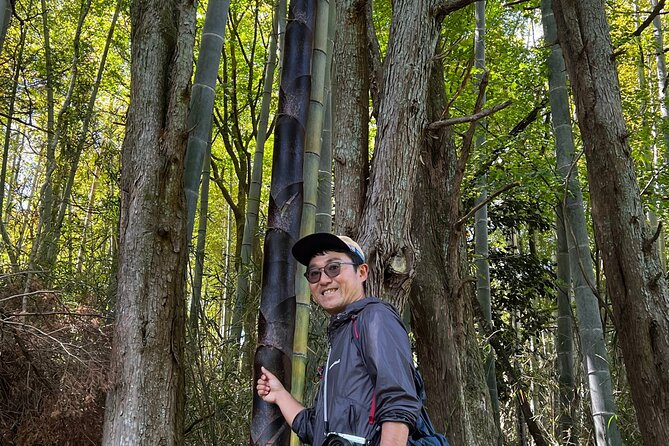
Aki is a strong part of the outing. He is a nationally certified professional guide with a wilderness first-aid certificate, and he handles both the historical explanation and the practical business of moving through Hakone. You also get a guide who is willing to take family photos, a small touch that is useful on a day when your hands may be busy with walking poles, snacks, or rain gear.
The group limit of six is another advantage. You are not trailing behind a large crowd while trying to hear a lecture. At the same time, the small-group format does not turn the trip into a private tour, so the price remains more manageable than a fully private day.
More Mountain Hikes in Japan
- Full Day Hiking Tour at Mt.Takao including Hot Spring
★ 5.0 · 52 reviews - Explore Kiso Valley : Magome – Tsumago Mountain Trail Walk
★ 5.0 · 33 reviews - Morning Hiking Tour: Mt. Futaba & Hiroshima’s History
★ 5.0 · 25 reviews
From Hakone Yumoto to the Amazake Tea House
Meet at Hakone Yumoto Station at 9:00 a.m. The opening transfer uses a shared taxi to reach the trailhead, with the transport cost paid separately. From there, the first walking section takes about an hour and leads toward the Amazake Tea House area.
This part introduces the mountain setting and the old route before the lake appears. The path is tied to the former Tokaido, and the walk includes a woodcraft village where you can see local artisans making use of the area’s timber traditions. It is a useful beginning because you are not dropped straight at a viewpoint and rushed through a photo stop. You start by moving through the type of mountain corridor that made the old road demanding.
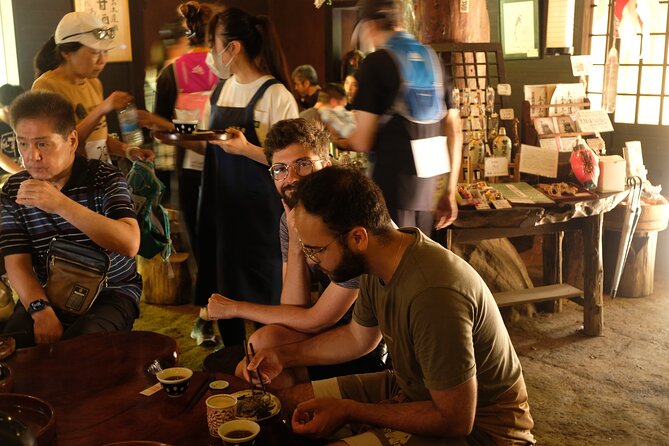
The Amazake Tea House is also a natural place for a break. Amazake and snacks are not included, so bring some cash if you want to buy them. The stop can add a pleasant local-food moment, but you should not treat it as part of the tour price.
The first two hours include the initial walking and tea-house area, according to the planned schedule. Since the total day includes several trail sections, you should wear shoes suited to uneven ground and be ready for changes in pace. This is not a stroll around Hakone Yumoto.
Lake Ashi, the Heiwa no Torii, and the cedar road
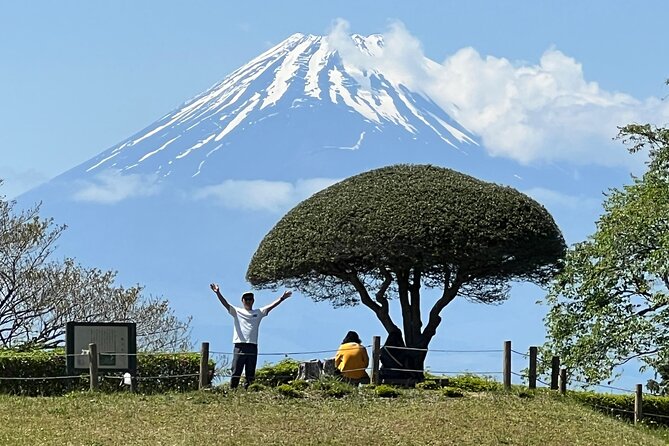
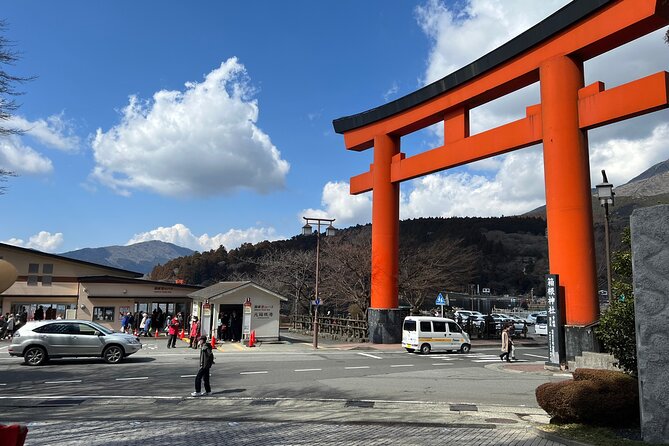
After reaching Lake Ashi, you walk along the shoreline toward the famous Heiwa no Torii. In clear weather, this is one of the day’s best photo areas, with the torii in the lake and Mt Fuji possibly visible behind it. The view depends entirely on clouds and conditions, so book this tour for the route and the setting, not for a guaranteed Fuji photograph.
The lakeside section lasts about an hour and a half. That gives you time to take in the water, the shrine gate, and the change from mountain trail to one of Hakone’s best-known public sights. Because the tour arrives on foot rather than simply stopping for a quick bus photo, the lake becomes part of a larger route.
From the shoreline, you continue through the cedar avenue on the old Hakone road. The giant cedar trees once gave travelers shade and protection from weather. Their scale also helps explain why this section of road remains memorable even when Mt Fuji is hidden.
This is one of the strongest parts of the day for people who want a mixture of nature and history. You get a quiet walk under tall trees, but Aki’s explanation gives the route a human purpose. You are not just looking at old paving stones. You are following a working road that once carried officials, merchants, and ordinary people between major cities.
The Hakone Checkpoint and lunch near Hakone-machi
The cedar avenue leads to the Hakone Checkpoint, which operated much like an immigration control point in modern terms. The guide explains its role and why this mountain crossing mattered to the authorities of the time.
Allow about 30 minutes here. That is enough for the setting and explanation without turning the stop into a museum-heavy morning. If your main interest is Edo-period travel, this may be the most important historical stop on the first half of the route.
Lunch follows near Hakone-machi at a local Japanese restaurant. Lunch is not included, and the expected cost is about 2,000 yen for your group. The wording of the cost means you should confirm the exact amount and meal arrangements when booking or meeting the guide.
After lunch, you take a bus to skip a temporarily closed section of the route. This is an important practical detail. The tour does not pretend to offer one unbroken walk when part of the path cannot be used. Instead, the bus preserves the overall journey and lets you continue on the Shizuoka side of Hakone Hachiri.
Some hikers may prefer a fully continuous trail. If that is your priority, this tour will feel less pure than a single-track trek. For most people, the bus is a sensible compromise that keeps the day moving and avoids a closed section.
Same trailhead, a different sort of day:
- Fushimi Inari Hidden Hiking Tour (Private Option Available)
★ 5.0 · 1,750 reviews - Kyoto: 3-Hour Fushimi Inari Shrine Hidden Hiking Tour
★ 4.9 · 270 reviews - Hiroshima Local guided Hiking Tour&Open-air Tea Ceremony
★ 5.0 · 213 reviews - Magome & Tsumago Nakasendo Trail Day Hike with Government-Licensed Guide
★ 5.0 · 38 reviews
Yamanaka Castle Ruins and the Shizuoka side
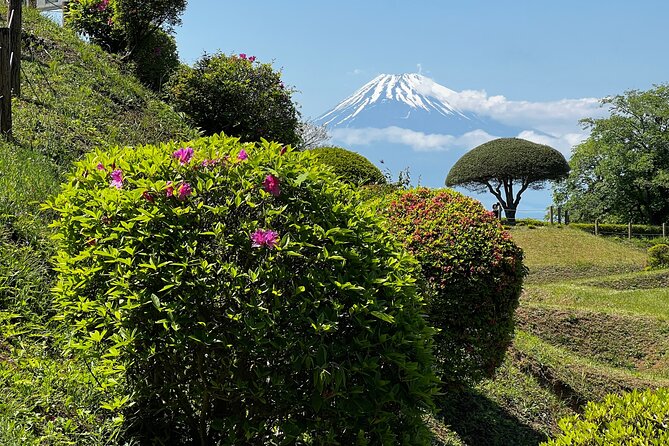
The bus takes you toward the next trailhead, where the route resumes. You then walk along the Hachiri Heritage path toward Yamanaka Castle Ruins.
The castle ruins provide a different kind of historical stop from the checkpoint. Instead of seeing a controlled passage on a major road, you encounter the remains of a defensive site along the mountain route. The visit lasts about an hour, and clear weather may bring another view of Mt Fuji.
This section is especially appealing if you like old roads with a story attached to them. The path connects the ruins to the larger crossing rather than treating the castle as an isolated attraction. You can better understand why elevated positions and mountain routes mattered in earlier Japan.
Expect the walking to remain active. The tour covers about 8 kilometers overall, but distance alone does not describe the effort. The route crosses mountain terrain and includes stone sections, slopes, and changes between trail and transport. A moderate fitness level is required, and you should be comfortable spending much of the day on your feet.
Rain can also change the feel of the walk. The day may continue in cloudy or wet conditions if the tour operates, while Fuji and distant views disappear. Bring clothing suited to the forecast and keep in mind that the cancellation policy is strict: the booking is normally non-refundable and cannot be changed. If poor weather causes the operator to cancel, you receive the choice of another date or a full refund.
Arriving in Mishima by way of shrine and river
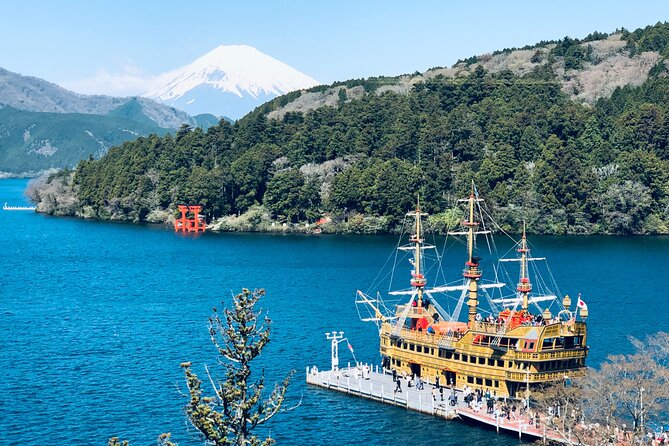
The final section brings you toward Mishima, where the route ends at Mishima Station. Before the station, the tour includes Mishima Taisha, described as the largest shrine in Mishima, and the Genbe River.
This ending changes the mood again. You begin with a mountain road and finish in a city setting, linking the old crossing to a modern rail connection. Mishima Taisha provides a final cultural stop, while the river offers a more relaxed close to the walking day.
The tour ends at Mishima Station after about seven hours. That makes the itinerary useful for people continuing through Japan rather than returning to Hakone. From Mishima, the Shinkansen reaches Odawara in about 15 minutes for roughly 2,500 yen, or Tokyo in about 45 minutes for about 4,400 yen. Buses also connect Mishima with Hakone and other parts of Izu.
Do not confuse the end point with the start point when planning your day. You will not finish back at Hakone Yumoto. This one-way design is a major strength if Mishima fits your route, but it requires you to organize your onward journey in advance.
What the $158.52 price really covers
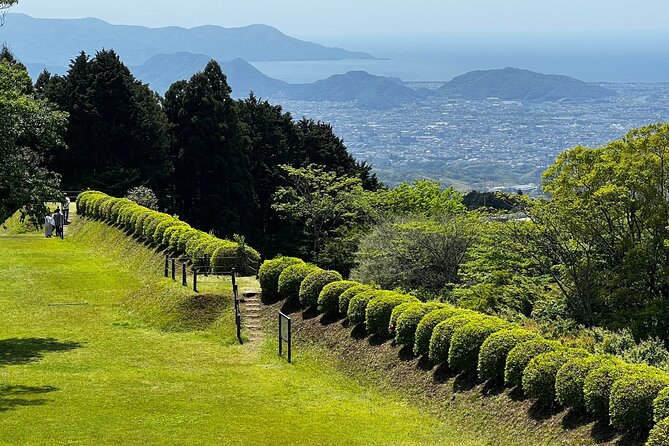
The tour costs $158.52 per person. That is not an all-in price. You should budget separately for about 2,000 yen in shared taxi and bus fares, about 2,000 yen for lunch, and any amazake or snacks. The Shinkansen from Mishima is optional and also costs extra.
Even with those additions, the price can be fair for a seven-hour small-group outing led by a nationally certified guide with wilderness first-aid training. You are paying for route planning across two prefectures, historical interpretation, trail navigation, transport between walking sections, and a group size limited to six.
The value is strongest if you would otherwise struggle to connect these places on your own. Hakone Hachiri is not a single attraction with one obvious entrance. The day involves trailheads, buses, a temporarily closed section, the old road, and a final arrival in Mishima. A guide reduces the work of piecing those sections together.
The value is weaker if you want a cheap, independent hike or if you plan to spend most of the day on the lake and at Hakone Shrine. In that case, local buses and a self-guided walk may cost less. This tour earns its price through the connection between sites and the guide’s historical and practical help.
Who should book this walk
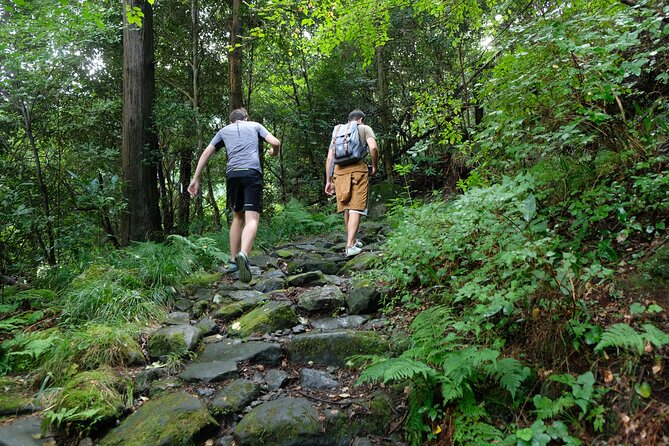
I would recommend it to you if you enjoy walking with context, rather than simply checking off viewpoints. It suits people interested in Edo-period Japan, old roads, shrine architecture, mountain scenery, and the way modern transport now follows historic routes.
It is also a good match for families or couples who value a small group and personal attention. Aki’s photo-taking is useful for families, and the six-person maximum leaves more space for questions than a large coach tour.
You should think twice if you dislike uneven paths, steep mountain sections, buses between trail segments, or a fixed seven-hour schedule. The tour requires moderate fitness, and the 8-kilometer distance is only part of the effort.
Weather is another deciding factor. Mt Fuji may be hidden, and rain or cloud can alter the scenery. The route still has historical value in poor visibility, but you should not book solely for the promised view. The operator requires good weather to run the tour and offers a new date or full refund if it cancels for weather.
Practical details before you go
The tour is confirmed at booking, accepts mobile tickets, and allows service animals. It begins near public transportation at Hakone Yumoto Station and finishes at Mishima Station, so keep your onward rail or bus plan handy.
Book early if your schedule is fixed. The tour is booked an average of 61 days ahead, and the maximum of six people makes available places limited.
Bring money for the shared taxi, buses, lunch, and optional snacks. A phone is useful for the mobile ticket, but comfortable walking shoes and weather-ready clothing matter more. Since the day combines walking, public transport, and historical stops, pack lightly enough to carry your belongings between each part of the route.
Should you book Hakone Hachiri?
Book it if you want to cross Hakone rather than simply look at it. The route gives you Lake Ashi, the Heiwa no Torii, the cedar avenue, the Hakone Checkpoint, Yamanaka Castle Ruins, Mishima Taisha, and the Genbe River in one well-planned day.
Choose it with clear expectations: the Fuji views are weather-dependent, extra costs apply, and the walking is active. If those conditions suit you, guide Aki’s personal approach, first-aid training, transport know-how, and historical explanations make this one of the more useful ways to experience the old Hakone crossing.
FAQ
Where does the tour begin?
The tour begins at Hakone Yumoto Station in Hakone at 9:00 a.m.
Where does the tour end?
It ends at Mishima Station in Mishima, Shizuoka.
How long does the tour last?
The tour lasts approximately seven hours.
How far do you walk?
You will hike about 8 kilometers during the experience.
What places are included?
The route includes the Amazake Tea House area, Lake Ashi, the Heiwa no Torii, the cedar trees of the old Hakone road, the Hakone Checkpoint, Yamanaka Castle Ruins, Mishima Taisha, and the Genbe River.
Is lunch included?
No. Lunch is not included and costs around 2,000 yen for your group at a local Japanese restaurant.
Are transportation costs included?
No. Shared taxi and bus transportation costs about 2,000 yen. The Shinkansen from Mishima to Odawara or Tokyo also costs extra.
Is Mt Fuji guaranteed to be visible?
No. Mt Fuji views are possible from several parts of the route when weather permits, but clouds and poor conditions may block the view.
More Historical Tours in Japan
- 1-Day Tour from Nagoya: Hiking the Historic Nakasendo Trail
★ 4.9 · 34 reviews - Nepal Discovery Tour: Heritage Sites & Scenic Hill Easy Hike
★ 5.0 · 121 reviews - Kathmandu Highlights: Private UNESCO World Heritage Sites Tour
★ 5.0 · 50 reviews - Semi – Private Tour at Cape of Rodon; Hidden Beaches & History
★ 5.0 · 46 reviews
Just added around Japan
- From Nagoya: Kamikochi Guided Hike in the Japanese Alps★ 5.0 · 3 reviews
- Kyoto: Arashiyama Bamboo Grove, Monkey Mountain Walking Tour★ 4.7 · 4 reviews
- 1-Day Tour from Nagoya: Hiking the Historic Nakasendo Trail★ 4.9 · 34 reviews
- From Matsumoto/Nagano: Nakasendo Trail Walking Tour★ 4.9 · 33 reviews
- Private Local Hiking to enjoy the nature and culture of Mt.Fuji★ 5.0 · 22 reviews
- Walk the Ancient Pilgrim Paths of Mt. Fuji – Private Tour★ 5.0 · 10 reviews
- Kyoto: Fushimi Inari Hidden Hike (Private)★ 5.0 · 31 reviews
- Explore Kiso Valley : Magome – Tsumago Mountain Trail Walk★ 5.0 · 33 reviews
Japan Hiking Tours, compared.
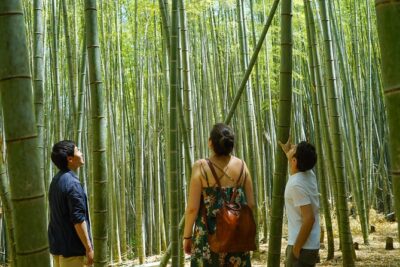
Fushimi Inari Hidden Hiking Tour (Private Option Available)
Read our review →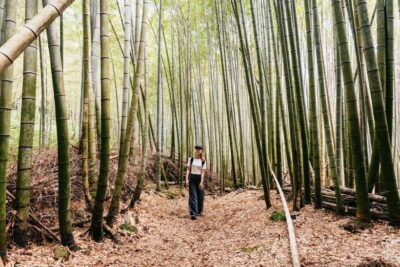
Kyoto: 3-Hour Fushimi Inari Shrine Hidden Hiking Tour
Read our review →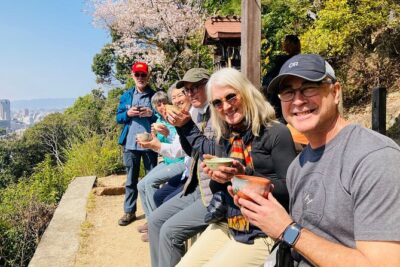
Hiroshima Local guided Hiking Tour&Open-air Tea Ceremony
Read our review →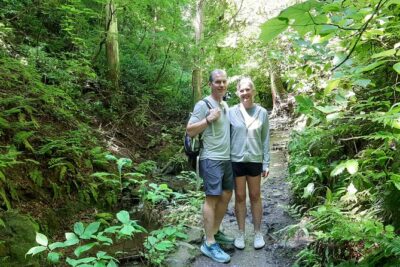
Full Day Hiking Tour at Mt.Takao including Hot Spring
Read our review →
Magome & Tsumago Nakasendo Trail Day Hike with Government-Licensed Guide
Read our review →
1-Day Tour from Nagoya: Hiking the Historic Nakasendo Trail
Read our review →
From Matsumoto/Nagano: Nakasendo Trail Walking Tour
Read our review →
Explore Kiso Valley : Magome – Tsumago Mountain Trail Walk
Read our review →Browse the lists this tour appears in