
REVIEW · JAPAN
Explore Kiso Valley : Magome – Tsumago Mountain Trail Walk
The best part of this experience is the chance to walk a real section of Japan’s old road between Tokyo and Kyoto, then finish in two beautifully preserved post towns. You get mountain paths, waterfalls, and Edo-period streets in one well-planned day, without having to puzzle over rural buses or trail maps.
I like the private format, since your guide can adjust the pace and answer your questions. I also like the local touch. Guides such as Ryo, who grew up near the Nakasendo Trail, and Harumoto have helped make the route’s customs, food, and old roadside life easier to understand. The main drawback is physical: 9 kilometers of walking with slopes calls for good fitness, and food is not included.
Key points to know before you book
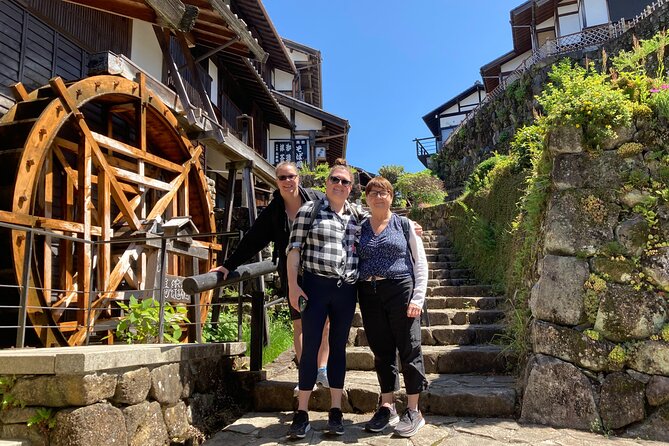
- A 9-kilometer walk connects Magome and Tsumago, two of the best-preserved post towns on the Nakasendo.
- The route includes forest paths, a high viewpoint, and Odaki-Medaki Waterfalls, not just historic streets.
- Your private English-speaking guide handles the route and local buses, which removes much of the day’s transport stress.
- The tour runs from 9:00 a.m. to about 3:45 p.m., ending at Nagiso Station.
- Admission to the Nagisomachi Museum and Wakihonjin Okuya is included, while meals and drinks cost extra.
- The walk suits active visitors best, especially those comfortable with rural paths and uphill sections.
Why the Nakasendo Trail is worth your walking shoes
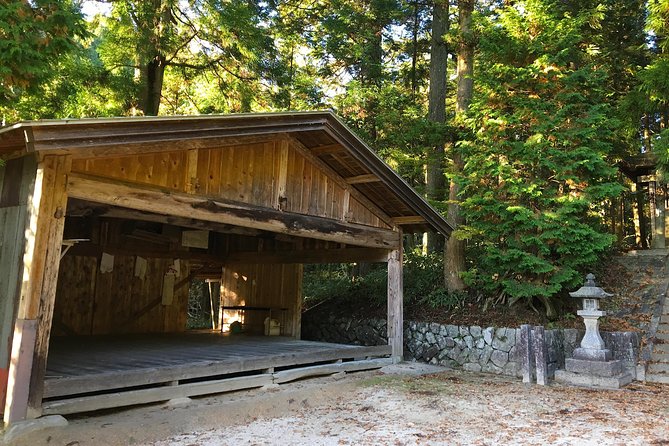
The Nakasendo was an inland highway linking Kyoto and Tokyo during Japan’s premodern period. Its post towns gave travelers places to rest, eat, and sleep, and Magome and Tsumago retain much of that old-road character.
This tour focuses on the section between the two towns. It is a smart choice if you want a taste of a long-distance route but do not have time for a multi-day trek. You walk through the Kiso Valley rather than simply arriving by bus, taking in the change from busy modern transport to quiet woods and old homes.
The route is not a flat stroll. You will cover about 5.5 miles, or 9 kilometers, and the tour information calls for a strong level of physical fitness. The high point near Magome reaches about 801 meters. You do not need to be an expert hiker, but sturdy shoes and a willingness to walk uphill will make the day much more pleasant.
The private setup is useful here. A guide can keep you on the right path, stop to explain local customs, and adjust the rhythm to suit your group. If you ask many questions, the day has room for conversation instead of the fixed pace of a large group tour.
More Mountain Hikes in Japan
- Full Day Hiking Tour at Mt.Takao including Hot Spring
★ 5.0 · 52 reviews - Hike Japan Heritage Hakone Hachiri with certified mountain guide
★ 5.0 · 46 reviews - Morning Hiking Tour: Mt. Futaba & Hiroshima’s History
★ 5.0 · 25 reviews
Starting at Nakatsugawa and reaching Magome
You meet your guide at the ticket gate of Nakatsugawa Station at 9:00 a.m. From there, you take a bus toward Magome-juku. The included bus ticket is a small detail with real value, since rural transport is one of the less obvious challenges of visiting this part of the Kiso Valley.
The tour does not include a private car or taxi. That is worth noting if you prefer door-to-door transport, but the public bus is part of the experience and keeps the day tied to the old route’s countryside setting.
Magome-juku is the first major stop. The town climbs along a stone-paved street, with traditional buildings, small shops, and roadside houses arranged along the former highway. You have about 40 minutes here before continuing on foot.
That first visit gives you a useful introduction to the Nakasendo. Magome was a post town where samurai and ordinary people paused during long journeys. The preserved setting is attractive, but it can also feel like a popular sightseeing stop, so the walking route becomes important. It takes you beyond the main street and into the surrounding hills.
Magome Observatory and the highest point
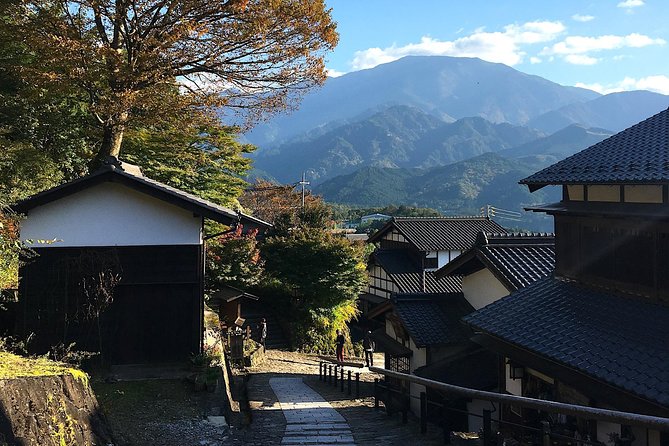
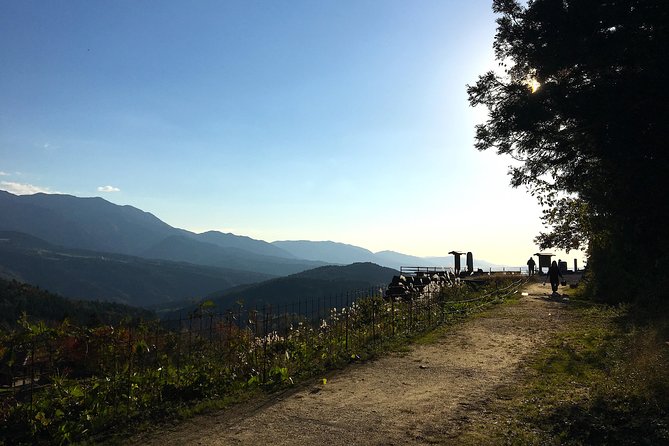
A short climb brings you to the Magome Observatory. You spend about 15 minutes here, looking across the town and the surrounding Kiso area from roughly 801 meters.
This is one of the clearest payoff points on the route. You gain a sense of the old road’s geography instead of seeing each stop as an isolated village. On a clear day, the view helps explain why this inland corridor mattered, with mountain routes shaping travel between central Japan’s major cities.
The stop is brief, and that is probably sensible. The tour has a full schedule, and the main attraction is the walk itself. If photography matters to you, have your camera ready before reaching the viewpoint rather than expecting a long pause.
Forest paths and the Odaki-Medaki Waterfalls
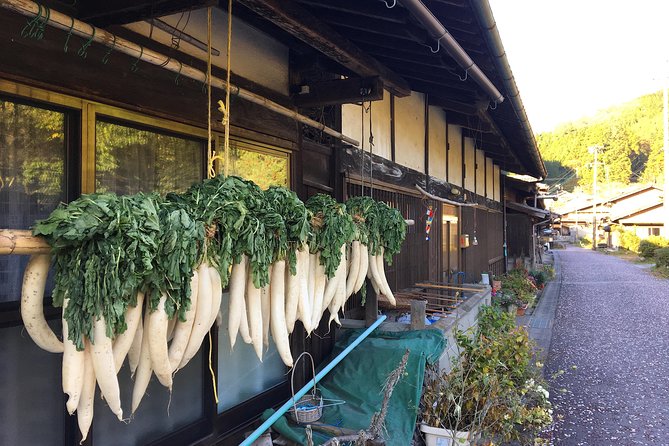
From Magome, the trail moves into a quieter section of the Kiso Valley. The walk combines rural road, wooded stretches, and gentle changes in elevation. You are not simply strolling between two old towns. The route gives you the physical setting that shaped travel along the Nakasendo.
About 10 minutes are set aside for Odaki-Medaki Waterfalls. The name refers to two falls, Odaki, or man waterfall, and Medaki, or woman waterfall. Their water once offered a welcome refreshment for people traveling along the highway, and they still provide a cool break in the woods.
This part of the route is especially appealing on a warm day. It also gives the walk some variety. After the open view near Magome, the forest and running water create a quieter mood.
You should keep your expectations practical. This is not a full-day wilderness hike. The waterfalls are a short stop within a guided cultural walk, and the schedule allows about 10 minutes there. Still, they are a worthwhile feature because they connect the natural setting with the old road’s everyday use.
Same trailhead, a different sort of day:
- Fushimi Inari Hidden Hiking Tour (Private Option Available)
★ 5.0 · 1,750 reviews - Kyoto: 3-Hour Fushimi Inari Shrine Hidden Hiking Tour
★ 4.9 · 270 reviews - Hiroshima Local guided Hiking Tour&Open-air Tea Ceremony
★ 5.0 · 213 reviews - Magome & Tsumago Nakasendo Trail Day Hike with Government-Licensed Guide
★ 5.0 · 38 reviews
Otsumago and the road into Tsumago
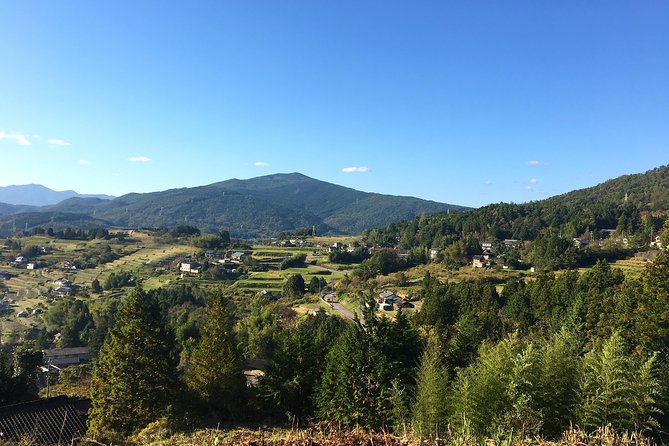
The route continues toward Otsumago, a district within the Tsumago-juku preservation area. You spend about 20 minutes here, looking at houses built in traditional Hon-Udatsu and Dashibari Zukuri styles.
Otsumago is a useful transition point. Magome has a more obvious post-town identity, while Otsumago shows how old houses and daily life continue beyond the central sightseeing street. The area has also faced the pressure of tourism, but the route gives you a chance to see more than the best-known storefronts.
This is where a local guide adds real value. Architectural terms are easy to pass by without meaning. With an explanation, the shape and placement of the houses become clues to how the old highway worked.
The walking portion can feel long if you arrive expecting a short village visit. That is the point of the tour, though. You are paying for a full route between the towns, not only for quick photographs at two famous streets.
Tsumago-juku, the day’s main historic stop

Tsumago-juku receives about 1 hour and 10 minutes, making it the longest stop on the schedule. The town once had one Honjin inn for important officials, one Waki-Honjin inn, and 31 Hatago inns for ordinary travelers.
That division tells you something important about old Japanese travel. The Nakasendo was not only a scenic path. It was a working road with rules, ranks, lodging, and services for people making long journeys on foot.
Tsumago’s preserved streets are among the most memorable parts of the day. Wooden buildings line the road, and the town has worked to protect its old appearance. You will have time to look around, take photographs, and absorb the contrast between the forest route and the compact post town.
Your guide can also help you decide how to use the free time. The schedule is not long enough for an unhurried stop at every shop, so you may want to focus on the town’s architecture and the specific places included later in the tour.
Tsumago is also a good place to notice the difference between a historic setting and a museum display. Some buildings have formal preservation value, but the town’s appeal comes from seeing the old road as a street rather than a collection of isolated objects.
Inside the Nagisomachi Museum
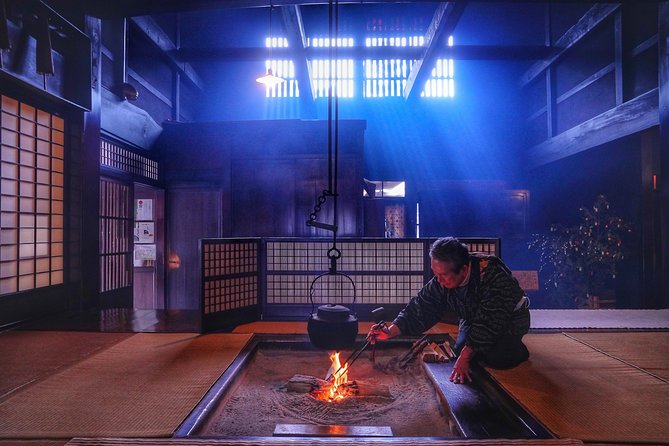
The Nagisomachi Museum occupies the former Waki-Honjin Okuya residence, also known as the Hayashiya House. The building is a designated Important Cultural Property and has been restored using floor plans from the late Edo period.
You spend about 25 minutes here. That is enough time for a focused visit, especially after several hours of walking. The museum helps put the route’s inns and social structure into concrete form. Instead of only seeing a preserved facade, you get a look inside a building tied to the people who managed travel and lodging along the highway.
This admission is included in the tour price. That matters because the day combines transport, guiding, and several cultural visits rather than charging you separately at each step.
The museum may be less exciting for anyone who wants only scenery and fresh air. For me, though, it supplies the context that makes Magome and Tsumago more than photogenic old streets.
Wakihonjin Okuya and the final look at old-road life

The final listed stop is Wakihonjin Okuya, also visited for about 25 minutes. The residence dates from 1877 and served as both a Waki-Honjin and a provision store for generations.
It was built from Japanese cypress, a fragrant wood that had only recently become legal as a building material when construction took place. That detail gives the building a close connection to changes in Japan’s building rules and local trade.
The stop works well at the end because it brings together several themes from the day: lodging, commerce, local materials, and the movement of people along the Nakasendo. After walking through forest and villages, you can see how the road supported a whole local economy.
The museum and residence are not huge attractions, so visitors looking for a full museum day may find the visits short. Their value comes from fitting them into a larger route. You see the road, the towns, and then the buildings that helped the road function.
What the guide adds to the walk
This is a private tour, so only your group participates. That gives you more freedom than a standard coach excursion. You can ask about local traditions, pause for photos, or request a more relaxed rhythm within the day’s fixed timetable.
Several guides are associated with the experience. Ryo grew up in the area around the Nakasendo Trail, which gives him a direct connection to the route. Harumoto has introduced visitors to regional culture, local food, and small treats along the way. Kazuo is described as patient and attentive, particularly useful if you plan to ask many questions.
The guide assignment can vary, so you should not book on the assumption that one named guide is guaranteed. What you can count on is an English-speaking guide, a private group, and help finding your way along a route where signage and rural transport may otherwise slow you down.
The guide also makes the tour more than a self-guided walk. You could follow the trail with a map, but you would lose much of the explanation about the buildings, the post-town system, and local customs. For first-time visitors to Japan, that added context is a major part of the value.
Price, timing, and what your $171.31 covers
The price is $171.31 per person, with group discounts available. For a private experience lasting roughly seven hours, that is not a budget outing, but it covers more than a basic guided hike.
Included are the English guide, the bus ticket used to reach Magome, and entrance fees for the included cultural sites. You also get a planned route from Nakatsugawa Station to Nagiso Station, rather than having to coordinate the trail, local buses, and return transport on your own.
Food and drinks are not included. Bring money for anything you want to eat or drink, and remember that the day’s walking schedule leaves limited time for a long meal. The route finishes at Nagiso Station around 3:45 p.m., where your guide will help you buy a train ticket back to your accommodation.
The early start and station-to-station design make this practical for a day trip. It is also booked an average of 66 days ahead, so I would reserve early if your Japan schedule is fixed.
Free cancellation is available until 24 hours before the start time. The experience depends on good weather. If poor weather forces cancellation, you can choose another date or receive a full refund.
Who will enjoy this experience most
I would choose this tour if you want a strong mix of walking, scenery, and Japanese history in one day. It suits active couples, families with fit older children, and small groups that value a private guide.
It is less suitable if you want a flat path, extensive shopping time, or a relaxed sightseeing day with little exertion. The route includes slopes, and the tour information specifically asks for a strong level of physical fitness.
The 9-kilometer distance is manageable for many active people, but fitness is not only about distance. You will also spend much of the day on your feet, moving between trail sections, town streets, viewpoints, and historic buildings.
Wear comfortable walking shoes and plan for changing weather. The tour requires good conditions, and the scenery is a central part of the experience, so a clear day will add considerably to the appeal.
Should you book the Magome to Tsumago walk?
Book it if you want to experience the Nakasendo with the practical details handled for you. The strongest reasons are the private guide, included bus and admissions, local cultural explanation, and the satisfying route from one historic post town to another.
Skip it if your priority is a short, easy town visit or if a 9-kilometer walk with hills sounds tiring. You will get the most from this day if you see the trail itself as the main attraction, with Magome, Tsumago, waterfalls, and old inns serving as memorable stops along the way.
For active visitors with limited time in the Kiso Valley, this is a well-balanced way to see the area. It gives you scenery, old-road history, and a clear finish at Nagiso Station, without turning the day into a transport puzzle.
FAQ
How long is the tour?
The experience lasts about seven hours. It begins at 9:00 a.m. and ends at Nagiso Station around 3:45 p.m.
How far do I walk?
The route covers about 5.5 miles, or 9 kilometers, between Magome and Tsumago.
Where does the tour start?
You meet your guide at the ticket gate of Nakatsugawa Station in Gifu Prefecture.
Where does the tour finish?
The tour ends at Nagiso Station in Nagano Prefecture. Your guide will assist you with buying a train ticket back to your accommodation.
Is the tour private?
Yes. Only your group participates in the private activity.
Is an English-speaking guide included?
Yes. An English guide is included, and guides may include Ryo, Harumoto, or Kazuo depending on the booking.
Are bus tickets included?
Yes. The bus ticket used to travel from Nakatsugawa Station to Magome is included. Private taxi, car, or bus transport is not included.
Are entrance fees included?
Yes. Entrance to the included museum and Wakihonjin Okuya is included.
Is food included?
No. Food and drinks are not included in the tour price.
Can I cancel for a full refund?
You can cancel at least 24 hours before the experience begins for a full refund. If poor weather causes the tour to be canceled, you can receive a full refund or choose another date.
More Walking Tours in Japan
- From Matsumoto/Nagano: Nakasendo Trail Walking Tour
★ 4.9 · 33 reviews - Walk the Ancient Pilgrim Paths of Mt. Fuji – Private Tour
★ 5.0 · 10 reviews - Kyoto: Arashiyama Bamboo Grove, Monkey Mountain Walking Tour
★ 4.7 · 4 reviews - Boston Freedom Trail Walking Tour with Costumed Guide
★ 4.5 · 2,531 reviews
Just added around Japan
- From Nagoya: Kamikochi Guided Hike in the Japanese Alps★ 5.0 · 3 reviews
- Kyoto: Arashiyama Bamboo Grove, Monkey Mountain Walking Tour★ 4.7 · 4 reviews
- 1-Day Tour from Nagoya: Hiking the Historic Nakasendo Trail★ 4.9 · 34 reviews
- From Matsumoto/Nagano: Nakasendo Trail Walking Tour★ 4.9 · 33 reviews
- Walk the Ancient Pilgrim Paths of Mt. Fuji – Private Tour★ 5.0 · 10 reviews
- Kyoto: Fushimi Inari Hidden Hike (Private)★ 5.0 · 31 reviews
- Private Local Hiking to enjoy the nature and culture of Mt.Fuji★ 5.0 · 22 reviews
- Hike Japan Heritage Hakone Hachiri with certified mountain guide★ 5.0 · 46 reviews
Japan Hiking Tours, compared.
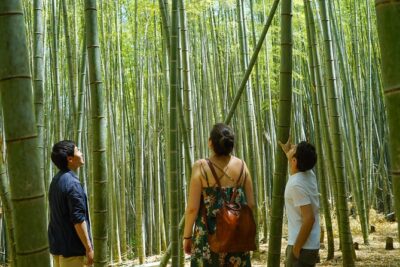
Fushimi Inari Hidden Hiking Tour (Private Option Available)
Read our review →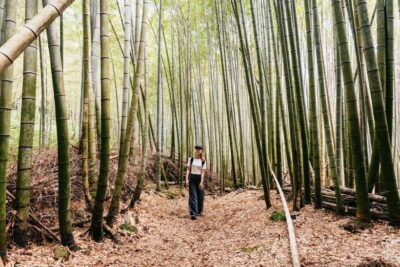
Kyoto: 3-Hour Fushimi Inari Shrine Hidden Hiking Tour
Read our review →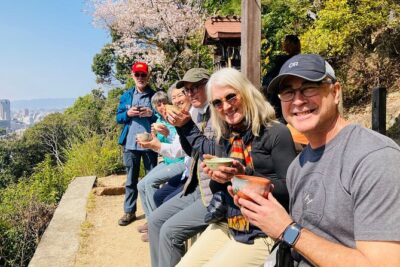
Hiroshima Local guided Hiking Tour&Open-air Tea Ceremony
Read our review →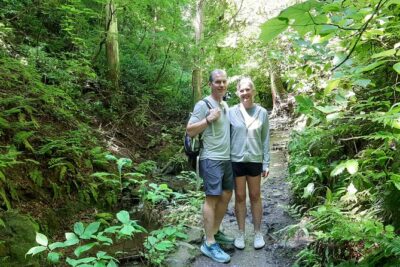
Full Day Hiking Tour at Mt.Takao including Hot Spring
Read our review →
Hike Japan Heritage Hakone Hachiri with certified mountain guide
Read our review →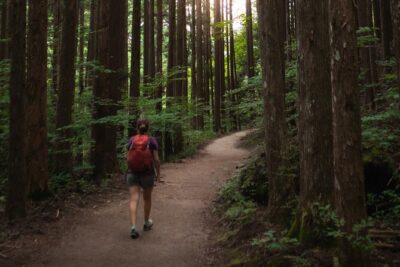
Magome & Tsumago Nakasendo Trail Day Hike with Government-Licensed Guide
Read our review →
1-Day Tour from Nagoya: Hiking the Historic Nakasendo Trail
Read our review →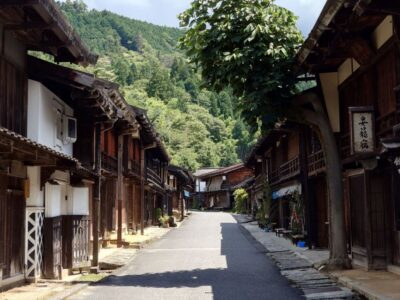
From Matsumoto/Nagano: Nakasendo Trail Walking Tour
Read our review →Browse the lists this tour appears in