
REVIEW · JAPAN
Hike Japan Heritage Hakone Hachiri (Half Day)
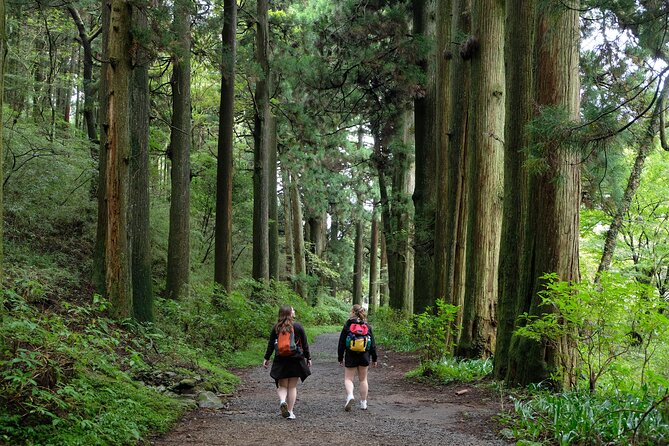
Hakone’s old Tokaido highway is at its best away from the busy resort streets. This half-day hike takes you over cobbled Edo-era paths and forest trails, through the woodcraft village of Hatajuku, and onward to Lake Ashi. I like the 400-year-old teahouse stop and the way the guide connects the trail to Japan’s past. I also like the small group limit of six, which makes questions and conversation easy.
The main drawback is that this is not a continuous, all-uphill trek. You use a shared taxi to reach the trailhead and a local bus to skip the steepest section, with those fares extra. Still, that choice makes the outing more manageable for people who want a real walk without spending the whole day on a punishing climb.
Key points to know before booking
- The old Tokaido is the star: Walk one of the best-preserved cobbled sections of the historic road linking Tokyo and Kyoto.
- Hatajuku adds a local craft stop: Learn about Hakone’s traditional wood carving after roughly an hour on foot.
- A 400-year-old teahouse breaks up the walk: The included amasake gives you a warm, traditional pause before the final stretch.
- The steepest trail section is skipped by bus: You still hike for about two to three hours, but the route is not a full continuous climb.
- The finish is useful for onward travel: End near Lake Ashi and catch a bus or pirate ship ferry toward your next stop.
- The group is capped at six: Guides such as Akihiro and Aki can give the outing a personal, local feel.
Why this half-day walk works so well in Hakone

Hakone is often treated as a place for hot springs, lake cruises, and a possible Mount Fuji photo. Those are good reasons to come, but the old Tokaido road explains why this mountain pass mattered long before it became a resort.
This tour puts that story under your feet. You walk sections of the route once used to connect Edo, today’s Tokyo, with Kyoto. The road crosses wooded slopes between Hakone-Yumoto and Lake Ashi, and its stones make the past feel more immediate than a museum display.
I like the balance here. You get a genuine forest walk, a traditional village, a historic refreshment stop, and a major Hakone sight in about four hours. You do not have to give up an entire day of sightseeing, and you finish in a spot where you can continue by bus or boat.
The route also avoids pretending that every worthwhile hike must be a test of endurance. The bus skips the steepest section. That may disappoint hikers looking for a complete point-to-point challenge, but it is a sensible choice for anyone with moderate fitness who wants time to listen, look around, and learn.
A few more hikes around Japan worth a look
- Hike Japan Heritage Hakone Hachiri with certified mountain guide
★ 5.0 · 46 reviews - 1-Day Tour from Nagoya: Hiking the Historic Nakasendo Trail
★ 4.9 · 34 reviews - Morning Hiking Tour: Mt. Futaba & Hiroshima’s History
★ 5.0 · 25 reviews
Starting at Hakone-Yumoto at 9:00 a.m.
You meet your guide at Hakone-Yumoto Station at 9:00 a.m. The station is near public transportation, making it a practical starting point if you are already staying in Hakone or arriving from the Odawara area.
Transportation to the trailhead is not included. A shared taxi costs 2,000 yen to be divided among the group. You should keep that extra amount in mind when comparing the tour price, especially if you are booking alone or with only one other person.
The tour price is $114.95 per person. That is not simply the cost of a walk. It pays for a certified national mountain guide, route interpretation, group coordination, and a small-group format capped at six people. The value is strongest if you want the historical context explained as you go. If you only need directions for a trail you can manage yourself, the price will feel less compelling.
Guides named in connection with this experience include Akihiro and Aki. Akihiro is from the area, and his English is described as excellent after studying in Seattle. That matters on a route where the pleasure comes from understanding what you are seeing, not just following a path.
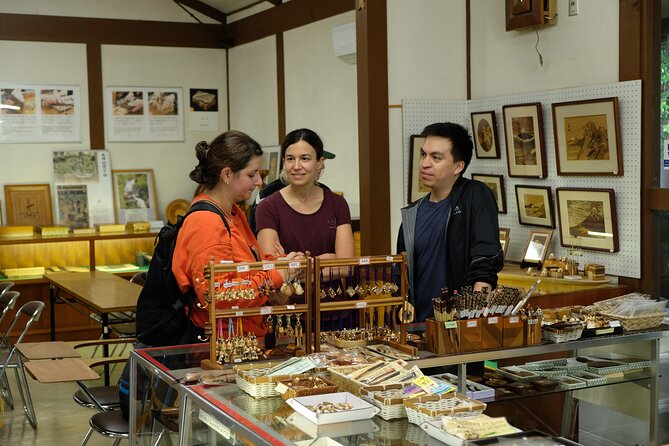
Walking through Hatajuku and its woodcraft tradition
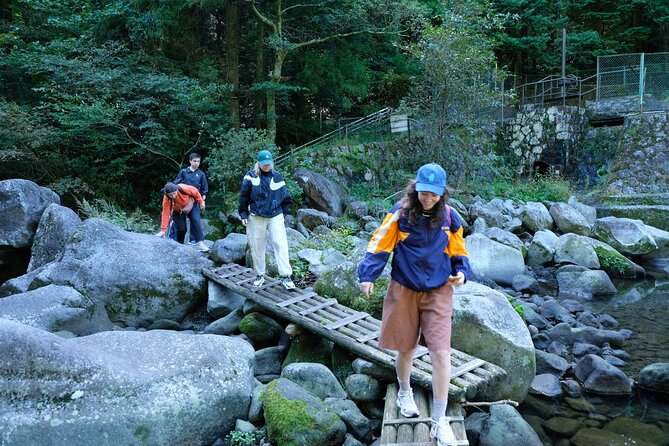
After about an hour of hiking, you reach Hatajuku. This village is known for traditional Hakone woodcraft, and it gives the walk a human scale. Instead of passing only through trees, you see a community tied to the region’s long craft tradition.
The village stop is free, and the guide helps explain the local art. You can expect this part of the tour to be more than a quick photo pause. It is a chance to connect the forest route with the people and skills that developed around Hakone’s mountain roads.
The old Tokaido was never just a scenic footpath. It carried people, goods, and official traffic between Japan’s major centers. Hatajuku helps you picture the road as part of daily life rather than as a preserved relic.
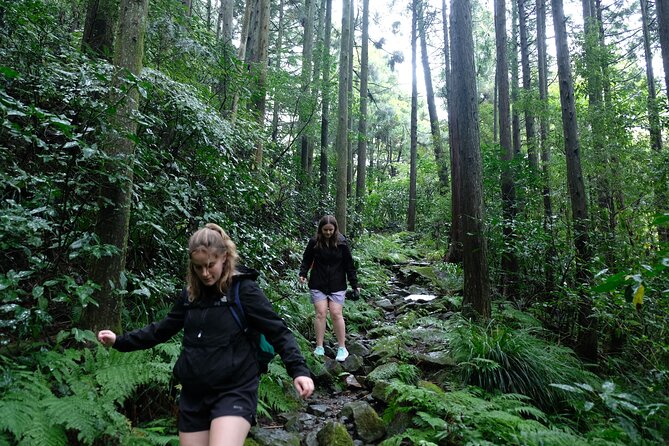
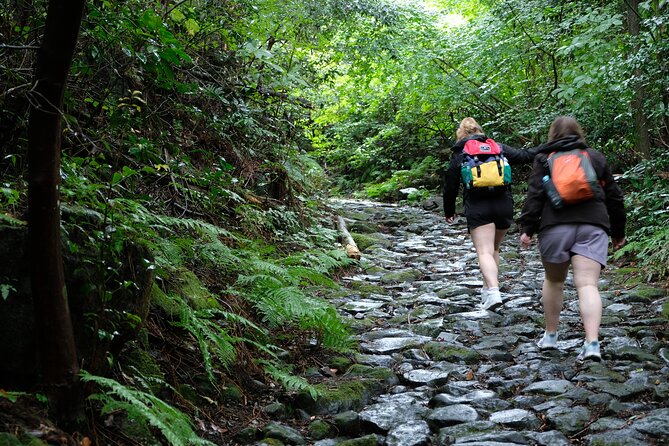
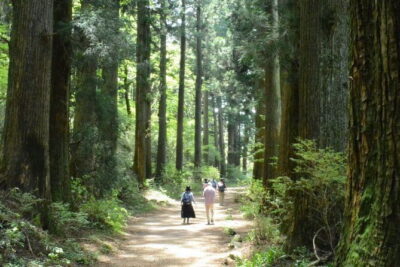
The walk before the village is one of the more appealing parts for people who prefer quieter routes. Some sections are on cobbled paving, while others pass through primitive forest. The path can feel tucked away from Hakone’s more visited attractions, and the small group makes it easier to pause when the guide points out something worth noticing.
You should still wear sturdy walking shoes. The supplied information calls for moderate physical fitness, and cobbled paths are not as easy underfoot as a smooth pavement. The tour is only about four hours, but it is a proper hike, not a stroll between train stations.
Taking the bus to the historic Amazake Tea House
After Hatajuku, you take a bus to avoid the steepest part of the old trail. The fare is less than 400 yen and is not included in the tour price.
This is an important detail. The bus is not a sign that the walk has been watered down. It lets the guide preserve the most interesting forest and cobbled sections while keeping the outing within a half-day schedule. You trade a hard climb for more time at the places that give the route its character.
The bus takes you toward the Hakone Amazake Tea House, where you stop for about 30 minutes. The teahouse has a 400-year history, and that age gives the break real weight. This is not simply a modern café added for convenience. It is part of the old route’s story.
You receive an amasake drink during the stop. Despite its name, amasake is generally a sweet, low or non-alcoholic rice drink, though the exact preparation is not specified here. On a cool mountain morning, it offers an energizing pause before you continue toward the lake.
One useful detail from the experience is that the tea house stop may also include a traditional rice dessert or barley tea, depending on the guide and local arrangements. Since only the amasake is specifically listed, treat any additional tasting as a possible extra rather than a guaranteed part of the package.
I especially like this stop because it slows the pace. Hakone can become a checklist of transport connections. Here, you have time to sit, drink something local, and hear why this road mattered.
Same trailhead, a different sort of day:
- Fushimi Inari Hidden Hiking Tour (Private Option Available)
★ 5.0 · 1,750 reviews - Kyoto: 3-Hour Fushimi Inari Shrine Hidden Hiking Tour
★ 4.9 · 270 reviews - Hiroshima Local guided Hiking Tour&Open-air Tea Ceremony
★ 5.0 · 213 reviews - Hiroshima: Morning Hiking Tour with Open-air Tea Ceremony
★ 4.8 · 58 reviews
Crossing the forest toward Lake Ashi
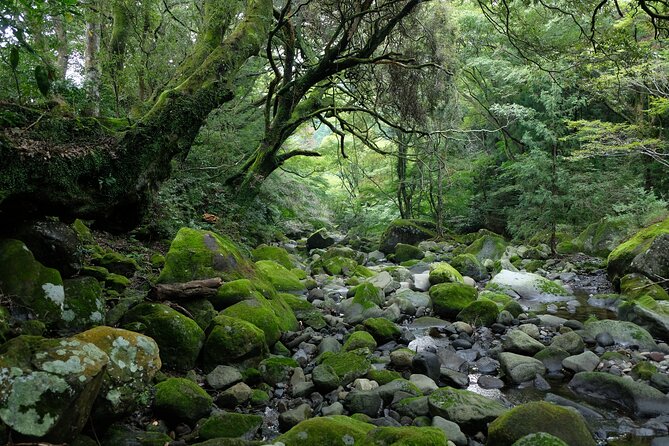
After the teahouse, you continue on foot toward Lake Ashi. The route mixes old paving with forest trails, and this is the part that gives the excursion its forest bathing character.
That phrase should not lead you to expect a spa treatment or a silent wellness program. It means time among the trees, with the guide drawing attention to the setting and the old route. Some portions are off the main tourist track, and the group may have the forest largely to itself.
The forest is also where the route feels least like a standard sightseeing circuit. You are not simply being moved from one famous Hakone attraction to another. You are walking through the space between them, using an old road to understand how the area fits together.
The hiking portion lasts roughly two to three hours in total, though the exact time at each point can vary. The itinerary also allows around an hour at Lake Ashi, so the full activity runs about four hours. That gives you enough time to enjoy the route without turning it into an all-day commitment.
You should plan for changing weather. The tour requires good weather, and mountain conditions can affect the outing. If poor weather forces cancellation, you are offered another date or a full refund, but the booking itself is otherwise non-refundable and cannot be changed for personal reasons.
Arriving at Lake Ashi and looking for Mount Fuji
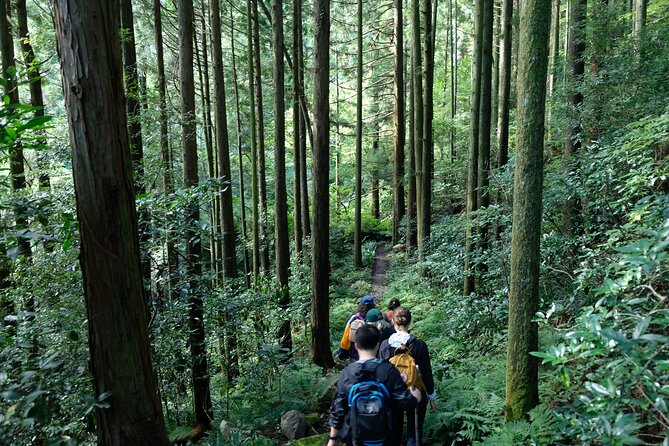
Lake Ashi is the final scenic destination. If the weather cooperates, you may see Mount Fuji across the lake and have time for a photograph. The view is a bonus rather than a promise. Hakone’s mountain weather can hide Fuji, even when the rest of the day is pleasant.
That uncertainty is worth accepting because the walk does not depend on the Fuji sighting alone. The old highway, forest, village, and teahouse give the tour plenty of substance. If Fuji appears, the day gets a memorable finishing touch.
You have about an hour at Lake Ashi. This is useful because you do not need to rush straight from the trail into your next connection. You finish at Motohakone, near the lake and the Hakone Checkpoint, with onward buses available to Odawara, Hakone-Yumoto, or hotels in Hakone.
A ferry, including the well-known pirate ship, is also available from the Lake Ashi area. The tour ends at around 1:00 p.m., so you can continue sightseeing rather than return to the starting point with the group.
Understanding the Hakone Checkpoint
The Hakone Checkpoint is the final stop, with about 30 minutes set aside for explanation. Its importance comes from Hakone’s position on the old Tokaido route. This mountain pass was a controlled gateway, and the checkpoint helped regulate movement along the road.
The guide’s explanation is valuable here because the structure means more once you understand its role. Without that context, it can look like another preserved building near a lake. With the story of travel between Edo and Kyoto in mind, the checkpoint becomes the logical end to the walk.
This is where the experience shifts from nature back to national history. You begin among trees and old stones, pass through Hatajuku, pause at a traditional teahouse, and finish at a place that shows how the road was governed.
The checkpoint also makes the ending convenient. You are not left at a remote trail exit wondering how to return. You can choose public transportation toward your next Hakone stop, or take a boat across the lake if that fits your plans.
How the group size and guide affect the experience
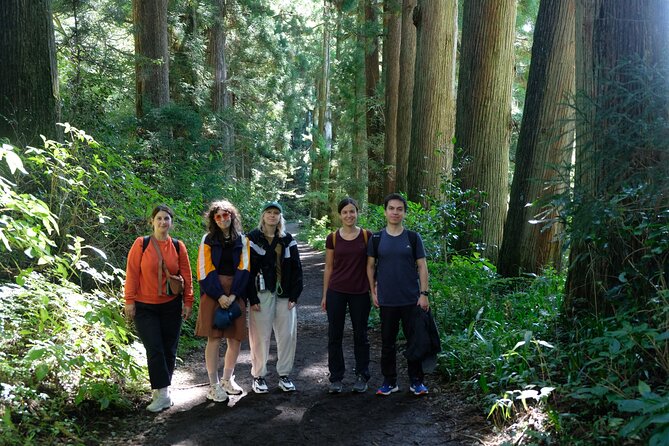
The maximum group size is six. That is small enough for a guide to keep the pace together and answer questions without turning every stop into a formal lecture.
The strongest part of the guiding is the local and historical focus. Akihiro is from the area, and the guide team explains the Edo-era road, local craft, and Hakone’s role in Japanese history. Aki has also been associated with the walk and has guided families along the route.
This is a good match if you enjoy learning while walking. The tour is not designed as a speed hike. One account of the experience describes it as more of a regional tour on foot than a hard-core trek, and that is a helpful way to set expectations.
The guide also helps with the practical parts that can be awkward on your own, such as the shared taxi, the bus around the steep section, and the route toward the lake. You are paying for orientation as much as for access.
Who should book this Hakone hike
I would choose this tour if you want to see a less polished side of Hakone and still have time for other activities the same day. It suits couples, families with older children, and small groups who enjoy moderate walking with plenty of explanation.
A 16-year-old joined the outing with a parent, and the experience included both scenery and local history. That suggests the tour can work well for families whose children are old enough to manage a few hours on uneven paths and appreciate a story behind the sights.
It is also a good choice for first-time visitors who find Hakone’s transport network confusing. The guide gives the route a clear shape, from Hakone-Yumoto to the lake, and the finish point connects naturally with buses and the pirate ship.
I would hesitate if you want a long, continuous mountain hike, complete solitude, or a guaranteed Mount Fuji view. The bus removes the steepest part, the route includes several planned stops, and Fuji depends entirely on the weather.
Bring comfortable walking shoes and allow for the extra transportation costs. Keep your schedule flexible after 1:00 p.m., since the finish gives you several onward choices but does not include transportation back to your hotel.
Should you book the Hachiri half-day hike?
Book it if you want history beneath your feet, a quiet forest route, and a guide who can explain why Hakone mattered. The combination of Hatajuku, the old stones, the 400-year-old teahouse, the checkpoint, and Lake Ashi gives you far more than a basic nature walk.
The $114.95 price is reasonable for a certified national mountain guide and a group of no more than six, especially if you value local context and help with the route. Add the shared taxi and bus fares to your budget, and remember that the booking is non-refundable unless poor weather cancels the tour.
Skip it if you want a strenuous full-day hike or prefer to explore independently. For everyone else, this is a smart half-day way to meet the older, quieter Hakone before you move on to the lake, a ferry, or your next stop.
FAQ
Where does the tour start?
The tour starts at Hakone-Yumoto Station in Hakone, Kanagawa, at 9:00 a.m.
Where does the tour finish?
The tour finishes at Motohakone near Lake Ashi and the Hakone Checkpoint. From there, you can take a bus toward Odawara, Hakone-Yumoto, or hotels in Hakone.
How long does the experience last?
The activity lasts about four hours. The hiking portions total roughly two to three hours, with time also set aside for Hatajuku, the teahouse, the Hakone Checkpoint, and Lake Ashi.
Is transportation included?
Transportation to the trailhead is not included. A shared taxi costs 2,000 yen to be divided among the group, and the bus to the teahouse costs less than 400 yen.
How difficult is the hike?
You should have a moderate level of physical fitness. The route includes cobbled paths and forest trails, but the steepest section is skipped by bus.
Is Mount Fuji guaranteed to be visible?
No. You may see Mount Fuji across Lake Ashi if weather conditions are clear, but the view is not guaranteed.
What happens if bad weather cancels the tour?
If poor weather causes the experience to be canceled, you are offered a different date or a full refund. Personal cancellations or changes are otherwise non-refundable.
Just added around Japan
- Hiking Tour in Enoshima with a Local Guide★ 5.0 · 4 reviews
- Kanazawa Day Tour: Shomyo Falls & Tateyama Mountain Walks★ 5.0 · 4 reviews
- Pasture Hike with Horse Whisperer at Horse Trust in Kagoshima★ 5.0 · 2 reviews
- 4.5 hours Snowshoe hike in Shiretoko five lakes★ 4.5 · 2 reviews
- 3.5hours Primeval Forest Snowshoe hike and Wildlife Watching Tour★ 5.0 · 14 reviews
- 3 hours Snowshoe hike to “Furepe fall” and Wildlife Watching★ 5.0 · 9 reviews
- Furepe Waterfall Nature Walk★ 5.0 · 6 reviews
- Traverse Outer Rim of Hakone Caldera and Enjoy Onsen Hiking Tour★ 5.0 · 30 reviews
Japan Hiking Tours, compared.
Fushimi Inari Hidden Hiking Tour (Private Option Available)
Read our review →
Kyoto: 3-Hour Fushimi Inari Shrine Hidden Hiking Tour
Read our review →
Hiroshima Local guided Hiking Tour&Open-air Tea Ceremony
Read our review →
Hiroshima: Morning Hiking Tour with Open-air Tea Ceremony
Read our review →
Full Day Hiking Tour at Mt.Takao including Hot Spring
Read our review →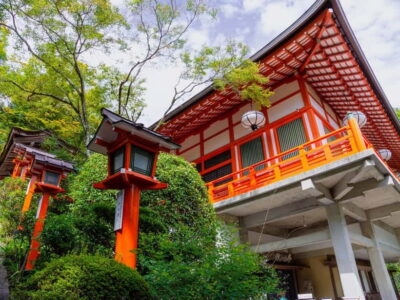

Hike Japan Heritage Hakone Hachiri with certified mountain guide
Read our review →Browse the lists this tour appears in