
REVIEW · JAPAN
Hike and explore the Kurama and Kibune ancient Paths
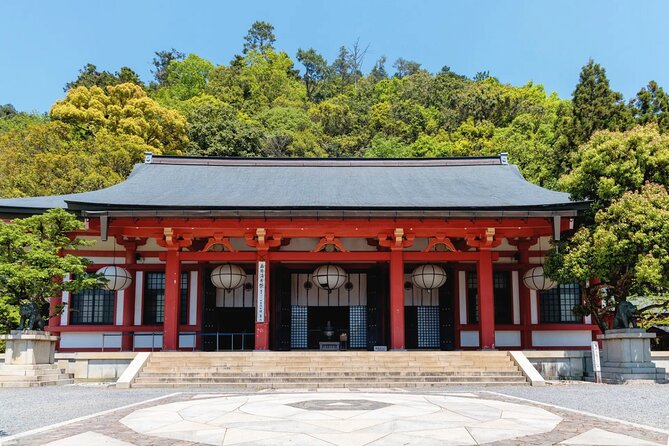
The best part of this outing is the shift from city streets to Kurama’s cedar-covered mountain paths, reached by a scenic local train ride from Kyoto. You’ll pass temple grounds, small shrines, stone steps, and quiet forest corners before descending into Kibune and its famous lantern-lined shrine.
I like the way the trip combines two very different pleasures: spiritual sites with real atmosphere, and a proper walk that gives you time to notice the forest. I also like the small group size, capped at 12 people, and the chance to learn local stories from Justin, one of the named guides.
The main caution is the trail itself. It is not a flat stroll. Steep and uneven sections can be tricky in wet or hot weather, so you need reasonable fitness, sturdy shoes, and a willingness to take your time.
Key points to know before booking
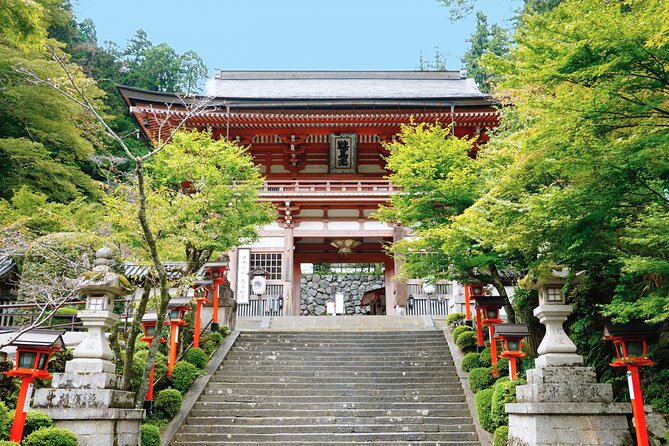
- Kurama-dera and Kifune Shrine in one half-day: You visit two of northern Kyoto’s most atmospheric religious sites.
- A scenic Eizan Railway ride: The journey north is part of the experience, not just a way to reach the trailhead.
- A real mountain hike: Expect steep stairs, uneven ground, and forest paths rather than a paved temple walk.
- Guide Justin adds local stories: The experience includes legends, sacred places, and less obvious points along the route.
- Small group, English guide: The group can include up to 12 people, with transportation and entry fees covered.
- Bring lunch money and water: Lunch is not included, and the day runs for about 5 hours and 30 minutes.
Leaving Kyoto Station for Mount Kurama
The meeting point is the Starbucks Coffee at Kyoto Tower Sando, close to Kyoto Station. The start time is 9:30 a.m., so you get a reasonably early beginning without sacrificing a hotel breakfast.
The first part of the day is a useful lesson in Kyoto’s geography. You take the Karasuma Subway Line to Kokusaikaikan Station, then walk for about 15 to 20 minutes through a quiet residential area to Iwakura Station. This transfer involves more walking than some visitors expect, but it also moves you away from central Kyoto before the hike begins.
From Iwakura, you board the Eizan Railway for a ride of about 30 minutes to Kurama Station. The train carries you into northern Kyoto, where the city gives way to wooded mountain country. I like this approach because the change happens gradually. You do not simply step off a tour bus at a temple gate. You watch the surroundings grow quieter as you head toward the trail.
Transportation during the tour is included, which matters here. Reaching Kurama and returning to the Kyoto Station area on your own is possible, but the guided route removes the need to work out the subway, walking connection, and railway transfer yourself.
A few more hikes around Japan worth a look
- Fushimi Inari Hidden Hiking Tour (Private Option Available)
★ 5.0 · 1,750 reviews - Kyoto: 3-Hour Fushimi Inari Shrine Hidden Hiking Tour
★ 4.9 · 270 reviews - Hiroshima Local guided Hiking Tour&Open-air Tea Ceremony
★ 5.0 · 213 reviews
Kurama-dera and the sacred slopes
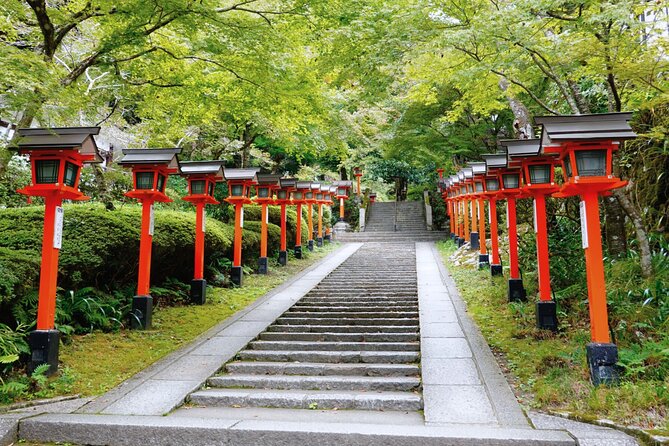
Kurama-dera is set on the slopes of Mount Kurama, and the temple feels closely tied to the mountain around it. The visit includes the main hall, which offers broad views, along with guardian statues and other sacred features that give the site a more mysterious mood than many city temples.
You should allow about two hours for this first part of the experience. That time covers the temple visit and the beginning of the mountain route, with your guide explaining the stories tied to the area.
What makes Kurama-dera special is the setting. The temple is not simply a building surrounded by paved courtyards. It sits above the village on a wooded slope, so the approach and the views are part of the visit. Sacred places and natural features appear together, which helps explain why this mountain has attracted monks, warriors, and mystics over the centuries.
Your guide can also point out details that are easy to pass without context. The tour description refers to natural sites believed to hold spiritual energy, and the guide shares legends connected with the route. If you enjoy Japanese religion, folklore, and places where nature is treated as part of the sacred world, this section will likely be the high point.
The drawback is that the temple area is not effortless to reach. There are slopes and stairs, and the forest trail that follows is more demanding than a standard temple visit. If you want a short, level outing, Kurama-dera on its own may be a better fit than the full crossing to Kibune.
The mountain path between Kurama and Kibune
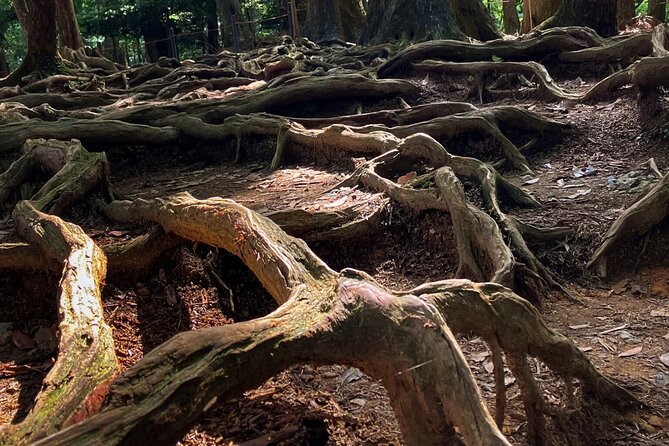
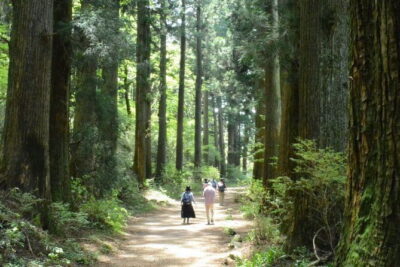
After Kurama-dera, the tour becomes a proper hike. You follow a mountain route through dense cedar forest, passing small shrines, natural sites, and steep stairways. The path is rugged in places, with uneven footing that requires attention.
This is where a guide earns the fee. It is not just about finding the way. A steady pace helps you manage the climb and descent, while explanations give meaning to places that might otherwise look like ordinary forest. Justin is named as one of the guides, and the experience places clear emphasis on stories and lesser-known points beyond the main temple buildings.
The route is described as rewarding but challenging. That is the right way to think about it. You do not need to be a serious mountain walker, but you should have a moderate level of fitness. Wet weather can make the ground more difficult, and hot weather can make the stairs feel longer. Good walking shoes are a sensible choice, even though the tour does not specify a particular type.
I would also avoid treating this as a race between two shrines. The value lies in the time between them. The forest gives you a quieter view of Kyoto, away from the packed streets and major sightseeing corridors. You get space to listen, look up at the trees, and hear how the route has been shaped by belief and local legend.
There is a practical point here: bring water and expect to carry what you need during the walk. Lunch is not included, and the tour lasts around five and a half hours. Depending on the timing and the guide’s pace, you should plan to eat before the meeting time or carry a small meal.
Arriving in Kibune and Kifune Shrine
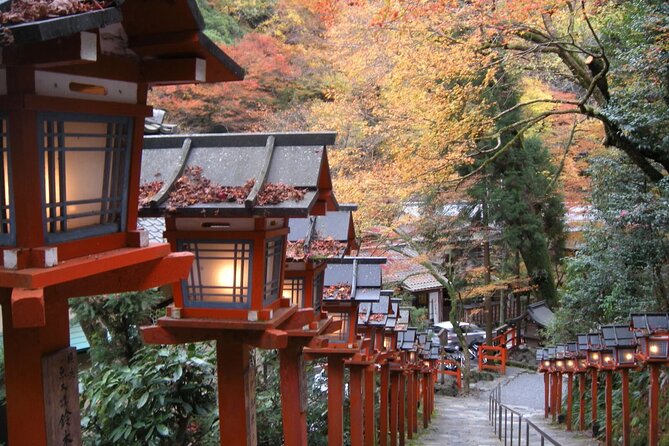
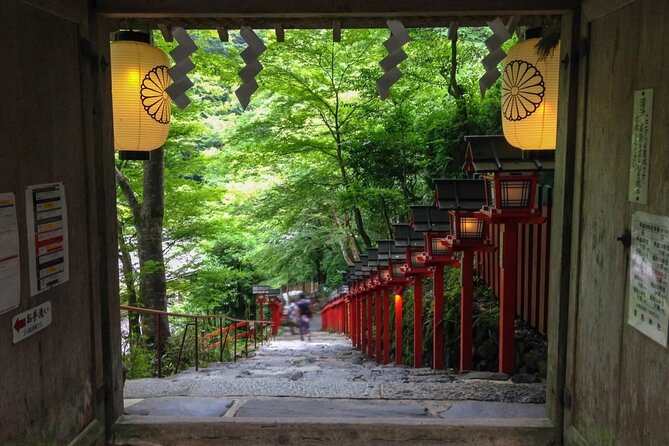
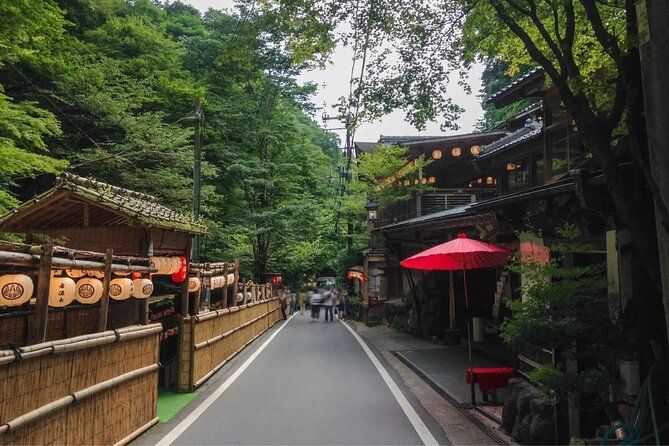
The descent brings you into Kibune, a peaceful mountain village associated with water and rain. From there, the route continues to Kifune Shrine, known for its red lantern-lined staircase.
The staircase is one of the most recognizable sights on the tour. The red lanterns frame the stone steps and create a strong sense of arrival, especially when the forest surrounds the shrine. It is a place where you will want to pause rather than rush through for a quick photograph.
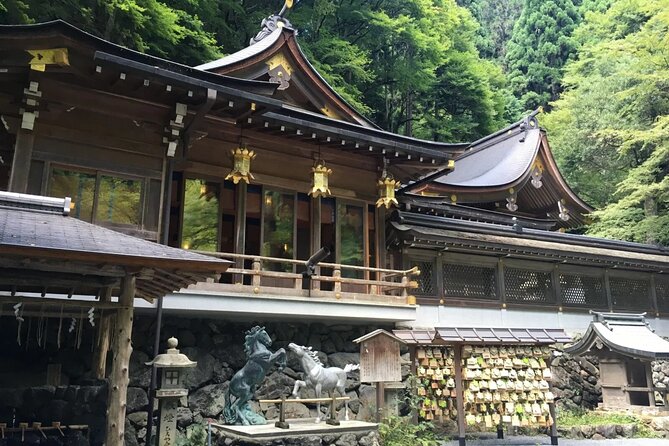
Kifune Shrine is dedicated to the goddess of water and rain, which gives the visit a clear connection to the mountain environment. The tour also includes the chance to try water-activated omikuji. You place the fortune in water and wait for the message to appear, a small activity that adds something hands-on to the shrine visit.
This final stop balances the physical effort of the hike. At Kurama-dera, the emphasis is on the mountain temple and its elevated setting. At Kifune, the red lanterns, water connection, and village atmosphere create a different mood. Seeing both in one outing helps you understand why this northern corner of Kyoto has such a strong spiritual identity.
The shrine visit is listed at about three hours together with the Kibune River section and the descent into the village. That is a substantial portion of the day, though much of it includes walking. You should not expect hours of free time sitting at the shrine or exploring shops.
Same trailhead, a different sort of day:
- Kyoto Hiking Tour: The Nature and Legends of Kurama and Kibune
★ 5.0 · 75 reviews - Hiroshima: Morning Hiking Tour with Open-air Tea Ceremony
★ 4.8 · 58 reviews - Full Day Hiking Tour at Mt.Takao including Hot Spring
★ 5.0 · 52 reviews - Kyoto: Hike and Hot Springs in Kurama
★ 5.0 · 49 reviews
What the $165.18 price covers
At $165.18 per person, this is not a cheap way to see two religious sites. The value comes from the combination of transport, an English-speaking guide, entry fees, and route guidance across a mountain trail.
You are paying for more than admission to Kurama-dera. The trip includes the subway connection, the walk to Iwakura Station, the Eizan Railway ride, and the return journey to the original meeting point. Entry fees at the tour stops are covered as well, so there should be fewer small costs to manage during the day.
The guide is the biggest part of the value for me. Without one, you could still reach Kurama and Kibune, but you would need to organize the route and interpret the temple grounds and sacred sites yourself. The forest path is also easier to handle when someone familiar with it sets a safe pace and helps with navigation.
The maximum group size is 12. That is small enough for a guide to keep an eye on the group over uneven ground, while still large enough that you should not expect a private walk. If you want complete freedom to stop, linger, or change the pace, a self-guided day may suit you better.
The booking pattern suggests that people often reserve this experience well ahead, with an average of 43 days. You do not need to treat that as a rule, but it is wise to check availability before leaving the planning of your Kyoto days until the last minute.
Who will enjoy this half-day walk
I would recommend this experience to you if you want to see a quieter side of Kyoto and enjoy a mix of cultural sites and outdoor activity. It suits someone who finds a temple more memorable when reached through the woods rather than by taxi.
It is also a good choice if you want a guide to explain local beliefs. The route has enough legends and sacred references that a guide can add real value, particularly if you do not already know much about Japanese religious traditions.
The outing may suit you if you are comfortable with:
- Steep stairs and uneven mountain paths
- Walking for several hours
- Hot or wet conditions
- A group schedule
- Carrying your own food and water
I would think twice if you have difficulty with slopes, need a fully accessible route, or prefer a relaxed sightseeing day with plenty of time to sit. The available information only describes moderate physical fitness as necessary, but the uneven trail remains the key consideration.
Families with older children might find the route appealing, though the activity data does not specify a minimum age. Since there are steep sections, you should judge the walk by your own group’s fitness rather than assume it will feel easy for everyone.
Timing, group size, and small practical details
The tour lasts about 5 hours and 30 minutes and begins at 9:30 a.m. It ends back at the original meeting point near Kyoto Station. That makes it easier to pair with an afternoon or evening plan, though I would avoid booking a time-sensitive activity immediately afterward in case the walk or transport takes longer than expected.
The mobile ticket is convenient. You can keep the booking on your phone rather than carry a printed voucher.
The tour is near public transportation, but the day includes several changes: subway, walking, railway, and hiking. Wear shoes that can handle stairs and uneven surfaces. The information does not promise luggage storage, so arrive with only what you can comfortably carry.
Free cancellation is available if you cancel at least 24 hours before the start time. Changes or cancellations made within 24 hours are not refunded, and the cut-off uses local time. That policy is worth noting because weather can affect how comfortable the trail feels, even though the exact operating policy for poor weather is not stated.
My take on the Kurama to Kibune route
I like this experience because it makes Kyoto feel larger than its famous central temples. You ride a local railway, walk through a mountain forest, visit a temple with wide views, and finish at a shrine marked by red lanterns. The day has a clear sense of movement and place.
The strongest feature is the balance between culture and walking. You are not spending the whole day looking at buildings, but you are also not hiking without a purpose. The sacred sites, water traditions, statues, and legends give the route character.
The biggest weakness is the price. At $165.18, you should book it for the guide and the organized route, not simply for admission to Kurama-dera and Kifune Shrine. If you are confident with Kyoto transport and comfortable following a mountain path alone, you may prefer to arrange the day yourself.
Should you book this tour?
Book it if you want a guided escape from central Kyoto, enjoy moderate mountain walking, and care about the stories behind temples and shrines. The small group, included transport, covered entry fees, and guide support make the price easier to justify for a first visit.
Skip it if your priority is a flat, flexible sightseeing day or if you want to spend long stretches at either temple. For the right walker, though, the route from Kurama-dera to Kifune Shrine offers one of Kyoto’s most satisfying combinations of forest, folklore, and mountain spirituality.
FAQ
Where does the tour start?
It starts at 9:30 a.m. at Starbucks Coffee in Kyoto Tower Sando, near Kyoto Station.
How long does the experience last?
The activity lasts approximately 5 hours and 30 minutes.
Where does the tour end?
The tour ends back at the original meeting point near Kyoto Station.
Is transportation included?
Yes. Transportation during the tour is included, including the subway and Eizan Railway portions of the route.
Are admission fees included?
Yes. Entry fees at all tour locations are included.
Is lunch included?
No. Lunch is not included, so you should plan to eat before the tour or bring food with you.
How difficult is the hike?
The tour requires a moderate level of physical fitness. The trail includes steep and uneven sections, and wet or hot weather can make the walk more difficult.
Just added around Japan
- Kyoto Off The Beaten Path: Hidden Zen Garden & Magical Shrine★ 5.0 · 4 reviews
- Hiking Tour for Sacred Sites in Kyoto with a Guide★ 5.0 · 3 reviews
- Kyoto Hiking Tour: The Nature and Legends of Kurama and Kibune★ 5.0 · 75 reviews
- Kyoto Arashiyama Bamboo Forest Hiking Tour(Hidden Temples)★ 5.0 · 30 reviews
- Hiking Tour in Enoshima with a Local Guide★ 5.0 · 4 reviews
- Kanazawa Day Tour: Shomyo Falls & Tateyama Mountain Walks★ 5.0 · 4 reviews
- Pasture Hike with Horse Whisperer at Horse Trust in Kagoshima★ 5.0 · 2 reviews
- 4.5 hours Snowshoe hike in Shiretoko five lakes★ 4.5 · 2 reviews
Japan Hiking Tours, compared.
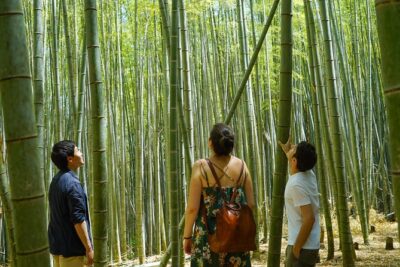
Fushimi Inari Hidden Hiking Tour (Private Option Available)
Read our review →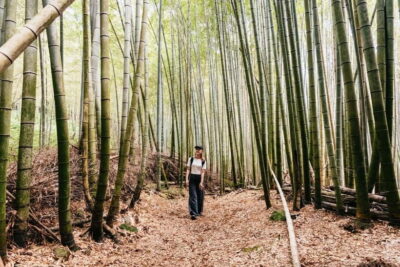
Kyoto: 3-Hour Fushimi Inari Shrine Hidden Hiking Tour
Read our review →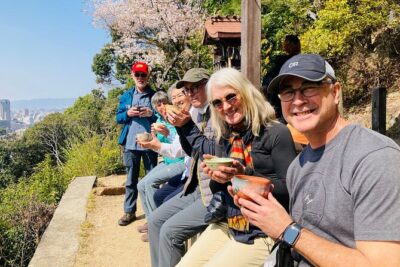
Hiroshima Local guided Hiking Tour&Open-air Tea Ceremony
Read our review →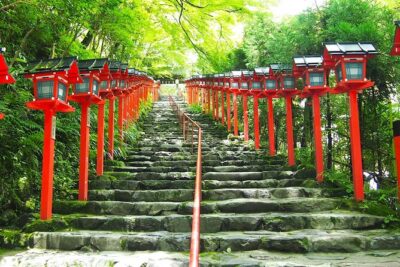
Kyoto Hiking Tour: The Nature and Legends of Kurama and Kibune
Read our review →
Hiroshima: Morning Hiking Tour with Open-air Tea Ceremony
Read our review →
Full Day Hiking Tour at Mt.Takao including Hot Spring
Read our review →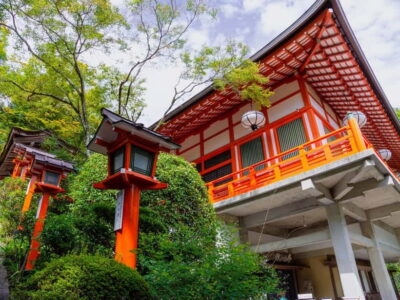
Browse the lists this tour appears in