
REVIEW · VOLCANO HIKES
From Antigua: Adventure, 2-Day Hiking to Acatenango Volcano
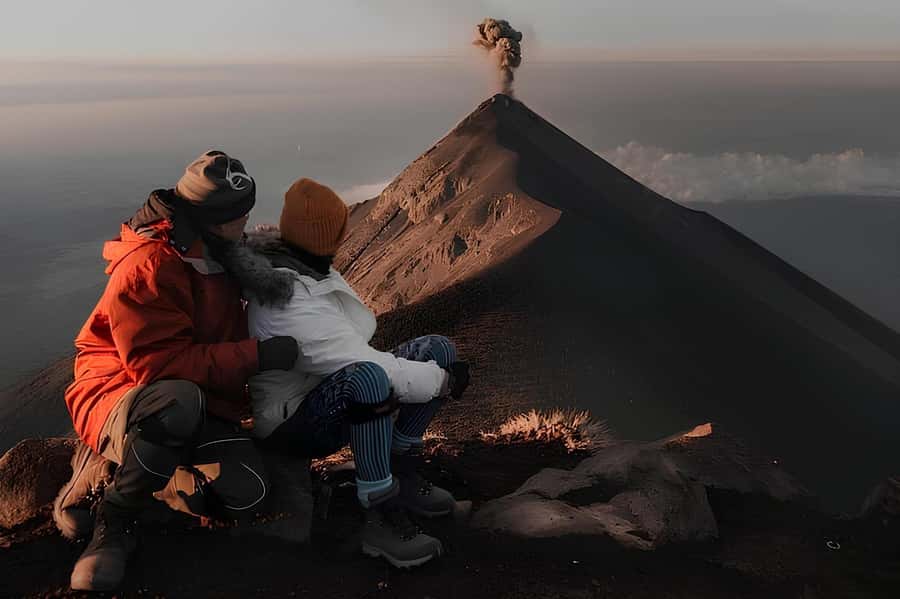
Acatenango is not a gentle hill with a volcano at the end. It is a long, steep climb over loose volcanic soil, followed by a cold night high above Antigua and a sunrise hike that can leave your legs shaking. The reward is a front-row view of Fuego erupting across the valley, often with glowing lava and a deep rumble under the stars.
I like the low $54 price and the practical kit included: transport, food, sleeping bag, mat, dome shelter, jacket, gloves, and hat. I also like the choice built into the second morning. You can climb for sunrise, or stay at camp and watch the sky brighten from a warmer spot. The main drawbacks are basic food, crowded sleeping arrangements, and guides who speak Spanish only.
Quick facts before you book
- The hike takes 4.5 to 6 hours uphill: Your pace, fitness, altitude, and the loose gravel all matter.
- Fuego is visible from base camp: The optional Q200 hike gets closer, but it adds a hard night climb and descent.
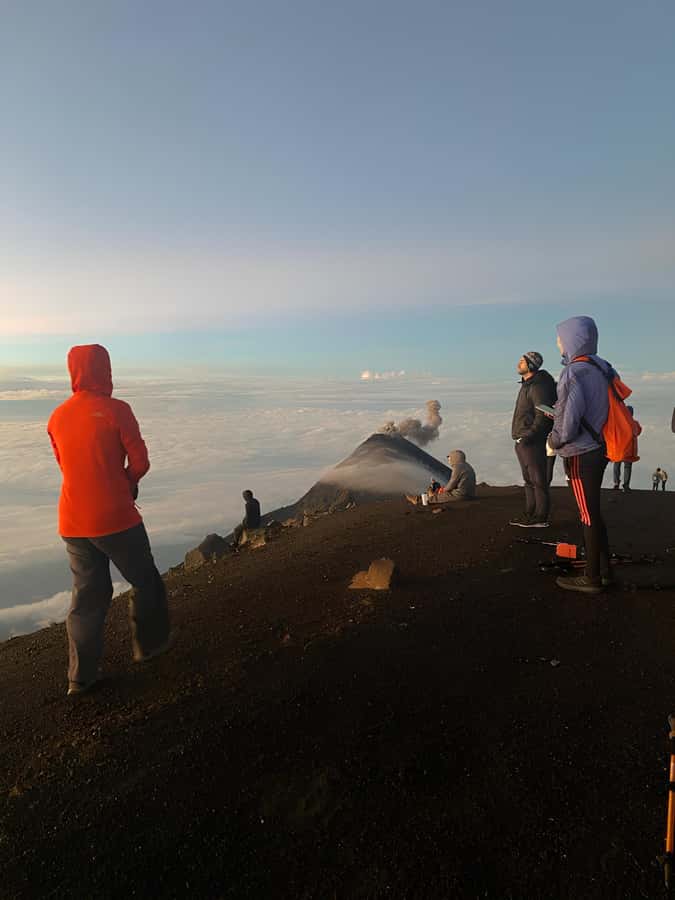
- The sunrise walk is optional: You can remain at camp if the cold, altitude, or steep trail has taken enough out of you.
- Bring more food than you think: Meals are included, but several people found them small or plain.
- Expect a cold, simple night: Cabins or dome shelters may hold several people, with sleeping bags and mats but little comfort.
- Guiding is in Spanish: Guides such as Luis, Roberto, Saul, Esbin, and Ronald have been praised on different departures, but English ability varies.
Why Acatenango is worth the hard climb
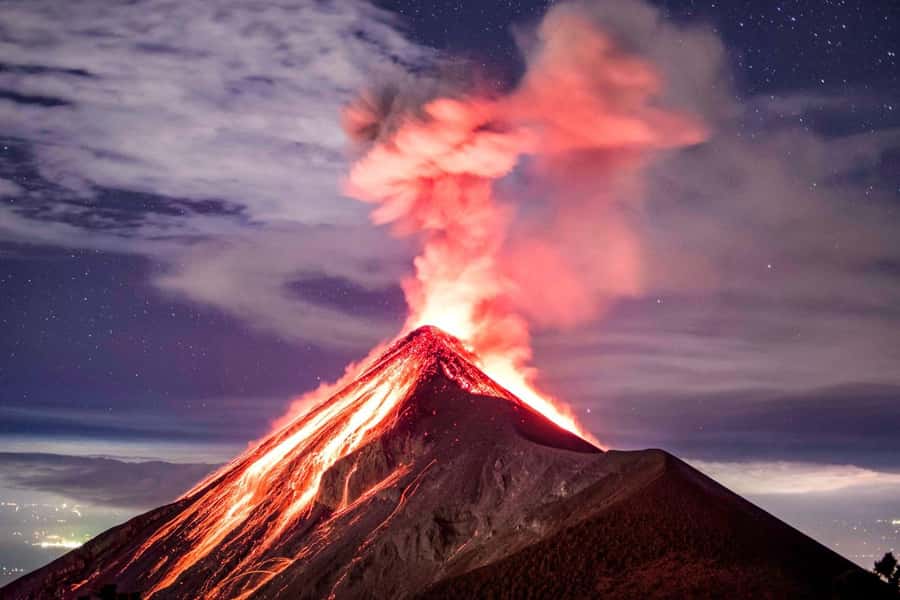
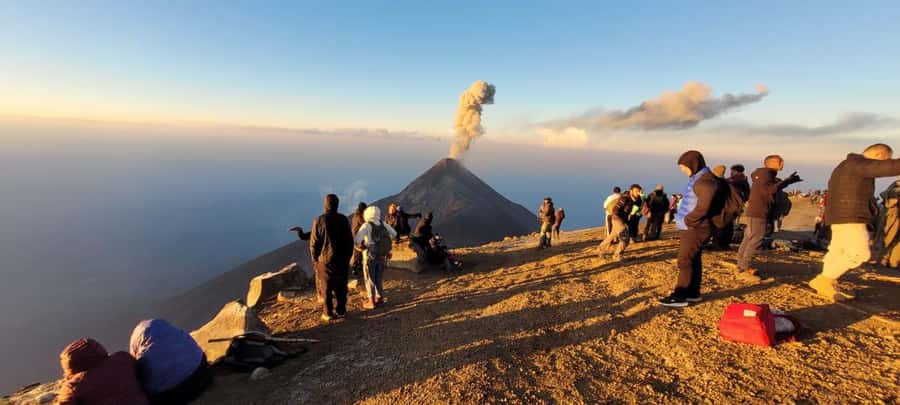
The main reason to choose this trip is the view of Volcán de Fuego. Acatenango gives you a high perch across from one of Guatemala’s most active volcanoes. At camp, you may see bursts of fire every few minutes, hear a heavy boom, and sometimes feel the ground tremble after dark.
That spectacle changes the feel of the hike. The climb is not just about reaching a summit and taking a photograph. You spend the night watching a live volcano work in the darkness, then wake before dawn for views above the clouds. It is raw and memorable, but it is not polished or comfortable.
The tour received an overall rating of 4.4 from 1,189 ratings, which fits the experience well. The strongest praise centers on the guides, the scenery, the logistics, and the value. The recurring cautions are just as clear: this is a very hard hike, the food is basic, and the sleeping arrangements are shared and simple.
More Volcano Hikes in the world:
- Etna Volcano: South Side Guided Summit Hike
★ 4.7 · 1,545 reviews - The Volcano Heart Tour: Hiking, Tasting and Sunset Experience
★ 5.0 · 1,120 reviews - Reykjavík: Volcano Eruption Site and Reykjanes Hiking Tour
★ 4.6 · 1,066 reviews
Leaving Antigua and preparing at 8:45 AM
Pickup begins at your hotel or accommodation in Antigua. You need to wait at the entrance so the guide can find you. Transport is shared, and the pickup system uses meeting points to save time before the group heads toward the mountain.
At around 8:45 AM, you stop at the provider’s station. This is where you receive the packed food, jacket, gloves, and cold-weather hat. You can also rent a backpack or flashlight if you did not bring your own. A climbing pole costs Q50, and it is worth considering if you are not used to steep, loose trails.
The equipment supplied helps keep the price down, but do not treat it as a complete mountain outfit. The jacket is not waterproof, the gloves may not be especially warm, and a headlamp or flashlight is important if you take the Fuego add-on or walk before sunrise. Pack a raincoat and waterproof bag even if the forecast looks kind.
La Soledad and the long uphill push
The hike begins in La Soledad after a briefing with the guides. From here, the path climbs for roughly four and a half to six hours, depending on the group’s speed and how often you stop.
The trail is steep, dusty, and covered in loose volcanic gravel. On the way down, this surface can feel like marbles under your shoes. Good hiking shoes with firm grip are more useful than expensive gear, and several people found trekking poles helpful for balance and braking.
The first section can feel especially hard because the climb starts working on your lungs quickly. Altitude adds another layer. Even fit hikers have described burning lungs, a dry throat, and a need for frequent pauses. This is not a place to prove a point. Walk slowly, drink often, and tell the guide if you need a break.
There are three bathroom stops on the first day. Bring toilet paper, since it is not guaranteed to be available. Small shops along the route sell snacks, water, and sometimes simple food, but you should not depend on them for your main supply. Bring at least three liters of water, with four liters a sensible choice for anyone who drinks heavily during hard exercise.
The shared pace can work well. Groups are often split into faster and slower sections, with extra guides helping keep people together. Still, the experience can vary. Some departures have had very patient guides who stayed beside slower climbers, while others felt rushed at rest stops. If you are near the back, make your needs clear early.
Base camp, cold air, and Fuego after dark
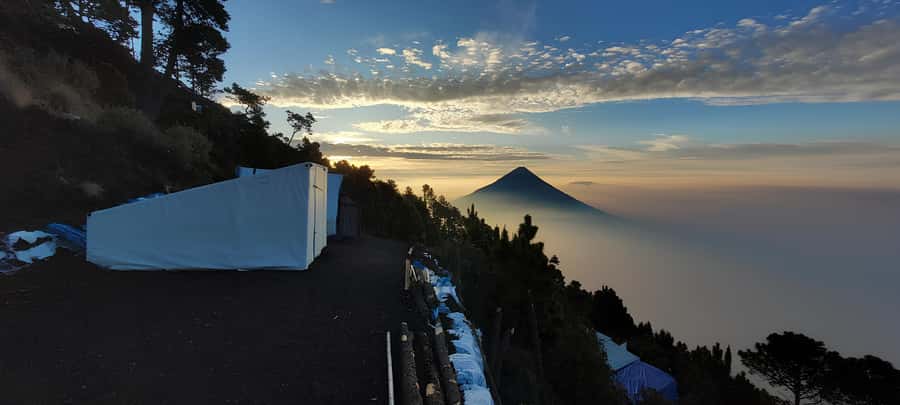
You reach base camp in the late afternoon. The reward arrives quickly: wide views toward the surrounding peaks and Fuego’s eruptions across the valley. On a clear night, this is the heart of the experience.
Accommodation is a dome or simple cabin with a mat and sleeping bag. Sharing with strangers is normal, and some shelters hold about five people. A few have described the arrangement as comfortable enough for one night, while others found the cabins crowded, cold, or in need of better cleaning. Bring warm sleep clothes, extra socks, and a small pillow. A pillow is specifically recommended, and you will appreciate it after the climb.
The cold can surprise you. Temperatures around camp have been reported near freezing, with wind making it feel worse. Provided jackets, gloves, and hats help, but pack your own warm layers. A fleece, thermal shirt, warm trousers, and dry socks are more useful than one bulky coat. Keep spare socks in a waterproof bag because wet feet make the descent miserable.
Dinner is served at camp, followed by time to rest. The food is designed to keep the operation affordable, not to provide a mountain feast. Menus include regular, vegetarian, vegan, and gluten-free options, and some people found the special meals very good. Still, portions can feel small after six hours uphill. Bring protein bars, nuts, chocolate, dried fruit, or other compact snacks you know you will eat.
More Guided Day Hikes in the world:
- From Marrakech: Ouzoud Waterfalls Guided Hike and Boat Trip
★ 4.7 · 33,630 reviews - Berber villages : Atlas Mountains Day Hike from Marrakech
★ 5.0 · 14,007 reviews - Bali: Sunrise Mount Batur Guided Hike with Breakfast
★ 4.8 · 9,660 reviews - Bali: Mount Batur Sunrise Guided Hike and Natural Hot Spring
★ 4.8 · 9,284 reviews
The optional Fuego hike at night
The extra Fuego excursion costs Q200. It takes you closer to the eruptions, which can be an extraordinary sight when the weather cooperates. The tradeoff is serious: you climb down from camp, go up again toward Fuego, and return in the dark. That means more elevation change after an already punishing first day.
You need a flashlight or headlamp for this section. A proper headlamp leaves both hands free for poles and balance. Cloud and weather can also block the view, so the extra fee does not guarantee glowing lava.
Some people consider this the best part of the trip. Others decide the eruptions are close enough from base camp and prefer to save their energy for sunrise. I would treat Fuego as an optional upgrade only if you are still moving well after reaching camp, have warm clothing, and genuinely want another hard climb. If your main goal is a calm night and sunrise, staying at base camp is a sensible choice.
Sunrise above the clouds
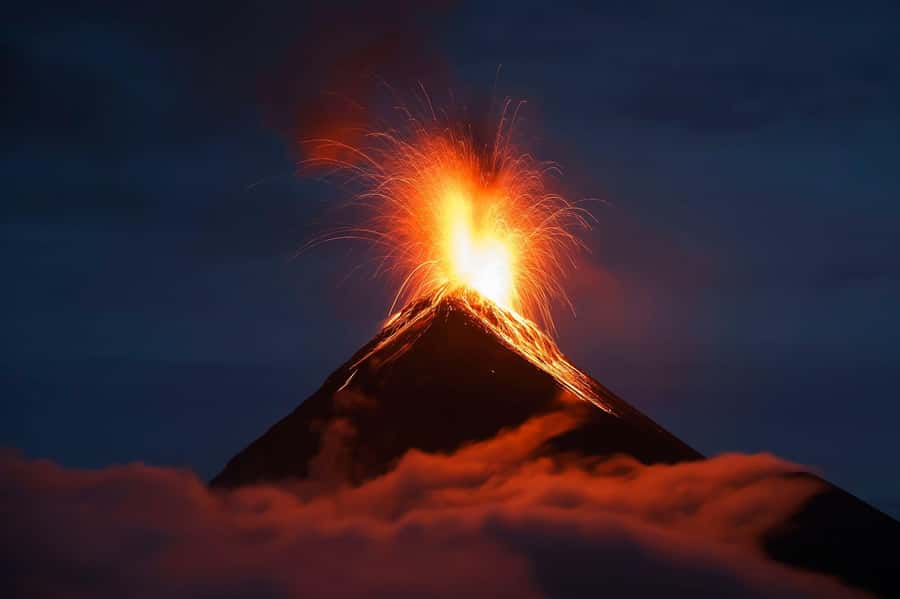
The sunrise hike starts very early. The route to the upper part of Acatenango is steep, cold, and exposed, with wind at the top. You climb in darkness or low light, so bring a flashlight even if you skip Fuego.
This section is optional. You can remain at camp, drink hot chocolate, and watch the changing sky from there. That is not a lesser experience. Several people found the view from base camp spectacular enough, while others considered the final climb one of the most rewarding parts of the entire trip.
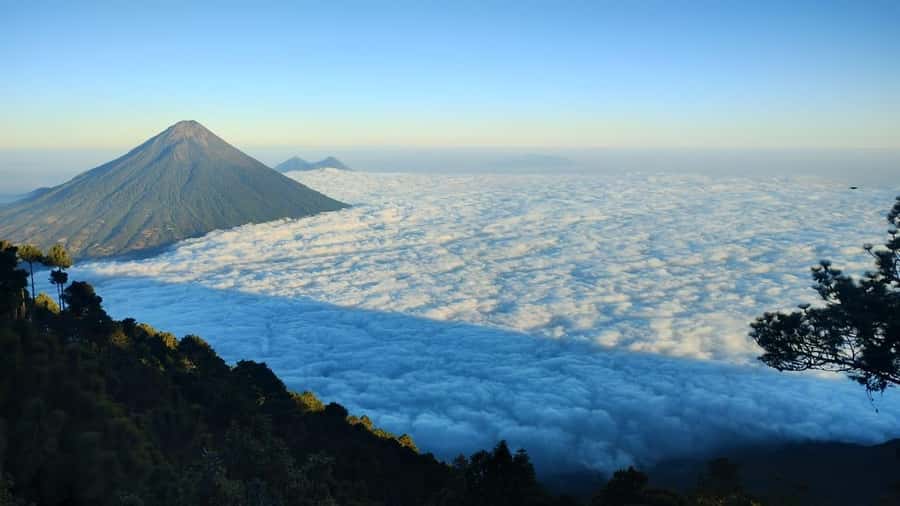
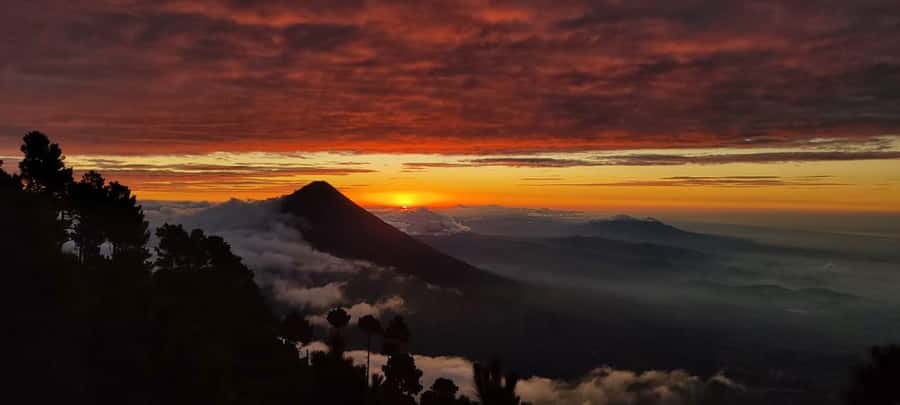
At the top, the payoff is a broad sunrise over the clouds, with the volcanic peaks catching the first light. The last stretch can be the toughest because your body is tired, the trail is steep, and the cold bites through thin clothing. Take the slow group if needed. No photograph is worth rushing on loose ground.
After sunrise, return to camp for breakfast. The hot chocolate is a small but welcome detail, especially after standing in the wind. You then pack your gear and begin the descent.
The descent to the bus
Going down is faster, often taking around two and a half to three hours, but it is not easy. Loose gravel makes slipping common, particularly if your shoes lack traction. Poles help, and a bandana or gaiter can keep dust out of your mouth. Sunglasses protect your eyes when the trail gets dry and dusty.
Your bus waits at the point where the first day began. From there, you return to Antigua and are dropped at your accommodation. The logistics are straightforward, but expect tired legs. Some people still felt sore two to four days later, especially after adding Fuego.
What the $54 price really covers
At $54, this is an unusually strong budget package. You receive round-trip transport, a guide, one night of shelter, sleeping bag, mat, lunch, dinner, breakfast, hot chocolate, basic cold-weather gear, luggage storage, and the hike itself.
You still need to pay the volcano entrance fee, listed as Q100, about $13. Water, snacks, and the optional Fuego hike cost extra. Backpack, flashlight, and pole rentals also add to the final bill if you arrive without gear.
The value is best understood as an efficient way to reach Acatenango without buying every piece separately. You are not paying for comfort, private guiding, gourmet meals, or a quiet cabin. You are paying for access, transport, basic equipment, and a guided route to an extraordinary viewpoint.
What to pack for a safer, better night
Keep your pack light, but do not cut the essentials. A 25-liter pack may work for some people, even though 45 to 55 liters is recommended if you carry all your own layers and water.
Bring:
- Three to four liters of water
- Hiking shoes with firm grip
- Warm layers and dry sleep clothes
- Extra socks
- Sunglasses and sunscreen
- Headlamp or flashlight
- Protein-rich snacks
- Simple raincoat
- Waterproof bag
- Toilet paper
- Small pillow and toiletries
- Cash for the entrance fee, snacks, and rentals
- Trekking poles if you use them
Avoid overpacking. You need one night, not a full expedition. Keep electronics and spare clothing sealed against rain and volcanic dust.
Who should choose this tour
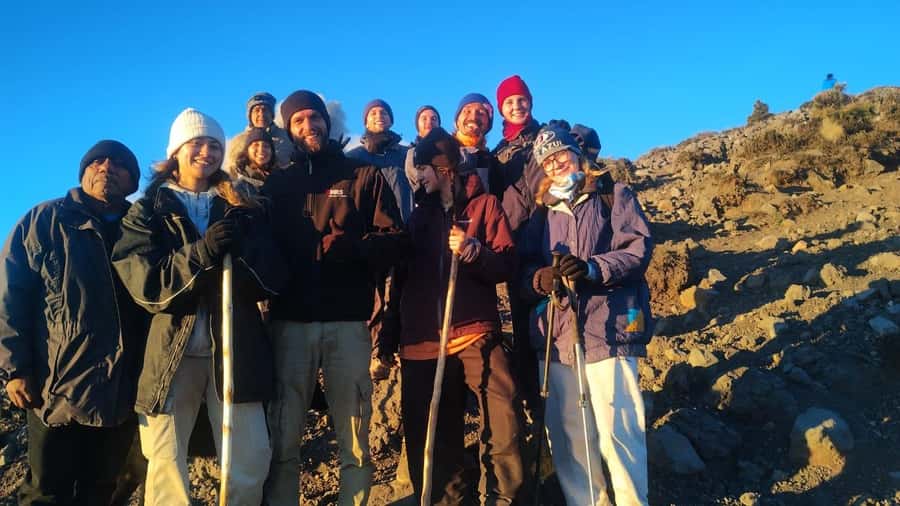
This trip suits you if you have a good fitness base, some hiking experience, and a strong interest in volcanoes. You do not need to be an elite athlete. Several first-time hikers completed it, but they had to accept a slow pace, many breaks, and a hard day.
It is not suitable for children under 11, pregnant people, anyone with mobility limitations or heart problems, people over 65, or anyone with a low fitness level. If you have asthma or another medical concern, take the physical demands seriously and seek medical advice before booking.
Spanish is the tour language. Basic Spanish makes the briefings and trail communication easier. English ability varies among guides, so do not book this expecting a detailed English nature talk. The guides are generally described as friendly, encouraging, and safety-minded, with names including Luis, Roberto, Saul, Esbin, and Ronald appearing on different departures.
You can cancel up to 24 hours before departure for a full refund, and reserve now while paying later. Those policies help with planning, but they do not change the need to prepare well.
Should you book the Acatenango overnight hike?
Book it if you want a demanding mountain experience at a low price, and if sleeping simply does not bother you. The volcano views, sunrise, and chance to watch Fuego erupt at night can make the sore legs worthwhile.
Think twice if you dislike shared cabins, basic meals, cold weather, steep gravel, or Spanish-only guiding. I would also skip the Fuego add-on unless you still feel strong at camp. The main Acatenango hike already delivers the central experience, and base camp offers an excellent view of the eruptions.
For the best chance of enjoying it, train with uphill walks, bring warm layers, carry enough water and snacks, and use shoes with real traction. This is a budget tour, but the mountain itself provides the luxury: fire in the darkness and sunrise above the clouds.
FAQ
How difficult is the Acatenango hike?
It requires good fitness, agility, and intermediate hiking ability. The first day takes about four and a half to six hours uphill on a steep trail with loose volcanic gravel. The sunrise hike and optional Fuego excursion add more climbing.
Is the sunrise hike required?
No. You can stay at base camp while the rest of the group climbs for sunrise. The view from camp can still be excellent.
Is the Fuego hike included in the price?
No. The optional Fuego hike costs Q200. It takes you closer to the eruptions but adds a demanding climb and descent after reaching base camp.
What food is included?
Lunch and dinner on day one, plus breakfast and hot chocolate on day two are included. Regular, vegetarian, vegan, and gluten-free menus are available. You should bring extra snacks because portions may not satisfy after a hard climb.
Do I need to bring water?
Yes. You should bring at least three liters of water, with some people finding four liters more comfortable. Water is not included in the tour price.
Is the tour offered in English?
The live tour guide language is Spanish. English ability varies among guides, so basic Spanish can help with instructions and communication.
More 2-Day Experiences in the world
- From Antigua: 2-Day Acatenango Volcano Hiking with Guide
★ 4.1 · 366 reviews - 2-Day Ice Cave & South Coast: Glacier Hike and Glacier Lagoon
★ 4.5 · 203 reviews - 2-Day South Coast Waterfalls, Jokulsarlon Glacier Lagoon and Hike from Reykjavik
★ 5.0 · 177 reviews - Private Jökulsárlón Glacier Lagoon 2 Day Tour & Glacier Hike
★ 5.0 · 159 reviews
Just added around the world
- Madeira: Hike Transfer to Ponta de São Lourenço (PR8)★ 4.8 · 26 reviews
- Garibaldi Park/ Panorama Ridge/ Hiking Day Trip★ 5.0 · 4 reviews
- Glacier Express Jeep & Hiking Tour – Local Icelandic Guide★ 5.0 · 8 reviews
- Full Day in Côte Bleue: Scenic Nature Walk and Boat Tour★ 5.0 · 3 reviews
- Funchal: Pico Grande Guided Hike with Curral das Freiras★ 5.0 · 6 reviews
- Funchal: PR1.2 Pico Ruivo & Achada Teixeira Hiking Transfer★ 4.9 · 27 reviews
- From El Calafate: El Chalten Full-Day Tour and Short Hike★ 4.5 · 84 reviews
- From Reykjavik: South Coast and Glacier Hiking Tour★ 5.0 · 14 reviews
Volcano Hikes, compared.
The Volcano Heart Tour: Hiking, Tasting and Sunset Experience
Read our review →
Reykjavík: Volcano Eruption Site and Reykjanes Hiking Tour
Read our review →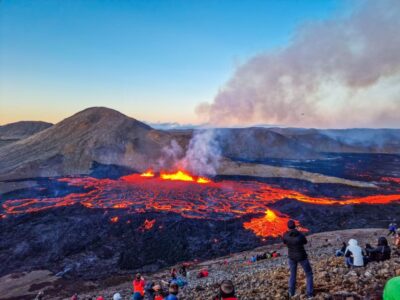
Reykjavík: Guided Afternoon Hiking Tour to New Volcano Site
Read our review →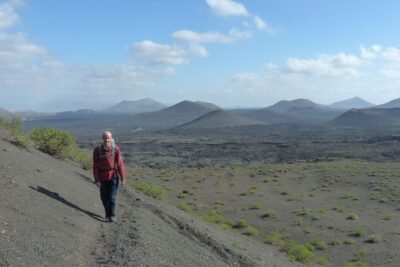
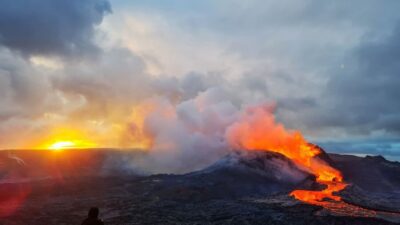
From Reykjavík: Fagradalsfjall Volcano Hike with Geologist
Read our review →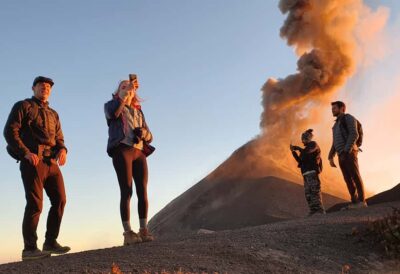
Antigua, Guatemala: Volcano Acatenango Overnight Hiking
Read our review →
Iceland Hiking Tour to Fagradalsfjall Volcano with Local Guide
Read our review →Browse the lists this tour appears in