
REVIEW · ITALY
Etna Volcano: South Side Guided Summit Hike
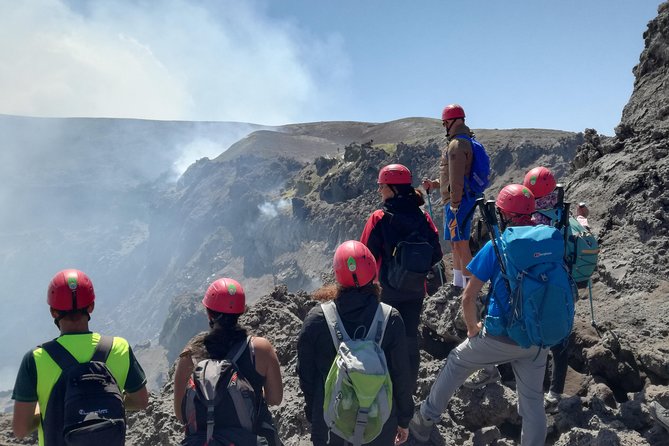
Etna saves its best drama for high ground. This six-hour hike takes you by cable car to 2,500 meters, then across black lava, loose volcanic sand, gas-stained rock, and a lava channel toward the summit craters. Antonio, Giovanni, Marco, and Massimo are among the guides praised for clear explanations and careful pacing, though your guide will depend on the day.
I like two things right away: the cable car removes a long, tiring lower climb, and the route gives you both crater views and close-up volcanic details. The guide-led format matters here because Etna is active, changeable, and not a place where a marked path tells the whole story. The main catch is cost: the advertised tour price is $67.97, but the cable car costs an additional €52 per person, payable on site in cash.
Key points to know before you book
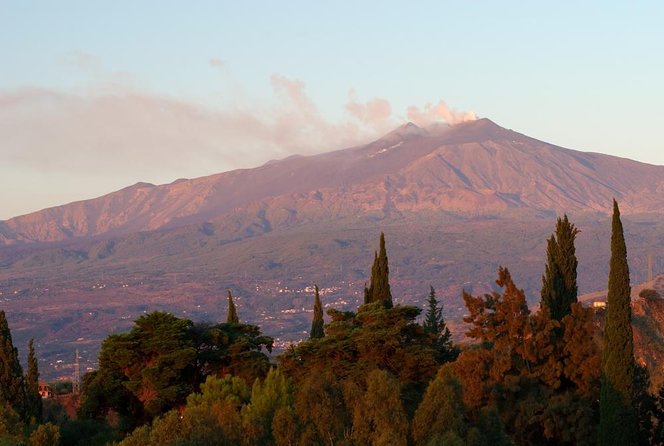
- You hike from 2,500 meters toward Etna’s summit craters, with roughly two hours of uphill walking over sandy and uneven ground.
- The cable car is not included, so budget an extra €52 per person and bring cash.
- The route can change at short notice because of eruptions, weather, seismic activity, or safety rules.
- Your guide supplies practical gear, including hiking boots, a helmet, walking sticks, and accident insurance.
- The scenery is stark and unusual, with lava flows, volcanic bombs, sulfur colors, gas emissions, and views into several craters.
- This is a medium-high difficulty hike, best for reasonably fit people comfortable with altitude, loose ground, cold, and wind.
Why this Etna hike feels different from a simple volcano viewpoint
Many Etna outings give you a nice view and a short walk. This one aims higher, both literally and physically. After meeting at Ashàra Etna and Stromboli Guides near Rifugio Sapienza on Etna’s south side, you take the cable car up to 2,500 meters and continue on foot.
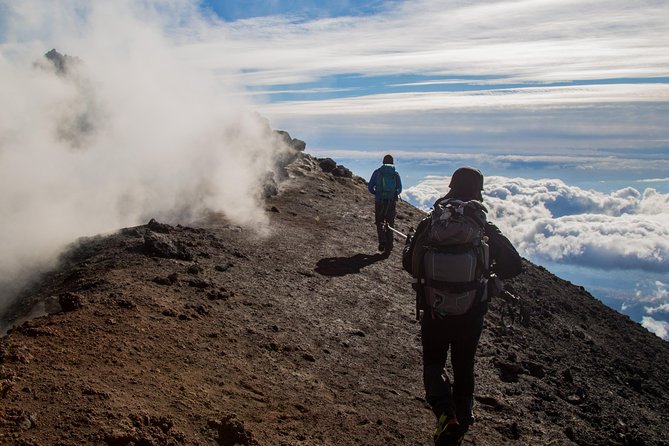
That change in altitude is important. You are not strolling along a paved overlook. The upper slopes can feel like a huge sand dune, and every step may slide slightly backward. One particularly useful piece of advice is to expect the air to feel thin and the wind to turn cold quickly, even when Sicily below is warm.
I like that the route combines geology with scenery. You are not simply pointed toward a crater and sent off for photographs. The guide explains lava flows, eruption patterns, sulfur deposits, volcanic bombs, and the forces that shape Etna. The ground itself becomes the lesson.
The excursion has a rating of 4.7 from 1,545 reviews, with repeated praise for guide skill, safety, pacing, and volcanic knowledge. That matters more here than polished presentation. A good guide can make a changed route feel worthwhile when the summit area is closed.
More Mountain Hikes in Italy
- Mount Etna: Summit Guided Hiking Tour up to 3,400 m
★ 4.8 · 4,792 reviews - Catania: Mount Etna Adventurous Hiking Tour with Equipment
★ 4.7 · 784 reviews - Mount Etna Adventurous Hiking Tour with Equipment
★ 4.5 · 439 reviews
Meeting at Rifugio Sapienza and getting ready
The meeting point is Ashàra’s information point at Rifugio Sapienza, close to the Terrazza dell’Etna restaurant. This is the Etna South access area, and the activity ends at the same point.
Allow time to find the correct desk. One practical weakness reported about the start is that the check-in point can be hard to spot, especially with several mountain businesses around the refuge. The initial outfitting can also take time if many people need boots, helmets, or walking sticks.
The operator provides hiking boots, a rock helmet, walking sticks, and accident insurance. That is useful if you are traveling light or did not bring proper mountain footwear. Still, I would not treat the supplied equipment as a substitute for preparation. Wear long pants, socks, a sun hat, sunglasses, and sunscreen. Pack a jacket and an extra T-shirt because the upper mountain can be cold and windy, and a spare layer can make a big difference after exertion.
Bring a 10 to 20 liter daypack with water, snacks, and a packed lunch. Food and drinks are not included. A sandwich may be available near the meeting point, but you should not depend on buying everything at the last minute.
Shorts, sleeveless shirts, large bags, luggage, pets, and strollers are not allowed. Children under nine cannot join, and the hike is not suitable for pregnant people or those with heart, back, respiratory, or blood-pressure problems. Vertigo and wheelchair use are also listed as reasons not to book.
The 25-minute cable-car ride to 2,500 meters
The cable car is the practical heart of this outing. It carries you from the refuge to 2,500 meters in about 25 minutes, sparing you the lower slopes and leaving your energy for the upper route.
The €52 ticket is paid separately on site and must be paid in cash according to the activity details. That extra charge changes the value calculation. At $67.97 for the guided hike, the tour looks inexpensive at first. Once you add the cable car, the real price is much higher, though you are also receiving equipment, insurance, and a certified mountain or volcano guide.
The cable-car station can be busy. One large group lost time while tickets and boarding were organized, so do not expect every minute of the six-hour schedule to be spent walking. The ride itself is short, but waiting and equipment fitting can stretch the start.
The quick climb also means your body has little time to adjust. Take the first part slowly. Loose volcanic ground is harder work than it looks, and the altitude can make a normal pace feel demanding.
From the upper station across Etna’s black volcanic ground
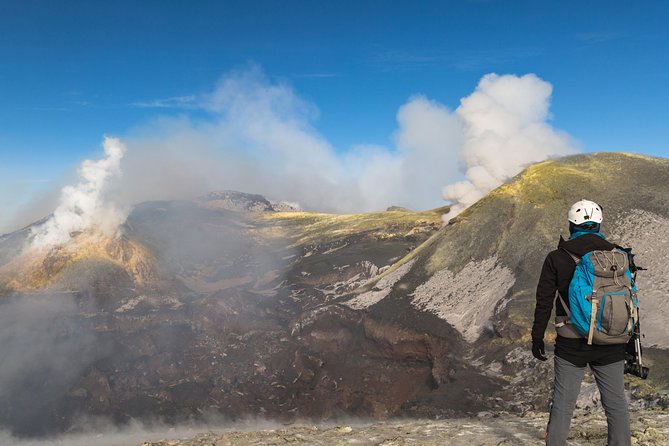
After leaving the cable car, you begin hiking through lava flows and sandy, lunar-like terrain. The first viewpoint comes after roughly 40 minutes of walking, with scenery opening across the upper mountain and toward the craters.
The surface is one of the most memorable parts of the experience. You may cross fine dark ash, rough lava, and uneven rock. Walking sticks are not decorative here. They help with balance on both the climb and the descent, especially where the ground gives way beneath your boots.
This is also where a layered clothing plan pays off. Review details describe snow in late May, cold headwinds, and temperatures that felt far below the conditions at the refuge. A face covering is worth packing for wind and volcanic dust. At the same time, sun exposure can be strong, so keep your sunglasses and sunscreen handy.
The guide controls the pace. That is a real benefit for a mixed group. Several guides, including Giovanni, Antonio, Marco, and Massimo, were praised for waiting, offering breaks, helping people with different fitness levels, and keeping the group together. The hike is not a private, custom-paced walk, but a careful guide can make the difference between a hard day and an enjoyable one.
More Volcano Hikes in Italy
- Etna Volcano: South Side Guided Summit Hike
★ 5.0 · 311 reviews - Mount Etna: Central Crater Guided Hike for Advanced Hikers
★ 4.8 · 106 reviews - Hike near the summit craters up to the maximum safe altitude currently foreseen
★ 5.0 · 57 reviews
The Central Crater and Etna’s high summit zone
The route then continues toward the Cratere Centrale dell’Etna, or Central Crater area. The stated schedule allows about an hour and a half for scenic walking toward the crater, followed by another hour around Mount Etna for a guided visit, photos, and a break.
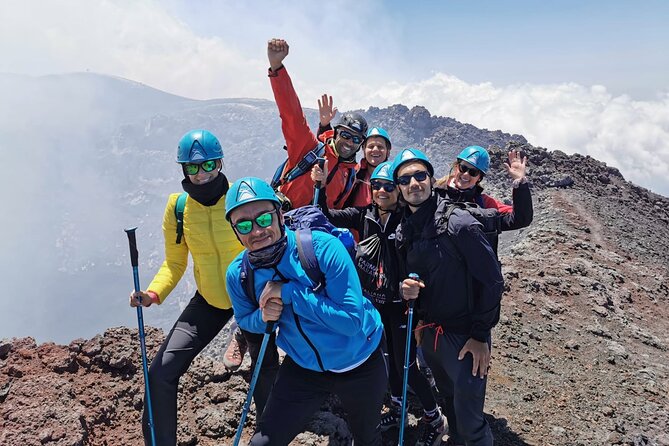
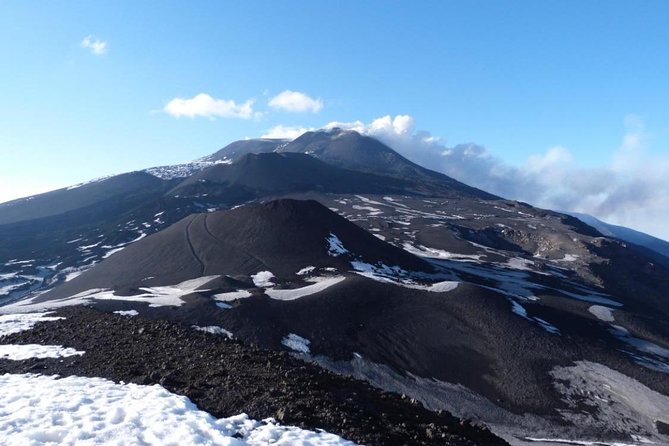
The reward is a close view of Etna’s upper volcanic world. From the rim area, you may look toward the Northeast Crater and the Southeast Crater, the latter associated with some of Etna’s most impressive recent eruptions. The precise route and access point depend on current conditions.
Expect an environment that looks almost unreal but is entirely natural: gas emissions, volcanic bombs, and ground colored by minerals released during sulfur sublimation. These details are easy to miss if you walk alone. Your guide can point out the difference between old lava and newer deposits, explain why sulfur creates bright patches, and describe how eruptions have altered the mountain.
The views can be excellent when the air is clear. You may see far across Sicily and down the steep upper slopes, but visibility is weather dependent. Cloud, wind, ash, and volcanic activity can all reduce the view. Do not book this expecting a guaranteed photograph from the exact summit rim.
Safety rules are strict for good reason. The guide may stop the walk or change the route if conditions threaten the group. When summit craters are closed, the hike continues to the highest permitted point. This has happened during eruptions and seismic warnings, with groups reaching around 3,000 meters instead of the summit area. That can be disappointing, but seeing smoke plumes, fresh volcanic features, and nearby craters can still make the outing worthwhile.
Barbagallo Craters, Valle del Bove, and the lava channel
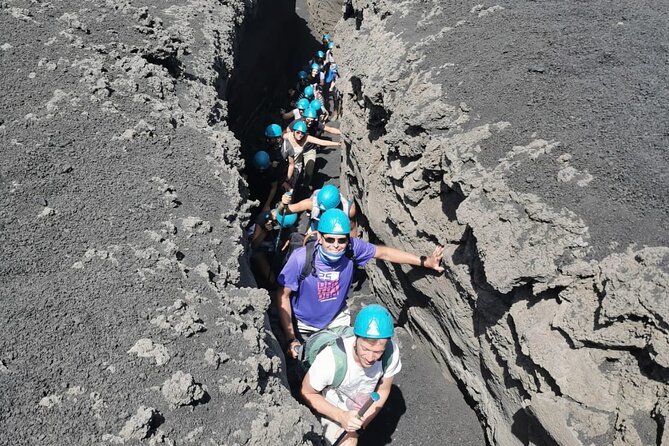
The return route includes the Barbagallo craters and a walk through a lava-flow channel. This section gives the hike a different feel from the summit approach. Instead of focusing only on height, you get a closer look at the structures created by past eruptions.
The itinerary allows about an hour for hiking in the direction of Valle del Bove. This broad volcanic valley is one of Etna’s major natural features, and it gives the route a strong sense of scale. The descent can be easier on your breathing but harder on your knees and footing, especially on loose ash.
The lava channel is a particularly good detail for anyone interested in how molten rock moves. You are not promised active lava, and the tour should never be booked with that expectation. Etna may be smoking, quiet, or under restrictions on the day of your visit.
After returning to the 2,500-meter area, you take the cable car back to Rifugio Sapienza. The scheduled cable-car rides are about 25 minutes each, but queues and group organization can add time.
What the guides add to the day
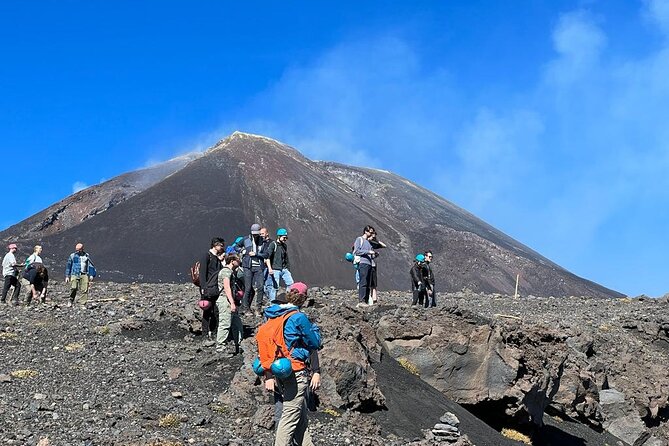
The strongest part of this excursion is the human element. Guides are not simply there to point out the summit. They read the mountain, watch the weather, adjust the pace, and decide when the route must change.
Antonio is praised for explaining volcanic history and guiding people along routes they might not find alone. Giovanni is described as both a guide and geologist, with strong English and a clear grasp of Etna’s geological story. Marco is noted for patience with slower hikers, while Massimo is praised for his care for the mountain and his direct, relaxed manner.
These names are examples from the guide team, not a guarantee of who will lead your departure. The available languages are English, Italian, and French.
The guides also appear willing to make the day useful when the main goal is not possible. If summit access is restricted, they may take you toward other craters, viewpoints, smoke plumes, or volcanic features at the highest safe altitude. That flexibility is a major reason to choose a guided hike instead of treating the summit as a single all-or-nothing target.
Difficulty, clothing, and the people this suits best
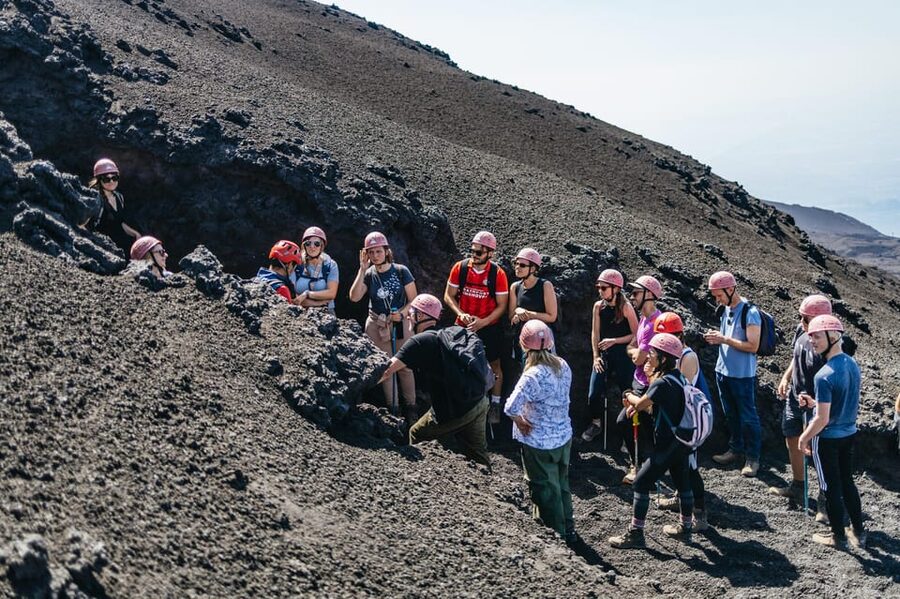
The operator rates the hike medium-high in difficulty. I would take that seriously. You need to be comfortable walking for several hours on sand, rough rock, and uneven ground, with a substantial uphill section at altitude.
This is a good match for an active adult who wants more than a cable-car viewpoint and is happy to work for the scenery. It is less suitable if you want a relaxed sightseeing outing, have trouble with loose ground, or dislike cold wind and changing plans.
Wear long pants and sturdy socks. Use the supplied boots if your own footwear is not suitable, and take the walking sticks. Pack a warm jacket, an extra T-shirt, water, snacks, lunch, sunglasses, sunscreen, and a face covering. A small backpack is far better than carrying loose items in your hands.
The tour is not suitable for children under nine, pregnant people, wheelchair users, or people with vertigo, back, heart, respiratory, or high-blood-pressure problems. The guide may end the hike for anyone whose health or safety becomes a concern.
Price, flexibility, and practical value
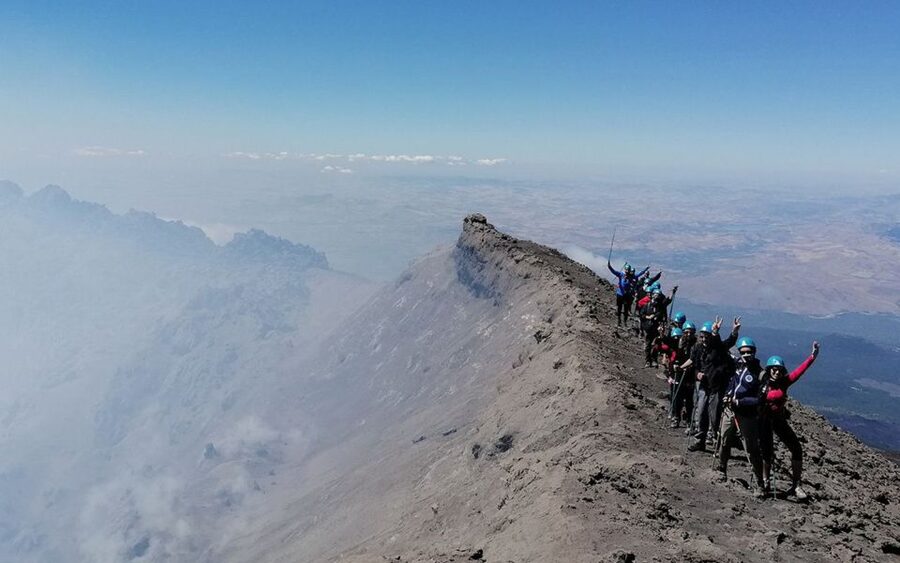
The listed price is $67.97 per person, but the required cable-car ticket adds €52, paid in cash. That makes this a mid-priced guided mountain outing rather than a cheap half-day activity.
The price includes the hike, a multilingual volcano or Alpine guide, boots, walking sticks, a helmet, and accident insurance. Those inclusions matter if you are not equipped for high-altitude volcanic terrain. You are still responsible for food and water, and the cable car is separate.
You can cancel up to 24 hours before departure for a full refund, and the reserve-now, pay-later option gives you some flexibility. The activity may be canceled if fewer than four people book. Weather and volcanic activity can also alter or cancel the plan, so avoid scheduling it on the final day of a tight Sicily itinerary.
Should you book this Etna summit hike?
Book it if you want a serious Etna experience with a guide who can explain the volcano and adjust the route to real conditions. The combination of cable-car access, crater views, lava features, and professional equipment gives you far more than a quick photo stop.
Think twice if you want a guaranteed summit visit, dislike physical exertion, or are not prepared for the extra €52 cable-car charge. The summit may be closed, and the route may finish below the crater rim.
For fit visitors who understand that Etna is an active volcano, I think this is a strong choice. Go prepared for wind, cold, loose ash, and a changed itinerary, and you will be ready to appreciate the mountain for what it is, not just for the exact viewpoint shown in a booking photo.
FAQ
How long does the Etna summit hike take?
The activity lasts about six hours, including the cable-car rides, hiking, breaks, guided explanations, and return to Rifugio Sapienza.
Where does the tour begin?
Meet at Ashàra’s information point at Rifugio Sapienza on Etna’s south side, close to the Terrazza dell’Etna restaurant.
Is the cable-car ticket included?
No. The cable-car ticket costs €52 per person and is payable on site in cash.
How high does the cable car go?
The cable car takes you to about 2,500 meters above sea level.
What equipment is provided?
The tour includes hiking boots, a rock helmet, walking sticks, accident insurance, and a multilingual volcano or Alpine guide.
What languages are available?
Guides operate in English, Italian, and French.
Can the route change because of volcanic activity?
Yes. The guide may change the route because of weather, environmental conditions, seismic activity, or volcanic risk. If the summit craters are closed, the hike continues to the highest safe permitted point.
What should I bring?
Bring water, food, snacks, a packed lunch, sunglasses, a sun hat, sunscreen, a jacket, a spare T-shirt, long pants, socks, and a 10 to 20 liter daypack.
Just added around Italy
- From Taormina or Catania: Private Full-Day Mount Etna Hike★ 4.5 · 8 reviews
- From Taormina: Mount Etna Half-Day Evening Hike★ 5.0 · 4 reviews
- From Sorrento: Path of the Gods Guided Hike with Transfer★ 4.8 · 23 reviews
- From Sorrento: Skip-the-Line Guided Vesuvius Hike and Lunch★ 4.4 · 5 reviews
- From Sorrento: Path of the Gods Hike with Tasting Stop★ 4.9 · 29 reviews
- From Siracusa: Pantalica Nature Reserve Guided Hiking Tour★ 4.9 · 9 reviews
- From Orosei or Dorgali: Gorropu Canyon Guided Hike★ 4.9 · 40 reviews
- From Genna Silana: Canyon of Gorropu Guided Hike★ 3.7 · 3 reviews
Italy Hiking Tours, compared.
Cinque Terre Day Trip with Optional Hiking or Pisa
Read our review →
Florence: Cinque Terre Day Trip with Optional Hiking or Pisa
Read our review →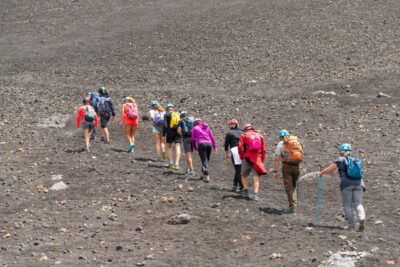
Mount Etna: Summit Guided Hiking Tour up to 3,400 m
Read our review →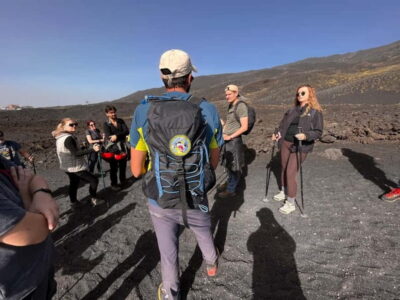
Catania: Mount Etna Adventurous Hiking Tour with Equipment
Read our review →
From Taormina: Etna Tour with Hiking, Cave Visit, & Tastings
Read our review →
Catania: Etna Nature Tour with Hiking, Cave Visit, & Tasting
Read our review →
Mount Etna Adventurous Hiking Tour with Equipment
Read our review →Browse the lists this tour appears in