
REVIEW · USA
Freedom Trail Walking Tour in Boston in French
Boston’s Freedom Trail is more than a red line through downtown. It is a compact lesson in revolution, religion, immigration, architecture, abolition, and everyday city life. This French-language walk with Maria links Boston Common to Copp’s Hill Terrace, passing the State House, Faneuil Hall, Paul Revere’s house, and the North End.
I like the small maximum group of 12, which should make it easier to hear stories and ask questions. I also like the range of subjects: you get the famous 1770 shooting and Paul Revere, but also French architecture, the 54th Regiment Memorial, Holocaust Memorial, The Embrace, and modern Boston.
The main consideration is pace. In about two and a half hours, you cover a long stretch of downtown on foot, with much of the time spent outdoors. Museum visits are not included, and the tour finishes in the North End rather than returning to Boston Common.
Key points at a glance
- French-language history walk: Maria leads the tour in French, with a mix of dates, anecdotes, and discussion.
- Boston Common to Copp’s Hill: The route crosses downtown and ends near the Old North Church and North End restaurants.
- Sixteen Freedom Trail sites: You see the essential landmarks connected to Boston’s colonial and revolutionary past.
- Small group format: The tour accepts no more than 12 people, allowing a more personal pace.
- Modern and historic Boston together: Expect The Embrace, the Holocaust Memorial, old churches, markets, graveyards, and city streets.
- No museum admissions: The $45 price covers the guide, local services, fees, and taxes, but not indoor museum visits.
Why this French walking tour works well for Boston
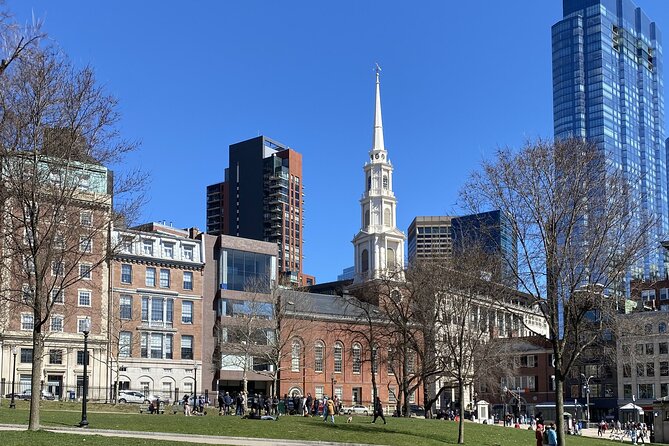
The best reason to choose this experience is its route. You begin at Boston Common, the oldest public park in the United States, and finish at Copp’s Hill Terrace with views toward the Charles River, Bunker Hill, and the USS Constitution. Along the way, Boston’s past appears in layers rather than as a string of isolated monuments.
Maria’s approach, based on the available feedback, is a major part of the appeal. She leads in French, mixes serious history with personal anecdotes, and encourages interaction. Her explanations helped make the city’s past accessible even in chilly weather, and one French-speaking couple described the experience as lasting close to three hours. Plan for the advertised two and a half hours, but allow a little extra time if discussion runs long.
The tour costs $45 per person. That is reasonable if you want a French-speaking guide to orient you through the city and connect the sites into one story. It is less attractive if you only want to follow the red-brick trail independently, or if you plan to spend considerable time inside historic buildings. The price does not include museum entry, and the itinerary mainly uses public streets, squares, churches seen from outside, and open historic areas.
More Walking Tours in the USA:
- Boston Freedom Trail Walking Tour with Costumed Guide
★ 4.5 · 2,531 reviews - Freedom Trail Walking Tour 250
★ 4.5 · 1,118 reviews - Entire Freedom Trail Walking Tour: Includes Bunker Hill and USS Constitution
★ 5.0 · 732 reviews
Boston Common begins the story in 1634
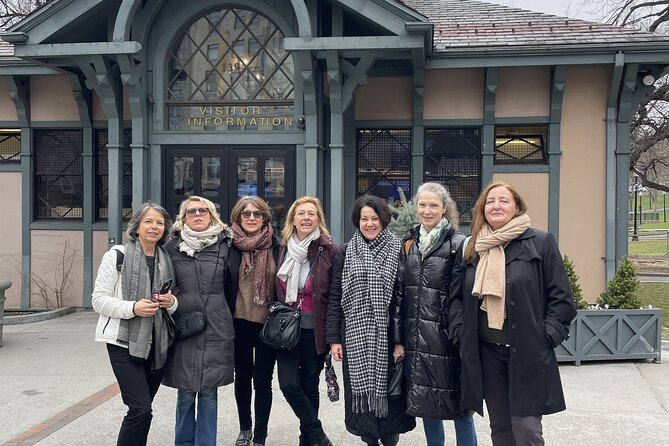
The meeting point is the Boston Common Visitors Center at 139 Tremont Street. The walk starts at 11:00 am, giving you a clear rendezvous in a central part of town.
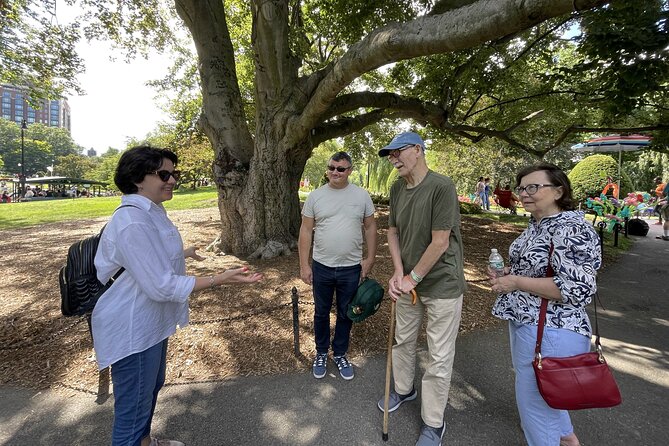
Boston Common is not just a pleasant park. Established in 1634, it has witnessed public gatherings, military activity, ceremonies, and major moments in the city’s story. The guide uses the park to explain how Boston developed and why this patch of green matters to the city.
You also hear about the Emerald Necklace, a chain of six parks forming a green ribbon through Boston. The itinerary includes Telegraph Hill, described as a historic hill linked with the city’s founding, as well as monuments such as the Boston Massacre Memorial, the Great Elm Tree, and the Soldiers and Sailors Monument.
This opening section is useful because it gives you a sense of scale. Boston’s downtown is compact, but its public spaces carry centuries of political and social change. The Freedom Trail begins here, so you start with context rather than rushing straight to the most famous buildings.
Beacon Hill adds art, politics, and French architecture
From Boston Common, the route moves past the Robert Gould Shaw and 54th Regiment Memorial. This bronze bas-relief by Augustus Saint-Gaudens honors the African American soldiers of the 54th Massachusetts Regiment, one of the best-known Black Union regiments of the American Civil War.
The stop is brief, listed at about five minutes, but it adds an important subject that a strictly Revolution-focused walk could miss: abolition and the fight over citizenship and military service. Saint-Gaudens’ work also gives the route a strong artistic moment.
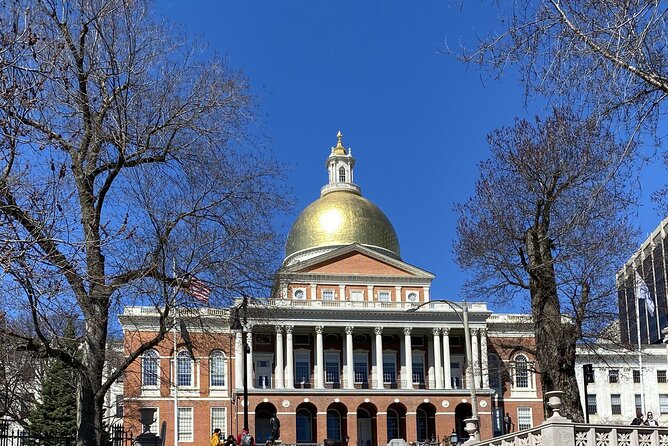
The Massachusetts State House follows. Built in the late 18th century by architect Charles Bulfinch, the building has a golden dome and Federal-style design. It dominates Beacon Hill and helps explain the civic importance of this part of Boston.
You do not enter the State House on this itinerary, so your experience here is architectural and historical rather than an interior tour. That is worth knowing if you want to see legislative rooms or displays. The guide’s value is in pointing out what you are looking at and placing the building within Boston’s growth.
The walk then reaches Old City Hall, completed in 1865. Its French Second Empire design recalls Napoleon III-era architecture, including the look of Paris’s Garnier Opera. This is an unusual detail on the Freedom Trail, and a good reminder that Boston’s visual identity is not purely colonial or British.
Downtown shows Boston’s literary and revolutionary side
The Old Corner Bookstore is one of the older commercial buildings in downtown Boston, dating to 1718. In the 19th century, the building housed a publishing firm associated with several famous American classics.
You may find this stop especially interesting if you like the history of books and publishing. It shifts attention away from battles and political speeches and toward the people who shaped American ideas through print.
Next comes the Old South Meeting House, built in 1729. This former Puritan church served as a gathering place for nearly three centuries. Its importance comes from both religion and public debate. Boston’s churches were not only places of worship. They were also locations where residents organized, argued, and made decisions.
The Old State House, built in 1713, is one of the route’s strongest visual contrasts. A small colonial building surrounded by modern offices, it can look almost stranded in the middle of downtown. From its balcony, the Declaration of Independence was read publicly on July 18, 1776.
The nearby Boston Massacre Site brings the political tension into focus. In 1770, British soldiers fired into a crowd and killed five Bostonians. The event became a powerful piece of revolutionary propaganda, helping turn local anger toward British rule into a larger political cause.
These stops work best together. The Old South Meeting House shows people gathering, the Old State House shows authority, and the Boston Massacre Site shows what happened when public tension turned deadly. You get a connected story rather than a set of unrelated dates.
A few more hikes around the USA worth a look
- Lower Antelope Canyon Hiking Tour
★ 5.0 · 6,216 reviews - Multnomah Falls and Columbia River Gorge Half-Day Hiking Tour
★ 5.0 · 2,108 reviews - San Francisco: Yosemite National Park & Giant Sequoias Hike
★ 4.5 · 1,777 reviews - Valley of Fire Guided Hike from Las Vegas
★ 5.0 · 1,611 reviews
Faneuil Hall and Quincy Market add the city’s commercial character
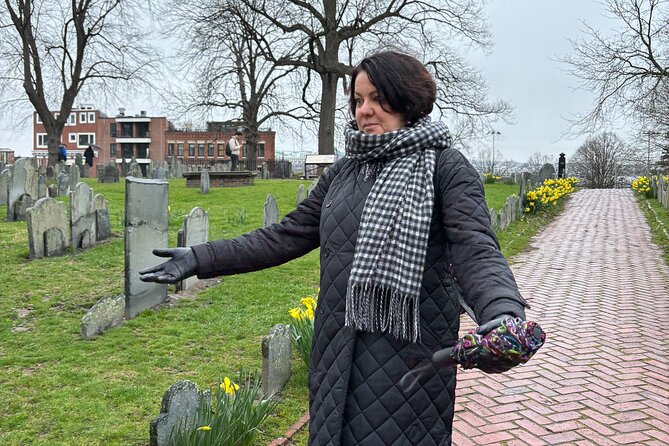
Faneuil Hall has been called the Cradle of Liberty. Built in 1741, it combines civic purpose with a memorable symbol: a golden grasshopper weather vane. The grasshopper became one of Boston’s earliest and best-known emblems.
The stop is short, around five minutes, so expect an exterior explanation rather than a long indoor visit. That is enough to understand why the building mattered as a place for public speeches and political meetings, but not enough for a full examination of its interior.
Quincy Market dates from 1824 and now functions as a food court lined with stalls and shops. Its setting lets you see how Boston’s old market district has been adapted for modern city life.
I like this section because it connects historical Boston with the practical city you see today. You are not only looking at monuments preserved behind glass. You are walking through a working downtown area where people eat, shop, meet, and move through the same streets.
The Union Oyster House comes next. The restaurant dates to 1826 and occupies a historic building from 1704. It is identified as the oldest restaurant in the United States. The building also has a French connection: Louis-Philippe, later king of France, lived in a modest second-floor apartment there.
That detail should appeal to French-speaking participants, since it ties Boston’s colonial streets to French political history. The tour does not include a meal, and the restaurant is not presented as a dining stop, but you can return later if you want to eat in the area.
Behind the Bostonian hotel, the route passes older pedestrian streets and the Blackstone Block, which is listed on the National Register of Historic Places. This small area helps you notice the city’s surviving street pattern, not just its grand public buildings.
The North End brings Paul Revere into view
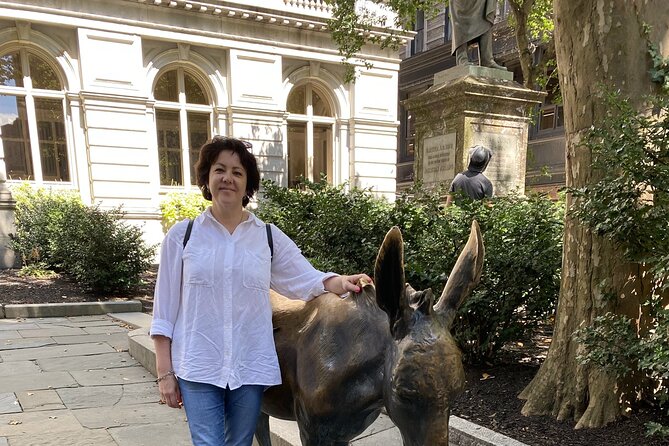
The North End is one of Boston’s oldest neighborhoods and the longest portion of the walk, at about 30 minutes. It is also where the route becomes especially atmospheric, with narrow streets, old buildings, and strong links to Boston’s immigrant story.
The Paul Revere House dates to 1676 and is one of the last surviving buildings from the colonial period. Revere lived there from the 1780s into the 1800s. The tour discusses the building and its owner, but museum admission is not part of the experience.
That distinction matters. You can see the house from the route, learn its place in the story, and decide later if you want to pay separately for an interior visit. If you want a guided explanation in French without spending time inside, the exterior stop may be enough.
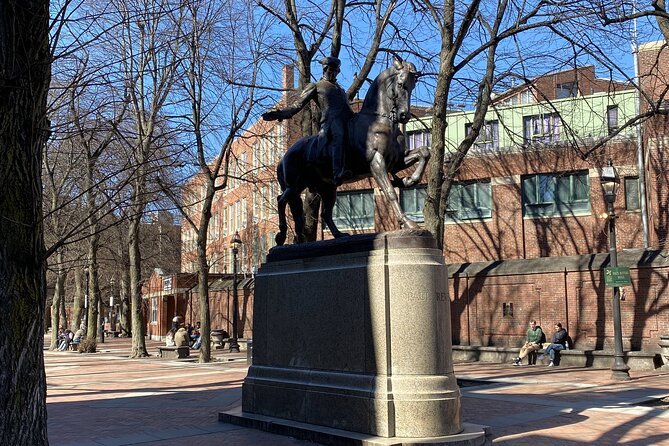
The Paul Revere Statue and the pedestrian area around it recall his famous midnight ride in 1775. This is a good place to separate the real historical event from the simplified version many people first learn as children. Maria’s style, according to the supplied comments, includes anecdotes and questions, which should help keep this familiar story from feeling worn out.
Old North Church and Copp’s Hill finish the walk
The Old North Church is one of the key landmarks in the North End. The church’s site has roots reaching back to 1650, and during the colonial period it was an influential church and a stronghold of Puritan belief.
The itinerary gives this stop about five minutes. You should expect an explanation of its place in the colonial story, not an extended church visit. Since indoor visits are not planned, check your remaining energy and schedule if you want to explore the building afterward.
The final stop is Copp’s Hill Burying Ground, reached at Copp’s Hill Terrace. The hill is described as the highest point in the North End, with a cemetery dating to 1659. From the terrace, you can look toward the Charles River, the Bunker Hill Obelisk, and the USS Constitution across the water.
This is a satisfying end point because the view opens up after hours among downtown buildings. It also gives you a chance to pause, take photographs, and orient yourself to Boston’s wider geography.
The tour ends in the Italian Quarter, close to the Old North Church and Italian restaurants. That makes the finish practical. You can continue exploring, stop for lunch, or return to the Old North Church area without crossing the city again.
What the two and a half hours feel like on foot
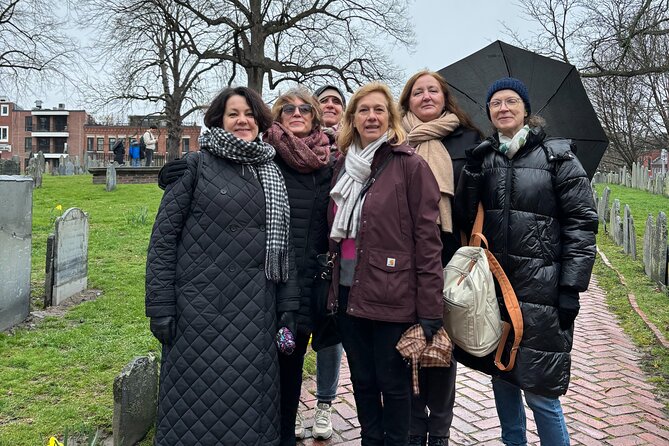
This is a walking tour with no transportation included. Most participants can take part, and service animals are allowed. The group maximum is 12, which is small enough for the guide to adjust explanations and respond to questions.
You should wear comfortable shoes and prepare for changing outdoor conditions. The route includes parks, sidewalks, public squares, a cemetery, and hills. The reviews specifically describe enjoying the tour despite chilly weather, so do not assume a cool day will make the experience impossible, but dress for the forecast.
The itinerary lists many short stops, usually five or ten minutes, with 30 minutes in the North End. That structure keeps the tour moving, but it also means you will not linger long at every landmark. The guide’s stories are therefore important. They fill in the meaning that a quick photograph cannot provide.
The route is suitable for someone who wants a broad introduction to downtown Boston in one morning. It is not designed for a slow, detailed study of every building. You will see the essentials, hear connections between them, and finish with a useful mental map of central Boston.
Who should book this French-language experience
I would choose this tour if you want Boston explained in French and prefer a human guide to an audio app or guidebook. It is particularly well suited to first-time visitors who want the major Freedom Trail sites without planning the route themselves.
It also works well for couples, families, and small groups who value conversation. Maria is repeatedly described as warm, enthusiastic, and passionate about Boston’s history, with a pleasant manner and a strong command of anecdotes. Those qualities matter on a long outdoor walk.
You may want another option if your priority is indoor access to historic buildings, a shorter route, or a tour focused only on the American Revolution. The museum visits are not included, and the walk covers subjects beyond 1775, including education, immigration, architecture, abolition, the Holocaust Memorial, and present-day Boston.
Free cancellation is available if you cancel at least 24 hours before the 11:00 am start time. Cancellations or changes within that window are not refunded.
Should you book the Freedom Trail walk in French?
Book it if you want a lively French-language introduction to Boston, especially if you like history told through people, buildings, and small details. The route is well chosen, Maria receives especially strong praise for her warmth and storytelling, and the ending near the North End gives you an easy next stop for food and further sightseeing.
Think twice if you dislike walking, need extensive indoor touring, or want to move at a very slow photographic pace. For $45, the value comes from the guide’s explanations and the connections between sites, not from included admissions. For a French-speaking visitor seeking a well-organized first look at Boston, that is a fair trade.
FAQ
How long does the Freedom Trail walking tour last?
The tour lasts approximately two hours and 30 minutes. Some feedback describes the experience lasting close to three hours, so allow a little extra time.
What language is the tour conducted in?
The tour is conducted in French. Maria is the French-speaking guide named in the experience information.
Where does the tour start?
It starts at the Boston Common Visitors Center, 139 Tremont Street, Boston, Massachusetts 02111.
What time does the tour begin?
The scheduled start time is 11:00 am.
Where does the tour end?
The walk ends at Copp’s Hill Terrace in Boston’s North End, near the Old North Church and Italian restaurants.
Are museum admissions included?
No. Museum visits are not planned, and museum admission is not included.
How large is the group?
The tour has a maximum of 12 participants.
Can I cancel for a full refund?
Yes. You can receive a full refund if you cancel at least 24 hours before the experience start time. Cancellations or changes made less than 24 hours before the start are not refunded.
Just added around the USA
- Ketchikan Rainforest Canoe and Nature Walk★ 4.5 · 89 reviews
- Alaskan Escape: Cruise, Hike, and Cultural Immersion★ 5.0 · 3 reviews
- Private Waterfalls Hike and Swim in Lihue★ 5.0 · 38 reviews
- Hike and Bike Kelleys Island Trails★ 5.0 · 13 reviews
- Kansas City Crossroads Art District and Westside Urban Hike★ 5.0 · 22 reviews
- Strawberry Hill and Downtown KCK Hike★ 5.0 · 18 reviews
- Juneau Shore Excursion: Mendenhall Glacier Canoe, Paddle and Hike★ 5.0 · 75 reviews
- Norris Adventure: Seaplane, Paddle and Glacier Hike★ 5.0 · 12 reviews
USA Hiking Tours, compared.

Small Group: Valley of Fire Half Day Tour from Las Vegas
Read our review →
Multnomah Falls and Columbia River Gorge Half-Day Hiking Tour
Read our review →
San Francisco: Yosemite National Park & Giant Sequoias Hike
Read our review →


Small Group Waterfall and Rainforest Hiking Adventure on Maui
Read our review →

Kauai Adventure: Kayak & Hike to Secret Falls with Expert Guide
Read our review →Browse the lists this tour appears in