
REVIEW · JAPAN
Kamakura One Day Hike Tour with Government-Licensed Guide
Kamakura’s best moments come on foot, where wooded hills, Zen temples, old lanes, and the Great Buddha fit into one well-planned day. This private six-hour tour lets you choose three or four sights instead of racing through every temple in town.
I like the 3.7-mile Daibutsu Trail and the chance to shape the day around your interests. I also like that guides such as Shinji Komiyama contact you before the tour and can focus on history, hiking, photography, or quieter corners of Kamakura. The main catch is time: if you are coming from Tokyo, the journey can take about 1.5 hours each way, leaving too little time unless you plan carefully.
Key points to know before booking
- Choose only three or four sites: The long list of temples and shrines is a menu, not a promise to visit them all.
- Walk the Daibutsu Trail: The route runs about 3.7 miles, or 6 kilometers, between the Great Buddha and Jochi-ji.
- Meet on foot: Pickup means meeting your guide at your hotel or the closest station within the designated Kamakura or Yokohama area.
- Use the guide for context: The government license requires strong knowledge of Japanese culture and history, useful at samurai shrines and Zen temples.
- Budget for extras: Transportation, lunch, entrance fees, and personal costs are not included.
- Allow enough time: A six-hour tour works best when you are already in Kamakura or nearby, not when the day also includes a long Tokyo commute.
A smart way to see Kamakura in six hours
Kamakura is easy to underestimate. It sits close to Tokyo, yet its wooded hills, ocean setting, temples, and samurai connections give it a very different feel. The town can also scatter your attention. One shrine may be in the center, a hiking trail may climb into the hills, and a temple or island may require a train ride.
That is where a private guide helps. You choose three or four priorities from the available sights, then the guide builds the walking route around them. You might ask for a broad introduction to Kamakura’s past, a solid hike, Zen temples, Buddhist art, photography, or places that feel less crowded.
I like this format more than a fixed checklist. You are not forced to spend five minutes at every famous stop simply because it appears in a standard itinerary. The tradeoff is that the tour description presents many possible places, but six hours will not cover them all. Decide your must-see sites before the day begins.
The tour costs $153.50 per person. That is a serious price for a walking experience, but it becomes easier to justify for a private group that wants a flexible route and a licensed English-speaking guide. You are paying for planning, interpretation, and time saved, not transportation or a full package of admissions.
More Guided Day Hikes in Japan
- Hiroshima Local guided Hiking Tour&Open-air Tea Ceremony
★ 5.0 · 213 reviews - Full Day Hiking Tour at Mt.Takao including Hot Spring
★ 5.0 · 52 reviews - Magome & Tsumago Nakasendo Trail Day Hike with Government-Licensed Guide
★ 5.0 · 38 reviews
Starting at Tsurugaoka Hachimangu Shrine
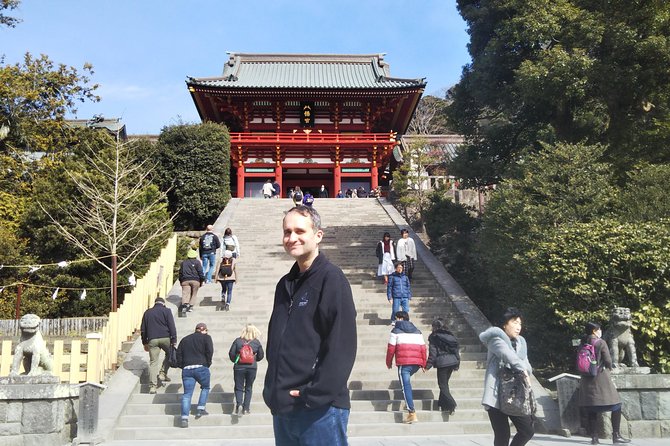
Tsurugaoka Hachimangu is the natural place to begin if you want Kamakura’s samurai story explained from the center outward. The shrine honors Hachiman, linked with Emperor Ojin and regarded as the patron deity of the Minamoto family and samurai more broadly.
A 30-minute visit gives you time to see the main approach and understand why this shrine mattered to Kamakura’s rulers. I would choose it early in the day if your main goal is historical context. Your guide can explain how religion, military power, and political authority met here without reducing the subject to a string of dates.
The shrine itself is free to enter. Since it is a central sight, it also makes a practical meeting point if you are beginning near Kamakura Station.
Meeting the Great Buddha at Kotoku-in
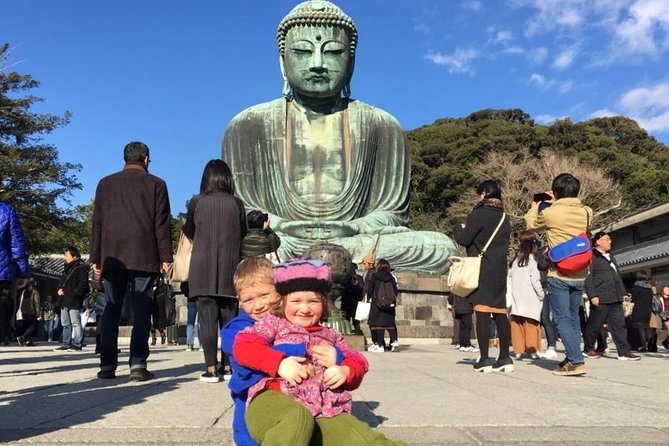
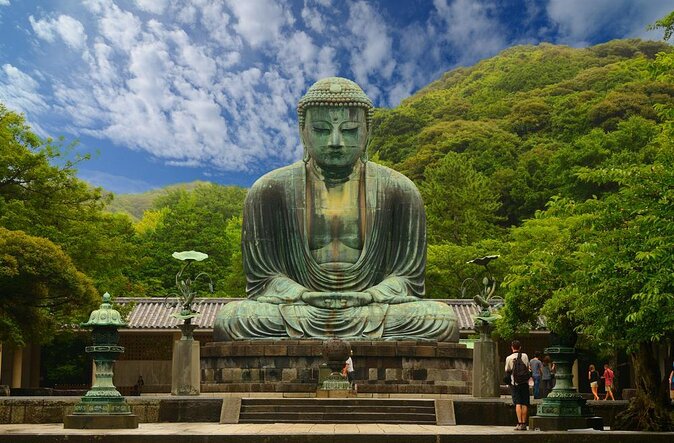
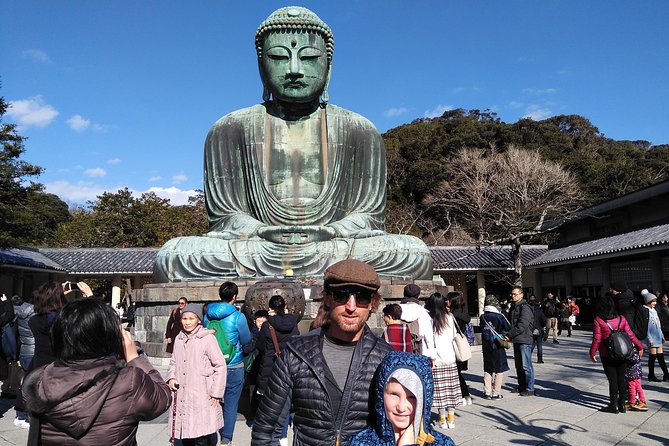
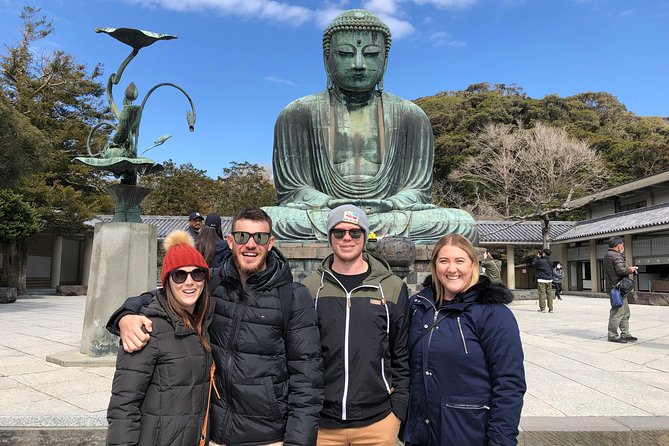
The Great Buddha of Kamakura is the image most people associate with the town. The bronze Amida Buddha at Kotoku-in is 11.4 meters tall and has long been Japan’s second-largest bronze Buddha.
The listed visit is brief, only about five minutes, so you should be clear about what you want. If you simply need to see the statue and take in its scale, a short stop may work. If you want a fuller explanation of Amida Buddhism, the history of the statue, or time around the temple grounds, ask your guide to give Kotoku-in more room.
Admission is not included. The Great Buddha is also the southern end of the Daibutsu hiking route, making it a logical anchor for a hike rather than an isolated photo stop.
Walking the 3.7-mile Daibutsu Trail
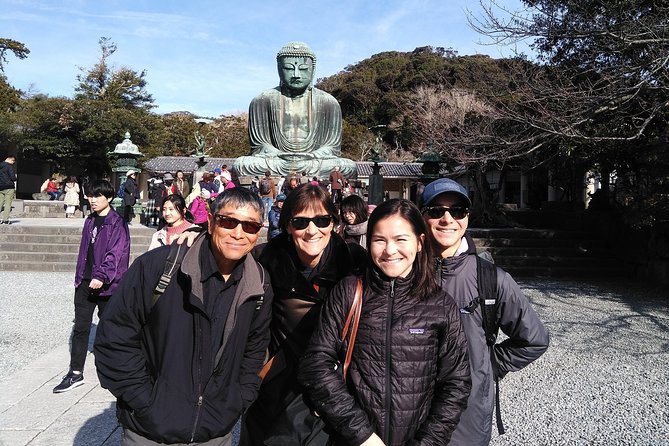
The Daibutsu Trail is the tour’s most active feature. It runs for about 3.7 miles, or 6 kilometers, between the Great Buddha in the south and Jochi-ji Temple toward the north. The route crosses the wooded hills that surround Kamakura.
This is not a flat town stroll. The trail is the reason to wear proper walking shoes and leave room in your day for uneven ground. One tour with Shinji Komiyama took place after rain, and he noted that the path was slippery. That is useful advice: wet weather can change the feel of the hike, so ask about conditions and be realistic about your footing.
The trail receives about an hour in the sample plan, but your guide can shape the balance between walking and sightseeing. If hiking is your main reason for booking, say so before the tour. Shinji has already handled that kind of request, combining a general introduction to Kamakura with a good walk.
The trail also gives you a break from temple interiors and busy streets. You move through forested hills, then return to historic sites with a better sense of how Kamakura is arranged.
Same trailhead, a different sort of day:
- Fushimi Inari Hidden Hiking Tour (Private Option Available)
★ 5.0 · 1,750 reviews - Kyoto: 3-Hour Fushimi Inari Shrine Hidden Hiking Tour
★ 4.9 · 270 reviews - Hike Japan Heritage Hakone Hachiri with certified mountain guide
★ 5.0 · 46 reviews - 1-Day Tour from Nagoya: Hiking the Historic Nakasendo Trail
★ 4.9 · 34 reviews
Hasedera and its towering Kannon
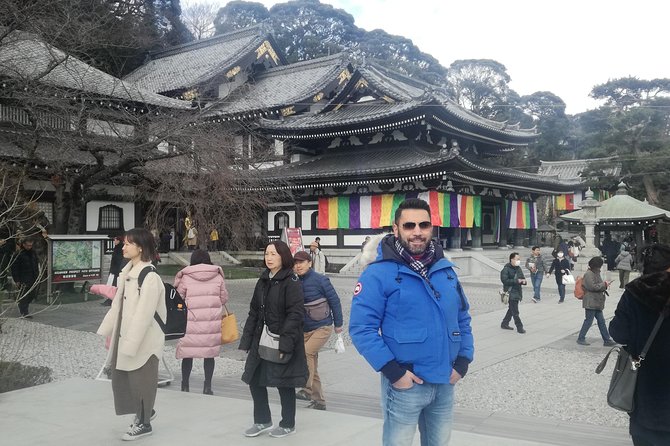
Hasedera belongs on your shortlist if Buddhist sculpture interests you. The Jodo sect temple is known for an eleven-headed Kannon, the goddess of mercy. The gilded wooden image is 9.18 meters tall.
The listed stop is only five minutes, which is not enough for a thoughtful visit to a major temple complex. I would include Hasedera only if you are willing to give it more time or if your group mainly wants a quick look alongside the Great Buddha.
Admission is not included. Ask your guide how Hasedera fits with the day’s walking route, since adding too many southern Kamakura sights can leave little time for the hills or northern Zen temples.
Bamboo at Hokoku-ji Temple
Hokoku-ji is a strong choice for a shorter, more focused temple visit. Behind the main hall is a small bamboo grove with more than 2,000 dark green stalks and narrow paths through the trees.
The grove is not huge, and that is part of its appeal. You are not signing up for a long hike through bamboo. You are visiting a compact temple setting where the bamboo changes the mood quickly.
The suggested stop lasts 30 minutes, which gives you time to walk the paths without turning the visit into a rushed photograph. Admission is extra. If you want a quieter, more visual stop after a history-heavy morning, Hokoku-ji balances the itinerary well.
Zen temples around Kita-Kamakura
The northern side of Kamakura is especially useful for comparing Zen temples. Engaku-ji is one of Eastern Japan’s leading Zen temples and ranks second among Kamakura’s five great Zen temples. It was founded in 1282 by the regent Hojo Tokimune.
Kencho-ji ranks first among the five great Zen temples and was founded in 1253. It is also described as the oldest Zen temple in Kamakura. If you want the clearest introduction to Kamakura Zen, these two deserve priority.
Jochi-ji ranks fourth and belongs to the Engaku-ji school of the Rinzai sect. It is important for this tour because the Daibutsu Trail begins or ends near it. Tokei-ji is another small Rinzai temple nearby, while Jufuku-ji ranks third among the five great Zen temples and belongs to the Kencho-ji school.
You cannot reasonably visit all of these in detail during a six-hour walking tour. I would choose one or two, depending on whether the hike is also on your list. Engaku-ji or Kencho-ji provides a strong main stop, while Jochi-ji makes the most sense when paired with the Daibutsu Trail.
Entrance fees are not included at these temples. The tour information also notes that guide entry fees are covered only for sights listed under the included stops, so confirm which places your guide will enter with you and what you will pay separately.
Zeniarai Benten and money-washing tradition
Zeniarai Benten is a popular shrine in western Kamakura where people wash money in the spring. The name zeniarai means coin washing, and the custom is tied to the belief that money washed there will bring financial benefit.
This is a distinctive stop because it gives you a local ritual rather than another large temple complex. The shrine is free to enter, and the suggested visit is 30 minutes. It pairs well with a history-focused route if you want one lighter, more playful moment.
The shrine is in western Kamakura, so route planning matters. It may not fit neatly with every combination of eastern temples, Enoshima, and the Daibutsu Trail.
Meigetsuin, the Hydrangea Temple
Meigetsuin is known as the Hydrangea Temple because hydrangeas bloom across its grounds. It belongs to the Rinzai Zen sect and was founded in 1160.
This is a seasonal choice. The flowers are the main reason to prioritize it, while the temple’s Zen setting gives the stop value beyond the blooms. The suggested visit is only five minutes, so I would not select it unless your guide can allow more time or you are visiting during the hydrangea season and want a quick look.
Admission is extra. As with the other short stops, the five-minute estimate appears to describe a brief look rather than a full temple visit.
Smaller temples for a quieter route
Ankokuron-ji, Myohon-ji, Jomyo-ji, Zuisen-ji, Eisho-ji, and Jufuku-ji offer a different kind of Kamakura day. They are less about checking off a single famous object and more about seeing the town’s religious variety.
Ankokuron-ji and Myohon-ji are linked with the Nichiren sect. Jomyo-ji is a Zen temple in the eastern hills and ranks fifth among Kamakura’s five great Zen temples. Zuisen-ji sits at the back of a narrow valley surrounded by wooded hills and is a branch temple of Engaku-ji.
Eisho-ji is particularly unusual because it is the only surviving nunnery in Kamakura. It was founded in the early Edo period by a woman connected with the Tokugawa family.
These stops are best for repeat visitors or anyone who prefers a quieter route. Most have only five minutes in the suggested schedule, while Zuisen-ji receives 30 minutes and Eisho-ji 10 minutes. Admission fees are not included.
Adding Enoshima to the day
Enoshima is a small island west of Kamakura, linked to the mainland by a bridge and reached by a short train ride from Kamakura. It has a shrine and other attractions, with a distinctly tourist-oriented feel.
The planned stop is only five minutes, so Enoshima functions better as a view or orientation stop than as a full island visit. If you want to explore the island properly, it should probably replace several other sites rather than be added on top of them.
One particularly useful detail comes from a tour with Shinji Komiyama: good weather allowed the group to see Mount Fuji from Enoshima. That sight is weather-dependent, so treat it as a bonus, not a promise. If photography matters to you, tell the guide before the day begins.
How the guide changes the experience
The guide is the main reason to choose this tour instead of visiting Kamakura independently. A government-issued National Government Licensed Guide Interpreter certification requires a strong grasp of Japanese culture and history. At a shrine such as Tsurugaoka Hachimangu or a Zen temple such as Kencho-ji, that context can help you see more than architecture.
Shinji Komiyama is the named guide connected with the strongest praise. He contacts people before the tour to ask what they want, then adjusts the day. He has handled requests for a historical overview, a worthwhile hike, and photography opportunities.
The guide does not simply remove the need for planning. You still need to select three or four priorities, tell the local partner where you are staying, and choose a sensible start time. The better your request, the better the route can match your interests.
This is a private activity, so only your group participates. That gives you more control over pace and stops than a large group tour. It also means the price may make more sense for two or more people sharing the experience than for a solo visitor.
Price, timing, and practical value
At $153.50 per person, this is not a bargain walking tour. Transportation, lunch, entrance fees, and personal expenses are extra. You also do not receive private vehicle transport, and the meeting is on foot at your hotel or the closest station within the designated Kamakura or Yokohama area.
The value comes from flexibility and interpretation. If you are unsure how to connect a hike with temples, or you want a guide to explain the samurai and Zen traditions, the cost can save planning time and prevent an overstuffed day.
The six-hour length is the key limitation. The journey from Tokyo can take about 1.5 hours each way, according to one practical assessment of the schedule. That leaves only three hours in Kamakura if you count the full return trip. I would stay in Kamakura, start from Yokohama, or arrange your day so the tour is not squeezed between long train rides.
The tour is rated 4.5 from 12 ratings, with particularly strong praise for the guides’ preparation, friendliness, historical explanations, and ability to adjust the route. That is a small sample, but it matches the design of the experience: this works best when you use the guide as a local planner, not simply as a person who leads you from gate to gate.
Free cancellation is available until 24 hours before the start time. Changes or cancellations inside that window are not accepted for a refund.
Who should book this Kamakura hike?
I would book this tour if you want a private day with a clear focus. It suits couples, families, and small groups who want to choose between the Daibutsu Trail, samurai history, Zen temples, bamboo, or Enoshima rather than accept a fixed route.
It is also a good fit if you want an English-speaking guide who can explain cultural details and adjust the pace. Most people can participate, and service animals are allowed, but you should treat the activity as a real walking tour, especially if you select the full trail.
I would skip it if you want an all-inclusive package, private car, or a complete tour of every major Kamakura sight. I would also avoid booking it as a rushed day trip from central Tokyo. Pick three or four priorities, allow for train time, and tell the guide what matters most.
FAQ
How long is the Kamakura hiking tour?
The tour lasts approximately six hours. The Daibutsu Trail is about 3.7 miles, or 6 kilometers, and receives about one hour in the suggested schedule.
How many sights can I visit?
The tour is customizable around three or four selected sites from the available list. The full list includes far more places than can fit into one six-hour visit.
Where do I meet the guide?
You meet the guide on foot at your hotel or the closest station within the designated Kamakura or Yokohama area. Private vehicle transportation is not included.
Is transportation included?
No. Transportation fees are not included, and the tour does not provide private transportation. This matters especially if you are traveling from Tokyo, since the journey can take about 1.5 hours each way.
Are entrance fees included?
Entrance fees are generally not included. The tour information states that guide entry fees are covered only for sights listed under the included expectations, so you should confirm the chosen stops and budget for admissions.
Can I cancel for a full refund?
Yes. You can cancel at least 24 hours before the experience start time for a full refund. Cancellations or changes made less than 24 hours before the start time are not accepted for a refund.
More 1-Day Tours in Japan
- Cinque Terre Day Trip with Optional Hiking or Pisa
★ 5.0 · 8,486 reviews - Florence: Cinque Terre Day Trip with Optional Hiking or Pisa
★ 4.9 · 4,848 reviews - From Tirana: Bovilla Lake & Gamti Mountain Hiking Day Trip
★ 4.9 · 4,397 reviews - From SF: Yosemite Day Trip with Giant Sequoias Hike & Pickup
★ 4.9 · 1,331 reviews
Just added around Japan
- From Nagoya: Kamikochi Guided Hike in the Japanese Alps★ 5.0 · 3 reviews
- Kyoto: Arashiyama Bamboo Grove, Monkey Mountain Walking Tour★ 4.7 · 4 reviews
- 1-Day Tour from Nagoya: Hiking the Historic Nakasendo Trail★ 4.9 · 34 reviews
- From Matsumoto/Nagano: Nakasendo Trail Walking Tour★ 4.9 · 33 reviews
- Kyoto: Fushimi Inari Hidden Hike (Private)★ 5.0 · 31 reviews
- Private Local Hiking to enjoy the nature and culture of Mt.Fuji★ 5.0 · 22 reviews
- Walk the Ancient Pilgrim Paths of Mt. Fuji – Private Tour★ 5.0 · 10 reviews
- Morning Hiking Tour: Mt. Futaba & Hiroshima’s History★ 5.0 · 25 reviews
Japan Hiking Tours, compared.
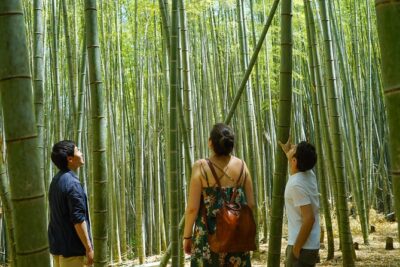
Fushimi Inari Hidden Hiking Tour (Private Option Available)
Read our review →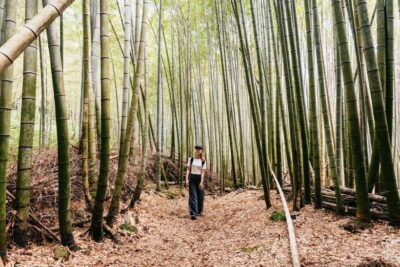
Kyoto: 3-Hour Fushimi Inari Shrine Hidden Hiking Tour
Read our review →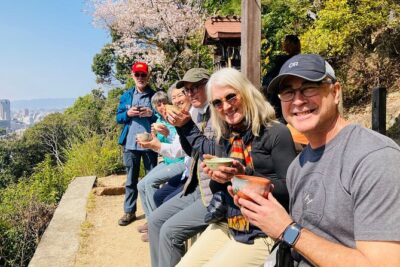
Hiroshima Local guided Hiking Tour&Open-air Tea Ceremony
Read our review →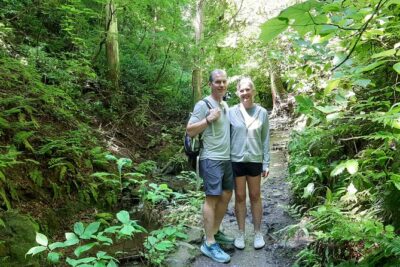
Full Day Hiking Tour at Mt.Takao including Hot Spring
Read our review →
Hike Japan Heritage Hakone Hachiri with certified mountain guide
Read our review →
Magome & Tsumago Nakasendo Trail Day Hike with Government-Licensed Guide
Read our review →
1-Day Tour from Nagoya: Hiking the Historic Nakasendo Trail
Read our review →
From Matsumoto/Nagano: Nakasendo Trail Walking Tour
Read our review →Browse the lists this tour appears in