
REVIEW · SELF-GUIDED TOURS
Volcanic Valley Self Guided Walking and Hiking at Waimangu
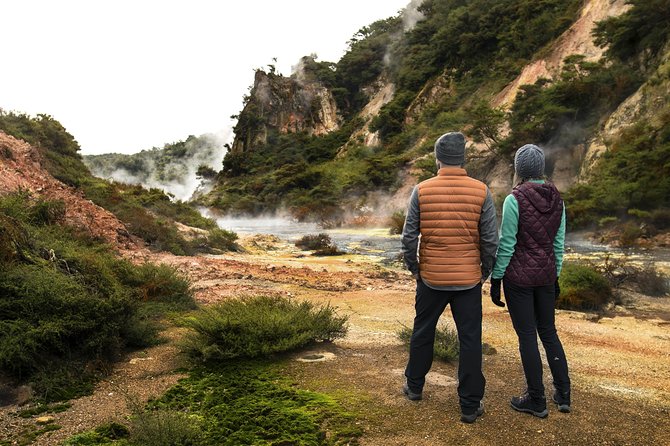
Waimangu is Rotorua’s volcanic valley in its most natural form: a long downhill walk past steaming lakes, bubbling ground, native bush, and open grassland. You set the pace, and a printed Wanderer Guide explains what you are seeing without placing you in a group.
I like two things here. The valley feels untamed, with birds, ferns, steam, and hot water sharing the same space. I also like the free return shuttle, which lets you see more without walking back uphill. The main caution is timing: late arrivals may have to hurry for the final bus, and the trail is uneven and steep in places.
Key points to know before you go
- Waimangu is a downhill geothermal walk, not a guided bus tour, so you control your stops and walking speed.
- Inferno Crater Lake and Frying Pan Lake are major sights, with steam, acidic water, and striking colors.
- The Wanderer Guide gives useful background on the Tarawera eruption and the lost Pink and White Terraces.
- The shuttle bus returns you uphill from the trail, making the full route easier on your legs.
- The setting feels natural rather than heavily staged, with forests, wetlands, birds, hot springs, and steam vents.
- Allow about two hours, and check the last shuttle time carefully if your entry is in the afternoon.
Why Waimangu feels different from a standard Rotorua stop
Rotorua offers several places to see geothermal activity, but Waimangu gives you a moving view of the whole system. You do not simply arrive at one viewing platform, take a photo, and leave. You walk through a changing series of environments, from native woodland to wetlands, steaming lakes, open grassland, and steep volcanic slopes.
That variety is the heart of the experience. One bend may bring a quiet stand of bush filled with birdsong. The next opens to a broad lake or a fumarole sending steam into the air. The geothermal sights are impressive, but they make more sense because you encounter them within a living natural setting.
Waimangu is also known as the world’s youngest geothermal system. Its story is tied to the Tarawera eruption, which reshaped the area and destroyed the Pink and White Terraces. The guide sheet helps connect the dramatic scenery you see today with that event and with the continuing volcanic activity beneath the valley.
I would choose this walk if you want time to look closely. The self-guided format means you can pause beside a steaming vent, read about a lake, or wait for better light without holding up a group.
More Walking Tours in New Zealand:
- Stevensons Island 2-Hour Cruise and Nature Walk
★ 4.6 · 160 reviews - Lake Cruise & Mou Waho Island Nature Walk
★ 5.0 · 148 reviews - Fiordland: Jet Boat & Nature Walk Experience from Te Anau
★ 4.9 · 97 reviews
Starting at 587 Waimangu Road
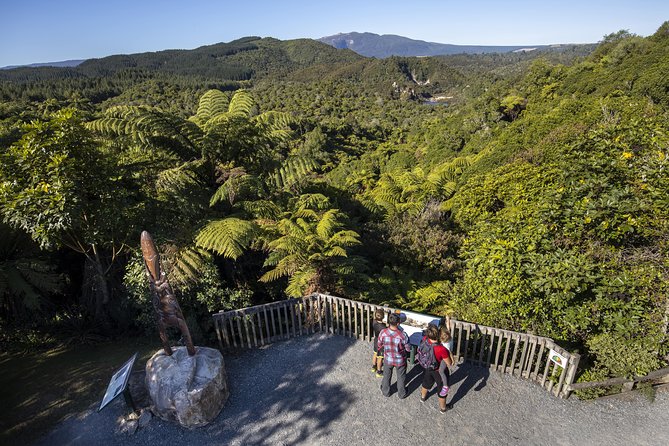
You begin at Waimangu Volcanic Valley, at 587 Waimangu Road in the Bay of Plenty region. Check in, collect your Wanderer Guide, and consider downloading the free Waimangu app before setting off.
The printed guide matters more than it might at first appear. Geothermal features can look similar when you see several hot pools and vents in a row. The notes give names and context, helping you understand why one lake is notable, why another has unusual color, and how the eruption changed the valley.
There is no regular guide leading your group from point to point. That is good news if you dislike a fixed schedule, but it also means you should take responsibility for your own timing. Read the guide as you go, keep an eye on the route, and allow enough time to reach the shuttle stop you want.
The entry price is about $46.54 per person. That is not the cheapest short activity around Rotorua, especially if you spend only an hour inside. Still, the fee includes admission, the guide sheet, and the internal shuttle bus. If you walk for close to two hours and use the bus to avoid the uphill return, the price becomes easier to justify.
The downhill route through forest and geothermal country
The walk begins with a gentle sense of discovery rather than a single major spectacle. You follow trails through native woodland and open areas where geothermal activity appears beside ordinary plant life.
That mix is one of Waimangu’s strongest features. You may hear birds in the trees while steam rises from a lake nearby. Ferns and grasses grow close to hot ground, creating a sharp contrast between cool green vegetation and volcanic heat.
The route is generally manageable, but it is not completely flat. Some sections are steep, and the surface can be uneven. The information advises a moderate level of fitness, which is a fair description. You do not need to be a serious hiker, but you should be comfortable walking downhill and handling steps or sloping paths.
Benches and stopping points make it possible to take the route slowly. Families can choose shorter options, while people who want more walking can continue farther into the valley. One practical detail is especially useful: there are several bus stops along the route, so you are not committed to walking every section if your legs or schedule say otherwise.
Do not rush the first half. The quieter sections of woodland and grassland give you a better feel for the valley than a rapid march from one famous pool to the next.
Frying Pan Lake and the first big geothermal views
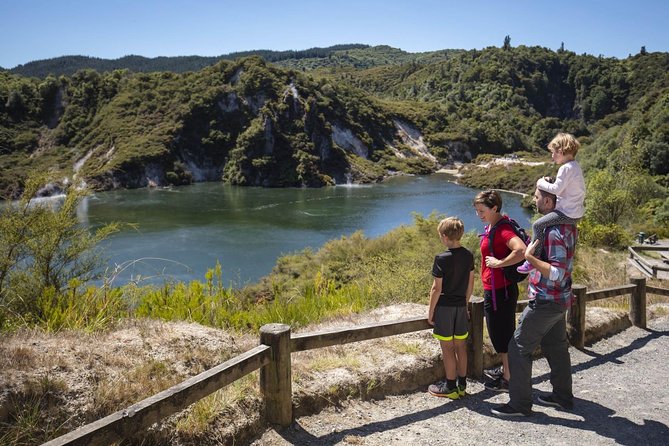
Frying Pan Lake is one of the main features along the walk. Its name gives you a good idea of the scene: broad, hot, and active, with steam and geothermal water spread across a large area.
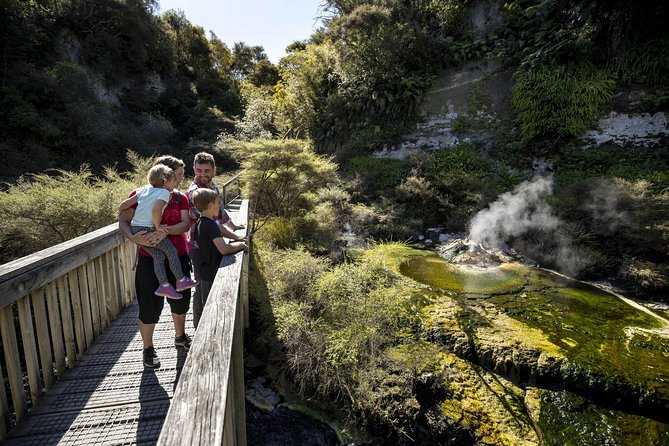
You may see hot springs and vents bubbling or spurting beside the trail. These sights are not presented as theatrical effects. The appeal comes from watching natural activity continue at its own pace. Steam can thicken or thin with the weather, and the air may carry the unmistakable smell of geothermal gases.
This is where the guide sheet earns its keep. Rather than treating the lake as a pretty view, it explains the forces behind it and helps you notice details in the water and surrounding ground.
The walk also gives you a chance to think about safety. Stay on the marked trail and use the designated viewing areas. A geothermal valley is not a place for casual shortcuts, even when a patch of ground looks firm.
A few more hikes around New Zealand worth a look
- Queen Charlotte Track: Cruise & Self-Guided Hike from Picton
★ 4.8 · 383 reviews - PR1 Sunrise Pico do Arieiro Self-Guided Hiking Transfer
★ 5.0 · 299 reviews - Self guided Hike Trail to Nature Walk & Waterfall
★ 4.5 · 283 reviews - Black Forest: Ravenna Gorge Hike, Self-Guided
★ 4.3 · 44 reviews
Inferno Crater Lake and the valley’s strongest colors
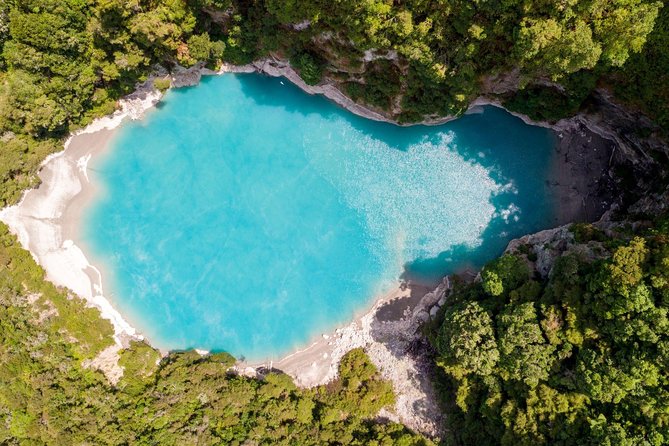
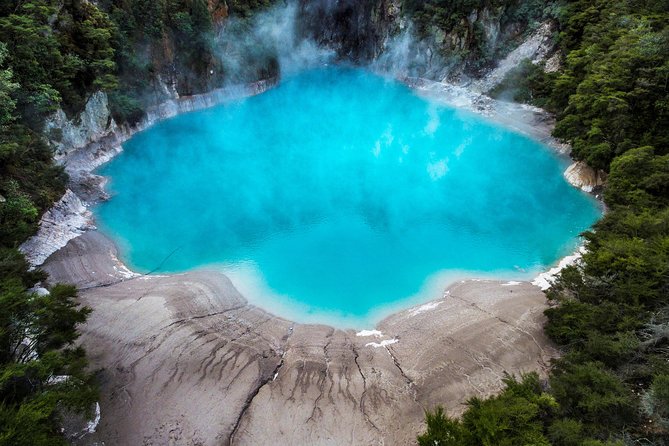
Inferno Crater Lake is likely to be one of your most memorable stops. The lake’s intense blue color is a major draw, and the sight can look almost unreal against the surrounding forest and volcanic slopes.
The color is part of the geothermal story, not a decoration added for visitors. Read the guide to understand the lake’s acidic conditions and the activity below the surface. You may also find that the view changes with steam, cloud, and sunlight, so give yourself a few minutes rather than taking a single hurried photograph.
Several people describe the walk to this point as easy enough for a relaxed outing, while others emphasize the steep sections. Both impressions can be true. The route is not an extreme hike, but the valley rises and falls enough that you will notice the grade, especially if you are carrying a child or a full day pack.
I would make Inferno Crater Lake one of your main time markers. If you have a late entry, know how long you want to spend there before continuing. Afternoon visitors have sometimes faced a tight return schedule when the final shuttle was approaching.
Lake Rotomahana and the story of the lost terraces
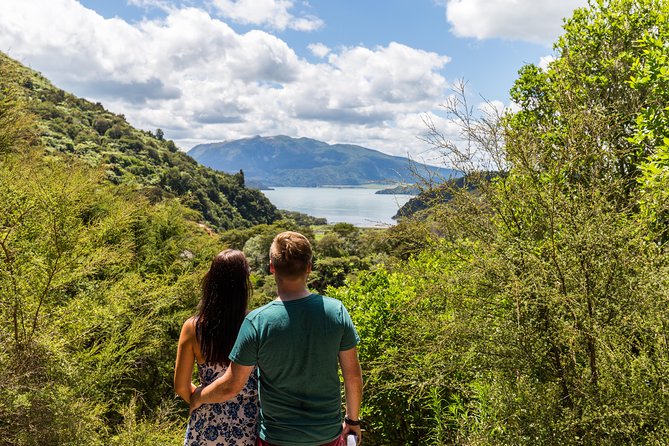
As you continue, the trail brings you toward Lake Rotomahana and the wider story of the Tarawera eruption. This is more than a scenic lake stop. It helps explain how the region changed and why the Pink and White Terraces are now hidden.
The guide sheet provides the background as you walk, so you can connect the water, craters, and steep volcanic forms with the event that reshaped the area. I find this kind of context more useful than a long lecture at the entrance because you receive it beside the feature it describes.
Some bookings and past visits have also included a boat cruise on Lake Rotomahana, but the self-guided walk described here includes the walk and internal shuttle only. Boat availability has varied, including periods when work affected the cruise, so do not assume a lake boat is part of this ticket unless your booking specifically says so.
The lake section can feel like a reward after the earlier walking. It opens the view and gives you a broader sense of the valley’s scale. If your energy is limited, you can use one of the shuttle stops rather than forcing yourself to complete every trail section.
The shuttle bus is more than a small convenience
The internal shuttle is one of the best practical parts of the visit. The route is downhill, but walking back uphill after a full circuit would change the outing from a pleasant half-day activity into a harder workout.
Use the bus to preserve your energy for the features themselves. You can walk farther into the valley, stop at the sights that interest you, and then ride back rather than retracing the route.
The shuttle also gives you a useful escape if the weather turns or the walk takes longer than expected. It is included in the admission price, along with an air-conditioned vehicle.
You still need to plan around the timetable. If your appointment begins at 3 p.m., a final bus around 4:35 p.m. can leave little room for lingering, photography, or a slow pace. For an afternoon visit, ask about the last pickup when you arrive. Morning is a better choice if you want cooler air, more visible steam, and less pressure from closing times.
Weather, clothing, and the walking surface
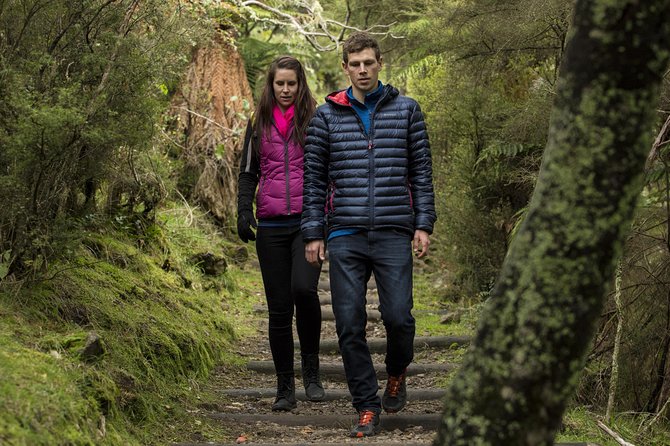
Waimangu operates in all weather, so dress for conditions rather than for the temperature in Rotorua town. Bring clothing that handles wind, rain, or changing temperatures, and wear shoes suited to uneven paths.
Cooler weather can make steam easier to see, while clear weather gives you stronger views across the lakes and slopes. Good weather also makes the walk more comfortable, but do not assume sunshine is necessary for a worthwhile visit. Mist and low cloud can add to the volcanic mood, although they may reduce distant views.
The route is not recommended for people with walking disabilities because of uneven surfaces and steep sections. Children must be accompanied by an adult. A pram may manage some of the walkway, but conditions vary, and a full route with slopes and steps may not be comfortable for every family.
The maximum group size is 15 people, but this is not a standard escorted group experience. You walk independently, with other visitors using the same trails.
How long should you allow?
The stated duration is roughly one to four hours, with about two hours listed for the main visit. That range makes sense because Waimangu lets you choose how much of the valley to walk and how long to stop.
Allow around two hours if you want the main sights without racing. Add time if you read every section of the guide, take photos, watch the steam, or pause for a rest.
An hour can work for a shorter visit, but you will need to be selective. Four hours gives you a slower pace and more room for the full walking route, though you should still confirm shuttle times.
I would schedule Waimangu as a half-day activity rather than squeezing it between several fixed appointments. The walk is better when you can stop without checking the clock every few minutes.
Is $46.54 good value?
At about $46.54 per person, Waimangu sits in the midrange for Rotorua attractions. If you compare it with a quick viewing platform, it may seem expensive. If you count the length of the walk, the number of geothermal features, the printed interpretation, and the return shuttle, the value is stronger.
The biggest benefit is freedom. You are not paying for a short presentation followed by a quick exit. You receive access to a large valley and can shape the visit around your energy and interests.
I would call it good value for anyone who prefers natural scenery and walking to a heavily staged attraction. It is less convincing for someone who wants a short, highly organized sightseeing stop or who dislikes uneven paths.
Food and drinks are available to purchase, but they are not included. Alcoholic drinks are also available for purchase. Transport to and from Waimangu is not included, so you need to arrange your own way to 587 Waimangu Road.
Who will enjoy this walk most?
This suits couples, families with older children, independent hikers, and anyone who wants to see Rotorua’s geothermal country at a calm pace. It also works well for people who prefer reading and observing rather than listening to a guide throughout the visit.
Families may appreciate the choice of routes and the bus stops. You can shorten the walk if needed, and the combination of forest, lakes, steam, and birds keeps the outing varied for children.
It is less suitable if you have limited mobility, dislike hills, or need a completely smooth route. The walk is not technically difficult, but moderate fitness and steady footing are important.
Photographers should plan for changing steam and light. The blue of Inferno Crater Lake, broad views over the thermal areas, and native vegetation offer plenty to look at, but the best view may require patience rather than a fast circuit.
My practical verdict
I would book this walk if you want Rotorua’s geothermal activity in a natural setting, with enough time to notice the details. Waimangu’s best qualities are its variety, its quiet self-guided pace, and the shuttle that removes the hardest part of the return.
Choose a morning entry if possible. You will have more time, cooler conditions, and less concern about the final bus. Bring proper shoes, dress for all weather, read the guide as you go, and do not assume a boat cruise is included.
Skip it if you want a very short stop, a fully guided experience, or a route without slopes. For everyone else, the combination of Inferno Crater Lake, Frying Pan Lake, Lake Rotomahana, native bush, and active steam makes this one of Rotorua’s more satisfying half-day walks.
FAQ
Where does the Waimangu self-guided walk begin?
The activity begins at Waimangu Volcanic Valley, 587 Waimangu Road, Bay of Plenty Region 3073, New Zealand.
How long does the walk take?
The visit can take about one to four hours, with around two hours suggested for the main walk. Your exact time depends on the route you choose, your walking pace, and how long you stop at the geothermal features.
What is included in the admission price?
The price includes admission to the self-guided walk, a guide sheet, the internal shuttle bus, and an air-conditioned vehicle.
Is transport to Waimangu included?
No. Transport to and from the attraction is not included. The shuttle covers the internal route from the walking trail back toward the starting area.
What should I wear?
The walk operates in all weather, so dress appropriately for changing conditions. Wear suitable shoes because the route has uneven surfaces and some steep sections.
Is the walk suitable for children?
Children must be accompanied by an adult. The route offers different walking options, but adults should consider the uneven surfaces and the moderate fitness level required.
Can I cancel for a refund?
You can cancel up to 24 hours before the experience start time for a full refund. Cancellations or changes made less than 24 hours before the start time are not accepted for a refund.
Just added around New Zealand
- Rangitoto Island: Sea Kayak & Summit Hike Day Trip★ 4.8 · 31 reviews
- From Queenstown: Franz Josef Glacier Hike & Scenic Flight★ 5.0 · 25 reviews
- From Queenstown: Mount Cook Heli-Hike and Bus Tour Combo★ 4.8 · 42 reviews
- Abel Tasman National Park: Cruise, Kayak, & Hike Tour★ 5.0 · 9 reviews
- Mou Waho Island: 3-Hour Cruise and Guided Nature Walk★ 4.9 · 66 reviews
- Fiordland: Jet Boat & Nature Walk Experience from Te Anau★ 4.9 · 97 reviews
- Mt Cook Small Group Tour & Heli Hike Combo from Queenstown★ 5.0 · 64 reviews
- Milford Track: Full Day Guided Hike and Nature Cruise★ 4.7 · 70 reviews
Self-Guided Tours, compared.
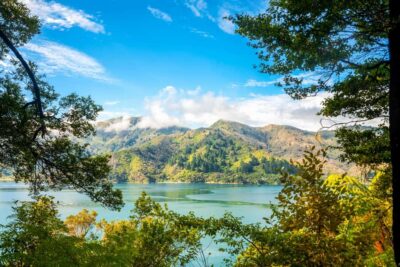
Queen Charlotte Track: Cruise & Self-Guided Hike from Picton
Read our review →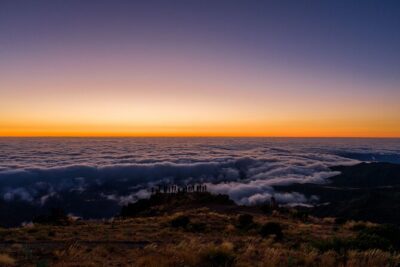
PR1 Sunrise Pico do Arieiro Self-Guided Hiking Transfer
Read our review →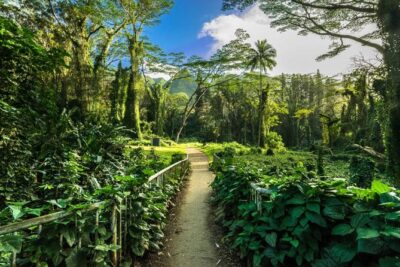
Self guided Hike Trail to Nature Walk & Waterfall
Read our review →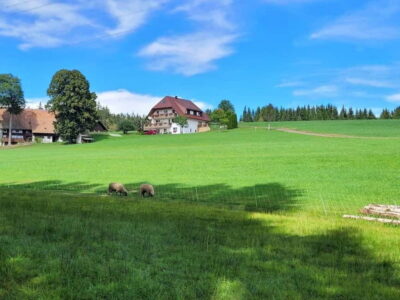
Browse the lists this tour appears in