
REVIEW · JAPAN
Hiroshima Local guided Hiking Tour&Open-air Tea Ceremony
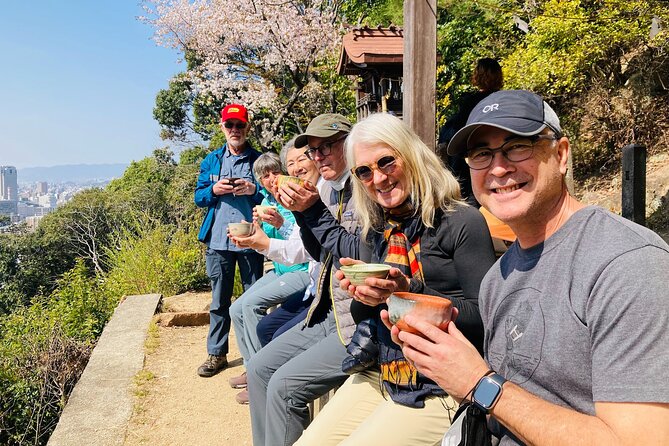
Mt. Futaba gives you a different way to meet Hiroshima. Instead of spending the whole morning among city streets and museums, you climb through shrine grounds and forest to a Buddhist peace pagoda, with the city and Seto Inland Sea spread below. The final reward is a Nodate tea ceremony outdoors, served by your guide at Kinko Inari’s upper shrine.
I like two things especially. First, the guides, including Nana, Michi, and Naomi, bring the route to life with explanations of Shinto customs, local history, and the meaning of shrine rituals. Second, the small group size, capped at six, makes the forest bathing, meditation, and tea service feel personal rather than staged. The main consideration is the climb: you go up about 500 steps, and steep or uneven sections can feel demanding in hot weather.
Key points to know before booking
- A mountain walk from Hiroshima Station: The route begins at the Shinkansen Exit and reaches forested Mt. Futaba without requiring a separate transfer.
- Shrines, a pagoda, and city views: You visit Hiroshima Toshogu, Kinko Inari, and Futabayama Peace Pagoda before looking across Hiroshima, Miyajima, and the Seto Inland Sea.
- About 500 steps uphill: The route is manageable for many people, but it is not a flat stroll. Frequent stops help.
- Tea served outdoors: The Nodate ceremony takes place near Kinko Inari’s Okumiya Shrine, with a broad view from the mountain.
- Three departure times: Morning departures are listed at 7:30, 10:00, and 13:00. The early start leaves most of your day free.
- A small conservation contribution: Five percent of the fee goes toward conservation work on Futaba Mountain.
Why Mt. Futaba changes your view of Hiroshima
Hiroshima is often approached through the Peace Memorial Park, A-Bomb Dome, and Peace Memorial Museum. Those places are essential, but this walk gives you another way to understand the city. From Mt. Futaba, you see Hiroshima as a living place that has rebuilt itself, with neighborhoods, waterways, the Seto Inland Sea, and Miyajima all visible from above.
The route also connects Shinto practice, Buddhist remembrance, and the natural setting around the city. Your guide explains what you are seeing instead of simply leading you from one gate to the next. That matters in Japan, where a shrine visit can involve customs that are easy to miss if you only stop for a photograph.
I especially like the balance here. You get a physical walk, cultural context, quiet time in the woods, and a pleasant drink at the end. It is not a substitute for Hiroshima’s main memorial sites, but it makes a strong companion to them.
More Guided Day Hikes in Japan
- Full Day Hiking Tour at Mt.Takao including Hot Spring
★ 5.0 · 52 reviews - Magome & Tsumago Nakasendo Trail Day Hike with Government-Licensed Guide
★ 5.0 · 38 reviews - Kamakura One Day Hike Tour with Government-Licensed Guide
★ 4.5 · 12 reviews
Starting at Hiroshima Station
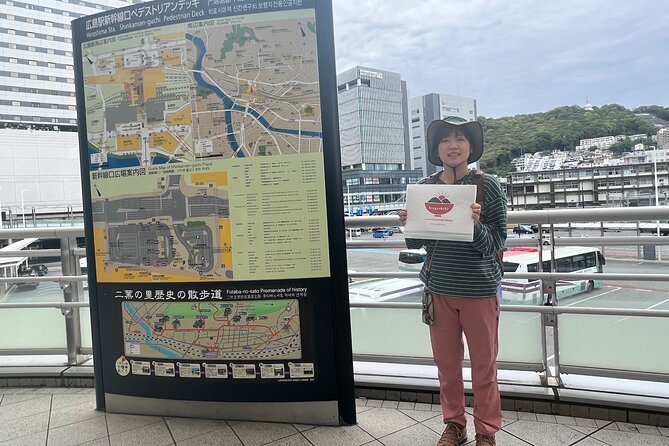
The meeting point is at Hiroshima Station’s Shinkansen Exit, at 1-2-37 Matsubaracho in Minami Ward. Starting here is practical if you are staying near the station or arriving by train. The walk begins right in the city, so you do not spend the morning arranging a taxi or finding a remote trailhead.
The guide first introduces the route and explains how the morning will work. Since the group can have no more than six people, you should be able to hear the explanations and ask questions without competing with a large crowd.
The listed departure times are 7:30, 10:00, and 13:00. The early option is the best fit if you want to visit the Peace Memorial Park, museum, or another part of Hiroshima afterward. The later starts may suit your schedule, but a 13:00 departure uses much of the afternoon.
Arrive on time. If you are more than 10 minutes late without contacting the operator, the booking can be canceled with the full fee charged.
Hiroshima Toshogu and the first shrine lessons
The first main stop is Hiroshima Toshogu, a significant Shinto shrine with important cultural assets. Here, the guide introduces the setting and explains details of shrine etiquette and practice.
This is a useful opening because you learn how to look before the walk becomes more physical. Instead of treating the shrine as a quick photo stop, you get context for gates, worship, offerings, and the relationship between sacred buildings and the surrounding mountain.
The stop lasts about 30 minutes. That is enough time for an explanation and a proper look without turning the morning into a long formal lecture. The pace also helps you save energy for the climb ahead.
Kinko Inari and the 500-step climb
From Hiroshima Toshogu, the route continues toward Kinko Inari Shrine and Mt. Futaba. The climb includes about 500 steps. That number is the most important practical detail in the whole tour, especially if you are not used to uphill walking.
The path is described as easy to moderate, with maintained stairs and trails, but it is still a climb. Some sections are steep or uneven. The guide pauses often to explain the shrines and local customs, which also gives you time to catch your breath.
Past participants have managed the walk in very hot conditions, including a day reaching about 36 degrees Celsius, because the guide built in water breaks and regular pauses. Still, do not treat that as a reason to ignore the weather. Wear shoes with a secure grip, bring water, and consider the early departure during warm months.
The climb is more rewarding than a standard city walk because each pause has a purpose. You are not simply counting steps. You are moving through a pilgrimage route, learning why the shrines matter, and watching the city gradually fall behind the trees.
Same trailhead, a different sort of day:
- Fushimi Inari Hidden Hiking Tour (Private Option Available)
★ 5.0 · 1,750 reviews - Kyoto: 3-Hour Fushimi Inari Shrine Hidden Hiking Tour
★ 4.9 · 270 reviews - Hike Japan Heritage Hakone Hachiri with certified mountain guide
★ 5.0 · 46 reviews - 1-Day Tour from Nagoya: Hiking the Historic Nakasendo Trail
★ 4.9 · 34 reviews
Futabayama Peace Pagoda and the wide view
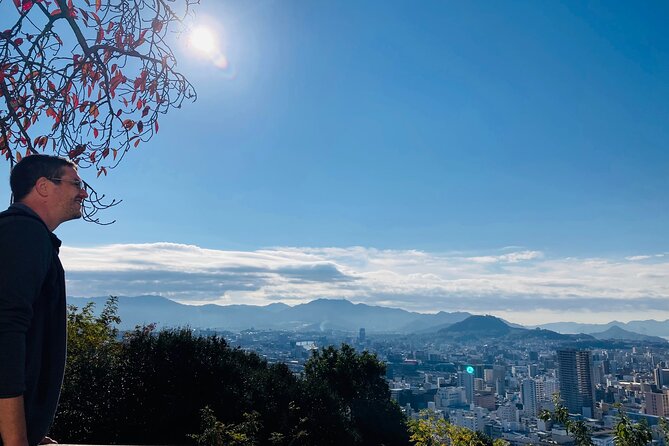
At the top, Futabayama Peace Pagoda provides one of the morning’s clearest visual moments. From here, you can look across Hiroshima City, the Seto Inland Sea, and Miyajima. On a clear day, this is the view that ties the whole outing together.
The pagoda also gives the walk a reflective quality. Hiroshima’s story is often told through memorial buildings and museum displays. From this height, you see the city’s recovery in a more direct way: streets, homes, waterways, and the working city stretching outward beneath the mountain.
Your guide helps identify parts of the view and adds historical context. That makes the overlook more useful than a simple stop for photographs. You gain a sense of how Hiroshima fits into its setting, rather than seeing the city only from ground level.
The stop is not completely private. Weather affects visibility, and the mountaintop is open to the elements. But the combination of height, greenery, and distance from the busiest city sights gives it a calm character.
Forest bathing and a pause for the senses
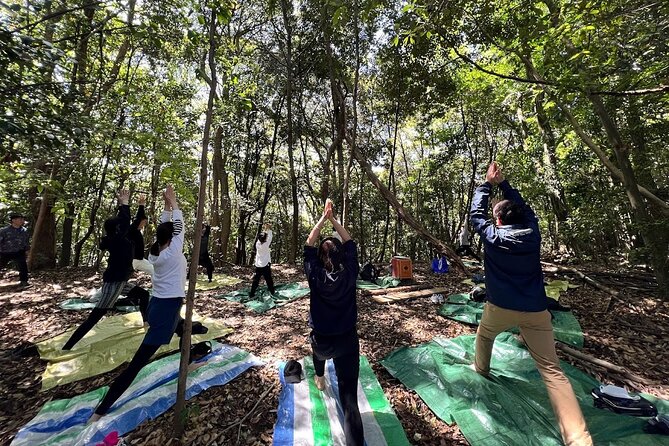
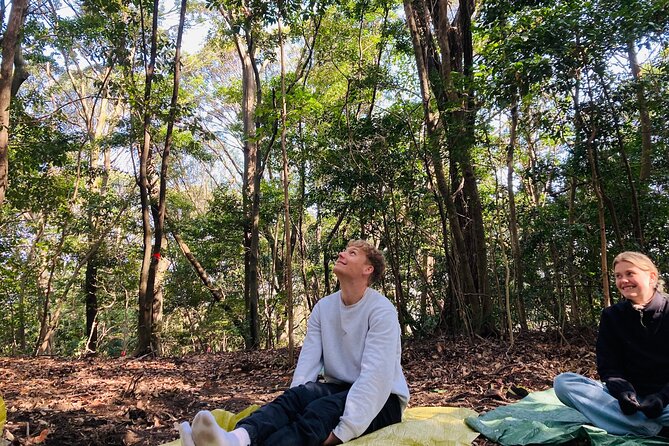
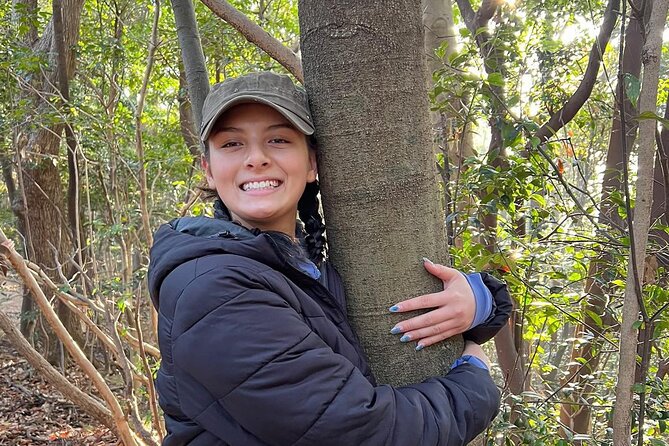
After reaching the upper part of Mt. Futaba, the tour includes a period of Shinrinyoku, or forest bathing. This is not a strenuous activity. It is a guided pause that asks you to pay attention to the forest and your senses.
The forest bathing section gives the morning a different rhythm. You have already climbed, listened, and taken in the view. Now you slow down. Some people will find this restful and memorable. Others may prefer more sightseeing time, especially if they are focused on monuments and formal attractions.
The guide may lead a short meditation or sensory exercise in a clearing. Groundsheets are used for the activity, according to the experience details. You should expect something simple and quiet rather than a long wellness class.
I see this as one of the tour’s most distinctive features. Many Hiroshima excursions cover monuments and museums, but few ask you to spend time noticing the mountain itself. It also creates a natural bridge between the climb and the tea ceremony.
Nodate tea at the Okumiya Shrine
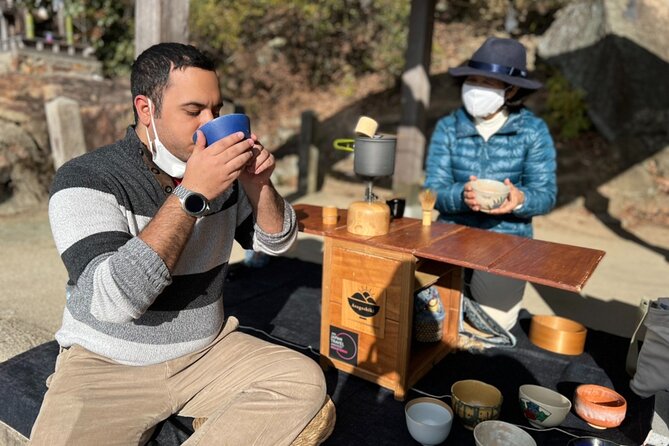
The tea ceremony takes place outdoors near Kinko Inari’s Okumiya Shrine. Nodate means tea served in an open-air setting, and the mountain view changes the mood from a formal indoor tea room. Your guide prepares and serves the tea, explaining the experience along the way.
The tea stop lasts about an hour, though the actual ceremony may vary with the day’s conditions and group pace. One especially practical detail from the experience is that the tea can be cold green tea, which is welcome after an uphill walk in summer. True matcha tea service is also included in the experience as described by participants.
This is not presented as a highly formal ceremony with strict silence and elaborate furnishings. Its strength is the setting and the personal connection. You are sitting near a sacred site, looking over Hiroshima, while your guide helps you understand the gestures and meaning behind the tea.
If you have already attended a polished tea ceremony in Kyoto, this will feel different. It is less about a perfect room and more about sharing tea outdoors in a place tied to the mountain’s religious life. That makes it a good choice if you want something informal, local, and connected to the walk.
The tea ceremony is also where the small group limit matters most. With up to six people, the guide can explain what is happening and make the occasion feel welcoming. Guides such as Nana, Michi, and Naomi are repeatedly described as warm, thoughtful, and easy to talk with. Their approach seems well suited to people who want questions answered rather than simply delivered a memorized script.
Returning to the station
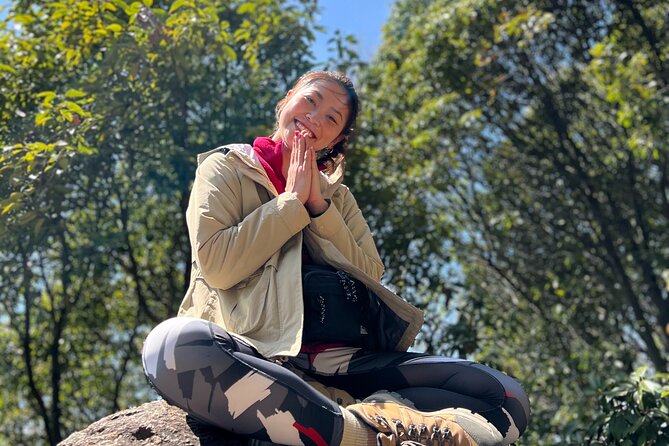
After the tea and mountain visit, you return to Hiroshima Station. The stated end time is 10:30 for the 7:30 departure, 13:30 for the 10:00 departure, and 16:30 for the 13:00 departure.
That timing makes the early departure particularly useful. You can have lunch, visit Peace Memorial Park, or continue to another Hiroshima sight while the day is still young. The later options are more convenient if your schedule does not allow an early start, but they leave less room for other activities.
The route is not designed for people seeking a long wilderness trek. You are close to the city and back at the station after roughly three hours. That is part of the appeal: you get forest, shrines, a viewpoint, and tea without giving up a full day.
What the $109.43 price covers
At $109.43 per person, this is not the cheapest way to take a walk in Hiroshima. You could visit some shrine grounds on your own for little or no admission cost. The value comes from the guide, the route planning, the explanations, the forest bathing session, and the open-air tea service.
The small group size strengthens the case for the price. A private or semi-private cultural walk can be costly in Japan, while this experience keeps the group to six people. You also avoid having to work out the mountain route, identify the shrines, or understand the customs on your own.
Five percent of the fee goes to conservation activities on Futaba Mountain. That is a modest but worthwhile feature, particularly because the tour depends on the care of the forest and trails.
I would consider the price fair if you value personal guiding and cultural explanation. If you only want a viewpoint and a short hike, it may feel expensive. If you want a morning that connects nature, religion, history, and tea, the fee is easier to justify.
Who should book this walk
This tour suits you best if you enjoy walking at a steady pace and want a side of Hiroshima beyond the main memorial district. Families with older children can take part, and children from 0 to 5 years old participate free, according to the tour information.
It is also a good fit for first-time visitors who want help understanding Shinto customs. The guides explain offerings, shrine practices, and local traditions in a way that adds meaning to the physical route.
You should think carefully before booking if stairs are difficult for you or if you dislike uneven paths. The route is not described as a hard mountain hike, but 500 steps are still 500 steps. Hot weather can make the climb much tougher, and rain may affect the outing.
The tour requires good weather. If poor weather causes cancellation, you are offered another date or a full refund. Normal cancellation is free up to 24 hours before the start time, while cancellations inside that period are not refunded.
Should you book the Mt. Futaba tea hike?
I would book this if you have already set aside time for Hiroshima’s major memorial sights and want a quieter morning with real local character. The best parts are the guides, the shrine explanations, the high view over the city, and the unusual tea service beside the mountain shrine.
Choose the early departure if possible. You get cooler walking conditions, more room in the rest of your day, and a calm start before Hiroshima’s main sights become busy.
Skip it if you want a flat walk, a formal indoor tea ceremony, or a tour focused only on the atomic bombing and memorial sites. For everyone else, this is a thoughtful three-hour addition to a Hiroshima visit, with enough physical effort to make the tea and the view feel earned.
FAQ
Where does the tour start and finish?
The tour starts at the Hiroshima Station Shinkansen Exit in Matsubaracho, Hiroshima. It ends back at the same meeting point.
How long does the experience last?
The tour lasts approximately three hours. The listed end times are 10:30, 13:30, and 16:30, depending on the selected departure.
How many steps are involved?
The hike requires going up about 500 steps on Mt. Futaba.
What departure times are available?
The listed departure times are 7:30, 10:00, and 13:00.
What will I see during the hike?
You visit Hiroshima Toshogu Shrine, Kinko Inari Shrine, and Futabayama Peace Pagoda. The route also includes views of Hiroshima City, the Seto Inland Sea, and Miyajima.
Is tea included?
Yes. The experience includes a Nodate open-air tea ceremony at Kinko Inari’s Okumiya Shrine, with a mountaintop view.
What happens if the weather is poor?
The activity requires good weather. If it is canceled because of poor weather, you can choose another date or receive a full refund.
Just added around Japan
- From Nagoya: Kamikochi Guided Hike in the Japanese Alps★ 5.0 · 3 reviews
- Kyoto: Arashiyama Bamboo Grove, Monkey Mountain Walking Tour★ 4.7 · 4 reviews
- 1-Day Tour from Nagoya: Hiking the Historic Nakasendo Trail★ 4.9 · 34 reviews
- From Matsumoto/Nagano: Nakasendo Trail Walking Tour★ 4.9 · 33 reviews
- Private Local Hiking to enjoy the nature and culture of Mt.Fuji★ 5.0 · 22 reviews
- Walk the Ancient Pilgrim Paths of Mt. Fuji – Private Tour★ 5.0 · 10 reviews
- Kyoto: Fushimi Inari Hidden Hike (Private)★ 5.0 · 31 reviews
- Explore Kiso Valley : Magome – Tsumago Mountain Trail Walk★ 5.0 · 33 reviews
Japan Hiking Tours, compared.
Fushimi Inari Hidden Hiking Tour (Private Option Available)
Read our review →
Kyoto: 3-Hour Fushimi Inari Shrine Hidden Hiking Tour
Read our review →
Full Day Hiking Tour at Mt.Takao including Hot Spring
Read our review →
Hike Japan Heritage Hakone Hachiri with certified mountain guide
Read our review →
Magome & Tsumago Nakasendo Trail Day Hike with Government-Licensed Guide
Read our review →
1-Day Tour from Nagoya: Hiking the Historic Nakasendo Trail
Read our review →
From Matsumoto/Nagano: Nakasendo Trail Walking Tour
Read our review →
Explore Kiso Valley : Magome – Tsumago Mountain Trail Walk
Read our review →Browse the lists this tour appears in