
REVIEW · USA
Boston Freedom Trail Walking Tour with Costumed Guide
Boston’s past comes alive best on foot, and this tour puts you beside the places where the American Revolution unfolded. In about 1 hour 45 minutes, you pass the gold-domed State House, Granary Burying Ground, the Old South Meeting House, and the Old State House before reaching the North End. The guide’s period costume and theatrical storytelling give the walk more life than a bare trail map.
I like the short 1.2-mile route, which gives you a useful slice of the Freedom Trail without the longer trek across the Charles River. I also like the finish near Faneuil Hall and Paul Revere Mall, where you can continue to a meal or more sightseeing. The main concern is group size: up to 50 people may join, and a few people have had trouble hearing when they were not near the front.
Key points to know
- The route covers Boston’s most concentrated historic core, including the State House, Granary Burying Ground, Old South Meeting House, and Old State House.
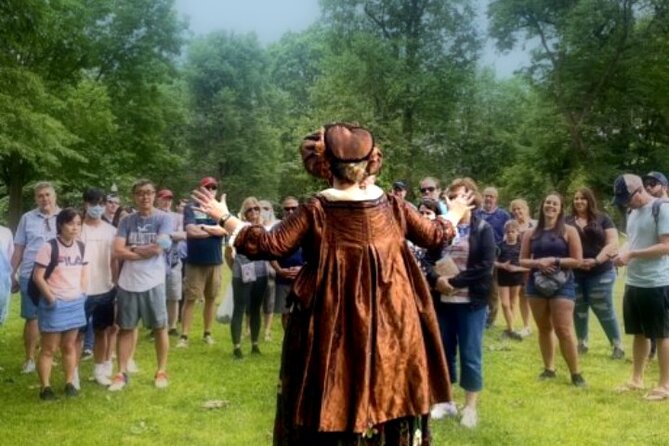
- Costumed guides bring different personalities, with guides such as Ben, Katherine, Neil, Elaina, and John Hancock using humor and theatrical storytelling.
- The walk is generally gentle, with only a few stairs reported, but you will spend most of two hours on your feet.
- Granary Burying Ground receives major attention, sometimes as much as 25 to 45 minutes, so the pace can depend on your guide.
- The route ends in the North End area, close to Paul Revere Mall, Faneuil Hall, food, and other central sights.
- The $26 price is reasonable if you want stories and direction, but less attractive if you prefer to enter historic buildings on your own.
Why this section of the Freedom Trail works so well

The Freedom Trail runs through Boston’s old center, but you do not need to walk every mile to understand the city’s role in the Revolution. This tour focuses on the compact section between Boston Common and the North End, where major sites sit close together.
That makes the route a good first look at Boston. You get the State House, churches, burial grounds, meeting houses, colonial streets, and Revolutionary stories in one outing. You also avoid spending half a day on a longer route if your schedule is tight.
The tour is built around stops rather than a steady march. At each one, your guide explains what happened there and adds personal stories, jokes, or bits of local color. That format helps you connect the names in American history to actual streets and buildings.
You should not expect a full indoor tour of every landmark. Much of the experience takes place outside, with explanations from the sidewalk or street. If you want to see interiors, you will need to return later and pay any separate admission fees.
More Walking Tours in the USA:
- Freedom Trail Walking Tour 250
★ 4.5 · 1,118 reviews - Entire Freedom Trail Walking Tour: Includes Bunker Hill and USS Constitution
★ 5.0 · 732 reviews - From Miami: Everglades Airboat Ride and Nature Walk
★ 4.8 · 459 reviews
Starting at the Massachusetts State House
The Massachusetts State House is an impressive first stop. Its gold dome catches your eye from Boston Common, and the building has served as the state capitol since 1798.
Your guide uses the State House to set the scene for colonial Massachusetts and the Revolution. This is a useful opening because the tour is not just about famous men and dramatic incidents. It also gives you a sense of how Boston functioned as a center of government, protest, trade, and political debate.
The stop lasts about 10 minutes and is outside, with free admission to the tour stop. The building itself may be worth a separate visit if you want an indoor look, but that is not part of this walking experience.
Park Street Church and Boston Common
From the State House, the route moves toward Park Street Church. The church is one of the recognizable landmarks on this part of the Freedom Trail, and its location beside Boston Common makes it an easy place to explain Boston’s changing public life.
You hear about the church’s place in Boston history, including the first performance of America, My Country ’Tis of Thee, on Independence Day in 1831. The stop takes about 10 minutes.
I like this early part of the walk because it eases you into the subject. You are not yet dealing with a crowded cluster of graves and narrow streets. Instead, you have room to get oriented and listen.
Granary Burying Ground deserves your attention
Granary Burying Ground is one of the most important stops, and the guide may spend a large part of the tour here. The cemetery is the final resting place of Samuel Adams, John Hancock, Paul Revere, James Otis, victims of the Boston Massacre, and three signers of the Declaration of Independence.
The grave markers are close together, and the site gives your guide a chance to explain how colonial Boston worked. You hear about political leaders, merchants, soldiers, and ordinary people whose lives were tied to the events that shaped the new nation.
The listed stop time is about 25 minutes, but some guides spend longer. That can be a strength if you enjoy stories and historical detail. It can also create a time problem later in the walk. One guide may give the cemetery a very long treatment and then shorten the final section.
If you want a quick overview, tell yourself that this is the point where patience pays off. If you are traveling with a young child, the cemetery may be the place where attention fades. The best guides use humor and short stories to keep the group moving mentally, but the subject remains serious.
A few more hikes around the USA worth a look
- Valley of Fire Guided Hike from Las Vegas
★ 5.0 · 1,611 reviews - Kauai Adventure: Kayak & Hike to Secret Falls with Expert Guide
★ 5.0 · 1,387 reviews - Griffith Observatory Hike: Guided Tour through Griffith Park
★ 5.0 · 1,020 reviews - Wailua River Kayak and Sacred Falls Guided Hike with Lunch
★ 5.0 · 783 reviews
Boston Latin School and the city’s literary past
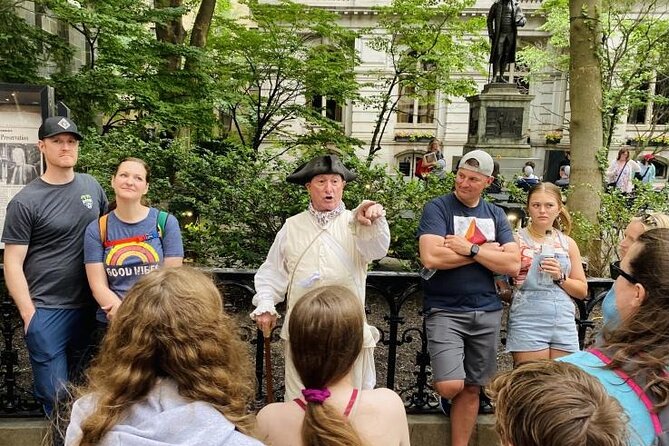
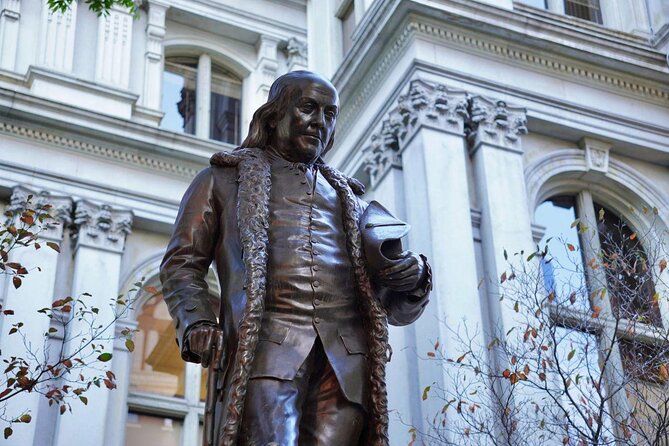
The next section brings you to the site of Boston Latin School, often described as America’s first public school. Your guide points out the connection to famous colonial figures such as Benjamin Franklin and Samuel Adams, along with the Benjamin Franklin statue.
This is a small stop, roughly 10 minutes, but it adds an important idea: Boston’s role in the Revolution was tied to education and public debate, not only to battles and protests.
The route also passes Boston’s oldest commercial building. This spot connects the historic district to American literature, since works associated with Nathaniel Hawthorne, Henry David Thoreau, and Henry Wadsworth Longfellow were published there. It is an easy detail to miss if you walk the trail alone, and it gives the tour a welcome change of subject.
Old South Meeting House and the Boston Tea Party
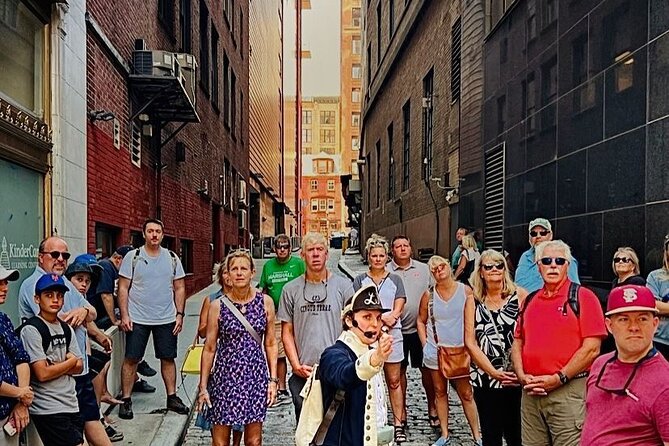
At the Old South Meeting House, the guide explains the Boston Tea Party and the gathering that led to it. The story is told outside the building, near the place where the crowd assembled.
This stop helps you understand the mechanics of protest. The Boston Tea Party is often reduced to the image of tea dumped into the harbor, but the meeting house story shows how public meetings and organized resistance shaped the event.
You also hear about the Paul Revere Bell. The stop takes about 10 minutes, which is enough for a clear explanation without turning the meeting house into a long lecture.
The building itself is not included as an indoor admission. If you want to explore it more fully, plan a separate visit. That extra step can make sense for history fans, but you should know what the $26 walking fee covers: a guided outdoor tour, not admission to Boston’s historic interiors.
The Old State House and the Boston Massacre
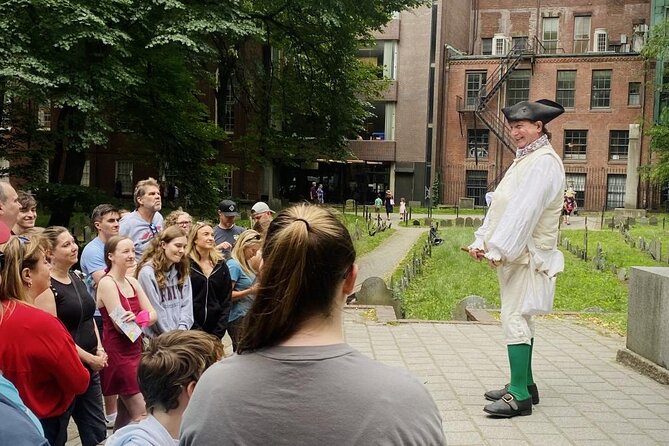
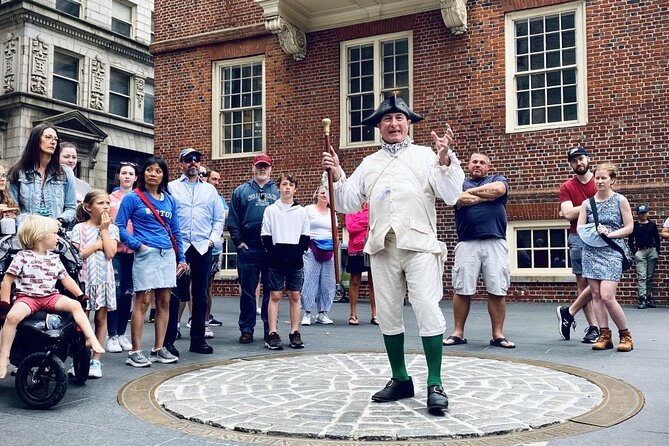
The Old State House is one of the most powerful stops on the route. The building marks the site of the Boston Massacre, and your guide explains the event and its effect on colonial opinion.
The stop lasts about 15 minutes. A good guide can show how the incident was used in political arguments and why it became such a strong symbol before the Revolution.
This is also where the tour’s storytelling style matters most. Some guides focus on facts and chronology. Others use drama, humor, and character work. Guides such as Neil McGarry, Katherine, Ben, and John Hancock have been praised for combining energy with historical explanation, but the tone can vary from one departure to another.
If you want a classroom-style lecture with dates and long context, ask questions as you go. If you prefer a lively version of the past, the costumed approach should suit you.
Samuel Adams, Faneuil Hall, and the end of the central route
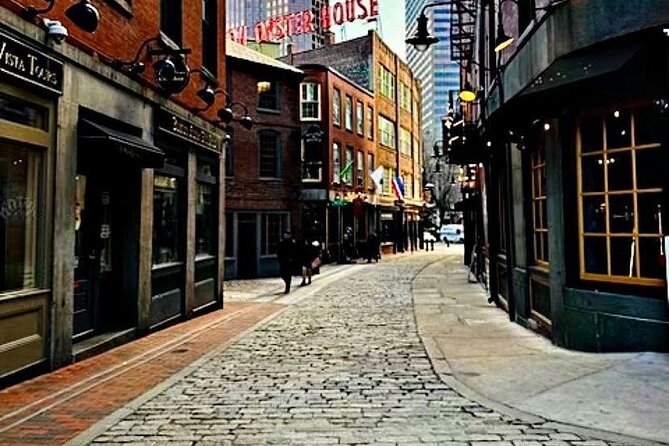
Near the statue of Samuel Adams, your guide explains Faneuil Hall and the story behind the statue. The tour points out that the statue is not entirely accurate, a small but memorable example of how public monuments can shape the way history is remembered.
The stop is listed at about 15 minutes. From here, you are well placed for Faneuil Hall, Quincy Market, and the surrounding historic streets. The exact description of the finish can vary, so check your confirmation for the meeting and ending point. The supplied details describe both a Boston Common to Faneuil Hall route and a finish at Paul Revere Mall in the North End.
That is not a major problem for planning, since the locations are within the same central sightseeing area. Still, you should not assume you will finish exactly where you started. The booking information lists two possible departure locations, so read the confirmation carefully.
Paul Revere House and Paul Revere Mall

The guide discusses the Paul Revere House from outside. The stop is short, about five minutes, and admission is not included.
That brief visit is useful for orientation, but it is not a substitute for going inside. The house is a key North End landmark, and you may want to return if you have time and want more than an exterior explanation.
The walk finishes at Paul Revere Mall, a small outdoor space near the North Church and other North End sights. This is one of the tour’s practical strengths. You can continue exploring on foot, stop for food, or use the finish as a starting point for the rest of your day.
Some guides may spend so much time earlier in the walk that they have little time for the final North End sites. If the North Church is important to you, ask about it before the tour ends. The route is strongest when the guide keeps a firm pace.
What the costumed guide adds
The guide’s period clothing is not just decoration. It signals that the walk will be part history lesson and part performance.
Guides use character names such as Ben, Mother Goose, Jeremiah Poope, and John Hancock. Their styles differ. Some lean into jokes and memorable facts. Others give a fuller account of the people and events involved.
The strongest guides manage both sides. They keep children engaged, make room for questions, and still explain why the Boston Massacre or Boston Tea Party mattered. The best performances also help you remember the route after the tour ends.
The tradeoff is consistency. A humorous guide may give you fewer dates and less political context. One recent experience with a guide using the name Ben was praised for extra stops and memorable humor, but the historical detail felt lighter than expected. If exact facts matter to you, ask direct questions and consider using the tour as a lively introduction rather than your only source.
Walking conditions, group size, and timing
The route covers about 1.2 miles and is not described as strenuous. You should still wear comfortable walking shoes because you will be outside for nearly two hours, with stops on pavement and streets.
The tour is suitable for most people, including older participants and families with a stroller and a very young baby. One person reported only four stairs. Slow walkers are generally accommodated, and guides are expected to help groups cross busy roads safely.
The maximum group size is 50. That is the biggest practical concern. If you are at the back of a large group, traffic noise and street sounds can make it hard to hear. Arrive early and try to stay near the guide, especially at the opening stops.
The tour can run longer than the advertised 1 hour 45 minutes. Some departures finish around two hours or even 2 hours 15 minutes because the guide allows time for questions, photos, or extra stories. That is pleasant if your schedule is loose, but leave a buffer before a meal reservation or another timed activity.
Cold wind and shade can make the route feel much cooler than expected. Boston weather changes quickly, and the tour operates outdoors. Dress in layers and bring weather protection. The cancellation terms also allow a different date or full refund if poor weather causes the operator to cancel.
Is $26 a good value?
At $26 per person, this is a fair price for a guided introduction to Boston’s historic center. You are paying for nearly two hours of direction, storytelling, and help making sense of sites that can otherwise blur together.
The value is highest on a first visit. You can learn the basic layout, hear the main Revolutionary stories, and finish near several useful next stops. It is also a good choice if you enjoy live performance and want more personality than a recorded audio guide.
The value is lower if you plan to enter several historic buildings. Admission is not included for the Old South Meeting House, Old State House, Paul Revere House, or other indoor attractions. In that case, treat the walking tour as a starting point and budget for separate admissions.
At the same time, the tour saves you from missing smaller details. The old commercial building, the Paul Revere Bell, the disputed Samuel Adams statue, and the stories tied to Granary Burying Ground are easy to pass without context.
Who should book it?
I would choose this tour for a first visit to Boston, especially if you want a clear introduction before exploring alone. It also suits couples, groups of friends, and families with children old enough to follow a history story for nearly two hours.
History fans should book with the right expectation. You will get strong site coverage and lively interpretation, but the depth depends on the guide and the time available. If you want a detailed academic treatment, this may feel light.
Families should think about age and attention span. Children who enjoy costumes, jokes, and character stories may have a great time. An eight-year-old with little interest in American history may not. A position near the front can also make a large group easier to hear.
Should you book this Freedom Trail walk?
Book it if you want a compact, guided route through Boston’s most important Revolutionary sites and like history presented with humor and theatrical flair. The $26 fee is sensible for a first look, and the finish near Faneuil Hall and the North End makes the rest of your day easy to plan.
Skip it if you want extensive indoor access, a small private group, or a tightly timed academic lecture. If you do book, arrive early, stay near the front, wear warm layers, and keep your schedule flexible. Ask questions when a guide moves quickly, and save time after the tour to revisit the Old State House or Paul Revere House from inside.
FAQ
How long is the Boston Freedom Trail walking tour?
The tour lasts about 1 hour 45 minutes. Some departures may run longer, reaching around two hours or 2 hours 15 minutes.
How far does the tour walk?
The route covers about 1.2 miles, from the Boston Common area toward Faneuil Hall and the North End.
What sites are included?
The route includes the Massachusetts State House, Park Street Church, Granary Burying Ground, Boston Latin School, the Old South Meeting House, the Old State House, the Samuel Adams statue, the exterior of the Paul Revere House, and Paul Revere Mall.
Is admission to the historic buildings included?
No. The tour includes the guided outdoor walk, but admission to places such as the Paul Revere House and other interiors is not included.
Is the tour suitable for older participants?
Most people can participate, and the walk is generally not strenuous. Comfortable shoes are recommended, and the route includes only a small number of stairs according to the available tour information.
What happens if the weather is bad?
The tour operates outdoors and requires suitable conditions. If the operator cancels because of poor weather, you can receive a different date or a full refund.
How large can the group be?
The maximum group size is 50 people. Staying near the front can help you hear the guide, particularly in busy streets.
Are service animals allowed?
Yes. Service animals are allowed on the tour.
Can I cancel for a full refund?
Yes. You can cancel at least 24 hours before the start time for a full refund. Cancellations or changes made less than 24 hours before the start time are not refunded.
Just added around the USA
- Anchorage: Full-Day Matanuska Glacier Hike and Tour★ 4.7 · 48 reviews
- Oahu: Manoa Falls Hike and east side beach day★ 4.9 · 10 reviews
- From Springdale: Greater Zion Scenic Hiking Tour★ 4.9 · 21 reviews
- From Springdale: The Zion Narrows Hike with Lunch★ 4.8 · 85 reviews
- From Seward: Harding Icefield Trail Hiking Tour★ 5.0 · 11 reviews
- From Sedona: Archeology and Nature Hike★ 4.9 · 8 reviews
- From Seward: 6-hour Wilderness Hiking Tour★ 4.5 · 5 reviews
- From Rapid City: Private Devils Tower Tour and Hike★ 5.0 · 6 reviews
USA Hiking Tours, compared.

Small Group: Valley of Fire Half Day Tour from Las Vegas
Read our review →
Multnomah Falls and Columbia River Gorge Half-Day Hiking Tour
Read our review →
San Francisco: Yosemite National Park & Giant Sequoias Hike
Read our review →


Small Group Waterfall and Rainforest Hiking Adventure on Maui
Read our review →

Kauai Adventure: Kayak & Hike to Secret Falls with Expert Guide
Read our review →Browse the lists this tour appears in