
REVIEW · USA
A Guided Hike Adventure: Kilauea Iki Crater and a Lava Tube
Walking across a hardened lava lake is the headline here, and it is a good one. The Kilauea Iki Crater was filled by the 1959 eruption, leaving a broad, rough surface where you can see how a once-fiery lake cooled into solid rock.
I like the small-group format, usually two to six people, because it gives you room to ask questions and set a sensible pace. I also like that the guides supply packs, trekking poles, binoculars, rain gear, breakfast, and a trail snack. That is a generous amount of practical help for a half-day hike.
The main consideration is the terrain. This is a 7.5-kilometer, or roughly 4.5-mile, walk over varied volcanic ground, not a casual stroll. You need closed-toe shoes, and children under eight cannot join.
Key points
- Cross a cooled lava lake: Walk through Kilauea Iki Crater, formed during the dramatic 1959 eruption.
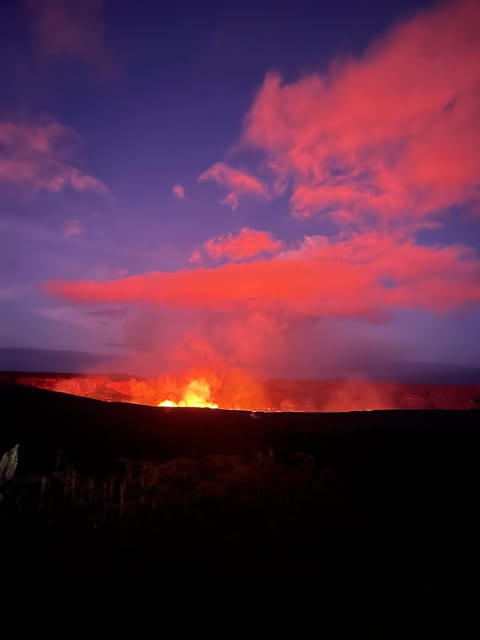
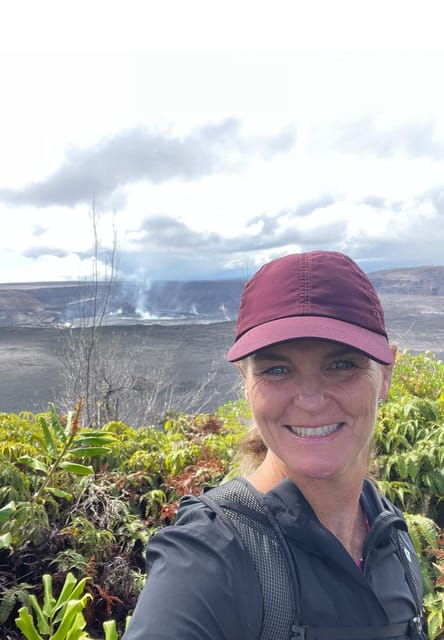
- See current volcanic activity: Begin with views toward Halemaʻumaʻu Crater, where eruptions have continued since December 23, 2024.
- Enter Nahuku Lava Tube: Walk through an ancient passage made by flowing lava.
- Travel with useful gear included: Day packs, trekking poles, binoculars, rain gear, breakfast, and a snack are provided.
- Get a personal guide experience: Groups are typically two to six people, with a maximum of 10.
- Plan for park fees: A separate Hawaii Volcanoes National Park pass is required unless you already have a valid pass.
Why the hardened lava lake is the main event
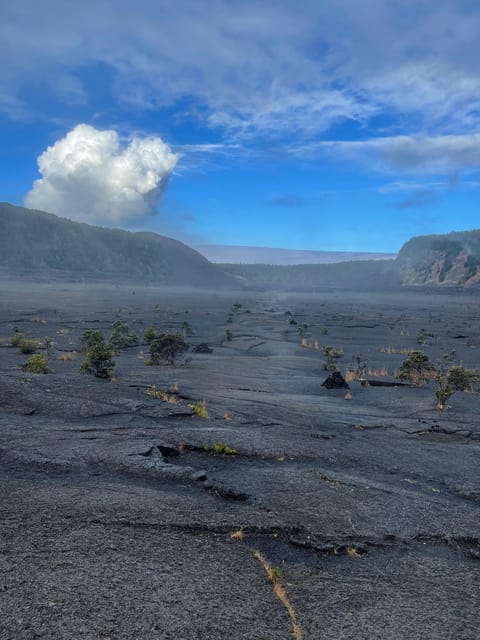
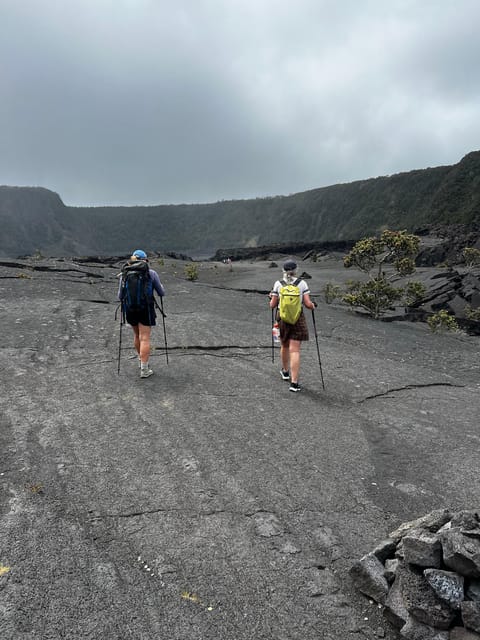
Many volcano tours keep you at overlooks. This one takes you onto the volcanic ground itself. The Kilauea Iki Crater route lets you cross the hardened lava lake left behind by the 1959 eruption, giving you a close look at the rough surface and the marks of cooling rock.
That setting makes the geology easier to understand. You are not simply looking at a crater from a safe distance and hearing that lava once flowed here. You are walking across the place where the lava collected, cooled, and changed the shape of the crater floor.
The surface is rugged, so your footing matters. Trekking poles are supplied, which is useful on uneven ground and helpful if your legs tire during the longer walk. Wear sturdy closed-toe shoes, and expect a route that feels like a real hike rather than a paved park visit.
The tour covers about 4.5 miles and lasts 270 minutes, or four and a half hours. That time includes the guided stops, the crater walk, and the lava tube visit. The pace can be adjusted for the group, a point worth noting if you enjoy walking but do not want to race from one stop to the next.
More Guided Day Hikes in the USA
- Multnomah Falls and Columbia River Gorge Half-Day Hiking Tour
★ 5.0 · 2,108 reviews - Valley of Fire Guided Hike from Las Vegas
★ 5.0 · 1,611 reviews - Wailua River Kayak and Sacred Falls Guided Hike with Lunch
★ 5.0 · 783 reviews
Halemaʻumaʻu views and a volcano that is still active
The outing begins with views of Halemaʻumaʻu Crater. The crater has been the site of ongoing volcanic activity since December 23, 2024, with lava fountaining reported at heights of more than 1,000 feet during eruptions that occur every week or two.
Volcanic activity can change, so do not treat those details as a promise that you will see a fountain during your specific departure. The value of this opening stop is also the setting itself: your guide can explain what you are seeing, how an eruption changes the crater, and why conditions in an active volcanic area need respect.
I would pay close attention here rather than rushing to take photographs. A good guide helps connect the distant view with the ground under your feet later at Kilauea Iki. You see both a current volcanic center and the older result of a major eruption in one half-day outing.
The activity is led in English. The guides bring professional and personal wilderness experience, and at least one guide, Jennifer, is specifically praised for answering questions and keeping the hiking pace comfortable for everyone in the group. That combination matters more than a memorized speech. Volcanic scenery is impressive, but clear explanations make it meaningful.
Crossing Kilauea Iki Crater on foot
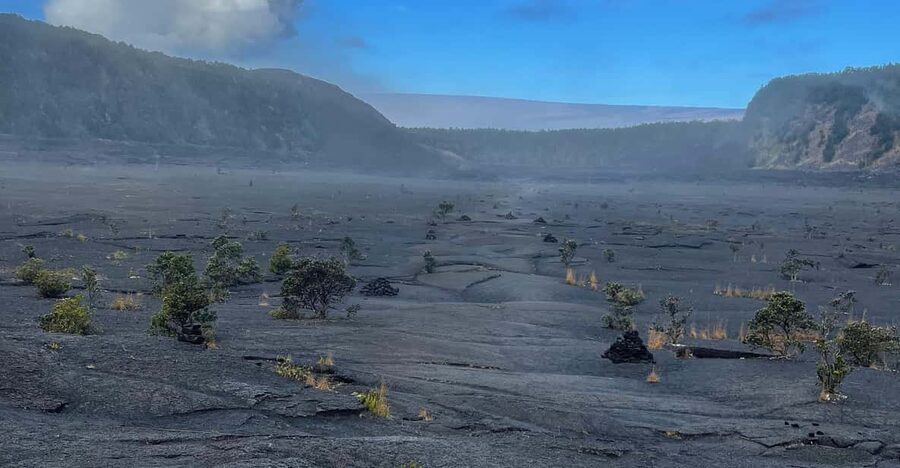
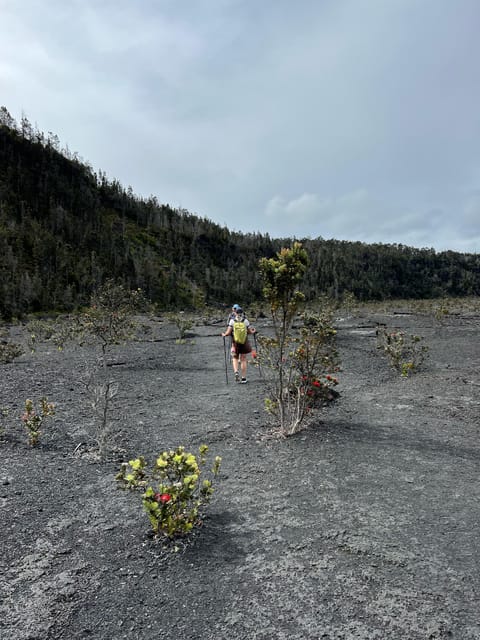
The Kilauea Iki section is where the tour feels most unusual. You cross a hardened lava lake created by the 1959 eruption, moving over a surface that records the force and heat of the event.
Expect a stark setting with dark, broken volcanic rock and little of the soft, familiar trail scenery found elsewhere in Hawaii. The contrast is part of the appeal. The crater shows a tougher side of the island, shaped by heat, pressure, collapse, and cooling.
Your guide can point out how the terrain reflects volcanic processes and help you read details that are easy to miss on your own. The supplied binoculars may also be useful during crater and volcano viewing, especially when the group pauses to look across a wide distance.
This part of the walk calls for patience. You may want to stop often for photographs, but footing should come first. Trekking poles offer extra balance, and the small group makes it easier to stop for questions without holding up a large line of people.
The route is suitable for seasoned hikers and for people who are new to volcanic trails, provided they are comfortable with a 4.5-mile hike over varied ground. The tour description does not promise a flat or easy path, so I would not book it if you are looking for a short viewpoint walk.
Inside Nahuku Lava Tube
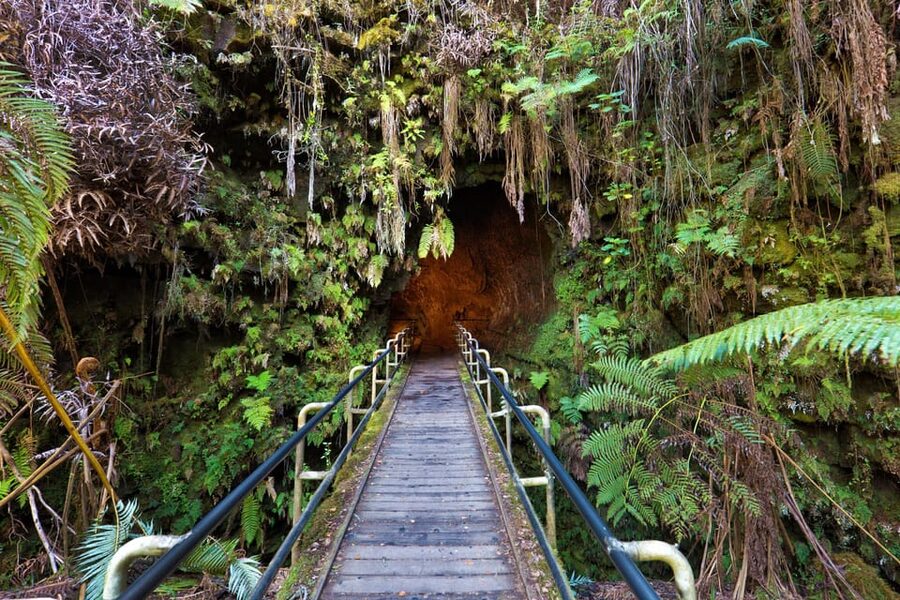
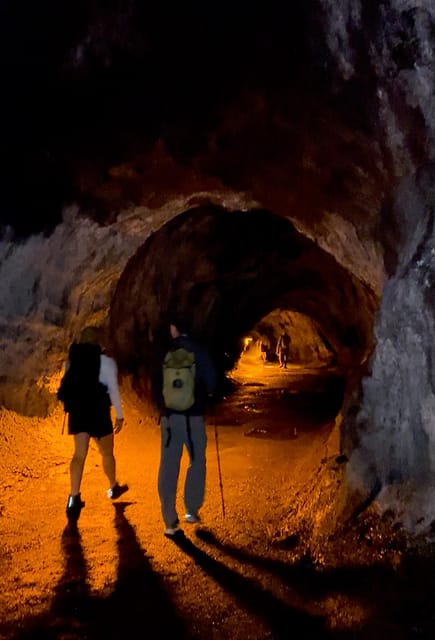
The visit to Nahuku Lava Tube changes the mood of the hike. After crossing open volcanic ground, you enter a natural passage formed by ancient lava flows.
A lava tube is created when the outer part of a lava flow cools while hotter lava continues moving inside. When the flow drains, it can leave a tunnel behind. Walking through one gives you a direct sense of how lava can shape space below the surface, not just spread across it.
The tube is one of the park’s best geology lessons because the explanation happens inside the feature itself. Your guide can discuss how the tunnel formed and help you notice the rock shapes along the passage.
You should still dress for changing conditions. Rain gear is provided, which is useful in a tropical volcanic park where weather can shift. Closed-toe shoes are required, and bare feet are not allowed. The supplied gear removes much of the packing guesswork, but you should still arrive ready to walk.
More Volcano Hikes in the USA:
- Oahu: Diamond Head Crater Hike and North Shore Experience
★ 4.7 · 189 reviews - Hidden Craters Hike of Kona
★ 5.0 · 156 reviews - Big Island: Hawai’i Volcanoes National Park Guided Hike
★ 4.9 · 30 reviews - Big Island: Off the Beaten Path Volcano Crater Hike
★ 5.0 · 15 reviews
What the guide adds to the hike
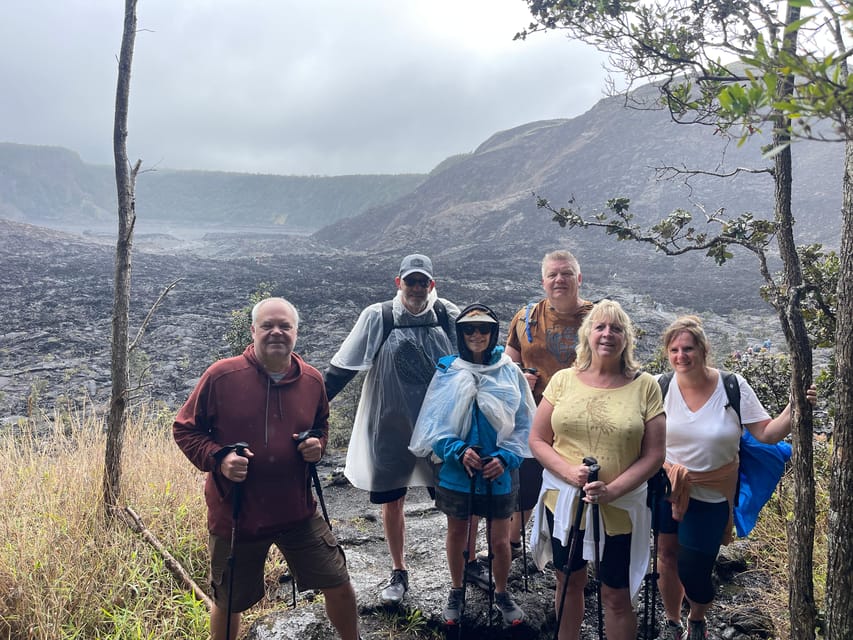
The guide is not just there to point out the trail. The experience is designed around geology, ecology, park history, and the plants and animals connected to this volcanic setting.
That broad focus is useful because the crater and lava tube can look stark at first glance. A guide helps you see the process behind the scenery and explains why the area matters. You can ask questions as they come up instead of saving them for the end.
The small groups are a real advantage. The typical size is two to six people, though the maximum is 10. With fewer people, it is easier to hear the guide, pause for photographs, and keep the pace suited to the group.
The only named guide supplied for this experience is Jennifer. Her careful pacing and ability to answer questions are worth highlighting, especially for mixed-ability groups. A four-and-a-half-hour hike is more enjoyable when nobody feels pushed beyond a comfortable speed.
The tour also follows Leave No Trace principles. That means the guide team aims to limit its effect on the park and support conservation. In a volcanic area that may look tough and empty, this matters. The rock can survive heat, but the wider ecosystem remains sensitive.
Breakfast, trail food, and supplied equipment
The included gear is one of the strongest practical features. You receive a high-quality day pack, trekking poles, binoculars, and rain gear. Breakfast and a healthy hiking snack are also included.
That arrangement makes the morning simpler. You do not need to bring a pack or poles, and you have some food arranged for a hike that takes up much of the morning or afternoon. Jennifer is specifically praised for the quality of the hiking food, so the meal planning is not an afterthought.
You still need closed-toe shoes. The supplied rain gear does not mean you should ignore the weather, but it gives you a useful layer if conditions change. The tour information does not specify clothing, water, or exact meal contents, so ask the provider if you have dietary needs or want to confirm what to carry.
Drones, alcohol, and drugs are not allowed. Bare feet are also prohibited. Those rules are straightforward and fit the setting: this is a protected national park and an active volcanic area, not a casual picnic spot.
Is $157 a fair price?
The cost is $157 per person, before the national park entrance fee. That is not the cheapest way to walk in Hawaii Volcanoes National Park, but the price includes a 4.5-hour guided outing, professional wilderness support, a small group, equipment, breakfast, and a snack.
I see the value most clearly if you would otherwise need to arrange several pieces yourself. The guide brings packs, trekking poles, binoculars, and rain gear, then adds interpretation about the volcano, crater, lava tube, ecology, and conservation. You are paying for time, preparation, and context, not only for access to a trail.
The separate park fee is $15 per person, or $30 per vehicle for one week across all Hawaii national parks. An $80 annual pass covers all national parks. Active-duty military members can use the free military pass. If you plan to visit more than once, check which entrance option makes sense for your trip.
For a visitor who only wants to see a crater overlook, $157 may feel high. For someone who wants to walk across Kilauea Iki, enter Nahuku Lava Tube, ask questions, and avoid carrying specialist gear, the cost is easier to justify.
Timing, meeting points, and group size
The activity lasts 270 minutes, and starting times depend on availability. There are two listed starting options: Devastation Trail and the Devastation Trail parking lot. The return is to one of those same two locations, with the exact meeting point depending on the option booked.
Read your confirmation carefully so you know which location applies. The information does not describe hotel pickup or transport between the park and your accommodation, so plan to reach the selected meeting point yourself unless your booking details say otherwise.
The group is limited to 10, with two to six people typical. That is small enough for a personal experience without requiring you to organize a private tour. It also gives the guide room to manage the pace and explain features along the way.
Free cancellation is available up to 24 hours before the activity for a full refund. You can also reserve now and pay later, which helps if your park schedule depends on weather or changing eruption conditions.
Who will enjoy this experience most
I would choose this hike if you want more than a scenic drive and prefer to understand what you are seeing. It suits people who enjoy geology, active volcanoes, photography, and guided walks with plenty of explanation.
It also works well for mixed hiking experience. The pace can be adjusted for the group, and the supplied poles can help on uneven ground. Still, you should be comfortable walking 4.5 miles over volcanic terrain for several hours.
This is not suitable for children under eight. It is also a poor fit if you want a completely flexible, self-guided morning or if you dislike organized timing. The route has a clear structure, a guide, and park rules that everyone must follow.
The best match is a curious hiker who wants to connect today’s volcanic activity with the 1959 Kilauea Iki eruption and the older lava flows inside Nahuku Lava Tube.
Should you book the Kilauea Iki and lava tube hike?
Book it if walking across a cooled lava lake sounds more appealing than simply viewing one from the roadside. The combination of Kilauea Iki, Halemaʻumaʻu views, and Nahuku Lava Tube gives you three different ways to understand Hawaii’s volcanic activity in one half-day.
The strongest reasons to choose it are the small groups, the included equipment and food, and the guide’s role in setting a comfortable pace. Jennifer’s careful attention to questions and group speed is especially encouraging for anyone worried about keeping up.
Skip it if you want a quick, low-effort sightseeing stop, need a child-friendly activity for under-eights, or do not want to pay the tour price plus the park entrance fee. For everyone else, this is a well-planned way to see Volcanoes National Park on foot, with enough time to notice what the rock is telling you.
FAQ
How long is the guided hike?
The activity lasts 270 minutes, or four and a half hours. The walking distance is listed as 7.5 kilometers, approximately 4.5 miles.
Where does the tour start and finish?
The listed starting options are Devastation Trail and the Devastation Trail parking lot. Drop-off is at Devastation Trail or the Devastation Trail parking lot, with the exact meeting point based on the option booked.
Is the national park entrance fee included?
No. You need a separate Volcanoes National Park pass unless you already have a valid national park pass. The listed cost is $15 per person, $30 per vehicle for one week across all Hawaii national parks, or $80 for an annual pass covering all national parks. Active-duty military members can use a free military pass.
What equipment and food are provided?
The tour includes a high-quality day pack, trekking poles, binoculars, rain gear, a healthy breakfast, and a hiking snack. You need to bring closed-toe shoes.
How large is the group?
The activity is limited to 10 participants. Groups are typically smaller, often two to six people.
Can children join the hike?
Children under eight are not permitted to participate. The tour is conducted in English, and the route involves a 4.5-mile walk over varied volcanic terrain.
More Cave Hikes in the USA
- Glacier Hiking & Geothermal Cave Pools Tour
★ 5.0 · 139 reviews - Skaftafell: Ice Cave Tour and Glacier Hike
★ 4.5 · 1,746 reviews - Matacanes : Canyoning + Hiking + Water Jumps + Rappel + Caves
★ 5.0 · 1,497 reviews - Peniche: Berlengas Island Trip, Hiking and Cave Tour
★ 4.7 · 1,473 reviews
Just added around the USA
- Anchorage: Full-Day Matanuska Glacier Hike and Tour★ 4.7 · 48 reviews
- Oahu: Manoa Falls Hike and east side beach day★ 4.9 · 10 reviews
- From Springdale: Greater Zion Scenic Hiking Tour★ 4.9 · 21 reviews
- From Springdale: The Zion Narrows Hike with Lunch★ 4.8 · 85 reviews
- From Seward: Harding Icefield Trail Hiking Tour★ 5.0 · 11 reviews
- From Sedona: Archeology and Nature Hike★ 4.9 · 8 reviews
- From Seward: 6-hour Wilderness Hiking Tour★ 4.5 · 5 reviews
- From Rapid City: Private Devils Tower Tour and Hike★ 5.0 · 6 reviews
USA Hiking Tours, compared.
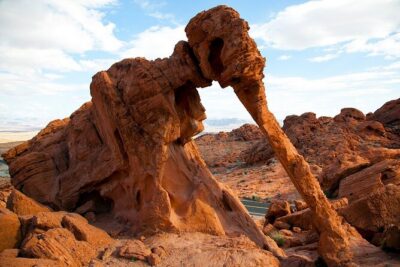
Small Group: Valley of Fire Half Day Tour from Las Vegas
Read our review →
Multnomah Falls and Columbia River Gorge Half-Day Hiking Tour
Read our review →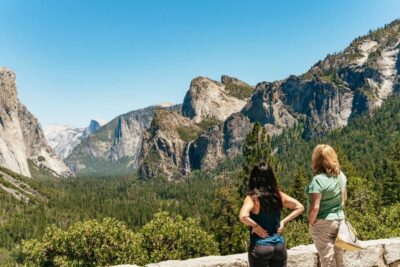
San Francisco: Yosemite National Park & Giant Sequoias Hike
Read our review →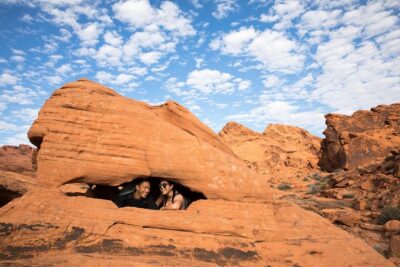

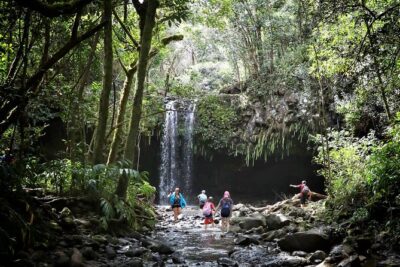
Small Group Waterfall and Rainforest Hiking Adventure on Maui
Read our review →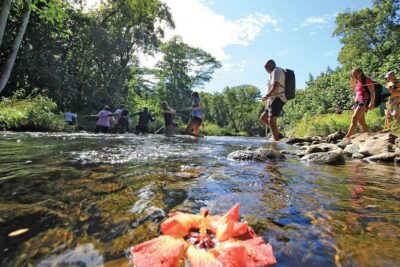
Kauai Adventure: Kayak & Hike to Secret Falls with Expert Guide
Read our review →Browse the lists this tour appears in