
REVIEW · USA
Hidden Craters Hike of Kona
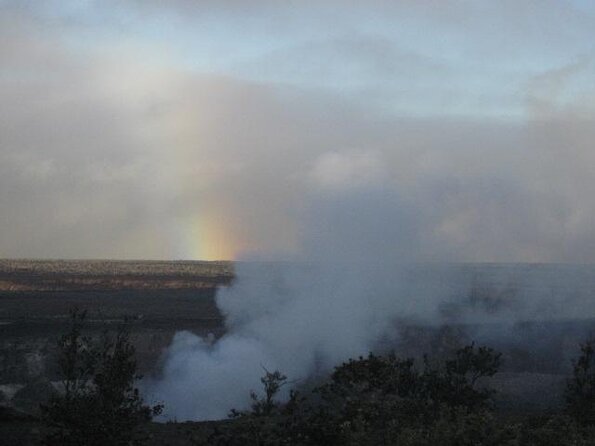
The best part of the Hidden Craters Hike is its rare access to private land on Hualalai, reached through three locked gates and far removed from the usual Kona sightseeing stops. You hike across old volcanic flows, circle craters, pass through a short lava tube, and enter both young and old native forest.
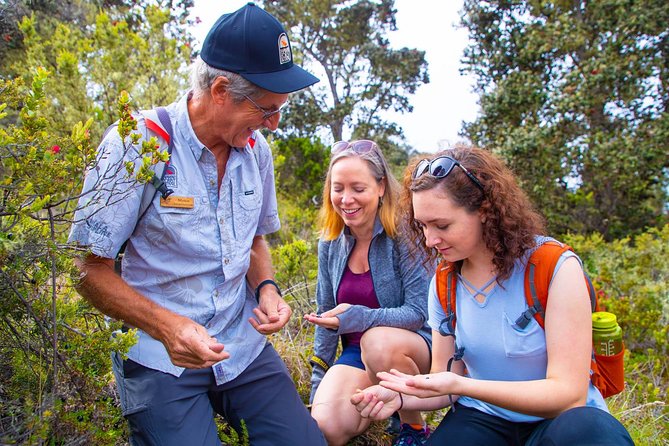
I like the small groups, capped at 10 people, and the way the guides, including Mark, Mateo, Taro, and Nick, mix volcano science with Hawaiian stories and cultural insight. I also like the practical extras: walking poles, daypacks, filtered water, drinks, snacks, and rain gear. The main caution is simple: this is a real mountain hike, not a gentle walk. Loose rock, slippery descents, and up to 1,000 feet of climbing can make it tougher than the moderate rating suggests.
Key points to know before you book
- Private Hualalai access: Three locked gates lead to volcanic country that is not part of an ordinary self-guided Kona outing.
- A varied four-mile route: Expect craters, lava flows, a lava tube, newer forest, older forest, and wide views from high on the mountain.
- Small-group guiding: The maximum is 10 people, giving guides room to adjust the pace and offer route choices.
- Proper hiking required: Uneven and rocky ground, slippery surfaces, steep sections, and a lava-tube climb call for decent fitness and good footwear.
- Useful gear is included: Walking sticks, daypacks, rain gear, water refills, juices, sparkling flavored water, and snacks are provided.
- A five-hour morning outing: Meet at the Kailua-Kona headquarters at 7:30 a.m., then return to the same point after the hike.
Why Hualalai makes this hike different
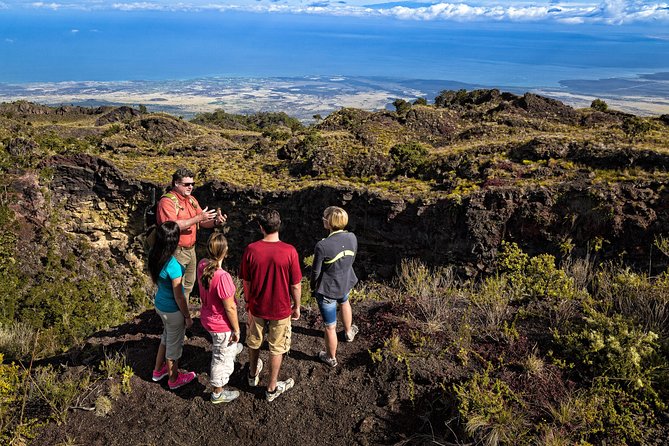
Kona is often associated with beaches, coffee farms, sunsets, and smooth coastal roads. Hualalai offers a much rougher side of the island. This volcano rises behind Kona, and its upper slopes reveal how quickly Hawaii can shift from forest to bare lava, cinder, and broken volcanic rock.
The access matters. You do not simply pull over beside a public trail and start walking. The route crosses private land behind three locked gates, giving the outing a more remote feel. That also explains why this experience is difficult to duplicate on your own.
The volcanic features are not all the same. You might walk beside cinder and crater rims, cross rugged lava flows, and inspect rock formations that show how molten material once moved and cooled. The route also includes a short lava tube, an especially memorable section for anyone who likes the unusual details of volcanoes.
The setting changes as you climb. Some parts feel dry and open, while others pass through native forest. The mix of young forest, older growth, lava, and crater formations gives the walk more variety than a trail that simply climbs to one viewpoint.
More Volcano Hikes in the USA:
- Oahu: Diamond Head Crater Hike and North Shore Experience
★ 4.7 · 189 reviews - Big Island: Hawai’i Volcanoes National Park Guided Hike
★ 4.9 · 30 reviews - Big Island: Off the Beaten Path Volcano Crater Hike
★ 5.0 · 15 reviews
Starting in Kailua-Kona at 7:30 a.m.
You meet at the Hawaii Forest & Trail headquarters at 73-5593 A Olowalu Street in Kailua-Kona. Arrive 15 minutes before departure so you can check in without rushing. Restrooms and parking are available at the headquarters, which makes this an easier start than meeting beside an unfamiliar rural road.
The drive to the trailhead takes about 30 minutes. Hotel pickup and drop-off are not included, so you need to arrange your own way to the headquarters. The meeting point is near public transportation, but you should confirm that your chosen connection fits the early start.
That early departure is useful. It gives you the main part of the day for the hike and may offer cooler conditions than a later start. Still, the mountain can have changing weather, so bring the recommended light sweatshirt or jacket even if Kona feels warm.
The total experience lasts about five hours. Roughly one hour is used for the initial portion of the outing, including the transfer and setup, and about four hours are spent exploring Hualalai. The activity ends back at the headquarters.
Hiking through craters, lava flows, and forest
The main hike covers about four miles, with up to 1,000 feet of elevation gain and descent. That distance sounds manageable, but the surface matters more than the mileage. You are walking on uneven and rocky ground, with loose gravel and sections that can become slippery after rain.
Some parts may feel like a steady mountain walk. Other sections require more care, especially on the way down. Several people found the descent harder on the knees than the climb, and that is worth considering if you have knee, balance, back, or neck problems.
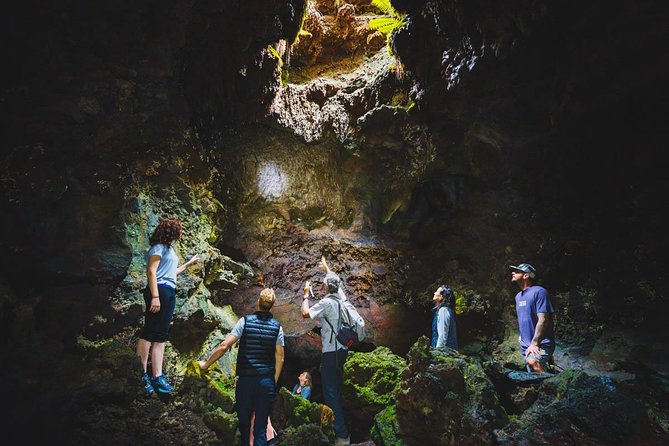
The route is not a paved path or a simple crater overlook. You may climb over rugged volcanic flows, move around crater rims, and step through changing terrain. At one point, you climb in and out of a lava tube. The tube itself is described as short, but the entrance and exit add a physical challenge.
Guides can offer different route options in some places. Mark, in particular, is praised for giving stronger hikers a harder option while keeping the group together. That flexibility is useful, but it does not turn the activity into an easy walk. You still need to be ready for a proper hike.
The views are one of the strongest reasons to make the effort. From higher ground, you can look across Kona and, in suitable conditions, find yourself above the clouds. Overcast weather can soften the views, but the craters and volcanic formations remain interesting even when the horizon disappears.
The guides bring the volcano to life
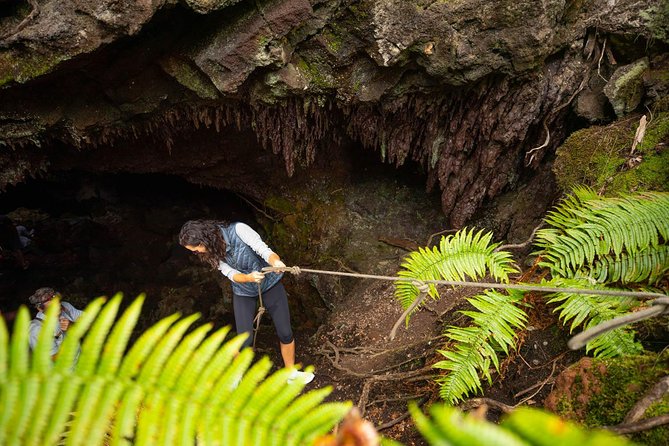
The guide makes a major difference here because the scenery needs explanation. A crater can look like a hole in the ground until someone shows you how it formed, how the rock differs from nearby flows, and how plants begin to return to volcanic soil.
Guides named in the feedback include Mark, Mateo, Taro, Nick, Tracy, Mel, Jon, Adam, and Rob. The strongest praise goes to their mix of safety awareness, humor, local stories, geology, plant knowledge, and Hawaiian cultural context.
Mark is especially good at managing different hiking abilities. He gives breaks when needed, offers route choices, and keeps attention on safety and leaving no trace. Mateo is praised for explaining Kona’s history, culture, and natural features while watching the group closely on rough roads and slippery trail sections.
Taro is noted for making the volcano and surrounding nature easy to understand, while Nick brings a relaxed personality to the walk. Other guides are described as spirited, engaging, and careful about stopping when someone needs to catch their breath.
You should expect interpretation throughout the hike rather than one long talk at the start. The guides explain the plants, topography, volcanic history, local legends, and the meaning of the land. They also make room for quiet moments, which is a nice touch in a place where the best experience may be simply standing still and taking in the forest.
A few more hikes around the USA worth a look
- Lower Antelope Canyon Hiking Tour
★ 5.0 · 6,216 reviews - Boston Freedom Trail Walking Tour with Costumed Guide
★ 4.5 · 2,531 reviews - Multnomah Falls and Columbia River Gorge Half-Day Hiking Tour
★ 5.0 · 2,108 reviews - San Francisco: Yosemite National Park & Giant Sequoias Hike
★ 4.5 · 1,777 reviews
How difficult is the hike?
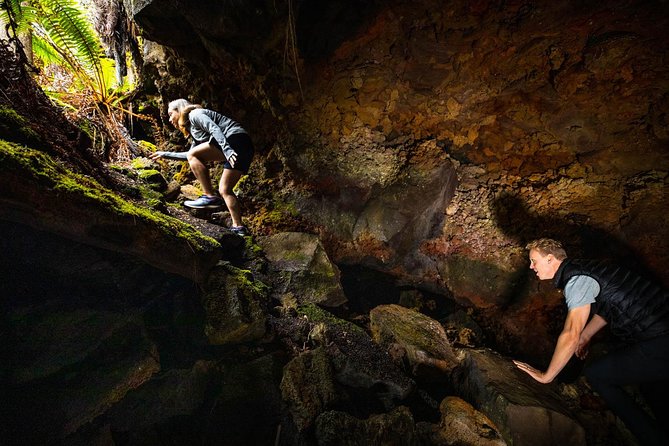
The operator describes the activity as requiring moderate physical fitness. In practice, I would treat it as moderate to challenging, depending on your hiking background, balance, knees, and recent weather.
The most useful way to judge it is this:
- You should be comfortable hiking 3 to 4 miles on uneven ground.
- You should be prepared for up to 1,000 feet of uphill and downhill movement.
- You need closed-toe walking shoes or hiking boots.
- Hiking boots with good traction are a better choice than tennis shoes.
- You should be able to manage loose rock, slippery surfaces, and a short lava-tube climb.
- You should not book if you have significant back or neck problems or trouble with balance.
Several fit hikers describe it as a rewarding technical hike rather than a stroll. One older participant completed it at age 73, but that should not be taken as a promise that the route suits every older hiker. Fitness, balance, and comfort on rough terrain matter more than age alone.
The walking sticks are not just decorative equipment. Multiple people found them useful, especially on descents. If your knees are sensitive, remember that the return downhill can be the most demanding part.
Children aged 7 and under are not recommended. The route is also a poor match for anyone looking for a flat, easy family outing. Stronger children and teens may be fine, but the supplied information does not give a specific age range beyond the warning for young children.
What is included for the $198.95 price
At $198.95 per person, this is not a bargain hike in the usual sense. The value comes from access, transportation to the trailhead, a small group, a trained naturalist guide, and equipment that would be inconvenient to arrange on your own.
The price includes:
- An interpretive naturalist guide
- Access fees and local taxes
- A ride from the Kailua-Kona headquarters to the trailhead
- Refillable filtered water
- Juice and sparkling flavored waters
- Snacks
- Walking sticks
- Daypacks
- Rain gear
The drinks and snacks are a real help on a morning with steady climbing. You do not need to carry a large hiking pack, and the refillable water setup reduces the need to bring multiple bottles.
You should still arrive ready to hike. Wear shorts or comfortable hiking clothes, a short-sleeved shirt, and a light sweatshirt or jacket. Closed-toe walking shoes are required, and hiking boots are the safer pick when the ground is loose or wet.
The price does not include hotel transportation. You also need to bring your own personal items, though the provided daypacks cover the basic carrying needs for the activity.
Small groups, safety, and the pace
The maximum group size is 10 people. That is small enough for direct questions and easier communication on narrow or uneven sections. It also gives the guide a better chance to notice when someone needs a rest.
The pace may not feel slow. One account describes a spirited pace, while other experiences allowed for frequent stops and different route choices. The actual rhythm will depend on the group, guide, weather, and trail conditions.
This variation is worth keeping in mind. A strong hiking group may move briskly, while a mixed group may pause more often for views, explanations, or rest. The guide can make adjustments, but the outing still has a planned duration and everyone needs to stay together.
Safety is particularly important on the rough access roads and volcanic terrain. Guides are responsible for driving to the trailhead and warning you about tricky spots. You should listen closely, especially before descending slippery ground or entering the lava tube.
The experience requires good weather. If poor weather causes cancellation, you are offered another date or a full refund. The company also requires a minimum number of participants, so a confirmed booking can still be canceled if that number is not reached. In that case, you receive an alternative or a full refund.
Who will enjoy this Hualalai outing?
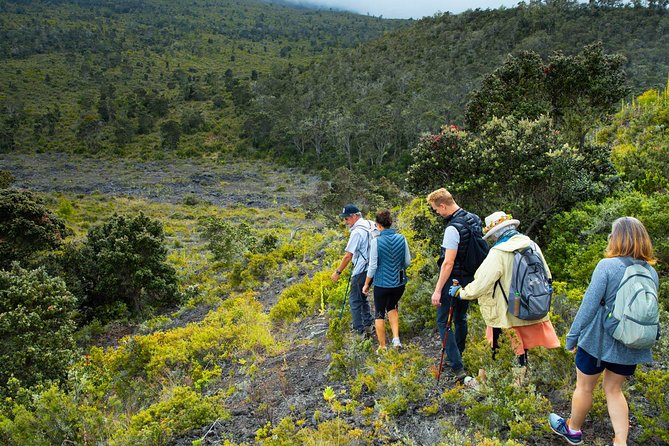
I would choose this hike if you want to see a side of Kona that is more rugged, quiet, and geological than the coast. It suits people who enjoy walking for several hours, asking questions, and learning how volcanic rock, forest, and Hawaiian culture connect.
It is especially good for:
- Experienced or reasonably fit hikers
- Visitors interested in volcanoes and native plants
- People who prefer small groups
- Anyone who wants a guide rather than a self-led trail
- Hikers who appreciate cultural stories along with geology
- Visitors who want strong mountain views near Kona
I would choose something else if you want a relaxed sightseeing morning, have trouble with steep or uneven terrain, or dislike loose gravel and slippery surfaces. It is also not available for cruise ship visitors because the timing does not work with ship schedules.
The tour is likely to appeal more to an active couple, solo hiker, or family with older children than to a group seeking an easy shared activity. You should also be honest about your downhill ability. The mileage is not extreme, but the footing can make the hike demanding.
Booking and cancellation details
The experience is often reserved well ahead, with an average booking time of about 52 days before departure. That suggests you should plan early if your Kona dates are fixed, especially because the group is limited to 10 people.
You can cancel for a full refund up to 24 hours before the local start time. Changes or cancellations inside that 24-hour window are not accepted for a refund. Booking confirmation is normally immediate, though reservations made within five days of the date may take up to 48 hours and remain subject to availability.
Should you book the Hidden Craters Hike?
Book it if you want a serious half-day walk through volcanic terrain with excellent guide support and access to private Hualalai land. The craters, lava tube, native forest, and high views give the route real variety, while walking sticks, water, snacks, and a 10-person limit make the day easier to manage.
Skip it if you are looking for a gentle trail or if rough descents, balance issues, bad knees, or a lack of hiking experience could turn the outing into a struggle. For the right hiker, the $198.95 price buys more than a view. It buys access to a difficult-to-reach part of Kona and a guide who helps you understand what you are seeing.
FAQ
Where does the Hidden Craters Hike start?
You meet at the Hawaii Forest & Trail headquarters at 73-5593 A, 73-5593 Olowalu Street in Kailua-Kona. Check in 15 minutes before the 7:30 a.m. departure.
How long does the experience last?
The experience lasts approximately five hours. About 30 minutes of travel time is needed to reach the trailhead, and the Hualalai portion lasts about four hours.
How far do I hike?
You should be prepared to hike about 3 to 4 miles on uneven or rocky terrain, with up to 1,000 feet of elevation gain and descent.
What should I wear?
Closed-toe walking shoes or hiking boots are required. Shorts, a short-sleeved shirt, and a light sweatshirt or jacket are recommended.
Is equipment provided?
Yes. Walking sticks, daypacks, rain gear, refillable filtered water, juices, sparkling flavored waters, and snacks are included.
Is hotel pickup included?
No. Hotel pickup and drop-off are not included. You must make your own way to the Kailua-Kona headquarters.
Can I cancel for a refund?
You can cancel up to 24 hours before the experience start time for a full refund. Poor weather or failure to meet the minimum group size may also lead to an alternative date or a full refund.
Just added around the USA
- Anchorage: Full-Day Matanuska Glacier Hike and Tour★ 4.7 · 48 reviews
- Oahu: Manoa Falls Hike and east side beach day★ 4.9 · 10 reviews
- From Springdale: Greater Zion Scenic Hiking Tour★ 4.9 · 21 reviews
- From Springdale: The Zion Narrows Hike with Lunch★ 4.8 · 85 reviews
- From Seward: Harding Icefield Trail Hiking Tour★ 5.0 · 11 reviews
- From Sedona: Archeology and Nature Hike★ 4.9 · 8 reviews
- From Seward: 6-hour Wilderness Hiking Tour★ 4.5 · 5 reviews
- From Rapid City: Private Devils Tower Tour and Hike★ 5.0 · 6 reviews
USA Hiking Tours, compared.
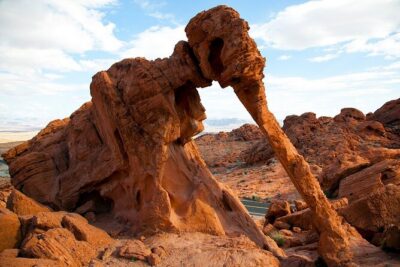
Small Group: Valley of Fire Half Day Tour from Las Vegas
Read our review →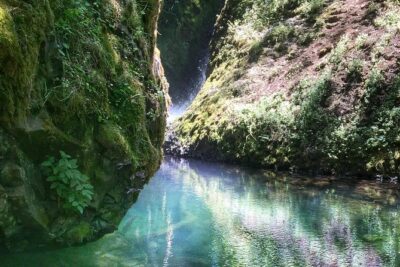
Multnomah Falls and Columbia River Gorge Half-Day Hiking Tour
Read our review →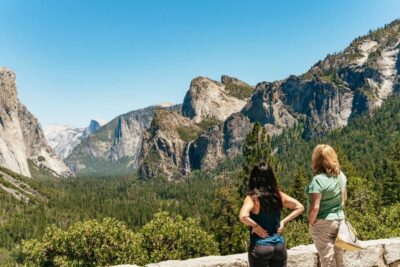
San Francisco: Yosemite National Park & Giant Sequoias Hike
Read our review →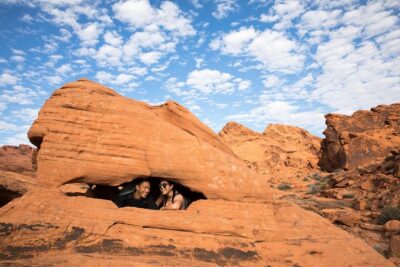

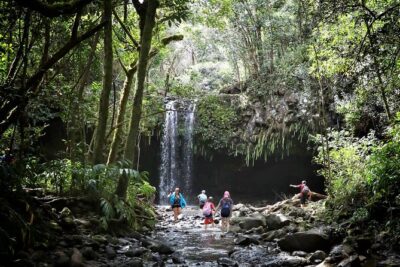
Small Group Waterfall and Rainforest Hiking Adventure on Maui
Read our review →
Kauai Adventure: Kayak & Hike to Secret Falls with Expert Guide
Read our review →Browse the lists this tour appears in