
REVIEW · JAPAN
Kyoto: 3-Hour Fushimi Inari Shrine Hidden Hiking Tour
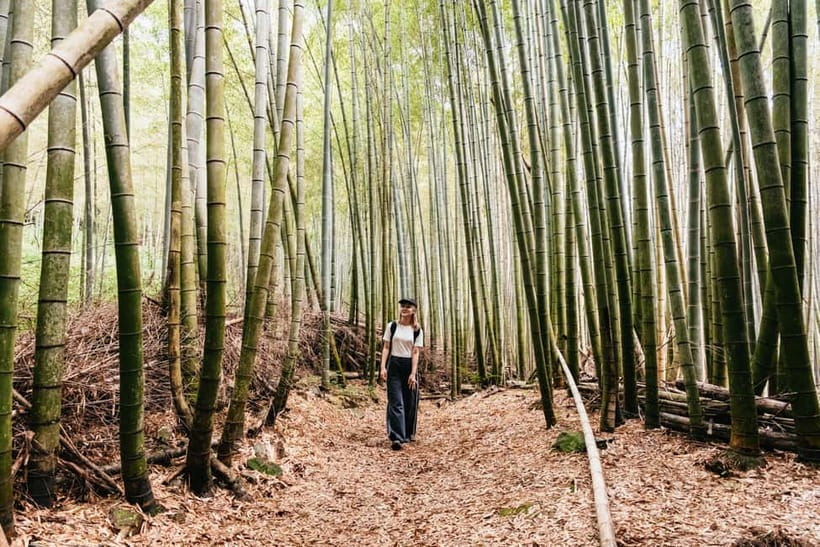
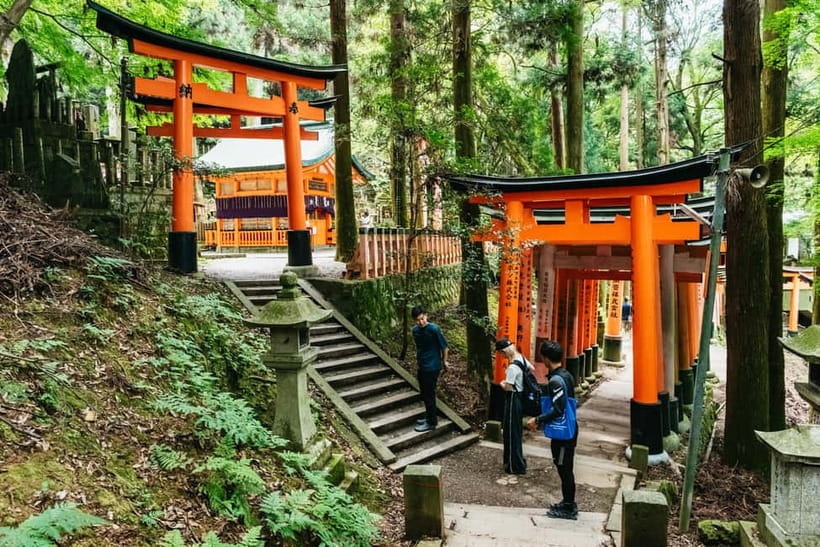
Fushimi Inari is famous for its endless red torii gates, but the best part of this tour is the quiet approach through forest trails. Starting near Tofukuji Station, you walk through a calm neighborhood, climb Mount Inari by rougher paths, pass small altars and bamboo groves, then reach the shrine from behind.
I like the small groups of up to nine people and the way local guides such as Hina, Naru, Shiori, and Yuto make the shrine more understandable. I also like the practical photo help, since guides regularly stop at scenic points and take pictures for you. The catch is simple: this is a real 7-kilometer hike, not a gentle stroll. Some paths are steep, rocky, muddy, or stair-heavy.
Key points to know before you book
- Start at Tofukuji Station: Meet outside Exit 2 at FamilyMart Nakai Tofukuji.
- Use forest paths first: Much of the opening half avoids the main tourist route.
- See bamboo and small altars: The quiet side of Mount Inari gives you a different view of the shrine grounds.
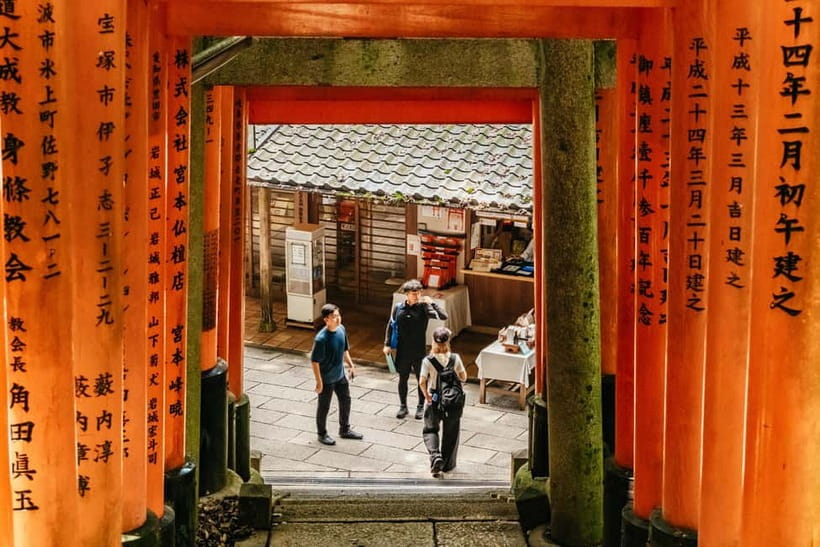
- Reach the famous torii gates later: Crowds increase as you approach Fushimi Inari’s best-known areas.
- Plan for moderate effort: Expect roughly 7 kilometers, hills, stairs, and uneven ground.
- Bring the right clothes: Long sleeves and long pants help with mosquitoes, bugs, sun, and brush.
Why this Fushimi Inari hike feels different
Most people approach Fushimi Inari from the main entrance and immediately join the stream of people under the vermilion torii gates. That route gives you the classic photographs, but it can also feel crowded, especially near the base.
This tour takes the opposite approach. You meet at Tofukuji Station, then walk through a quieter neighborhood toward the mountain. The route uses actual forest paths rather than staying entirely on paved roads. For much of the climb, you may hear birds, footsteps, and the guide’s explanations instead of a steady shuffle of people.
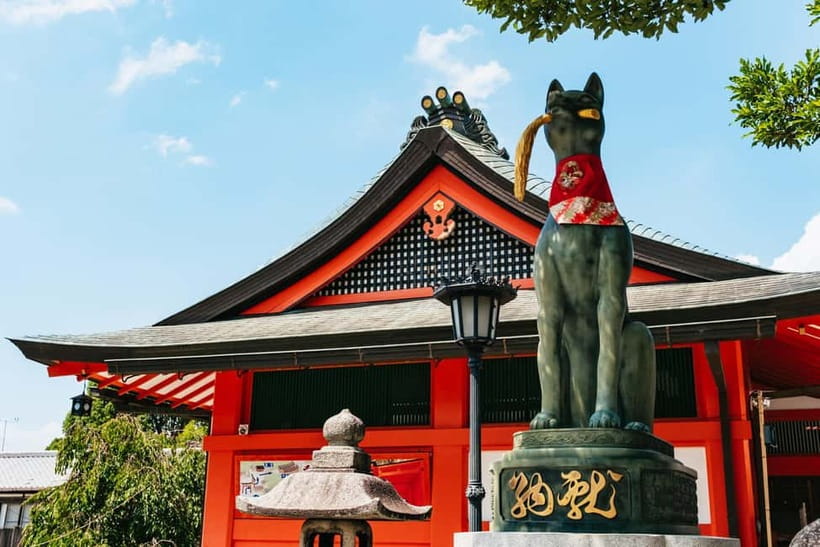
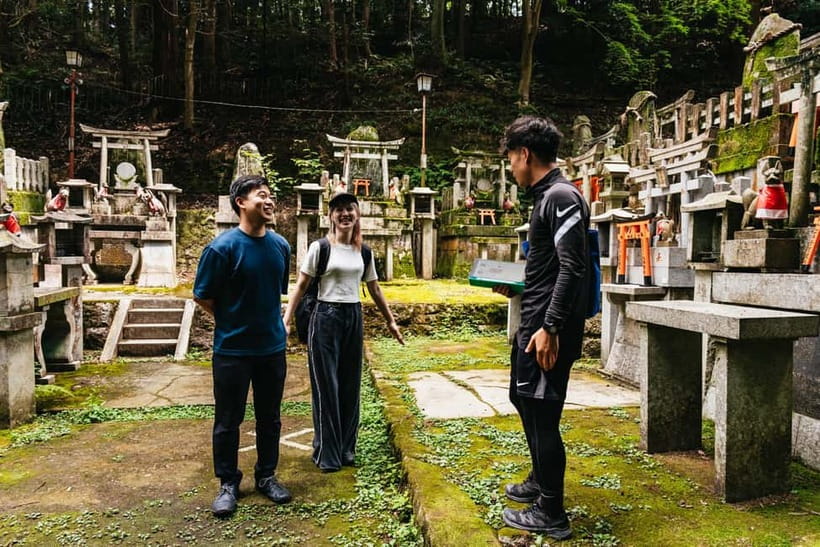
That change matters. Fushimi Inari is not only a photo stop. It is a Shinto shrine spread across a wooded mountain, with thousands of torii gates and many smaller worship sites. The forest route gives you time to notice the stone fox figures, side altars, mossy corners, and quiet sections that are easy to miss on a quick visit.
The tour is offered in English, with private or small-group choices. A group can be as small as a few people, or as large as nine. That is a good size for a hilly walk. You can ask questions, pause for photographs, and keep a more natural pace than you would in a large bus group.
A few more hikes around Japan worth a look
- Mauritius: Tamarind Falls Highlights 3-Hour Hiking Trip
★ 4.9 · 588 reviews - Skaftafell Glacier Hike 3-Hour Small Group Tour
★ 4.5 · 580 reviews - Solheimajokull Glacier 3-Hour Small-Group Hike
★ 5.0 · 501 reviews
Meeting at Tofukuji Station
The meeting point is FamilyMart Nakai Tofukuji, outside Tofukuji Station Exit 2. The location is convenient if you are coming by train, but pay attention to the rail instructions.
You can use both rapid and local trains on the JR line. On the Keihan line, use sub-express, semi-express, or local trains. Do not take an express train to Tofukuji.
The tour begins before you reach the main Fushimi Inari entrance, which is part of its appeal. Starting at Tofukuji gives the walk a gradual rhythm. You leave the station area, pass through a residential neighborhood, and visit smaller shrines before the trail begins.
The provided schedule lists FamilyMart Nakai Tofukuji as both the starting point and return point, while the route description says the walk finishes at the main Fushimi Inari Shrine, where you can buy street food. Confirm the exact ending point when you book, especially if you have a train reservation or another activity afterward.
Tofukuji Temple and the quiet neighborhood
The opening temple visit lasts about 10 minutes. It is a short stop, but it helps set the tone for the day. Instead of jumping straight into the most photographed section of Fushimi Inari, you begin with a smaller look at Kyoto’s religious setting.
From there, you walk toward the mountain through a quieter neighborhood. This part is not the headline attraction, but I think it is useful. You get a gradual transition from city streets to wooded paths, and your guide can explain local customs and the difference between temple and shrine traditions.
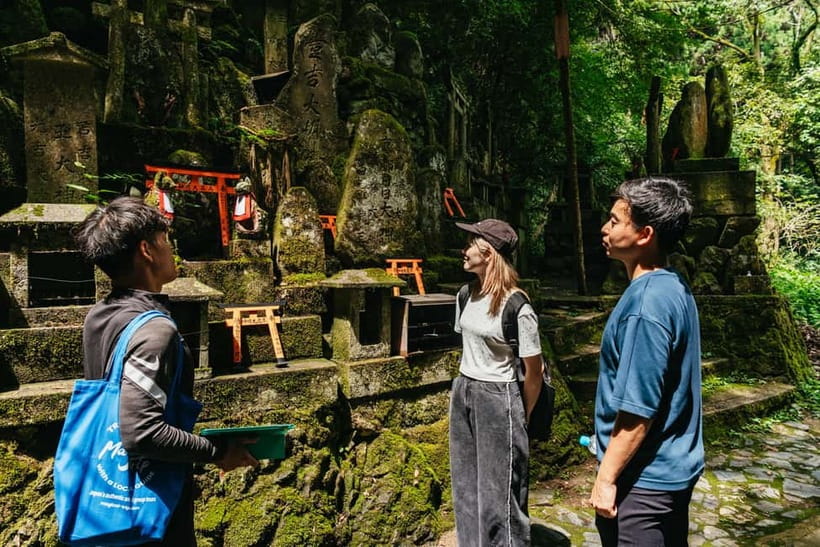
Several guides have been praised for explaining how to enter torii gates, make offerings, and form respectful wishes. That practical instruction is one of the tour’s strongest features. You are not simply moving from one photo stop to another. You learn how to behave at the sacred sites along the way.
The first bamboo grove and off-pavement trails
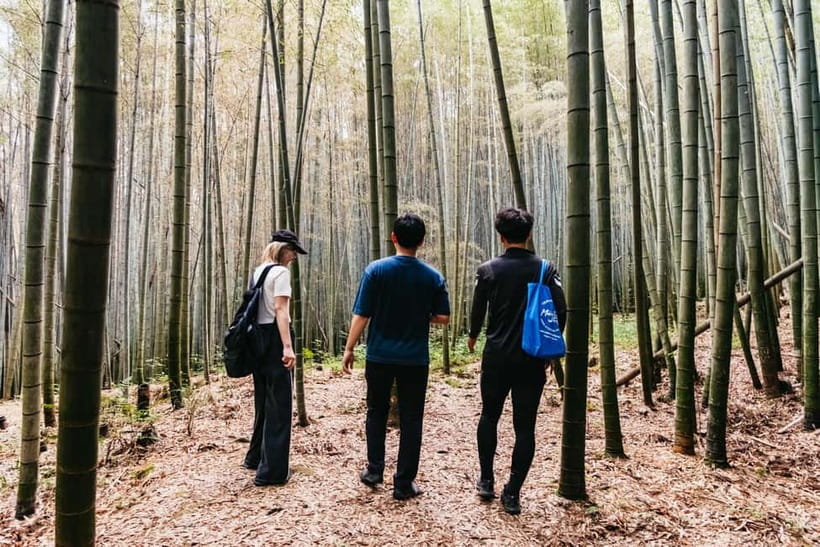
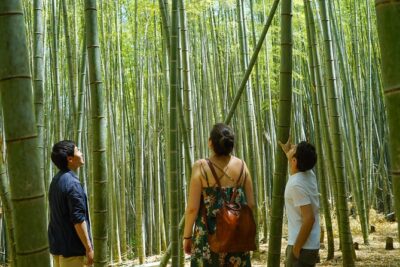
The first major stop is a bamboo grove reached by a less-used trail. This is where the tour begins to feel far removed from central Kyoto.
Bamboo is one of the reasons many people visit Arashiyama, but this route gives you a smaller and quieter grove near Fushimi Inari. One traveler even found the grove impressive enough to make a separate Arashiyama visit feel less essential. That does not mean the two places are identical, but it shows how much scenery this walk packs into three hours.
The path is not always smooth. You may encounter rocky ground, roots, mud after rain, and short steep sections. Guides make regular stops, and additional pauses are possible, but you still need to be comfortable walking uphill and downhill.
This is also the section where long clothing matters. The mountain can have mosquitoes and other bugs, and the forest offers shade but not complete protection. Long sleeves and long pants are recommended. They also help with branches, damp brush, and sun exposure.
Same trailhead, a different sort of day:
- Fushimi Inari Hidden Hiking Tour (Private Option Available)
★ 5.0 · 1,750 reviews - Hiroshima Local guided Hiking Tour&Open-air Tea Ceremony
★ 5.0 · 213 reviews - Full Day Hiking Tour at Mt.Takao including Hot Spring
★ 5.0 · 52 reviews - Hike Japan Heritage Hakone Hachiri with certified mountain guide
★ 5.0 · 46 reviews
Climbing Mount Inari through small altars
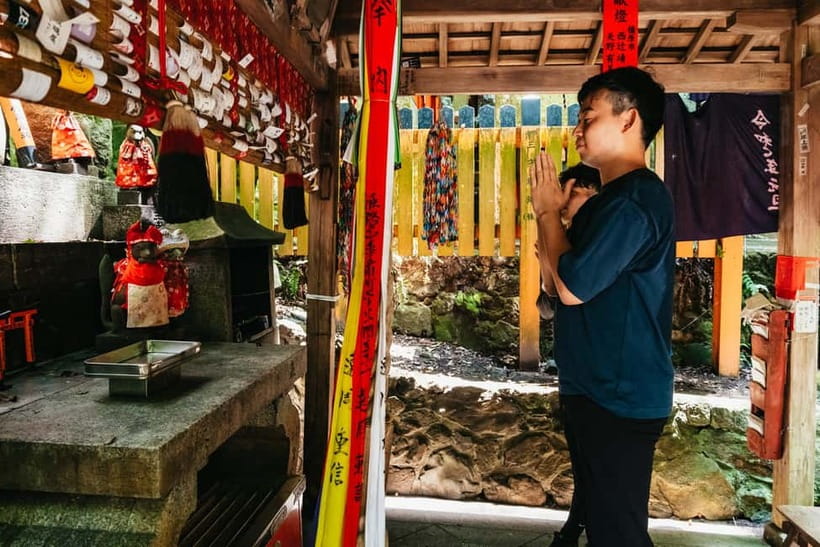
As the route continues, you connect with the main torii route and climb toward the summit. The red gates become more frequent, but the walk still includes side paths and smaller religious sites.
Fushimi Inari is often described through its thousands of torii gates, yet the mountain is also filled with stone foxes, memorials, tiny altars, and offerings. Your guide can explain what you are seeing and why the fox appears so often at Inari shrines. The exact amount of explanation depends on the guide and the group, but guides such as Jimmy, Hina, Naru, and Shiori have been praised for connecting the walk with Shinto practice and Japanese daily life.
The route reaches the summit area, which is covered with shrine altars. Do not expect a grand panoramic platform at every stop. The reward here is the combination of forest, gates, stone figures, and the feeling of moving through a living religious site.
The climb is described as moderate, but the guest feedback gives a useful reality check. One hiker counted about 50 flights of stairs on a watch. Others called the walk fun and manageable, but still more demanding than expected. I would rate it as suitable for someone in regular walking condition, not someone looking for an easy sightseeing loop.
Returning by a second forest route
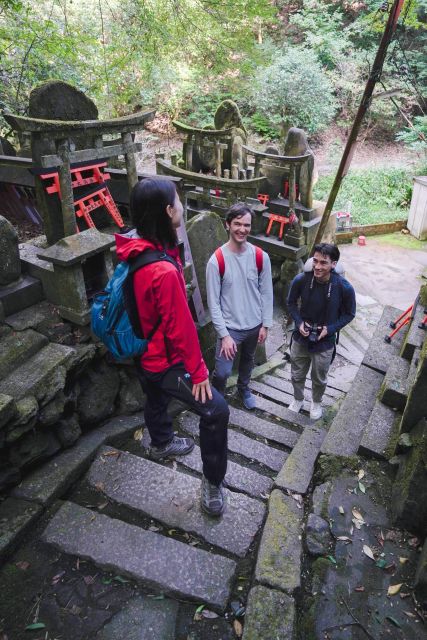
After reaching the upper part of the mountain, you descend by a forested trail. This return route includes more small shrines and another bamboo grove, so the walk does not simply retrace its steps.
The downhill section can be easier on your lungs but harder on your knees and footing. Rain changes the experience considerably. Mud and slippery stones have made the trail more difficult for some groups, although wet weather can also mean fewer people on the path.
This is a good point to slow down. The tour is designed around regular stops, and the guide can adjust the pace. Still, you should wear shoes with a reliable grip. The supplied information does not require hiking boots, but ordinary smooth-soled shoes would be a poor choice for uneven, wet ground.
The route is shaded for about half of the tour, which is welcome in Kyoto’s warmer months. It also means the walk can feel cooler and darker than the open main approach. Bring water, since additional food and drinks are not included.
Arriving at Fushimi Inari’s famous gates
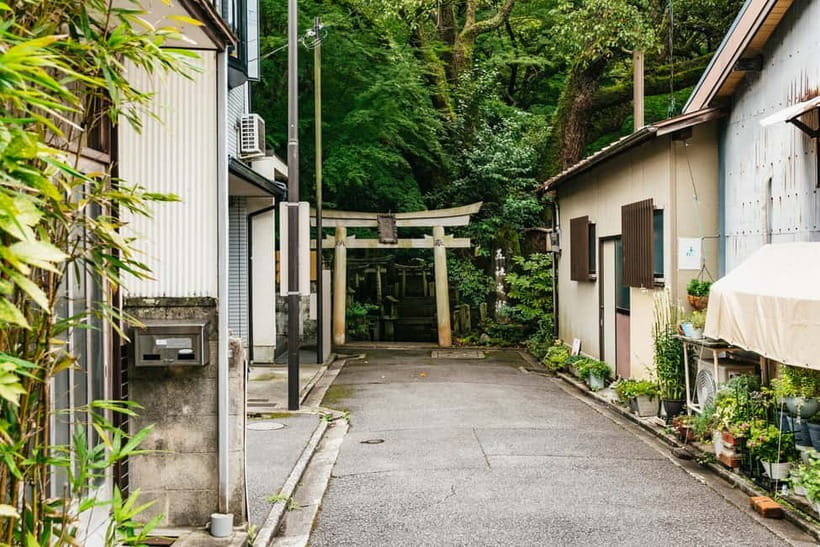
The final approach brings you to the area most people recognize from photographs. By entering from the less-used side, you see the torii gates after spending much of the morning or afternoon in relative quiet.
Crowds usually increase as you move toward the main shrine and the best-known lower sections. That is not a flaw in the tour. It is simply the tradeoff. The guide can help you take photographs at popular points, but no route can guarantee an empty view of Fushimi Inari’s most famous gates.
The contrast makes the arrival more satisfying. You have already walked through bamboo, forest, and small altar sites, so the main torii corridor feels like the final chapter rather than the entire story.
The tour description says you finish at the main shrine and can buy local street food afterward. The itinerary also lists a return to FamilyMart Nakai Tofukuji, so check the day’s ending plan before you set off. Either way, allow a little time after the tour if you want to eat or explore the shrine base.
The guides and the value of local help
The guide can make or break a cultural walk, and this experience has used a rotating group of English-speaking guides. Names praised in the supplied material include Hina, Naru, Shiori, Yuto, Yukari, Hikari, Makoto, Nina, Jimmy, and Matthew.
The strongest guides do more than lead the way. They explain shrine etiquette, help with offerings and wishes, describe the meaning of amulets, and answer questions about Shinto and Japanese customs. They also take photographs at scenic points, which is useful when you are traveling as a couple or family and do not want every picture to be a selfie.
English ability may vary by guide. One particularly positive account noted that explanations were brief because the guide’s English was limited, even though the route and personal attention were still good. If detailed cultural discussion is your main reason for booking, a private group may give you more time to communicate and ask questions.
Price, group size, and overall value
At $72 per person, this is not the cheapest way to see Fushimi Inari. You can visit the shrine on your own for the cost of transportation and perhaps a snack. The price makes sense if you value route-finding, cultural context, photographs, and a quieter approach.
The guide also saves you from trying to locate lesser-used paths on your own. That matters on a wooded mountain where the most interesting route is not always obvious. A guide can keep the group moving, point out small religious sites, and help you avoid treating a sacred place like a simple backdrop.
The small-group format strengthens the value. With up to nine people, the guide can usually respond to questions and adjust stops better than a large group leader can. A private option is available if you want a more personal pace, though the price may vary by booking choice.
Free cancellation is available up to 24 hours before the start time, and you can reserve now and pay later. The hike may be canceled in extreme weather. You can also cancel for rain if you are not prepared, but the clothing and footwear advice should be taken seriously.
Who should book this hike?
I would choose this tour if you want more than the standard torii-gate photograph. It suits people who enjoy walking in nature, want a local explanation of Shinto customs, and would rather trade some comfort for quieter paths.
It also works well for active families with older children. Children under eight are not suitable, and children younger than eight require parent or guardian permission before booking. Families with children aged 10 and 13 have completed the walk successfully, but the adults should be ready to help manage the hills and stairs.
You should think twice if you have limited mobility, trouble walking, or are not in regular physical condition. This is not a paved sightseeing stroll. The total distance is about 7 kilometers, with uneven trails, stairs, hills, and possible mud.
Pack light. Large bags and luggage are not allowed. Bring water, long sleeves, long pants, and shoes that can handle rough ground. A rain-ready layer is sensible, but do not assume the forest will be dry after a wet night.
Should you book the Fushimi Inari Hidden Hiking Tour?
Book it if your ideal Fushimi Inari visit includes bamboo, forest, side altars, shrine customs, and a moderate workout before reaching the famous gates. The route gives you a fuller sense of Mount Inari and avoids the busiest areas for much of the walk.
Skip it if you want a short, flat visit focused only on the main torii corridor. You will pay more than you would for an independent visit, and the hike can be slippery or tiring in wet weather.
For most reasonably fit visitors, I think the combination of quiet trails, local guidance, and classic Fushimi Inari scenery makes the $72 worthwhile. Just treat the word hiking as the important part of the title.
FAQ
Where does the Fushimi Inari hiking tour begin?
It begins at FamilyMart Nakai Tofukuji, outside Exit 2 of Tofukuji Station.
How long is the tour?
The tour lasts three hours and covers approximately 7 kilometers.
Is the tour suitable for people with limited mobility?
No. The tour is not recommended for people with mobility impairments or those who have trouble walking.
How difficult is the hike?
It is a moderate hike rather than a simple walk. You should expect hills, stairs, uneven forest paths, and some effort. Regular stops are included, and extra stops can be made if needed.
What should I wear?
Wear long sleeves and long pants because mosquitoes and other bugs may be present. These clothes also help with sun and brush. Comfortable shoes with good grip are strongly advisable for uneven paths.
Are food and drinks included?
No. Additional food and drinks are not included. Street food may be available near the main shrine after the walk.
Can I cancel the booking?
Yes. You can cancel up to 24 hours before the start time for a full refund. Free date or time changes are also available up to 24 hours before the tour, depending on availability.
Just added around Japan
- From Nagoya: Kamikochi Guided Hike in the Japanese Alps★ 5.0 · 3 reviews
- Kyoto: Arashiyama Bamboo Grove, Monkey Mountain Walking Tour★ 4.7 · 4 reviews
- 1-Day Tour from Nagoya: Hiking the Historic Nakasendo Trail★ 4.9 · 34 reviews
- From Matsumoto/Nagano: Nakasendo Trail Walking Tour★ 4.9 · 33 reviews
- Private Local Hiking to enjoy the nature and culture of Mt.Fuji★ 5.0 · 22 reviews
- Walk the Ancient Pilgrim Paths of Mt. Fuji – Private Tour★ 5.0 · 10 reviews
- Kyoto: Fushimi Inari Hidden Hike (Private)★ 5.0 · 31 reviews
- Explore Kiso Valley : Magome – Tsumago Mountain Trail Walk★ 5.0 · 33 reviews
Japan Hiking Tours, compared.
Fushimi Inari Hidden Hiking Tour (Private Option Available)
Read our review →
Hiroshima Local guided Hiking Tour&Open-air Tea Ceremony
Read our review →
Full Day Hiking Tour at Mt.Takao including Hot Spring
Read our review →
Hike Japan Heritage Hakone Hachiri with certified mountain guide
Read our review →
Magome & Tsumago Nakasendo Trail Day Hike with Government-Licensed Guide
Read our review →
1-Day Tour from Nagoya: Hiking the Historic Nakasendo Trail
Read our review →
From Matsumoto/Nagano: Nakasendo Trail Walking Tour
Read our review →
Explore Kiso Valley : Magome – Tsumago Mountain Trail Walk
Read our review →Browse the lists this tour appears in