
REVIEW · GUIDED DAY HIKES
Tongariro Alpine Crossing: Premium Guided Hike
The Tongariro Alpine Crossing is a full-day walk through one of New Zealand’s most striking volcanic areas. You’ll pass steaming-looking craters, mineral-stained ground, bright lakes, and broad views toward Mount Ngauruhoe, Mount Tongariro, and Mount Ruapehu. The scenery changes fast, which is a big reason this hike earns its reputation.
I like the strong safety focus and the way guides adjust the route to weather and group ability. I also like the practical support: transport from the Adrift base, winter crampons and ice axes when needed, and up to $60 of clothing and footwear hire. The catch is simple: this is not an easy stroll, and the full crossing is never guaranteed.
Key points to know before booking
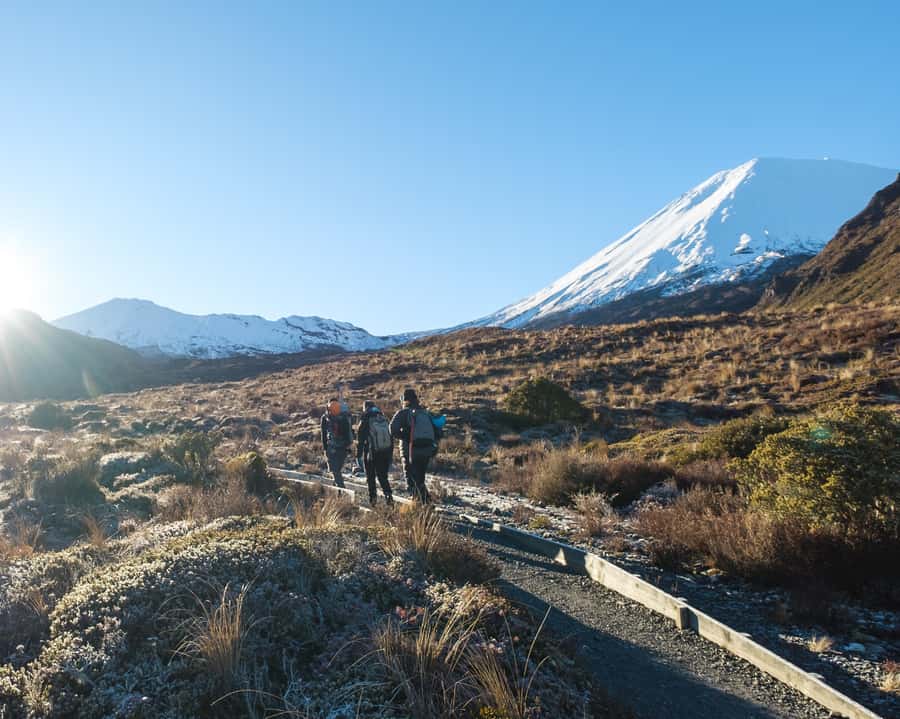
- Expect a serious 8-hour walk: The whole outing lasts about 9 hours, including two 25-minute van rides.
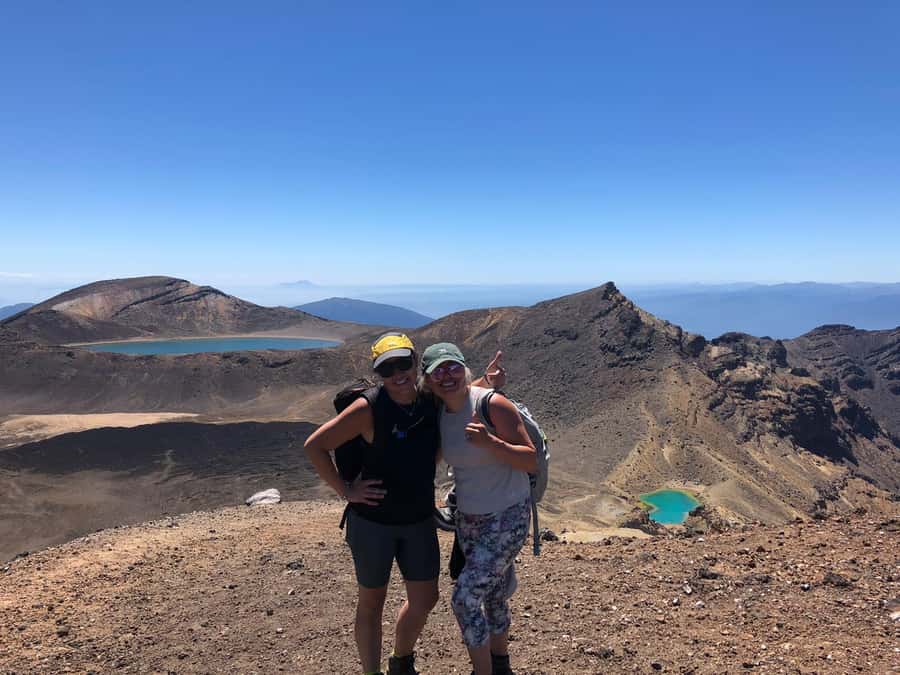
- Volcanic scenery changes constantly: You’ll see red craters, scoured rock, mineral colours, mountain springs, Emerald Lakes, and Blue Lake.
- Weather controls the day: Wind, snow, ice, avalanche risk, and hypothermia can change the route or prevent you from reaching the Ketetahi end.
- Guides provide real practical help: Guides have helped with cramps, fatigue, pacing, snacks, route changes, and early returns when someone became ill.
- Winter is a different undertaking: Crampons and ice axes are supplied if required, but you still need warm layers, gloves, and suitable footwear.
- The $254 price buys more than a walk: You pay for a guide, transport from National Park, safety decisions, and some clothing or footwear hire.
A volcanic day between three famous peaks
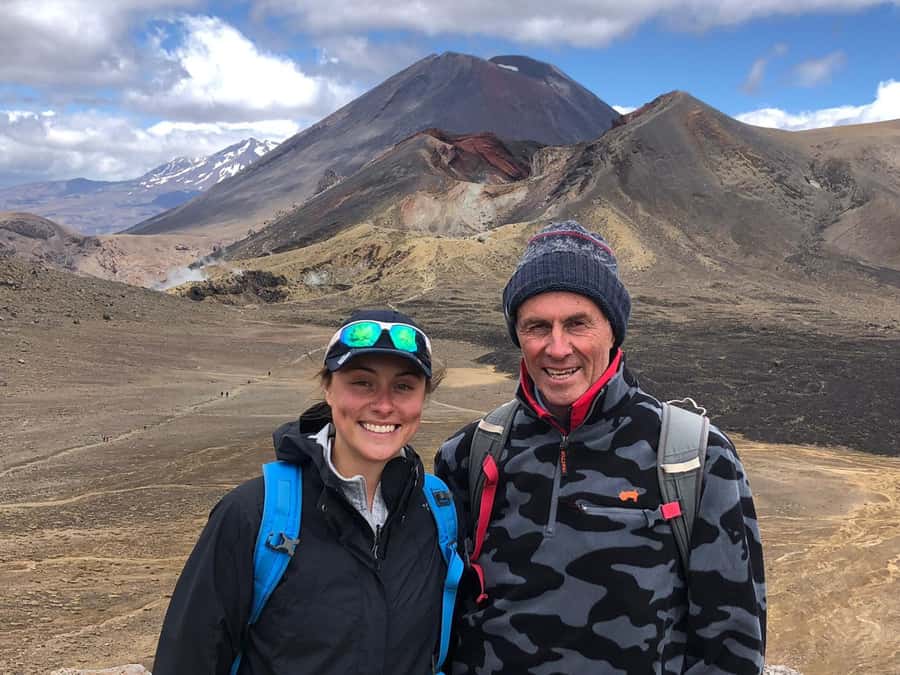
The crossing links the volcanic terrain around Mount Tongariro and Mount Ngauruhoe, with Mount Ruapehu visible as part of the wider setting. You are not simply walking from one point to another. The route moves through several types of ground, from native bush to open alpine terrain and crater country.
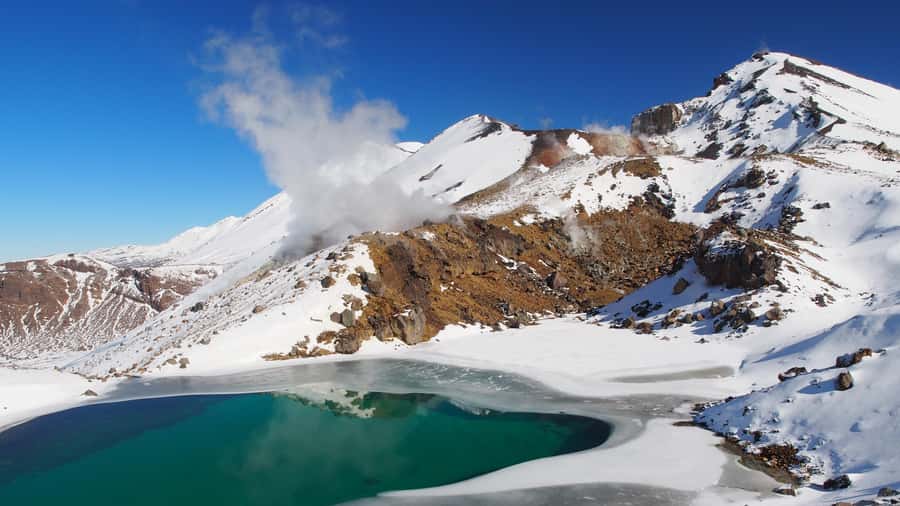
The colours are a major part of the appeal. Sulphur, aluminium, silica, and other mineral deposits have left the ground in different shades and textures. Red crater walls, dark volcanic rock, and the bright Emerald Lakes give the walk a look that feels unusual even by New Zealand standards.
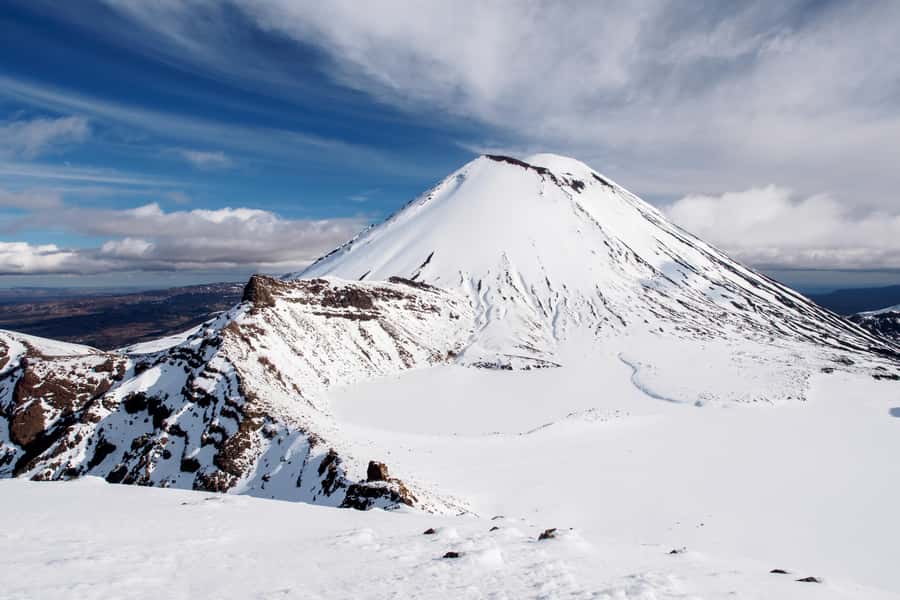
If you know the Lord of the Rings films, you may also recognize Mount Ngauruhoe as the mountain used for Mount Doom. That connection is fun, but the real attraction is the geology and the sense of walking through a place shaped by active volcanic forces.
The scenery is not gentle or polished. You may walk across rough volcanic rock, exposed slopes, and uneven paths. That raw quality is exactly what makes the route memorable, but it also explains why good footwear, steady pacing, and sensible clothing matter.
More Guided Day Hikes in New Zealand
- Queen Charlotte Track: Cruise & Self-Guided Hike from Picton
★ 4.8 · 383 reviews - Milford Track: Full Day Guided Hike and Nature Cruise
★ 4.7 · 70 reviews - Routeburn Track Guided Hike (Full Day)
★ 5.0 · 27 reviews
What the nine-hour schedule really involves
The day begins at the Adrift Tongariro base and shop at 53 Carroll Street in National Park. From there, a van takes you to the walking area in about 25 minutes. The hike itself is scheduled for roughly eight hours, followed by another 25-minute drive back to the base.
That timing leaves room for a long, demanding day rather than a quick scenic outing. You should plan to be active for most of the daylight period, with enough food, water, and clothing to handle major changes in temperature and weather.
A guide may use alternative paths to reduce crowding while still taking you to the main sights. This is useful on a popular route, since it can give you a little more space and keep the walk from feeling like a simple line of people moving between photo stops.
The exact route is decided on the day. Reaching the Ketetahi end is not guaranteed, and the group may need to turn back or use a modified route. That is not a flaw in the schedule. Alpine safety depends on wind, snow, ice, avalanche danger, visibility, and the risk of hypothermia.
Native bush gives way to open volcanic ground
The walk includes beautiful New Zealand native bush before the route opens into harsher alpine country. This change helps break up the day. You begin with plant life and shelter, then move into an open world of craters, rocks, springs, and coloured mineral deposits.
Once you reach the exposed sections, conditions can change quickly. A sunny start does not mean a warm day at higher elevations. One person who joined in February described needing several layers because the weather can shift from summer-like conditions to something much colder in a short time.
You should pack clothing that works in layers rather than one heavy item. A light base layer, fleece or warm mid-layer, and waterproof raincoat give you more control as you climb and descend. In summer, the operator asks for one light top and two warm top layers. In winter, bring three warm top layers, thermal clothing or walking trousers, over-trousers, a warm hat, and gloves.
Craters, springs, and the Emerald Lakes
The volcanic features are the reason to choose this walk over an ordinary mountain trail. You will see craters with different forms and colours, shaped by eruptions at different times. The ground can look scoured and bare, with rough volcanic rock underfoot and mineral stains adding strong colour.
The red craters are among the most memorable sights. They give the route its dramatic character, but they also sit in an exposed alpine setting where wind can be strong. One important warning from the day’s safety guidance is that a gorge crossing may not be possible if the wind becomes too severe. You may not know for certain until you are high on the route.
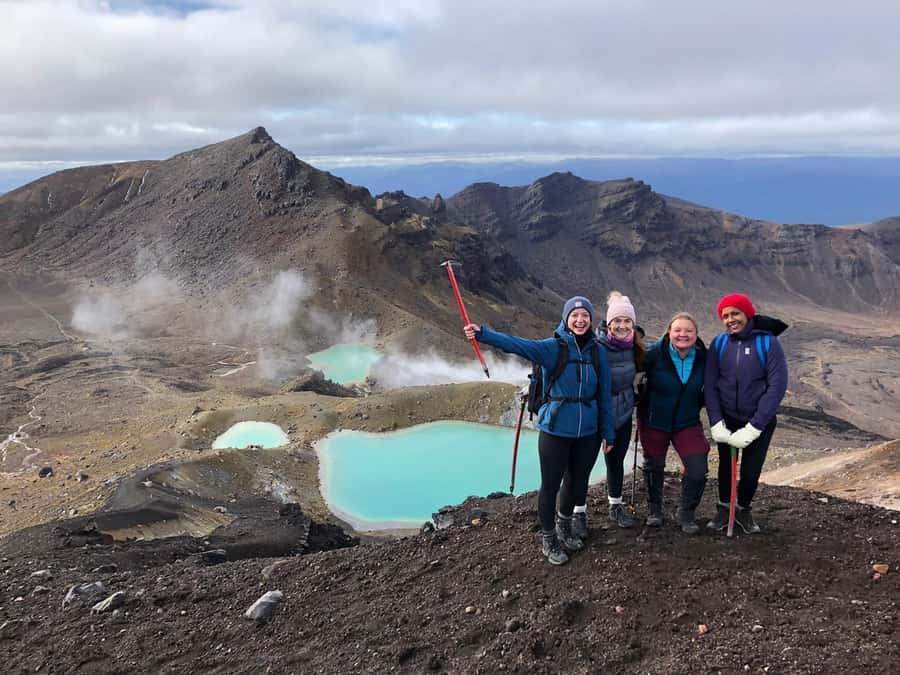
The Emerald Lakes provide one of the most famous views on the crossing. Their colour comes from the volcanic minerals in the area, not from a tropical beach setting. The Blue Lake offers another striking stop, with a different colour and shape that helps show how varied this volcanic area can be.
You should not assume every viewpoint will be available in every kind of weather. Clouds, snow, rain, or strong wind can hide the peaks and lakes. One group reached the summit in poor conditions and only received the full view when the weather cleared. That possibility is part of the gamble of booking an alpine walk.
Same trailhead, a different sort of day:
- Franz Josef Glacier Heli-Hike
★ 4.5 · 618 reviews - Heli Hike Fox Glacier
★ 5.0 · 563 reviews - Franz Josef: 2.5 Hour Glacier Hike with Helicopter Transfer
★ 4.7 · 322 reviews - Fox Glacier: Up to 3 Hours Hike with Helicopter Transfer
★ 4.9 · 309 reviews
Why a guide is useful on this route
You do not need previous alpine experience, and the guide provides training and tuition on the day. You do need a reasonable fitness level. The operator asks you to speak up before starting if you are worried about your ability, since the guide may be able to discuss route or pacing options.
The guide’s value goes well beyond pointing out scenery. Guides monitor the group, set a workable pace, explain the terrain, and decide when conditions are no longer sensible. In one case, a participant developed severe quad cramps. The guide provided electrolyte gels and sugar gummies and suggested ways to walk that reduced the strain.
Another participant became sick about 30 minutes into a walk in bad weather. The guide arranged a pickup and made sure the person returned safely to their accommodation. That kind of response matters on a remote, strenuous route. You should still carry your own medication and food, but the guide gives you another layer of support.
The guiding style can also add cultural context. Ty, one of the guides, was especially praised for sharing Māori culture while leading the walk. Other guides named in feedback include Kayla, Stu, Stuart, Hiro, Hannah, and Kenny. The guide on your date will vary, but the operator’s strongest pattern is attentive support combined with practical knowledge of the route.
Fitness, fatigue, and the long descent
You do not need to be an experienced hiker, but you should be comfortable with a full day on your feet. The route is strenuous, and the descent can be especially hard on tired legs. One first-time hiker described the downhill section as particularly difficult, while another experienced hiker had unexpected quad cramps.
Do not judge the walk only by the distance or the first hour. You may feel fine early on and then struggle after the major climbs, exposed sections, or long descent. Walking poles can help, especially if your knees or balance are concerns. The operator does not list poles among the included equipment, so ask about available gear when arranging your equipment.
Eat before you become tired. Pack a proper lunch, snacks, and 1 to 2 litres of water. Sugar-based snacks and electrolyte products may be useful, particularly if you are prone to cramps, but they do not replace a real meal.
The guides aim to respect different ages and ability levels, with rest stops and pace adjustments when possible. Even so, a group tour cannot move at every person’s preferred speed. If finishing the full route is your top priority, ask about a private option. A group may need to alter the plan because of weather or because some members need more time.
Summer and winter are two different walks
Summer gives you the best chance of seeing the route in its familiar dry, colourful form, but it does not guarantee calm weather. Bring sun protection, a hat, sunglasses, sunscreen, and a waterproof raincoat. The operator also recommends breathable or quick-dry clothing and hiking shoes or boots.
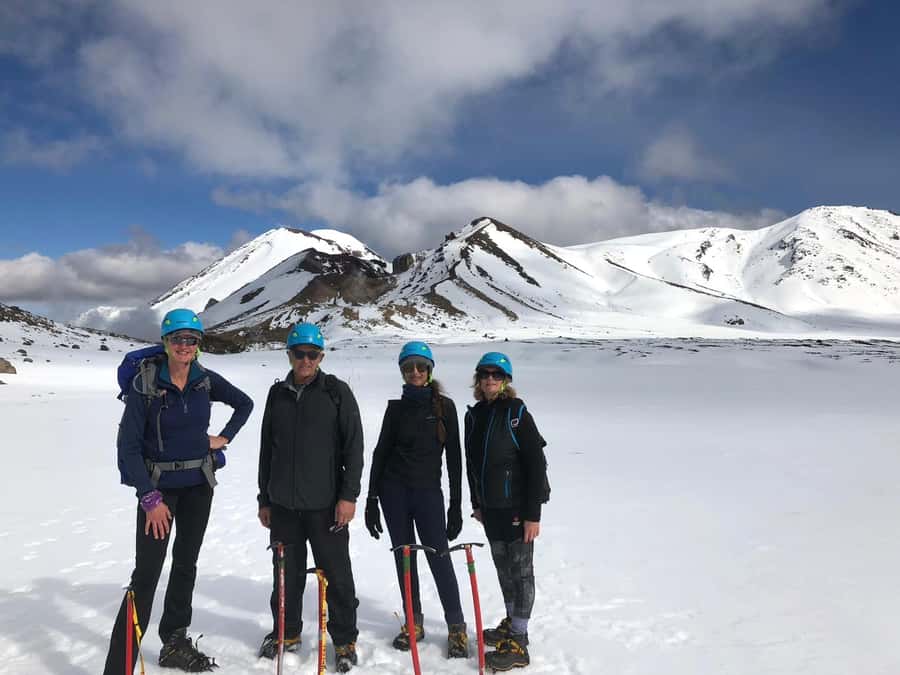
Winter brings snow-covered craters and a quieter feel, with fewer people on the route. It also raises the technical demands. Crampons and ice axes are supplied by Adrift Tongariro if conditions require them, and the guide gives instruction on their use.
Winter visitors need thermal layers, waterproof over-trousers, a warm hat, and gloves. Do not treat the supplied equipment as a substitute for personal preparation. One winter outing took place in rain that changed to snow, and even rain gear could not prevent the group from becoming soaked. That is a useful reminder that alpine weather can overpower ordinary outdoor clothing.
A winter day may also be shortened or redirected. The route may be covered in snow, and the safe line can change with ice and avalanche conditions. The reward is a striking white setting without the summer crowds, but you should book winter only if you are comfortable with a more uncertain plan.
What the $254 price includes
At $254 per person, this is not the cheapest way to walk the Tongariro Alpine Crossing. The price makes more sense if you value transport, equipment access, and a guide who can make safety decisions in changing conditions.
The package includes transport between the Adrift base and the activity, an English-speaking guide, and up to $60 of clothing and footwear hire. In winter, crampons and ice axes are supplied when they are required. Those inclusions can save you from buying or packing specialist items for one day.
Lunch is not included. You also need to pay extra for return transfers from Taupo CBD, Turangi, or Whakapapa Village. Those transfers are available with a surcharge and require at least two people, so check the arrangement before booking if you are not staying near National Park.
I see the price as reasonable for someone who wants support rather than a self-guided outing. It is less compelling if you already have the equipment, know the route well, and are comfortable making your own weather decisions. The biggest value is not a guaranteed summit or finish. It is having an experienced person assess the conditions and help the group respond to them.
Practical packing for a safer day
Pack lightly, but do not cut essential clothing. Your daypack should hold:
- 1 to 2 litres of water
- Packed lunch and snacks
- Waterproof rain gear
- Warm layers and quick-dry clothing
- Hiking shoes or boots
- Sunglasses, hat, and sunscreen
- Personal medication
- Insect repellent
- Extra winter layers, gloves, and a warm hat in cold conditions
Breathable clothing is useful when climbing, while waterproof outer layers matter when rain or snow arrives. Avoid relying on a single cotton layer, since wet clothing becomes uncomfortable and slow to dry.
The operator can provide personal equipment, footwear, and clothing for hire at the Adrift base. Ask about the $60 clothing and footwear allowance when arranging what you need. It is still wise to arrive with your own suitable base layers and rain protection if you have them.
Children under 12 cannot join this activity. For everyone else, the key question is not age alone but fitness, confidence on uneven ground, and willingness to accept a route change.
Cancellation and meeting details
You meet at Adrift Tongariro Guiding and Shop, 53 Carroll Street, National Park 3948. The activity is conducted in English, and the full outing takes about nine hours.
You can cancel up to 14 days in advance for a full refund. Since mountain conditions can change, that policy gives you some flexibility while planning a wider New Zealand trip.
If you are travelling alone, you can still book. The operator generally meets its minimum numbers, especially on good-weather days. Do not assume, however, that a solo booking guarantees a private walk or a particular route.
Should you book the Tongariro Alpine Crossing?
Book this guided walk if you want to see the famous craters and lakes but do not want to make every safety call yourself. It is especially suitable if you are visiting in winter, lack alpine equipment, or want a guide who can help with pacing, cramps, fatigue, and sudden weather changes.
Think twice if you want a relaxed sightseeing day. This is a strenuous hike, and the full crossing may not happen. Strong wind can block a gorge crossing, snow can force a different route, and group pace can affect the final distance.
For most reasonably fit visitors, the guided format adds useful value. You get the volcanic scenery, native bush, Emerald Lakes, and Blue Lake, along with equipment support and a trained person watching the conditions. Just arrive prepared for a hard day, keep your plans flexible, and treat reaching the Ketetahi end as a possibility rather than a promise.
FAQ
How long does the Tongariro Alpine Crossing tour take?
The full activity lasts about nine hours. This includes two van rides of roughly 25 minutes each and around eight hours of guided walking and sightseeing.
Where does the tour begin?
You meet at Adrift Tongariro Base and Shop, 53 Carroll Street, National Park 3948, New Zealand.
Is transport included?
Transport between the Adrift Tongariro base and the activity is included. Return transfers from Taupo CBD, Turangi, and Whakapapa Village are available for an extra charge, with a minimum of two people.
What sights will I see?
The route includes volcanic craters, red craters, mountain springs, Emerald Lakes, Blue Lake, native bush, and views connected with Mount Ngauruhoe, Mount Tongariro, and Mount Ruapehu.
Do I need previous alpine experience?
No alpine experience is required. Training and tuition are provided on the day, but you do need a reasonable fitness level.
Is the full crossing guaranteed?
No. Reaching the Ketetahi end is not guaranteed. Weather, wind, avalanche danger, ice, hypothermia risk, and group conditions can affect the route.
Are crampons and ice axes included?
Crampons and ice axes are supplied when winter conditions require them. The guide provides instruction for the conditions of the day.
Is lunch included?
No. You need to bring your own packed lunch, snacks, and 1 to 2 litres of water.
Can I hire clothing or footwear?
Yes. Personal equipment, footwear, and clothing can be hired at Adrift Tongariro. The tour includes $60 of clothing and footwear hire.
Can children join the hike?
Children under 12 are not permitted to join this activity.
Just added around New Zealand
- Rangitoto Island: Sea Kayak & Summit Hike Day Trip★ 4.8 · 31 reviews
- From Queenstown: Franz Josef Glacier Hike & Scenic Flight★ 5.0 · 25 reviews
- From Queenstown: Mount Cook Heli-Hike and Bus Tour Combo★ 4.8 · 42 reviews
- Abel Tasman National Park: Cruise, Kayak, & Hike Tour★ 5.0 · 9 reviews
- Fiordland: Jet Boat & Nature Walk Experience from Te Anau★ 4.9 · 97 reviews
- Mou Waho Island: 3-Hour Cruise and Guided Nature Walk★ 4.9 · 66 reviews
- Mt Cook Small Group Tour & Heli Hike Combo from Queenstown★ 5.0 · 64 reviews
- Routeburn Track Guided Hike (Full Day)★ 5.0 · 27 reviews
Guided Day Hikes, compared.
Sunrise Mount Batur Guided Hike with Breakfast
Read our review →
Mount Batur Sunrise Guided Hike and Natural Hot Spring
Read our review →
Mount Etna: Summit Guided Hiking Tour up to 3,400 m
Read our review →
Multnomah Falls and Columbia River Gorge Half-Day Hiking Tour
Read our review →
Ouzoud Waterfalls Guided Hike and Boat Trip from Marrakech
Read our review →
Browse the lists this tour appears in