
REVIEW · ITALY
Mount Etna: Special Hike on the Wild and Authentic Side
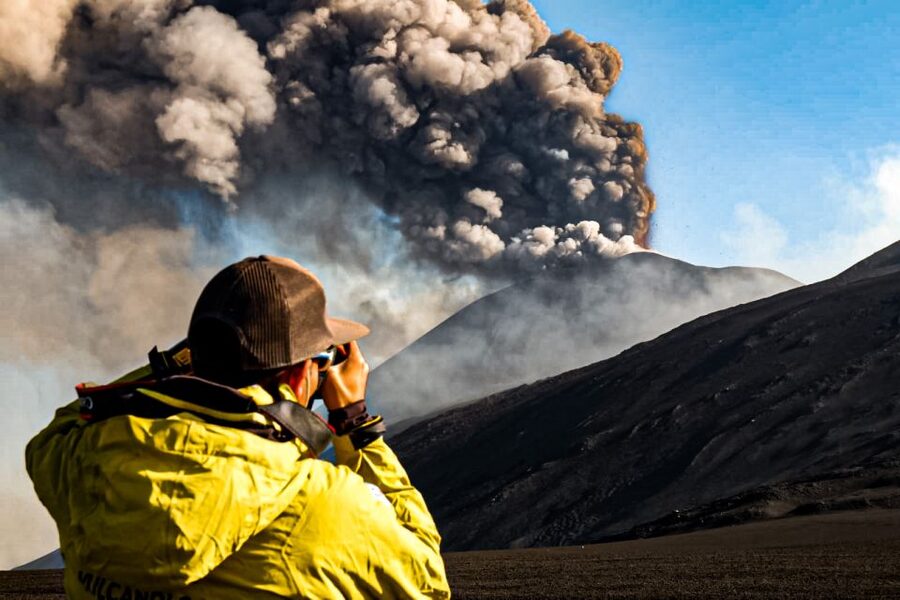
Mount Etna’s north side feels far removed from the busy summit routes. A 4×4 carries you from 1,800 to 2,800 meters, then you walk across ash slopes, crater rims, lava fractures, and old eruption sites with an authorized volcanological guide. The most memorable feature is the chance to enter an intact volcanic chimney, helmet on, and see where molten rock once moved.
I like the small-group approach, with guides assigned by language and group size instead of sending one large crowd up the mountain. I also like the route’s variety: broad views toward Taormina and the Aeolian Islands, then close-up volcanic details such as lava ducts and the 1947 craters. The catch is practical: the $65 price does not include the required 4×4 transport fee of €50 per person, and high-altitude walking requires reasonable fitness.
Key points to know before booking
- Reach 2,800 meters by special 4×4: The rough road is not suitable for ordinary cars, and the vehicle fee is paid separately.
- Walk through real volcanic features: The route includes fractures, lava-flow mouths, explosive craters, and a volcanic chimney.
- Use it as a summit alternative: The route continues within current safety limits if summit craters are closed.
- Expect a high-altitude hike: You walk around crater edges and down loose volcanic ash, so balance and sturdy footwear matter.
- See Etna from the quieter north: The trail finishes toward Piano Provenzana rather than following the busiest southern approach.
- Pack for fast-changing weather: Bring water, snacks, sun protection, long trousers, a windbreaker, and a rain jacket.
Etna’s north side offers a different kind of volcano day
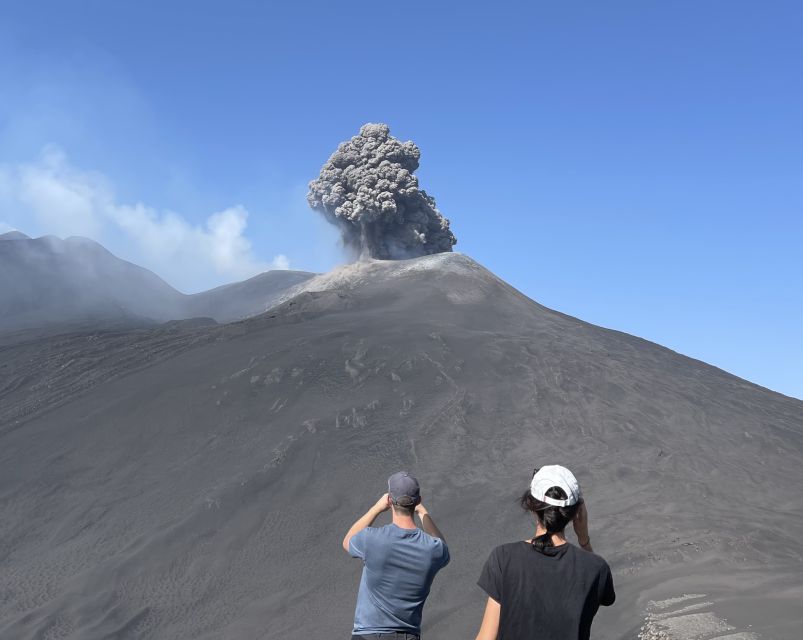
Most first-time Etna excursions focus on getting as close as possible to the summit craters. This route takes a smarter approach. It treats the mountain as a vast volcanic record, where each crater, fracture, and dark flow marks a different event.
You begin at the Mareneve Bar, near the winter ski chairlift, in the parking area. Look for the second of four buildings. Arrive a little early, since the group must organize equipment and vehicles before heading uphill.
The activity is advertised as four hours, but the detailed route covers several stops and about six kilometers on foot after the high-altitude vehicle transfer. One account describes a trek lasting almost five hours, so I would avoid scheduling a tight connection afterward. Mountain conditions and the pace of the group can affect the total time.
The route is especially useful when the summit craters are closed because of volcanic risk. You still reach the highest point currently permitted with guides, then explore a long chain of older and newer eruption sites on the way back down.
More Mountain Hikes in Italy
- Mount Etna: Summit Guided Hiking Tour up to 3,400 m
★ 4.8 · 4,792 reviews - Etna Volcano: South Side Guided Summit Hike
★ 4.7 · 1,545 reviews - Catania: Mount Etna Adventurous Hiking Tour with Equipment
★ 4.7 · 784 reviews
The 4×4 climb from 1,800 to 2,800 meters
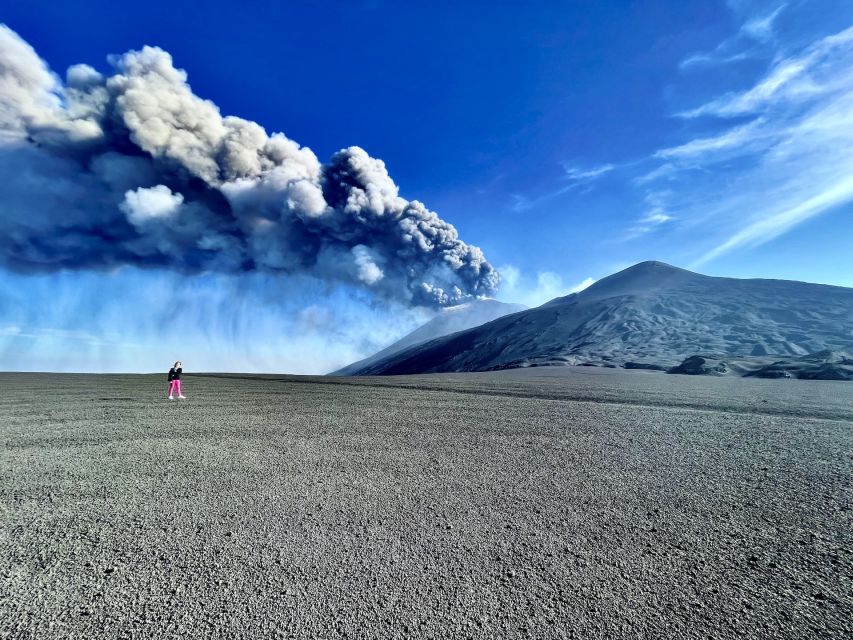
The first part is not a sightseeing drive in an ordinary sense. You board a special 4×4 vehicle for roughly eight kilometers of rough volcanic road. The guide begins explaining Etna during the ride, which makes the transfer part of the tour rather than dead time.
The vehicle takes you to about 2,800 meters and the Volcanological Observatory. That altitude matters. You gain height quickly, and the air and weather can feel different from the coast. People who struggle with altitude, breathing, heart conditions, vertigo, or low fitness should take the warnings seriously.
The separate vehicle charge is €50 per person. This is the main price detail to understand before booking. The advertised tour price is $65, but that covers the guide service, not the 4×4 transport. Add the vehicle fee, food, drinks, and any personal gear you need, and the actual cost is higher than the headline figure.
The rough road is one reason the transfer is worthwhile. You cannot simply drive your own rental car to the same point. Once you reach the observatory, the first short walk begins.
A high viewpoint near 2,900 meters
From the observatory, you walk from about 2,800 to roughly 2,900 meters. This first section leads to a panoramic point with views toward the summit craters, recent lava flows, Taormina, and, when visibility cooperates, the Aeolian Islands.
Do not count on a clear panorama. Etna creates its own weather, and cloud or haze can limit what you see. Still, the viewpoint gives you a useful sense of scale. From high on the north slope, the mountain’s scattered craters and dark lava routes make more sense as parts of one active volcanic system.
This short climb is also a good test for the rest of the outing. The route is not described as extreme, and one guide account calls it not too difficult, but it is still high-altitude walking. You will be walking near crater edges and over uneven volcanic ground. If you feel dizzy, tell the guide early rather than trying to push through.
After the viewpoint, you return to the 4×4. The vehicle carries you to the side of one of the major craters on Etna’s north slope, where the longer walk begins.
The 1947 craters and an intact volcanic chimney
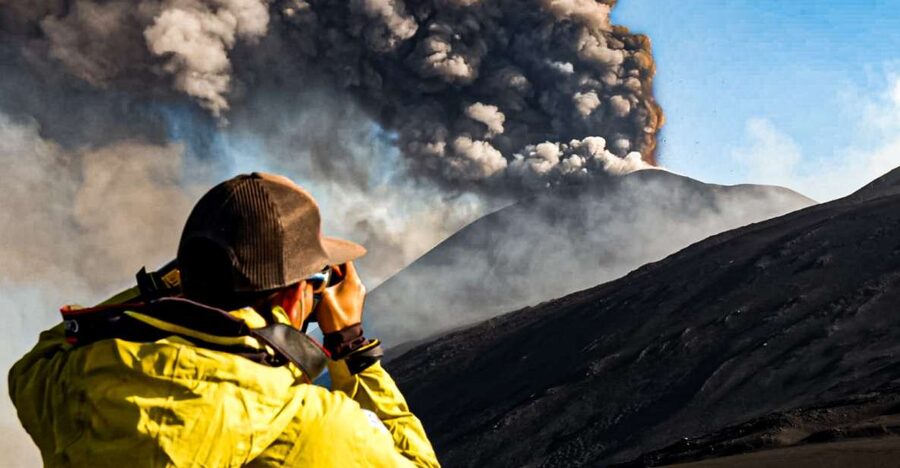
The most unusual section comes at the eruption sites of February 24, 1947. You walk along the north-side fracture, or rift, and inspect openings connected with the flow of lava.
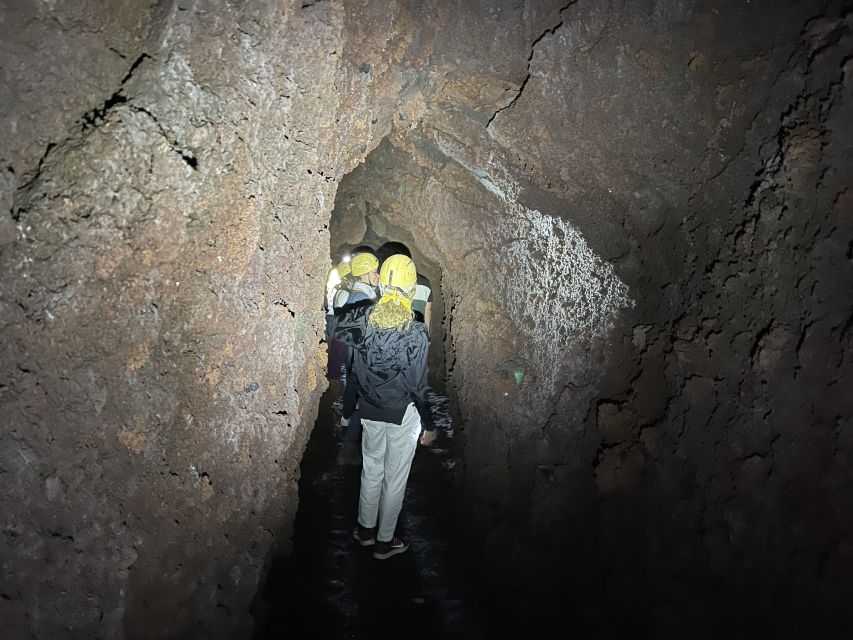
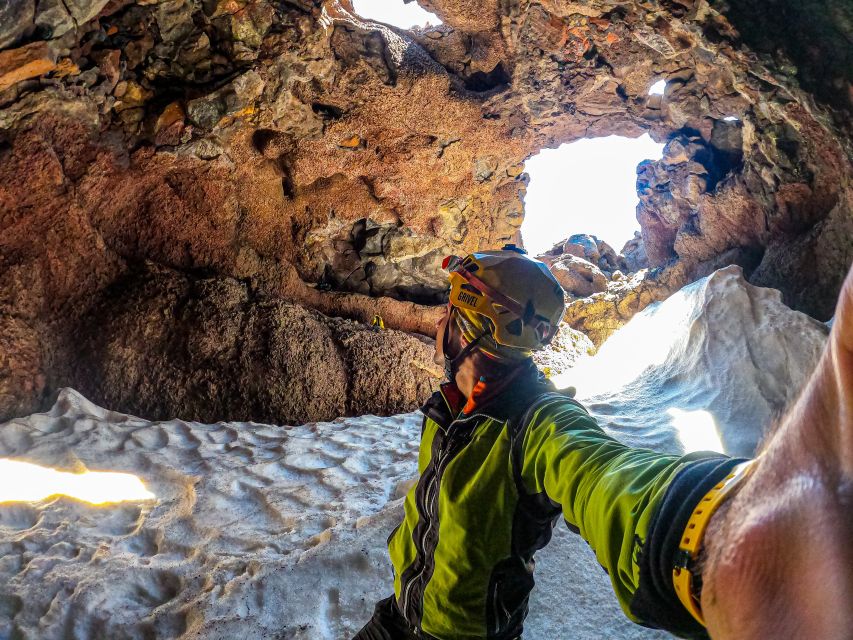
With a protective helmet, you can enter the chimney of an intact volcanic cone. This is not a polished cave attraction. It is a raw volcanic passage, and the guide uses it to explain how an eruption works. You also enter mouths from which lava once emerged.
This close view gives the route its real value. A distant crater can look like a simple hole in the ground. Inside a volcanic duct, you can better understand the route molten rock took as it moved upward and outward. Guides such as Ciccio have used eruption footage and on-site explanations to connect what you see with Etna’s recent activity.
The supplied equipment includes helmets, trekking poles, warm jackets, extra socks, a backpack, and trekking shoes. One recent participant specifically noted receiving rain gear and hiking boots. Still, I would bring your own hiking shoes if you have them, because the insurance does not cover you without adequate footwear. The equipment available on the day may also vary, so ask before relying on borrowed gear.
Same trailhead, a different sort of day:
- Cinque Terre Day Trip with Optional Hiking or Pisa
★ 5.0 · 8,486 reviews - Florence: Cinque Terre Day Trip with Optional Hiking or Pisa
★ 4.9 · 4,848 reviews - From Sorrento: Path of the Gods Guided Hike with Transfers
★ 4.8 · 530 reviews - From Taormina: Etna Tour with Hiking, Cave Visit, & Tastings
★ 4.7 · 518 reviews
A long walk across Etna’s eruption record
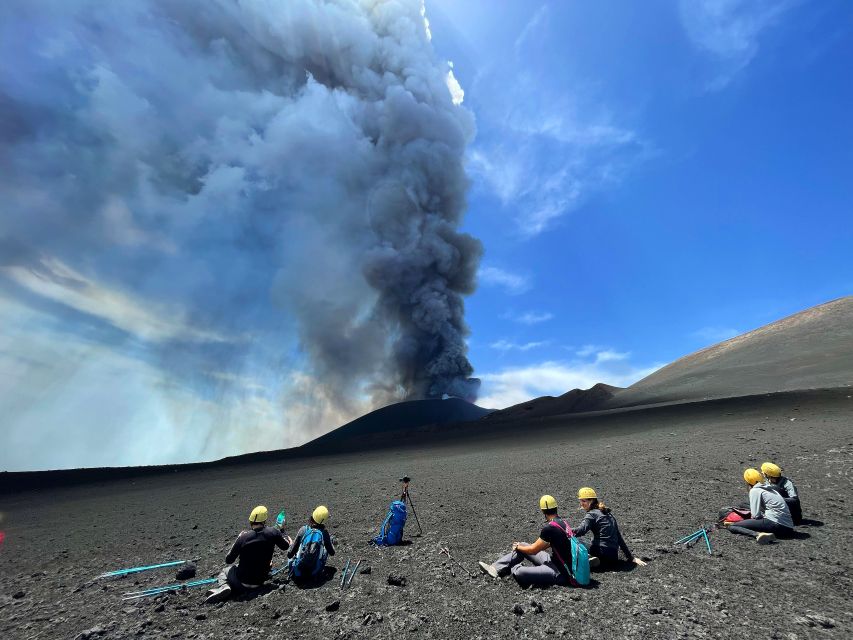
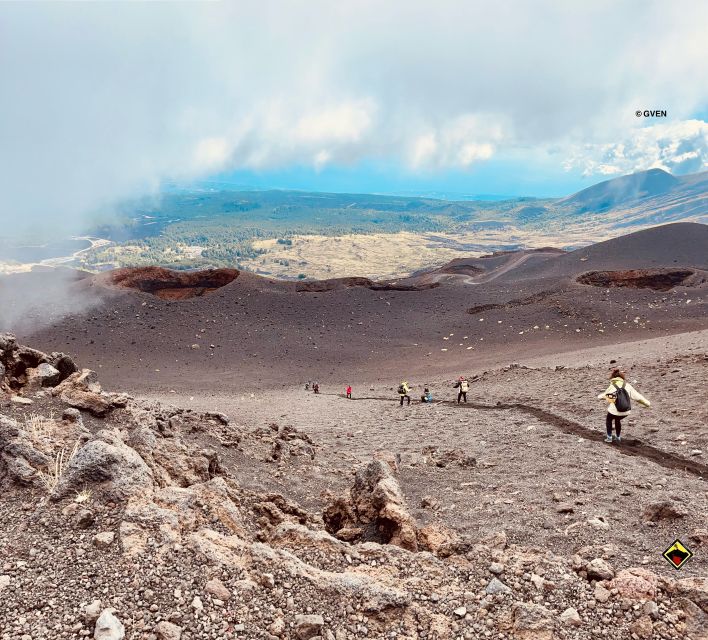
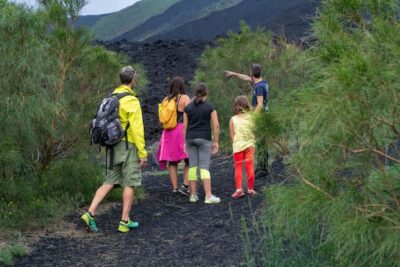
The main walk follows the north slope toward Piano Provenzana. You pass the edges of large explosive craters and descend over volcanic ash. Loose ash is tiring in a different way from a normal trail. It shifts under your feet, so trekking poles are useful, especially on descents.
The route links craters from eruptions in 1914 and 1924, 1809, 1874, 1879, 1911, 1923, 1974 and 1975, and 2002. You are not simply ticking off dates. The succession shows how Etna repeatedly opens new vents on its sides, far below the summit.
That is why the north route feels more like fieldwork than a standard mountain walk. You see fractures in the ground, cones of different sizes, lava-flow channels, ash slopes, and openings where lava escaped. Each feature helps explain why access rules can change. Etna is not a dormant monument. It remains an active volcano, and the safe route depends on current conditions and official orders.
The final walking section covers about six kilometers to Piano Provenzana. The exact pace depends on the group and the terrain. Your guide may stop often to explain the eruptions and rock formations, which adds interest but can extend the day. If you want a fast workout, this may feel slow. If you want to understand what you are seeing, the pauses are the point.
Why the guide makes or breaks the hike
This is a guide-led volcanic excursion, not an independent path walk. The guide must follow the safety limits set by the Civil Protection authorities and current volcanic-risk rules. That is important on Etna, where the highest accessible point can change.
The guides named in the available tour information include Ciccio, Rafael, Vincenzo, Daniele, and Luca. Their approach may differ, but the strongest part of the experience is the explanation of what lies beneath your feet. Luca, for example, is described as offering clear information about volcanic formation and past eruptions, while Vincenzo used videos and stories about recent activity to bring the route to life.
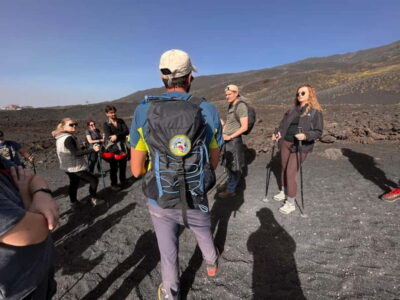
Groups are divided according to language and size. French, Italian, and English are offered. This should help keep the walk manageable and make the technical explanations easier to follow.
I would ask your guide about the day’s permitted altitude and route before setting off. If summit craters are closed, this north-side program is a useful alternative, but it is not a substitute for standing at the summit. You may see the summit craters from a distance rather than enter the active summit zone.
What the $65 price really includes
At $65 per person, the guide service is fairly priced for a specialized route, but the total cost needs careful reading. The required 4×4 transfer costs €50 per person on the spot. That makes the transport almost as important to the budget as the advertised tour itself.
Included in the guide service are:
- An authorized volcanological guide
- Trekking poles
- Protective helmets
- Accident insurance
- Trekking shoes
- Warm jackets
- Extra socks
- A backpack
Lunch, bottled water, snacks, and a rain jacket are not included. Bring your own food and drink. A packed lunch makes sense because the route is long enough to cross normal meal times, and there is no promise of a food stop on the mountain.
Parking information needs a quick check. The meeting instructions mention a €3 charge paid after the excursion, while another price note lists €5 on weekdays and €8 on Sundays and public holidays. Because these figures conflict, confirm the current parking fee when you book or arrive.
The activity requires at least eight participants in total. If that number is not reached, the excursion can be cancelled. Bad weather can also lead to cancellation or postponement. The cancellation policy allows a full refund when you cancel at least 24 hours ahead, but weather and minimum-group changes are separate issues.
Who should choose this Etna route
I would choose this outing if you want volcanic detail more than a quick summit photo. It suits a moderately trained hiker who can manage several hours at altitude, uneven ground, crater edges, and loose ash.
It is also a good choice if you want fewer crowds. The north side is less frequented than the standard southern approach, and the route’s appeal comes from its quiet craters and exposed volcanic features. You get a stronger feeling of Etna as a working volcano rather than a transport stop with a view.
You should reconsider if you have back, heart, respiratory, or mobility problems. The activity is also unsuitable for people with vertigo, a fear of heights, claustrophobia, epilepsy, recent surgery, altitude sickness, or a low level of fitness. The route includes narrow volcanic interiors, crater edges, high elevation, and loose slopes.
The stated age restriction excludes people over 95. More important than age is how you handle altitude and uneven walking. Tell the guide about your health before starting, and stop if the height or terrain causes trouble.
Wear long trousers and closed hiking shoes. Sandals, flip-flops, open-toed shoes, and high heels are not allowed. Alcohol is not permitted in the vehicle.
What to pack for changing mountain weather
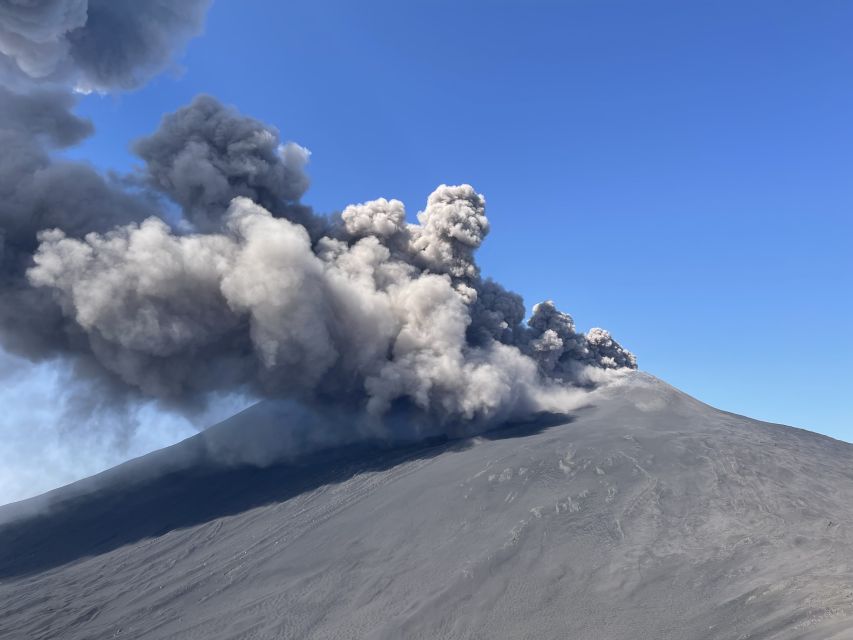
Etna can be sunny, cold, windy, or wet during the same outing. Bring a windbreaker, jacket, sunglasses, sunscreen, comfortable clothing, and a rain jacket. The supplied gear may include warm clothing and rain protection, but I would not count on every item fitting perfectly or being available in every size.
Pack plenty of water and snacks. A packed lunch is sensible, especially if the route runs closer to five hours than four. Keep your hands free where possible, since trekking poles are useful on the ash descents.
The combination of sun, wind, and altitude can catch you off guard. Sunglasses and sunscreen matter even when the air feels cool. Long trousers protect your legs from rough volcanic surfaces and shifting ash.
Should you book the wild north-side hike?
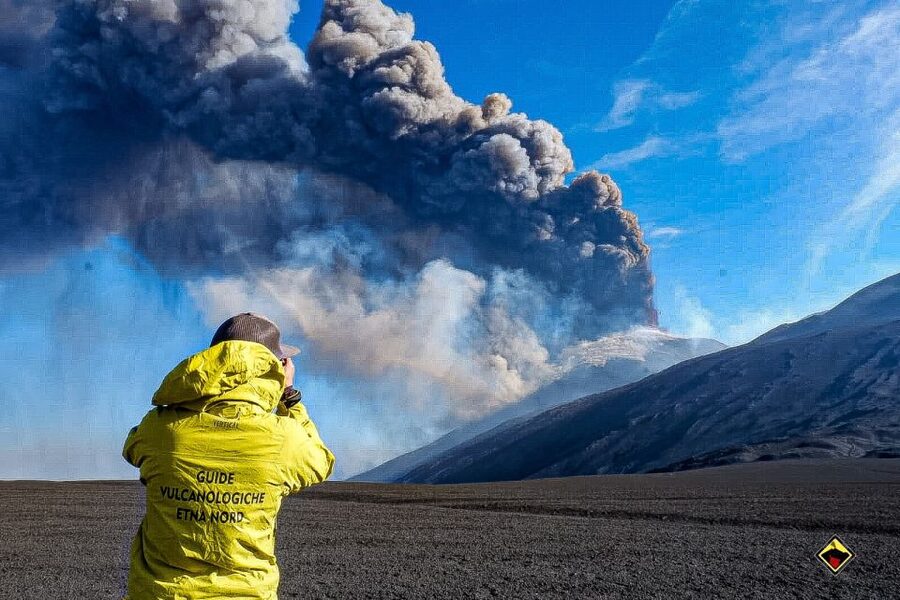
Book it if you want an active, informative Etna day built around craters, lava channels, and geology rather than a simple ride to a viewpoint. The north-side setting, 4×4 approach, intact volcanic chimney, and long walk toward Piano Provenzana give the tour a clear identity.
Skip it if you need an easy outing, dislike rough vehicle rides, or want guaranteed access to the summit craters. The $65 headline price also requires a €50 transport payment, and the weather, volcanic rules, and eight-person minimum can change the plan.
For a fit hiker who wants to understand how Etna erupts, this is one of the better alternatives when summit access is restricted. Bring proper shoes, expect a demanding but manageable day, and budget for the extra transport fee.
FAQ
How long does the Mount Etna north-side hike last?
The advertised duration is four hours. The walking route and stops can make the outing longer, and one account describes nearly five hours, so allow extra time in your schedule.
How high does the excursion go?
The 4×4 vehicle takes you from about 1,800 meters to 2,800 meters. You then walk to approximately 2,900 meters, subject to current safety rules and volcanic conditions.
Is the 4×4 transport included in the $65 price?
No. The guide service costs $65 per person, while the 4×4 transport costs €50 per person and is paid on the spot.
What languages are available?
The live guide service is available in French, Italian, and English. Groups are divided by language and participant numbers.
What equipment is provided?
The activity includes trekking poles, protective helmets, accident insurance, trekking shoes, warm jackets, extra socks, and a backpack. Bring adequate footwear, since insurance does not cover you without suitable shoes.
Can the tour operate if the summit craters are closed?
Yes. This route is designed as an alternative within the maximum safe altitude allowed by the authorities. The exact route and highest point depend on current volcanic-risk rules and weather conditions.
Just added around Italy
- Hiking Florence Tuscany hills with lunch & wine★ 5.0 · 22 reviews
- Day trip to Cinque Terre by Deluxe minivan & Hiking★ 5.0 · 6 reviews
- Fiesole Hike & Italian Aperitivo★ 5.0 · 6 reviews
- Hiking Tuscany & Chianti Wine – 3 Organic Wineries with lunch★ 5.0 · 27 reviews
- Hike & Wine Tour★ 5.0 · 9 reviews
- Private Guided Hiking Cinque Terre Day From Florence★ 5.0 · 7 reviews
- Dolomites of Cortina Winter Hiking & Sledding Experience★ 5.0 · 6 reviews
- Snowshoe hike to the Cinque Torri★ 5.0 · 2 reviews
Italy Hiking Tours, compared.
Cinque Terre Day Trip with Optional Hiking or Pisa
Read our review →
Florence: Cinque Terre Day Trip with Optional Hiking or Pisa
Read our review →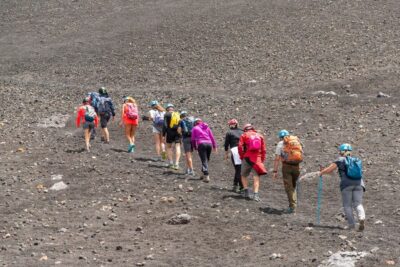
Mount Etna: Summit Guided Hiking Tour up to 3,400 m
Read our review →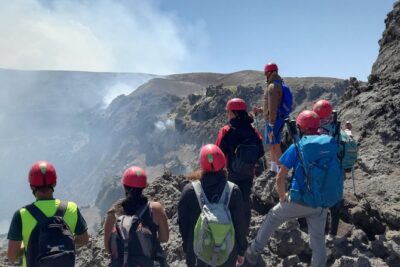
Catania: Mount Etna Adventurous Hiking Tour with Equipment
Read our review →
From Taormina: Etna Tour with Hiking, Cave Visit, & Tastings
Read our review →
Catania: Etna Nature Tour with Hiking, Cave Visit, & Tasting
Read our review →Browse the lists this tour appears in