
REVIEW · ITALY
Mount Etna: Hike to The Highest Point With a Guide
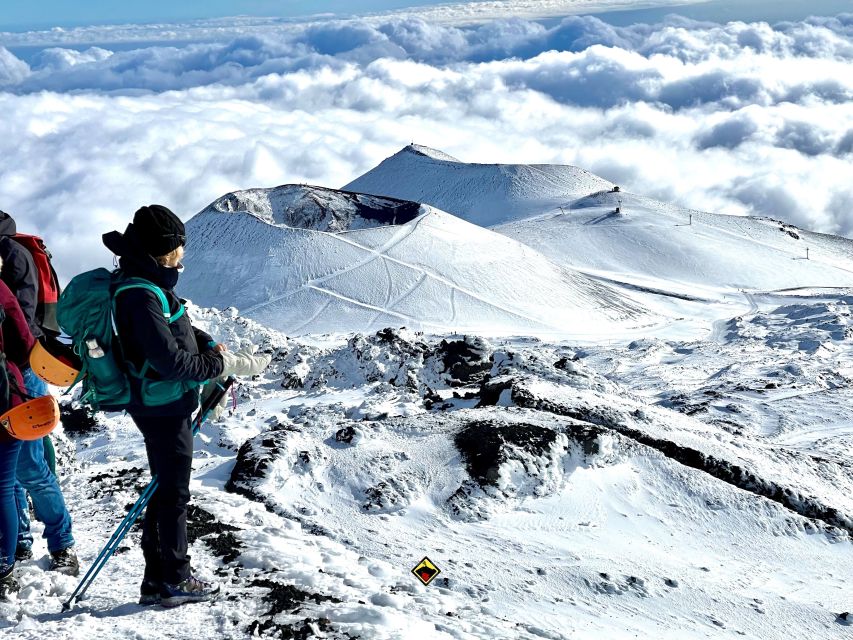
Mount Etna is at its most impressive when you are walking beside still-steaming lava flows, with hot volcanic rock underfoot and fumaroles sending gases out of the mountain. This is not a gentle sightseeing stroll. It is a guided trek to roughly 3,000 meters, where wind, snow, thin air, and loose volcanic ground can make the final section demanding.
I like the combination of specialist volcanic explanations and practical safety help. Guides including Vincenzo, Andrea, Fabio, and Nikos have been praised for pacing groups carefully and explaining the geology in clear English, Italian, or French. I also like that helmets, poles, shoes, jackets, insurance, and the Etna entry fee are included. The catch is the extra €52 cable car ticket, plus the fact that this route is for fit hikers, not casual walkers.
Key points before you book
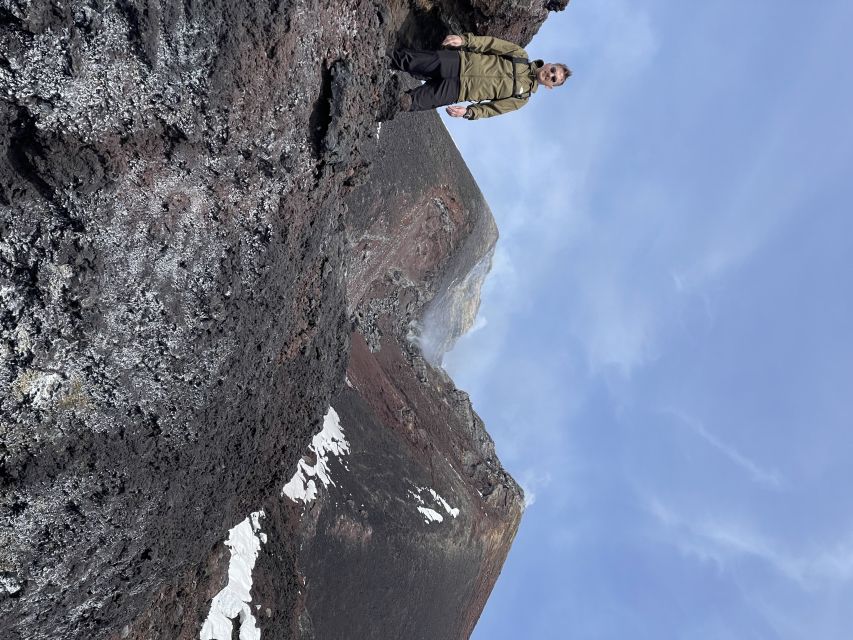
- Reach about 3,000 meters: Special permission may allow the group above the usual 2,750-meter limit, but only if conditions and the group’s health permit it.
- Expect real mountain weather: Wind, snow, ice, and cold can appear even on a clear day.
- Guides make the difference: Vincenzo, Nikos, Andrea, and Fabio are among the named guides praised for care, humor, and strong volcanic knowledge.
- The cable car costs extra: Budget €52 per person for the return ride, paid locally before the ascent.
- The route is physically serious: You need good fitness, proper shoes, and comfort with steep, loose, narrow, or exposed ground.
- The group size can vary: The activity requires at least eight participants, but one outing reached about 20 people.
Starting at Rifugio Sapienza at 1,900 meters
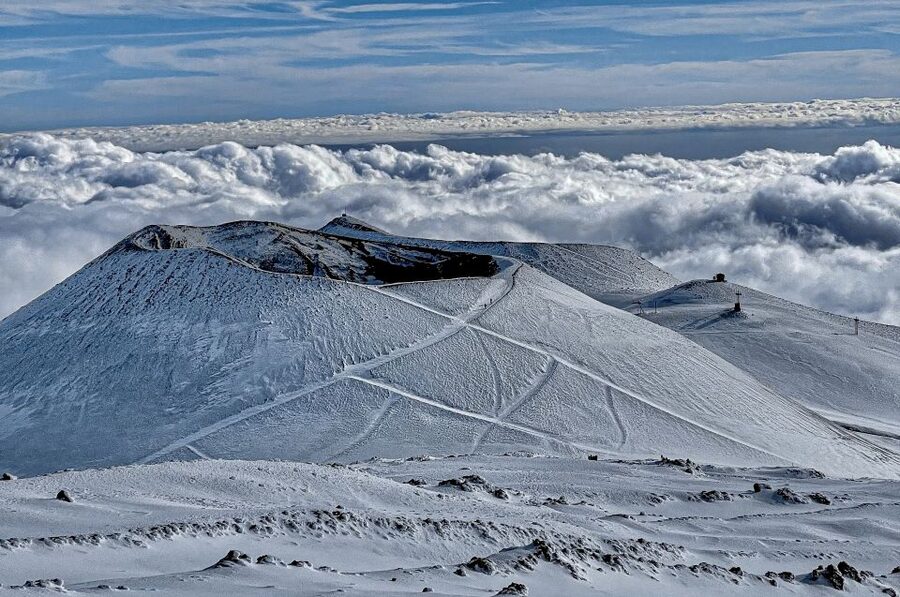
You meet the guides in the parking area in front of the Esagonal Bar at Rifugio Sapienza. This is the practical starting point for the excursion, at about 1,900 meters above sea level.
The guide helps arrange the return cable car tickets at the Funivia dell’Etna office. The ticket is not part of the $65 tour price, so your actual cost is higher. With the €52 cable car charge added, this is still a fair price for a five-hour guided outing that supplies equipment and insurance, but you should calculate the full cost before booking.
The minimum group size is eight. That matters because the tour may be cancelled if too few people sign up. Group size is less predictable than the description may suggest. Some departures have been small, around 10 people, while another group reached about 20. A small group gives you more time with the guide and usually makes stopping on narrow ground easier.
The cable car ride takes about 20 minutes and carries you from 1,900 meters to approximately 2,500 meters. It saves your legs for the volcanic terrain above, but it does not make the outing easy. You still gain roughly 500 meters or more on foot, depending on the route and conditions.
More Mountain Hikes in Italy
- Mount Etna: Summit Guided Hiking Tour up to 3,400 m
★ 4.8 · 4,792 reviews - Etna Volcano: South Side Guided Summit Hike
★ 4.7 · 1,545 reviews - Catania: Mount Etna Adventurous Hiking Tour with Equipment
★ 4.7 · 784 reviews
The cable car ride to 2,500 meters
The cable car is more than a scenic extra. It changes the nature of the day by taking you quickly into the high mountain zone, where the air is thinner and the weather can be harsher.
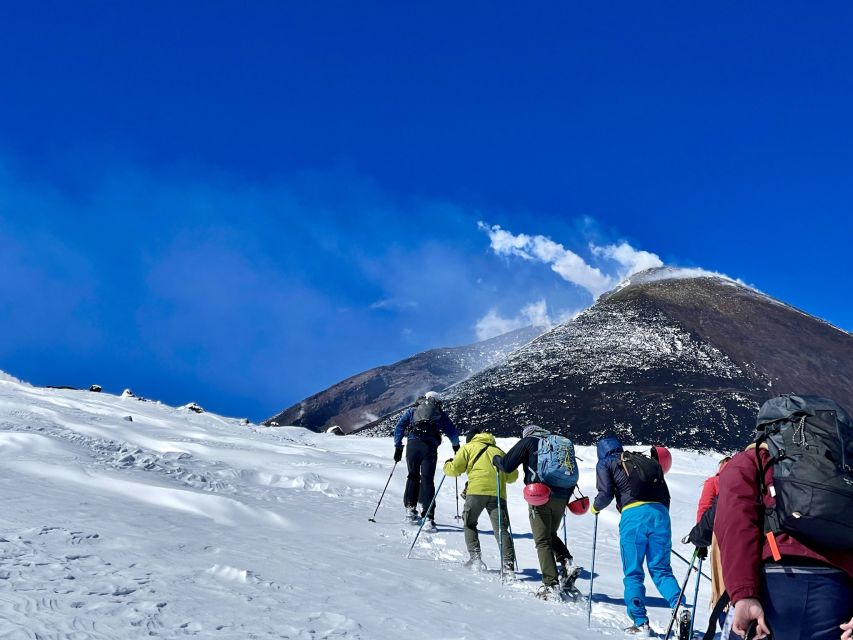
From the upper station, you begin walking across black volcanic ground. On a clear day, you get wide views from the upper slopes of Etna, but conditions can change quickly. Strong wind has been reported at the top, and winter outings may involve snow and ice. A sunny day at Rifugio Sapienza does not guarantee mild weather higher up.
Take the guide’s advice about clothing seriously. Wear long trousers, a windbreaker, warm layers, sunglasses, sunscreen, and proper hiking shoes. Bring gloves and a hat because those are not supplied. Pack snacks and drinks, since food and beverages are also excluded.
The operator supplies trekking poles, helmets, warm jackets, trekking shoes, and a backpack. That is useful if you are visiting Sicily without a full hiking kit. Still, bring your own sturdy footwear if you have it. The insurance does not cover you properly without suitable shoes, and loose volcanic surfaces are a poor place for casual trainers.
Walking beside hot lava and fumaroles
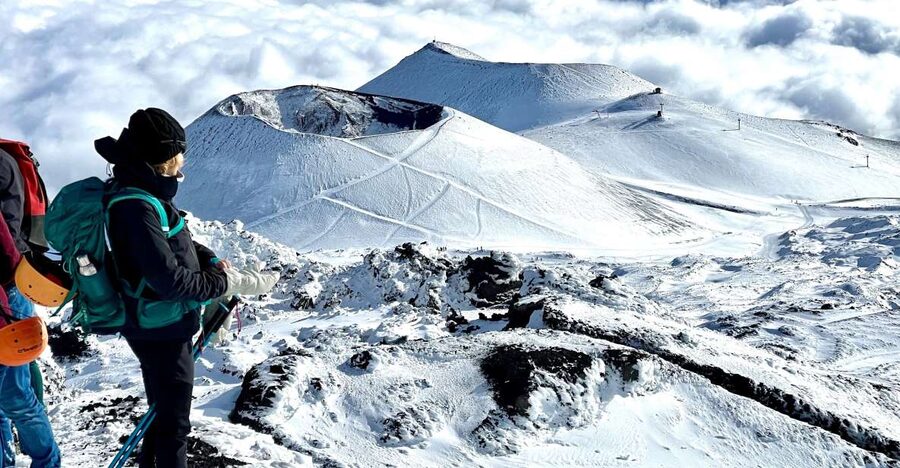
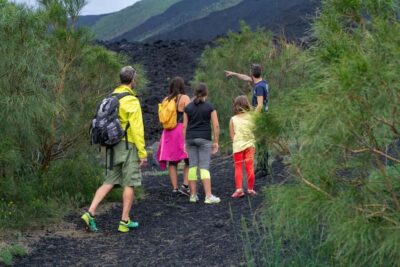
The first major part of the trek takes you through a stark volcanic setting. You pass recent lava flows whose banks may still be warm or steaming. The unusual part is the physical sensation: you are not simply looking at an old lava field from a viewpoint. You may feel heat from the rocks underfoot and see vapour escaping from cracks.
Fumaroles are openings that release hot gases from below the surface. Your guide explains what you are seeing and keeps you away from unsafe spots. This is where the specialist guide earns the fee. Etna is active, and the safe route can change with volcanic activity, snow, and official restrictions.
Do not treat the fumaroles as photo props. The gases are hot, the ground can be unstable, and the route is controlled by current rules. You will get close enough to understand the volcano’s activity, but the guide decides how close is sensible.
The small basalt canyon is another memorable feature. It may be buried under snow in winter, so it is not guaranteed. If visible, it gives you a close look at the way flowing lava cuts and hardens into dark volcanic rock. This is a short stop, but it helps turn the geology lesson into something you can touch and see.
Barbagallo Crater and the upper volcanic route
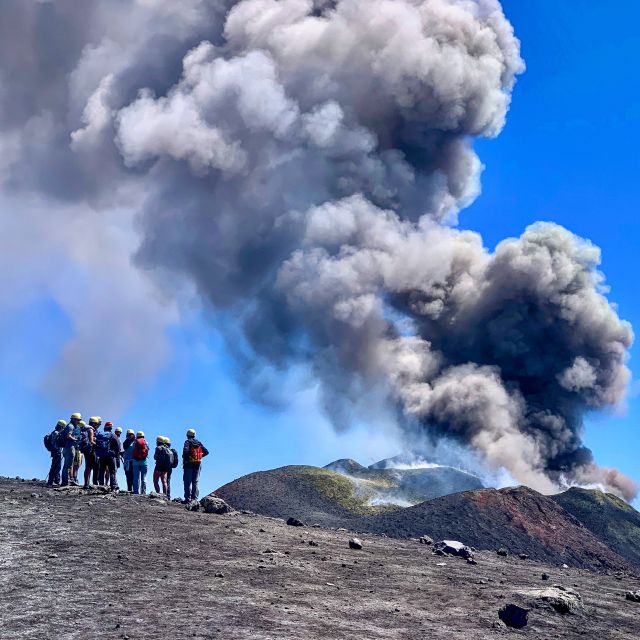
The guided visit around the Barbagallo Crater is the longest scheduled section, lasting roughly two hours and 20 minutes. This is where the day feels most like a proper mountain trek rather than a cable car excursion.
The ground can shift from hard black lava to loose ash, gravel, or snow. Descending loose volcanic grit can be harder than climbing it because your feet slide and your knees must absorb the slope. Use the trekking poles. They are not decorative equipment, especially on the descent.
The route may bring you close to the base of the Southeast Crater, described as the most active crater at the time of the visit. You do not climb into the highest-risk zones. Access depends on current volcanic conditions and official ordinances, so the exact route can change.
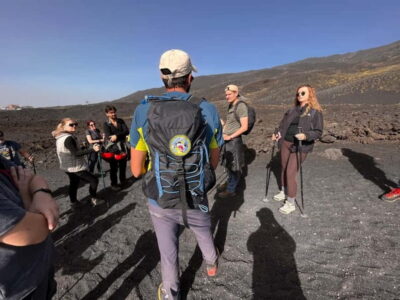
The guide’s talks add real value here. You learn how recent eruptions have reshaped the upper slopes, why fumaroles form, and how different lava surfaces reveal the movement of molten rock. Guides such as Vincenzo and Nikos have been singled out for making these explanations clear and entertaining rather than turning the walk into a technical lecture.
Pacing also matters. At this height, a strong walker can still feel breathless. The guides have used regular stops to let people recover while explaining the volcano. That is helpful, but do not mistake frequent pauses for an easy route. The elevation and uneven ground remain demanding.
Same trailhead, a different sort of day:
- Cinque Terre Day Trip with Optional Hiking or Pisa
★ 5.0 · 8,486 reviews - Florence: Cinque Terre Day Trip with Optional Hiking or Pisa
★ 4.9 · 4,848 reviews - From Sorrento: Path of the Gods Guided Hike with Transfers
★ 4.8 · 530 reviews - From Taormina: Etna Tour with Hiking, Cave Visit, & Tastings
★ 4.7 · 518 reviews
Near the Southeast Crater at 3,000 meters
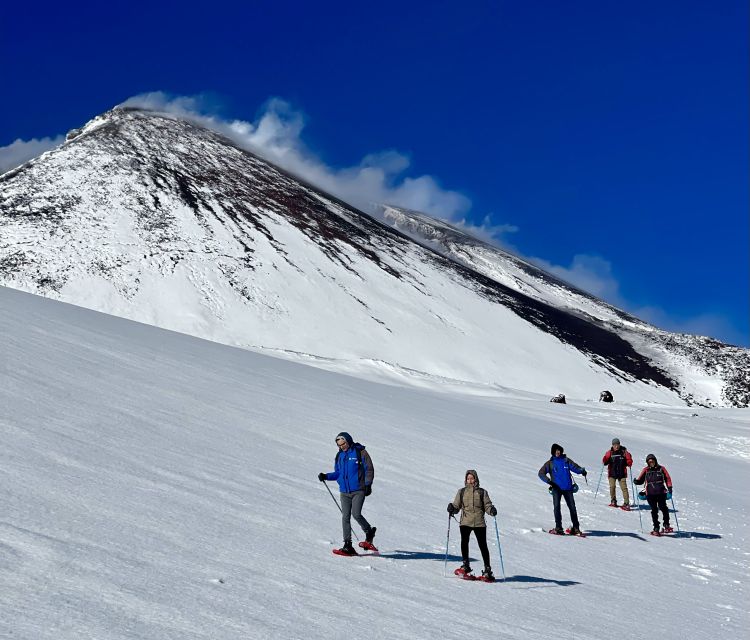
The highest point is close to the base of the Southeast Crater, at around 3,000 meters. The experience is not a climb to the summit itself. You approach the upper crater area while staying outside zones restricted for safety.
Special authorization for scientific purposes may allow the group to pass the current 2,750-meter limit. This is conditional. If anyone in the group is showing major altitude sickness, or if volcanic and weather conditions are unsuitable, the guide will not push higher.
That rule is a strength, not a disappointment. A high-altitude volcano is not a place to demand a particular finish line. Your guide’s job is to choose the safest route available that day. You may reach the planned height, or you may stop lower and spend more time examining lava, craters, or fumaroles.
At the top, you can expect a broad view when the weather is clear. You can also expect cold and strong wind. One winter outing involved conditions so windy that the group could stay at the highest point for only a few minutes. Plan to enjoy the achievement quickly, then move to a more sheltered place for the longer break.
The crater edges and narrow paths may cause dizziness. If you have vertigo, respiratory trouble, heart problems, high blood pressure, epilepsy, recent surgery, or a low level of fitness, this is not the right excursion. People with back or mobility problems should also avoid it.
The 2002 craters and the return route
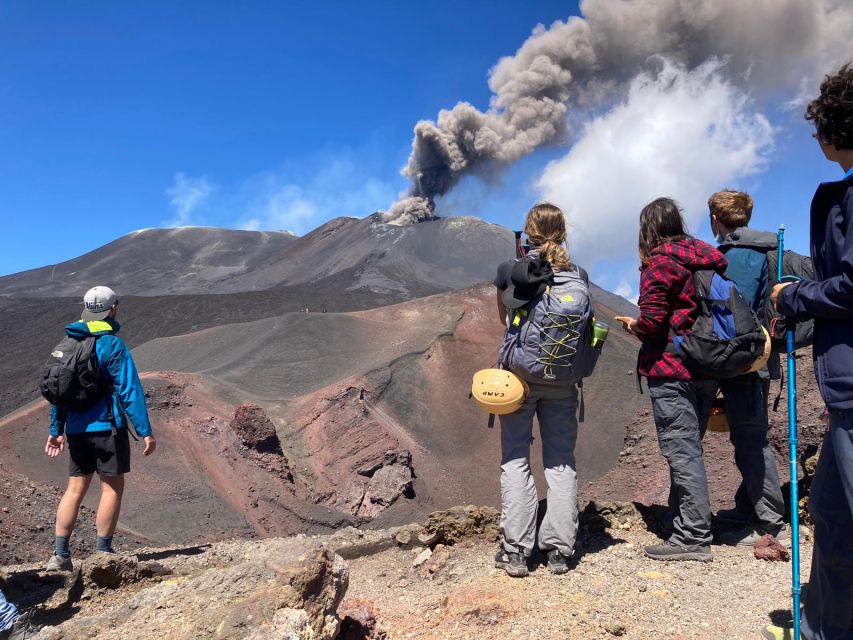
After the upper crater area, the route heads toward the large craters formed in 2002. These offer a strong sense of Etna’s recent activity. The craters are not distant museum pieces. They show how quickly this mountain can create new volcanic forms.
The itinerary includes a photo stop of about 40 minutes, followed by another shorter period for a visit, explanation, rest, and photos. These pauses are welcome because the route demands concentration. They also give you time to look around instead of staring at your boots.
The descent can be the trickiest part. One section is made of sandy shale or loose ash, and it requires careful footing. Winter brings another issue: the route back to the cable car may be full of snow. In deep snow, snowshoes cost an additional €15 per person.
After the steepest part, the path toward the cable car station becomes easier. You return by cable car to Rifugio Sapienza, then finish near the original meeting point. A transfer of around 20 minutes is listed in the schedule, including the return toward the Valle del Bove area.
What the guides add to the day
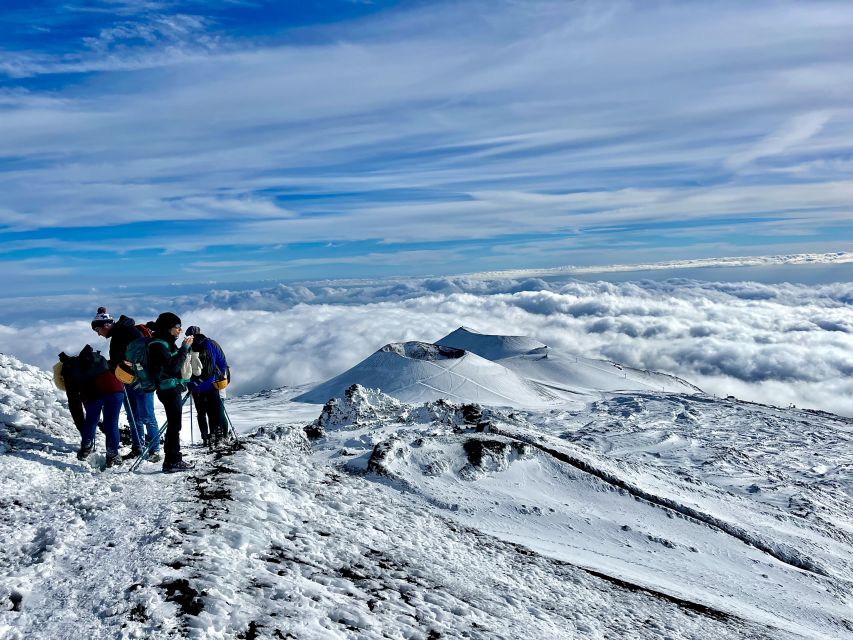
The most praised part of this excursion is the guiding. Vincenzo is repeatedly described as warm, funny, attentive, and highly informed about Etna. Andrea Montemagno has been praised for explaining in both English and Italian, while Nikos has been noted for keeping a close eye on the group in strong wind and difficult terrain. Fabio has also been praised for helping people as the climb became harder.
Those details matter because conditions can make the walk feel uncertain. A good guide checks the pace, explains where to place your feet, and changes the route when snow or volcanic activity requires it. The guide also gives meaning to what you are seeing. Without that context, black rock, steam, and ash can blur into one dramatic but confusing view.
Language options are Italian, French, and English. If your group includes people with different walking speeds, expect the guide to stop often enough for explanations and recovery. That makes the day more manageable, though it also means the schedule is not a race to the highest possible point.
The operator advertises a certified volcanology guide, accident insurance, helmets, poles, shoes, jackets, and a backpack. These inclusions make the tour useful for visitors who did not pack for an alpine outing. They do not remove the need for fitness or proper personal clothing.
Is $65 plus the cable car a fair deal?
The advertised tour price is $65 per person, but you must add the €52 return cable car ticket. Deep-snow conditions may add another €15 for snowshoes. Food, drinks, and transport from your accommodation are not included.
I consider the price reasonable if you want a guided upper-Etna experience rather than a short walk near the lower cable car station. You are paying for a specialist guide, safety equipment, insurance, entry fees, route decisions, and explanations of an active volcano. The guide’s role becomes especially valuable when the weather turns cold, windy, snowy, or unclear.
It is less attractive if you only want a quick view from the cable car. In that case, the five-hour trek, extra ticket, clothing demands, and physical effort may feel excessive. The tour is best value for you if reaching the upper volcanic zone and understanding the recent eruptions are central to your Sicily plans.
Who should book this Etna hike?
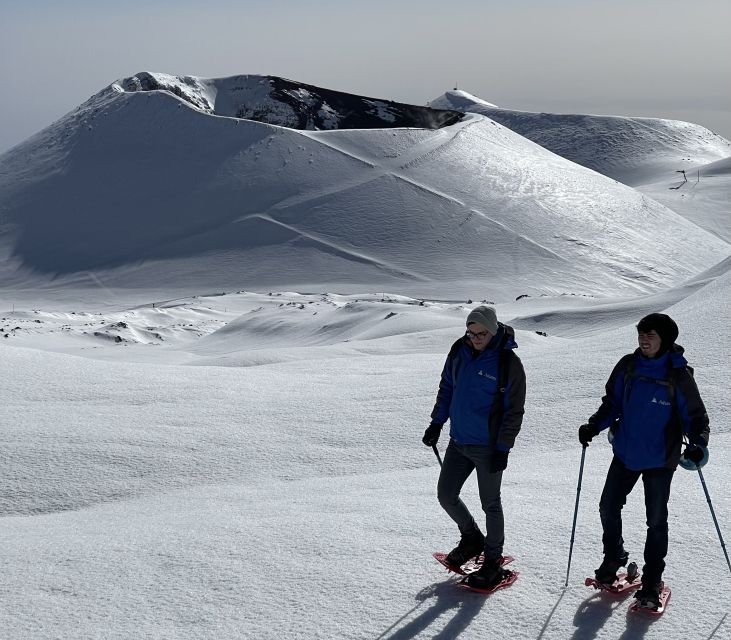
You should book if you are fit, comfortable hiking on uneven ground, and interested in volcanic science. You do not need to be an elite mountaineer, but you should be ready for a route that has been described as tricky and challenging, especially in snow, ice, wind, or loose ash.
The activity can suit older hikers who are reasonably fit and properly equipped. One couple in their late 50s completed it with suitable clothing and boots. The key is not age alone. It is your balance, stamina, comfort with height, and ability to handle a long mountain outing.
Children are restricted. The information gives two different age limits, under 11 and under 12, so confirm the current rule before booking. In any case, this is not designed for young children.
The outing is not suitable for people with mobility impairments, significant back issues, heart or respiratory problems, epilepsy, vertigo, high blood pressure, recent surgery, or poor fitness. It is also not suitable for anyone without hiking experience, according to the supplied conditions.
Free cancellation is available up to 24 hours before the activity, and you can reserve without paying immediately. If bad weather makes the excursion unsafe, the operator may cancel or reschedule it.
What to pack for Etna’s upper slopes
Wear long trousers and proper hiking shoes. Sandals, flip-flops, open-toed shoes, and high heels are not allowed.
Pack:
- Windproof jacket and warm layers
- Hat and gloves
- Sunglasses and sunscreen
- Spare clothes
- Snacks and drinks
- Comfortable clothing suited to changing weather
The supplied jackets, shoes, poles, helmets, and backpack are useful, but I would still bring your own hiking boots if you have them. Bring enough clothing for cold wind at 3,000 meters, even if the lower slopes feel mild.
Should you book this Mount Etna hike?
Book it if you want to walk through a living volcanic zone, not simply photograph Etna from below. The fumaroles, warm lava banks, recent craters, and views near 3,000 meters give the day real substance, while guides such as Vincenzo and Nikos add safety and useful explanation.
Skip it if you dislike exposed paths, loose ground, cold wind, or uncertain conditions. Also skip it if you want a relaxed family outing or an inexpensive cable car ride. For a fit hiker with proper clothing, this is a serious but rewarding way to meet Mount Etna up close.
FAQ
How high does the hike reach?
The route can reach approximately 3,000 meters near the upper craters. Special authorization may allow the group above the current 2,750-meter altitude limit, but this depends on health, weather, volcanic activity, and official restrictions.
Is the cable car included in the tour price?
No. The return cable car ticket costs €52 per person and is paid locally before departure.
Where is the meeting point?
Meet the guides in the parking area in front of the Esagonal Bar at Rifugio Sapienza.
How long does the activity last?
The excursion lasts about five hours. Starting times depend on availability.
What languages does the guide speak?
Guides are available in Italian, French, and English.
Are hiking shoes and equipment provided?
The activity includes trekking shoes, trekking poles, helmets, warm jackets, and a backpack. You should still bring appropriate clothing, and insurance will not cover you properly without suitable shoes.
Is the hike suitable for children?
The supplied information gives age restrictions excluding children under 11 or under 12. Because the stated limits differ, confirm the current minimum age before booking.
What happens if the weather is bad?
The excursion may be cancelled or rescheduled in adverse weather. The route also changes according to volcanic activity and current official ordinances.
Just added around Italy
- From Taormina or Catania: Private Full-Day Mount Etna Hike★ 4.5 · 8 reviews
- From Taormina: Mount Etna Half-Day Evening Hike★ 5.0 · 4 reviews
- From Sorrento: Path of the Gods Guided Hike with Transfer★ 4.8 · 23 reviews
- From Sorrento: Skip-the-Line Guided Vesuvius Hike and Lunch★ 4.4 · 5 reviews
- From Sorrento: Path of the Gods Hike with Tasting Stop★ 4.9 · 29 reviews
- From Siracusa: Pantalica Nature Reserve Guided Hiking Tour★ 4.9 · 9 reviews
- From Orosei or Dorgali: Gorropu Canyon Guided Hike★ 4.9 · 40 reviews
- From Genna Silana: Canyon of Gorropu Guided Hike★ 3.7 · 3 reviews
Italy Hiking Tours, compared.
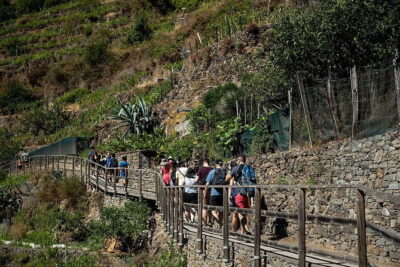
Cinque Terre Day Trip with Optional Hiking or Pisa
Read our review →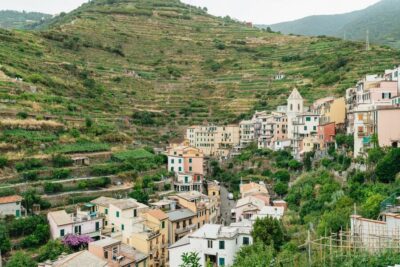
Florence: Cinque Terre Day Trip with Optional Hiking or Pisa
Read our review →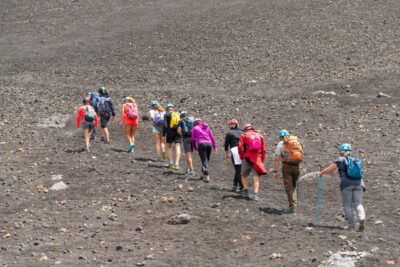
Mount Etna: Summit Guided Hiking Tour up to 3,400 m
Read our review →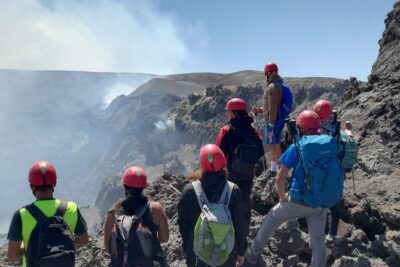
Catania: Mount Etna Adventurous Hiking Tour with Equipment
Read our review →
From Taormina: Etna Tour with Hiking, Cave Visit, & Tastings
Read our review →
Catania: Etna Nature Tour with Hiking, Cave Visit, & Tasting
Read our review →Browse the lists this tour appears in