
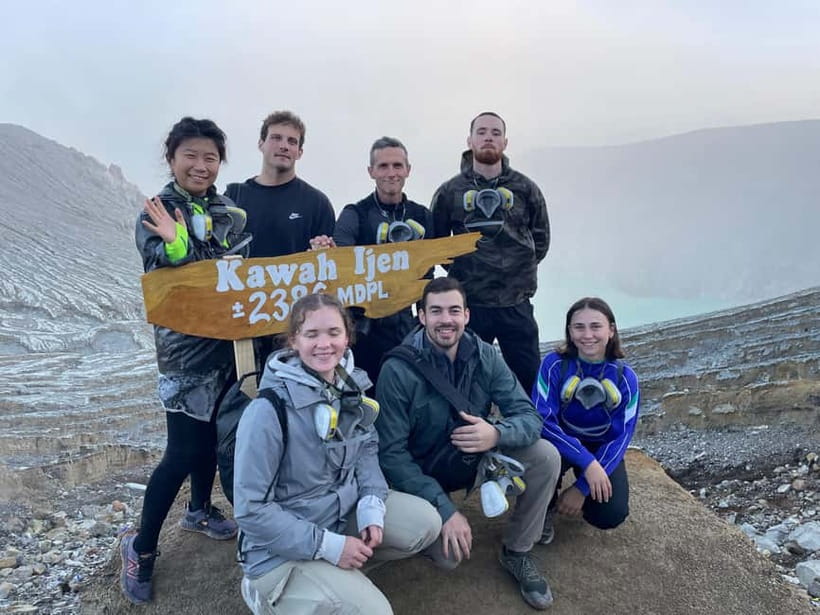
REVIEW · INDONESIA
Ijen Volcano Midnight Hike with Blue Fire & Guide (SHARING)
Ijen’s blue fire is the headline, but the sunrise over its turquoise crater lake may be the more reliable reward. This shared midnight hike takes you from Banyuwangi to Paltuding, with a local guide, gas mask, headlamp, entrance fees, and breakfast included.
I like the careful safety setup and the fact that the price covers the health certificate, not just transport and admission. I also like the practical finish: coffee before and after the hike, then an Indonesian breakfast. The main drawback is the timing. You start after midnight, walk 3.8 kilometers uphill, and may not see blue fire if volcanic conditions close access or the sulfur is too strong.
Key points to know
- Blue fire is possible, not promised: Access depends on sulfur levels and volcanic conditions.
- The hike is 3.8 km each way: Expect a steady uphill walk of about 1.5 to 2 hours.
- Safety gear is supplied: A gas mask and headlamp are included, with first aid and portable oxygen available.
- The group setup is sensible: One local trekking guide is provided for every seven participants, with at least two guides for larger groups.
- The package covers the essentials: Banyuwangi transfers, park entry, health certificate, parking, drinks, coffee, and breakfast are included.
- Cold, tired, and rewarding: Temperatures can fall between 5°C and 15°C before sunrise, so warm clothing matters.
Why Ijen’s Blue Fire Is Worth the Midnight Start
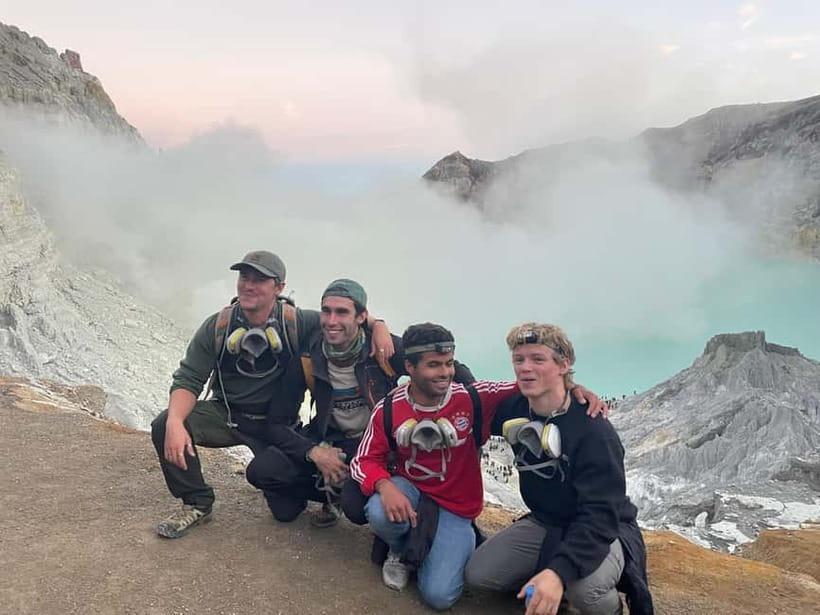
Ijen is one of the few places where you may see blue flames linked to burning sulfur gases. The effect is eerie and unusual, but it is not a standard light show. You see it only when volcanic conditions allow access and when the gas levels are safe enough for the authorities and guides to proceed.
That uncertainty is important. Do not book this hike on the assumption that blue fire is guaranteed. The tour focuses on the full Ijen trek, and the crater lake sunrise remains a major part of the experience even if the blue flames cannot be reached.
You begin after midnight, which means the first part of the adventure takes place in darkness. The route is clearly marked, but you still need to watch your footing and keep a steady pace. Your guide carries or provides the key safety equipment, and the headlamp helps you see the trail while leaving your hands free.
The darkness also changes the mood of the mountain. You hear footsteps, guides giving directions, and perhaps sulfur workers moving along the route. It is less about a relaxed walk and more about reaching the crater before the light changes.
More Volcano Hikes in Indonesia:
- From Bali: Ijen Volcano Sunrise Hike with Transfer & All Fee
★ 4.8 · 139 reviews - Ijen Crater Blue Fire Night Hike
★ 5.0 · 49 reviews - From Bali or Banyuwangi: Ijen Crater Sunrise Hike
★ 4.6 · 33 reviews
Banyuwangi Pickup and the Road to Paltuding
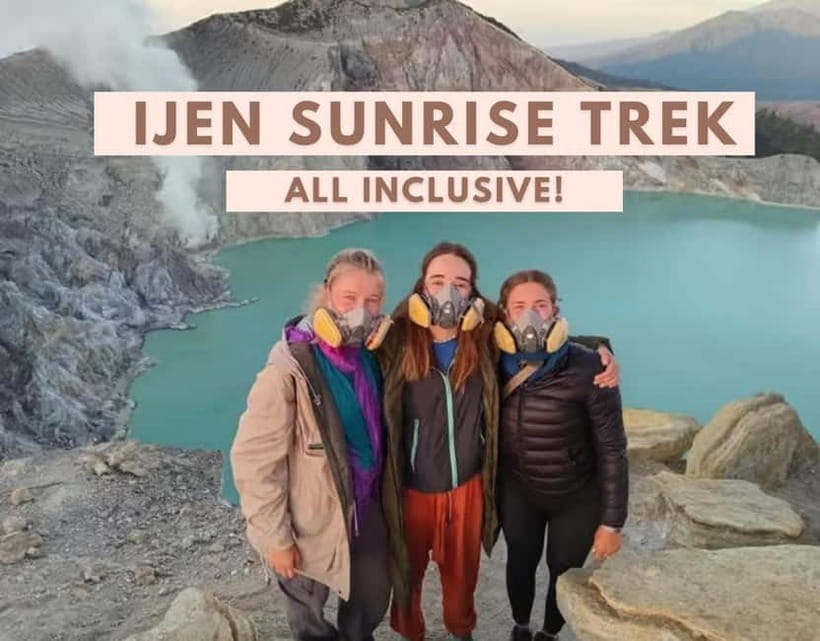
The tour begins with pickup from your accommodation in Banyuwangi. The drive to Paltuding Post takes around one to one and a half hours, depending on traffic. This is useful if you are staying in the city and do not want to arrange a separate taxi or navigate the mountain road before midnight.
At the basecamp, you meet the local trekking leader who stays with you during the hike. This is when you should check your warm jacket, gloves, shoes, water, and other personal items. The operator supplies the gas mask and headlamp, but you are responsible for bringing suitable clothing and footwear.
The health certificate is included in the price and is mandatory for the hike. That saves you one practical task, but you should still take the fitness restrictions seriously. This is not a suitable outing for children under 12, pregnant women, people with heart or respiratory problems, or anyone with a low level of fitness.
The transfer is one of the stronger parts of the package. At $20 per person, the cost is modest for a shared trip that includes transport, permits, guide service, equipment, and food. The main value is convenience. You can sleep at your Banyuwangi accommodation afterward instead of arranging the return journey yourself.
The 3.8 Kilometer Climb to Ijen Crater
The trail from Paltuding to the crater covers about 3.8 kilometers each way. The climb takes roughly 1.5 to 2 hours, depending on your pace and the group. It is a steady uphill walk rather than a technical climb, but the lack of sleep and cold air can make it feel harder than the distance suggests.
You should wear proper hiking shoes with a firm sole. Comfortable shoes are listed as essential, but ordinary casual footwear may not give you enough grip or support for the uphill route. Bring water, gloves, and warm layers that you can adjust as your body heats up.
The tour uses one dedicated guide for every seven participants. For groups larger than seven, at least two guides are provided. This is a useful arrangement on a night hike because people naturally spread out on the trail. A guide at the front and another helping farther back can make it easier to keep the group together.
The English-speaking guide can explain the route, help with instructions, and assist when sulfur gas becomes strong. One rating described the guide as kind and careful about safety, including helping people who were struggling. That kind of support matters more here than a long stream of facts. You need clear directions, especially near the crater.
Do not treat the walk as a race. The goal is to reach the upper viewpoint in good condition, not to arrive exhausted. If the pace is too fast for you, tell the guide early rather than waiting until you are completely spent.
Gas Masks, Sulfur, and the Work of Local Miners
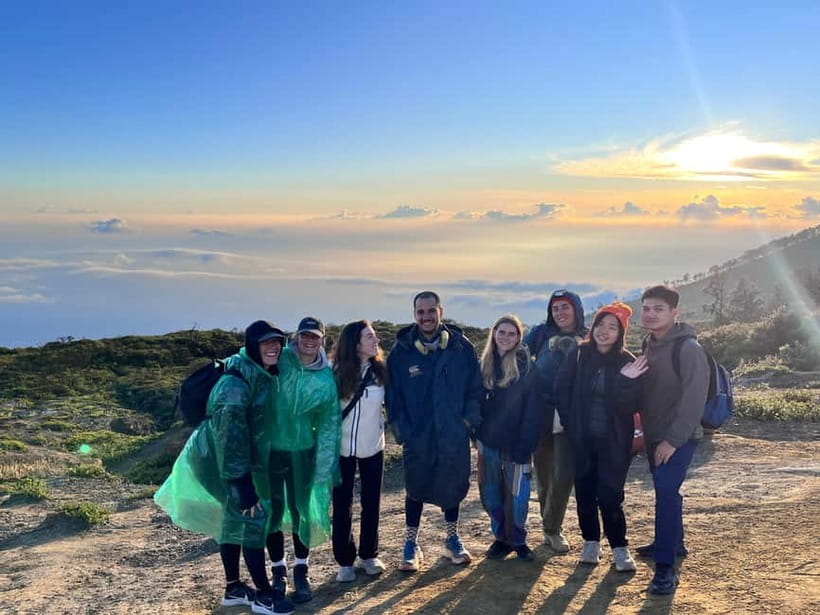
Near Ijen, sulfur is not an abstract geological detail. Local miners work around the volcano and carry sulfur from the crater area. The sight gives the hike a human dimension, but it also shows why you need to respect the conditions underfoot and in the air.
The supplied gas mask is mandatory near the crater. It is described as clean and well maintained, and a portable oxygen canister and first aid kit are available during the trip. These provisions do not make the air harmless. They give you basic protection, but you still need to follow your guide’s instructions and move away from strong fumes when told.
Sulfur gas can shift with volcanic conditions and wind. This is one reason the blue fire viewing area may close. A responsible guide will not force access simply to deliver a promised photograph.
The miners also help put the hike in perspective. You are walking the same volcanic setting as people doing demanding physical work, not visiting a staged attraction. Give them room on the trail and avoid turning their work into a photo prop. The strongest part of this stop is often the reminder that Ijen is both a natural site and a working place.
A few more hikes around Indonesia worth a look
- Bali: Sunrise Mount Batur Guided Hike with Breakfast
★ 4.8 · 9,660 reviews - Bali: Mount Batur Sunrise Guided Hike and Natural Hot Spring
★ 4.8 · 9,284 reviews - Banyuwangi : Mt Ijen Hike, Blue Fire & Panoramic Lake Guided
★ 4.9 · 98 reviews - Bali: Mount Batur Entry Ticket on a Guided Hike or Jeep Ride
★ 4.7 · 38 reviews
Blue Fire Before Sunrise
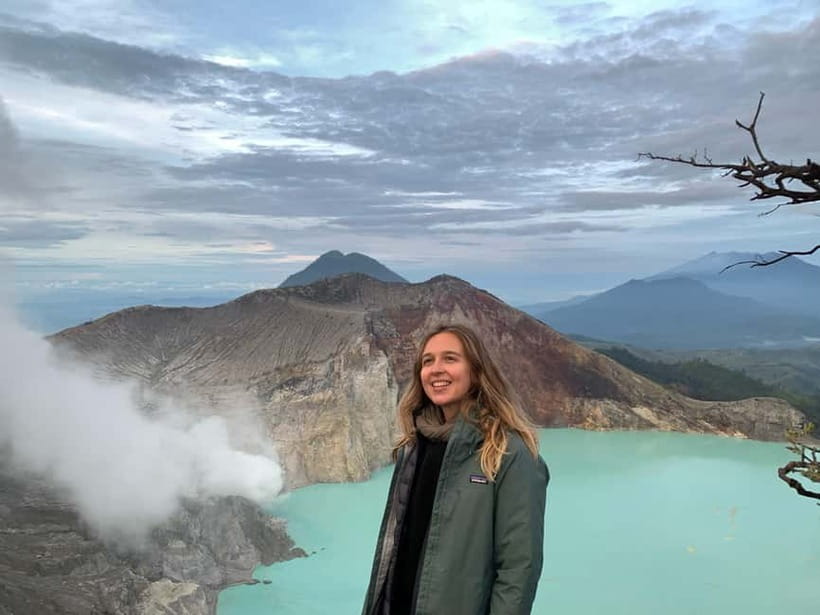
If conditions permit, the guide may lead you toward a viewing area for the blue fire. The flames are caused by burning sulfur gases and are best seen in darkness, which explains the midnight start.
The viewing opportunity can be brief or restricted. High sulfuric activity may prevent access, and the tour does not guarantee a sighting. This is the single biggest expectation to manage before booking. If seeing blue fire is your only reason for coming, you are taking a real risk.
If you do reach the area, the gas mask becomes especially important. Follow the guide’s instructions, stay with the group, and do not wander closer for a better photograph. The experience is unusual because it combines a natural phenomenon with the raw, uncomfortable conditions of an active volcanic site.
One person who joined the trip saw the blue fire up close and described it as surreal, but also pointed out that the gas mask was essential when the sulfur became strong. That is a useful way to think about the stop. It can be unforgettable, but it is not polished or comfortable in the usual sightseeing sense.
Sunrise Over the Turquoise Crater Lake
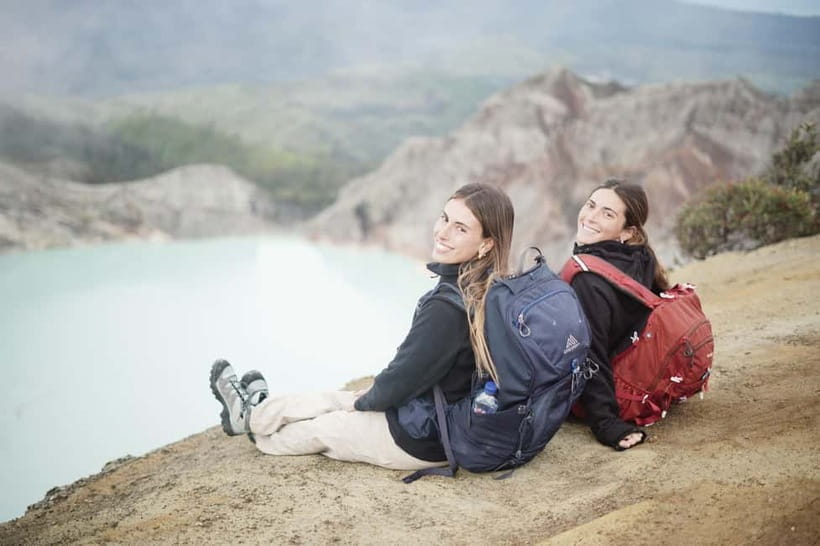
After the dark crater experience, the sunrise viewpoint changes the pace. As daylight arrives, the turquoise lake and surrounding peaks come into view. The colors shift as the sky brightens, giving you a much broader sense of Ijen than you get in the darkness.
This is the part of the tour that makes the trip worthwhile even if blue fire access is closed. The lake, crater walls, and mountain ridges provide the main scenic payoff, and you have a better chance to appreciate them without sulfur fumes or the pressure of a midnight viewing window.
The viewpoint can be cold, especially if you have been standing still. Keep your jacket and gloves handy rather than packing them away during the climb. A warm layer is not optional decoration here. Temperatures before sunrise can fall to between 5°C and 15°C.
Photography should be easier once there is daylight, but remember that the weather and volcanic conditions control what you see. Do not expect a clear view every time. The tour supplies a route and guide, not a guarantee of perfect visibility.
The Dead Forest Detour
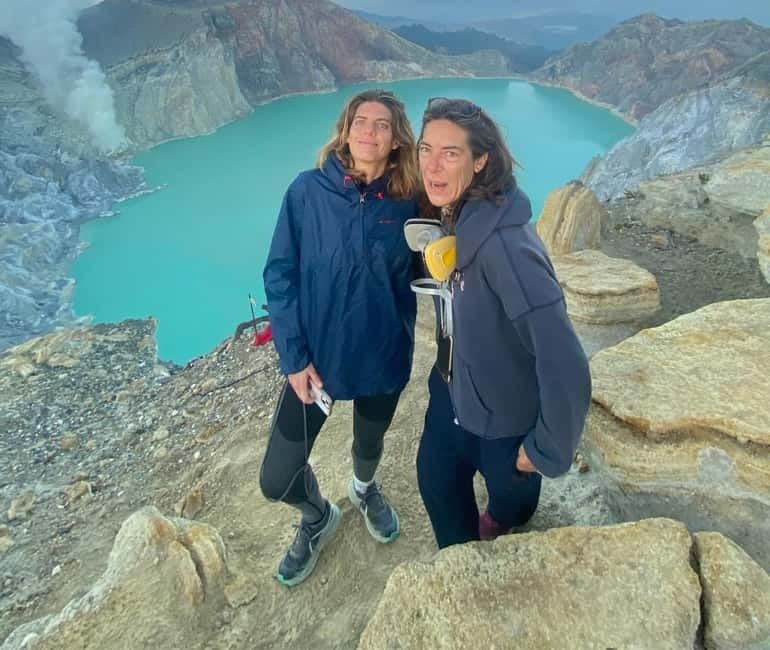
The optional dead forest offers a short side trip for people who want a quieter, more unusual setting. It was shaped by earlier volcanic eruptions, and its bare, eerie appearance contrasts with the open crater views.
Because the detour is optional, you can decide based on your energy, timing, and the group’s progress. After a midnight start and a steep uphill walk, you may prefer to spend more time at the main viewpoint or begin the descent. If you still have energy, the dead forest adds another angle to the volcano’s story.
I like that this stop is not treated as mandatory. It gives the guide room to adjust the outing without pretending every part suits every person. Ask about the detour when you reach the summit so you know how it affects the timing.
The Descent, Breakfast, and Return to Banyuwangi
The way back to Paltuding usually takes one to one and a half hours. It is easier than the climb, but do not switch off completely. Loose footing, tired legs, and a busy trail can still cause problems.
Once you return to basecamp, the driver takes you back to Banyuwangi, with the ride taking about an hour. Coffee is included before and after the hike, and an Indonesian breakfast is served after the trek. This is a small but meaningful detail. After walking through the night, a drink and meal are more useful than another sightseeing stop.
The return transfer also makes the tour practical for a short stay. You finish at your accommodation rather than needing to find your own transport from a mountain post. You can then rest, though the lack of sleep may affect the rest of your day.
Smoking is not allowed in the vehicle, and alcohol and drugs are prohibited. Large bags, luggage, baby strollers, pets, and electric wheelchairs are also not suitable for this trip. Bring only what you need for the hike.
What the $20 Price Really Covers
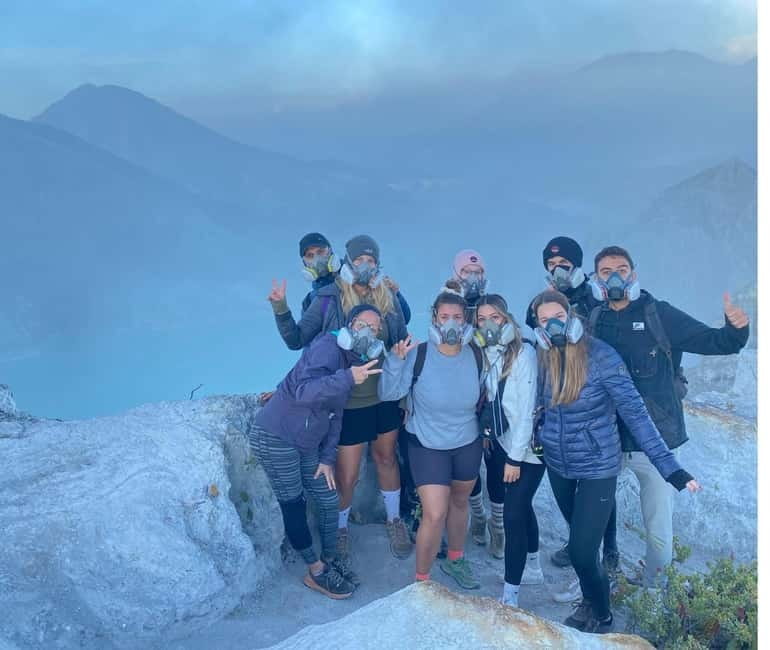
The $20 per-person price is strong value if you need the full package. It includes round-trip transport from Banyuwangi, Ijen National Park admission, the Jambu entrance fee, parking, a local guide, the mandatory health certificate, a gas mask, headlamp, first aid access, portable oxygen, coffee, and breakfast.
You still pay for your personal expenses and travel insurance. The price also does not guarantee blue fire, perfect weather, or access to every area of the crater. That is not a weakness unique to this tour. Those parts depend on conditions beyond the operator’s control.
The shared format keeps the price low, but it means you will hike with other people and follow a group schedule. If you want a private pace or complete control over stops, this may not be the right setup. For solo visitors and couples who want a guided outing without paying for a private vehicle, the shared format makes practical sense.
Who Should Book This Ijen Hike?
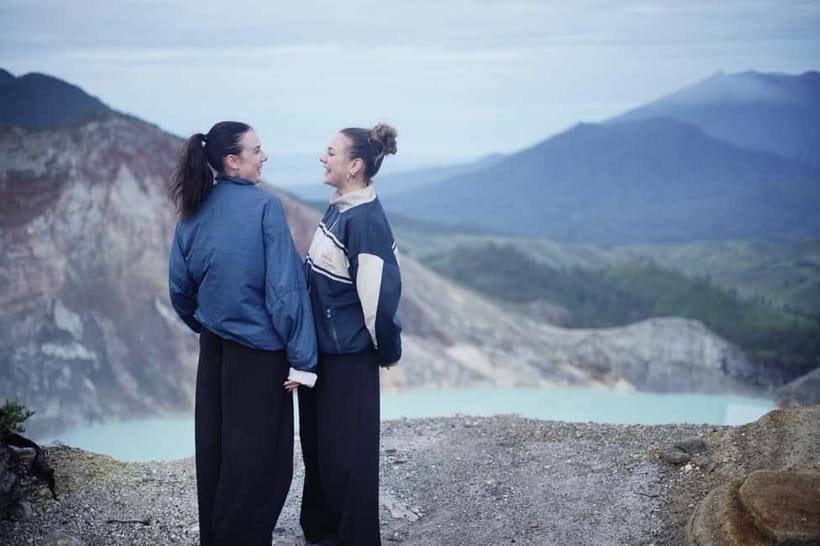
I would choose this tour if you are staying in Banyuwangi, have moderate fitness, and want one demanding night to see several sides of Ijen. It suits people who value transport, gear, and a guide more than a private experience.
You should be comfortable with:
- Starting after midnight
- Walking 3.8 kilometers uphill
- Hiking in temperatures as low as 5°C
- Wearing a gas mask around sulfur fumes
- Accepting that blue fire may be closed or invisible
- Sharing transport and guide time with other participants
Bring warm clothing, gloves, water, and proper hiking shoes. Avoid high heels, large luggage, and anything you cannot carry comfortably. You should also be ready for a quiet, disciplined outing. Making noise is not allowed, and the volcanic setting demands attention.
The tour is not suitable for children under 12, pregnant women, or people with heart or respiratory issues. If you have doubts about your health, the mandatory certificate process is a reminder to seek medical advice before booking.
Should You Book It?
Book this Ijen hike if you want a well-supported route to the crater and understand that blue fire is a possibility, not a promise. The strongest reasons are the included safety gear, English-speaking guide, Banyuwangi transfers, health certificate, and simple post-hike meal.
Skip it if you dislike overnight activity, struggle with uphill walking, or need a guaranteed blue-fire sighting. For the right person, the combination of sulfur workers, blue flames when conditions allow, a turquoise crater lake, and sunrise makes this a memorable use of one long night in Java.
FAQ
Where does the Ijen hike begin?
The tour picks you up from your accommodation in Banyuwangi and takes you to Paltuding Post, the Ijen entrance area in the Licin region.
How long is the hike to the crater?
The route to the crater is approximately 3.8 kilometers each way. The uphill walk usually takes about 1.5 to 2 hours.
Is blue fire guaranteed?
No. Blue-fire access depends on volcanic conditions and sulfur activity. It may not be permitted when conditions are unsafe.
What equipment is included?
The tour provides a gas mask and headlamp. A first aid kit and portable oxygen canister are also available.
Do I need a health certificate?
Yes. A health certificate is mandatory for the hike, and it is included in the tour price.
What should I bring?
Bring comfortable hiking shoes, warm clothing, gloves, and water. Temperatures before sunrise may range from 5°C to 15°C.
Is breakfast included?
Yes. Coffee is provided before and after the hike, and an Indonesian breakfast is included after the trek.
Is the tour suitable for children?
The tour is not suitable for children under 12. It is also not suitable for pregnant women or people with heart, respiratory, or serious fitness concerns.
How much does the tour cost?
The shared tour costs $20 per person. Travel insurance and personal expenses are not included.
Just added around Indonesia
- Jakarta Rainforest Hiking to Hidden Waterfall & Suspension Bridge★ 5.0 · 4 reviews
- From Banyuwangi or Bali Sunrise Ijen Vulcano Hiking All Inclusive★ 5.0 · 50 reviews
- Private Mt Batur hike with Hot Springs & Hotel transfer★ 5.0 · 2 reviews
- Mt. Batur: 2 Day Camping Trip, Summit Hike, and Hot Springs★ 4.9 · 25 reviews
- Mount Merbabu Hiking Tour 2D1N With Camping★ 4.8 · 12 reviews
- Mount Batur Sunrise Hike Breakfast & Hotel transfer★ 5.0 · 2 reviews
- Mount Batur: 2D1N Kintamani Tour with Private Sunrise Hiking★ 4.6 · 21 reviews
- Lombok : hiking- rice terrace & waterfalls tour★ 5.0 · 2 reviews
Indonesia Hiking Tours, compared.
Sunrise Mount Batur Guided Hike with Breakfast
Read our review →
Mount Batur Sunrise Guided Hike and Natural Hot Spring
Read our review →
Mount Batur Sunrise Hike and Natural Hot Spring Option
Read our review →
Munduk: Twin Lake Jungle Hike, Ulun Danu Temple, & Waterfall
Read our review →Browse the lists this tour appears in