
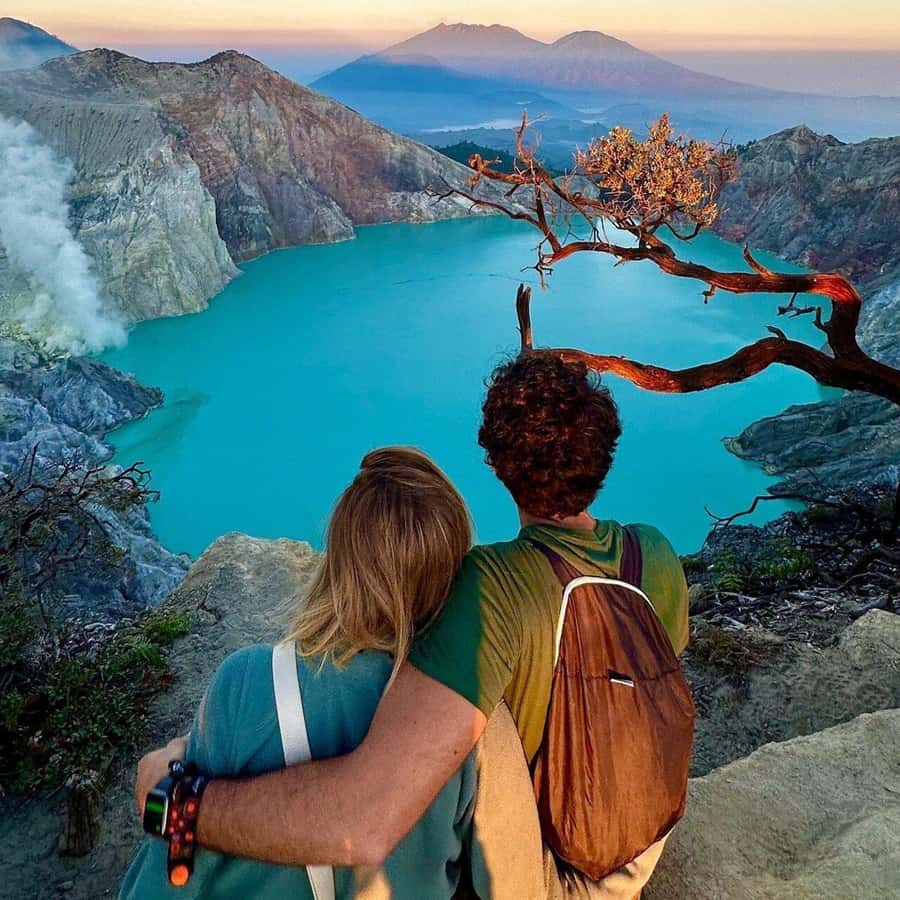
REVIEW · INDONESIA
Banyuwangi : Mt Ijen Hike, Blue Fire & Panoramic Lake Guided
Mount Ijen’s blue fire is the headline here, but the real adventure is the whole night: a steep climb in the dark, sulfur fumes, working miners, a huge turquoise lake, and sunrise from the crater rim. The flame is a natural gas phenomenon, not a staged show, so it may be absent or extinguished for safety and mining work.
I like the way the tour gets you moving early, helping you reach the crater before the narrow route becomes crowded. I also like the practical extras: a headlamp, gas mask, entry fee, coffee or tea, and an English-speaking guide. Guides such as Qim Qim, Malik, and Raffi are especially praised for keeping groups together and upbeat.
The main drawback is the physical demand. You leave Banyuwangi around 11 p.m., hike through the night, and may descend 900 meters into the crater if volcanic conditions allow. That descent is not for anyone with asthma, heart problems, a fear of heights, or low fitness.
The essential facts at a glance
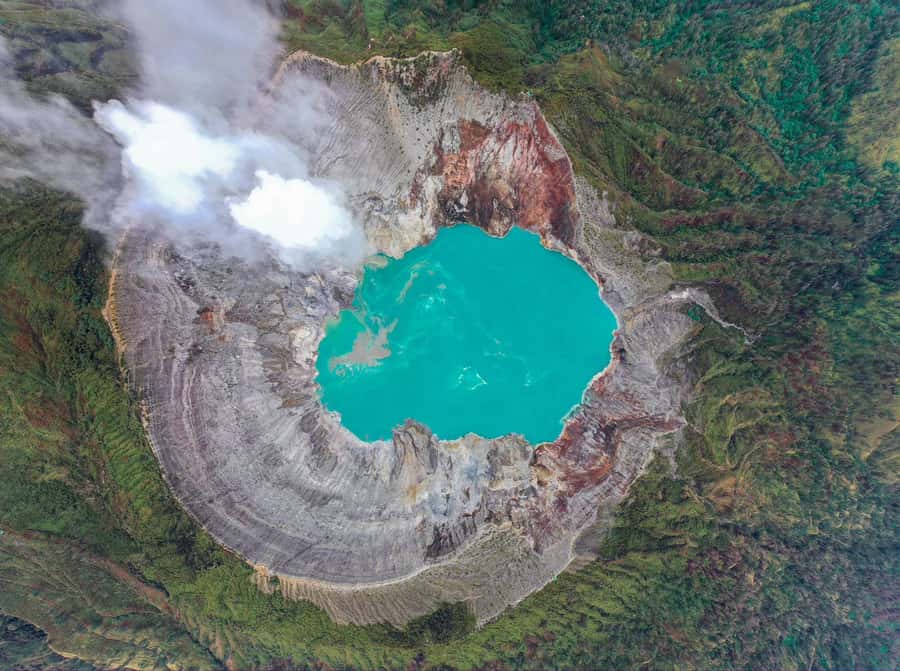
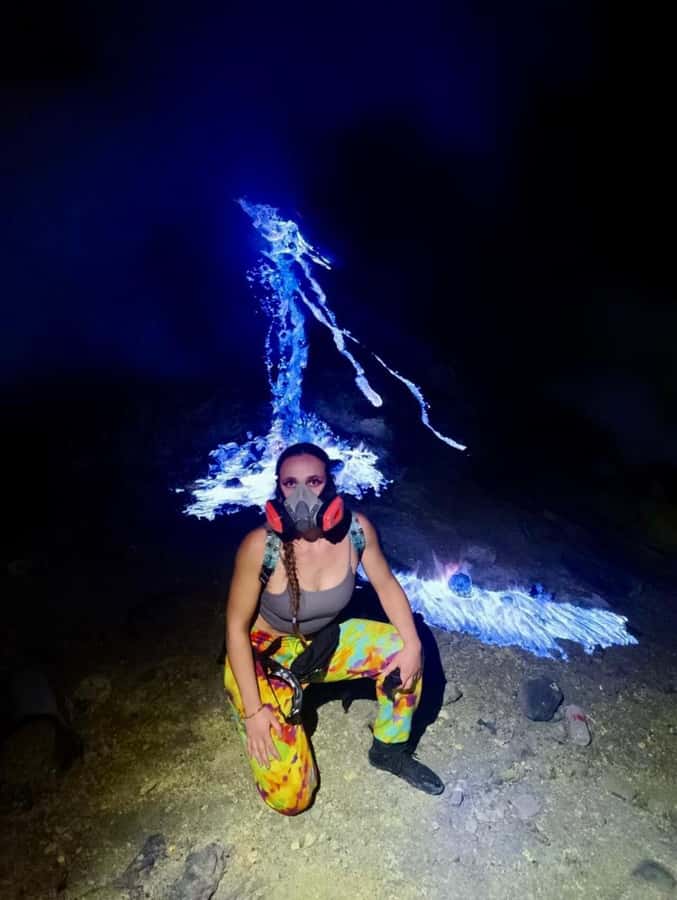
- Blue fire before sunrise: You may see Ijen’s rare blue flames, but volcanic conditions and mining work can prevent it.
- A demanding midnight hike: Expect a dark uphill trek on loose ground, followed by a possible steep crater descent.
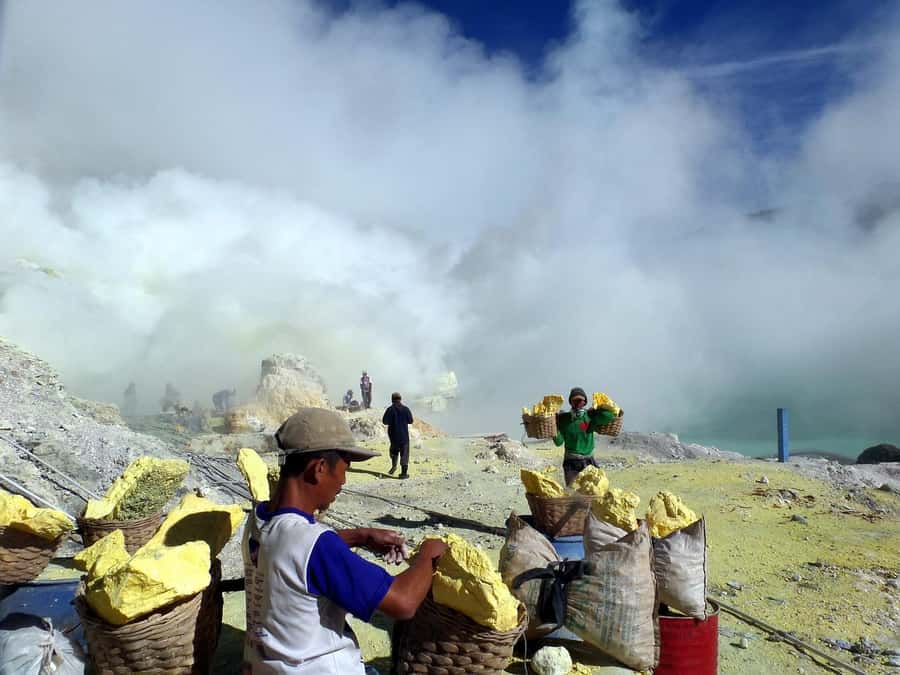
- Sulfur miners at work: You can see traditional sulfur harvesting and learn about the hard realities of the job.
- Early access matters: Guides aim to get groups to the crater early, before the narrow path fills with people.
- Useful gear is included: Entry fees, transport, a headlamp, gas mask, health certificate, parking, and a hot drink are covered.
- Good value at $20: The price is low for a nine-hour outing with transport, guiding, equipment, and park admission.
Why Mount Ijen is worth the lost night of sleep
Mount Ijen is one of Java’s most memorable natural sights because several very different experiences come together in a short window. You hike under a dark sky, watch sulfur miners carry heavy loads, look across an intensely colored crater lake, and then see the rim brighten at sunrise.
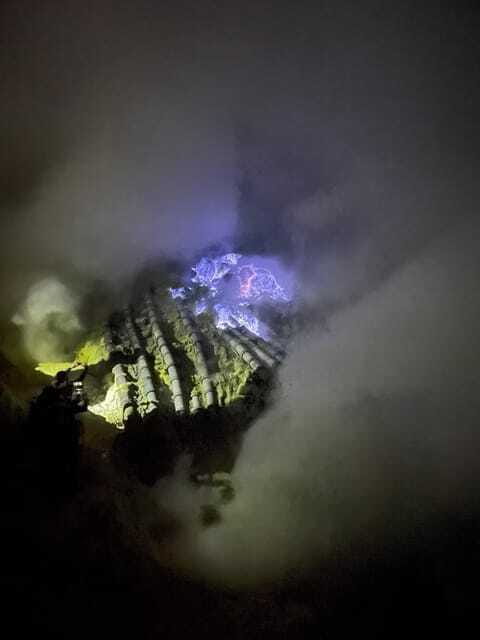
The blue fire is the most unusual part. It appears when sulfurous gases burn, creating blue flames in the dark. This is not the same as blue lava, despite the way the sight is sometimes described. It is also not dependable. The fumes may be too strong, the route may be closed, or miners may extinguish the flames while working.
I appreciate that the tour does not treat the blue fire as a promise. You should book this for the volcano, the miners, the lake, and the sunrise first. If the flames appear, they are an extraordinary extra.
The human side matters just as much. Sulfur miners still use traditional methods at Ijen, working in a place where fumes can be harsh and the ground can be difficult. A good guide can help you see the site with respect rather than treating it as just a dramatic photo stop.
More Mountain Hikes in Indonesia
- Bali: Sunrise Mount Batur Guided Hike with Breakfast
★ 4.8 · 9,660 reviews - Bali: Mount Batur Sunrise Guided Hike and Natural Hot Spring
★ 4.8 · 9,284 reviews - Mount Batur Sunrise Hike and Natural Hot Spring Option
★ 5.0 · 1,927 reviews
A midnight departure from Banyuwangi
Pick-up is scheduled between 11 and 11:30 p.m. from selected areas around Banyuwangi, including Glagah, Kalipuro, and Licin. You should wait in your hotel lobby about ten minutes early. The drive is by shared car, so you may be joined by other people.
That start time is not a minor detail. You are climbing soon after midnight, then returning to Banyuwangi around 9 a.m. You need to arrive rested, eat beforehand, and avoid treating this as a casual morning walk.
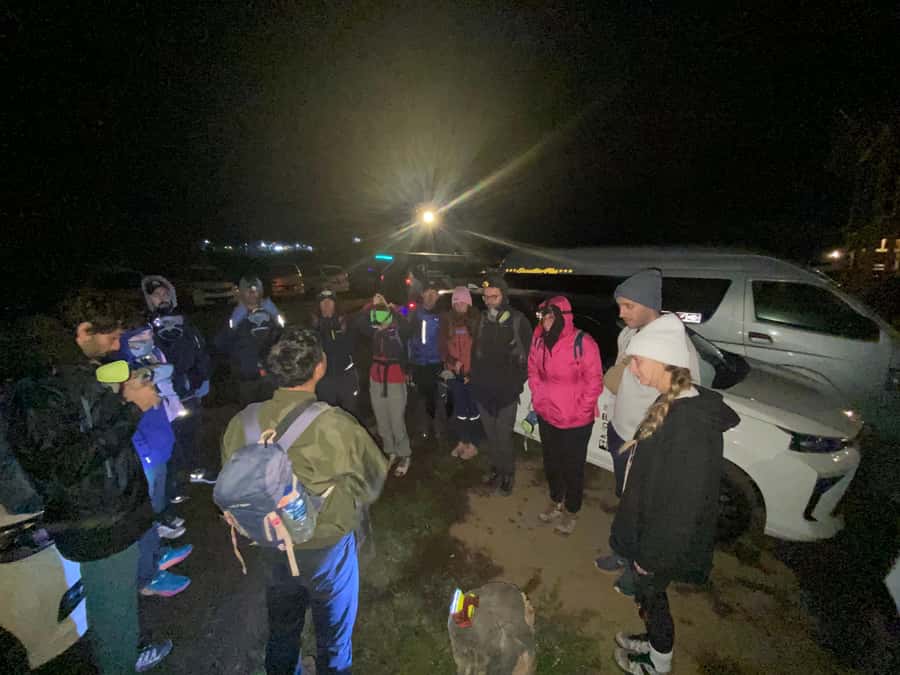
The group typically reaches the Paltuding parking area around 1:30 a.m. There is a short safety briefing and time to prepare before the hike begins at roughly 2 a.m. This pause is useful for organizing your clothing, checking your headlamp, and asking the guide about the route.
The tour includes a health certificate, but you still need to be honest about your fitness and medical limits. The guide can set a pace, but no one can remove the steep sections or the effects of a sleepless night.
The climb from Paltuding to the crater rim
The main uphill route begins at about 2 a.m. The supplied timing places the summit around 3 a.m., though your pace, group size, and park conditions can affect the schedule.
The climb is physically challenging rather than technical. The ground can be loose and slippery, especially on the descent, so proper hiking shoes with good grip are a smart choice. Old trainers may be uncomfortable on unstable ground.
A headlamp is included, which is essential in the dark. You should still bring warm clothes. Temperatures near the mountain are listed at around 8 to 13 degrees Celsius, and the early hours can feel colder when you stop or wait.
The guides are an important part of this section. Qim Qim is repeatedly praised for high energy, humor, music, and encouragement, while Malik and Raffi are noted for helping people at different fitness levels. That can make a real difference when a group includes both fast and slow walkers.
The best guides do not simply push everyone uphill. They check on the group, help people over slippery sections, and keep the pace together. One practical advantage of an early, well-managed start is reaching the front of the queue when the park opens, although the exact timing depends on conditions.
Descending into the crater for blue fire and miners
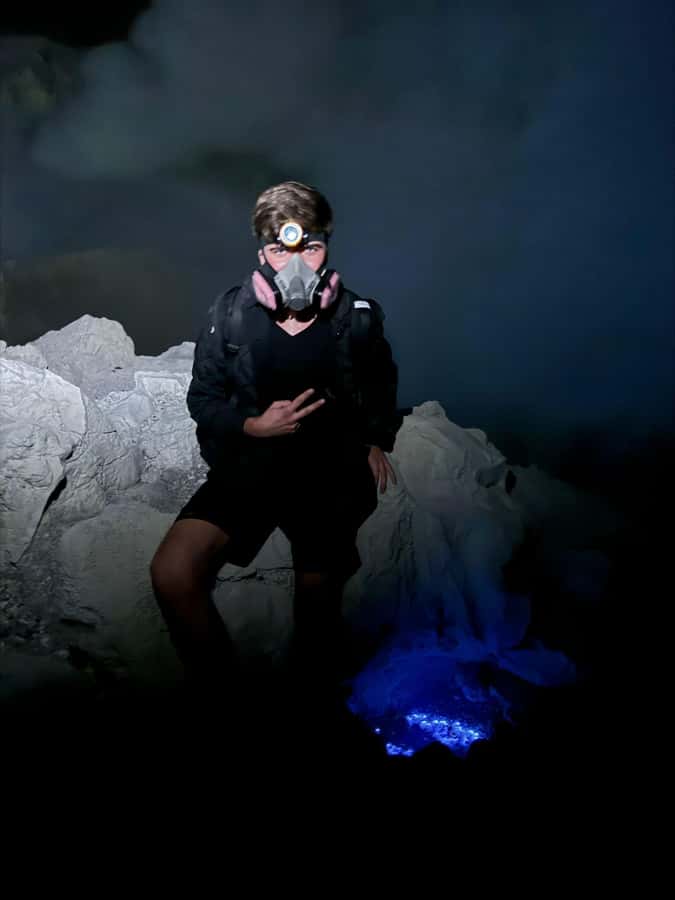
At about 3 a.m., the group may descend toward the crater. This is the most demanding and safety-sensitive part of the experience.
The route into the crater drops about 900 meters and can involve steep, narrow ground. After an earthquake, the crater area became less stable, so access depends on the guide’s instructions and current volcanic conditions. The descent is allowed only when the sulfur fumes are considered safe.
You should not descend if you have asthma, a heart condition, a fear of heights, or insufficient fitness. The tour is also not suitable for children under seven, pregnant women, wheelchair users, or people with mobility impairments.
A gas mask is included, and guides provide goggles or additional protection when needed. Still, included safety gear does not make the crater harmless. Listen closely, stay with the guide, and do not wander toward fumes or unstable ground for a better photograph.
At the bottom, you may see miners gathering sulfur with traditional tools and carrying it out by hand. This is a powerful part of the visit, but it can also be uncomfortable. You are looking at difficult work in an active volcanic setting, not a performance arranged for tourists.
Blue fire sightings vary. Some groups have arrived first and had several quiet minutes near the flames before crowds appeared. Other departures have found no blue fire because it was too dangerous, unavailable, or extinguished to support mining work. That uncertainty is part of the nature of the site.
The narrow crater route can become crowded, with many people moving in both directions. Waiting may be necessary, especially later in the morning. Guides who know the timing can reduce some of the delay, but they cannot control every group on the mountain.
More Lake Hikes in Indonesia:
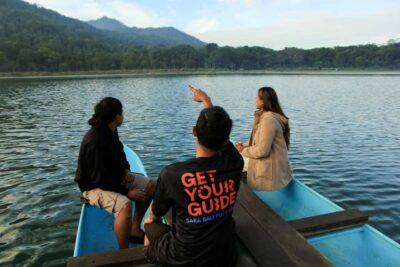
- Munduk: Twin Lake Jungle Hike, Ulun Danu Temple, & Waterfall
★ 4.9 · 536 reviews - Munduk: Twin Lakes Jungle Hike with Lake Canoe and Waterfall
★ 4.9 · 139 reviews - From Bali : Mt Ijen Hike, Blue Fire & Panoramic Lake Guided
★ 5.0 · 5 reviews - From Tirana: Bovilla Lake & Gamti Mountain Hiking Day Trip
★ 4.9 · 4,397 reviews
Sunrise above the turquoise lake
After the crater section, the schedule calls for climbing back toward the rim at about 4 or 4:30 a.m. You then have time at a viewpoint from roughly 5 to 6 a.m.
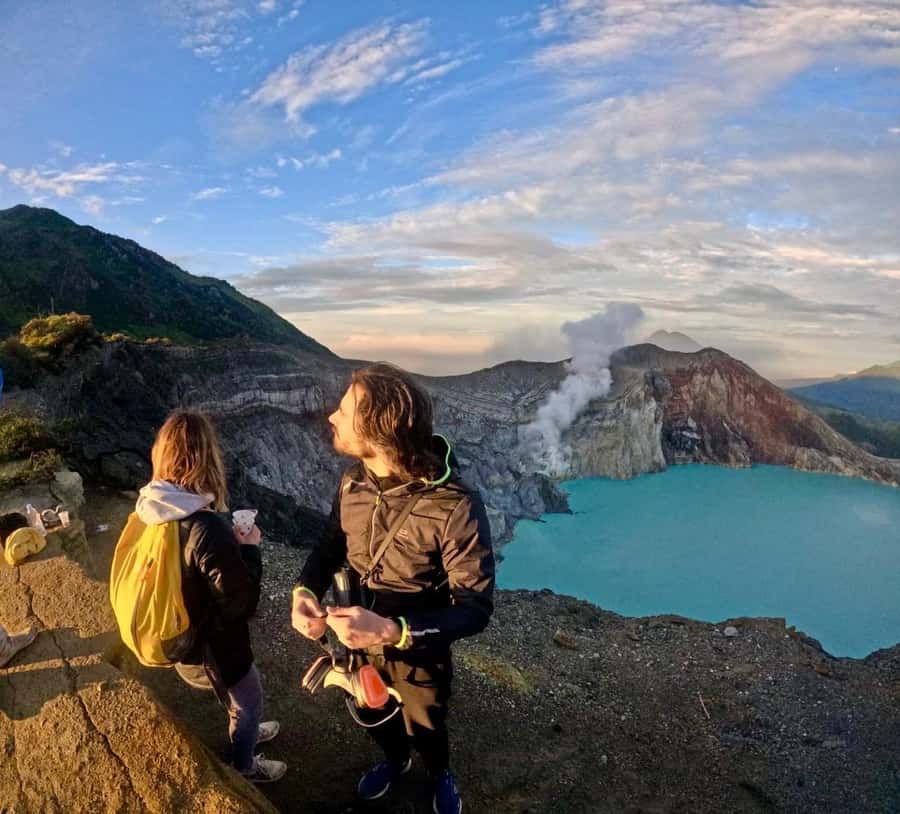
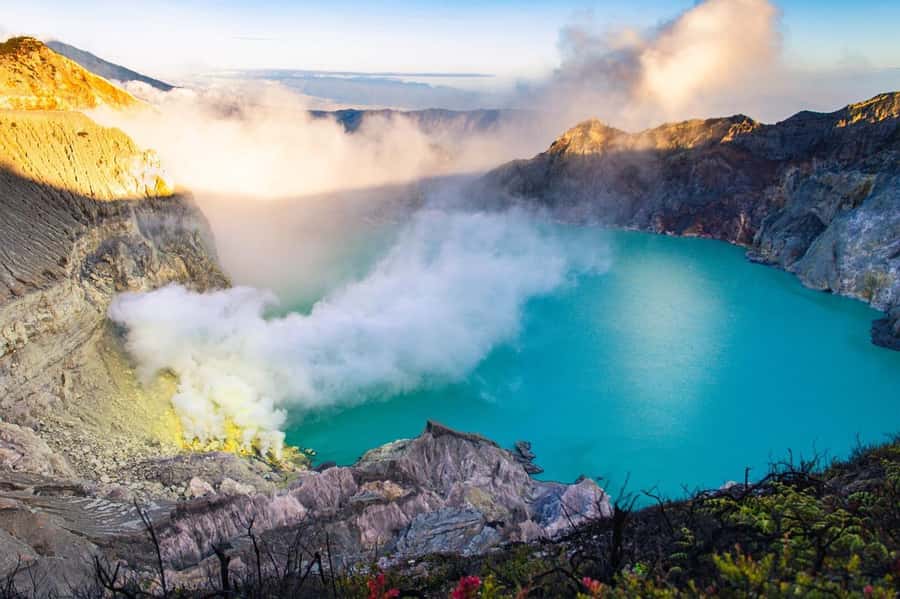
This is where the tour changes character. The darkness lifts, the turquoise lake comes into view, and the scale of Mount Ijen becomes clearer. The lake is striking, but its color should not tempt you to approach the water or ignore safety instructions. The crater remains an active volcanic area.
The guide prepares coffee or tea at the viewpoint. That simple break is well timed. After the night climb, a warm drink and a chance to sit can be more useful than another rushed photo stop.
Sunrise is weather-dependent, so cloud can block the sun even when the crater and lake are still visible. I would treat the sunrise as a bonus rather than a guarantee. The rim views remain worthwhile in changing light, with or without a clear horizon.
Guides also explain the volcano’s history and the life of the sulfur miners. Qim Qim is often singled out for sharing practical information about Ijen and the working conditions below. This context gives the view more meaning than a quick visit followed by a pile of photographs.
Returning to Banyuwangi by 9 a.m.
The descent to the parking area begins around 6 a.m. It may sound easy after the crater work, but tired legs and loose ground can make the return surprisingly taxing.
Take your time on the downhill route. A strong grip matters more than speed, and you should keep your jacket available until the air warms. The parking-area rest period around 7 to 7:30 a.m. gives you a chance to recover before the drive back.
Departure for Banyuwangi is scheduled around 7:30 or 8 a.m., with arrival near 9 a.m. The exact return time can shift if the group waits on the crater route or moves at different speeds.
This is a shared experience, and the group may include people with different abilities. That can mean waiting, but it also means the guide has a reason to manage the pace rather than race ahead. Several guides, including Qim Qim, are praised for keeping slower walkers involved.
One caution deserves attention: a participant reported concern about a driver appearing tired at the wheel. That is not a routine feature of the tour, but a midnight transfer requires alert driving. If you feel unsafe, speak up immediately.
What the $20 price really covers
At $20 per person, this is a strong-value mountain outing if the schedule and physical effort suit you. The price includes pick-up and drop-off, the Mount Ijen National Park entry fee, an English-speaking mountaineering guide, a headlamp, gas mask, health certificate, parking, and coffee or tea.
You still need to pay for your own food and drinks, and guide tips are not included. Bring cash for those needs. If your accommodation is in the Ijen Resort Villas or Licin area, an additional 150,000 Indonesian rupiah per group may apply for pick-up.
The low price should not be confused with a low-effort activity. You are paying for access and support, not a gentle sightseeing ride. The value is best for someone who wants a complete Ijen experience without arranging transport, park admission, equipment, and a guide separately.
Free cancellation is available up to 24 hours before departure, and you can reserve now and pay later. Mount Ijen closes every Friday of the month, so check the date before building your Java plans around this outing.
What to bring for the night
Pack for cold, darkness, fumes, and exertion. Your essentials are:
- Warm layers and a jacket
- Long pants
- Hiking shoes with good grip
- Drinking water and any food you need
- Cash
- A phone or camera, if you want photographs
The tour supplies a headlamp and gas mask, but you should still dress as if you will spend several hours outdoors. A warm layer that can be removed is more practical than one heavy item.
Eat before pick-up, since food is not included. The coffee or tea break is welcome, but it should not be treated as breakfast.
Who should book this Mount Ijen tour?
I would recommend it to reasonably fit hikers who want several major Ijen sights in one outing and prefer having transport and a guide arranged. It suits people who can handle a midnight start, uneven ground, cold air, and a possible steep crater descent.
It is a particularly good choice if you want help with pacing and timing. Guides such as Qim Qim, Malik, and Raffi are praised for energy, humor, route management, and support for slower walkers. The guide may also take photographs and explain the volcano and mining work.
I would not choose it if your main goal is guaranteed blue fire. No operator can promise that under changing volcanic conditions. I would also avoid it if you have low fitness, respiratory or heart problems, mobility limits, or difficulty with heights.
Should you book it?
Book this Mount Ijen hike if you see the blue fire as a possibility rather than the entire point. The volcano, turquoise lake, sunrise, miners, and demanding night walk give the experience plenty of value even when the flames are closed or absent.
At $20, the included transport, park entry, safety gear, guide, and hot drink make it an appealing deal. Just choose a non-Friday date, prepare for a sleepless night, wear serious footwear, and accept that safety decisions may change the plan. If you can do that, this is a practical and memorable way to experience Mount Ijen from Banyuwangi.
FAQ
What time does the Mount Ijen tour begin?
Pick-up is scheduled between 11 and 11:30 p.m. from selected Banyuwangi-area locations. The hike begins at about 2 a.m.
How long does the experience last?
The total duration is about nine hours, with return to Banyuwangi scheduled around 9 a.m.
Is blue fire guaranteed?
No. Blue fire depends on volcanic activity, sulfur fumes, safety conditions, and mining work. Miners may also extinguish it to support their work.
Is the crater descent always available?
No. The descent depends on current safety conditions and the guide’s instructions. It is permitted only when the fumes are considered safe.
How steep is the crater descent?
The descent into the crater is about 900 meters and can be steep. You need moderate fitness and should not have asthma, heart problems, or a fear of heights.
What is included in the price?
Pick-up and drop-off, the Mount Ijen National Park entry fee, an English-speaking guide, a gas mask, headlamp, health certificate, parking fee, and coffee or tea are included.
What should I bring?
Bring warm clothing, a jacket, long pants, hiking shoes, drinks, and cash. Food is not included.
Is Mount Ijen open every day?
Mount Ijen is closed every Friday of the month. Check the date before booking.
Is the tour suitable for children or people with mobility limits?
It is not suitable for children under seven, pregnant women, wheelchair users, people with mobility impairments, or people with a low level of fitness.
Just added around Indonesia
- From Yogyakarta: Mount Merbabu One Day Hiking Tour★ 4.9 · 27 reviews
- From Medan: Mount Sibayak Sunrise Hike & Natural Hot Spring★ 4.8 · 31 reviews
- From Bali : Mt Ijen Hike, Blue Fire & Panoramic Lake Guided★ 5.0 · 5 reviews
- Exclusive Soft Hiking: 2-Day Pergasingan Hill Adventure★ 4.5 · 2 reviews
- Banyuwangi: Mt. Ijen Sunrise Hike with Pickup & Health Check★ 4.9 · 109 reviews
- Bali: Sunrise Hike at Mount Batur with Bali Swing★ 5.0 · 24 reviews
- Bali: Mount Batur Sunrise Hike Including Transfer & All Cost★ 4.8 · 39 reviews
- Bali’s Mount Abang Expedition: Guided Hike★ 5.0 · 2 reviews
Indonesia Hiking Tours, compared.
Sunrise Mount Batur Guided Hike with Breakfast
Read our review →
Mount Batur Sunrise Guided Hike and Natural Hot Spring
Read our review →
Mount Batur Sunrise Hike and Natural Hot Spring Option
Read our review →
Munduk: Twin Lake Jungle Hike, Ulun Danu Temple, & Waterfall
Read our review →Browse the lists this tour appears in