
REVIEW · ITALY
Hike near the summit craters up to the maximum safe altitude currently foreseen
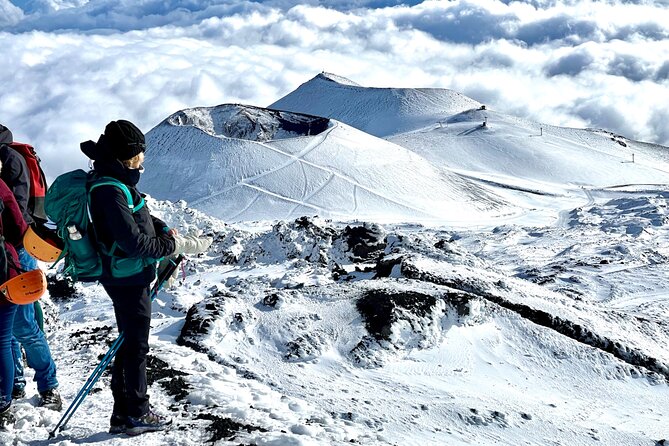
Mount Etna gives you a rare chance to walk high on an active volcano without attempting the unstable summit cone itself. You start at 1,900 meters, ride the cable car to 2,500 meters, then climb across black lava fields to about 3,000 meters, the highest altitude currently allowed.
I like the expert volcanic guides, including Filippo, Vincenzo, and Daniele, who explain the geology, eruptions, lava tunnels, plants, and crater formations as you walk. I also like the useful gear loan: boots, poles, helmets, warm jackets, extra socks, and a spare backpack are included.
The main catch is cost and altitude. The advertised price is $66.38, but you must pay another €52 on site for the cable car. Cold air, thin air, uneven ground, and a 500-meter climb make this a real mountain hike, not a casual stroll.
Key points to know before you book
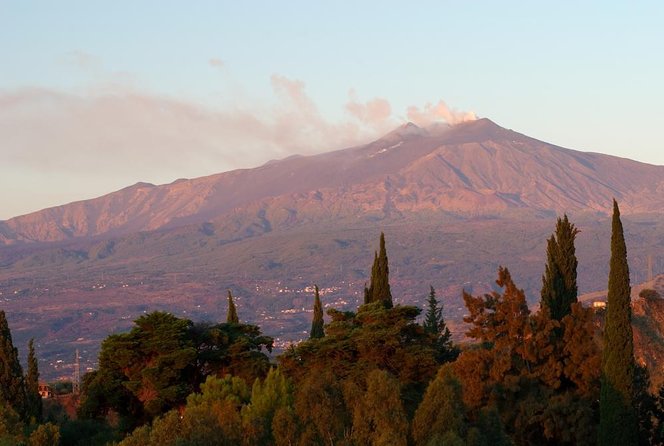
- Reach 3,000 meters on Etna’s upper slopes: You hike to the maximum altitude currently allowed by summit regulations, near the South-East Crater.
- Ride the cable car to 2,500 meters: The lift saves energy for the most interesting volcanic terrain above the tree line.
- Learn from an authorized vulcanological guide: Guides such as Filippo, Vincenzo, and Daniele combine safety instructions with geology and eruption stories.
- Walk across active volcanic terrain: Expect lava fields, crater rims, channels, fumaroles, and possible views of lava tunnels or older cones.
- Bring your own gloves and hat: Jackets and boots are supplied, but hats and gloves are not.
- Plan for a demanding half-day: The route covers about 6.5 kilometers with roughly 500 meters of ascent and descent.
Starting at 1,900 meters on Mount Etna
The meeting point is at the Esagonal Piazzale Funivia Etna Sud near Nicolosi. The tour begins at 8:30 a.m., giving you a clear morning schedule for a five-hour outing.
After check-in, your guide handles the initial arrangements and helps prepare the group. This is a good time to ask about clothing, the weather, and the route planned for that day, since volcanic conditions can change quickly.
You will be above 1,900 meters from the beginning. That matters more than the distance alone. At altitude, your breathing can feel harder, and the temperature can be much lower than in Nicolosi or Catania. A sunny morning at the coast does not guarantee warm conditions on Etna.
The operator supplies trekking shoes, poles, helmets, warm jackets, extra socks, and an extra backpack. That makes the tour easier to book if you do not want to pack specialist hiking gear for Sicily.
You still need a hat and gloves. Bring them even in summer. Sunglasses are also useful, especially if there is ash, snow, or strong reflected light. Contact lenses are discouraged because volcanic gases and ash can irritate your eyes. If you wear them, sunglasses are recommended.
More Mountain Hikes in Italy
- Mount Etna: Summit Guided Hiking Tour up to 3,400 m
★ 4.8 · 4,792 reviews - Etna Volcano: South Side Guided Summit Hike
★ 4.7 · 1,545 reviews - Catania: Mount Etna Adventurous Hiking Tour with Equipment
★ 4.7 · 784 reviews
The cable car ride to 2,500 meters
The cable car takes you from the starting area to 2,500 meters, where the walking section begins. This is one of the tour’s practical strengths. You get quickly into the high volcanic zone without spending hours climbing from the lower slopes.
The €52 round-trip cable car ticket is not included in the advertised tour price, so budget for it before you arrive. Parking is also separate, and transport from your accommodation is not provided.
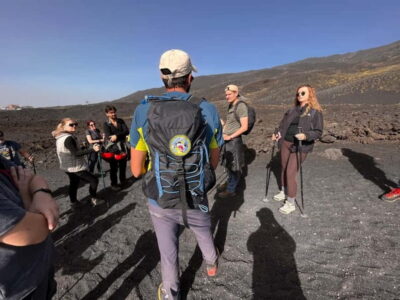
Once you leave the cable car station, the character of the excursion changes. You are no longer visiting Etna from a viewpoint or roadside stop. You are walking through its upper volcanic zone, where the ground may be loose, uneven, and unstable.
The guide sets the pace and chooses the safest route. The exact path can change because of wind, snow, ash, eruptions, fumarole activity, or official restrictions. That flexibility is important here. A fixed route would not make sense on an active volcano.
Crossing lava fields and crater rims
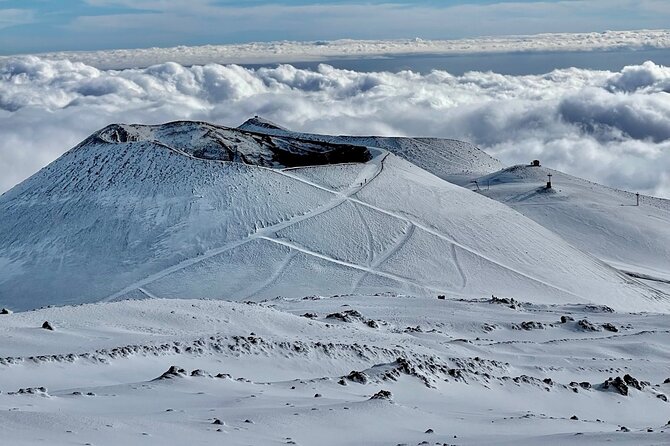
The route gains about 500 meters from the cable car area to approximately 3,000 meters. Along the way, you cross lava fields, pass lava channels, and walk near smaller craters and crater rims.
The surfaces are not smooth. Volcanic rock can shift under your boots, and ash can make uphill walking tiring. Trekking poles are more than a nice extra here. They help with balance and reduce strain on the descent.
The walking distance is about 6.5 kilometers in total, though the exact distance and elevation gain may vary. You need moderate physical fitness and some comfort with long uphill walks. The tour is suitable for children over seven who are accustomed to walking, but age alone does not make the route easy.
The guide builds in pauses, which are useful for both recovery and explanation. This is where the tour becomes more than a high-altitude walk. A good guide can point out how lava moved, why a crater formed where it did, and how recent activity has changed the upper slopes.
The guides named in the experience include Filippo, a geology specialist with a PhD, as well as Vincenzo, Podlo, and Daniele. The strongest praise goes to the guides’ friendliness, clear explanations, and ability to encourage people without pushing them beyond their limits.
Reaching the South-East Crater area
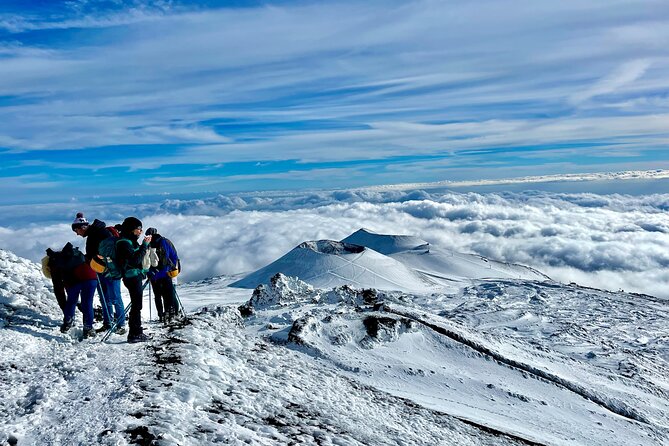
The main goal is the base of the South-East Crater, Etna’s most active cone. You do not climb onto the cone itself. Access is closed because of extreme heat, unstable ground, possible collapses, and the danger created when magma is close to the surface.
This restriction is not a disappointment in disguise. It is the reason the tour can offer a regulated way to see the summit area. You get close enough to understand the scale and power of the crater while staying within the safety limits set by local authorities and Civil Protection.
Recent eruptions can change the route or stop access to parts of the summit zone. If the summit crater is closed, you may view it from a safe distance and continue around older craters, lava channels, or other permitted features. The itinerary may also be suspended if weather, volcanic activity, or environmental conditions become unsafe.
From the permitted viewpoints, you can look toward the South-East Crater and the surrounding upper slopes. The air may be cold and thin, and crater rims can cause dizziness for some people. Take your time at the higher points, especially if you feel lightheaded.
More Volcano Hikes in Italy
- Etna Volcano: South Side Guided Summit Hike
★ 5.0 · 311 reviews - Mount Etna: Central Crater Guided Hike for Advanced Hikers
★ 4.8 · 106 reviews
What the descent adds to the day
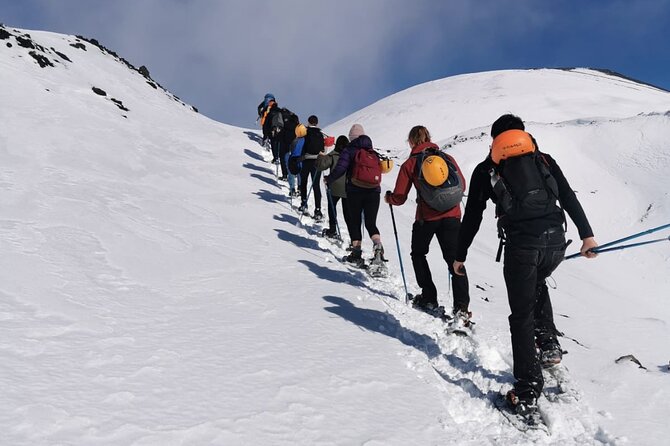
The descent from about 3,000 meters to the cable car station is on foot. You then ride the cable car back to the starting area.
Walking down volcanic ash and loose rock can be harder than expected. Your knees and ankles work differently on the descent, and poles become especially useful. Good footwear matters, which is why the included trekking shoes are valuable if your own shoes are not suited to unstable ground.
The descent is not simply time spent retracing the uphill route. Depending on conditions and the guide’s judgment, it can reveal different views of lava channels, older craters, and volcanic formations. An August excursion, for example, included views of the summit craters from a safe distance, older smaller craters, and lava caves farther downhill.
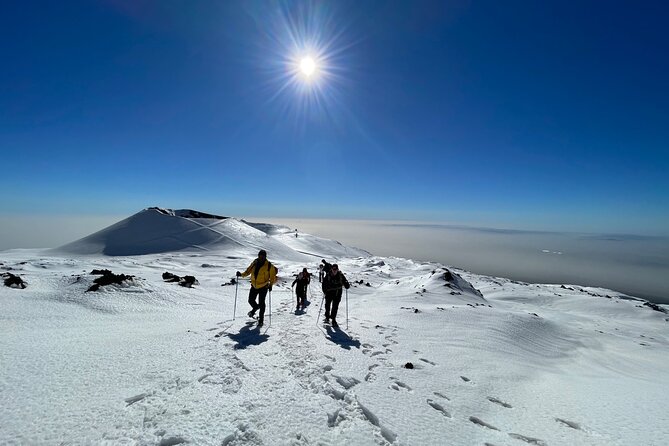
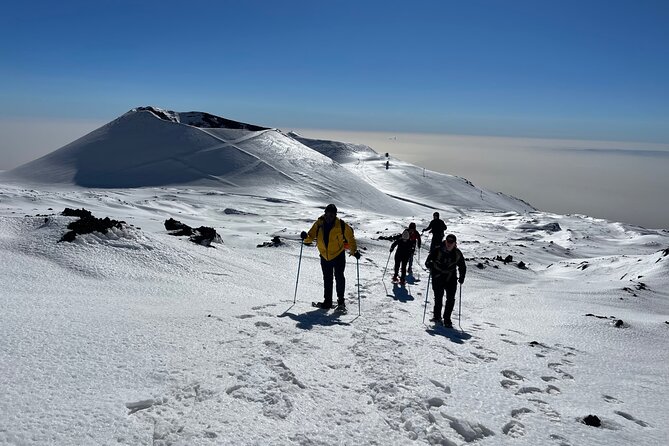
In winter, deep snow can change the experience again. Snowshoes may be required and cost €15 per person, paid to the guide. The tour can be especially striking in snowy conditions, but you should expect slower progress and more demanding footing.
The value of the $66.38 price
At first glance, $66.38 looks like a reasonable price for a five-hour guided hike with equipment and accident insurance. It includes an authorized vulcanological guide, Mount Etna admission, trekking poles, shoes, helmets, warm jackets, extra socks, and a spare backpack.
The extra €52 cable car charge changes the calculation. Your basic outing cost is therefore the listed tour price plus the cable car fee, before parking or any accommodation transfer. Deep-snow conditions can add another €15 for snowshoes.
Even with those extras, the price can make sense if you need equipment or want a guide who can interpret the volcano rather than simply lead you uphill. Hiring boots, poles, a helmet, and a jacket separately would be inconvenient, particularly if you are visiting Sicily with light luggage.
The included accident insurance is another practical benefit. It does not remove the need to judge your own fitness, but it gives the organized outing a useful safety structure.
For independent hikers who already have equipment and know the upper slopes, the total price may feel less attractive. For most visitors who want a guided, regulated approach to Etna’s summit zone, the instruction and equipment help justify the cost.
Fitness, health, and altitude concerns
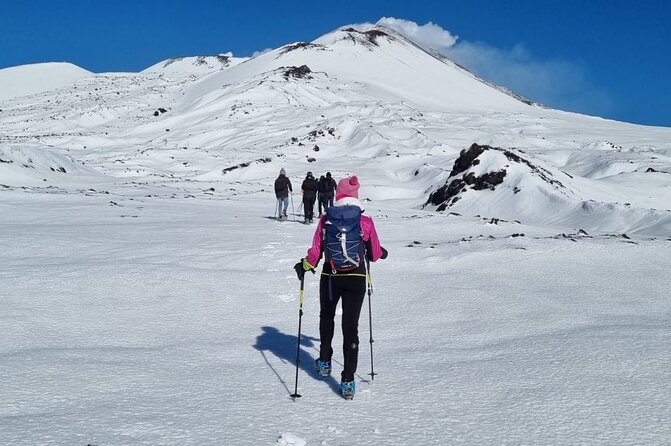
You should be comfortable with several hours of walking and a sustained uphill climb. The tour is not recommended if you do little physical activity, even though it does not require special athletic training.
The volcanic ground is uneven and may be unstable. You may walk along crater rims, which can cause dizziness. Anyone with cardiovascular or respiratory conditions, hypertension, or another specific medical concern should assess the risks carefully and tell the guide about relevant health issues.
The route is controlled by current regulations, but control does not make the terrain easy. You remain at high altitude near an active volcano, with cold, wind, gases, ash, and changing ground conditions possible.
I would not book this as a relaxed family outing unless every child in the group is already used to walking. The minimum age is over seven, but the better test is stamina, balance, and comfort with a five-hour mountain day.
Weather and volcanic changes matter
This excursion requires good weather. Poor conditions can lead to a different date or a full refund, and the route may be altered or suspended if volcanic activity or environmental conditions create a safety risk.
That uncertainty is part of visiting Etna. You are not booking a museum with a fixed indoor route. The mountain itself determines what is possible on the day.
A recent eruption can close the summit crater while leaving plenty to see nearby. In that situation, the experience may focus on safe views of the peak craters, older cones, lava tunnels, and lower sections of the route. You should see that as a responsible adjustment, not a failure to deliver the mountain.
The operator may also set the route according to current regulations and group safety. You are paying for access within those limits, not for a promise to reach a particular crater regardless of conditions.
Who will enjoy this Etna hike most
This tour fits you best if you want a serious look at Mount Etna’s upper slopes but do not want to plan the route, interpret the geology, or source specialist gear yourself.
It is a good choice for:
- Hikers with moderate fitness who can manage a long uphill walk
- Visitors who want to reach about 3,000 meters
- People interested in eruptions, lava formations, and volcanic science
- Families with children over seven who are used to walking
- Solo participants who want to join a small group
- Visitors who prefer an English-speaking guide
The maximum group size is 15, which is small enough for questions and basic attention from the guide. Group makeup may vary, and language arrangements can be organized when needed.
I would choose another Etna outing if you want an easy viewpoint, a short walk, or a fully private experience. I would also reconsider if you have little walking experience or a medical condition that makes altitude and exertion risky.
What to pack for the upper slopes
The supplied equipment covers many awkward items, but you still need personal layers and protection.
Bring:
- Warm clothing that can be layered
- Hat and gloves
- Sunglasses
- Water and any personal snacks you need
- Comfortable clothing for several hours of walking
- Sun protection
You can find a place at the meeting point for breakfast or sandwiches, according to the available local facilities, but do not rely on finding food higher on the mountain. Starting early also helps you avoid arriving hungry for the climb.
Use the supplied poles if you are unsure about footing. On loose volcanic ground, steady steps are more useful than speed.
Booking, cancellation, and the final decision
You can cancel up to 24 hours before the local start time for a full refund. Changes made within 24 hours are not accepted, and the minimum number of participants must be met for the excursion to operate.
I would book this tour if your priority is reaching the highest currently permitted hiking altitude on Etna with a guide who can explain what you are seeing. The combination of cable car access, regulated summit views, volcanic interpretation, and included equipment gives the day a clear purpose.
I would skip it if the added cable car fee makes the total cost uncomfortable, if you want a gentle walk, or if you are not prepared for cold and thin air. For a fit visitor who wants to get close to Etna’s active summit without entering a prohibited zone, this is a strong choice.
FAQ
Where does the Mount Etna hike start?
The meeting point is Esagonal Piazzale Funivia Etna Sud, 95030 Nicolosi CT, Italy. The activity starts at 8:30 a.m. and ends back at the same meeting point.
How long does the excursion take?
The excursion lasts approximately five hours.
How far do you walk?
The full route covers about 6.5 kilometers. The distance can vary depending on volcanic, weather, snow, and safety conditions.
How high does the hike go?
The hike begins on foot at about 2,500 meters after the cable car ride and reaches approximately 3,000 meters, the maximum altitude currently allowed by summit regulations.
Is the cable car included in the price?
No. The round-trip cable car ticket costs €52 per person and must be paid on site.
What equipment is included?
The tour includes an authorized vulcanological guide, trekking poles, trekking shoes, helmets, a warm jacket, extra socks, an extra backpack, accident insurance, and Mount Etna admission.
Do I need to bring anything myself?
You should bring a hat and gloves, since they are not supplied. Sunglasses are also recommended because ash and volcanic gases can irritate the eyes.
Is the hike suitable for children?
Children over seven may take part if they are accustomed to walking. The route requires moderate fitness and includes uneven volcanic ground, uphill walking, crater rims, and high altitude.
What happens if weather or volcanic conditions make the route unsafe?
The guide may change or suspend the itinerary if conditions create a risk. If the experience is canceled because of poor weather or because the minimum number of participants is not met, you can receive a different date or a full refund.
Just added around Italy
- From Taormina or Catania: Private Full-Day Mount Etna Hike★ 4.5 · 8 reviews
- From Taormina: Mount Etna Half-Day Evening Hike★ 5.0 · 4 reviews
- From Sorrento: Path of the Gods Guided Hike with Transfer★ 4.8 · 23 reviews
- From Sorrento: Skip-the-Line Guided Vesuvius Hike and Lunch★ 4.4 · 5 reviews
- From Sorrento: Path of the Gods Hike with Tasting Stop★ 4.9 · 29 reviews
- From Siracusa: Pantalica Nature Reserve Guided Hiking Tour★ 4.9 · 9 reviews
- From Orosei or Dorgali: Gorropu Canyon Guided Hike★ 4.9 · 40 reviews
- From Genna Silana: Canyon of Gorropu Guided Hike★ 3.7 · 3 reviews
Italy Hiking Tours, compared.
Cinque Terre Day Trip with Optional Hiking or Pisa
Read our review →
Florence: Cinque Terre Day Trip with Optional Hiking or Pisa
Read our review →
Mount Etna: Summit Guided Hiking Tour up to 3,400 m
Read our review →
Catania: Mount Etna Adventurous Hiking Tour with Equipment
Read our review →
From Taormina: Etna Tour with Hiking, Cave Visit, & Tastings
Read our review →
Catania: Etna Nature Tour with Hiking, Cave Visit, & Tasting
Read our review →Browse the lists this tour appears in