
REVIEW · ITALY
Cinque Terre: Eco Hiking and Wine Tasting
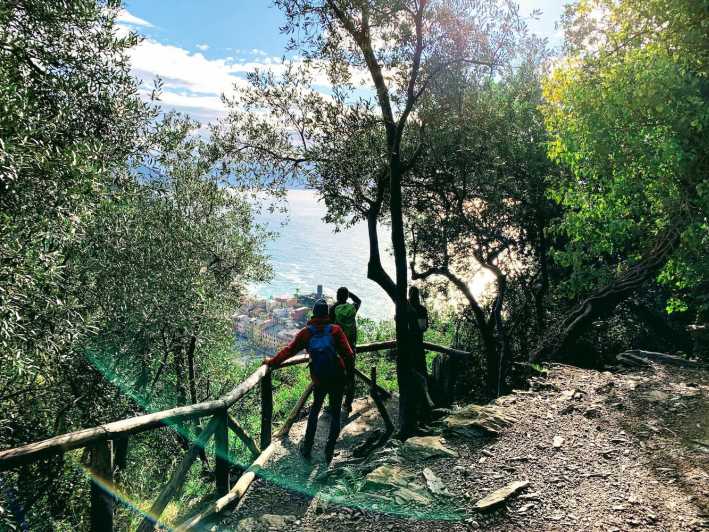
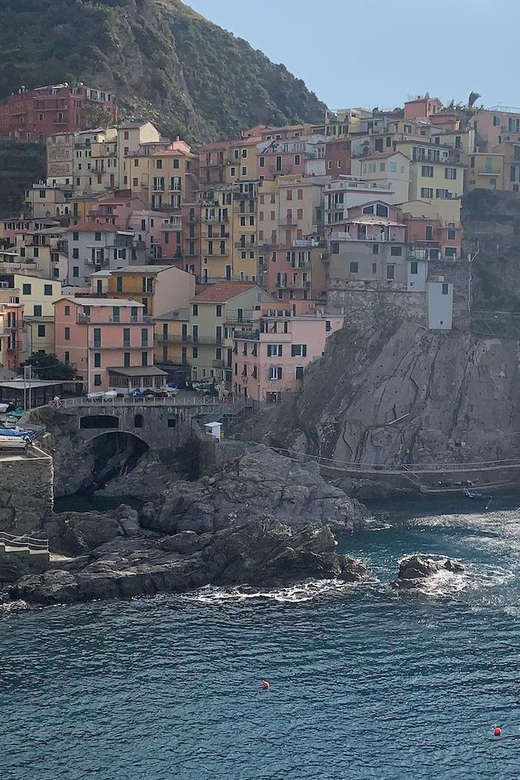
The best part of this outing is the route itself: you walk from Corniglia to Manarola through the old vineyard terraces that give Cinque Terre its character. The trail climbs through olive trees and Mediterranean scrub, then opens to wide views of the Ligurian Sea before dropping toward the coast.
I like the stop in Volastra, where a glass of natural wine and fresh Ligurian focaccia turn a hard uphill walk into a proper local experience. I also like the guide-led format. Guides such as Milo and Marco bring patience, trail skill, and stories about the park that you would miss on a solo walk.
The catch is simple: this is not a casual stroll. The route covers 5 kilometers with 654 meters of total elevation change, including a steep first hour and a demanding final descent. You need hiking shoes, two liters of water, and enough fitness to handle heat and uneven ground.
Key points to know before booking
- The route links three Cinque Terre villages: Start in Corniglia, pass through Volastra, and finish in Manarola.
- The first hour is the hardest: The climb accounts for most of the effort, while the middle section is close to level.
- The tasting is part of the setting: Stop in Volastra for Triple A natural wine, focaccia, and other local products.
- The group stays small: The activity runs with a minimum of 3 and a maximum of 15 people.
- The arrival is convenient: You finish in Manarola’s historic center, close to the train station and viewpoint.
- Heat matters: The tour is rated suitable for a trained beginner, but heat, fatigue, steep ground, and the descent can make it feel more demanding.
Corniglia to Manarola, the route in plain terms
This is a half-day walk through the Cinque Terre National Park, not a bus tour with a short photo stop. You spend most of the four and a half hours on foot, with the guide explaining how people shaped this steep coast over generations.
The route begins at Corniglia and reaches Manarola through Volastra. Its highest point is about 376 meters above sea level, while the lowest point is around 16 meters. You gain about 294 meters and lose about 360 meters, so the walk is not just an uphill climb.
The organizers classify it as T, or tourist, on the Italian Alpine Club scale. In practical terms, that means you do not need advanced mountaineering skills, but you do need to walk steadily on uneven trails and tolerate a sustained climb.
The detailed timing is roughly three and a half to five hours, depending on the group. The advertised duration is four and a half hours, and the listed departure time is 9:45 in the morning.
A few more hikes around Italy worth a look
- Tuscany Hiking Tour from Siena Including Wine Tasting
★ 5.0 · 112 reviews - Florence: Hiking Tuscany & Chianti wine 3 wineries and lunch
★ 5.0 · 9 reviews - Private Hiking Florence Tour with Wine and Lunch or semi-pri
★ 5.0 · 4 reviews
Meeting in Corniglia at 9:45
You meet outside Ristorante La Posada on Via Stazione 11, at the end of the staircase from Corniglia railway station. This detail matters because Corniglia’s station sits below the village, and reaching the village requires a climb on foot.
The first scheduled stop is a 15-minute safety briefing. Use it to check your footwear, fill your water bottle, and tell the guide about any concern that could affect your pace.
The group size is a real advantage here. With no more than 15 people, the guide can keep an eye on the slower walkers and explain the trail without shouting over a large crowd. The minimum group size is three, so check that the activity is operating on your chosen date.
The guides speak Italian and English. The people leading the walk are certified hiking guides with a focus on the park, its ecology, and its cultural traditions. Milo and Marco are names associated with especially strong guiding on this experience, though you should check who is assigned when you book.
The first climb through Corniglia’s terraces
The opening section takes about 105 minutes and includes the main uphill effort. Corniglia is the highest of the five coastal villages, so you begin with a good deal of climbing rather than easing into a flat path.
This is where the tour earns its value. You are not only looking at vineyards from a train window. You are walking among terraces built on steep ground, where generations of farmers used stone walls to make room for vines, olive trees, and orchards.
The terraces are central to Cinque Terre’s identity. They show how human work and Mediterranean nature have shaped one another over time. The guide adds the missing context, explaining the stories behind the fields, paths, and old farming practices.
Expect a steep ascent during the first hour. One person who completed the walk found the climb and descent demanding enough to recommend walking sticks for anyone with orthopedic concerns. That is useful advice, not a sign that the route is extreme. Poles can make the uneven sections more comfortable and reduce strain on your knees.
Do not wear sandals, flip flops, slippers, or ordinary city shoes. Hiking shoes are required, and the rule makes sense once the trail tilts upward and the surface becomes less forgiving.
Vineyard terraces above the Ligurian Sea
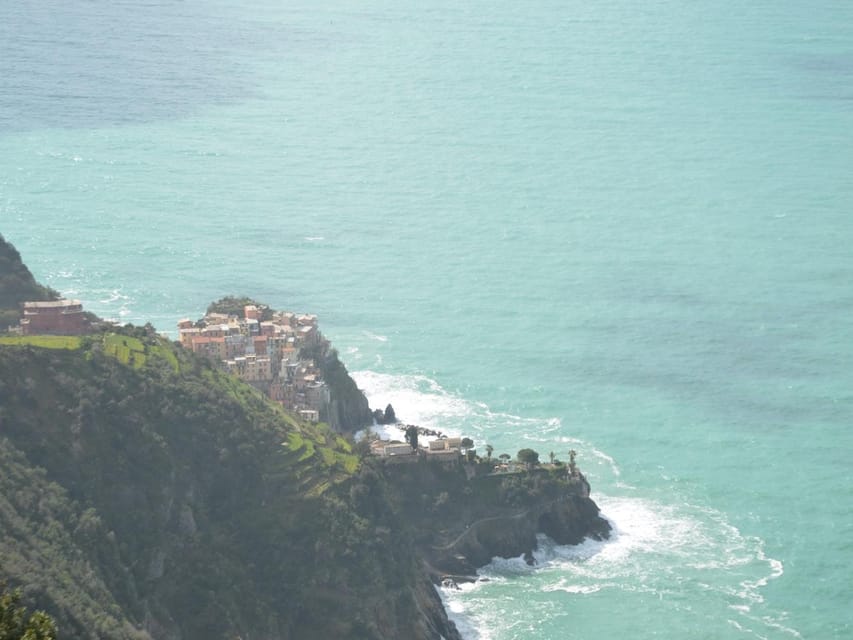
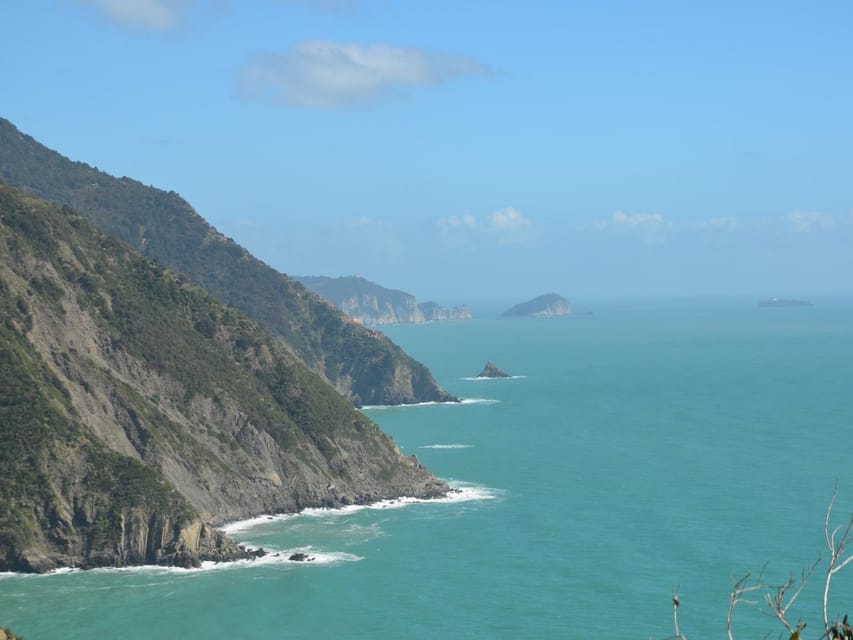
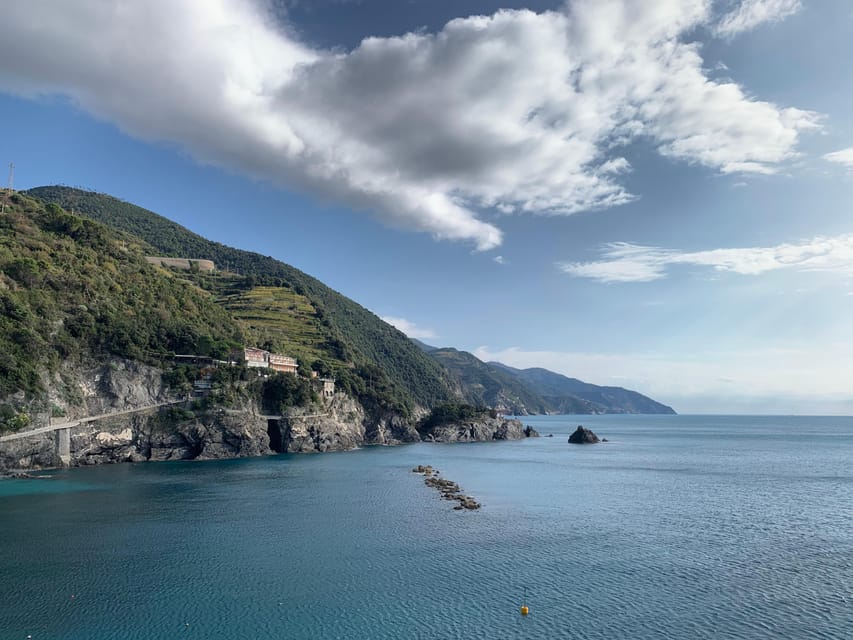
Once you gain height, the reward is a clearer view over the jagged coast. Vineyards cling to slopes above the water, while holm oak and mastic trees add shade and texture to the route.
The views are one of the strongest reasons to choose this activity instead of a standard village visit. You see the coast from above, with the terraces in the foreground and the sea beyond. The route also gives you a sense of the work needed to maintain this difficult terrain.
The guide’s role is more than navigation. Outdoor Portofino frames the walk around responsible recreation, conservation, and citizen science. In simple terms, you learn how careful visitors can reduce damage and support the places they visit.
That message will appeal to you if you want more than a scenic walk. The experience connects tourism with the care of the park, while still keeping the focus on walking, views, food, and local stories.
You should bring a reusable bottle holding at least two liters of water. Add sunscreen, sunglasses, a hat with a visor, and a windproof and waterproof jacket. A spare shirt can be useful after the climb, especially in warm weather.
Same trailhead, a different sort of day:
- Cinque Terre Day Trip with Optional Hiking or Pisa
★ 5.0 · 8,486 reviews - Florence: Cinque Terre Day Trip with Optional Hiking or Pisa
★ 4.9 · 4,848 reviews - Mount Etna: Summit Guided Hiking Tour up to 3,400 m
★ 4.8 · 4,792 reviews - Etna Volcano: South Side Guided Summit Hike
★ 4.7 · 1,545 reviews
Volastra, wine, and a well-earned pause
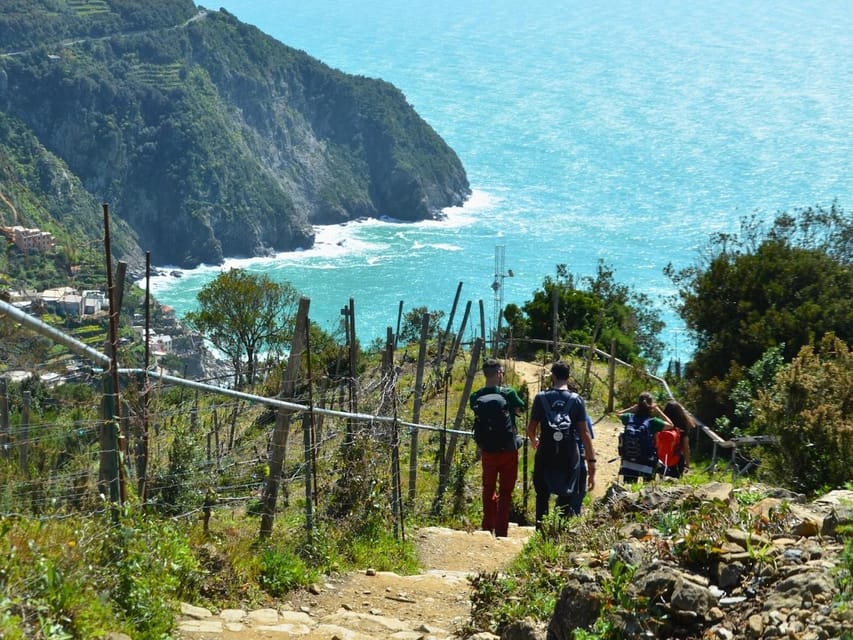
The route reaches Volastra before the final descent to Manarola. This village provides the social and culinary center of the outing, with a short aperitif in a traditional Mediterranean setting.
The tasting includes a local wine carrying the Triple A label. The three As refer to farmers, artisans, and artists, and the certification is presented as a marker of natural production and lower environmental and social impact.
You also taste typical Ligurian focaccia and other local products. This is not a full meal, so do not start the hike expecting lunch. Bring snacks if you normally need food during several hours of walking.
I like this pause because it ties the drink to the place where the vineyards are grown. You are tasting wine within the park, after seeing the terraces that make it possible. That feels more meaningful than a wine sample served in a generic tasting room.
The break also divides the hike into two manageable parts. You handle the climb first, rest in Volastra, then set out for the final descent toward Manarola.
The final descent into Manarola
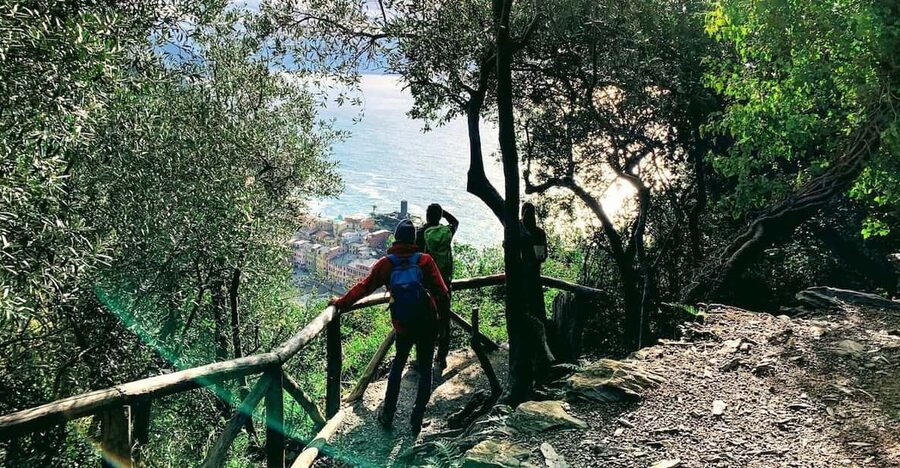
After Volastra, the path continues on a mostly level section before the descent begins roughly half an hour from Manarola. The downhill stretch brings you toward the village’s historic center and viewpoint.
Do not underestimate this part. Descending can be harder on knees and ankles than climbing, especially after several hours outside. If you have joint problems, walking poles are worth considering, and you should be honest with yourself about your ability before booking.
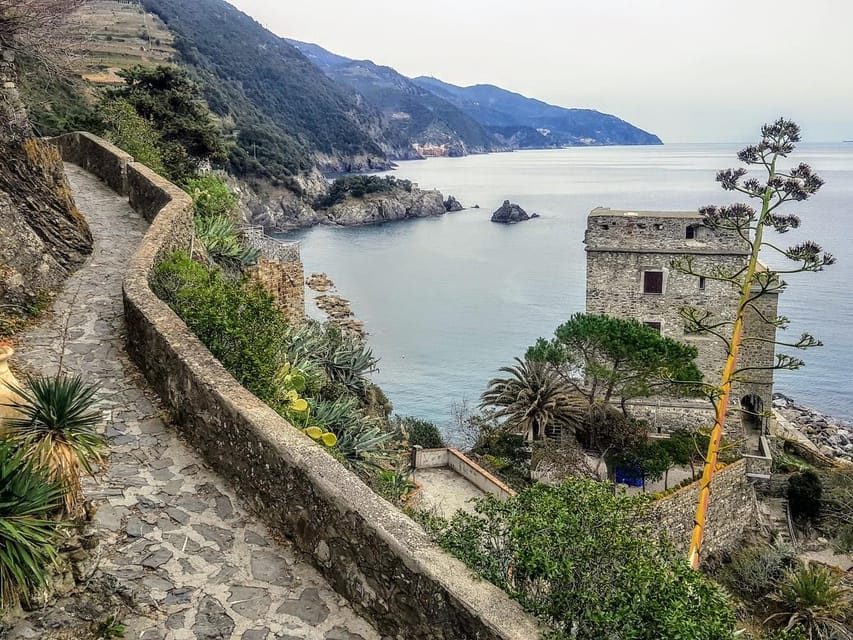
The route ends in Manarola, a useful place to finish because you are close to the train station and the village viewpoint. The arrival point is far more convenient than ending at an isolated trailhead.
The provided details describe the final stop as Manarola, while the meeting information refers to the activity ending back at the meeting point. For practical planning, treat the stated arrival point as Manarola’s historic center near the station, and confirm the exact end arrangement when booking.
What the guide adds to the walk
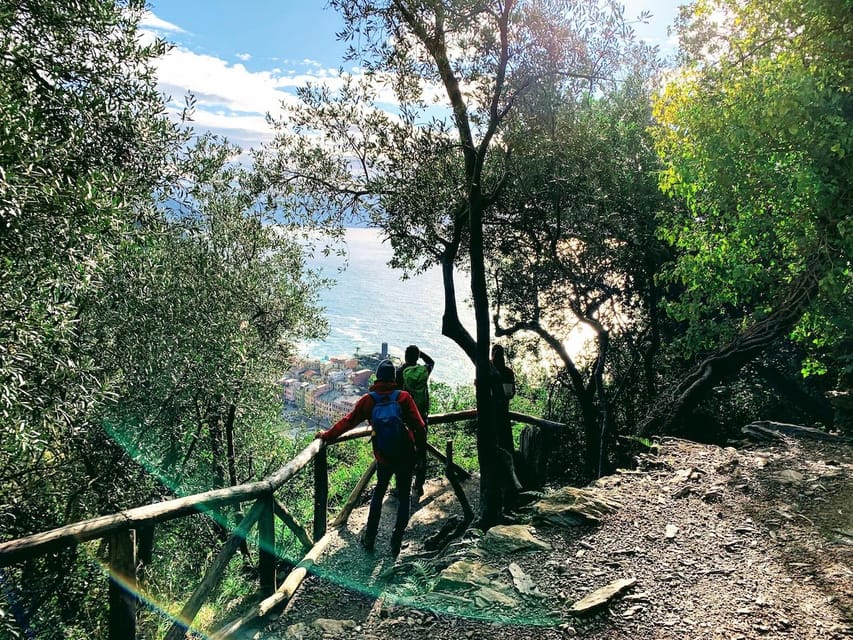
A good guide makes a major difference on this route. The trail itself provides views, but the guide explains why vineyards cover such steep slopes, how the park’s natural areas fit with its farming traditions, and what responsible walking looks like here.
The guide also manages pace and safety. This matters in a group where people may have different hiking backgrounds. Milo is described as patient and informative, while Marco is praised for making the walk feel worthwhile despite the effort.
That personal attention is one of the main strengths of this activity. You are not simply following a downloadable route. You have someone watching the group, answering questions, and helping you read the terrain.
The experience is offered in Italian and English. If you want detailed conversation in another language, this tour may not be the right match.
How hard is the Cinque Terre eco hike?
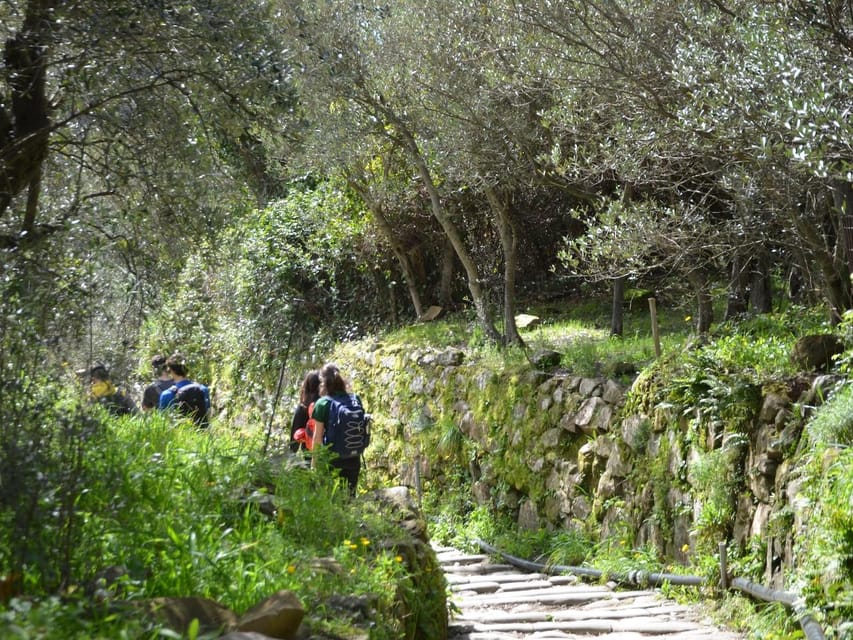
The official rating of trained beginner is fair, but it needs context. The distance is only 5 kilometers, yet the elevation change and steep terrain make the walk more tiring than the number suggests.
You should be comfortable with:
- A sustained uphill section during the first hour
- Uneven trails and exposed coastal terrain
- Heat and sun
- A long descent into Manarola
- Several hours of steady movement
The activity is suitable for people aged 10 and older, provided they can manage the heat and fatigue. It is not suitable for children under 10, pregnant women, wheelchair users, people with low fitness, or anyone over 95 according to the stated restrictions.
The most important warning concerns medical limits. If you have pulmonary or cardiac restrictions, this is not a sensible hike for you. People with orthopedic problems may still manage it, but the guide and medical advice should determine that choice, not optimism on the morning of departure.
What to pack for a comfortable morning
Pack lightly, since large bags and luggage are not allowed. A small backpack is the practical choice.
Bring:
- Hiking shoes
- At least two liters of water
- Snacks
- Sunscreen
- Sunglasses
- A hat with a visor
- A waterproof and windproof jacket
- A spare shirt
- Optional walking sticks
The water requirement is not a minor suggestion. There are uphill sections, and the tour can last longer than four hours depending on the group’s pace.
Wear proper trekking clothing rather than jeans or restrictive city clothes. The trail moves from open sun to wooded stretches, so layers give you more control over your comfort.
Is the $100.82 price fair?
At $100.82 per person, this is not the cheapest way to see Cinque Terre. You are paying for a certified local guide, a small group, trail management, interpretation of the park, and a tasting of natural wine and local food.
The value depends on how you would otherwise spend the morning. If you already know the trails and prefer to walk alone, you may find the price hard to justify. You would need only transport, water, and perhaps a snack.
If you want a safer, more informed route through unfamiliar terrain, the cost makes more sense. The guide handles route-finding, explains the area, and helps the group manage the climb. The Volastra tasting adds a local food and wine experience that you would not get from simply taking the train between villages.
The group cap of 15 also supports the price. This is not a huge coach excursion. You get a more personal outing, with a better chance to hear the guide and ask questions.
Free cancellation is available up to 24 hours before the start, and you can reserve now and pay later. Those terms help if your Cinque Terre schedule depends on weather or train plans, though the hike itself still requires suitable conditions and personal readiness.
Who should book this experience?
Book this if you enjoy active sightseeing and want to understand how Cinque Terre’s terraces were made and maintained. It suits a fit adult, an active family with children 10 and older, or anyone who prefers a guided route to wandering without context.
It is especially good for you if the combination of scenery, local wine, and environmental education sounds better than a quick village visit. The tasting is modest but well placed, and the walk gives you a stronger sense of the area’s farming traditions.
Think twice if you are looking for a gentle afternoon. The route has a steep first hour, a tiring descent, and exposure to heat. The distance may look short on paper, but elevation changes turn it into a proper hike.
Should you book the Corniglia to Manarola hike?
I would book this tour if you have solid basic fitness, proper shoes, and a real interest in both the coast and the people who shaped it. The best features are specific: the Corniglia to Manarola route, the vineyard terraces, the Volastra wine and focaccia stop, and the guide’s attention to conservation.
I would skip it if you have heart or lung restrictions, serious joint trouble, low fitness, or no desire to climb. For everyone else, this is a well-balanced way to see Cinque Terre on foot, with enough local flavor to make the effort worthwhile.
FAQ
Where does the hike start?
You meet outside Ristorante La Posada at Via Stazione 11 in Corniglia, at the end of the staircase that begins at Corniglia railway station.
Where does the hike finish?
The stated arrival point is Manarola’s historic center and viewpoint, close to Manarola railway station.
How long is the activity?
The advertised duration is four and a half hours. The actual walking time can range from about three and a half to five hours, depending on the group’s pace.
How far do you walk?
The route covers approximately 5 kilometers and includes about 654 meters of total elevation change.
What is included in the price?
The price includes the safety briefing, a local expert hiking guide, and a tasting of natural wine and local products, including typical Ligurian focaccia.
What should I bring?
Bring hiking shoes and a reusable water bottle holding at least two liters. Sunscreen, sunglasses, a hat, suitable trekking clothes, snacks, and a waterproof jacket are also recommended.
Just added around Italy
- From Taormina or Catania: Private Full-Day Mount Etna Hike★ 4.5 · 8 reviews
- From Taormina: Mount Etna Half-Day Evening Hike★ 5.0 · 4 reviews
- From Sorrento: Path of the Gods Guided Hike with Transfer★ 4.8 · 23 reviews
- From Sorrento: Skip-the-Line Guided Vesuvius Hike and Lunch★ 4.4 · 5 reviews
- From Sorrento: Path of the Gods Hike with Tasting Stop★ 4.9 · 29 reviews
- From Siracusa: Pantalica Nature Reserve Guided Hiking Tour★ 4.9 · 9 reviews
- From Orosei or Dorgali: Gorropu Canyon Guided Hike★ 4.9 · 40 reviews
- From Genna Silana: Canyon of Gorropu Guided Hike★ 3.7 · 3 reviews
Italy Hiking Tours, compared.
Cinque Terre Day Trip with Optional Hiking or Pisa
Read our review →
Florence: Cinque Terre Day Trip with Optional Hiking or Pisa
Read our review →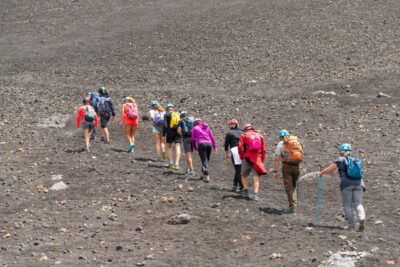
Mount Etna: Summit Guided Hiking Tour up to 3,400 m
Read our review →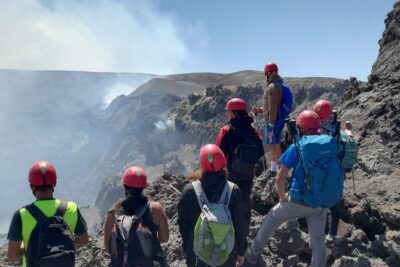
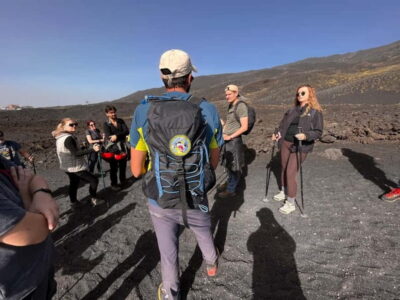
Catania: Mount Etna Adventurous Hiking Tour with Equipment
Read our review →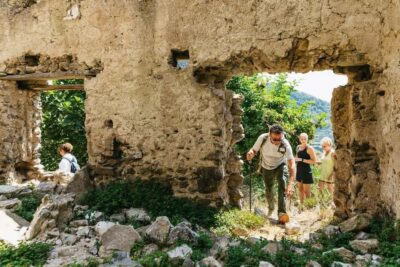
From Taormina: Etna Tour with Hiking, Cave Visit, & Tastings
Read our review →
Catania: Etna Nature Tour with Hiking, Cave Visit, & Tasting
Read our review →Browse the lists this tour appears in