
REVIEW · GLACIER HIKES
Franz Josef Glacier Heli-Hike
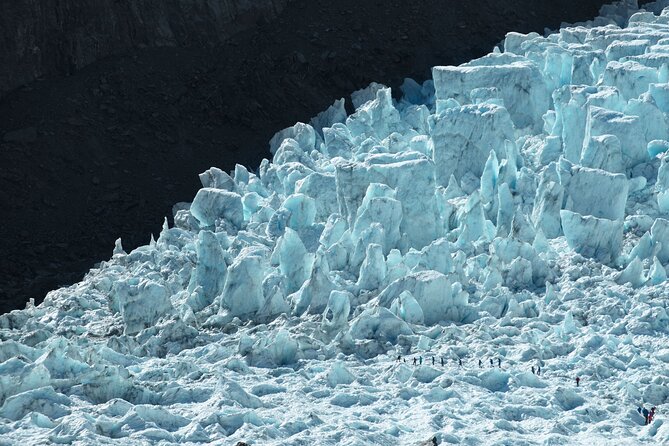
The Franz Josef Glacier Heli-Hike puts you on ice that cannot be reached by an ordinary trail. After a 10-minute helicopter flight over the Southern Alps, you land on the glacier, pull on crampons, and follow your guide through blue crevasses, pinnacles, seracs, and narrow ice passages.
I like the small groups of no more than 11 and the fact that warm clothing and boots are supplied, so you do not need to arrive with mountaineering gear. I also like the mix of practical ice work, geology, and Māori stories, with guides such as Sarah, Angus, Maya, and Hannah praised for making the outing both safe and lively.
The catch is the weather. Cloud and rain can cancel or delay the flight, sometimes at short notice, so you should leave room in your schedule for a second attempt. The walk is also moderately difficult, not a gentle stroll.
Key points to know before you book
- You land directly on Franz Josef Glacier: The flight gives you access to ice far beyond the regular valley viewpoints.
- The walk lasts about 2 hours 15 minutes: Expect steady movement, steps cut into ice, narrow gaps, and some climbing.
- All major gear is supplied: Gore-Tex jacket, over-trousers, hat, gloves, leather boots, and crampons are included.
- The guide shapes the experience: Look for clear safety instruction, glacier science, local stories, and a pace suited to the group.
- Weather controls the day: A rescheduled date or full refund is offered if poor weather cancels the trip.
- The $506.01 price buys access, not just transport: You are paying for the helicopter, specialist equipment, guides, safety systems, and time on private glacier ice.
Landing on a glacier reached only by helicopter
Franz Josef Glacier is not a place you simply walk up to and wander across. The tour begins at Franz Josef Glacier Guides in the village, at the Glacier Base on Cron Street. After check-in, you receive a safety briefing and get fitted with clothing and boots before heading to the helicopter.
The flight itself is short, about 10 minutes each way, but it is a major part of the appeal. You rise above the Southern Alps and see the glacier from above before landing on it. From the ground, a glacier can look like a distant river of ice. From the air, its bends, ridges, snowfields, and broken sections make much more sense.
The landing is designed to be gentle, but it still feels thrilling. You are stepping out onto moving ice in a place that ordinary sightseeing cannot reach. The operator describes Franz Josef as one of the fastest-moving glaciers in the world, so the ice formations change over time. That helps explain why no two outings follow exactly the same route.
Your flight back gives you another view of the mountains and surrounding country. Do not expect a long scenic helicopter tour. The flight is mainly your transport to and from the glacier, with the walking time providing the main event.
More Glacier Hikes in New Zealand
- Heli Hike Fox Glacier
★ 5.0 · 563 reviews - Franz Josef: 2.5 Hour Glacier Hike with Helicopter Transfer
★ 4.7 · 322 reviews - Fox Glacier: Up to 3 Hours Hike with Helicopter Transfer
★ 4.9 · 309 reviews
What the 2-hour 15-minute ice walk feels like
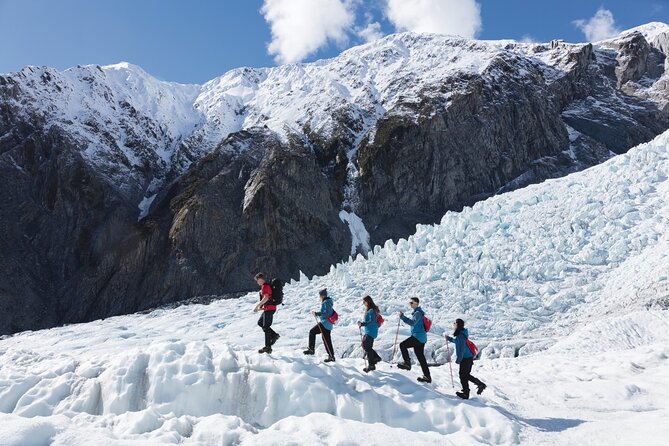
Once you land, your guide checks the group and helps everyone prepare for the walk. Crampons give you grip on the ice, but they do not remove the need for balance, strength, or care. You still need to lift your feet properly, watch where you step, and follow instructions closely.
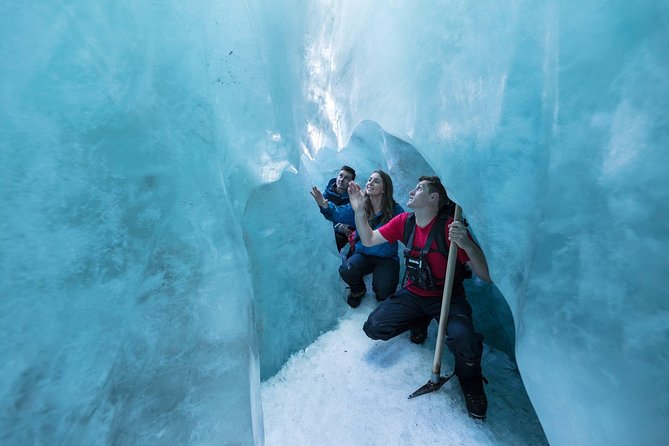
The route can include steps cut into the glacier, uneven ice, uphill and downhill sections, and tight passages between ice walls. One account described some gaps as narrow enough that you may need to turn sideways. That detail matters if you have limited agility or find confined spaces uncomfortable.
You may pass ice caves, pinnacles, seracs, deep blue crevasses, and mazes of sculpted ice. These formations are not fixed attractions. The glacier shifts, melts, cracks, and reshapes itself, so the guide selects a route suited to current conditions.
The pace is generally controlled rather than rushed. A steady pace helps the group stay together and gives the guide time to cut or improve steps, check ropes, and explain what you are seeing. Still, this is active walking. A person in their mid-60s completed the outing and found it challenging but enjoyable, while another participant left early because of the effort. Those details give you a fair picture: age alone is not the issue, but fitness and agility matter.
Bring water and, if you need them, small snacks. The walk can take real effort, especially with extra clothing and boots. Sunglasses and sunscreen are important even on a cool day, since bright light reflects strongly from the ice.
Ice caves, crevasses, and the story beneath your feet
The best guides do more than lead you from one formation to the next. They explain how the ice moves, how cracks form, and why the glacier looks different from one visit to another.
The supplied commentary covers local geography, glaciology, and Māori stories. That combination gives the walk more meaning. You are not just looking at blue ice as a pretty backdrop. You are learning how pressure and movement shape the glacier, while also hearing cultural stories connected with the region.
Angus was praised for combining formal glaciology with Māori traditions. Guides such as Sarah, Alex, Ruby, Heather, Hannah, Tom, and Maya were also singled out for clear instruction, good humor, and careful group management. Your own guide will vary, but the important point is that the quality of the outing depends heavily on that person. A strong guide sets a safe pace, watches the group, and turns strange ice shapes into something you can understand.
The route may include short sections through narrow ice corridors. These are often the most memorable parts, but they can also be the most demanding. You should not book this expecting to stand still for photographs all afternoon. You will stop for explanations and pictures, but the experience is built around walking.
Some groups have enjoyed playful touches, including flavored snow cones made from glacier snow. That is a small detail, but it captures the tone of the outing: serious safety work mixed with a sense of fun.
Clothing and equipment supplied at the base
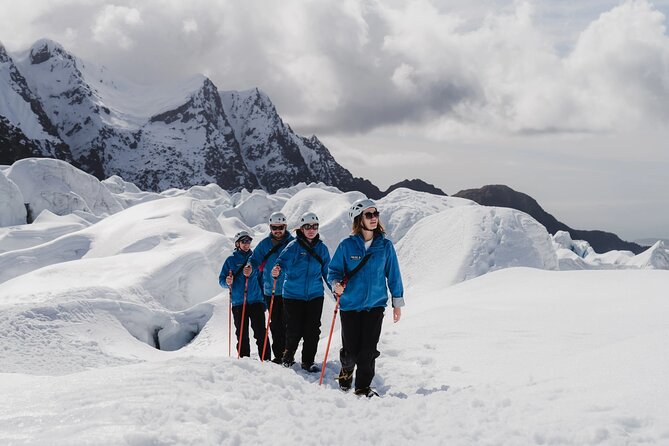
You do not need to own crampons or pack heavy alpine clothing. The tour supplies:
- Gore-Tex jacket
- Gore-Tex over-trousers
- Woolen hat
- Gloves
- Leather boots
- Crampons
You should still arrive prepared. Wear two to four warm upper-body layers, using clothing that dries quickly. Quick-drying trousers or shorts are recommended, while jeans are a poor choice because they become cold and heavy when wet.
Pack sunglasses, sunscreen, water, and a camera. The supplied outer layers protect you from cold and wet conditions, but they do not replace sensible clothing underneath. You may feel surprisingly warm while walking, even in winter, yet conditions can change quickly on the glacier.
The boots and crampons are especially useful for anyone who has never walked on ice. The gear does not turn the outing into an easy walk, but it gives you proper footing and removes the need to buy or rent specialist equipment separately.
Same trailhead, a different sort of day:
- Queen Charlotte Track: Cruise & Self-Guided Hike from Picton
★ 4.8 · 383 reviews - Rotorua Hiking: Mt Tarawera Guided Volcanic Crater Experience
★ 5.0 · 283 reviews - Volcanic Valley Self Guided Walking and Hiking at Waimangu
★ 4.5 · 248 reviews - Mount Cook: 3-Hour Tasman Glacier Helicopter Ride and Hike
★ 4.9 · 235 reviews
Timing, group size, and what the four-hour day includes
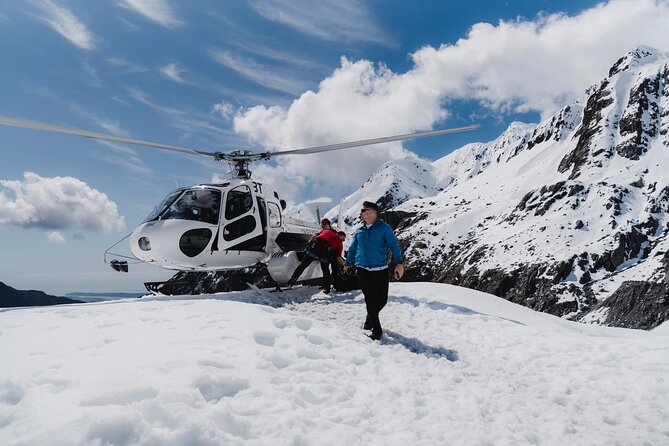
The full outing takes about four hours, including preparation, helicopter flights, and time on the glacier. The guided ice walk itself lasts about 2 hours 15 minutes. You can choose a morning or afternoon departure.
The group limit is 11 people. That is a useful size for a glacier walk. The guide can keep track of everyone, answer questions, and adjust the pace more easily than with a large coach group. It also helps at narrow ice features, where a crowd would slow everything down.
The meeting point is central in Franz Josef village, and hotel pickup and drop-off are not included. Plan to get yourself to the base on time. After the return flight, the activity ends back at the same meeting point.
There is also an extended option. The standard trip has a minimum age of 10, while the 5.5-hour extended trip requires participants to be at least 14. The longer outing will suit fit people who want more time on the ice, but you should choose based on your actual ability rather than the appeal of a longer itinerary.
Is $506.01 good value?
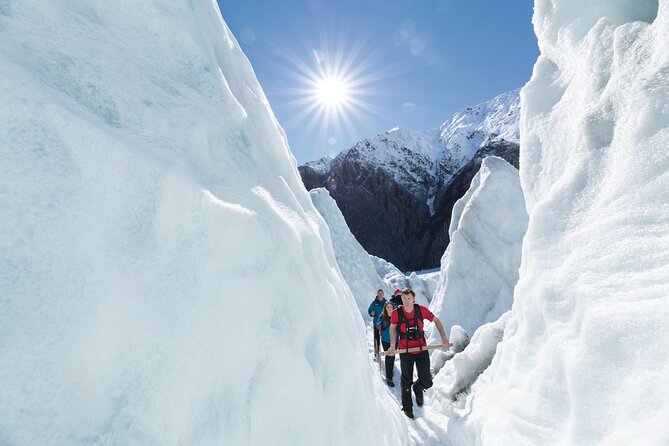
At $506.01 per person, this is expensive by normal sightseeing standards. It is not simply a short helicopter ride followed by a photo stop. The cost includes return flights, specialist clothing, boots, crampons, an expert ice guide, safety management, and access to a section of Franz Josef Glacier reached only by helicopter.
I think the price makes sense if walking on a glacier is a central goal of your South Island trip. You are paying for access to an environment that changes constantly and requires trained staff, aircraft, equipment, and careful route planning.
The value is less clear if you mainly want a quick mountain view. The flight is only about 10 minutes each way, and weather can prevent the main activity from going ahead. If you have limited time or a tight budget, a ground-based glacier viewpoint may be a better fit, though it will not give you the same close contact with the ice.
A good way to protect the value of the booking is to schedule it early in your Franz Josef stay. That gives you a chance to move to another day if cloud or rain closes the route. The operator offers a new date or a full refund when poor weather cancels the trip, but that does not restore a missed holiday day.
Weather is part of the adventure, and part of the risk
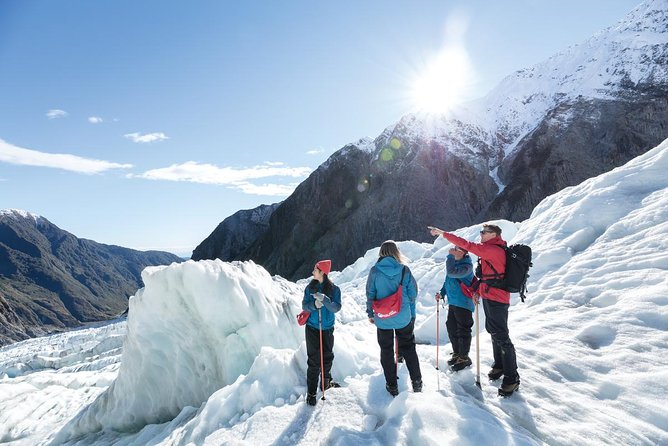
Helicopter glacier trips depend on safe flying conditions. Rain, cloud, wind, and changing alpine weather can delay or cancel the outing. One group waited two hours before the conditions opened enough to fly. Other departures were moved to the next day, while some were cancelled altogether.
This is not a flaw in the operation. The helicopter cannot safely fly through unsuitable conditions, and the glacier route may also change with the weather. Still, you need to plan around that fact.
Stay in Franz Josef for at least two nights if the heli-hike is a high priority. That gives you a better chance of moving the booking when needed. If you have only one available morning and a fixed onward connection, the risk of missing the main event is much higher.
The standard cancellation terms allow a full refund if you cancel at least 24 hours before the start time. Changes or cancellations inside that period are not refundable under the stated policy. If the operator cancels because of weather, you are offered another date or a full refund.
Who will enjoy this most?
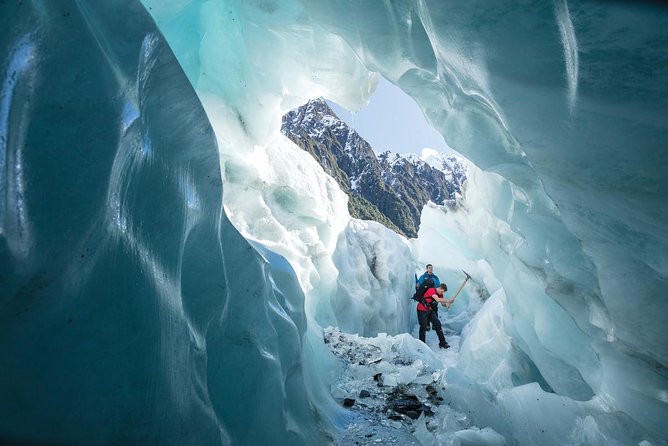
You should consider this trip if you:
- Have moderate fitness and can walk steadily for more than two hours
- Feel comfortable on uneven ground and steps
- Want an active experience rather than a viewing platform
- Enjoy learning how natural features form
- Can allow flexibility for weather changes
- Are happy to spend heavily for a rare alpine experience
You should think carefully if you have poor balance, limited agility, trouble with narrow spaces, or little tolerance for cold and wet conditions. The guide can control the pace, but the operator may curtail or cancel participation if your fitness is not suitable. Refunds are not available simply because you cannot take part on the day due to inadequate fitness.
The minimum weight is 35 kilograms and the maximum is 115 kilograms per person. The stated passenger total weight limit is 254 pounds. Pregnant women cannot join for health and safety reasons. Children must be accompanied by an adult.
Practical ways to make the day better
Book the heli-hike near the beginning of your stay, not on the final morning before a flight or long drive. Check the forecast when you can, but remember that alpine weather can change after you book.
Wear layers instead of one thick coat. You can remove a layer while walking and add it again during stops. Avoid cotton and jeans, and keep your hands protected even if the village feels mild.
Use the supplied gear carefully. Ask staff to adjust boots and crampons if anything feels loose before the helicopter departs. Once on the ice, follow the guide’s instructions about foot placement and spacing.
Do not treat the flight as the whole experience. The aerial views are excellent, but the reason to pay this price is the time spent walking among the formations. Give yourself enough energy for the return journey, and do not skip water or a small snack.
Should you book the Franz Josef Glacier Heli-Hike?
Book it if you want a close, active encounter with Franz Josef Glacier and can accept both the price and the weather risk. The helicopter access, small group, supplied equipment, and roughly two hours on the ice make this far more than a scenic flight.
I would choose it for a flexible South Island itinerary, especially with two nights in Franz Josef and a backup plan. I would skip it if you need a guaranteed departure, dislike uneven walking, or mainly want a quick view from the air. For fit visitors who want to step into blue ice caves, cross a living glacier, and hear the science behind it, this is one of the strongest reasons to stop in Franz Josef.
FAQ
How long does the Franz Josef Glacier Heli-Hike take?
The experience lasts about four hours in total. This includes preparation, two helicopter flights of about 10 minutes each, and approximately 2 hours 15 minutes of guided walking on the glacier.
What equipment is included?
The tour supplies a Gore-Tex jacket, over-trousers, woolen hat, gloves, leather boots, and crampons. You should still bring suitable layers, sunglasses, sunscreen, water, and a camera.
How fit do I need to be?
You need a moderate level of physical fitness. The walk includes uneven ice, steps, changes in height, and possibly narrow passages. The operator may curtail or cancel participation if your fitness is not suitable.
What is the minimum age?
The minimum age is 10 for the approximately 2.5-hour trip. The extended 5.5-hour trip has a minimum age of 14. Children must be accompanied by an adult.
What happens if the weather cancels the trip?
If poor weather causes the operator to cancel, you are offered another date or a full refund. You should allow extra time in your itinerary because weather delays and cancellations can happen at short notice.
Where does the tour start and finish?
You meet at Franz Josef Glacier Guides, Te Ao Marama, Glacier Base, 63 Cron Street, Franz Josef. The activity ends back at the meeting point, and hotel pickup and drop-off are not included.
Just added around New Zealand
- Rangitoto Island: Sea Kayak & Summit Hike Day Trip★ 4.8 · 31 reviews
- From Queenstown: Franz Josef Glacier Hike & Scenic Flight★ 5.0 · 25 reviews
- From Queenstown: Mount Cook Heli-Hike and Bus Tour Combo★ 4.8 · 42 reviews
- Abel Tasman National Park: Cruise, Kayak, & Hike Tour★ 5.0 · 9 reviews
- Fiordland: Jet Boat & Nature Walk Experience from Te Anau★ 4.9 · 97 reviews
- Mou Waho Island: 3-Hour Cruise and Guided Nature Walk★ 4.9 · 66 reviews
- Mt Cook Small Group Tour & Heli Hike Combo from Queenstown★ 5.0 · 64 reviews
- Routeburn Track Guided Hike (Full Day)★ 5.0 · 27 reviews
Glacier Hikes, compared.
Glacier Hike, Waterfalls and Black Sand Beach
Read our review →
Sólheimajökull: Blue Ice Glacier Hike near Vík (Easy)
Read our review →
Skaftafell National Park: Falljokull Glacier Advanced Hike
Read our review →
Jökulsárlón: Vatnajökull Glacier Guided Hiking Tour
Read our review →
Browse the lists this tour appears in