
REVIEW · GREECE
Delphi: Ancient Footpath Delphi Hiking
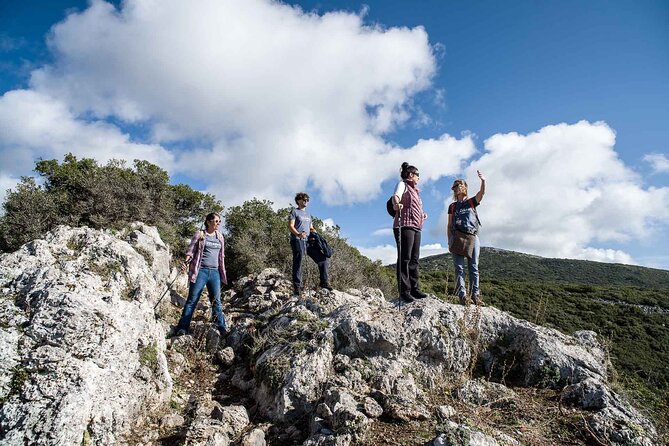
The most memorable part of this Delphi outing is the ancient footpath itself, a route once used by worshipers of Pan traveling between Delphi’s sacred temples and the Corycean Grotto. You walk beneath Mt Parnassos, through forest and open mountain country, then descend toward olive groves and the Corinthian Gulf. I like the small group of no more than eight and the way guides such as Hélène, Eleni, and Hilda connect mythology with plants, farming, and modern Greek life.
I also like the local snack stop, which can include feta, olives, bread, cheesecake, tea, and other regional foods. It gives the hike a human touch rather than making it only a workout. The main drawback is the terrain: this is a rocky downhill hike requiring strong physical fitness, and the tour does not include entry or guiding at the Delphi archaeological site. Plan a separate visit for the ruins.
Key points to know before you go
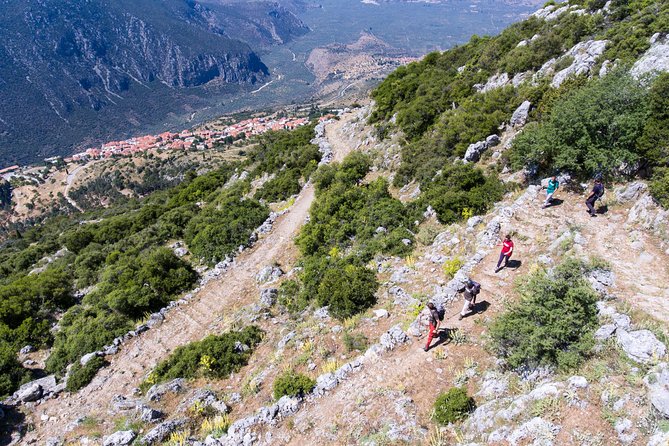
- Ancient E4 route: Follow a historic path from the Mt Parnassos area toward Delphi, linked with worship of Pan and the Corycean Grotto.
- Small group size: The maximum is eight people, allowing guides to adjust the pace and answer questions.
- Mostly downhill walking: The descent is scenic but can be hard on knees and ankles, especially on loose, rocky ground.
- Local food stop: Snacks may feature homemade feta, olives, bread, cheesecake, tea, and other Greek products.
- Nature and mythology together: Guides explain local plants, animal life, ancient stories, and present-day traditions.
- Separate ruins visit needed: Archaeological-site entry, museum entry, and guiding at the ruins are not part of the hike.
Walking Delphi’s ancient route down Mt Parnassos
This is not a stroll around the paved archaeological site. It is a proper mountain walk along part of the E4 European trail, beginning high on the Livadi plateau at about 1,200 meters and descending through the slopes of Mt Parnassos toward Delphi.
The route carries a strong sense of place. In ancient times, worshipers of Pan used this footpath when traveling from the temples of Delphi to the Corycean Grotto for sacred ceremonies. You are not simply moving from one viewpoint to another. The path gives you a physical link between the religious center below and the mountain setting above it.
The walk is described as roughly four hours and thirty minutes. Actual outings in this area can take longer or shorter depending on the route, pace, stops, and group. One account describes a six-kilometer descent taking three to four hours because of frequent pauses, while other outings with the same team have been shorter. Use the advertised four-and-a-half-hour duration as your planning guide, not as a promise that every minute will be spent walking.
The direction matters. You begin at altitude and lose height as you go, which means there is no long uphill climb built into the main route. That sounds easy, but downhill walking can be demanding in its own way. A rocky descent asks your knees, ankles, and balance to work constantly.
A few more hikes around Greece worth a look
- From Chania/Rethymno: Samariá Gorge Guided Hike with Pickup
★ 4.5 · 1,010 reviews - From Chania: Samaria Gorge with Professional Hiking Guide
★ 4.6 · 720 reviews - Meteora Small Group Hiking tour with Transfer and Monastery Visit
★ 5.0 · 484 reviews
Forest, wild plants, and views toward the Gulf
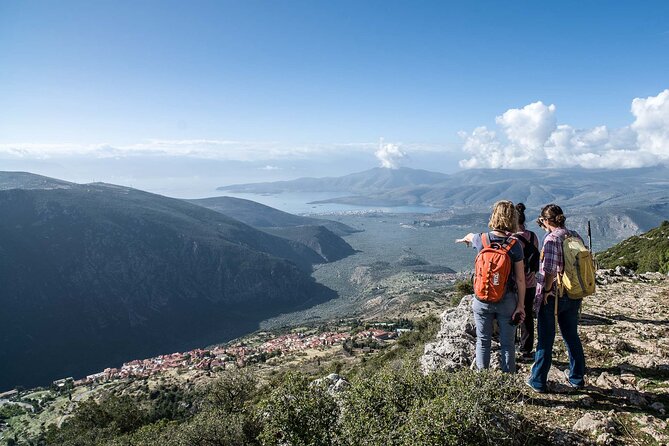
The first part of the route leads through lush forest on Mt Parnassos. The trees offer shade and a cooler setting than the exposed ruins below, though conditions will vary by season and weather. As the path opens, the views stretch toward the olive-growing valley and the Corinthian Gulf, with the mountains of the Peloponnese forming the distant backdrop.
The scenery is one of the strongest reasons to add this hike to a Delphi stay. The archaeological site gives you columns, walls, and sacred terraces. This walk shows the setting that made Delphi feel so powerful in the first place: high mountain slopes, open views, deep valleys, and a route joining the wild country to the sanctuary.
Guides bring attention to details you might otherwise pass. Hilda has pointed out wild thyme, wild asparagus, wild onions, berries, and other plants used by local people for food or traditional remedies. That sort of explanation adds value because the trail becomes more than a pretty walk. You begin to notice what grows beside the path and how people have made use of the land.
You should not expect a formal botany lesson. The appeal is the mix of short explanations, local stories, and pauses to look around. Hélène has been praised for linking nature with mythology, while Eleni and Hilda have also led walks with a strong focus on local plants and customs. The guide you receive may vary, and the tour is offered in English.
The snack stop is part of the experience
Snacks are included, and this is more than a packet of crackers at the end of a hike. The food described on these outings includes local cheeses, homemade sheep feta, olives, bread, cheesecake, tea, and a local spirit on some occasions.
The exact selection is not guaranteed, so think of it as a regional snack rather than a full meal. You should eat breakfast before setting out, especially since the route takes several hours and requires steady downhill effort. Lunch is not included, and alcoholic drinks are specifically excluded from the tour inclusions.
I like the pause because it slows the day down. You can sit among the olive groves, look across the valley, and hear about olive cultivation while eating food connected to the region. It is a better way to understand local life than simply being told that olives are important to Greece.
Dietary needs can be accommodated if you notify the operator in advance. Vegan, vegetarian, allergy-friendly, and gluten-free requests are welcome. Give notice when booking rather than waiting until the morning of the hike.
Guides who connect Pan, plants, and present-day Delphi
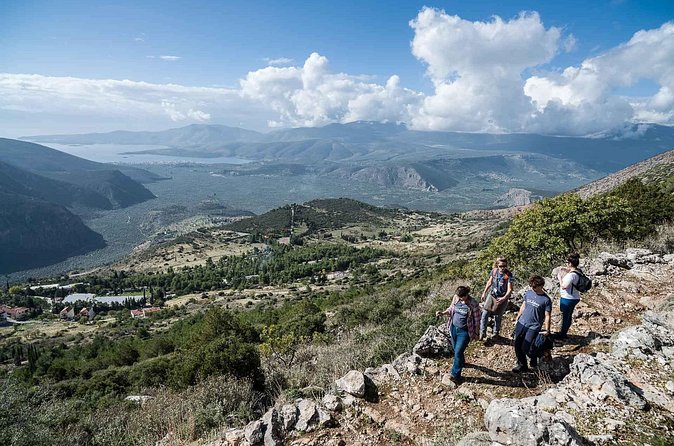
The guide is central to this experience. Hélène has led walks in English and French and is described as combining mythology with information about nature. Hilda has guided outings focused on flora, fauna, local stories, and food. Eleni has handled arrangements and guided walks, while Eleni and Giorgos have also supported self-guided trekking with GPS files.
The stories help give the trail shape. Pan was associated with wild places, shepherds, music, and fertility, and his worshipers used the route toward the Corycean Grotto. The experience does not take you only through an ancient storybook. Guides also discuss local farming, the olive groves, modern life in the region, and the plants that still matter to residents.
That balance is important. A guide who talks only about ancient Greece can make the modern countryside feel like scenery. A guide who talks only about plants can miss the meaning of the old route. Here, the stated focus brings both together.
Because the group is capped at eight, you should have a better chance to ask questions or mention a concern about pace. A small group also makes the snack stop feel more relaxed. It does not guarantee a private tour, though, and the pace still depends on the people booked that day.
Same trailhead, a different sort of day:
- From Heraklion: Samaria Gorge & Agia Roumeli Hiking Day Trip
★ 4.4 · 422 reviews - Samaria Gorge Hiking from Chania with Professional Hiking Guide
★ 4.5 · 372 reviews - From Rethymno/Chania: Imbros Gorge Hike
★ 4.4 · 353 reviews - From Chania: Samaria Gorge Hike with Local Mountain Guide
★ 4.5 · 282 reviews
What the rocky descent feels like
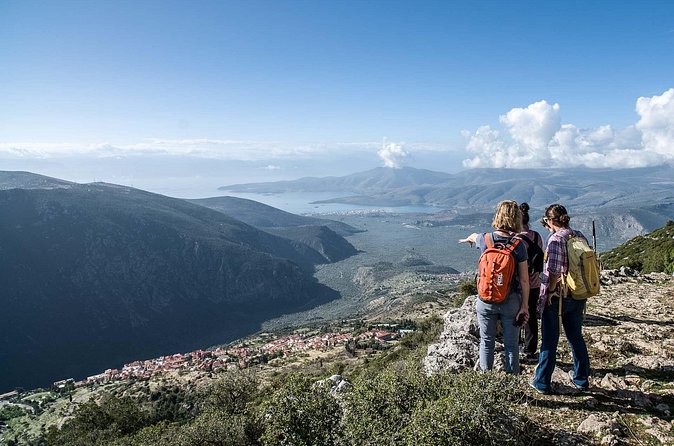
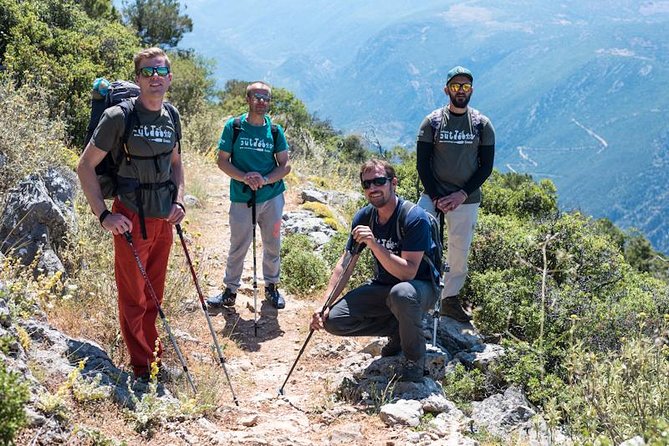
The route is described as relatively easy by mountain-hiking standards, but it is not effortless. The path can be rocky, and loose or uneven ground requires attention. One family found that hiking poles helped save their knees, and the guide provided poles for use. You should ask in advance if poles will be available for your departure, rather than assuming they are included every time.
Good footwear matters. Wear sturdy hiking shoes with reliable grip and ankle support. If you have ankle problems, bring any brace you normally use. The terrain is not suited to flimsy city shoes, smooth sandals, or anyone expecting a paved walk.
Strong physical fitness is required. That does not mean you need to be an expert mountaineer, but you should be comfortable walking for several hours on uneven ground. The downhill direction is helpful for stamina, yet it can be tiring for knees and ankles. Take the warnings seriously if you have joint problems or rarely hike.
Weather also affects the outing. The experience requires good weather, and poor conditions can lead to a different date or a full refund. Summer heat is another consideration. A July hike can still be pleasant, but carry what you need for sun and heat, and start with a solid breakfast.
Service animals are allowed. For other accessibility questions, ask the operator before booking, since the rocky trail and mountain descent may not suit every mobility level.
How the meeting point and archaeological site fit together
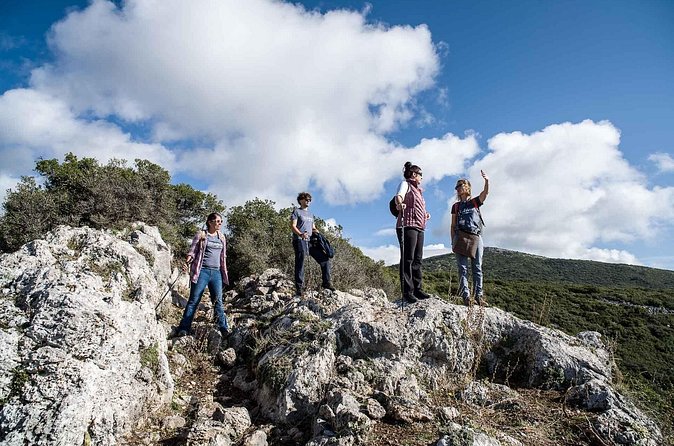
The listed meeting point is the Delphi Archaeological Museum, and the activity ends back at the meeting point. At the same time, the route description places the hike’s walking start on the Livadi plateau at about 1,200 meters. Since the supplied details do not explain the transfer between these points, confirm the exact morning meeting and transport arrangements before you pay.
This matters because the hike is not a guided tour of the Delphi ruins. You do not receive archaeological-site admission, museum admission, or a guided visit inside the sanctuary. If you want to see the Temple of Apollo, the theater, the stadium, and the museum, buy those tickets separately and allow extra time.
The walk may finish at or around the Delphi meeting point, but do not assume the guide will then escort you through the ruins. I would schedule the archaeological site for a separate block, ideally when your legs are fresh if detailed exploration is a priority.
This separation can be a benefit. You get one morning for nature and local stories, then another period for the formal remains. It also keeps the hike from becoming a rushed combination of walking and sightseeing.
Is $96.12 a fair price?
At $96.12 per person, this is not the cheapest way to see Delphi. The price makes more sense if you value a small group, a local guide, organized route support, snacks, and liability insurance.
The maximum of eight is important. You are paying for a more personal outing than a large bus tour, with a better chance of stopping for questions and adjusting the pace. The food stop also adds something tangible, especially when it includes local feta, olives, bread, and other products rather than generic refreshments.
Still, the price does not cover everything. You must pay separately for the archaeological site and museum, and lunch is not included. If your only goal is to see the ruins, spend your money on admission and a self-guided walk around Delphi instead. If you want a half-day on the mountain with a guide, the value is stronger.
The experience is booked around 60 days ahead on average, so popular dates may fill early. That is especially worth noting if you have only one day in Delphi or need a certain date for a larger Greek itinerary.
Who should book this Delphi hike?
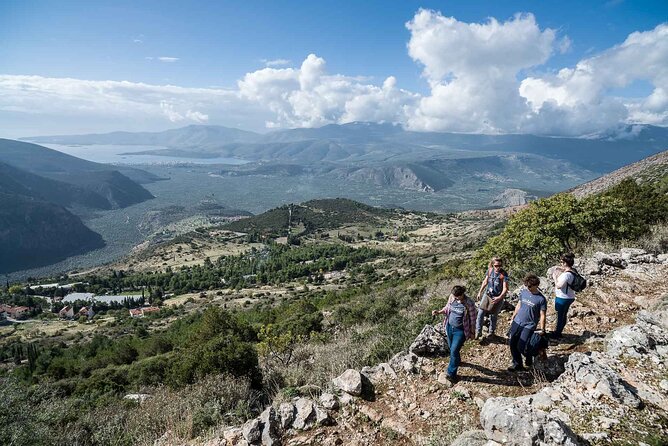
I would choose this hike if you want active time between visits to ancient sites. It suits hikers who enjoy a scenic descent, local food, plant stories, and mythology in the same outing. It is also a good choice for couples, families with active older children, and anyone willing to give Delphi an extra half-day.
It may suit less active families if everyone can manage several hours on rocky ground and the pace is comfortable. Do not book it for young children or reluctant walkers simply because the route is downhill. Downhill does not mean easy.
You should also consider it if you have already seen the main archaeological site and want a different view of the region. The olive groves, mountain forest, and Gulf outlook show Delphi as a living place rather than only an ancient monument.
I would skip it if you need a fully accessible route, dislike uneven paths, have serious knee or ankle concerns, or want a tour focused on the ruins themselves. I would also skip it if you have no time beyond a quick stop in Delphi, since the hike deserves a separate block in your schedule.
Practical booking advice
Free cancellation is available until 24 hours before the start time for a full refund. Cancellations or changes made less than 24 hours ahead are not refunded or accepted, and all times follow local time in Greece.
The tour requires a minimum number of participants. If that number is not reached, or if bad weather forces cancellation, you should be offered another date or experience, or a full refund.
Tell the operator about dietary needs in advance. Bring sturdy footwear, water, sun protection, and a charged phone. Since GPS tracks have been useful on related self-guided routes in this area, it is sensible to ask how route navigation is handled on your particular departure, especially if the guide is not walking every section with you.
Should you book the Ancient Footpath Delphi Hiking tour?
Book it if you want Delphi to be more than a quick stop at the Temple of Apollo. The combination of mountain walking, Pan mythology, local plants, olive groves, and a Greek snack stop gives you a fuller sense of the region.
The key test is physical. You need to be comfortable with a long, rocky descent and should plan a separate visit for the archaeological site. If that suits your interests and fitness, $96.12 buys a small-group experience with a clear local character. If you want ruins only, choose a site visit instead.
FAQ
How long does the Delphi hike last?
The advertised duration is approximately 4 hours and 30 minutes.
How many people can join the tour?
The group has a maximum of eight participants.
Where does the tour meet?
The listed meeting point is the Delphi Archaeological Museum in Delphi, Greece. The activity ends back at the meeting point.
Is the archaeological site included?
No. Entrance fees to the archaeological site and museum are not included, and the tour does not provide guiding inside either location.
What food is included?
Snacks are included. Depending on the outing, these may include local cheeses, feta, olives, bread, cheesecake, or tea. Lunch and alcoholic beverages are not included.
What level of fitness is needed?
You should have a strong physical fitness level and be comfortable walking for several hours on a rocky, mostly downhill mountain path.
Can dietary needs be accommodated?
Yes. Vegan, vegetarian, allergy-friendly, and gluten-free requests are welcome, but you need to notify the operator in advance.
Just added around Greece
- Ridomo Gorge hike to MANA spring★ 5.0 · 15 reviews
- Hiking around Navarino Bay★ 5.0 · 9 reviews
- Hiking around Kardamyli★ 5.0 · 12 reviews
- Full-Day Hiking Mount Taygetos Summit with Picnic★ 5.0 · 2 reviews
- Hiking Menalon & Lousios gorge★ 5.0 · 8 reviews
- Imbros Gorge Hiking Day Trip with transportation★ 4.5 · 20 reviews
- Full Day Hiking at Samaria Gorge&Agia Rumeli Beach from Heraklion★ 4.0 · 29 reviews
- Sarakina Gorge hiking & swim Adventure – Jeep Safari South Crete★ 5.0 · 21 reviews
Greece Hiking Tours, compared.
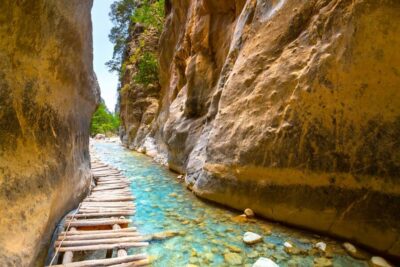
From Chania/Rethymno: Samariá Gorge Guided Hike with Pickup
Read our review →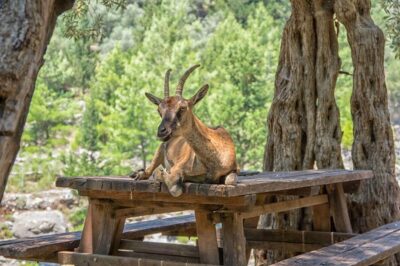
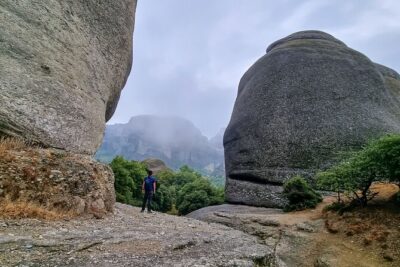
Meteora Small Group Hiking tour with Transfer and Monastery Visit
Read our review →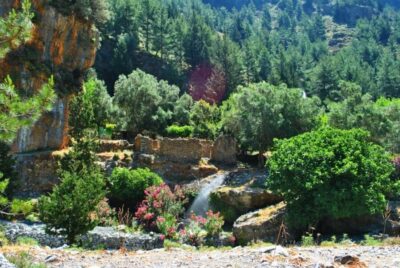
From Heraklion: Samaria Gorge & Agia Roumeli Hiking Day Trip
Read our review →
Samaria Gorge Hiking from Chania with Professional Hiking Guide
Read our review →
Kalabaka: Meteora Small-Group Hiking Tour w/ Monastery Visit
Read our review →Browse the lists this tour appears in