
REVIEW · ITALY
Mount Etna: Central Crater Guided Hike for Advanced Hikers
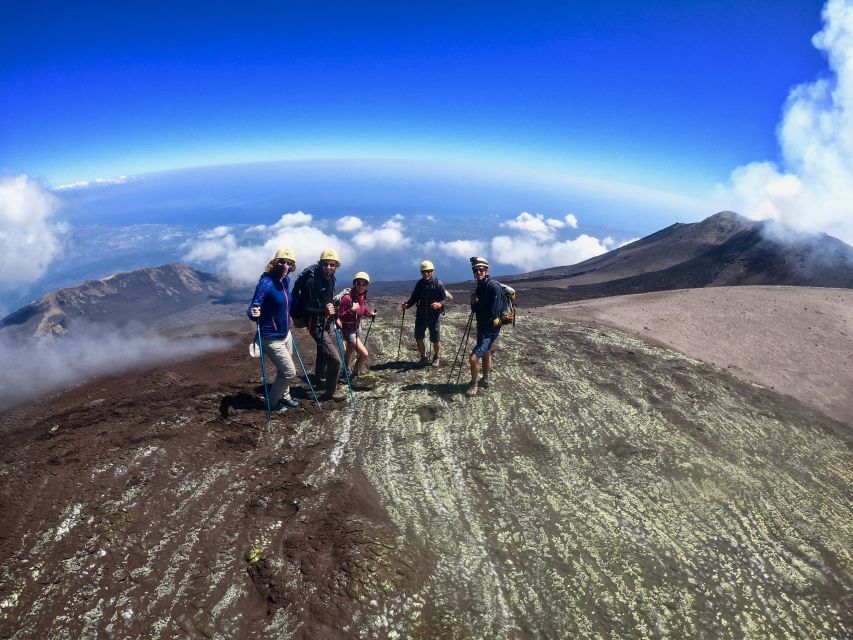
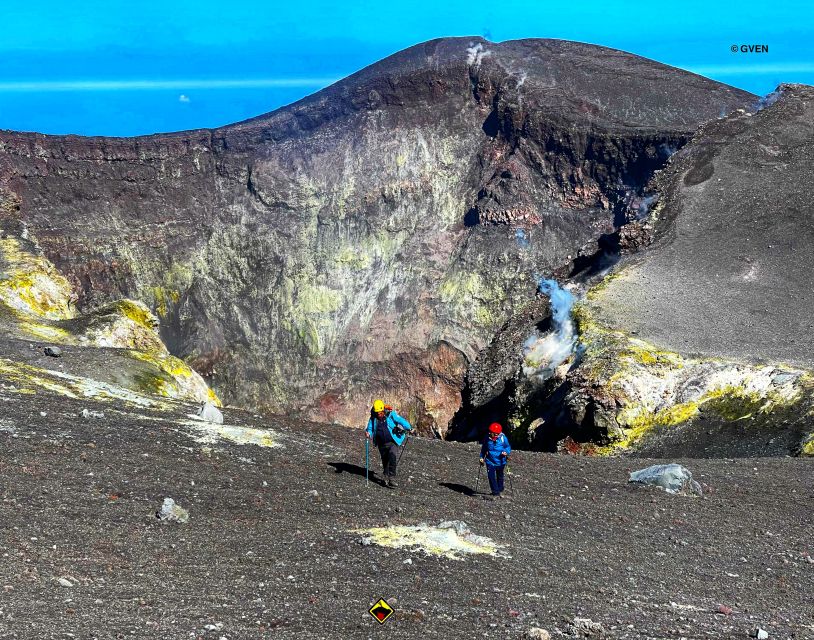
Mount Etna’s summit is not a gentle viewpoint reached by a short walk. This is a serious high-altitude hike to the 3,315-meter Central Crater, across loose volcanic slag, ash, and old lava flows. At the top, you look into Etna’s active crater system, with gas, fumaroles, and strange yellow and red mineral deposits.
I like two things in particular: the small group, limited to 10 people, and the scientific guidance from a licensed volcanological guide. Guides including Edo, Vincenzo, and Daniele have been praised for explaining Etna clearly and keeping the group together. The main caution is the 1,500-meter descent, which can be tougher than the climb and is a poor match for knee or joint problems.
Key points to know before climbing Etna
- The summit is genuinely high: You reach about 3,315 meters, where cold, wind, thin air, gas, and changing volcanic conditions can all affect the outing.
- The hike covers about 12 kilometers: Expect roughly 5 kilometers uphill and 7 kilometers downhill, with a total duration of 5 to 6 hours.
- The route starts on Etna’s north side: You meet at Chiosco Bar Mareneve near Piano Provenzana, then use an off-road vehicle to reach about 2,825 meters.
- The descent is the real test: You lose around 1,500 meters of height, unless you pay for an optional vehicle ride down.
- Equipment is available: Trekking poles, helmets, hiking shoes, extra socks, warm jackets, and backpacks are included.
- The price is not all-inclusive: The $130.28 guide fee does not include the uphill or downhill off-road transport, parking, lunch, or water.
What this Etna hike is really like
This outing gives you a more demanding and less conventional way to see Mount Etna. You are not simply riding to a viewpoint, taking a few photographs, and returning to town. You walk through a broad field of black volcanic material, climb toward the summit, follow part of the crater edge, and descend through channels on Etna’s northeast side.
The route begins at about 1,800 meters near Piano Provenzana. An off-road vehicle carries you up an 8-kilometer road to around 2,825 meters. That ride saves your legs for the main climb, but it is an extra cost. The uphill transfer costs €50 per person, paid locally.
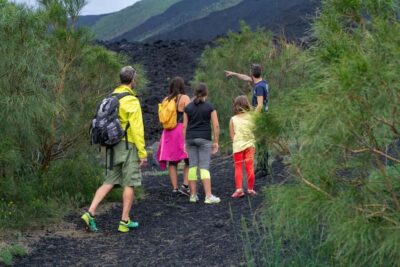
From the drop-off point, you walk about 5 kilometers toward the Central Crater. The ground is made of volcanic slag, ash, and large volcanic bombs. These are not smooth mountain paths. You will spend much of the climb on loose material, so every step takes more effort than the distance suggests.
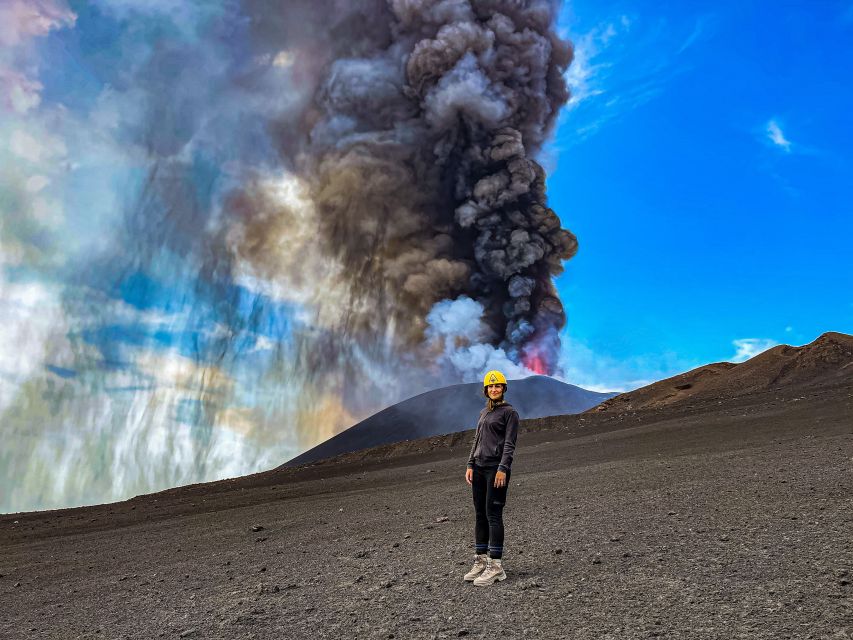
At the rim, your guide explains Etna’s summit craters, recent activity, gas emissions, and the way the volcano changes over time. The exact view depends on weather and the amount of volcanic gas. On a clear day, you may see far across Sicily, but the summit can also be cold, windy, cloudy, or partly hidden by fumes.
More Guided Day Hikes in Italy
- Mount Etna: Summit Guided Hiking Tour up to 3,400 m
★ 4.8 · 4,792 reviews - From Sorrento: Path of the Gods Guided Hike with Transfers
★ 4.8 · 530 reviews - Guided Day Hike on the Path of the Gods with Sorrento Transfer
★ 5.0 · 265 reviews
Meeting at Chiosco Bar Mareneve
The meeting point matters. You need to go to Chiosco Bar Mareneve di Ferraro Giuseppa, not Chiosco Bar Etna Nord. It is near the chairlift used by skiers in winter and is described as the second house among four buildings in the parking area.
This is a useful place to arrive prepared. You can sort out clothing, food, and water before the group leaves. Parking costs €3 for the full day, paid before or after the hike.
The group needs at least eight participants for the activity to run, with a maximum of 10 people. That is a fairly tight size for a mountain outing. You receive more direct attention than you would in a large coach group, and the guide can adjust the pace when someone needs a pause.
A small group does not make the hike easy. It simply makes the organization more personal and helps the guide keep everyone together.
The 30-minute off-road ride to 2,825 meters
The first transport section takes about 30 minutes. A special 4×4 vehicle travels along the north side of Etna, climbing from the 1,800-meter meeting point to roughly 2,825 meters.
This is more than a convenient shuttle. It places you high on the volcano before the walking begins and gives you wide views as you approach the upper slopes. It also means you start the hike in a colder, thinner-air environment, so do not treat the first few minutes as an ordinary stroll.
The €50 uphill transport charge is separate from the advertised tour price. This is the most important cost detail to understand before booking. The guide service costs $130.28 per person, but transport adds to the total.
The descent by vehicle is optional. If you want to ride down from about 2,800 meters to 1,800 meters, you pay another €20 per person. The supplied information also refers to the downhill transport as an optional bus or off-road vehicle, so confirm the current arrangement with your guide on the day.
Reaching the Central Crater
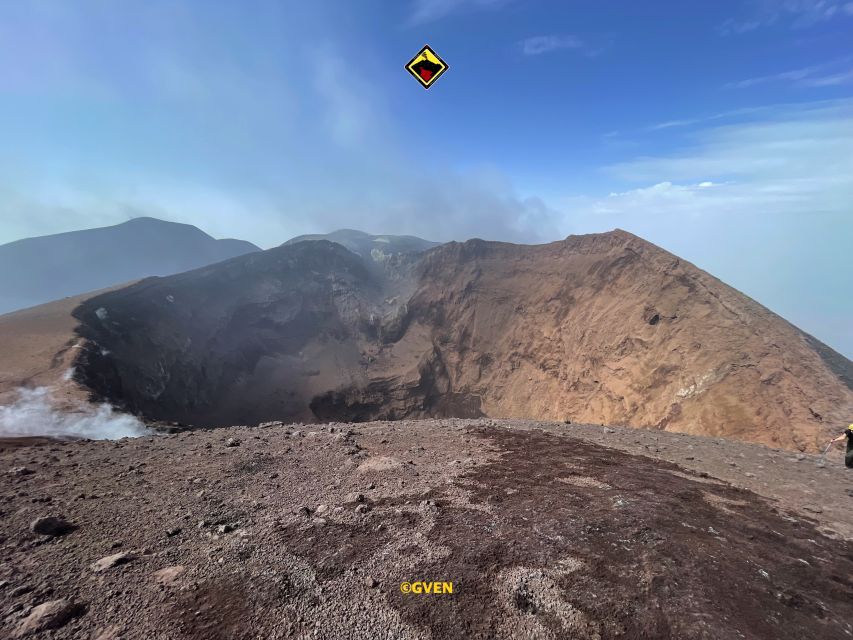
The uphill walk takes about two hours, with stops for photographs, explanations, and views. You gain around 490 meters from the high drop-off point to the crater edge, reaching approximately 3,315 meters.
The height is only part of the challenge. Loose ash and volcanic gravel shift underfoot, and larger lava fragments make the route uneven. Trekking poles are included and are genuinely useful here. They help with balance on the ascent and become even more helpful during the long return.
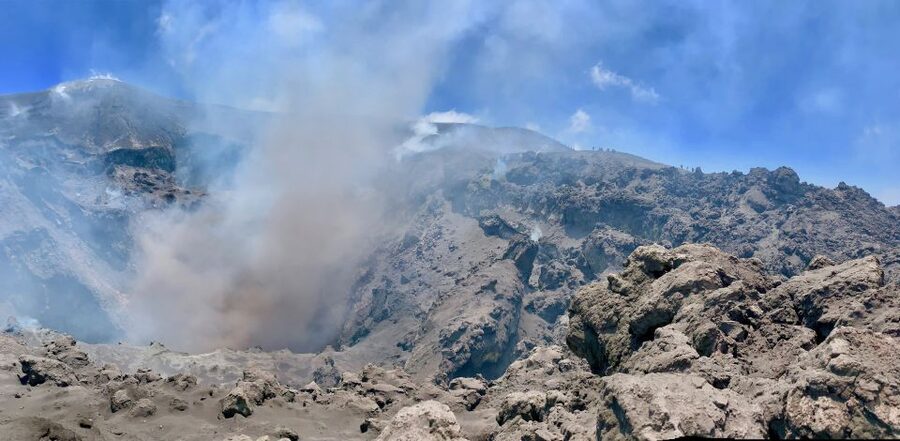
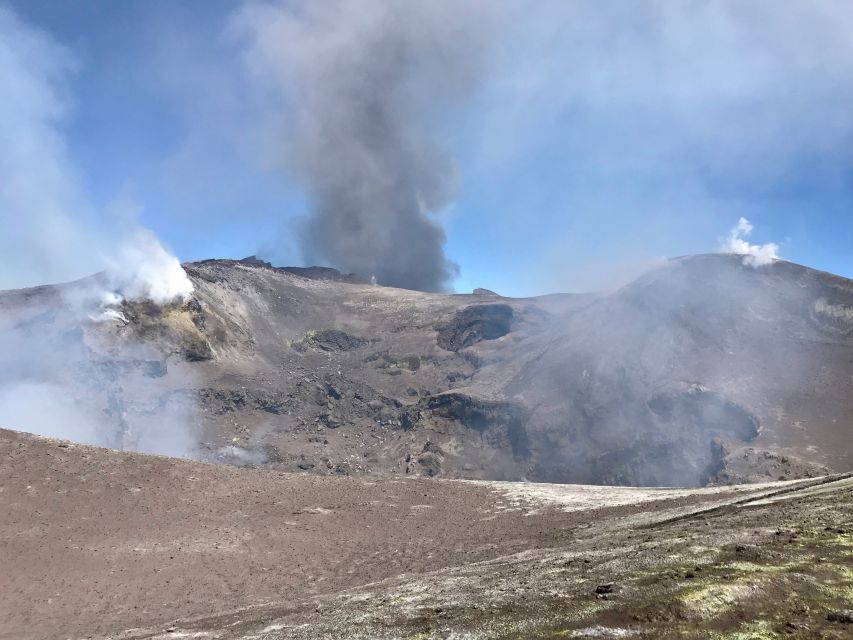
At the Central Crater, you get the main reward of the day: a close look at Etna’s summit zone. Your guide points out active craters and explains how eruptions can create new features quickly. The volcano is not presented as a frozen monument. It is a changing system that requires attention and respect.
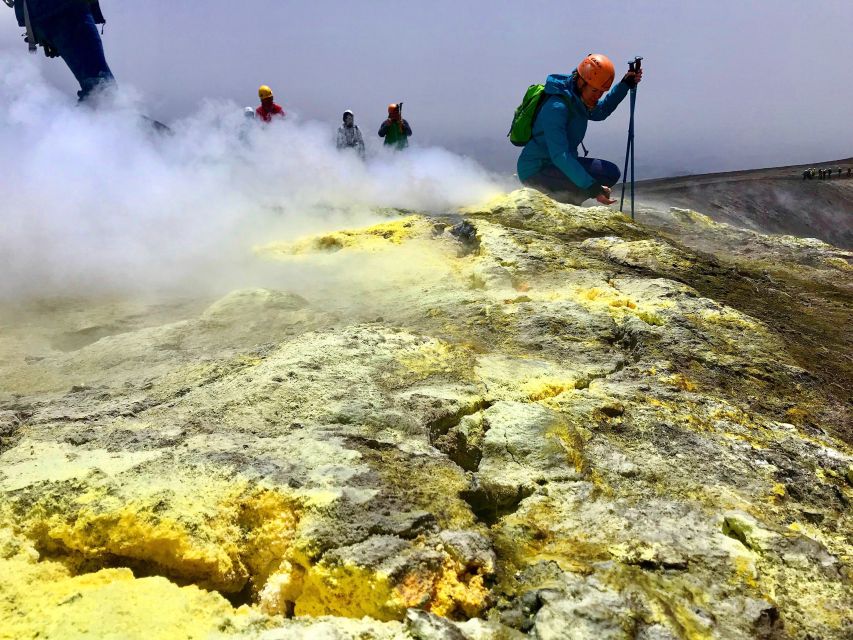
You may see gas escaping, fumaroles at different temperatures, and bright mineral colors around the openings. The effects can be striking, but they also explain why the route follows official safety limits. Volcanic conditions and access rules can change, and the guide may alter the route or end the summit section if conditions become unsafe.
The crater edge can also cause vertigo. If heights make you uncomfortable, this is not the right hike. You need to be able to follow instructions near exposed volcanic ground without panicking.
More Mountain Hikes in Italy
- Etna Volcano: South Side Guided Summit Hike
★ 4.7 · 1,545 reviews - Catania: Mount Etna Adventurous Hiking Tour with Equipment
★ 4.7 · 784 reviews - Mount Etna Adventurous Hiking Tour with Equipment
★ 4.5 · 439 reviews - Etna Volcano: South Side Guided Summit Hike
★ 5.0 · 311 reviews
The summit view depends on the volcano
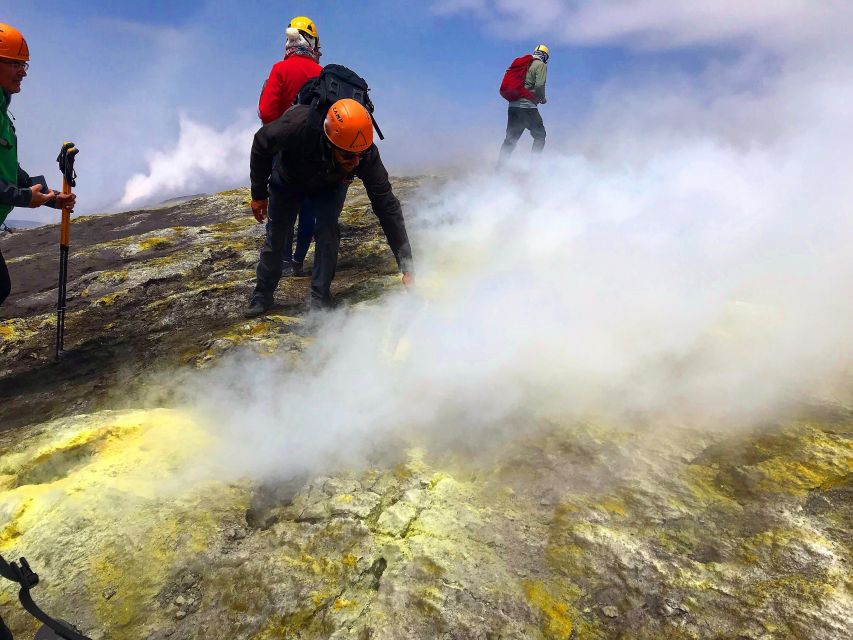
The promise of a view across Sicily comes with a clear condition: weather and volcanic gas must allow it. At this height, clouds and wind can move in quickly, and fumes may obscure the horizon.
That uncertainty is part of the experience. You might get a broad rooftop view, or you might spend more time studying the crater, fumaroles, and mineral deposits at close range. Neither outcome should be treated as a failure. Etna controls the view.
The summit can be biting cold and very windy even when conditions lower down feel comfortable. Bring a windbreaker, gloves, a warm layer, sunglasses, and a hat. Warm jackets are included, but you should still dress for high-altitude weather rather than relying only on supplied clothing.
Lunch near the Volcanological Observatory
After the summit visit, the route turns downhill along volcanic ash and slag. You stop near the base of the Volcanological Observatory for lunch.
Lunch is not included, so carry a packed meal and snacks. Water is also not included. Bring enough for a 5 to 6-hour mountain outing, because you should not count on buying supplies once the hike is underway.
This stop breaks up the descent and gives you a chance to eat before the harder lower section. It is a simple mountain pause, not a restaurant meal. Pack food that is easy to handle and eat outdoors.
The long descent through volcanic channels
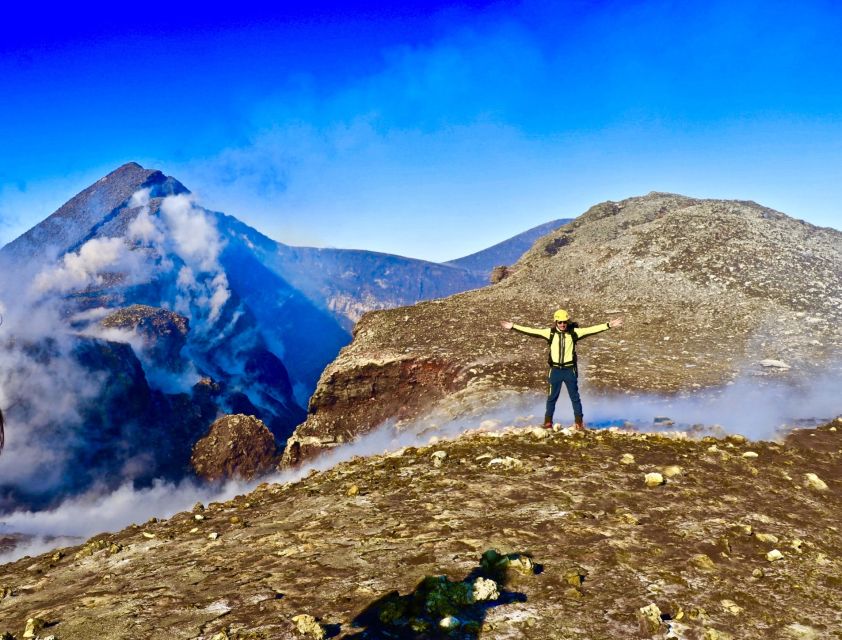
The route from the summit to Piano Provenzana is the part I would take most seriously. The total downhill difference can reach about 1,500 meters, from approximately 3,300 meters back to 1,800 meters.
Loose volcanic sand lets you move quickly in places, but it can also make your feet slide. The descent may feel playful when you move down a steep bank of black sand, yet the novelty wears off if your knees are already tired. The information specifically warns people with joint and knee problems against this outing.
The path continues through one of the large sandy channels on Etna’s northeast side. Here, the scenery changes from stark upper volcanic material to areas with endemic plants and seasonal streams. You pass the Anfiteatro ski-lift area before continuing toward Piano Provenzana.
This lower section gives the hike useful variety. You begin among summit craters and gas emissions, then finish in channels and plant-covered volcanic terrain. Still, the distance and downhill strain remain substantial. If your fitness is average but you can walk steadily for several hours, the route may be manageable. If you rarely hike, the high altitude and descent could be a poor combination.
What the guide adds to the experience
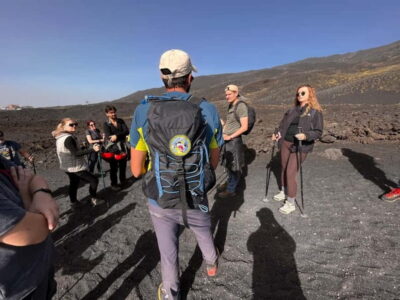
The guide is not simply there to point out a crater. The best part of the service is the connection between what you see and how Etna works.
You learn about the volcano’s evolution, the formation of craters, gas emissions, fumaroles, lava flows, and the speed at which volcanic features can change. Guides have also adjusted their pace to help keep mixed-ability groups together.
One particularly important skill is judgment. During active volcanic moments, the guide watches conditions and may move the group away from the summit area. That happened during one outing when higher-level explosions were observed, and the guide led the group down promptly and safely. On Etna, a good explanation matters, but sound decisions matter more.
The available guiding languages are English, Italian, and French. The group format allows questions and conversation without the distance you often get on a large excursion.
Equipment, clothing, and preparation
The activity includes trekking poles, protective helmets, trekking shoes, extra socks, warm jackets, and backpacks. That is helpful if your luggage is limited or you arrive without the right mountain kit.
You should still bring your own hiking shoes if you have them, along with waterproof shoes or rain gear, long pants, gloves, sunglasses, a windbreaker, and weather-appropriate layers. The supplied clothing is a useful backup, not a reason to arrive in casual holiday clothes.
Pack:
- Water and drinks
- A packed lunch
- Snacks
- Gloves
- Sunglasses and a hat
- Rain gear
- Long trousers
- Sturdy hiking footwear
Sandals, flip-flops, slippers, high heels, short skirts, sleeveless shirts, umbrellas, large bags, luggage, and strollers are not allowed. Those restrictions are practical. Loose volcanic ground is no place for open footwear or a heavy suitcase.
Who should book this hike
This is for trained hikers accustomed to mountain walking. You should be comfortable with several hours on uneven ground, a 5-kilometer climb, a long descent, and high-altitude exertion.
The hike is not suitable for people with heart, respiratory, back, mobility, or pre-existing medical problems. It is also unsuitable for pregnant women, people with epilepsy, high or low blood pressure, low fitness, vertigo, or a fear of heights.
Do not focus only on the relatively modest uphill gain. The altitude, loose surface, cold, wind, and 1,500-meter descent all add difficulty. A person with ordinary walking stamina may manage the climb, but the descent is where tired legs and sore knees can become a problem.
Is $130.28 good value?
The $130.28 price is reasonable for a small-group, high-altitude guided hike, especially since it includes a specialist volcanological guide and a large set of equipment. You are paying for access, route leadership, safety judgment, and interpretation of a live volcanic environment.
The price is less attractive if you assume it covers the whole day. Add €50 for the uphill vehicle, €20 if you choose the downhill ride, €3 for parking, and your own lunch and water. A pair choosing transport in both directions should budget for the extra vehicle costs before arrival.
You can save the €20 downhill charge by walking all the way to Piano Provenzana, but that is the hardest option for your knees. The walk gives you more time in Etna’s volcanic channels and scenery. The vehicle gives you a shorter, easier finish. I would make that decision based on your legs, not on the desire to save a small amount.
Cancellation and practical booking details
You can cancel up to 24 hours before the activity for a full refund, and you can reserve now while paying later. The outing normally takes 5 hours, though the detailed route can run 5 to 6 hours.
The activity may be canceled if at least eight participants are not reached. It may also change because of weather, environmental conditions, volcanic activity, or official regulations. Those are sensible conditions for an excursion to an active summit.
Should you book the Central Crater hike?
Book it if you want a real Etna hike rather than a short scenic stop. You get the summit craters, volcanic gas, crater-edge walking, scientific explanations, black sand, lava formations, and a changing route from the upper slopes to Piano Provenzana.
Skip it if you have knee problems, dislike heights, struggle with high-altitude exertion, or want a relaxed half-day outing. The climb may feel manageable, but the long descent can be punishing.
For a fit hiker who accepts the extra transport costs and arrives with proper clothing, this is one of the more rewarding ways to meet Mount Etna. Just remember that the volcano sets the terms: the view, route, and summit time can all change.
FAQ
Where does the Mount Etna hike begin?
You meet at Chiosco Bar Mareneve di Ferraro Giuseppa near Piano Provenzana. Do not go to Chiosco Bar Etna Nord. The meeting point is near the winter chairlift and is the second house among four buildings in the parking area.
How high does the hike go?
The route reaches approximately 3,315 meters at the edge of Etna’s Central Crater. The starting point is about 1,800 meters, and the off-road vehicle takes you to roughly 2,825 meters before the main climb.
How long is the hike?
The trekking route takes about 5 to 6 hours and covers roughly 12 kilometers. Around 5 kilometers are uphill and 7 kilometers are downhill, though the exact figures can vary.
Is the off-road transport included?
No. The uphill off-road ride costs €50 per person and is paid on the spot. A downhill vehicle from about 2,800 meters to 1,800 meters is optional and costs €20 per person.
What equipment is provided?
The activity includes a volcanological guide, trekking poles, protective helmets, trekking shoes, extra socks, warm jackets, and backpacks. You should still bring suitable clothing, water, food, and rain protection.
Do I need to bring lunch and water?
Yes. Lunch and water are not included. Bring a packed lunch, snacks, and enough water for the 5 to 6-hour route.
Is this suitable for beginner hikers?
No. The hike is intended for experienced or trained hikers who regularly walk in the mountains. It is not suitable for people with low fitness or several listed medical, mobility, respiratory, joint, or balance conditions.
What happens if the weather or volcanic conditions change?
The excursion may be altered or canceled because of environmental, climatic, or volcanic conditions. The route follows current official safety limits, and summit access depends on conditions including weather and volcanic gas.
More Volcano Hikes in Italy
Just added around Italy
- From Taormina or Catania: Private Full-Day Mount Etna Hike★ 4.5 · 8 reviews
- From Taormina: Mount Etna Half-Day Evening Hike★ 5.0 · 4 reviews
- From Sorrento: Path of the Gods Guided Hike with Transfer★ 4.8 · 23 reviews
- From Sorrento: Skip-the-Line Guided Vesuvius Hike and Lunch★ 4.4 · 5 reviews
- From Sorrento: Path of the Gods Hike with Tasting Stop★ 4.9 · 29 reviews
- From Siracusa: Pantalica Nature Reserve Guided Hiking Tour★ 4.9 · 9 reviews
- From Orosei or Dorgali: Gorropu Canyon Guided Hike★ 4.9 · 40 reviews
- From Genna Silana: Canyon of Gorropu Guided Hike★ 3.7 · 3 reviews
Italy Hiking Tours, compared.
Cinque Terre Day Trip with Optional Hiking or Pisa
Read our review →
Florence: Cinque Terre Day Trip with Optional Hiking or Pisa
Read our review →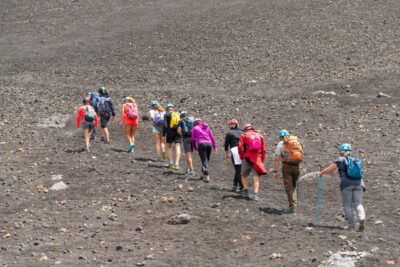
Mount Etna: Summit Guided Hiking Tour up to 3,400 m
Read our review →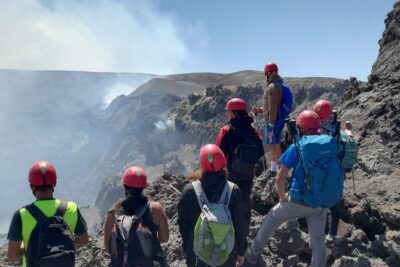
Catania: Mount Etna Adventurous Hiking Tour with Equipment
Read our review →
From Taormina: Etna Tour with Hiking, Cave Visit, & Tastings
Read our review →
Catania: Etna Nature Tour with Hiking, Cave Visit, & Tasting
Read our review →Browse the lists this tour appears in