
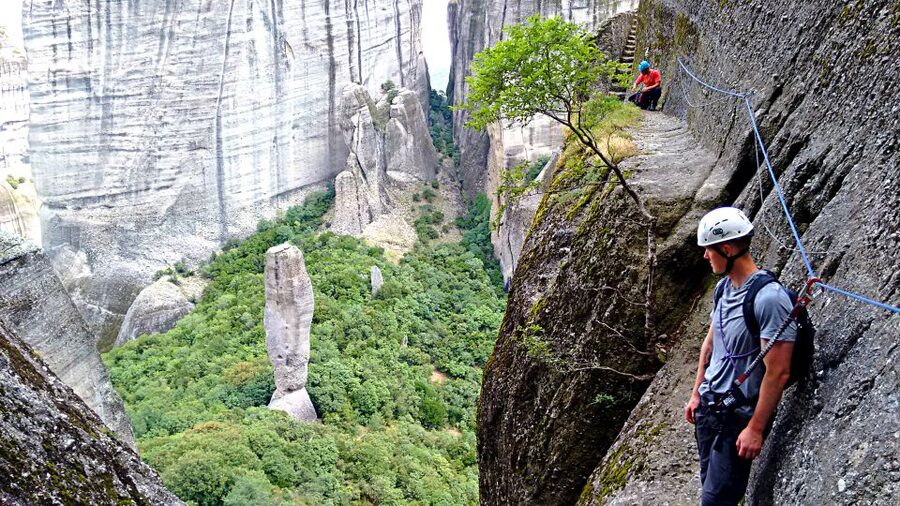
REVIEW · GREECE
Kastraki: Meteora Via Cordata Hiking Tour to the Great Saint
Meteora is famous for its monasteries, but this Via Cordata hike to Great Saint takes you into the rock itself. You scramble over sandstone, follow old paths cut by monks, and use fixed cables and safety equipment on sections that call for balance and steady feet.
I like the tiny guide groups, limited to six people with up to three people per mountain guide. I also like the mix of outdoor challenge and local history. Guides such as Kostas, Costa, and Evin help with safety, explain the area, and take photos at the viewpoints. The main consideration is effort: this is not a casual stroll, and the route is unsuitable for children under eight or anyone with low fitness.
Key points to know before you book
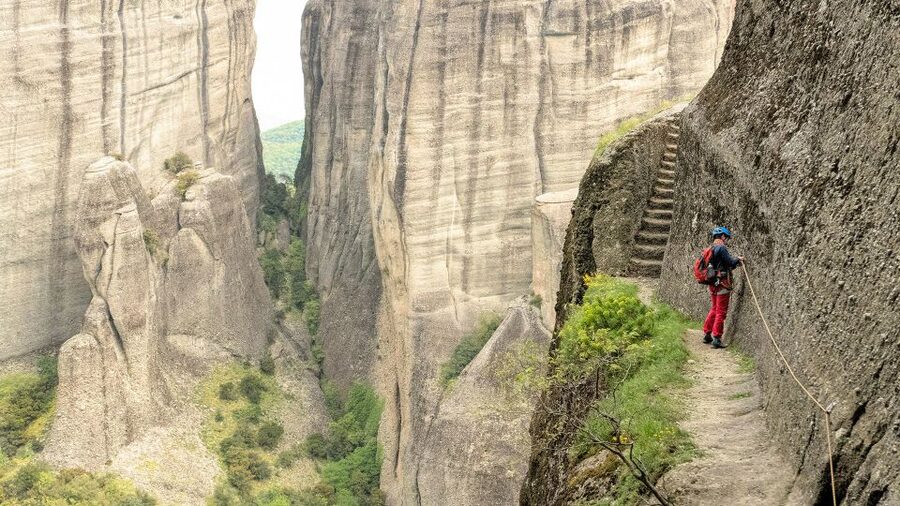
- Great Saint gives you a full Meteora panorama: The summit offers 360-degree views of the sandstone towers and monasteries.
- The Via Cordata adds excitement without full climbing: You use helmets, harnesses, and rope support on parts of the route.
- Small groups mean close guidance: Groups are limited to six, with as many as three participants per mountain guide.
- The route follows old monk-carved paths: This is a more unusual way to understand Meteora than simply viewing the monasteries from the road.
- Early starts help in warm weather: Some of the ascent has shade, but starting early can make the climb more comfortable.
- Closed shoes are essential: Sandals and flip flops are not allowed, and gloves may make gripping rock more comfortable.
Why this Meteora hike feels different
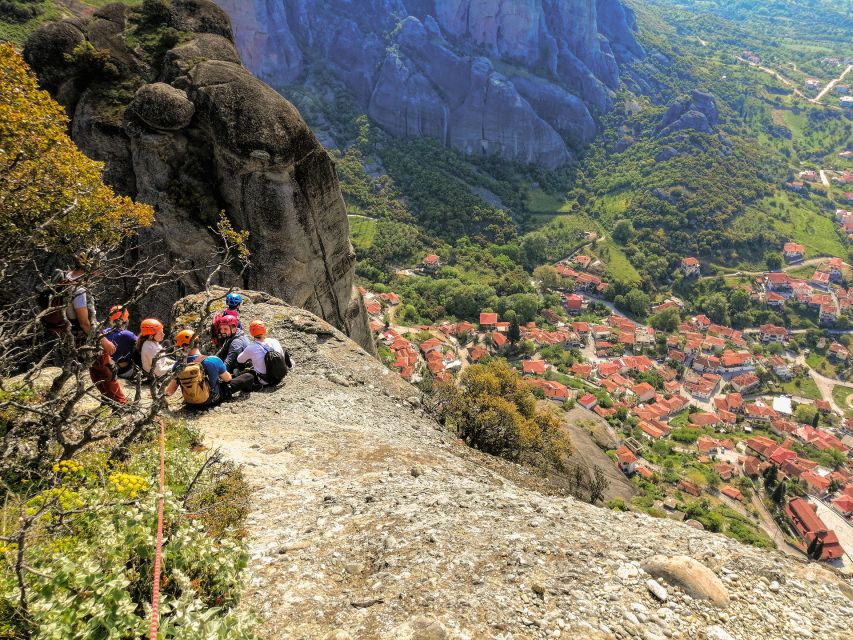
Meteora can be admired from below, from monastery terraces, or from a vehicle winding through the hills. This tour gives you a more physical look at the area. You move among the sandstone towers rather than only photographing them from a distance.
The route combines hiking, scrambling, and Via Cordata technique. The term refers to a protected route where you move along rock with the help of cables, harnesses, and ropes. You are not signing up for a technical rock-climbing trip, but you should be ready to use your hands, balance on uneven rock, and climb steadily uphill.
That mix is the real appeal. The route has enough challenge to feel like an adventure, yet the equipment and guide support make it more approachable than a serious climbing outing. One useful distinction is that Via Cordata is generally less demanding and less exposed than a full via ferrata. You still climb, but the activity is designed for people with a good fitness level who may not have much climbing experience.
The reward comes at Great Saint, where the views open in every direction. You can see the unusual rock formations and monasteries from above, with a much stronger sense of how the whole Meteora area fits together.
A few more hikes around Greece worth a look
- From Chania/Rethymno: Samariá Gorge Guided Hike with Pickup
★ 4.5 · 1,010 reviews - From Chania: Samaria Gorge with Professional Hiking Guide
★ 4.6 · 720 reviews - Meteora Small Group Hiking tour with Transfer and Monastery Visit
★ 5.0 · 484 reviews
Meeting in old Kastraki and getting ready
The tour begins in the center of the old habitation of Kastraki village, at Qastiro Meteora. This location puts you close to the rock formations before the hike even starts. An optional pickup service is available, but hotel pickup and drop-off from Kalampaka or Kastraki are not included in the price.
Your guide gives you a safety briefing before setting out. You receive the necessary equipment, including a helmet and harness, and your English-speaking mountain guide explains how to use it. This preparation matters because the route includes sections where careful movement is more important than speed.
The small group setup is a practical advantage here. With no more than six participants, and as few as three people assigned to one guide, you should get direct help when a rock step looks awkward or you need instructions about the next handhold. Guides also help keep the pace together, which is useful on a route where people may have different levels of comfort with scrambling.
The equipment is included, as is water. You need to bring closed-toe shoes. Hiking shoes are the sensible choice, though the available information does not require a particular type. Avoid sandals and flip flops completely. One useful extra tip is to consider light gloves, since a participant found that gloves would have made the rock sections more comfortable.
Scrambling through Meteora’s sandstone towers
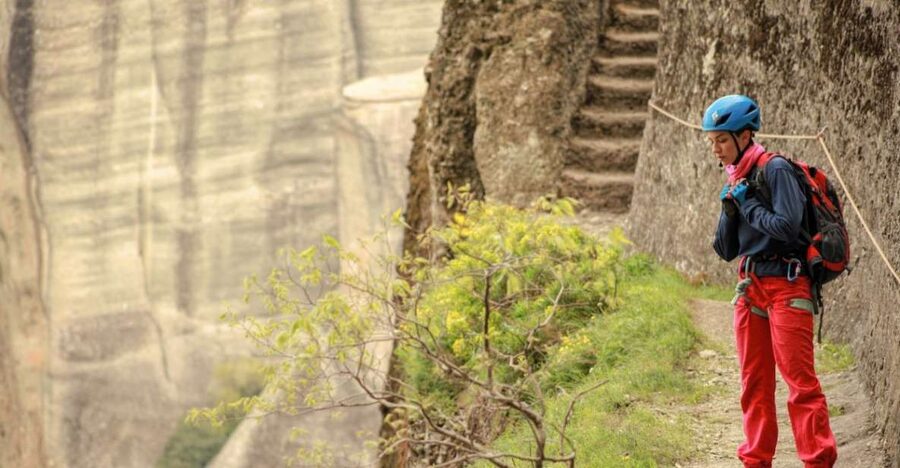
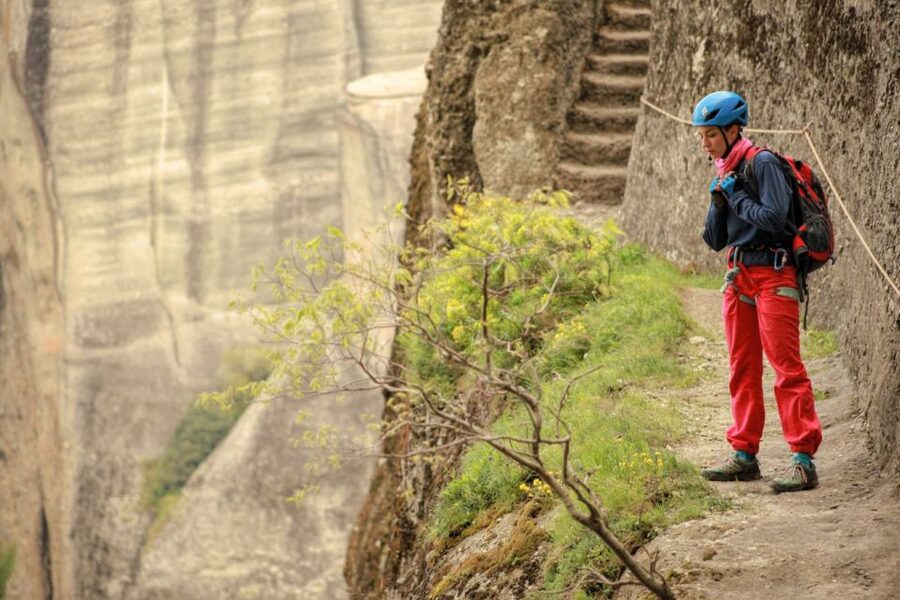
The first part of the route takes you into the striking rock formations around Meteora. These towers are not smooth mountain slopes. You should expect uneven ground, rock steps, and sections where you use your hands for balance.
Scrambling is different from ordinary walking. You may climb over low rock formations, shift your weight carefully, and choose where to place your feet. The guide stays with you and provides support, especially where the route becomes less obvious or the rock requires more care.
This is a moderate to challenging outing, so fitness matters more than technical climbing experience. You do not need to be an expert climber, but you should be comfortable with three hours of activity and an uphill route. The ascent can feel more demanding in summer heat, although shaded parts of the route help. An early departure is a smart choice if you have flexibility.
The setting makes the effort worthwhile. Meteora’s sandstone shapes are the main attraction, but seeing them from a narrow trail and touching the rock as you climb gives the area a different character. You are not just stopping at a viewpoint for five minutes. You are working your way through the formations and seeing how the paths connect.
Following paths carved by monks
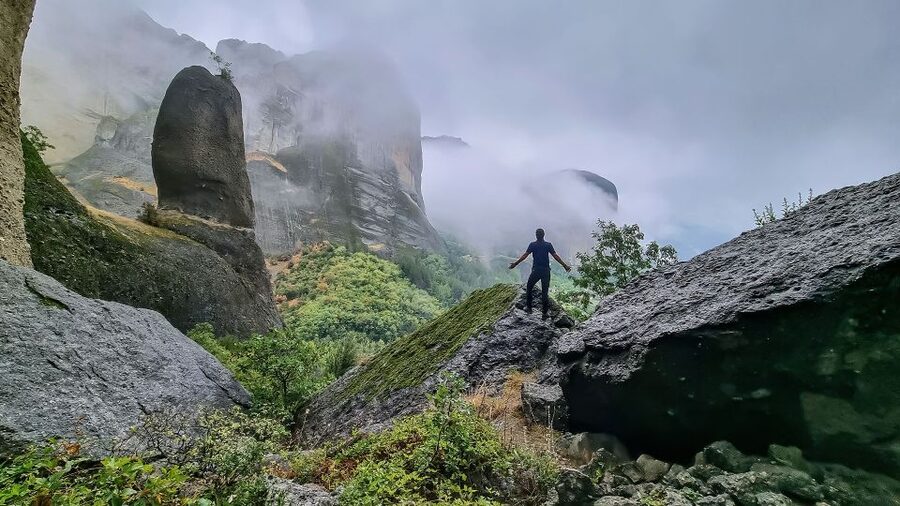
A special part of this outing is the use of old paths carved into the rock by monks. These routes connect the modern adventure with Meteora’s religious past. The monasteries are not simply scenic buildings placed on high rocks. Their position reflects centuries of movement through a difficult and unusual setting.
Your guide adds stories and historical information along the way. Guides are also known for using humor, which helps keep the mood light when the climb gets tiring. Kostas, Costa, and Evin are among the guides associated with this experience, and the guidance is a major part of its value.
The old paths may be less polished than a normal walking trail. That is part of their appeal, but it also means you should watch your footing instead of walking on autopilot. You may find some sections narrow, uneven, or steep enough to require a pause. The guide’s job is not only to lead but to show you how to move safely through those spots.
This is where the tour gives you something the standard monastery circuit cannot. You gain a sense of the physical work involved in reaching these high places long before modern roads and organized sightseeing.
Same trailhead, a different sort of day:
- From Heraklion: Samaria Gorge & Agia Roumeli Hiking Day Trip
★ 4.4 · 422 reviews - Samaria Gorge Hiking from Chania with Professional Hiking Guide
★ 4.5 · 372 reviews - From Rethymno/Chania: Imbros Gorge Hike
★ 4.4 · 353 reviews - From Chania: Samaria Gorge Hike with Local Mountain Guide
★ 4.5 · 282 reviews
The Via Cordata sections and safety support
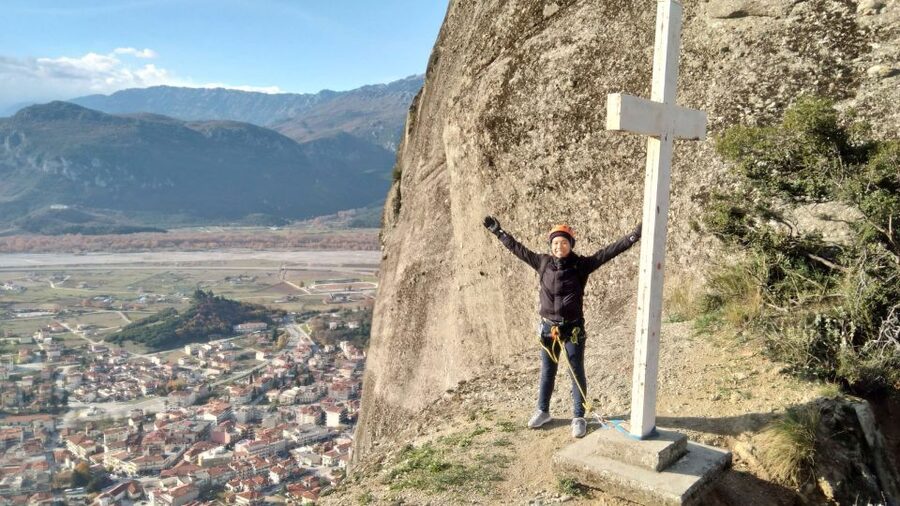
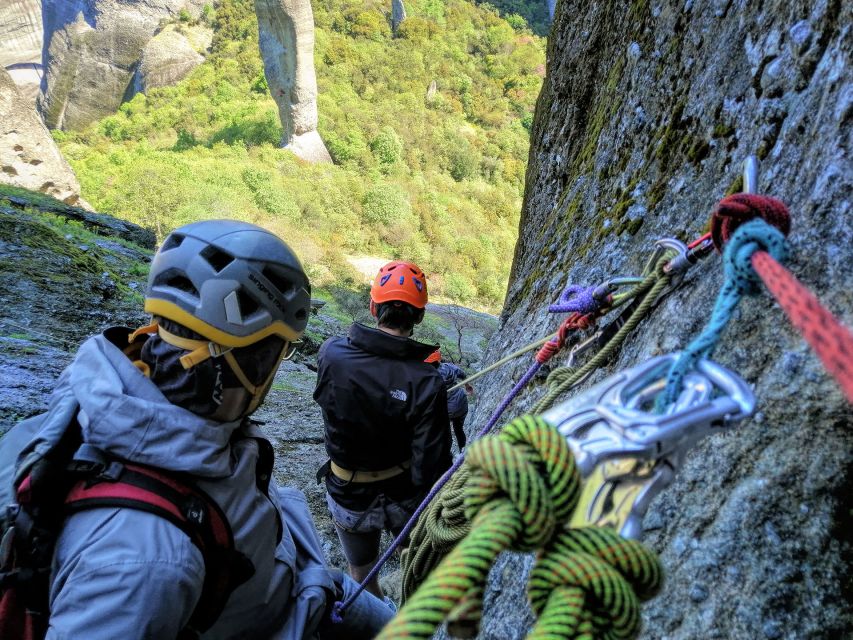
The Via Cordata sections are the most distinctive part of the tour. After your safety briefing, you use the supplied harness and helmet, with rope support available where needed. The guide explains how to move and helps you stay secure while you negotiate the rock.
For many people, this is the point where the outing becomes memorable. You get the thrill of moving through the rock, but you are not expected to manage the route alone. One participant who did not exercise regularly found the route manageable, with enough challenge to make it exciting. That is a useful guide to the overall level, though individual fitness and comfort with heights vary.
The experience is less physical and less vertiginous than a full via ferrata, according to one detailed account, but it still goes uphill. You should not book it expecting an easy walk. The route calls for balance, coordination, and the ability to keep moving over uneven ground.
The guides also help with the emotional side of the activity. If someone in your group feels nervous, clear instructions and patient support can make a real difference. A family with a worried child reported feeling secure with the help of two instructors, though the minimum age remains eight.
Reaching Great Saint and the 360-degree view
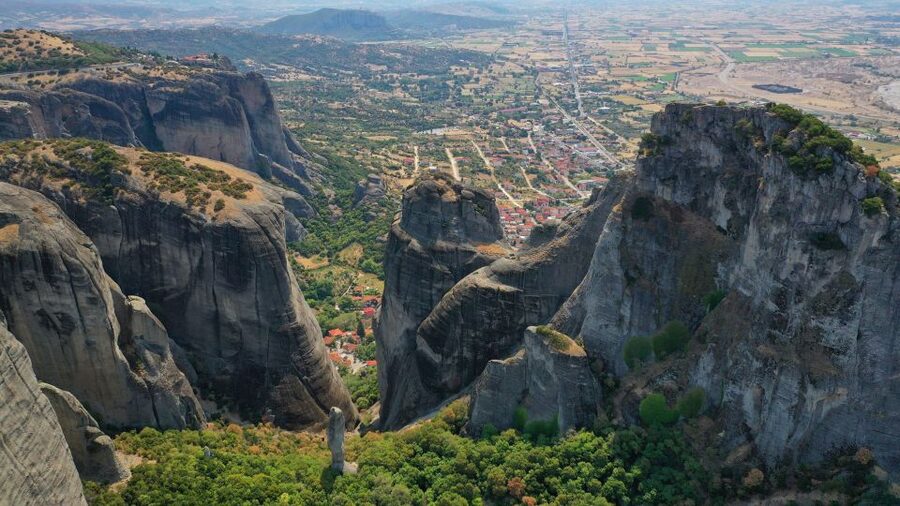
The summit of Great Saint is the payoff. From the top, you get broad views across the Meteora rocks and monasteries. The 360-degree outlook gives you a chance to understand the scale of the area, from the individual sandstone towers to the wider surroundings.
This is also the best time for photographs. The guides can help take pictures, so you do not have to rely entirely on quick self-timer shots. Bring a phone or camera only if you can keep it secure while walking. The route involves scrambling, and stopping to take a photo should never come before safe footing.
You get time at the top to catch your breath and take in the view before descending. That pause matters. The climb is not simply a race to a summit, and the scenery is strong enough to deserve time without rushing.
The views are particularly valuable because they follow physical effort. A monastery terrace offers fine scenery, but reaching Great Saint by this route gives the panorama a stronger sense of achievement. You have seen the rock up close, moved through it, and then looked back over the route from above.
The descent and what three hours really means
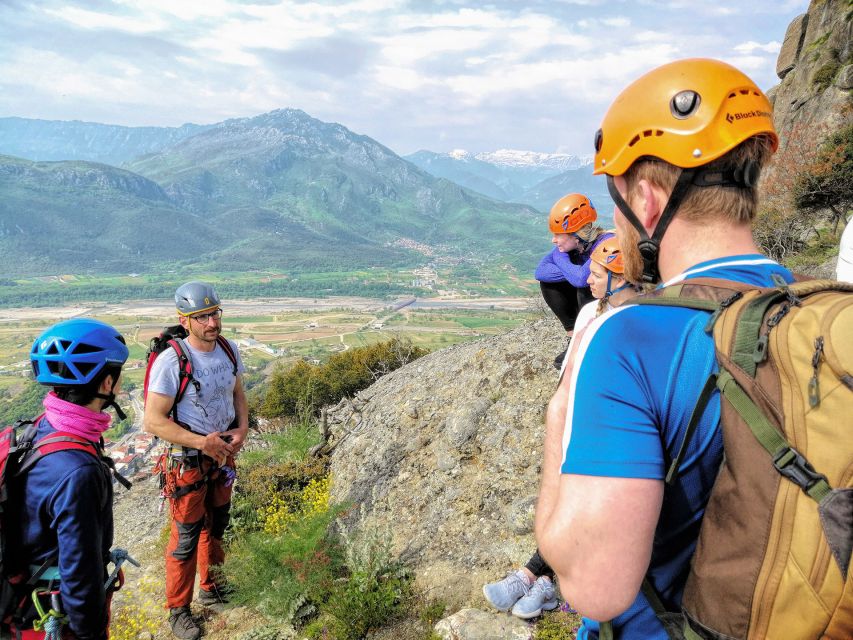
The entire activity lasts about three hours. That includes the briefing, equipment setup, uphill route, summit time, and descent. You should plan your day around the full block rather than assuming the hiking portion alone takes three hours.
The descent may sound easier, but uneven rock still demands attention. Tired legs can make balance harder, so listen to the guide and keep your pace controlled. This is another reason the small group format helps. You are less likely to feel pushed into moving faster than is comfortable.
The tour is short enough to fit into a day of exploring Kastraki and Meteora, yet active enough to feel like a main event rather than a quick add-on. It is also a good option if you want to avoid the busiest sightseeing flow around the monasteries. The route uses less conventional paths and focuses on open-air movement, rather than joining a large group at a standard attraction.
Rain changes the plan. The tour is cancelled in rainy weather because wet rock can make the route unsafe. You can receive a full refund or move to another date. Check the forecast before you set aside the morning or afternoon, and keep your schedule flexible if conditions look uncertain.
Price, group size, and overall value
At $88 per person, the tour is not the cheapest way to see Meteora. It is also not priced like a simple village walk. The fee covers an English-speaking mountain guide, safety equipment, and water, along with instruction and supervision on a route that requires specialist handling.
The value depends on what you want from Meteora. If your priority is to visit monasteries with the least physical effort, you may prefer a road-based sightseeing tour. If you want a more active outing, direct guide support, and a route beyond the usual stops, the price is easier to justify.
The group size strengthens the value. A maximum of six participants means you get more personal attention than on a large coach excursion. With as many as three people per guide, the experience can feel carefully managed rather than merely led from the front.
Food and drinks are not included, unless specifically stated, so bring what you need beyond the provided water. Hotel transportation is also separate. Those extra costs are small compared with the tour price, but it is better to know them before booking.
Free cancellation is available up to 24 hours before the activity for a full refund, and you can reserve now and pay later. Those terms are useful for a weather-sensitive outdoor activity, especially if your Meteora plans are still moving around.
Who should book this adventure
I would choose this tour if you want a close look at Meteora’s rock formations and enjoy active sightseeing. It suits people with a good fitness level who are comfortable walking uphill, scrambling, and using a harness on protected sections.
It can work for beginners, too, provided you understand the physical demands. You do not need a background in via ferrata or technical climbing, and the route is described as more accessible than a full via ferrata. Still, beginners should expect genuine exertion, not a gentle nature walk.
Families may find it suitable if children meet the minimum age of eight and are confident enough for uneven rock. The guide support can help nervous participants, but every family should judge fitness and comfort with heights honestly.
I would skip it if you have low fitness, want a relaxed stroll, dislike heights, or need a guaranteed outing in rainy weather. Sandals are not allowed, and the route is not suited to anyone who cannot manage closed shoes and uneven terrain.
Should you book the Great Saint Via Cordata hike?
Book it if you want Meteora to feel more than a collection of photo stops. You will scramble through the sandstone, follow old monk-carved paths, learn about the area from a local guide, and reach a summit with wide views over the monasteries.
The strongest reasons to go are the small group, careful instruction, unusual route, and excellent viewpoints. The main tradeoff is effort. Three hours can feel short to an experienced climber, but it is enough time for a rewarding active outing in warm weather or for anyone new to this type of route.
Choose an early starting time if available, wear secure closed shoes, consider light gloves, and leave room in your schedule for weather changes. For an active and personal look at Meteora, this is a strong choice.
FAQ
Where does the Meteora Via Cordata tour meet?
You meet your guide at the center of the old habitation of Kastraki village, at Qastiro Meteora.
How long does the activity last?
The tour lasts approximately three hours.
How much does the tour cost?
The listed price is $88 per person.
What equipment is included?
The tour provides all necessary equipment, including helmets and harnesses. Water is also included.
Is hotel pickup included?
No. Hotel pickup and drop-off from Kalampaka or Kastraki are not included. An optional pickup service is available.
What should I wear or bring?
You must wear closed-toe shoes. Sandals and flip flops are not allowed. Light gloves may make the rock sections more comfortable.
Is the tour suitable for children?
The activity is not suitable for children under eight years old. Participants should also have a good fitness level.
What happens if it rains?
The tour is cancelled in rainy weather. You can receive a full refund or choose an alternative date. You can also cancel up to 24 hours in advance for a full refund.
Just added around Greece
- Ridomo Gorge hike to MANA spring★ 5.0 · 15 reviews
- Hiking around Navarino Bay★ 5.0 · 9 reviews
- Hiking around Kardamyli★ 5.0 · 12 reviews
- Full-Day Hiking Mount Taygetos Summit with Picnic★ 5.0 · 2 reviews
- Hiking Menalon & Lousios gorge★ 5.0 · 8 reviews
- Imbros Gorge Hiking Day Trip with transportation★ 4.5 · 20 reviews
- Full Day Hiking at Samaria Gorge&Agia Rumeli Beach from Heraklion★ 4.0 · 29 reviews
- Sarakina Gorge hiking & swim Adventure – Jeep Safari South Crete★ 5.0 · 21 reviews
Greece Hiking Tours, compared.
From Chania/Rethymno: Samariá Gorge Guided Hike with Pickup
Read our review →
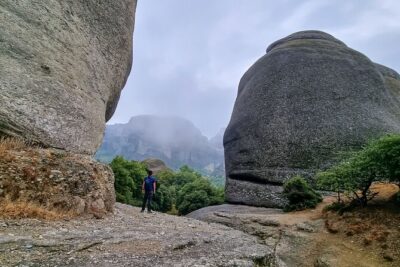
Meteora Small Group Hiking tour with Transfer and Monastery Visit
Read our review →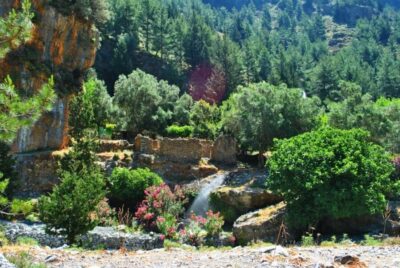
From Heraklion: Samaria Gorge & Agia Roumeli Hiking Day Trip
Read our review →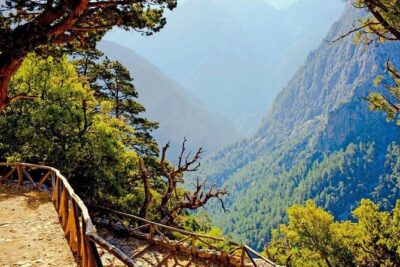
Samaria Gorge Hiking from Chania with Professional Hiking Guide
Read our review →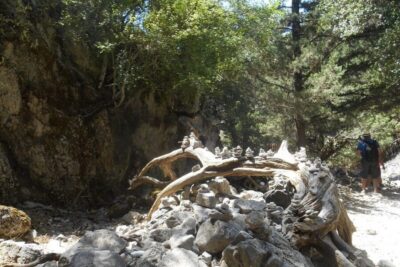
Kalabaka: Meteora Small-Group Hiking Tour w/ Monastery Visit
Read our review →Browse the lists this tour appears in