
REVIEW · GREECE
Meteora: Easy Hiking Adventure
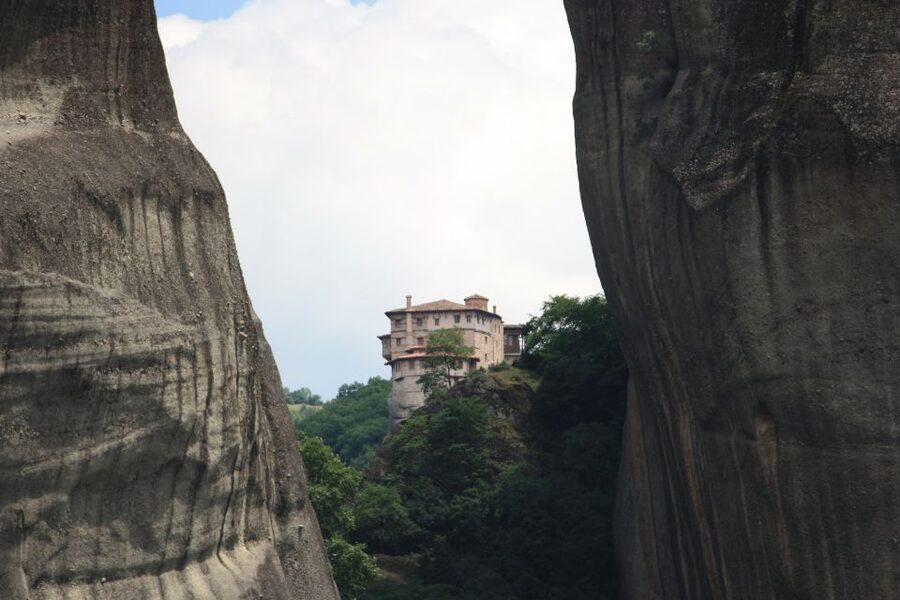
Meteora’s famous monasteries are only part of the story. This 8-kilometer hike follows old footpaths through the forest, past abandoned religious sites, rebel landmarks, carved steps, and the cave of St George Mandilas. You see the giant rock formations from below and reach the monasteries of Great Meteoron and Varlaam from a much more rewarding angle.
I like the small group of up to 12 people and the local guides, who can explain both the geology and the area’s past. I also like the door-to-door minibus service from Kalambaka or Kastraki, since it saves you the trouble of arranging transport to Kastraki. The main caution is the word easy: the route is manageable for many active families, but uphill sections and rough footing can make it light to moderate rather than effortless.
Key points to know before you book
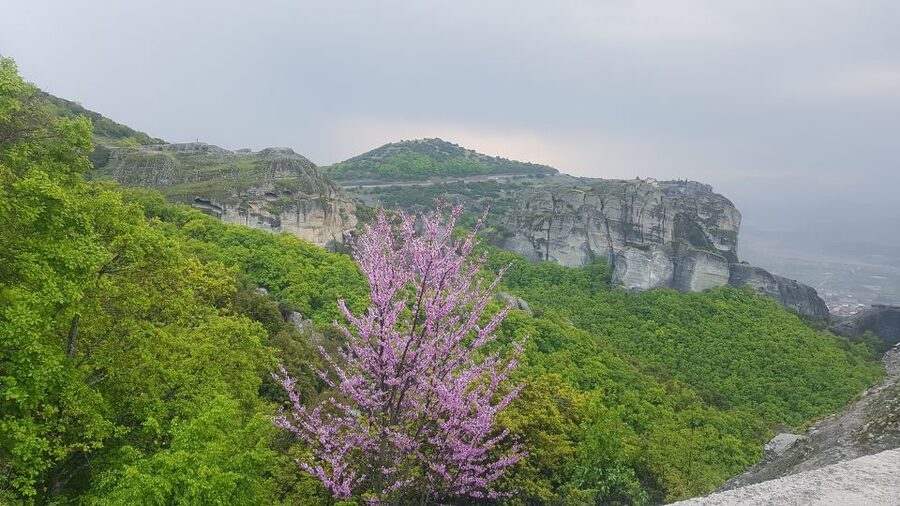
- The trail follows old monastery routes: Expect forest paths, wooden and carved stairs, and traces of the routes once used to carry supplies to the monasteries.
- You see more than the standard road views: The route includes Ypapanti, St Dimitrios church, rebel memorials, and the cave of St George Mandilas.
- The hike is about 8 kilometers: It is described as easy, but several people found the uphill walking more demanding than expected.
- Local guides add real context: Past departures have included Christos, Harry, and Georgia, with explanations ranging from local stories to geology and art.
- The monasteries may not be interior visits: Great Meteoron and Varlaam are reached on the route, but monastery entry is not included in the tour price.
- The $49 price covers useful basics: Transport, a certified English-speaking guide, bottled water, onboard Wi-Fi, taxes, and services are included.
Why this route shows you a different Meteora
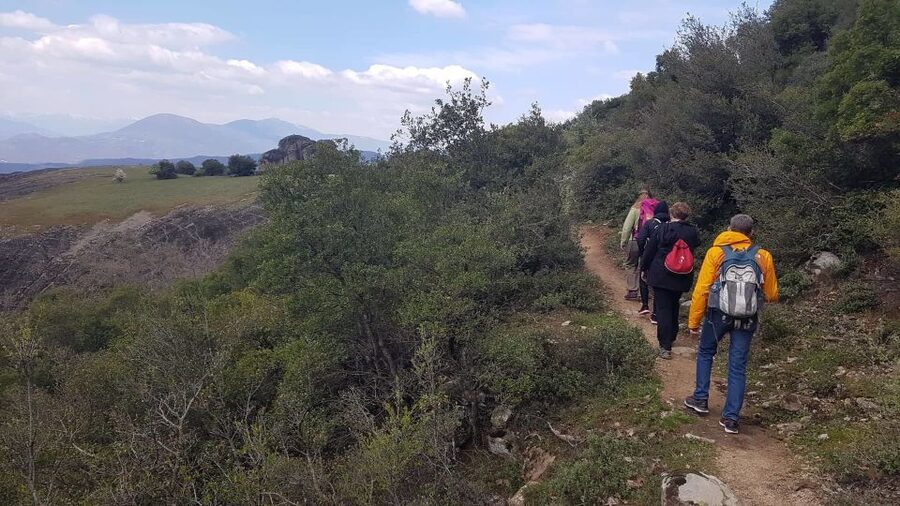
Meteora can be visited by road, with short walks from parking areas to the best-known monasteries. That approach is efficient, but it leaves out the older world below the cliffs. This hike takes you along paths that once served as the only practical links between villages and monasteries.
You will see signs of human effort all along the route. Some sections use carved steps cut into stone. Others use wooden stairs or rough forest paths. These are not polished park trails, and that is part of the appeal. They help you understand how difficult daily life around the monasteries once was.
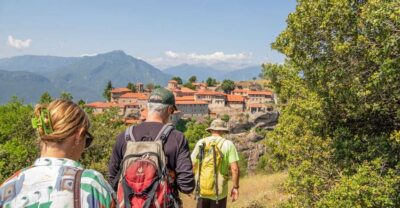
The setting changes as you walk. You begin near Kastraki, then enter forest beneath the towering rocks. The trees soften the heat in summer and add shade to the route, while openings in the woods give you views of the cliffs and monasteries above.
I would choose this outing if you want more than a quick photo stop. You get time to listen, ask questions, and notice small details that are easy to miss from a minibus window. You also get a more physical morning or afternoon, so it works best as an active sightseeing experience rather than a casual monastery shuttle.
A few more hikes around Greece worth a look
- From Chania/Rethymno: Samariá Gorge Guided Hike with Pickup
★ 4.5 · 1,010 reviews - From Chania: Samaria Gorge with Professional Hiking Guide
★ 4.6 · 720 reviews - Meteora Small Group Hiking tour with Transfer and Monastery Visit
★ 5.0 · 484 reviews
A smooth start from Kalambaka or Kastraki
The tour begins with pickup from your accommodation in Kalambaka or Kastraki. There are many possible pickup points, including hotels and guesthouses throughout both towns. You should wait in the reception area at least 10 minutes before the agreed time, since the minibus may be making several stops.
The ride to Kastraki takes about 20 minutes. This short transfer matters because the walking route begins there, not in central Kalambaka. A luxury minibus handles the transfer, and onboard Wi-Fi and bottled water are included.
A group limit of 12 keeps the outing fairly personal. That size gives the guide a better chance to adjust the pace and answer questions than a large coach tour would. It also means the start can take a little time if several hotel pickups are involved, so do not plan a tight connection immediately afterward.
Past departures have included guides named Christos, Harry, and Georgia. Christos was especially noted for taking the group away from the busiest routes and explaining the area through local memories. Harry has guided in English, Italian, and Spanish and has covered geology, history, and art. The guide assigned to your date may be different, and the confirmed service language is English.
Through the forest to Ypapanti
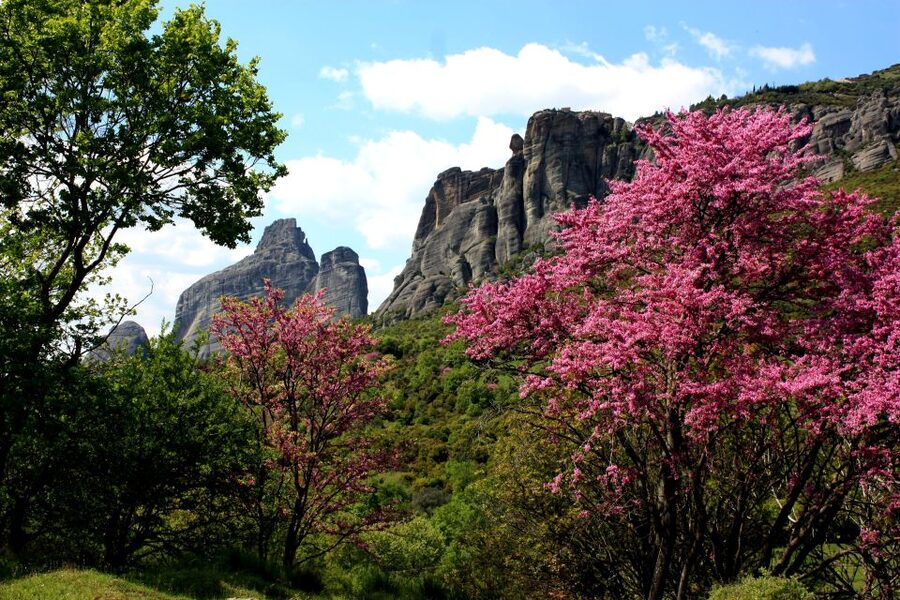
Once you leave Kastraki, the trail enters the forest beneath Meteora’s rock towers. This first section gives you a useful sense of scale. From the road, the rocks look like isolated pillars. On foot, you see how paths, trees, ledges, and small religious sites fit together around them.
One of the main stops is the abandoned and restored Monastery of the Visitation of Jesus, often called Ypapanti. It is set away from the busiest monastery circuit, making the approach feel quieter and more connected to the old footpath network.
Do not expect a grand entrance or a long interior visit here. The value is the setting and the story: an old religious site tucked into the rock country, reached by a route that makes its isolation understandable. Your guide can point out how people once moved between these places and how the buildings were maintained in a difficult location.
The trail can include uneven ground, stone steps, and uphill walking. Families with older children who are used to walking should find the route approachable, but younger children may need extra patience. Comfortable shoes are essential. Trainers with a secure sole are a better choice than sandals or smooth casual shoes.
Rebel history at Papathymios and St Dimitrios
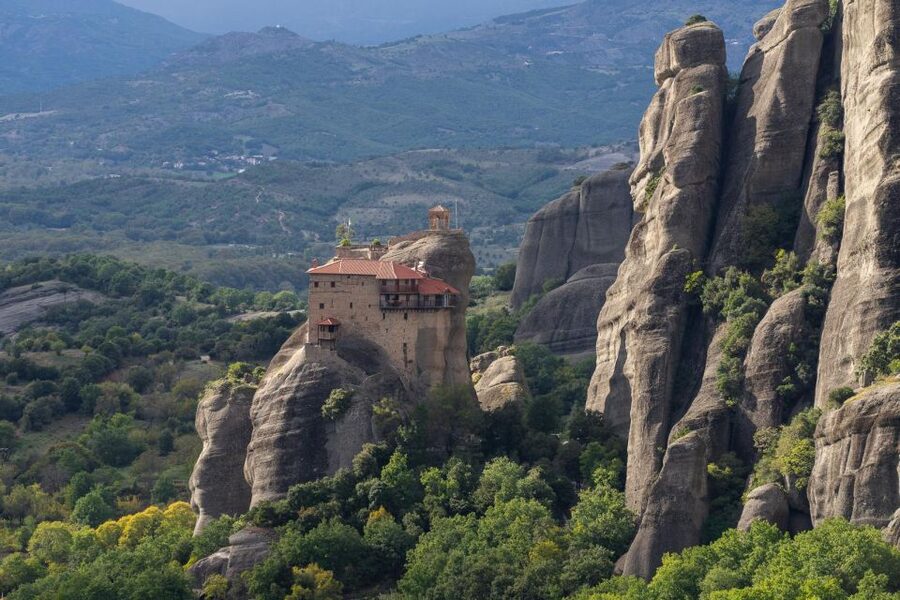
The hike then reaches the statue of Papathymios Vlahavas, a fighter during the rebellion against the Turks. This stop gives the route a human scale. Meteora is often presented as a place of monasteries and dramatic rocks, but it was also a place where people sought shelter, organized resistance, and used the terrain to their advantage.
You also pass St Dimitrios church. The church served as a headquarters for rebels during the Greek-Turkish war and was destroyed by the Ottomans in the early 18th century. That detail changes how you read the rocks around you. These were not just scenic walls. They offered concealment, difficult access, and control over movement through the area.
The guide is particularly important here. A sign alone would not explain how a church could become a working base or why certain paths mattered. A good local guide can connect the small sites to the wider story without turning the hike into a lecture.
The route’s historical stops also make this a good choice for people who have already seen the main monasteries by car. You are not simply repeating the usual viewpoints. You are walking through the places that support the larger story.
Same trailhead, a different sort of day:
- From Heraklion: Samaria Gorge & Agia Roumeli Hiking Day Trip
★ 4.4 · 422 reviews - Samaria Gorge Hiking from Chania with Professional Hiking Guide
★ 4.5 · 372 reviews - From Rethymno/Chania: Imbros Gorge Hike
★ 4.4 · 353 reviews - From Chania: Samaria Gorge Hike with Local Mountain Guide
★ 4.5 · 282 reviews
Reaching Great Meteoron and Varlaam from below
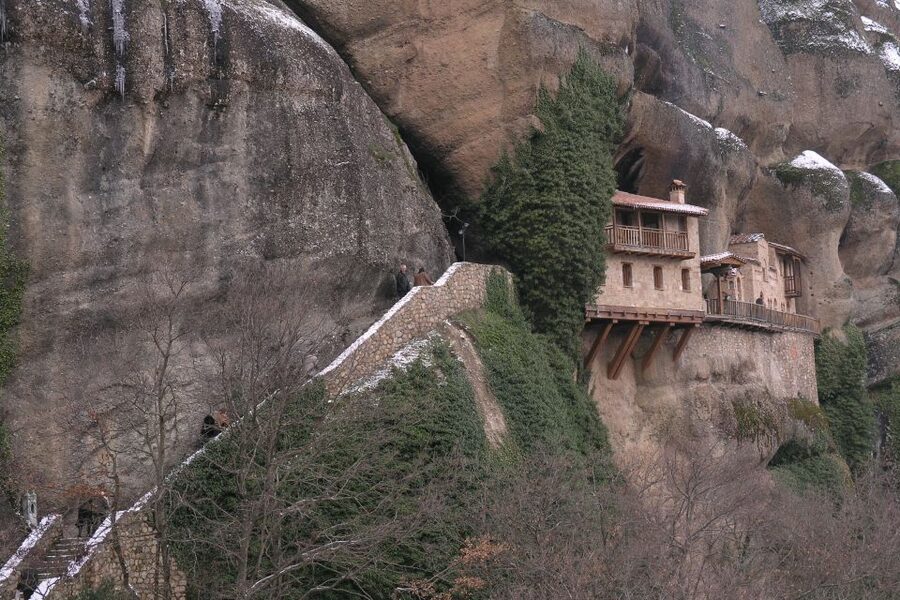
The trail climbs toward the upper rocks and the monasteries of Great Meteoron and Varlaam. This is likely to be the most demanding part of the walk, even though the experience is marketed as easy.
Several people found the route harder than expected, especially those who do not normally hike. One person described it as closer to light or moderate difficulty, and another said the uphill sections were the main challenge. That advice is worth taking seriously. You do not need advanced hiking skills, but you should be comfortable walking for several hours on uneven paths.
The reward is a view of the monasteries from their dramatic rock setting. Great Meteoron is the largest and best known of the Meteora monasteries. Varlaam is another major monastery perched above the plain. Reaching them along the old paths gives you a better sense of their height and isolation than arriving directly by road.
The tour information does not promise interior visits to both monasteries. The route reaches the monasteries, but the €5 monastery entrance fee is not included. If you want to go inside, carry cash because credit cards are not accepted for the entrance payment. Dress rules are strict: men need trousers and a sleeved shirt, while women need a long skirt. Skirts are available free at the monasteries, according to one past experience, but modest clothing from the start is simpler.
Animals cannot enter the monasteries. That matters if you are considering bringing a pet on the walking portion.
Down to Kastraki and St George Mandilas cave
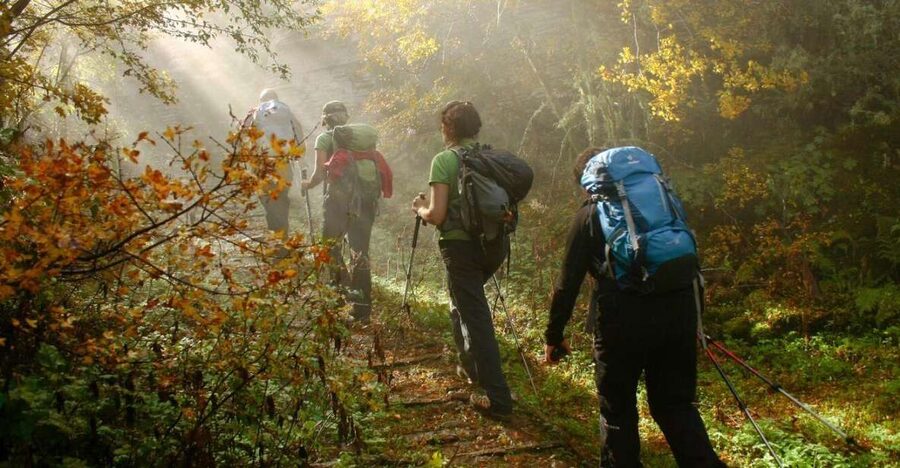
After the upper section, the path descends toward Kastraki. Descending can be easier on your breathing but harder on knees and balance, especially after several hours on stone and dirt. Take your time rather than treating this as a race back to town.
The route passes close to the cave of St George Mandilas. Each year, people climb to the cave to hang handkerchiefs, following a local tradition. It is a striking example of how religious practice and the rock formations remain tied together.
This stop is also a reminder that Meteora is still a lived place, not just an outdoor museum. The cave is difficult to understand from a road viewpoint. Walking near it lets you see the height and effort involved in the tradition, even if you do not take part.
The hike ends in Kastraki, where the minibus returns you to your accommodation in Kalambaka or Kastraki. The full guided portion lasts about 4.5 hours, including the route and stops. Exact timing may vary with the group pace and pickup schedule.
Is $49 a fair price?

At $49 per person, this is a good value if you want transport and a guided route rather than simply buying access to the monasteries. The price includes round-trip pickup, a certified English-speaking mountain guide, bottled water, Wi-Fi in the vehicle, taxes, and services.
The main value is the route itself. You could visit Great Meteoron and Varlaam by road, but you would not get the same old paths, forest approach, Ypapanti, rebel sites, or St George Mandilas cave. The guide also adds meaning to places that might otherwise look like scattered ruins and rocks.
The price does not include monastery entry, listed as €5, or travel insurance. You should also budget for suitable walking clothes and perhaps a second shirt. The advice to bring a change of clothes is practical, especially in warm weather, since you may sweat during the climb.
The tour allows free cancellation up to 24 hours before departure and offers reserve-now, pay-later booking. Those policies are useful if your schedule around Kalambaka is still shifting, but the real decision is your fitness and interest level. A bargain is less useful if you want a gentle sightseeing ride.
What to wear and carry for the 8-kilometer walk
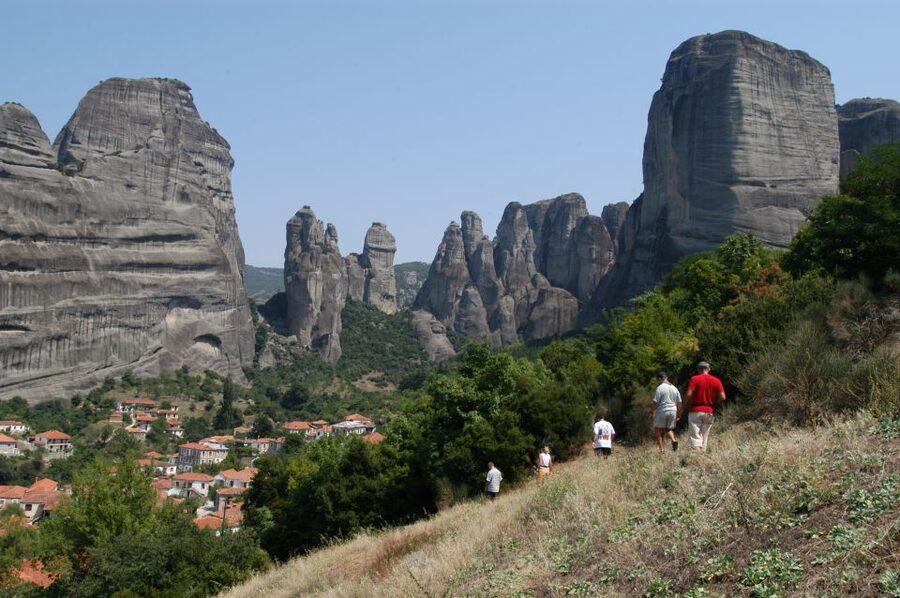
Wear comfortable clothes and sturdy, comfortable shoes. The route is not described as technical, but uneven paths and uphill sections call for footwear with a good grip.
Bring a small backpack with water, even though bottled water is provided. A hat or skullcap, raincoat, sunscreen, and a spare shirt are sensible additions. Weather can change the feel of the route, and rain can make old stone paths less comfortable.
For monastery access, men need trousers and a shirt or T-shirt with sleeves. Women need a long skirt. If entering a monastery matters to you, dress accordingly before leaving the hotel instead of relying on a borrowed covering.
The walk is not suitable for wheelchair users or people with back or heart problems. It is also not a good match if you are looking for a flat, paved route. The word family-friendly applies best to active families with children who can manage a full morning or afternoon on foot.
Who should choose this Meteora hike?
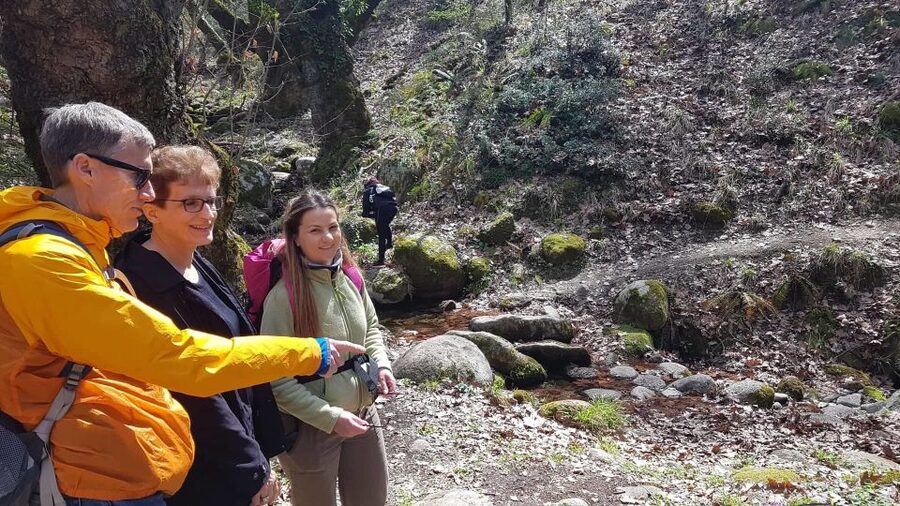
I would recommend it to you if you want to connect the famous monasteries with the paths and places around them. It is especially useful for first-time visitors who want a local introduction, and for repeat visitors who have already seen the main road viewpoints.
It suits an active couple, a small family, or anyone who prefers a guide-led walk to a standard coach circuit. The small group keeps the experience more flexible, and the route offers enough historical detail to satisfy people who want more than scenery.
I would be cautious if you rarely walk, have joint or heart concerns, or expect the word easy to mean nearly flat. One person who described the hike as easy still noted the uphill work, while another found it closer to light to moderate. Think of it as accessible hiking, not a gentle promenade.
Should you book it?
Book this tour if you want Meteora’s old paths, forest views, lesser-known religious sites, and local stories, with transport handled for you. At $49, the combination of a guide, pickup, and a route that reaches beyond the standard road circuit is strong value.
Skip it if your priority is entering several monasteries with minimal walking. The tour reaches Great Meteoron and Varlaam, but interior admission is not included, and the main experience is the hike itself. For everyone else, bring proper shoes, allow extra time for the hills, and treat easy as a fair warning rather than a guarantee.
FAQ
How long does the Meteora hike last?
The guided experience lasts about 4.5 hours.
How far is the walking route?
The distance is about 8 kilometers.
Where does the tour start?
Pickup is available from accommodation in Kalambaka or Kastraki. The minibus then takes you to Kastraki, where the hiking route begins.
How long is the minibus ride to the trail?
The transfer from the pickup area to Kastraki takes about 20 minutes.
What language is the tour conducted in?
The confirmed live tour language is English.
How large is the group?
The group is limited to 12 participants.
Are Great Meteoron and Varlaam included?
The route takes you to the monasteries, but the available information does not promise interior visits to both. Monastery entry costs €5 and is not included in the tour price.
Can I pay the monastery entrance fee by card?
No. Credit cards are not accepted for the monastery entrance fee, so bring cash.
What should I wear to enter the monasteries?
Men need trousers and a sleeved shirt. Women need a long skirt. Comfortable walking clothes and shoes are also required for the trail.
Is the hike suitable for everyone?
The route is described as easy, but it includes uphill sections and about 8 kilometers of walking. It is not suitable for wheelchair users or people with back or heart problems.
Just added around Greece
- Ridomo Gorge hike to MANA spring★ 5.0 · 15 reviews
- Hiking around Navarino Bay★ 5.0 · 9 reviews
- Hiking around Kardamyli★ 5.0 · 12 reviews
- Full-Day Hiking Mount Taygetos Summit with Picnic★ 5.0 · 2 reviews
- Hiking Menalon & Lousios gorge★ 5.0 · 8 reviews
- Imbros Gorge Hiking Day Trip with transportation★ 4.5 · 20 reviews
- Full Day Hiking at Samaria Gorge&Agia Rumeli Beach from Heraklion★ 4.0 · 29 reviews
- Sarakina Gorge hiking & swim Adventure – Jeep Safari South Crete★ 5.0 · 21 reviews
Greece Hiking Tours, compared.
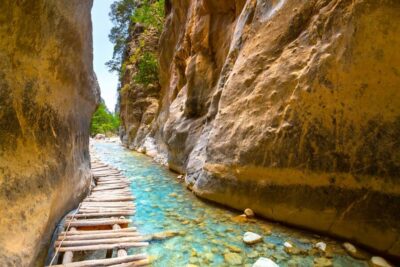
From Chania/Rethymno: Samariá Gorge Guided Hike with Pickup
Read our review →
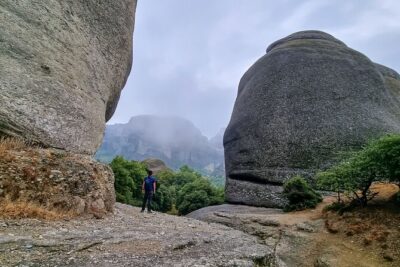
Meteora Small Group Hiking tour with Transfer and Monastery Visit
Read our review →
From Heraklion: Samaria Gorge & Agia Roumeli Hiking Day Trip
Read our review →
Samaria Gorge Hiking from Chania with Professional Hiking Guide
Read our review →
Kalabaka: Meteora Small-Group Hiking Tour w/ Monastery Visit
Read our review →Browse the lists this tour appears in