
REVIEW · ITALY
Linguaglossa: Mt Etna Summit Crater Hike with Optional 4×4
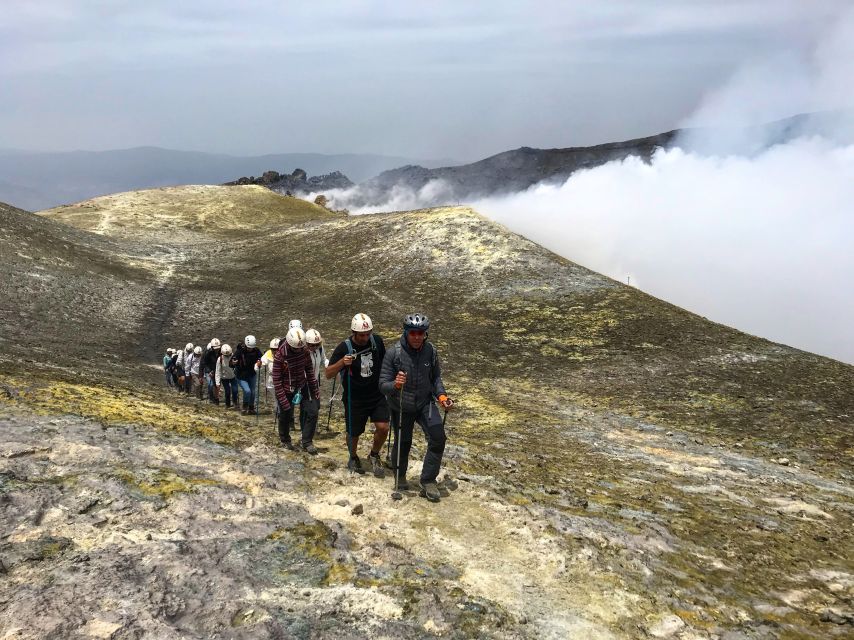
Etna’s north side gives you the volcano at its roughest and most dramatic. You begin above Piano Provenzana, ride up through black volcanic terrain, then walk across a high desert toward the summit craters, where sulfur colors and fumes make the mountain feel very much alive. I like the small group size and the chance to see Etna’s wild northern slope without the crowds found on easier lower routes.
I also like that the hike is not just a summit photo stop. You walk through several types of volcanic terrain, descend by loose sand gullies, and reach Pizzi Deneri for a sweeping view into Valle del Bove. The main catch is cost: the advertised price is $70, but the 4×4 ride costs an extra €50 per person, and you will need to be comfortable with a steep, loose downhill route.
Key points to know before you go
- Etna’s north side feels remote: The route crosses black volcanic desert, summit craters, ash, gullies, and hardy plants found only on Etna.
- The walk is physically serious: Expect 12 kilometers, about 600 meters of ascent, and 1,500 meters of descent over five hours.
- The summit section is the highlight: You approach the Central Crater, Bocca Nuova, South-East Crater, and North-East Crater from safe viewing areas.
- The 4×4 costs extra: The ride from Piano Provenzana to the higher trailhead is €50 per person, paid separately.
- The descent needs care: Loose gravel, steep volcanic sand, sharp rock, ice in colder months, and possible vertigo make gloves and sturdy shoes useful.
- Guiding adds real value: English, French, and Italian are available, with guides such as Vincenzo, Massimo, and Marco leading recent departures.
Why Etna’s north side is worth your time
Many Etna outings keep things simple: ride partway up, take a short walk, look at a crater, and return. This route asks more of you, but it also gives you a fuller picture of the volcano.
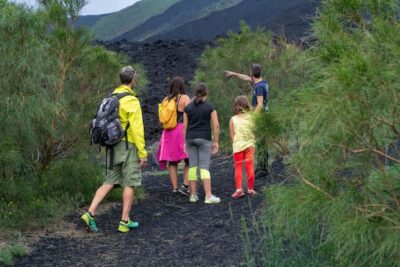
The north side around Piano Provenzana is less built up than the southern approach. From the starting point at about 1,800 meters, the route moves into open volcanic ground rather than a developed resort area. The scenery changes as you gain height. Dark lava, ash, broken rock, sulfur deposits, and broad views replace the lower mountain’s plant cover.
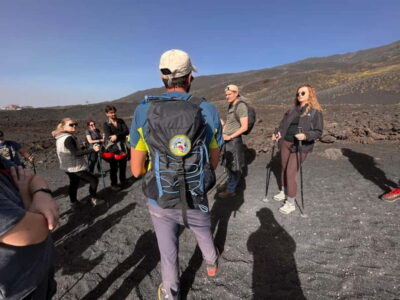
The route is especially good for anyone who wants to understand how a volcano is shaped by time and eruptions. Your guide explains Etna’s geological past while pointing out features along the way. That matters here, because the ground can look like a field of black rubble at first glance. With some explanation, the craters, lava flows, eruptive fractures, and caldera walls begin to make sense.
You also get the pleasure of scale. On a clear day, views reach toward the Aeolian Islands and the Gulf of Taormina. Those views are not guaranteed, since cloud and volcanic conditions can change quickly, but the high route gives you a strong chance at wide-open scenery.
More Mountain Hikes in Italy
- Mount Etna: Summit Guided Hiking Tour up to 3,400 m
★ 4.8 · 4,792 reviews - Etna Volcano: South Side Guided Summit Hike
★ 4.7 · 1,545 reviews - Catania: Mount Etna Adventurous Hiking Tour with Equipment
★ 4.7 · 784 reviews
Starting at Piano Provenzana at 8 a.m.
You meet in front of Chiosco Bar Mareneve at Piano Provenzana. Look for the Aitne Volcano Guide logo and allow extra time to park. Parking costs €3.
The departure time is 8 a.m., which is useful for two reasons. You have the cooler part of the day for the climb, and you get onto the high slopes before the route becomes more tiring in direct sun. The full outing lasts about five hours, though weather and volcanic conditions can alter the plan.
The group is limited to eight people, with a minimum of five needed for the departure. That is small enough for the guide to keep an eye on walking speed and footing. This becomes important if fitness levels vary. One recent guide, Vincenzo, adjusted the pace for a mixed group and helped people through harder sections. That kind of hands-on attention is more useful here than a guide who simply walks ahead and talks at fixed stops.
The guiding languages are English, French, and Italian. Vincenzo has led the walk in French, and Massimo has also guided recent outings. Your assigned guide can vary, so do not book expecting a particular person, but the multilingual setup is a strong practical benefit.
The €50 4×4 ride to 2,800 meters
From Piano Provenzana, you can take a 4×4 vehicle for roughly 30 minutes to Piano delle Concazza at about 2,800 meters. This saves a long lower section of walking and places you close to the high volcanic terrain that makes the outing special.
The ride is not included in the $70 tour price. It costs €50 per person and is paid locally. That extra charge changes the value calculation. At first glance, this looks like an inexpensive summit hike. Once you add the required high-mountain transfer, the total becomes considerably higher.
The vehicle ride itself is part of the mountain day, but comfort may be limited. One account described the return transport as crowded, with some people standing. Another called it an adventure and warned that it might not suit anyone with a weak stomach. I would treat the 4×4 as practical transport rather than a luxury ride.
You should also confirm the transfer arrangement before setting out, since the route description relies on reaching the high trailhead. The activity information lists the ride as optional and separately priced, but the planned walk begins at Piano delle Concazza after the vehicle transfer.
Walking to the Central Crater
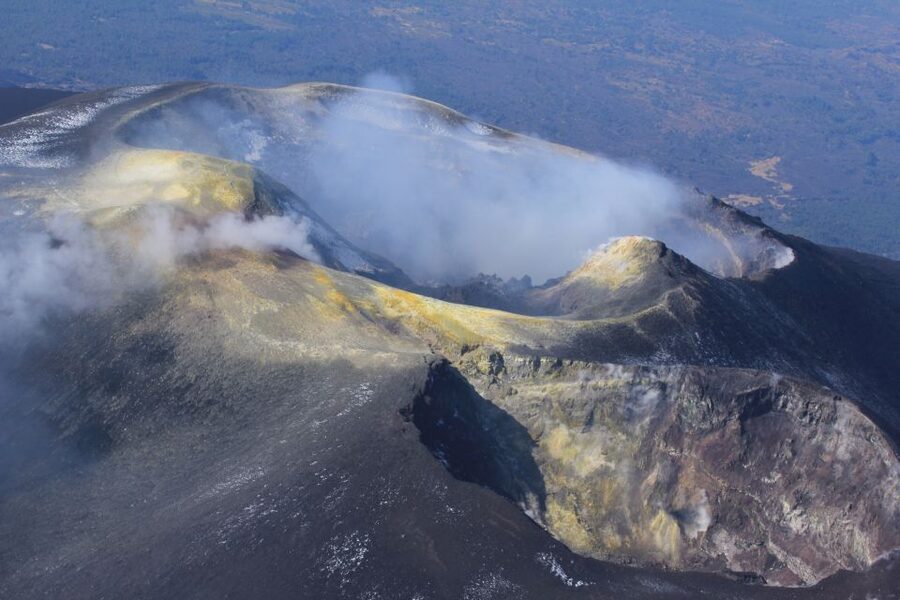
Once you leave the 4×4 at Piano delle Concazza, the main hike begins. The first walking section takes about 1.5 hours through a high volcanic desert.
This is not a gentle stroll. At roughly 2,800 meters, the air is thinner than at the coast, and the ground is uneven. You cross ash and volcanic rock while gaining height toward the summit area. The route description lists medium-high difficulty, with around 600 meters of climbing overall.
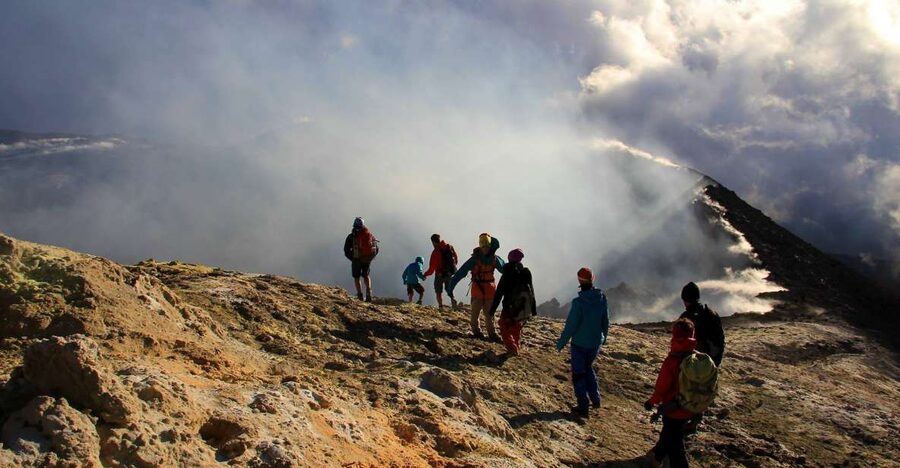
The first major goal is the rim of Etna’s Central Crater. From a safe position, you can look into the deep depression and see colorful sulfur sublimates. Sulfur can produce yellow and orange tones against the otherwise dark rock, while fumes give the crater a reminder of its active nature.
Your neck warmer has a job here. It helps protect your face from volcanic sand and gases, especially if wind moves loose material across the route. The mountain is not a theme park attraction, and conditions can feel raw. That is part of the appeal, but it also means you need to follow the guide closely and stay within the permitted viewing areas.
More Volcano Hikes in Italy
- Etna Volcano: South Side Guided Summit Hike
★ 5.0 · 311 reviews - Mount Etna: Central Crater Guided Hike for Advanced Hikers
★ 4.8 · 106 reviews - Hike near the summit craters up to the maximum safe altitude currently foreseen
★ 5.0 · 57 reviews - Sicily: Mount Etna’s North Slope Craters Guided Hike Tour
★ 5.0 · 8 reviews
Seeing Bocca Nuova and the other summit craters
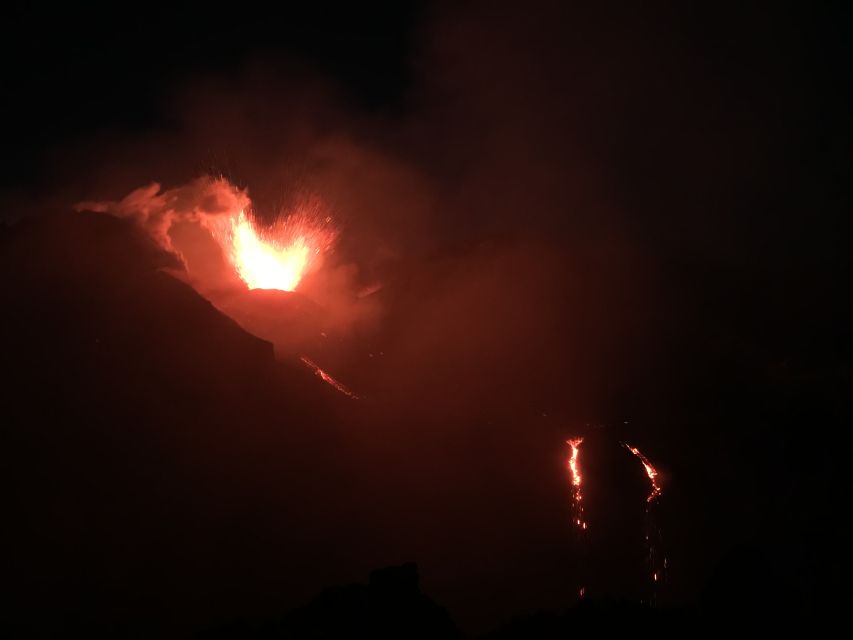
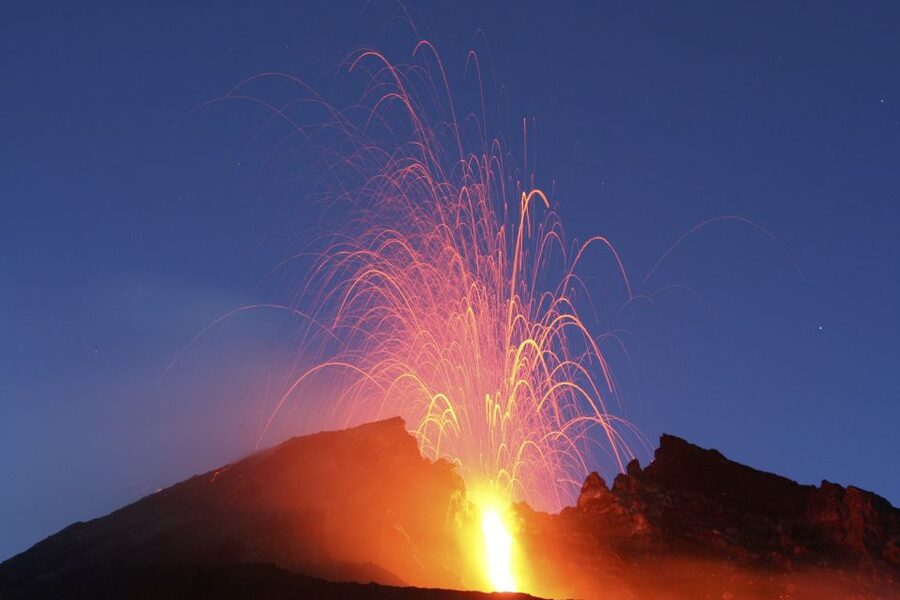
The hike continues through the summit area, with views of Bocca Nuova, the South-East Crater, and the North-East Crater. You do not walk into the craters. The guide chooses safe viewing positions, which can change with volcanic activity and ground conditions.
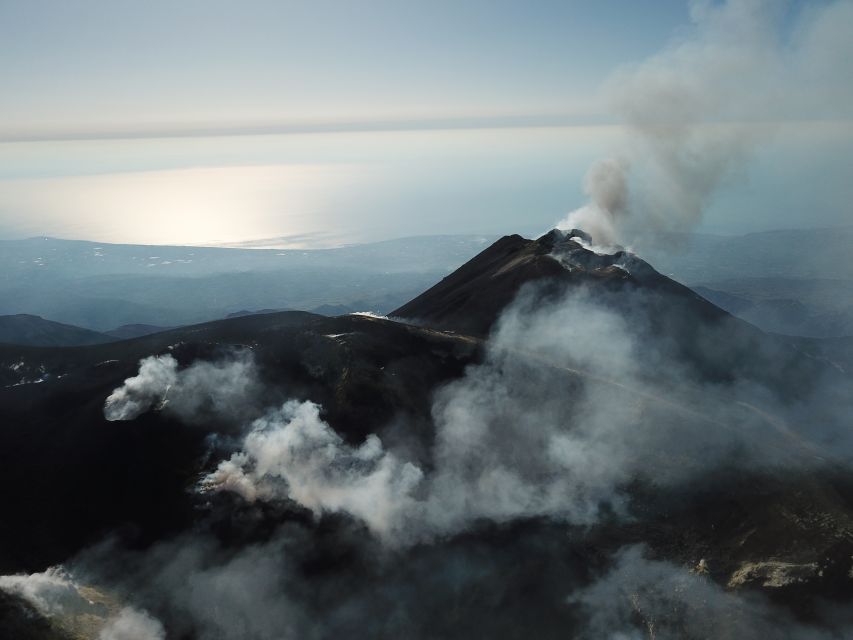
Bocca Nuova is especially interesting because the summit area does not look like a single neat cone with one hole in the top. Etna has several active and historic crater structures, each shaped by different eruptive periods. Seeing more than one helps you understand the volcano as a changing system rather than a fixed mountain.
The South-East and North-East Craters add variety to the view. Their outlines, colors, and smoke can differ depending on weather and activity. Do not expect the same amount of visible gas every day. A quiet-looking moment can still be significant, and increased activity can cause the route to change or be canceled.
This is where a good guide matters. A photo gives you the outline of a crater, but a guide can explain why the summit zone has several vents and why access rules are strict. The walk gives you information in the exact place where the geology is visible.
The steep descent through volcanic sand
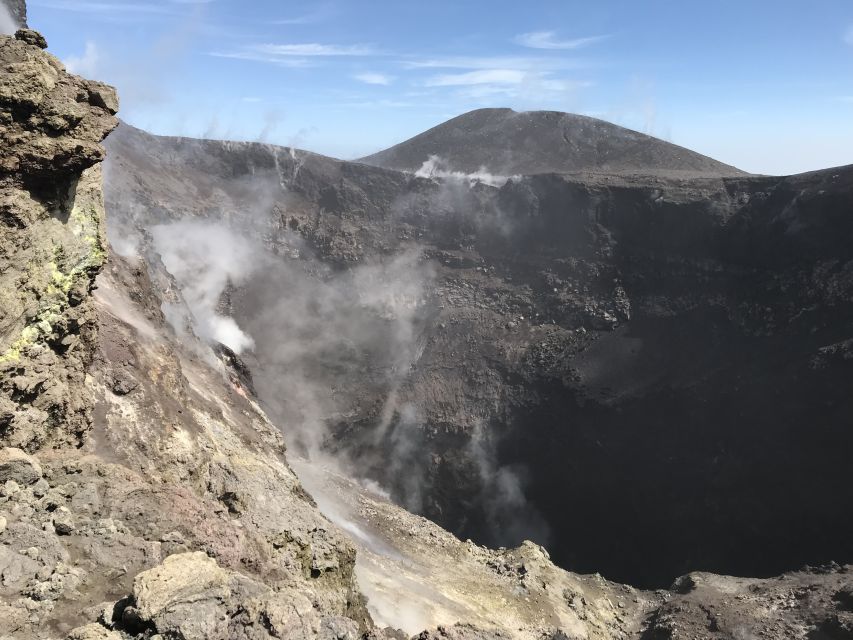
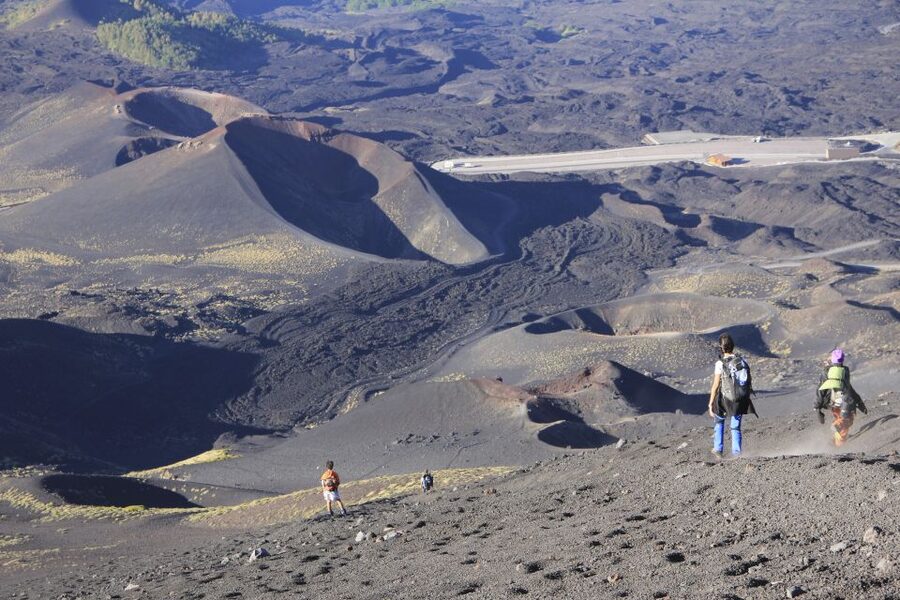
The return route is not simply the uphill walk in reverse. You descend through steep volcanic sand gullies toward Pizzi Deneri. Loose ground makes downhill walking harder than many people expect. Your feet can slide forward, and braking with each step can tire your legs quickly.
A recent outing included steep passages on gravel and ice, and the guide helped people where needed. Conditions will vary by date, but the warning is worth taking seriously. Gloves are useful, not just for warmth. Sharp volcanic rocks can give you something to hold when the footing becomes awkward.
Trekking poles are included, along with a helmet, trekking shoes, a wind jacket, and a pull or warm layer. Even with the supplied equipment, wear long trousers, a sweatshirt, gloves, a hat, and a windproof outer layer. The mountain can be cold and exposed at the summit, while the lower descent may feel warmer.
The loose gullies are also one of the most enjoyable parts for people who like active mountain walking. You can move quickly through soft volcanic sand when conditions allow, but you must keep your balance and listen to the guide. This is not the place for worn trainers or casual shoes.
Pizzi Deneri and the Valle del Bove view
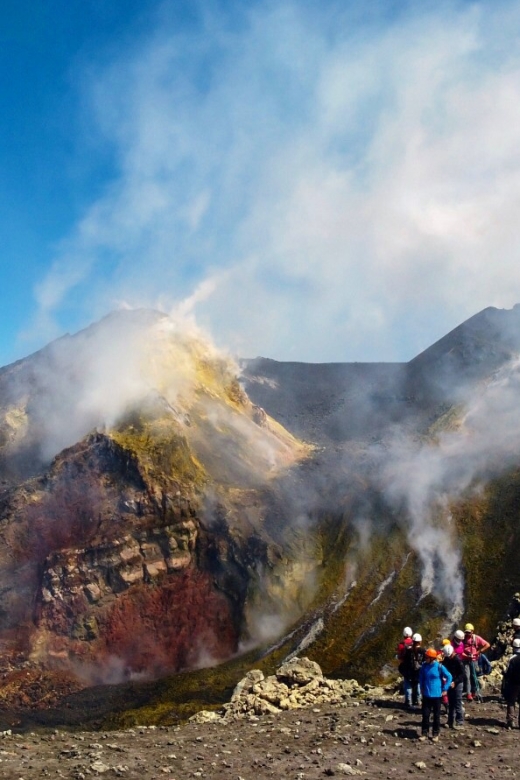
Pizzi Deneri provides one of the route’s best viewpoints. From here, you can look across the volcanic amphitheater of Valle del Bove, a huge caldera measuring about 8 kilometers long and 4 kilometers wide.
The view gives you a better sense of Etna’s scale than the summit craters alone. At the top, you focus on vents, fumes, and rock close at hand. At Pizzi Deneri, you see the wider structure of the mountain and the enormous hollow shaped by past volcanic events.
This is the natural place for a lunch break. Bring a packed lunch and at least 1.5 liters of water per person. Food and drinks are not included, and there is no promise of a meal stop with purchased food on the route.
The pause also gives your legs a break before the final descent. Five hours is not an extreme duration for a mountain outing, but the 1,500-meter downhill figure makes the day more demanding than the time alone suggests.
The Quarantore gullies and 2002 eruption area
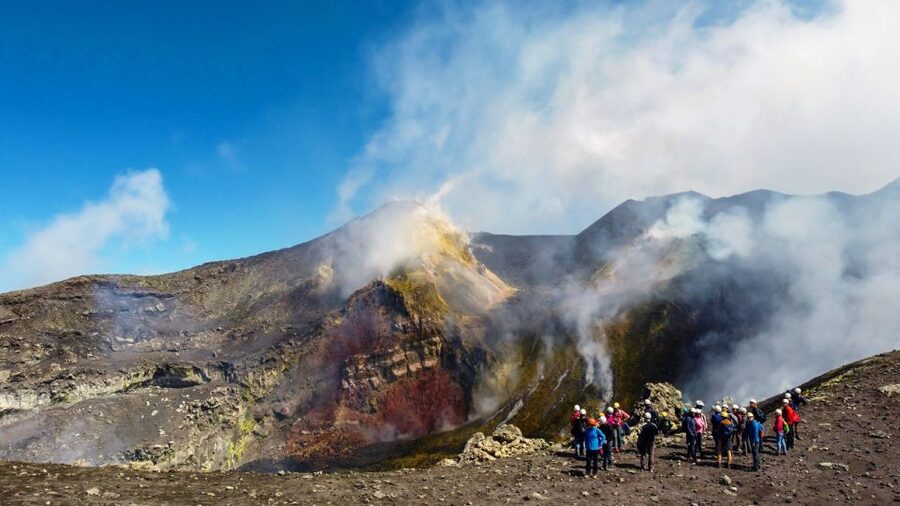
After lunch, the route continues down through the Quarantore gullies. The scenery changes again, with a view toward the 2002 eruptive fracture and more plant life along the trail.
Etna is not just bare black rock. As you lose height, plants begin to appear in pockets and then more regularly. Some are endemic to Etna, making this section useful for seeing how life returns to volcanic ground. Your guide can connect the plants to the mountain’s altitude, eruptions, and changing soil.
The 2002 fracture adds a recent date to the story. Instead of thinking only about ancient lava flows, you see evidence of an eruption within living memory. That helps explain why access rules, weather checks, and guide instructions are taken seriously.
The walk ends back at Piano Provenzana. The final 30-minute vehicle section listed for the route is part of the transport plan around the high route, while the main walking circuit finishes at the starting area.
What the $70 price really includes
The base price includes the volcano guide, trekking shoes, a wind jacket and pull, helmet, trekking poles, and insurance. Those inclusions make the price more reasonable, especially if you did not pack high-mountain gear for a Sicily trip.
Still, you need to budget beyond the headline figure:
- $70 per person for the activity
- €50 per person for the 4×4 ride
- €3 for parking
- Your packed lunch and water
Hotel pickup is not included. You must reach Piano Provenzana yourself, and the meeting point is in front of Chiosco Bar Mareneve.
The strongest value comes from the combination of guiding and supplied equipment. You get a full five-hour route, several crater viewpoints, the Valle del Bove overlook, and an explanation of Etna’s geology. The weakest part of the value is the separately charged transfer, particularly if the vehicle is crowded.
Who should book this Etna hike?
I would choose this route if you want a real mountain walk rather than a short scenic stop. It suits people with a good fitness level who are happy on loose, steep ground and who want more than a single crater viewpoint.
It is not suitable for children under eight, people with heart problems, vertigo, fear of heights, altitude sickness, recent surgery, or low fitness. The stated weight limit is 220 pounds, or 100 kilograms, and the stated age limit is under 80 years. These restrictions reflect the altitude, uneven ground, transport, and downhill demands.
You also need to accept uncertainty. Bad weather or increased volcanic activity can change the route. That is not a flaw in the guiding. It is a basic fact of visiting an active volcano. Keep some flexibility in your schedule rather than placing this outing immediately before an important flight.
The small group and multilingual guides make the walk easier to manage. Marco, Vincenzo, and Massimo have each received specific praise for safety, explanations, or language support on recent departures. You should still judge the tour by the route and conditions, not by the hope of getting one particular guide.
Practical packing advice
Wear the supplied trekking shoes if they fit well, but bring your own sturdy footwear if you prefer a known pair. Long trousers protect your legs from ash, sand, and sharp rock.
Pack at least 1.5 liters of water, a substantial lunch, gloves, a hat, a sweatshirt, and a windproof jacket. A neck warmer is particularly useful around volcanic sand and gases.
Keep your camera protected from grit. More important, keep one hand free when the route becomes steep. Trekking poles are supplied, but gloves still help when you need to steady yourself against rough rock.
Should you book this tour?
Book it if your priority is Etna’s wild north side, summit crater views, and a proper guided route through changing volcanic terrain. The geological explanations, small group, safety equipment, and dramatic view from Pizzi Deneri give the day more substance than a quick summit visit.
Think twice if you want an easy outing, dislike crowded vehicle transfers, or are watching every euro. The €50 4×4 charge is significant, and the downhill sections can be harder than the five-hour duration suggests.
For an active visitor who accepts those limits, this is a strong way to meet Etna on its own terms: smoky, rough, windy, and sometimes wonderfully unpredictable.
FAQ
How long does the Etna summit crater hike last?
The activity lasts about five hours, including the walking route and transport sections.
Where does the tour meet?
Meet in Piano Provenzana, in front of Chiosco Bar Mareneve. Look for the Aitne Volcano Guide logo. Parking costs €3.
Is the 4×4 ride included in the price?
No. The 4×4 ride costs €50 per person and is paid separately. Hotel pickup is also excluded.
What equipment is included?
The tour includes a volcano guide, trekking shoes, a wind jacket and pull, a helmet, trekking poles, and insurance.
Is the hike suitable for children?
Children under eight are not permitted. The hike is also not suitable for people with heart problems, vertigo, fear of heights, altitude sickness, recent surgery, or low fitness.
What languages are available?
Guides conduct the tour in English, French, and Italian.
Just added around Italy
- Hiking Florence Tuscany hills with lunch & wine★ 5.0 · 22 reviews
- Day trip to Cinque Terre by Deluxe minivan & Hiking★ 5.0 · 6 reviews
- Fiesole Hike & Italian Aperitivo★ 5.0 · 6 reviews
- Hiking Tuscany & Chianti Wine – 3 Organic Wineries with lunch★ 5.0 · 27 reviews
- Hike & Wine Tour★ 5.0 · 9 reviews
- Private Guided Hiking Cinque Terre Day From Florence★ 5.0 · 7 reviews
- Dolomites of Cortina Winter Hiking & Sledding Experience★ 5.0 · 6 reviews
- Snowshoe hike to the Cinque Torri★ 5.0 · 2 reviews
Italy Hiking Tours, compared.
Cinque Terre Day Trip with Optional Hiking or Pisa
Read our review →
Florence: Cinque Terre Day Trip with Optional Hiking or Pisa
Read our review →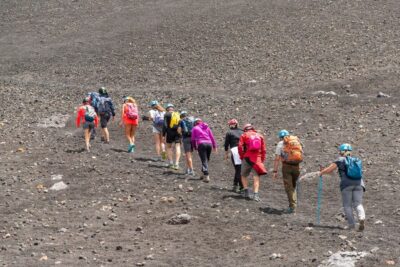
Mount Etna: Summit Guided Hiking Tour up to 3,400 m
Read our review →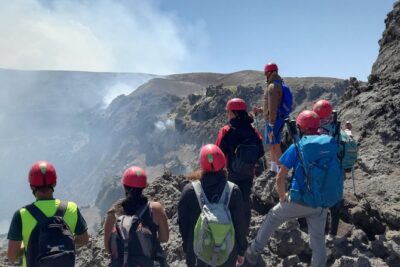
Catania: Mount Etna Adventurous Hiking Tour with Equipment
Read our review →
From Taormina: Etna Tour with Hiking, Cave Visit, & Tastings
Read our review →
Catania: Etna Nature Tour with Hiking, Cave Visit, & Tasting
Read our review →Browse the lists this tour appears in