
REVIEW · PORTUGAL
Guarda – nature walk: Tales on the Mondego Walkways
The striking part of this walk comes early: you descend about 500 wooden steps from the Mocho Real viewpoint into the Mondego Valley, with the Caldeirão waterfall below and the river guiding you onward. It is a fine mix of wild scenery, old engineering, Roman stonework, and mountain stories.
I like the way this tour connects nature with daily life. You do not just look at the river. You learn how water powered mills, looms, and turbines, and how wool became the famous Papa blanket. I also like the handmade local snack, made without dyes or preservatives and linked to the UNESCO Estrela Geopark EcoFood project.
The main drawback is the route itself. This is a one-way, 12-kilometre walk with 600 metres of accumulated slope, and much of the first section goes downhill on steps. The return taxi from Videmonte to the Caldeirão Dam is not included and costs about €25, so plan for that extra expense.
Key points to know before booking
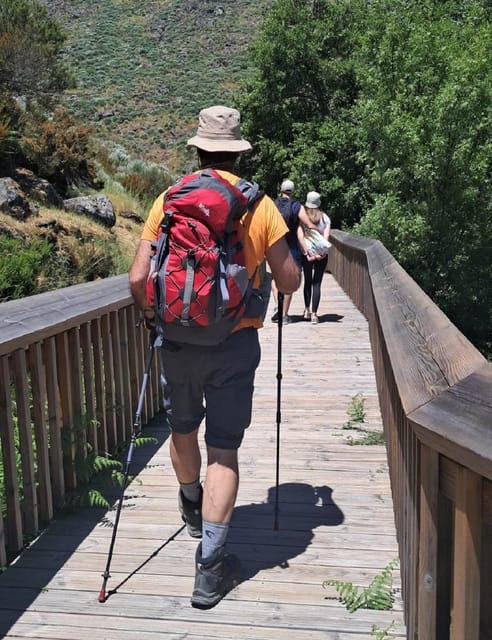
- 500 steps lead into the Mondego Valley: The descent is scenic but demands steady legs and sensible shoes.
- A one-way route with a real transport detail: You finish in Videmonte and need a taxi back to the starting point.
- History appears beside the river: Expect a Roman bridge, wool factories, a hydroelectric plant, flour mills, and former mining sites.
- Small groups keep the walk personal: The group is limited to 10 people, with Portuguese or Spanish guiding.
- The snack is part of the local story: Handmade regional food is included, but advance booking is wise because some items are made to order.
- Water, bridges, and bathing: On warm days, you can bring swimwear and a towel for a possible dip in the Mondego.
A six-hour walk with a story at every turn
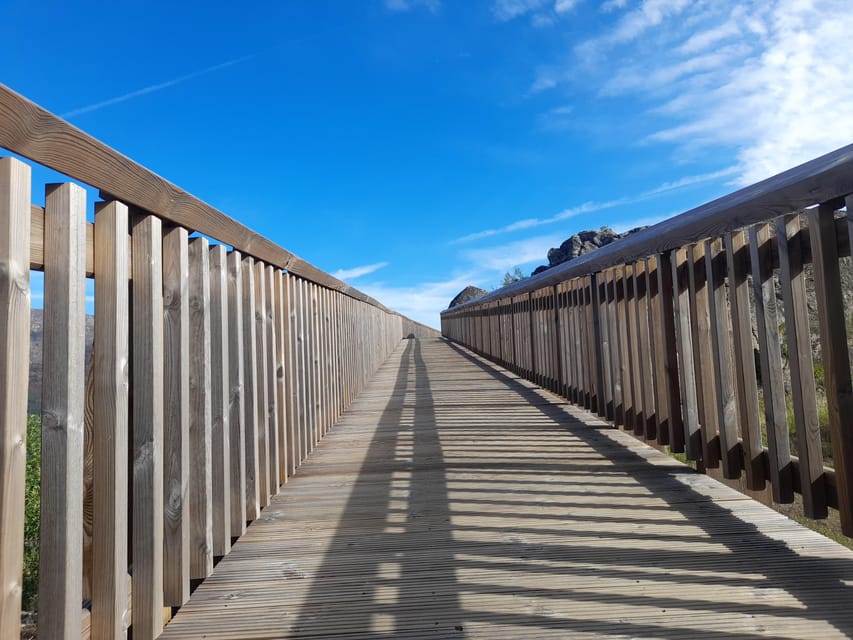
The Mondego Walkways are not simply a riverside stroll. They follow a route through the Caldeirão section of the Mondego Valley, where water has shaped both the rocks and the local economy.
At $33 per person, the price is fair for a guided six-hour outing. Your fee covers the guide, walkway entrance, insurance, and a regional snack. The value comes from the interpretation. Without a guide, you might see a waterfall, an old building, or a stone bridge. With the tour, each one becomes part of a larger story about power, wool, food, and mountain life.
The group limit of 10 is useful here. Narrow walkways and suspension bridges are easier to manage in a small group, and you have a better chance to ask questions. Gonzalo is the named guide associated with this experience, and his warm, human approach has been a major part of the appeal for people who joined him, including a solo visitor who found the experience comfortable and easy to follow.
The tour is offered in Portuguese and Spanish. If you do not speak either language, this is an important point to check before booking.
More Nature Walks in Portugal:
- Albufeira: E-Bike tour of Nature Trails and Tradition
★ 4.8 · 27 reviews - Prazeres: Full-Day Nature Walk
★ 4.6 · 18 reviews - Oslo Nature Walks: Island Hopping Tour
★ 4.8 · 2,713 reviews
Starting at Caldeirão Dam and climbing to the view
Meet at the parking area beside the entrance to the Mondego Walkways at the Caldeirão Dam. Look for the bird observatory and an orange umbrella, which marks the guide’s meeting point.
The walk begins with a short safety briefing of about 10 minutes. From there, you climb to the Mocho Real viewpoint. This opening climb gives you a broad view of the surrounding Serra da Estrela area and helps you understand the route ahead.
Then the direction changes sharply. You begin the long descent into the valley, using around 500 wooden steps. The steps are the first real test of the day. Going down can be harder on knees than expected, especially if you are not used to long stairways, so walking poles may help. Optional walking sticks are available for use.
Take your time here. The point is not to rush to the bottom. The view changes as you descend, and the route soon brings you close to the Caldeirão waterfall.
Caldeirão Waterfall and the old Mizarela Bridge
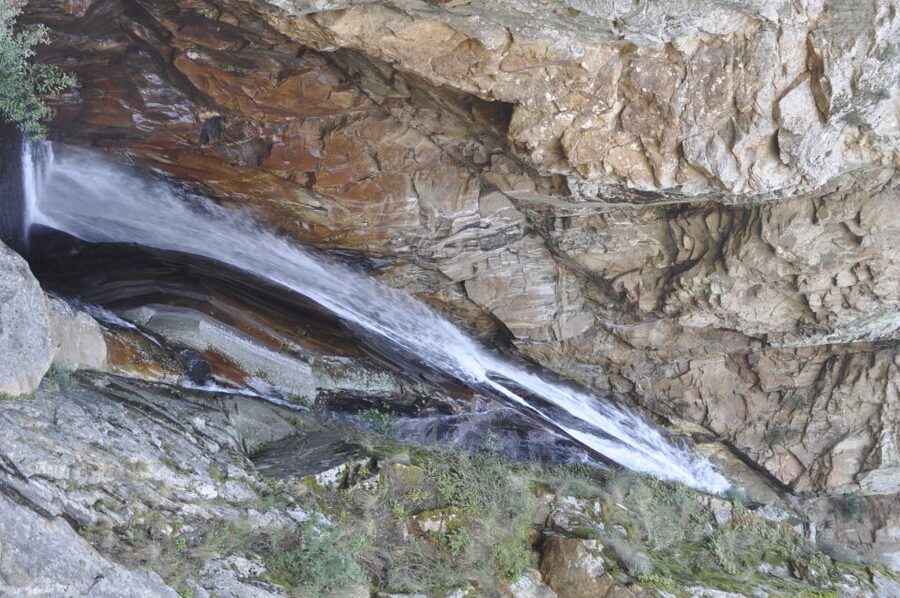
The Caldeirão waterfall is one of the main visual rewards of the route. Water drops through the rocky valley, and the setting feels more powerful because you have just come down from the open viewpoint into a narrower, more enclosed part of the Mondego Valley.
The guide stops here for photographs and explanation. The waterfall’s appearance will depend on recent rainfall and the season, but the water remains one of the defining features of this section.
Next comes the ancient Roman bridge at Mizarela. This is a good moment to slow down and look at the contrast between old stone construction and the newer walkway structures around it. The river has also carved natural forms into the rock, giving the stop a geological side as well as a historical one.
The bridge is not a large monument with a long formal visit. Its appeal is its place in the route. You see how people once crossed the valley and how the same river still shapes movement through the area.
Poços do Mondego and the working river
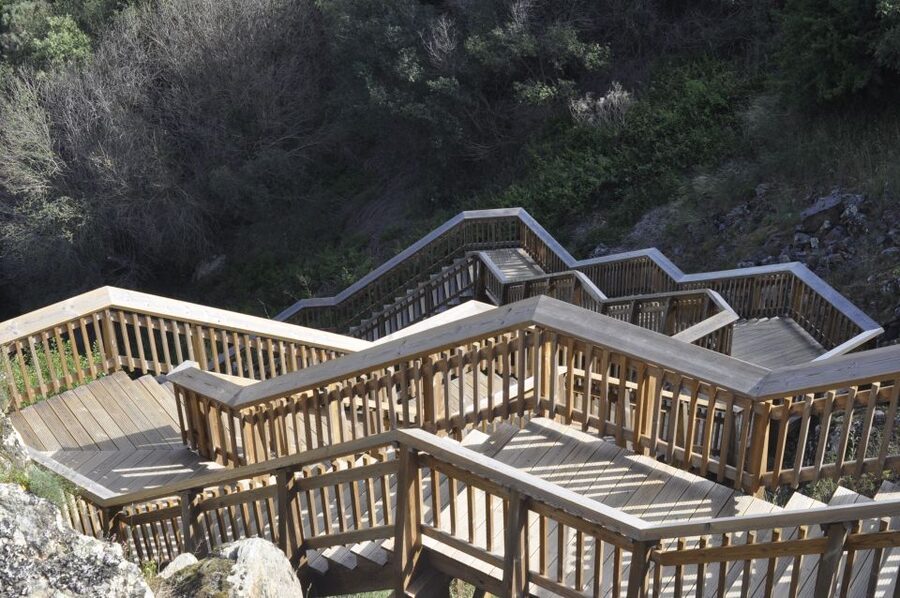
The Poços do Mondego section brings you close to pools and rock formations created by flowing water. These stops are especially appealing if you enjoy seeing a river in a less controlled state.
The walk also explains how the Mondego supported local work. Water was not only scenery. It powered machinery, moved turbines, and helped sustain communities in a difficult mountain setting.
That connection is one of the strongest parts of the experience. You get a better sense of why old industrial sites appear along the river rather than in a town center. The river supplied the force, and the factories grew beside it.
More Walking Tours in Portugal:
- From Funchal: Madeira Peaks Mountain Walk
★ 4.8 · 380 reviews - Madeira Peaks – Mountain Walk
★ 5.0 · 293 reviews - Fanal Assobiadores – Mountain Walk
★ 4.5 · 31 reviews - Madeira: Mountain Walk with Lagoon and Waterfalls
★ 3.9 · 28 reviews
Wool factories and the traditional Papa blanket
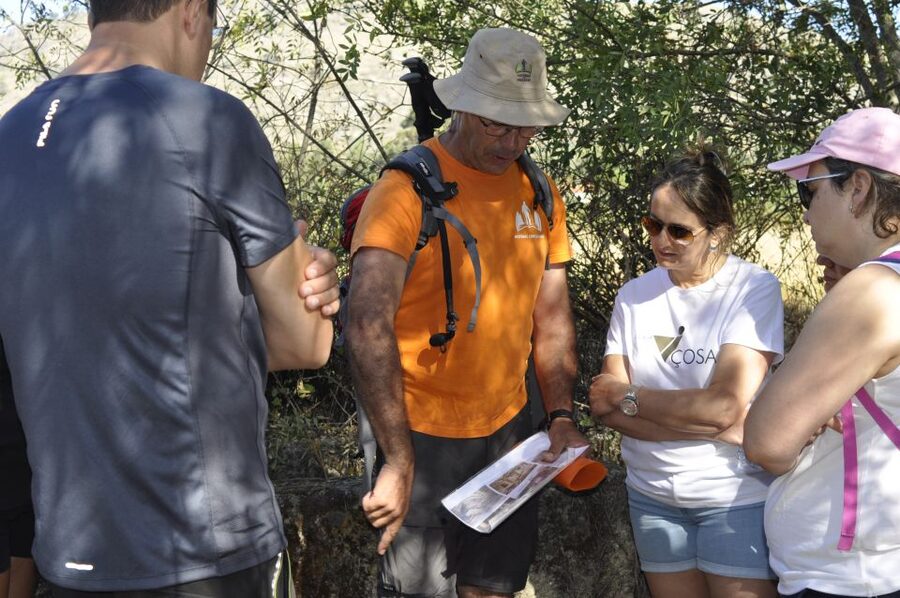
The trail passes old wool yarn and fabric factories. Their presence gives the walk a strong local character, since Serra da Estrela is known for traditional wool work and mountain textiles.
You learn about the Papa blanket, including how it was made and used. It is not presented as a polished museum object removed from daily life. Instead, the blanket is tied to the work of local families and the practical need for warmth in a highland region.
This section adds depth to the scenery. A waterfall is beautiful, but a blanket tells you how people lived through cold weather, worked with local materials, and passed skills from one generation to the next.
The old factories may appeal most to visitors who enjoy industrial history, rural crafts, and places that still show signs of working life. If you only want a fast walk with nonstop views, the explanations may feel like pauses. I think they are worth the time because they give the valley a human scale.
Pateiro Hydroelectric Plant and Levada do Pateiro
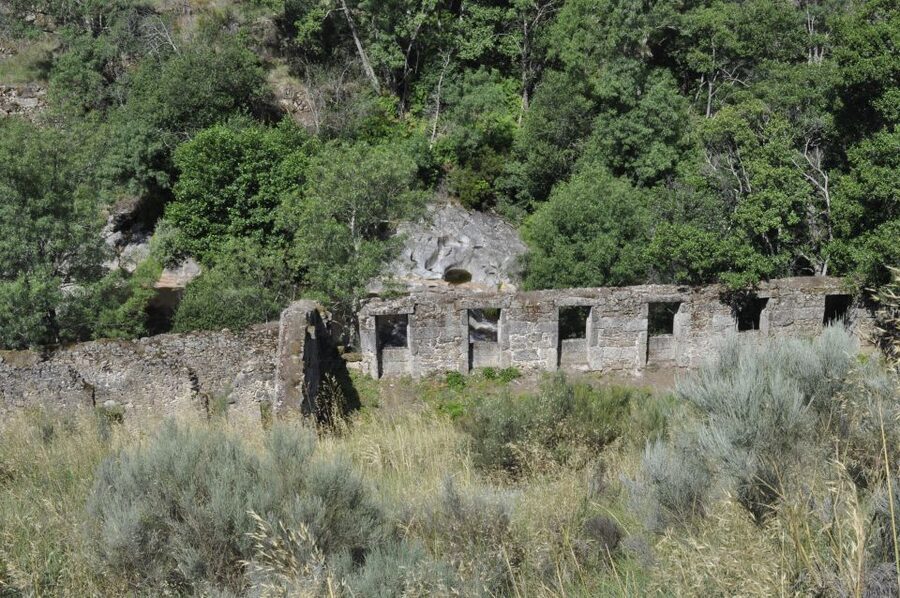
The Pateiro Hydroelectric Power Plant is identified as the oldest electricity factory in Guarda. The guide explains how the water reached the plant and how the turbines were moved by carefully designed channels and structures.
This is a useful stop for anyone interested in engineering. The machinery is part of the valley’s story, not an unrelated technical aside. Local people found ways to turn the river’s force into electricity, just as earlier generations used it to power mills and looms.
The nearby Levada do Pateiro shows how water was directed through the system. You can expect a guided stop and photo opportunity, followed by the Barragem do Pateiro, which you pass along the route.
The plant and dam also help explain the balance between nature and human use. The river is not entirely untouched, yet the route still includes stretches where the water, rocks, and woodland feel remarkably quiet.
Black gold, mining remains, and a local snack
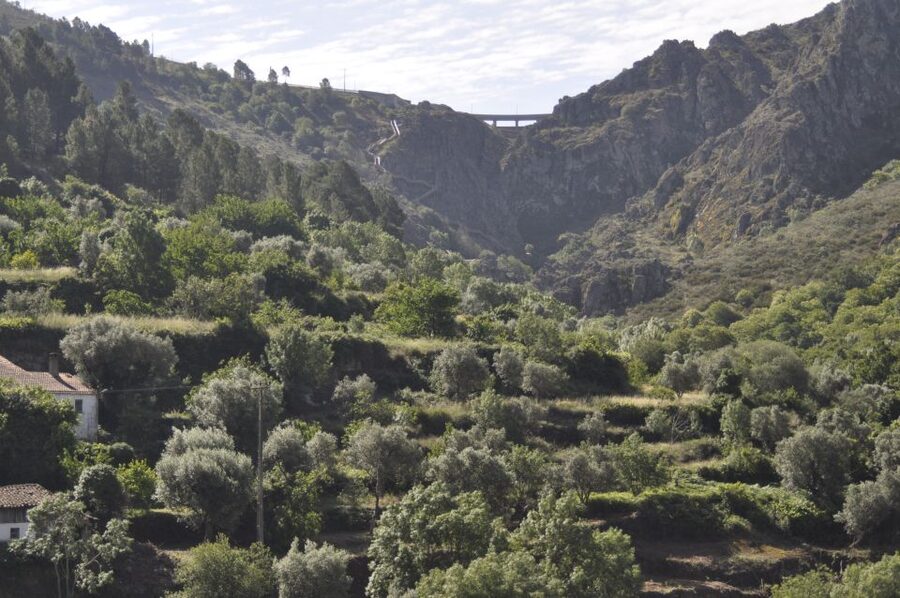
The walk later reaches the Cascalheiras and Escombreiras do Alto Mondego, areas linked to the exploitation of coal, known locally as black gold. The guide tells how this work helped feed families during World War II.
This is a sobering piece of the day. The phrase black gold can sound grand, but here it points to hard labor and family survival. The mining remains help you picture an era when local resources mattered in a direct and urgent way.
At a secret stop along the route, you pause for a snack made from traditional regional products. The food is handmade by local producers, contains no dyes or preservatives, and is classified as EcoFood through a partnership with Guarda 21 and the UNESCO Estrela Geopark.
Book at least 48 hours ahead if you want the snack to be arranged properly. Some of the products are made to order and may not always be available at short notice. You should still carry your own water and food, since the included snack is a refreshment, not a full meal.
This pause breaks up the walk at the right time. By then, you have already covered several substantial sections, and a local food tasting gives you another way to connect with the area.
Suspension bridges and the Moinhos stream
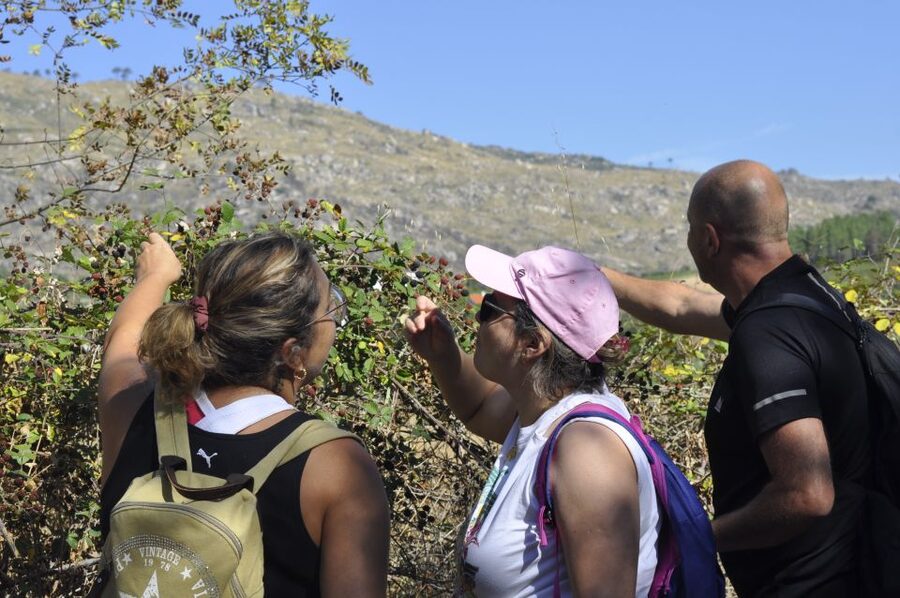
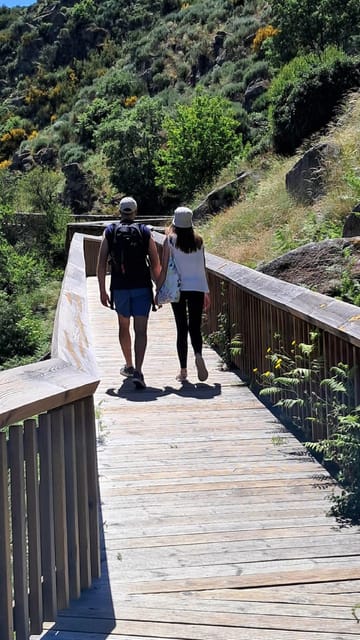
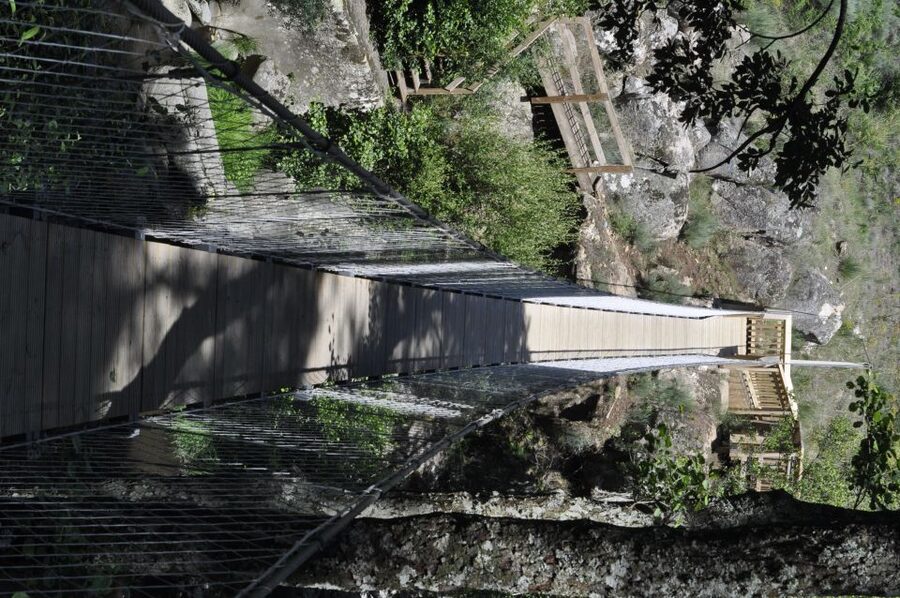
After the snack, the route asks for another small dose of courage. You cross suspension bridges with open views and a noticeable sense of height.
These bridges are not suitable for everyone. If you are afraid of heights, this is one of the clearest reasons to choose another activity. The rules also prohibit climbing, jumping, making noise, and other behavior that could unsettle the bridges or other people using them.
The route continues to the Moinhos stream, a tributary of the Mondego. Near the Cascata Ribeiro dos Moinhos, you learn about ancestral flour mills that once used the stream’s water.
This final section brings the story back to food. The river powered mills that processed grain, linking the waterway to a basic household need. After waterfalls, power plants, wool, and mining, the old mills provide a fitting end to the valley’s working history.
What the route demands from you
The walk covers 12 kilometres in one direction and includes about 600 metres of accumulated slope. It is rated moderate, level 2 or 3 out of 5 under the MIDE system.
You should arrive with hiking shoes, plenty of water, weather-appropriate outdoor clothing, and a small daypack. Sports shoes are also listed as suitable, but sturdy footwear is the safer choice for steps, uneven surfaces, and wet areas.
The activity runs in sunshine or moderate rain. Bring personal medication and clothing for changing weather. Toilets are available along the route, which is helpful on a six-hour outing.
The route is not suitable for wheelchair users, people with mobility impairments, people with a low level of fitness, visually impaired people, or anyone uncomfortable with heights. Unaccompanied minors are not accepted, and pets are not allowed except assistance dogs.
On warm days, pack swimwear and a towel. The calm waters of the Mondego may offer a refreshing bath, but swimming should be treated as an optional extra rather than the main purpose of the walk.
Getting back from Videmonte
The walk ends at the Videmonte car park, not back at the Caldeirão Dam. This is the most important practical detail to understand before you pay.
A taxi may be available at the finish, with an estimated fare of about €25 to return to the dam. That cost varies and is not included in the tour price. Because the route is one-way, you should confirm the return arrangement before setting out rather than assume the guide’s fee covers transport.
The activity does not include hotel pickup, transport to the starting point, meals beyond the included snack, or drinks. You are responsible for reaching the Caldeirão Dam parking area at the start.
If you drive a foreign-registered vehicle on Portugal’s electronic toll roads, the EASYtoll system is one option. It links your bank card to your vehicle registration for 30 days. The enrollment fee is €0.74, with an administrative cost of €0.32 per trip, and the receipt should be kept.
Who will enjoy this walk most
I would choose this experience if you want a full day outdoors with a strong local story. It suits people who like waterfalls, old bridges, water engineering, traditional food, and rural industry in the same outing.
It is also a good choice if you prefer a small group. A limit of 10 people makes the guide’s explanations easier to hear and the pace less hectic. Gonzalo’s presence is likely to matter if you enjoy a guide who adds personal warmth rather than simply pointing out landmarks.
I would not book it as a casual family stroll or an easy scenic walk. The steps, downhill start, 12-kilometre distance, suspension bridges, and 600 metres of slope require a reasonable level of fitness.
The walk also rewards patience. The best parts are not limited to the big waterfall. They include the old factory walls, the workings of the hydroelectric plant, the mining story, the local snack, and the flour mills by the stream.
Should you book the Mondego Walkways experience?
Book it if you want to connect Serra da Estrela scenery with the people and work that shaped the valley. For $33, the guided interpretation, walkway ticket, insurance, and handmade snack make the outing good value, especially in a group of no more than 10.
Skip it if you need an easy loop walk, dislike heights, or cannot arrange the taxi from Videmonte. Also remember to reserve at least 48 hours ahead if the regional snack matters to you.
For an active day that combines waterfalls, bridges, wool, electricity, mining, mills, and local food, this is one of the more rewarding ways to see the Mondego Valley.
FAQ
How long does the Mondego Walkways experience last?
The activity lasts about six hours.
How far is the walking route?
The route covers 12 kilometres in one direction.
Where does the walk begin?
It begins at the Caldeirão Dam parking area, beside the entrance to the Mondego Walkways and in front of the bird observatory.
Where does the walk finish?
The route finishes at the Videmonte car park.
Is transport back to the starting point included?
No. Transport from Videmonte back to the Caldeirão Dam is not included. A taxi may be available, with an estimated fare of about €25.
What languages does the guide speak?
The tour is offered in Portuguese and Spanish.
Is food included?
A snack made with handmade regional products is included. Full meals, drinks, and purchases at establishments visited during the activity are not included.
What should I bring?
Bring identification, water, food and drinks, hiking or sports shoes, outdoor clothing suited to the weather, a daypack, personal medication, swimwear, and a towel.
Can I cancel the booking?
You can cancel up to 24 hours in advance for a full refund. You can also reserve your place and pay later.
Just added around Portugal
- Prazeres: Full-Day Nature Walk★ 4.6 · 18 reviews
- Madeira: Hike Transfer to Ponta de São Lourenço (PR8)★ 4.8 · 26 reviews
- Funchal: Pico Grande Guided Hike with Curral das Freiras★ 5.0 · 6 reviews
- Funchal: PR1.2 Pico Ruivo & Achada Teixeira Hiking Transfer★ 4.9 · 27 reviews
- From Tavira: 7 Valleys Hiking, Benagil Cave and Snorkeling★ 4.8 · 8 reviews
- From Sintra, Mafra, or Ericeira: Hike and Wine Tour★ 5.0 · 4 reviews
- Leave Porto and go hiking in the Paiva Walkways, Arouca★ 4.8 · 30 reviews
- From Ponta Delgada: Hiking Moinho do Félix★ 5.0 · 5 reviews
Portugal Hiking Tours, compared.

Rabaçal: 25 Fontes & Risco Levada Hiking Transfer
Read our review →
Peniche: Berlengas Island Trip, Hiking and Cave Tour
Read our review →
Pico Do Arieiro Pico Ruivo Sunrise or Morning Hike Transfers
Read our review →
Caldeirão Verde: Levada Caldeirao Verde Hiking Transfer
Read our review →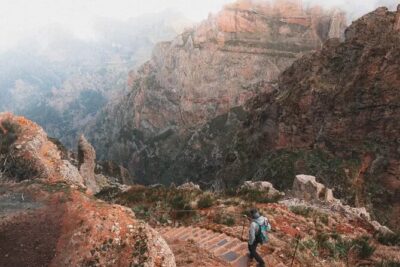
Browse the lists this tour appears in