
REVIEW · REYKJAVIK
Skaftafell: Small-Group Vatnajökull Glacier Hike (Moderate)
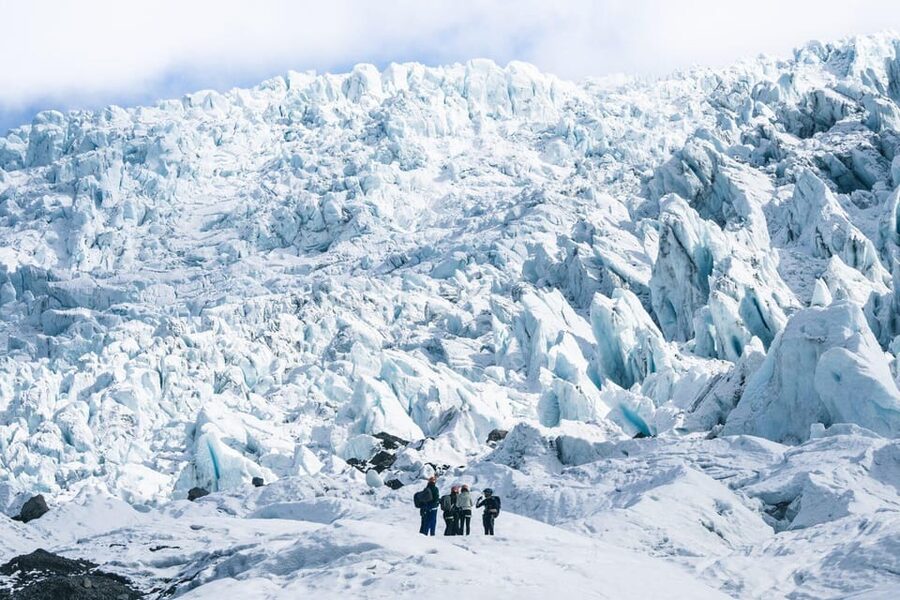
Vatnajökull is not just something you admire from a roadside viewpoint. On this moderate glacier hike, you walk onto the ancient ice, climb toward Falljökull’s jagged icefall, and follow routes shaped by crevasses, streams, and shifting ice. Guides such as Sara, Lucy, Kristian, and Josh are known for keeping the mood lively while taking safety seriously.
I like two things here. First, the small-group format lets the guide do more than point at the ice and recite facts. You may cross a glacial stream, explore a short ice cave, or use ropes on a more adventurous section. Second, this outing reaches higher and farther than the easier glacier walks, giving you a fuller day on the ice.
The trade-off is simple: this is a real hike, not a gentle stroll. Expect uneven ground, a long walk, crampons for much of the route, and a total day that may run closer to six or seven hours once equipment fitting and transport are included.
The details that matter most
- Falljökull is the main event: You hike toward the icefall that gives this outlet glacier its name, where broken ice forms walls, ridges, and sculpted passages.
- The advertised five hours can stretch: The formal schedule lists five hours, but several outings lasted about six to seven and a half hours from arrival to return.
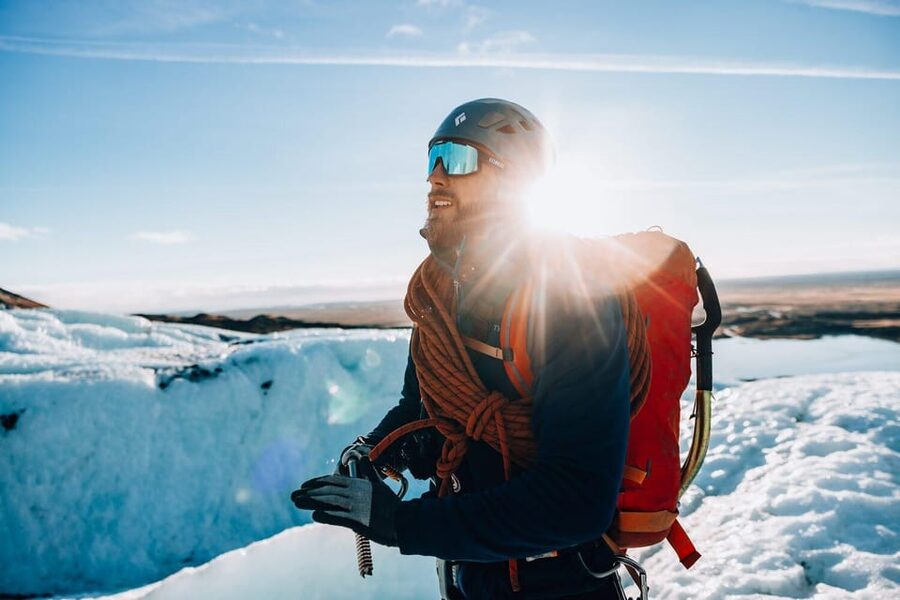
- You receive serious glacier gear: Crampons, helmet, harness, and walking ice axe are included. Some routes also use ropes.
- Boots are not optional: You need sturdy ankle-supporting hiking boots with a stiff sole. Rental boots are available, but the cost is extra.
- Fitness matters more than technical skill: No prior glacier experience is required, but you should be comfortable walking for hours over uneven ground.
- Small groups improve the day: The guide can adjust the pace, explain ice formations, and find photo stops without managing a crowd.
Why Falljökull is worth the extra effort
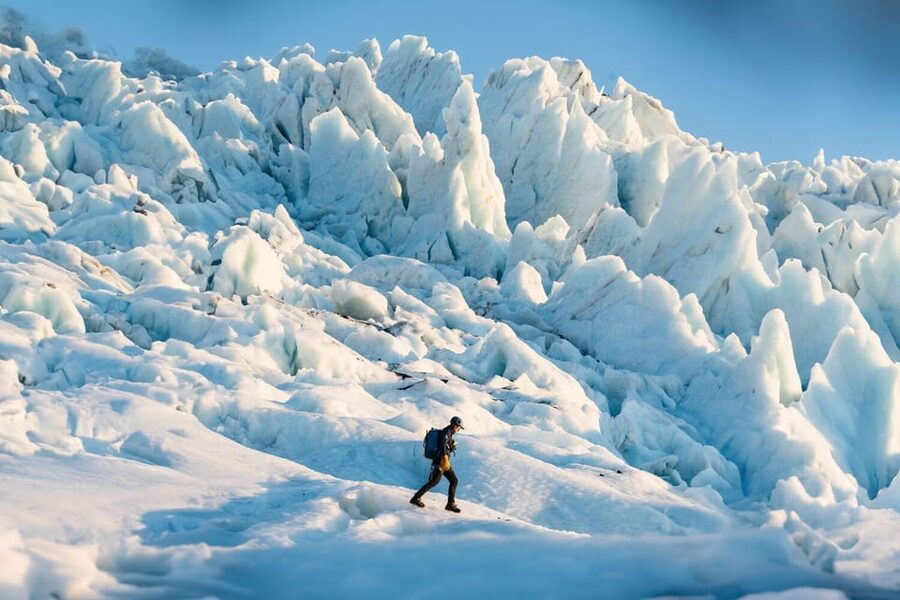
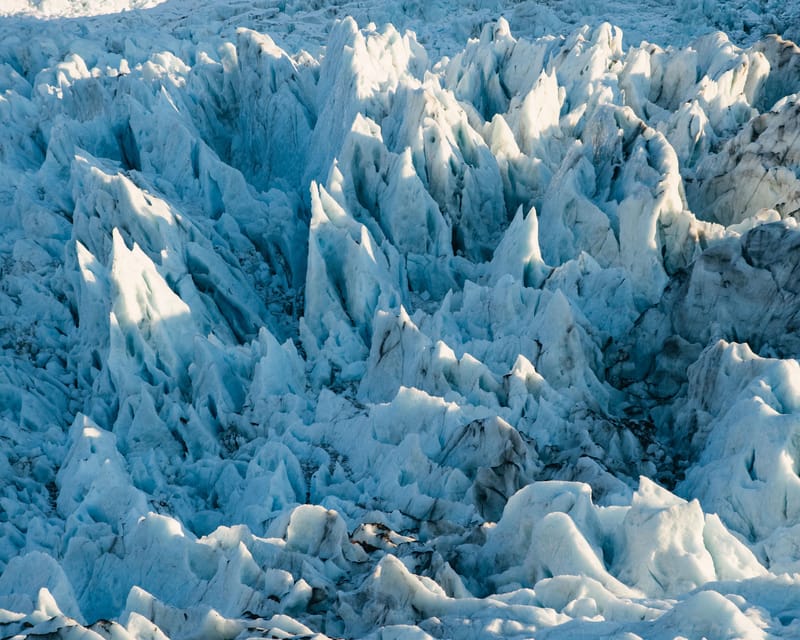
Falljökull is an outlet of Vatnajökull, one of Europe’s largest ice caps. Its lower edge is not a smooth sheet of white ice. It is a moving, broken world of blue channels, dark volcanic grit, ridges, hollows, and sharp ice formations.
The glacier keeps changing. Meltwater cuts channels. Crevasses open and shift. Pieces of ice break away. Volcanic material becomes trapped in the ice, leaving streaks and bands that show how Iceland’s fire and ice work together.
That makes a guided walk especially useful. A guide can point out moraines, explain how the ice has moved, and show why one route is safe while another is not. The best guides also turn the pauses into short lessons rather than dead time. Frances specifically appreciated explanations of moraines and Milankovitch cycles, while others enjoyed learning how different ice shapes form.
You are not simply walking on a frozen surface. You are seeing a natural system in motion, and the guide helps you read it.
More Glacier Hikes in Iceland
- Reykjavik: Glacier Hike, Waterfalls and Black Sand Beach
★ 4.8 · 1,285 reviews - From Reykjavik: Glacier Hike, South Coast and Waterfalls Day Trip
★ 5.0 · 915 reviews - Glacier Hike and South Coast Small-Group Tour from Reykjavik
★ 5.0 · 827 reviews
From Skaftafell Base Camp to the glacier
Your day begins at the Arctic Adventures booking hut in Skaftafell National Park. Allow time to find the hut, check in, and get fitted for equipment. The official schedule gives a 20-minute bus ride each way, though some outings included a longer preparation period and took about six to seven and a half hours overall.
The ride to the foot of the glacier is in a 4×4 bus. It saves your legs for the actual hike and carries the group closer to the ice. Once you arrive, you still have a walk across glacial terrain before putting on crampons and beginning the main section.
That approach matters. You do not step off the bus directly onto a polished white field. The route passes through ground shaped by ice and volcanic forces, which gives you an early look at how much the glacier has changed its surroundings.
At the glacier’s tongue, the guide checks your gear and gives a safety briefing. You will receive glacier crampons, a helmet, a harness, and a walking ice axe. The guide explains how to walk in crampons, how to handle slopes, and what to do around crevasses and meltwater.
Do not rush this part. Crampons feel strange for the first few steps, but one participant who had never used them found them easy to manage after getting started. Your guide will set the pace and show you how to place your feet.
Four hours on Falljökull’s changing ice
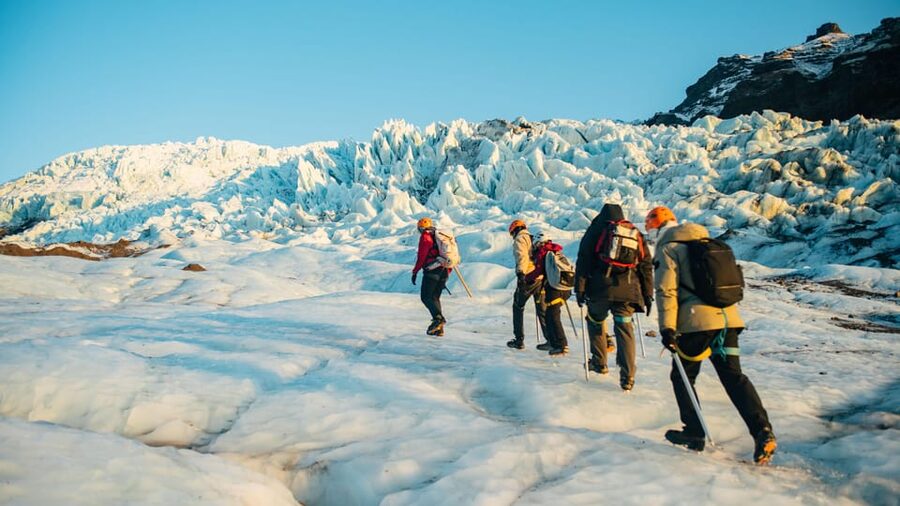
The main hike lasts about four hours in the stated itinerary, though actual time on the glacier can vary with conditions and group pace. You walk up and down uneven surfaces, pause for photographs, and explore features that change from season to season.
This is where the moderate rating makes sense. You do not need climbing experience, but the route is physical. You may walk for several miles in total, with one estimate putting the round trip near six miles and another describing roughly five miles. The exact distance depends on the route, weather, and how far conditions allow the guide to go.
The icefall is the highlight. As the glacier moves over uneven ground, the ice breaks into steep folds and towers. You may see deep blue openings, narrow passages, ridges, and sculpted walls. The route can include ropes in places, though this is not an ice-climbing course. One participant described the rope sections as a welcome surprise, while another made clear that the standard outing is a hike rather than a climb up vertical ice walls.
Guides sometimes lead the group through a short ice cave or along meanders in the ice. You may cross glacial streams or pass near a waterfall. These features are not guaranteed because glacier conditions change, but they show why the route is more interesting than a simple walk on flat ice.
The guide may also cut or improve steps in the ice and prepare safe crossings. That work is part of what you are paying for. Glacier travel is not merely a matter of handing you crampons and sending you uphill.
The guides make the difference
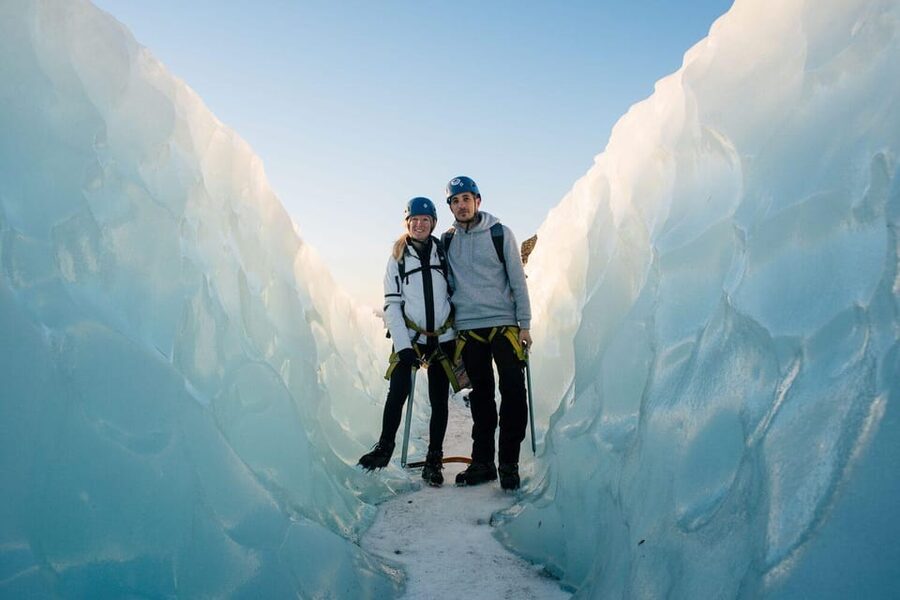
The strongest part of this experience is the guide service. Several guides receive praise for the same combination: safety, humor, patience, and clear explanations.
Lucy is especially noted for fitting gear carefully, explaining how to move over different surfaces, and finding good photo stops. Sara is described as attentive and passionate about nature. Kristian is praised for making a new and slightly intimidating activity feel manageable. Josh is remembered for showing more than expected and making the day fun.
Those individual names are useful because guide quality shapes a glacier trip more than almost anything else. You want someone who knows when to pause, how to read the ice, and how to keep a mixed-ability group together. You also want someone who can explain what you are seeing without turning every stop into a lecture.
The pace can be a drawback for strong hikers. In a group, you move at the speed of the least comfortable person. One participant wished the group had gone faster and farther. That is a fair limitation of a shared outing, but the small-group setup helps keep it from feeling like a mass procession.
More Glacier Hikes in Reykjavik
- Glacier Hike, South Coast Waterfalls & Black Sand Beach
★ 5.0 · 705 reviews - Reykjavík: Iconic Glacier Hike, South Coast & Waterfalls
★ 4.9 · 605 reviews - From Reykjavik: South Coast & Glacier Hike
★ 4.9 · 490 reviews - Reykjavík: Sólheimajökull Glacier Hike & Ice Climbing Intro
★ 4.8 · 380 reviews
What to wear and carry
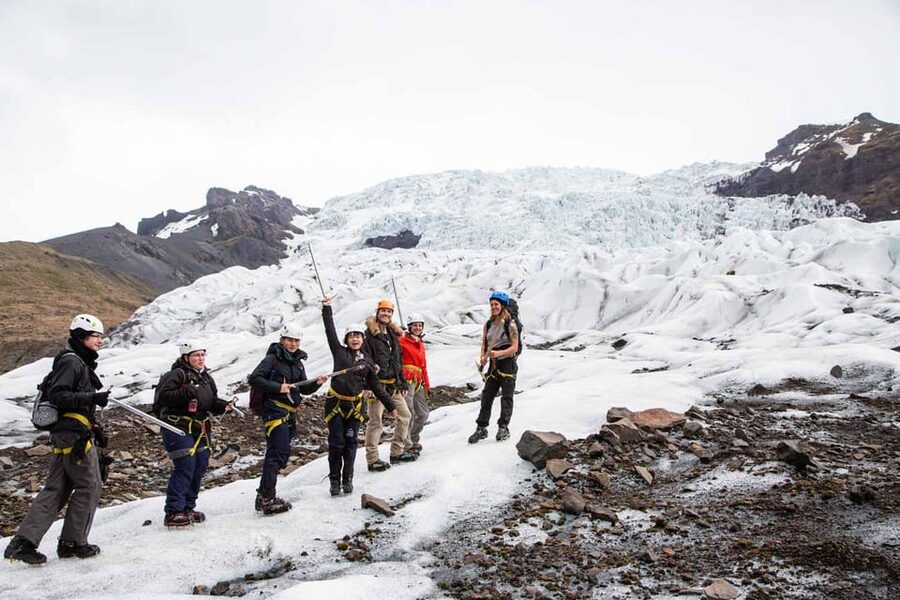
Sturdy hiking boots with ankle support are mandatory. The sole must be firm enough for the crampons to hold securely, and staff inspect footwear before you go out. Boots are available to rent, but the supplied information does not include a fixed rental price, so check the current cost when booking.
Wear warm, waterproof clothing in layers. A glacier can feel cold during stops, but several people warmed up once they were walking. Waterproof trousers and a waterproof jacket are sensible choices, along with gloves and a warm hat.
Bring water and small snacks. Food and drinks are not included, and one long outing specifically advised carrying snacks. A small backpack is useful for extra layers, snacks, and water. You may want to remove a jacket as the hike warms you up, then put it back on when the group pauses.
Your phone or camera should be easy to reach, but do not let photographs distract you from footing or instructions. The icefall offers excellent photo stops, and guides often know where the best views are. Listen first, take pictures second.
How hard is the moderate route?
The tour suits a regular hiker who is comfortable on uneven terrain and able to stay active for several hours. You do not need prior glacier experience, ice-climbing training, or advanced technical skills.
You do need:
- The ability to walk uphill and downhill for an extended period
- Comfort with uneven and changing ground
- Enough stamina to use crampons for much of the hike
- Willingness to follow instructions near crevasses, slopes, and meltwater
- Proper boots with ankle support
The minimum age is 14. The minimum shoe size is EU 35, and the specialized crampons fit EU sizes 35 through 50 only. If your shoe size falls outside that range, you cannot take part.
This is not a good choice if you want a short, easy introduction to a glacier. It is a better fit if you want to spend substantial time on the ice and do not mind a bit of exertion. The word moderate is important. It does not mean extreme, but it does mean active.
The price and what you get for $170
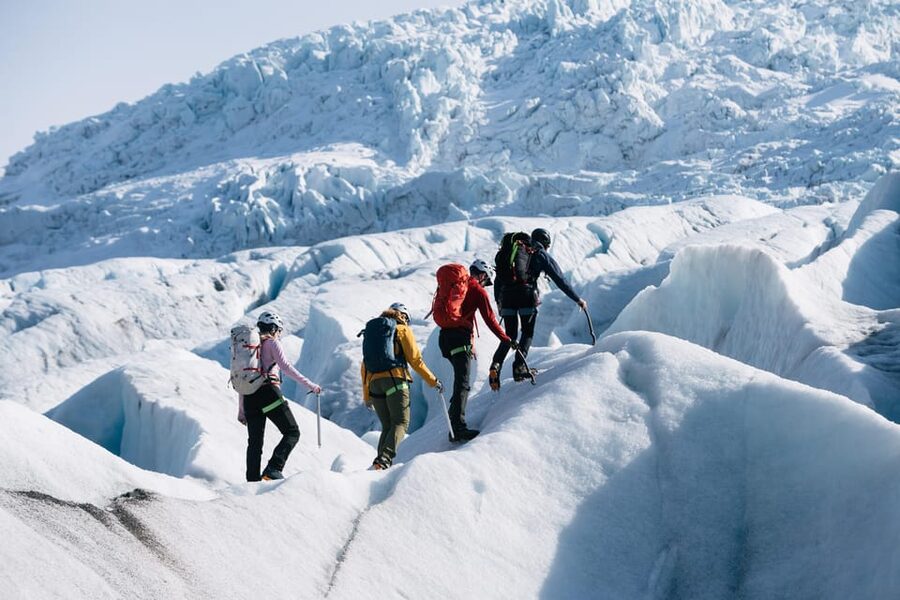
At $170 per person, this is not a cheap half-day activity. It is also more than a basic sightseeing stop, because the price includes a certified glacier guide, safety equipment, guided access to the ice, and 4×4 transport from Skaftafell to the glacier.
The value depends on what you want from Iceland. If you only want to see Vatnajökull, you can do that without paying for a hike. If you want to walk on it safely, understand what you are seeing, and reach more dramatic ice than the easy tours usually cover, the price is easier to justify.
You are also paying for route finding and risk management. Glaciers are not static parks with marked footpaths. Conditions change, and the guide chooses where to go based on the ice, weather, and group ability.
The small group adds value too. You get more room for questions, better access to the guide, and less waiting while a large crowd is organized. The included helmet, harness, crampons, and ice axe also save you from arranging specialist equipment yourself.
Cancellation is free up to 24 hours before the activity, and you can reserve now and pay later. Tour timing may change with the season and conditions, so leave flexibility in your day.
When the day runs longer than five hours
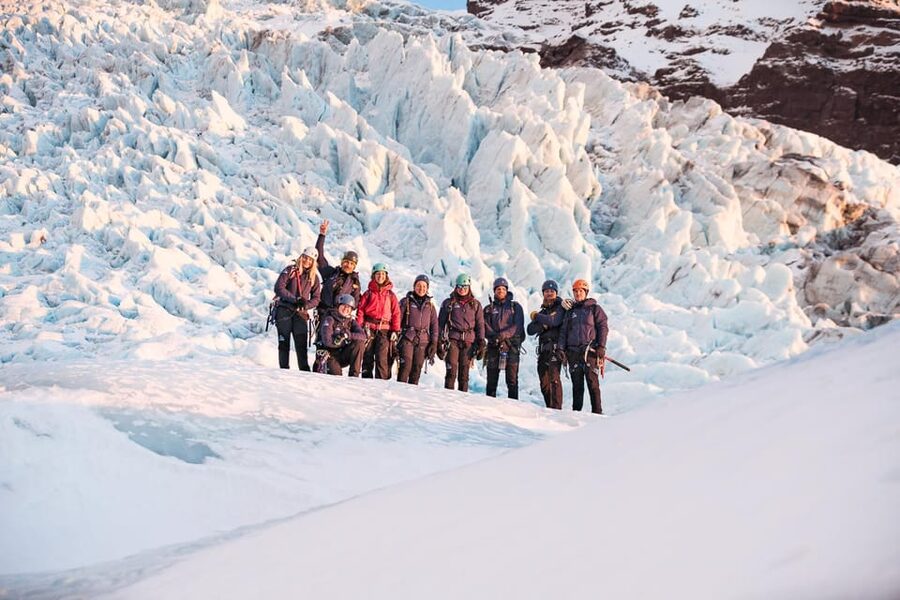
The stated duration is five hours, with a 20-minute ride to the glacier, about four hours at Falljökull, and a 20-minute return. In practice, equipment fitting, parking, safety instructions, walking to the ice, and returning gear can add a lot of time.
Some outings finished in about six hours. Others ran closer to seven or seven and a half hours. One participant was pleased to spend six hours on the glacier itself, while another was happy with the longer day but wished the timing had been clearer beforehand.
Plan conservatively. Do not book a tight evening activity, airport transfer, or dinner reservation immediately afterward. The extra time is not wasted, but you should know about it before arranging the rest of your day.
Who should book this glacier hike?
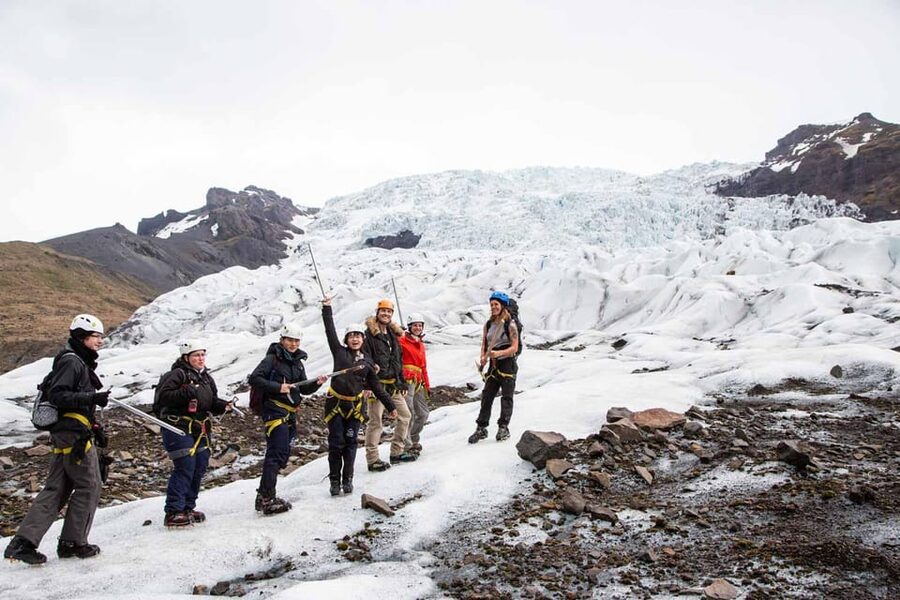
I would choose this tour if you want more than a quick taste of glacier travel. It suits active adults and teenagers 14 or older who are comfortable hiking for hours and want time to explore ice formations rather than simply stand on the glacier’s edge.
It is a strong choice for photographers, geology fans, and anyone curious about how ice reshapes the ground. It also works well for people who are nervous about glacier travel but want a guide who can introduce the activity carefully.
I would choose an easier outing instead if you have limited stamina, dislike uneven footing, or want a shorter activity. A moderate hike can be tiring, especially in poor weather or with a slower group.
My verdict: a serious glacier day that earns its place
I recommend the Skaftafell Vatnajökull hike if you are fit enough for a long walk and want to reach the more striking parts of Falljökull. The guides repeatedly make the difference, combining careful safety work with stories about geology, ice movement, and Iceland’s changing scenery.
Book it for the access, the time on the glacier, and the chance to see crevasses, streams, ice caves, and rope-assisted sections when conditions allow. Skip it if you need a short, predictable excursion or cannot meet the boot and crampon requirements.
Bring snacks, water, waterproof layers, and patience with the schedule. Give yourself a full day, not a narrow five-hour slot. Do that, and this is the kind of Iceland experience that feels earned, personal, and far more memorable than another viewpoint beside the road.
FAQ
Where does the glacier hike begin?
You meet at the Arctic Adventures booking hut in Skaftafell National Park.
How long does the activity last?
The stated duration is five hours. Actual timing can vary, and preparation, equipment fitting, and transport may make the full day last six to seven and a half hours.
How long is the bus ride to Falljökull?
The itinerary lists about 20 minutes by 4×4 bus each way between Skaftafell and the foot of the glacier.
Is the tour conducted in English?
Yes. The live guide speaks English.
What equipment is included?
The activity includes a certified glacier guide, guided glacier hike, helmet, walking ice axe, harness, glacier crampons, and 4×4 transport.
Do I need to bring hiking boots?
Yes. Sturdy hiking boots with ankle support are mandatory. Rental boots may be available for an extra cost.
What shoe sizes can use the crampons?
The specialized crampons are available for EU shoe sizes 35 through 50.
What is the minimum age?
The minimum age is 14. Children under 14 cannot join this activity.
Do I need previous glacier or ice-climbing experience?
No previous experience is stated as necessary. The activity is a moderate hike, and the guide provides a safety briefing and instructions for using the equipment.
Are food and drinks included?
No. Bring your own water and snacks, since food and drinks are not included.
Can I cancel the booking?
You can cancel up to 24 hours in advance for a full refund. You can also reserve now and pay later.
More Small-Group Hikes in Reykjavik
- Reykjavik: South Coast, Waterfalls & Glacier Hike Small-Group
★ 4.5 · 322 reviews - Inside the Volcano: Small-Group Tour and Lava Field Hike
★ 5.0 · 168 reviews - Small Group Volcano Hike with a Professional Geologist
★ 4.5 · 142 reviews - Volcano Hike and Blue Lagoon Including Admission Small Group Tour
★ 4.5 · 139 reviews
Just added around Reykjavik
- Glacier Express Jeep & Hiking Tour – Local Icelandic Guide★ 5.0 · 8 reviews
- From Reykjavik: South Coast and Glacier Hiking Tour★ 5.0 · 14 reviews
- From Reykjavik: Kerlingarfjöll Hiking Day Tour★ 4.7 · 90 reviews
- Reykjavik: Glacier Hike & South Coast Day Tour★ 4.7 · 92 reviews
- Private South Coast with Glacier Hike in Iceland★ 5.0 · 23 reviews
- Private Reykjadalur Hike & Hot River Geothermal Tour★ 4.9 · 7 reviews
- Private South Coast and Glacier Hike – With photos★ 5.0 · 49 reviews
- Volcano Hike and Grindavík Visit from Reykjavik★ 4.5 · 120 reviews
Reykjavik Hiking Tours, compared.
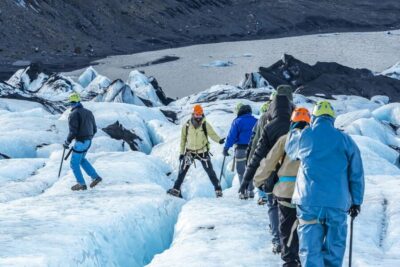
Glacier Hike, Waterfalls and Black Sand Beach
Read our review →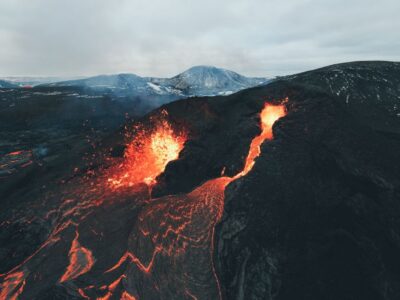
Reykjavík: Volcano Eruption Site and Reykjanes Hiking Tour
Read our review →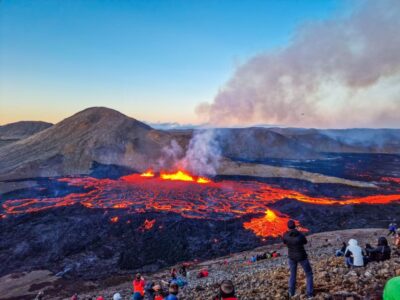
Reykjavík: Guided Afternoon Hiking Tour to New Volcano Site
Read our review →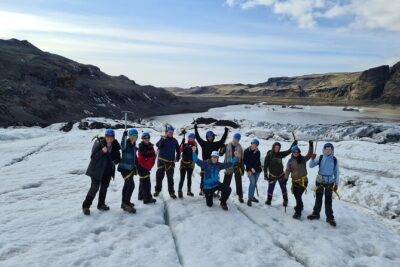
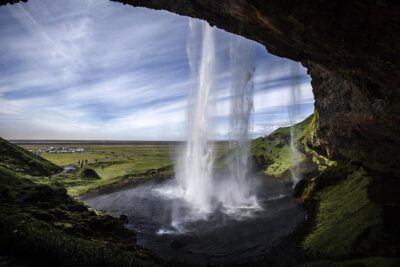
Glacier Hike and South Coast Small-Group Tour from Reykjavik
Read our review →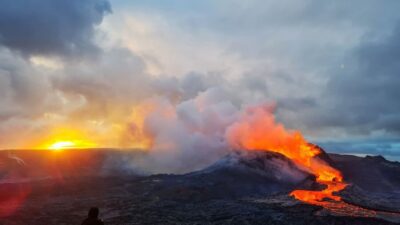
From Reykjavík: Fagradalsfjall Volcano Hike with Geologist
Read our review →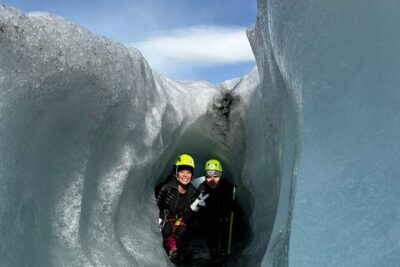
Glacier Hike, South Coast Waterfalls & Black Sand Beach
Read our review →
Browse the lists this tour appears in