
REVIEW · NIGHT HIKES
Night Hike to see Elusive & Rare Loris in Sigiriya
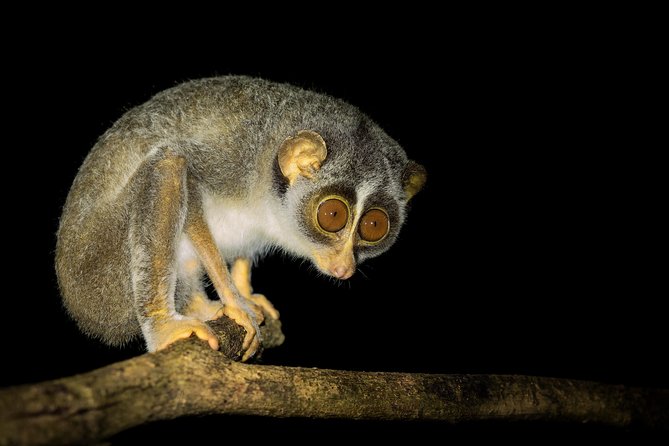
The main attraction here is a rare chance to see lorises in the wild, after dark, in the jungle around Pidurangala. These tiny primates move slowly through the trees, so finding one takes sharp eyes, patience, and a guide who knows where to look.
I like the short wildlife briefing before the walk, and I like that the activity supports habitat protection through Back of Beyond. The supplied headlamps also mean you do not need to arrive with a full safari kit. The main drawback is simple: wildlife is never guaranteed, and full moon or heavy rain can make lorises harder to find.
Key points to know before you book
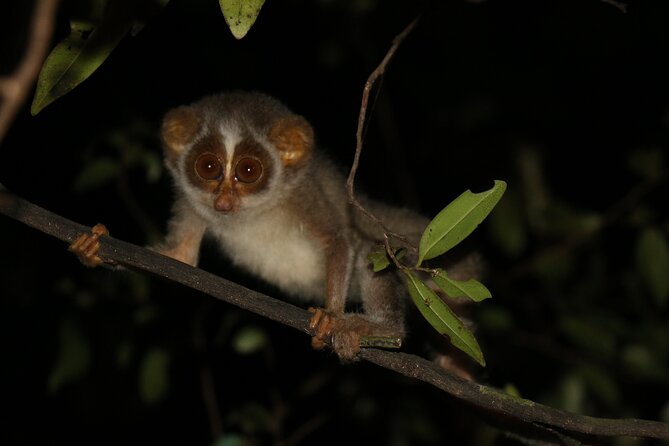
- More than a quick animal search: The walk includes an introduction to lorises and the wider night ecosystem, with chances to see birds, insects, lizards, geckos, and mouse deer.
- A strong sighting record: The advertised success rate is over 90 percent, and the experience includes a money-back guarantee if no loris is seen.
- Small-group format: Groups are limited to eight people, which helps everyone hear the guide and share sightings.
- Headlamps are provided: You only need suitable clothing and closed-toe shoes.
- The jungle is the setting: This is not a fenced zoo visit or a vehicle safari. You walk on jungle trails near Pidurangala.
- Weather matters: Rain may send lorises into hiding, while bright moonlight can make them less active or harder to spot.
Why a loris night walk belongs in your Sigiriya plans
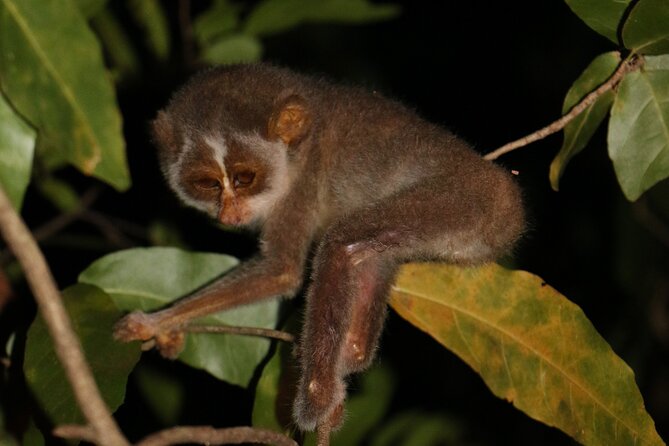
Sigiriya is famous for its ancient rock and grand views, but the jungle after sunset offers a different sort of reward. Instead of monuments and crowds, you get darkness, animal calls, and the slow search for a creature that most people never see.
The loris is the star. It is a nocturnal primate with large eyes and a careful, gentle way of moving through branches. You will not see it racing across the forest. Your guide may pause, scan the trees, and point out a pair of eyes or a small shape clinging to a branch.
That search is part of the fun. It also makes this outing different from a standard wildlife drive. You are on foot, close to the vegetation, and paying attention to details that are easy to miss during the day.
The activity is run by Back of Beyond, an organisation closely tied to conservation work in the area. Before heading out, you receive an explanation of lorises and the pressures facing their habitat. That background gives the walk a useful purpose. You are not simply collecting a wildlife photograph. You are learning why the animal is difficult to find and why protecting its woodland matters.
More Night Hikes in Sri Lanka:
- Adam’s Peak Night Hike Experience [One Day & ALL INCLUSIVE]
★ 5.0 · 14 reviews - Fortress Night Hike & Snack at a Local Market
★ 5.0 · 112 reviews - Tenerife: Teide Night Hike to Watch Sunrise and Shadow
★ 5.0 · 91 reviews
Meeting at Rocko’s Vegetarian Cafe in Pidurangala
The starting point is Rocko’s Vegetarian Cafe on Sigiriya Road in Pidurangala. This gives you a clear place to meet before entering the nearby jungle, rather than trying to find a guide somewhere along an unmarked trail.
Allow a little time to arrive and get organised. The meeting point is outside the main Sigiriya Rock complex, so check your route carefully if you are staying elsewhere in the area. The activity information gives a duration of 1.5 hours, while the walking outline describes roughly two hours. I would allow about two hours for the full outing and confirm the exact start and finish time when booking.
The group limit is eight people. That is small enough for a guide to keep everyone together and direct attention to a single animal when it is found. It also matters at night, when a large crowd can become noisy and make it harder for everyone to see or hear instructions.
A short introduction takes place before the walk. One recent format included a presentation about the loris and the conservation work connected with the site, followed by a drink. The purpose is not to fill time. It teaches you what to watch for before you enter the trees.
The briefing explains what makes lorises so hard to find
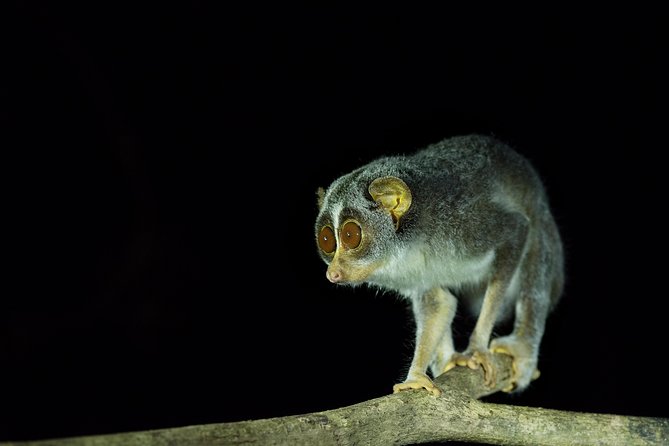
The opening talk is one of the strongest parts of the activity. You learn about the animal’s nocturnal habits, its place in the local ecosystem, and the work being done to protect it.
This is especially useful if you have never seen a loris before. In darkness, a small animal tucked into leaves can look like part of the tree. The guide’s explanation helps you understand why the group may stop often, scan several branches, or wait quietly before moving on.
The guides also point out other signs of night activity. The walk can include sleepy birds, unusual nests, bioluminescent insects, geckos, lizards, and mouse deer. One evening produced sightings of an adult and baby mouse deer, a kangaroo lizard, and an unusual gecko alongside four lorises.
That variety gives the outing value even before the main sighting. Still, you should book it because you want to look for lorises, not because you expect a full safari list. The guide may find several animals, or only one very well-hidden individual.
Headlamps, jungle paths, and the first steps after dark
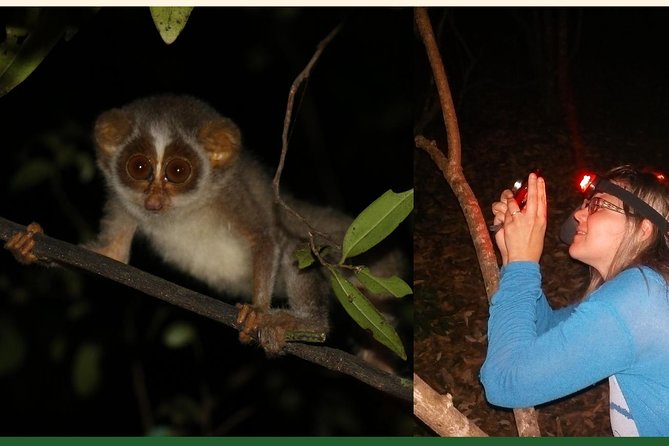
The necessary lighting gear is provided, including headlamps. That is a practical advantage. You can travel light and avoid buying equipment for one short walk.
You still need to dress for the setting. Wear long trousers, a long-sleeved shirt, and closed-toe shoes. This advice is important for comfort and basic protection on a jungle path. Sandals and shorts are poor choices for a walk through vegetation after dark.
The route is described as a guided hike through the Pidurangala jungle. Expect walking rather than a vehicle ride, with the guide setting the pace and stopping to inspect trees and branches. The exact trail conditions are not specified, so you should be ready for uneven ground and low light. Anyone who dislikes walking outside at night may find the setting more challenging than the duration suggests.
The mood changes quickly once the group leaves the meeting point. Cricket calls replace ordinary evening noise, and the guide may stop to listen before shining a light into the trees. Owls and other night creatures can add to the soundscape, even when they stay out of sight.
More Evening Trips in Sri Lanka:
- Ella: Sunset Tuk Tuk Tour with Little Adam’s Peak Hike
★ 4.8 · 9 reviews - The Volcano Heart Tour: Hiking, Tasting and Sunset Experience
★ 5.0 · 1,120 reviews - Cape Town: Lion’s Head Sunrise or Sunset Hike
★ 5.0 · 1,084 reviews - Cape Town: Lion’s Head Sunrise/Sunset Hike
★ 5.0 · 921 reviews
Searching the trees for the first loris
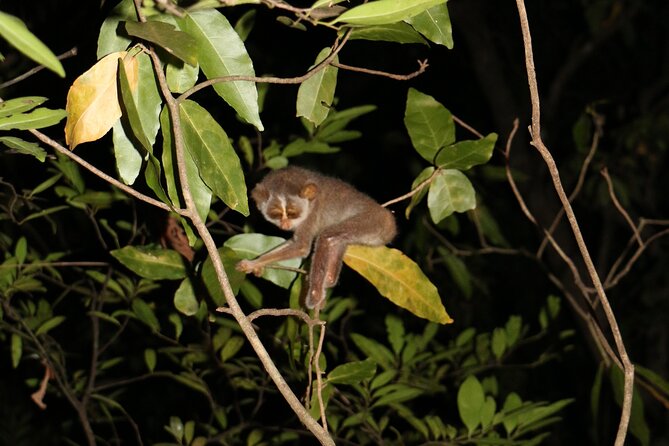
Loris sightings depend on careful observation. Your guide does the hard work of finding the animal, but you still need patience. The group may stand quietly while the guide studies the canopy, then move closer one person at a time when a loris is located.
The best sightings can be close. One group saw a loris directly above their heads, while another found one near enough for clear photographs. Other sightings were more distant, with the animal higher in the branches. This difference is worth understanding before you book. A successful sighting does not always mean a close-up encounter.
The number of lorises can vary, too. Some outings have produced one or two, while others have found four, five, or six. The advertised success rate is over 90 percent, and a money-back guarantee is offered if no loris is spotted. Ask for the exact terms of that guarantee when you reserve, since the provided information does not explain how the refund is processed.
The ethical approach is another strong point. The guide’s role is to locate and show the animals without turning the forest into a stage. You should expect the group to observe rather than handle, chase, or feed wildlife. That restraint is important with a small nocturnal animal.
Rain, moonlight, and the limits of wildlife watching
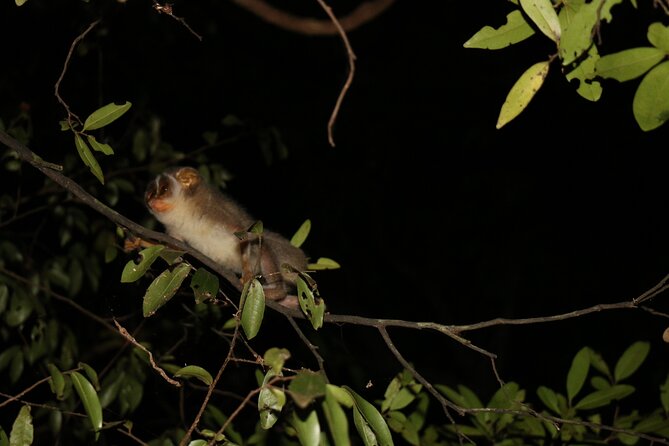
Weather has a real effect on this outing. Heavy rain can send lorises into cover, and it can also make the paths less comfortable. One outing after a major rainstorm produced birds, insects, and nests before the group finally found a loris near the end.
That is a useful lesson: do not give up too early. The same evening that seemed likely to produce no sighting ended with a successful find because the guide kept searching.
A full moon can create a different problem. Bright light may encourage lorises to stay farther inside the jungle, which can mean fewer close views. You may still see some, but the animals can be deeper in the trees.
You cannot control the weather, moon phase, or animal behaviour. If you want the best odds of a close encounter, ask about the conditions for your date. The high success rate is encouraging, but it is not a promise that every visit will produce five lorises at eye level.
Why the conservation angle adds value
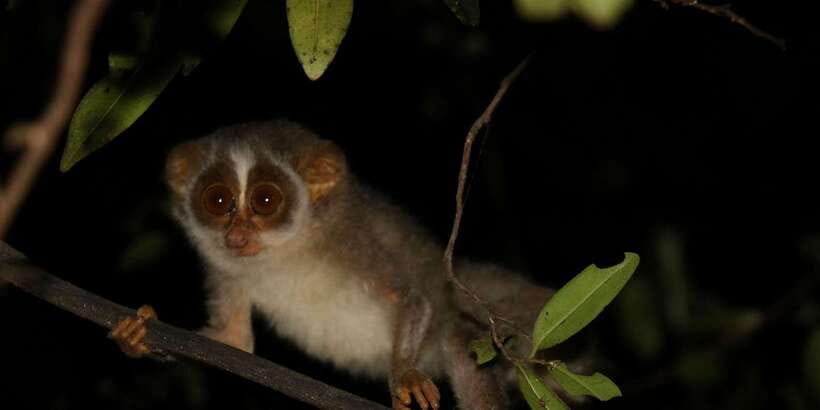
Back of Beyond presents this as more than an evening walk. The organisation works to protect lorises and their habitat, and part of the payment helps support that work.
That matters because a wildlife activity can have two very different effects. It can put pressure on animals for the sake of photographs, or it can help people understand why the habitat deserves protection. The briefing and the careful approach described here point toward the second model.
I especially like that the conservation message is tied to what you see. The guide can explain the animal before you search for it, then show how a small patch of woodland supports more than one species. Even a short sighting becomes more meaningful when you understand the setting around it.
This is also a good choice if you want an activity with a lighter footprint than a vehicle-based safari. You walk from the meeting point into nearby forest, and the small group keeps the outing personal.
What the $64 price means for two people
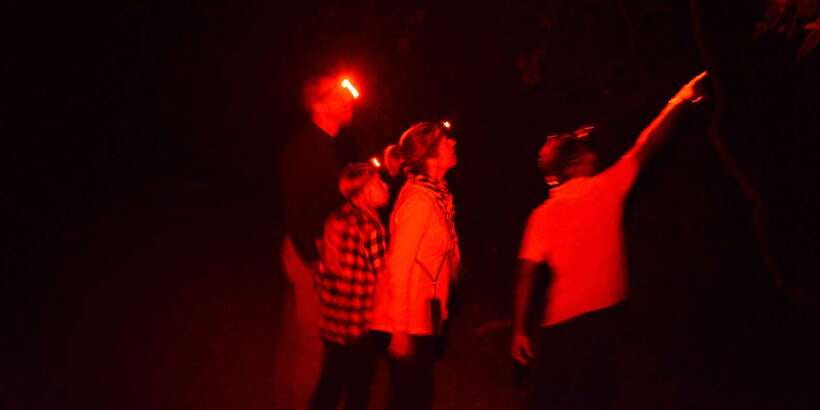
The listed price is $64 per group of up to two people. For a couple, that works out to $32 each, which is fair for a private-feeling wildlife walk with an expert guide, headlamps, a conservation presentation, and a strong chance of seeing the target animal.
The value is less obvious for a solo visitor, since the price is still set by the group rather than by one person. It becomes more attractive if you are travelling as a pair or can share the group arrangement.
You are not paying for transport, a long safari drive, or a full-day park excursion. You are paying for a focused evening search in a specialist setting. If you have already seen Sri Lankan wildlife from a vehicle, this gives you a different way to experience the forest.
The price also includes the possibility of seeing other nocturnal species, but I would judge the value mainly by the quality of the guide and the chance to see a loris. The guarantee helps reduce the risk, though you should confirm its conditions before paying.
Who will enjoy this most
I would recommend the walk to nature fans, amateur photographers, families with older children, and anyone who wants a quieter alternative to another climb or ruin visit. It suits people who enjoy waiting, listening, and looking carefully rather than rushing from one sight to the next.
It is also a good fit for visitors who care about conservation. The presentation gives context, and the organisation’s work adds a clear purpose to the outing.
You may want to skip it if you dislike darkness, insects, uneven paths, or uncertain results. The walk is short, but it is still a jungle outing at night. You should not expect a guaranteed close photograph or a paved route.
The activity is conducted in English, and the group is limited to eight people. If you need another language, this may not be the right choice.
Practical advice for a smoother evening
Wear the required long clothing and sturdy closed-toe shoes. Bring only what you can manage easily in the dark, since your attention will be on the guide and the trees.
Arrive on time. One late arrival caused by rain and elephants on the road was handled generously, with the guide arranging another outing, but you should not rely on that. Roads around Sigiriya can be affected by weather and wildlife, so allow extra travel time.
Keep your expectations flexible. You might see several lorises, or you might spend much of the walk studying other night creatures before finding one. The strongest part of the activity is the search itself, supported by a guide who can explain what the forest is doing after sunset.
Free cancellation is available up to 24 hours before the activity for a full refund, and you can reserve now and pay later. Those options are useful if your Sigiriya schedule depends on weather.
Should you book the Pidurangala loris walk?
Book it if you want a focused, ethical wildlife outing and you are willing to trade certainty for the excitement of a real animal search. The combination of a high sighting rate, small groups, supplied headlamps, and conservation work makes the $64 group price good value for two people.
I would be especially keen to book after a daytime visit to Sigiriya, when a night walk shows you a completely different side of the area. Just remember the key conditions: wear proper clothing, expect darkness and jungle paths, and do not judge the evening only by the number of photographs you take.
If the thought of finding a slow-moving primate by torchlight sounds more appealing than another crowded attraction, this is an easy choice. If you need guaranteed close views in perfect weather, choose a more controlled wildlife setting instead.
FAQ
Where does the loris night walk start?
The meeting point is Rocko’s Vegetarian Cafe in Pidurangala, near Sigiriya, Sri Lanka.
How long does the activity last?
The activity is listed as 1.5 hours, while the walking outline describes about two hours. Confirm the exact timing when booking.
How likely am I to see a loris?
The advertised success rate is over 90 percent. A money-back guarantee is offered if no loris is seen, but you should confirm the guarantee terms before booking.
What should I wear?
Wear long trousers, a long-sleeved shirt, and closed-toe shoes for the jungle walk.
Is equipment provided?
Yes. Necessary gear, including headlamps, is provided for the night walk.
How many people can join the group?
The activity is limited to eight participants and is conducted in English by a live guide.
Just added around Sri Lanka
- From Hatton: Adam’s Peak Sunrise Hike with Hotel Transfers★ 5.0 · 2 reviews
- From Ella: Little Adam’s Peak and Nine Arches Bridge Hiking★ 4.2 · 4 reviews
- From Ella – Unforgettable Sunrise Hike to Ella rock★ 4.6 · 2 reviews
- Overnight Treehouse Safari at Yala National Park★ 4.9 · 7 reviews
- Tuk-Tuk Safari Liptons seat,Tea Fields Hike,TeaFactory Tour★ 4.8 · 46 reviews
- Ella Day Trip: with Little Adam’s Peak Hike From Colombo★ 4.3 · 2 reviews
- Ella 2 Day Tour: Hikes, Waterfalls, Adventure Activities★ 5.0 · 2 reviews
- From Colombo/Negombo: Summit Thrills, Adams Peak Guided Hike★ 4.7 · 3 reviews
Night Hikes, compared.

Sedona Dark Sky Sunset & Night Hike With a Private Guide
Read our review →![Adam’s Peak Night Hike Experience [One Day & ALL INCLUSIVE]](https://4.hikingtourguide.com/wp-content/uploads/adam-s-peak-night-hike-experience-one-day-all-inclusive-400x267.jpg)
Adam’s Peak Night Hike Experience [One Day & ALL INCLUSIVE]
Read our review →Browse the lists this tour appears in