

REVIEW · FOREST & JUNGLE HIKES
Los Haitises: Caves, Mangroves, & Rainforest Hike/Boat Tour
Los Haitises reveals its best secrets from the water and underground. You begin at Caño Hondo, or Deep Creek, ride through red mangroves to San Lorenzo Bay, then walk rainforest trails to caves marked with Taino pictographs. The park’s steep limestone mogotes give the whole trip a wild, almost otherworldly look.
I like the mix of boat time and forest walking, since you see Los Haitises from several angles rather than from a single lookout. I also like the chance to visit Cueva de la Arena and Cueva de la Línea, where indigenous drawings and old shelter sites add meaning to the scenery. The main caution is the trail: parts can be slippery and steep, so proper shoes matter.
Key points to know before you go
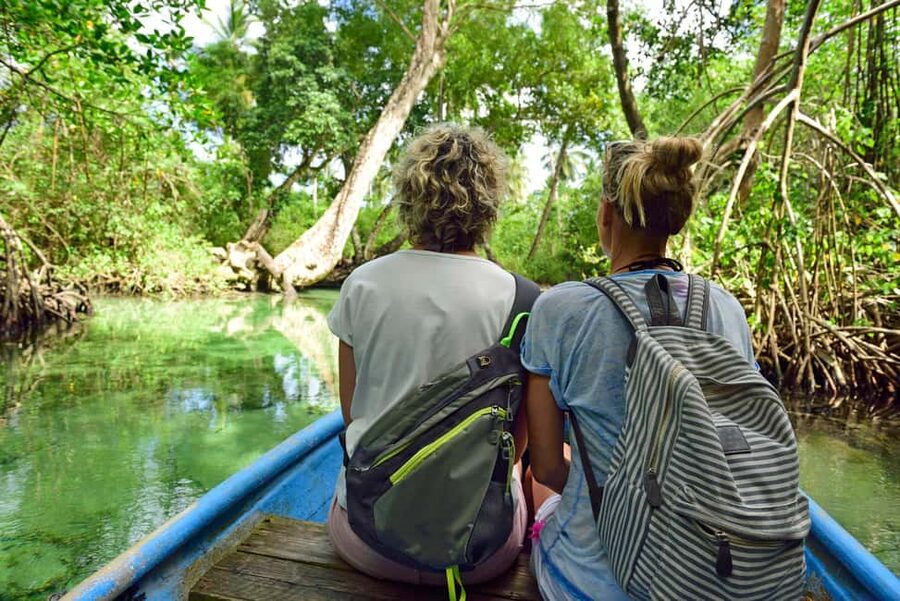
- Red mangroves by boat: You travel from Caño Hondo through narrow mangrove waterways toward San Lorenzo Bay.
- Limestone mogotes: More than 700 plant species are associated with these steep rock formations and their wetlands.
- Taino cave art: Cueva de la Arena and Cueva de la Línea contain pictographs linked to communities from about 750 years ago.
- A real rainforest walk: Expect muddy or slick ground, inclines, and sections where you may need to hold on.
- Wildlife watching: Birds, including pelicans, are a realistic possibility. Manatees, dolphins, and crustaceans may also be seen.
- Flexible timing: The full outing can take 5 to 11 hours, depending on the option and departure schedule.
Why Los Haitises works best as a boat-and-hike day
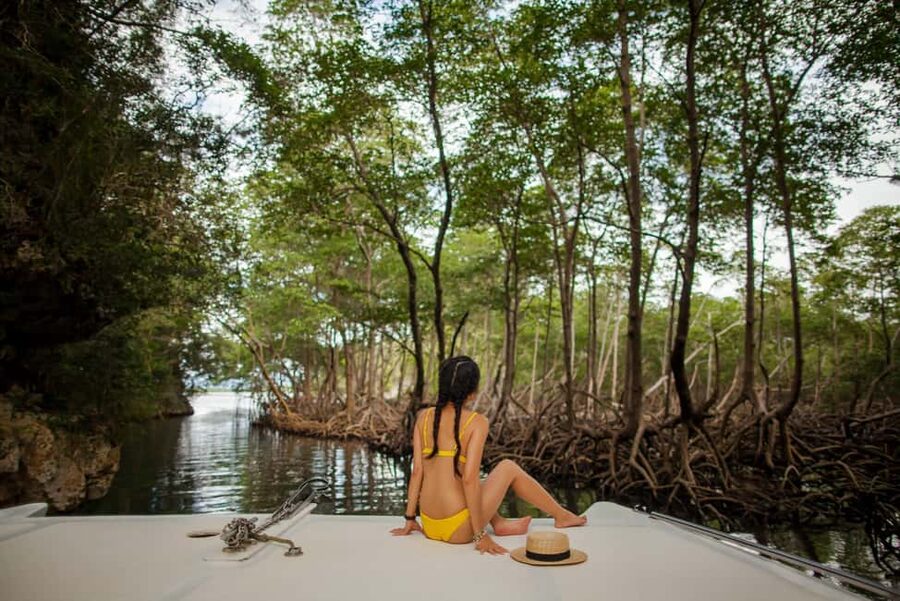
Los Haitises National Park is not a place you fully understand from a road or a quick photo stop. Its character comes from the meeting of water, mangrove, rainforest, and limestone. This tour lets you experience all four.
The name Haitises comes from the Taino language and refers to highlands or hills. That fits the park’s distinctive mogotes, large limestone formations rising sharply from the water. They are not smooth hills. They look more like broken stone towers, softened by plants and surrounded by wetlands.
I like that the tour begins on the water. The boat gives you a broad view of the rock formations before you enter the forest on foot. It also makes the park feel tied to its coastal setting, not simply like a woodland with a few caves added on.
The trip costs $70 per person. That is a fair price if your option includes transportation, the guided boat ride, the rainforest walk, and cave visits. Food and drinks are officially not included, and lunch is available at an extra cost, so I would not assume a meal is part of the price. One recent booking included water, cola, and food, which suggests that inclusions can vary by option. Confirm this before you pay.
More Cave Hikes in the world:
- Skaftafell: Ice Cave Tour and Glacier Hike
★ 4.5 · 1,746 reviews - Matacanes : Canyoning + Hiking + Water Jumps + Rappel + Caves
★ 5.0 · 1,497 reviews - Peniche: Berlengas Island Trip, Hiking and Cave Tour
★ 4.7 · 1,473 reviews
Starting at Caño Hondo with life jackets on
The usual starting point is the main port at Caño Hondo, translated as Deep Creek. Meeting points can change according to the option you book, so check the exact pickup details rather than simply entering Los Haitises into a map.
The boat ride begins with life jackets and a run through the red mangrove forest. Mangroves are especially good from a low boat because their tangled roots and narrow channels are close to eye level. The ride is not just transport to the walking portion. It is one of the main reasons to choose this outing.
You continue toward San Lorenzo Bay, a smaller bay connected to Samaná Bay. As the water opens up, the views change. The mangroves give way to open water and the park’s limestone mogotes. This transition is one of the most satisfying parts of the day, since you see the park shift from enclosed green waterways to broad coastal scenery.
Bring a camera, but protect it from spray and sudden rain. The boat offers the best chance to photograph the rock formations, mangroves, and birds from the water.
San Lorenzo Bay and the limestone mogotes
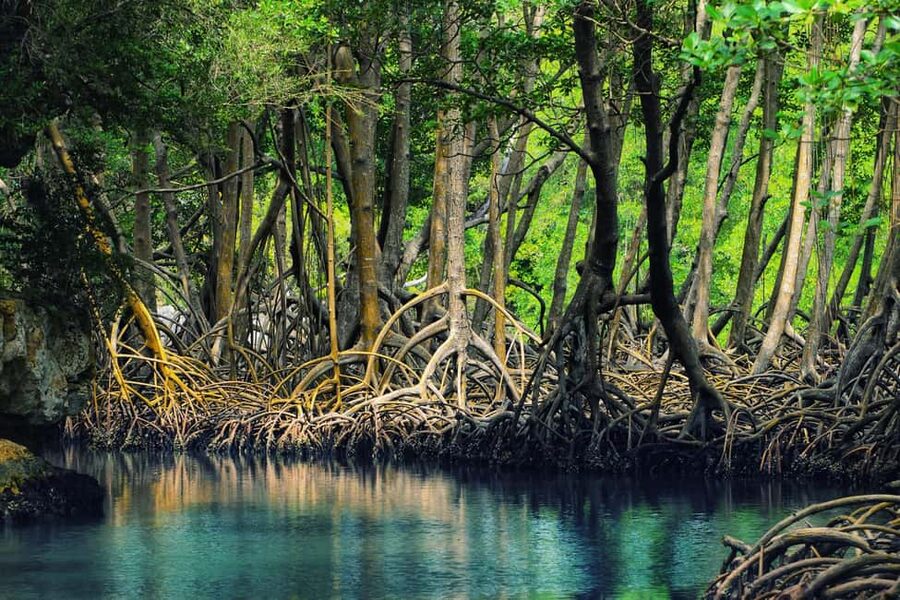
At San Lorenzo Bay, look for the tall limestone islands and cliffs. Their unusual shapes explain why Los Haitises feels so different from a standard rainforest park. Plants cover the tops and sides, while wetlands around the formations provide habitat for birds.
The information supplied for this tour notes more than 700 plant species in the park. You will not identify all of them on a short visit, of course, but the number helps explain the dense plant life around the mogotes. The guide can connect what you see to the park’s geology and natural setting.
Birdwatching is one of the more dependable bonuses. Pelicans have been seen during the boat ride, along with other wetland birds. The tour also identifies manatees, dolphins, and crustaceans as possible sightings. Treat these as luck, not promises. Wildlife keeps its own schedule.
The open bay is also a good place for photographs. You get a sense of the park’s scale here, with rugged forest, scattered limestone formations, and water all in one frame. I would take this section slowly rather than treating it as a quick crossing.
Walking the rainforest trail
The walking portion brings a different set of demands. The forest path can be slick, and parts of it rise or drop sharply. Some sections require you to hold on for balance. This is not a long-distance trek based on the information available, but it is more than a flat stroll from a dock to a cave.
Wear shoes with a strong tread. Sandals and smooth-soled trainers are poor choices for wet ground and uneven rock. You should also expect dirt, humidity, and the possibility of getting damp. The park setting is rewarding precisely because the trail is not polished like an urban walkway.
I like the small-group character reported for some departures. A smaller group makes it easier to hear the guide inside a cave and easier to pause for plants, birds, or rock details. Group size can vary, so do not assume every departure will be private.
Guides have included Ignacio and José, and the tour is offered in English, Spanish, and French. Ignacio has led walks in English, while José has been thanked for family visits. The quality of this outing depends heavily on the guide because the forest itself does not come with many signs. A good guide helps you connect the cave drawings, Taino life, pirate shelters, and geology into one coherent visit.
More Forest Hikes in the world:
- Small Group Waterfall and Rainforest Hiking Adventure on Maui
★ 5.0 · 1,417 reviews - Hike El Yunque Rainforest and Kayak Bio Bay Combo Tour
★ 4.5 · 1,010 reviews - From Khao Lak: Khao Sok Jungle Hike & River Tour
★ 4.7 · 688 reviews - Guided forest hike to Seattle waterfalls incl. Snoqualmie Falls
★ 5.0 · 589 reviews
Cueva de la Arena and Cueva de la Línea

The caves are the cultural heart of the tour. Cueva de la Arena and Cueva de la Línea were used as shelter by Taino communities and later by pirates. Their walls contain drawings associated with indigenous people who lived in the region roughly 750 years ago.
The pictographs give the caves weight beyond their cool, dark interiors. You are not just looking at unusual rock shapes. You are standing in places used by people long before modern tourism reached the park.
Do not expect a large museum or a fully developed underground attraction. The appeal is the setting and the guide’s explanation. Cave visits can be uneven underfoot, and low light makes a guide’s help especially useful. Keep your hands to yourself around the walls and follow instructions near the drawings.
The contrast between the caves and the boat ride works well. On the water, the park feels broad and open. Inside the caves, it becomes close and personal. That change in scale is one reason I would choose this trip over a boat-only outing if you want more than scenery.
Wildlife, wetlands, and what you may see
Los Haitises supports a wide range of wetland and forest life. The boat route gives you the best chance to spot birds around the mangroves and bay. Pelicans have been seen, and you may also notice smaller birds moving around the shoreline and rock formations.
Manatees and dolphins are possible sightings in the water. Crustaceans are another possibility around the mangrove environment. Still, no responsible park visit can promise a particular animal. Bring patience and binoculars if you have them, but enjoy the geology and plants even when the larger animals stay out of sight.
The tour’s strength is variety. You get wildlife habitat, but you also get caves, rock formations, old pictographs, and a forest trail. If you want a guaranteed animal encounter, this is not the right type of excursion. If you like observing a place as it is, with a little luck involved, it fits well.
Transport, timing, and the long range of duration
The stated duration ranges from 5 to 11 hours, which is a wide spread. That likely reflects different departure points, transfer times, and tour options. The national park is in Hato Mayor Province, and the road portion can be rough in places.
Allow plenty of room in your day. A shorter option may suit you if you are already close to the port. A longer version may include extended transfers, more time at the park, or added activities. Check the starting time and full duration for your selected option before arranging other plans.
The road to the park has been described as bumpy, although the driver on one departure knew the route well and drove carefully. This is useful context: the transfer is part of the day and may not be smooth. I would not schedule a tight connection or an important evening reservation after the tour.
Some departures finish with natural pools, small waterfalls, and water basins where you can cool off. A kayak outing has also been available to someone booked on another tour. Since these additions are not clearly included in every option, treat them as possible extras rather than guaranteed stops.
What to pack for a comfortable day
Your packing list should reflect both the boat and the trail.
- Shoes with good grip
- Light clothing that can get wet or muddy
- Sun protection
- Insect repellent
- Water and snacks, unless your selected option confirms refreshments
- A dry bag or waterproof phone protection
- A small towel if natural pools are included
- Cash for optional food, drinks, or other charges
Life jackets are provided for the boat ride. Lunch is available at an extra cost, but food and drinks are not generally included in the base details. I would bring water unless the operator confirms otherwise.
The trail is the main reason to avoid flip-flops. The combination of slick ground, steep sections, and cave floors calls for secure footwear. You do not need expedition gear, but you do need shoes you trust.
How the value compares at $70
At $70, this tour offers good value when transportation and the main park activities are bundled together. You are paying for more than a short boat cruise. The price covers access to a guided day built around mangroves, San Lorenzo Bay, a rainforest walk, and caves with Taino pictographs.
The value is strongest for people who want variety. A boat-only visit may be calmer and simpler, but it will not give you the same close look at the cave interiors or forest trail. A land-only visit would miss the mangrove channels and the best views of the mogotes.
The main price question is what your chosen option includes. Confirm the pickup point, meal arrangements, possible natural-pool stop, and exact duration. One departure had an awkward wait at the harbor, with guests being left at 3:30 p.m. and told the boat would not leave until 5 p.m. A small amount of money was handed over for the boat, but the arrangement should have been explained earlier. This is a reminder to clarify who operates each part of the day and when you will actually return.
Free cancellation up to 24 hours before the start and reserve-now, pay-later terms make the booking less rigid. Those policies are useful when the start time or transport plan is still being arranged.
Who should book this Los Haitises outing
I would recommend this tour to you if you enjoy active sightseeing and want cultural context along with natural scenery. It suits families with older children, couples, small groups, and anyone who would rather walk into a cave than spend the entire day sitting on a boat.
It is also a good choice if you care about a guide’s interpretation. The Taino pictographs, cave use, and meaning of the name Haitises add depth to what could otherwise be a pretty boat ride.
I would think twice if you dislike uneven trails, wet conditions, bumpy road transfers, or changing schedules. The park is not presented as a fully accessible attraction, and the slick inclines deserve serious attention. You can still enjoy the boat portion, but the complete experience depends on being comfortable on foot.
Should you book it?
Book this Los Haitises tour if you want one full day that combines mangroves, limestone islands, rainforest, and Taino cave art. The strongest reasons are the varied route, the cultural value of the caves, and the chance to explore in a small group with a guide such as Ignacio or José.
Skip it if you want a short, tightly timed excursion with guaranteed wildlife or a polished path. Before booking, confirm the meeting point, total duration, meal costs, and whether natural pools or kayaking are part of your option. With sturdy shoes and realistic expectations about the road and trail, the $70 price offers a worthwhile look at one of the Dominican Republic’s most unusual national parks.
FAQ
Where does the tour start?
The main port is Caño Hondo, also called Deep Creek, in Los Haitises National Park. The exact meeting point may vary depending on the option booked.
How long does the activity last?
The stated duration is between 5 and 11 hours. Check availability for the starting time and the exact duration of your selected option.
What languages are available?
Live guides are available in English, Spanish, and French.
Is transportation included?
Transfer is included in the tour details. The road to the park can be bumpy, and the total transfer time may affect the length of your day.
Are food and drinks included?
Food and drinks are not generally included in the base details. Lunch is available at an extra cost, so confirm the arrangements for your selected option.
What caves will I visit?
The tour visits Cueva de la Arena and Cueva de la Línea. They contain pictographs associated with Taino communities and were later used as shelter by pirates.
Is the rainforest walk difficult?
The walk includes slippery ground and some steep sections. Good shoe traction is recommended, and you may need to hold on in parts of the trail.
Can I see wildlife?
You may see wetland birds such as pelicans, as well as possible manatees, dolphins, and crustaceans. Wildlife sightings are not guaranteed.
Just added around the world
- Vermont Nature Trail with Topdawg Taxi and Tours★ 5.0 · 3 reviews
- La Soufriere Volcano Hike /Topdawg Tours★ 5.0 · 9 reviews
- Vermont Nature Trail Tour with Fraser’s Taxi and Tours★ 4.5 · 31 reviews
- One Day Mount Bisoke Hike Adventure Tour in Volcanoes Park★ 4.5 · 4 reviews
- 8 Days Kilimanjaro Hike via Lemosho Route★ 5.0 · 39 reviews
- Torc mountain & waterfall hike. Killarney. Private guided group. 3½ hours.★ 5.0 · 4 reviews
- 1-Day Bisoke Volcano Hiking Experience★ 4.0 · 4 reviews
- Local hills hiking★ 5.0 · 17 reviews
Forest & Jungle Hikes, compared.
Small Group Waterfall and Rainforest Hiking Adventure on Maui
Read our review →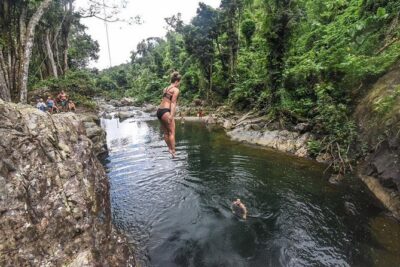
Hike El Yunque Rainforest and Kayak Bio Bay Combo Tour
Read our review →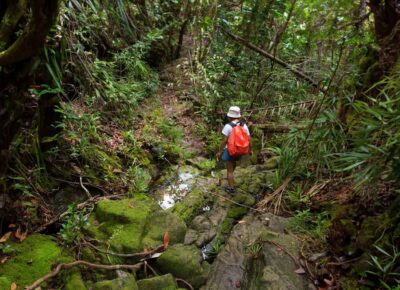
From Khao Lak: Khao Sok Jungle Hike & River Tour
Read our review →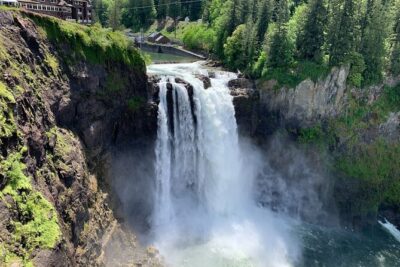
Guided forest hike to Seattle waterfalls incl. Snoqualmie Falls
Read our review →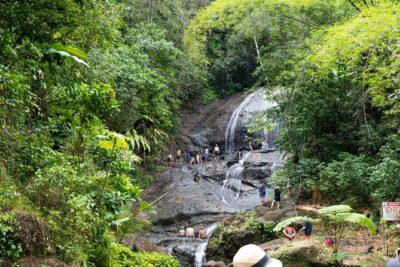
Mt. Rainier highlights – old forest, falls and glaciers
Read our review →
Ketchikan Electric Bike and Rain Forest Hike Ecotour
Read our review →
Great Ocean Road 12 Apostles & Rainforest Walk with Morning Tea
Read our review →Browse the lists this tour appears in