
REVIEW · SPAIN
Lanzarote: La Geria Vineyards Hiking Tour
Lanzarote’s La Geria wine country looks almost impossible at first: black volcanic soil, low stone walls, and vines planted in broad hollows of ash. This half-day hike shows how local farmers turned destruction into farmland, then rewards you with Malvasia wine at Bodega Rubicón. I like the clear sense of place, and I like that the wine comes after you have seen the hard work behind it. The main catch is that this is a real 9-kilometer walk, not a quick vineyard stop.
I also like the small groups, limited to 10 people, and the guides. Raquel, José, and Juan are praised for explaining volcanism, farming, and wine in an easy, lively way. Bring proper shoes and a warm layer. The paths are manageable for a reasonably fit person, but loose stones, hills, heat, wind, and calima can make the walk tougher than the word easy suggests.
Key points to know before booking

- A 9-kilometer volcanic walk: Expect several hours on uneven paths, with hills and loose stones underfoot.
- La Geria’s ingenious farming system: See how vines grow without ordinary irrigation in volcanic ash.
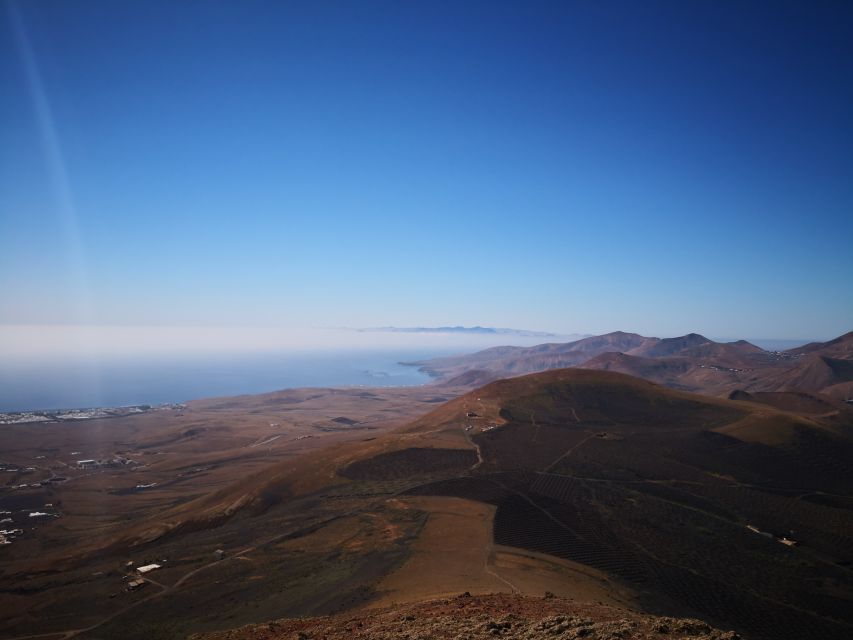
- A climb toward Gaida: Reach the island’s third-highest point for broad views over the surrounding volcanic country.
- Wine served with local bites: The finish includes Dry Volcanic Malvasia, bread, cheese, and a bodega visit.
- A genuinely small group: The maximum of 10 people allows the guide to keep a close eye on the pace.
- Hotel transport in many areas: Pickup and drop-off are included, but Playa Blanca and nearby villages are excluded.
Why La Geria feels like a farming miracle
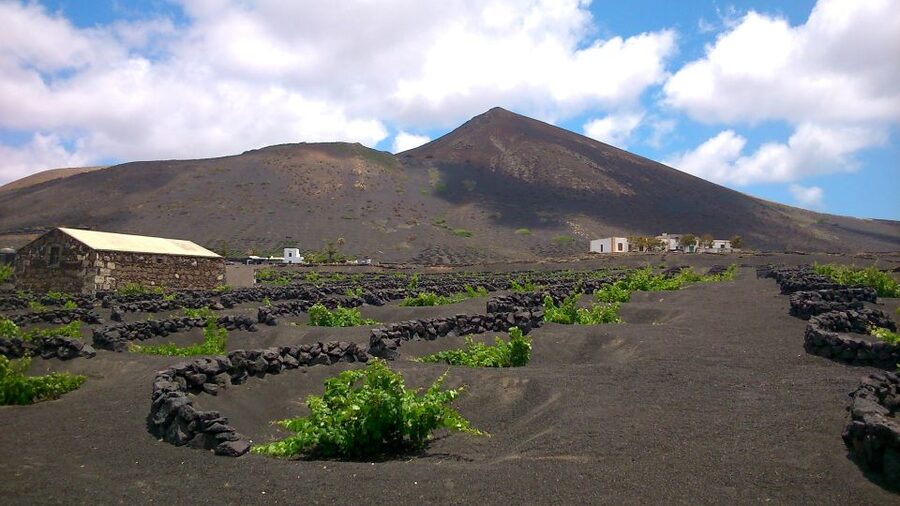
The most memorable part of this outing is not the wine glass at the end. It is the sight of vines growing in a place that appears hostile to agriculture.
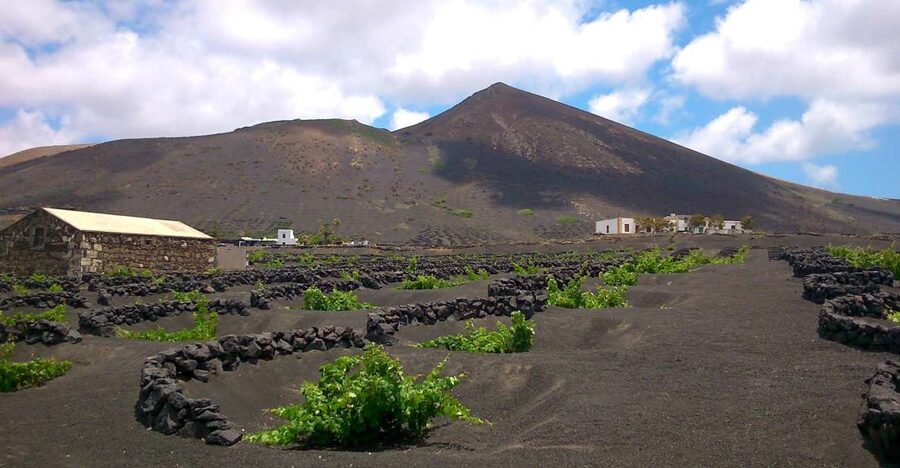
Eighteenth-century volcanic eruptions covered nearly a quarter of Lanzarote. Ash and lava devastated farmland, but local farmers found a way to use the new material. They cleared small hollows in the black ash, planted vines, and built low stone walls to protect them from the wind.
The ash helps hold moisture from the air and occasional rain. That matters on an island where water is scarce. The method is simple in appearance, but it demands patient, careful work around every plant. You will see why Lanzarote wine costs more than wine from mainland Spain. Each vine grows in a carefully prepared pocket of volcanic soil rather than in an ordinary field.
Your guide explains this system while you walk among the vineyards. That timing matters. Instead of hearing a quick farming talk at a winery, you see the planting pits, the walls, the ash, and the dry setting first. The wine tasting then feels connected to the land.
A few more hikes around Spain worth a look
- From Valencia: Montanejos Guided Hike with Natural Pools
★ 4.5 · 1,741 reviews - From Seville: Caminito del Rey Hike Day Trip
★ 4.5 · 1,240 reviews - Lanzarote: Hike Across Timanfaya’s Volcanic Landscapes
★ 4.8 · 1,234 reviews
Starting at Bodega Rubicón
The stated meeting time is 9:30 AM at the free parking lot of Bodega Rubicón. If you use the optional pickup, the exact time and meeting point are sent by email or SMS the day before. In most cases, pickup is arranged outside your accommodation, though Playa Blanca and nearby villages are not included.
Bodega Rubicón is also the likely finishing point, which gives the outing a tidy shape. You start near the wine country, walk through the volcanic vineyards, and end with a drink and something to eat.
The final timing is advertised as four hours. One account records a longer outing, so allow a little flexibility if the group pauses often or transport takes extra time. The walk itself covers roughly 9 kilometers, with one account measuring about 8.5 kilometers. That is enough distance to plan around, especially if you have another activity booked later.
Walking through black ash and working vineyards
The walking pace is adjusted to the group. Guides are described as moving back and forth between faster and slower walkers, with regular stops for explanations. That makes the route more social and less like a race to the summit.
The path is generally considered manageable for someone with a reasonable level of fitness. Still, do not confuse manageable with flat. You will deal with hills, uneven ground, and volcanic stones that can slip into your shoes. Walking trainers worked for some people, but comfortable shoes with a firm sole are the wiser choice.
The volcanic surface is part of the appeal, but it is also the chief practical nuisance. Loose stones can make footing less certain and may collect in your shoes. Wear socks that will not rub, and bring water even though a bottle is included.
Your snack bag contains water, fruit, and a biscuit. It is useful during the walk, but it is not a meal. Eat a proper breakfast before pickup, particularly if you are walking in the warmer months. A warm layer is equally important. Lanzarote can feel sunny and mild, yet wind on an exposed ridge can be surprisingly cool.
Climbing toward Lanzarote’s third-highest point
The route includes a climb toward the third-highest point on the island, identified in one account as the crater area of Volcano Gaida. This is where the outing shifts from vineyard walk to mountain viewpoint.
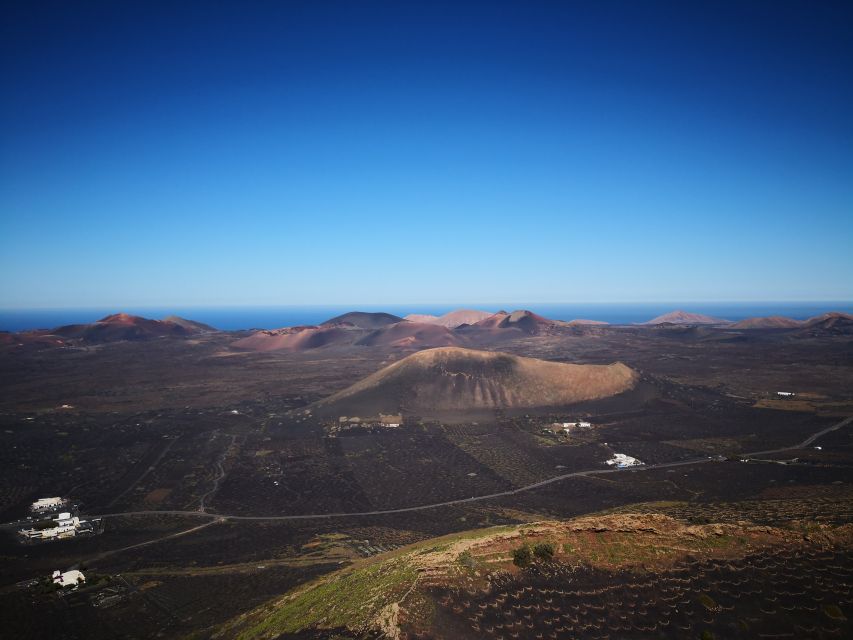
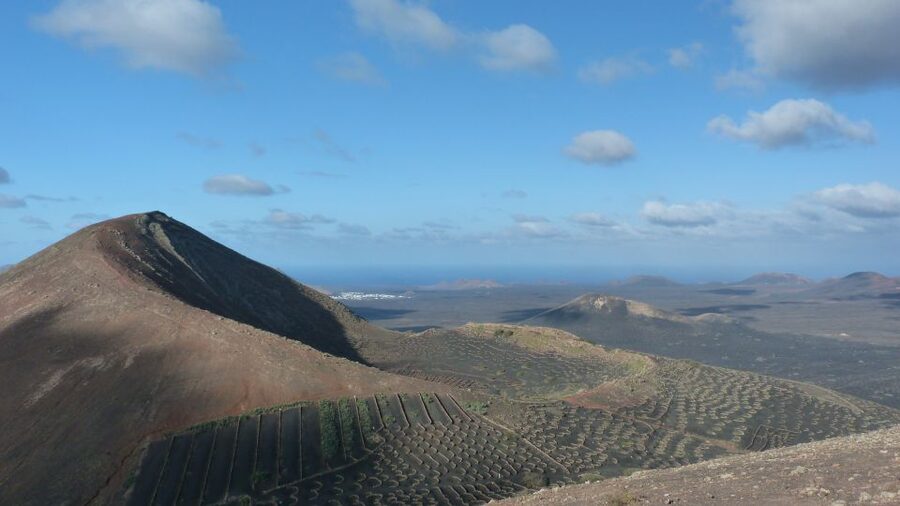
The reward is a wide view over La Geria and the surrounding volcanic country. The contrast is striking: neat vineyard hollows below, dark volcanic slopes around them, and an open horizon beyond. Bring a camera, but keep your hands free on the steeper sections.
This part also gives the guide a chance to explain how the island’s volcanic past shaped modern life. The point is not simply to reach a summit and take a photograph. You begin to connect the eruptions, the ash, the farming method, and the wine in one continuous story.
Heat is the main concern. A hot and humid day, especially with calima in the air, can make the climb much harder. One person became unwell from the heat despite eating and drinking properly, and the guide handled the situation carefully. That is reassuring, but it also tells you to take the conditions seriously. Walk at your own pace, drink regularly, and tell the guide early if you feel unwell.
Same trailhead, a different sort of day:
- The Volcano Heart Tour: Hiking, Tasting and Sunset Experience
★ 5.0 · 1,120 reviews - From Barcelona: Montserrat Monastery, Easy Hike, Cable Car
★ 4.9 · 1,021 reviews - From Barcelona: Montserrat Monastery & Scenic Mountain Hike
★ 4.9 · 978 reviews - Granada: Los Cahorros de Monachil Canyon Hiking Tour
★ 4.9 · 879 reviews
Guides who make the walk work
The human side of the experience receives some of its strongest praise. Raquel is described as energetic, attentive, and able to switch between English, French, and Spanish. José is noted for his friendly manner, island stories, and ability to answer questions while keeping the walk moving. Juan has also led the route.
Guide quality matters here because the scenery can seem stark if you do not understand what you are seeing. A good explanation turns a patch of black ash into evidence of farming skill. It also keeps the pace from becoming a silent march.
The small group limit of 10 is a real advantage. You can ask about grape growing, volcanic features, or the island without shouting across a coach party. The guide can also notice when someone is falling behind. That personal attention is especially useful on uneven ground.
Languages are English, French, and Spanish. The guide is licensed, and hotel pickup and drop-off are included where available. Transport reports describe door-to-door service in some cases, but you should wait for the confirmed meeting details rather than assume every accommodation is covered.
Wine, cheese, and the bodega finish
After the walk, you taste Dry Volcanic Malvasia, the white wine most closely associated with this part of Lanzarote. The tasting is served with bread and cheese, and accounts also mention mojo sauce. It is a modest finish, not a full meal, but it is exactly the right scale after a morning on foot.
The bodega visit adds useful context. You can see where the wine is produced and, if you wish, buy a bottle. The sheltered courtyard gives you a place to sit and recover before the return journey.
The wine itself is not treated as a separate luxury add-on. It is the final chapter of the walk. You have seen the dry soil, the wind protection, and the planting method, so the glass has a story behind it.
Additional meals, drinks, and extra tastings are not included. If you want more than the included glass and snack-style food, budget separately. The listed tasting is enough for a taste of the region, but not a substitute for lunch.
Is $55 a fair price?
At $55 per person, this is good value if you want several experiences combined into one morning: transport where available, a licensed guide, a roughly 9-kilometer hike, a high viewpoint, a snack bag, and a wine tasting.
You are not paying only for a glass of wine. The price also covers the guide’s interpretation of Lanzarote’s farming system and the practical work of moving a small group along volcanic paths. A standard winery visit may be cheaper, but it will not give you the same sense of how the vineyards fit into the island.
The value is weaker if you mainly want a relaxed tasting. This is an active outing with a climb, and the included food is light. People with low fitness, heart problems, respiratory issues, mobility impairments, or wheelchair users should not book it. Children under 12 are not suitable for the tour, and the activity information also lists children under 8 as unsuitable.
Free cancellation is available up to 24 hours before the start, and you can reserve now and pay later. Those policies help if your Lanzarote plans are still shifting, but they do not change the physical demands of the walk.
What to bring for a better morning
Pack light, but pack sensibly:
- Comfortable walking shoes with a firm grip
- A warm layer for wind at the higher point
- Extra water, even though one bottle is provided
- Sun protection and a camera
- A small bag for personal items
Drones and pets are not allowed. The route is outdoors, so conditions can affect how comfortable the walk feels. In particular, heat, wind, and calima can change a pleasant climb into hard work.
Do not plan this as an elegant outfit-and-tasting morning. Volcanic dust and loose stones are part of the setting. Dress for walking first, then enjoy the wine once the shoes come off.
Who should book this La Geria hike?
I would choose this tour if you want to understand Lanzarote rather than simply photograph it. It suits active adults, couples, solo visitors, and anyone curious about how people farm in a dry volcanic environment.
It is also a good choice early in a holiday. The guide can give you useful context about the island, and several guides are happy to answer questions and offer suggestions for the rest of your stay.
I would skip it if your priority is a long, leisurely lunch, a large wine selection, or a fully accessible route. I would also avoid it if you dislike uneven paths or struggle with hills. The pace is considerate, but no guide can remove the distance, stones, or heat.
The final call
Book this experience if you want a small-group walk with a strong sense of place, not just a winery transfer. The best parts are the clever vineyard system, the climb toward Gaida, the wide views, and the chance to finish with Malvasia, cheese, and bread at Bodega Rubicón.
The main decision is fitness. If you can comfortably walk about 9 kilometers on uneven ground and prepare for sun and wind, $55 buys a well-rounded half day. If you want only a tasting, choose a shorter winery visit instead.
FAQ
How long is the La Geria vineyard hike?
The activity is scheduled for about four hours. The walk covers approximately 9 kilometers, with one recorded distance of about 8.5 kilometers.
What time does the tour start?
The stated meeting time is 9:30 AM at the free parking lot of Bodega Rubicón. If you use pickup, the exact time and meeting point are sent by email or SMS the day before.
Is hotel pickup included?
Hotel pickup and drop-off are included where available. Pickup from Playa Blanca and nearby villages is not included.
What wine will I taste?
The included tasting is Dry Volcanic Malvasia white wine from Lanzarote.
Is food included?
A snack bag with water, fruit, and a biscuit is included. The tasting also includes bread and cheese. Meals, extra drinks, and additional tastings are not included.
What languages does the guide speak?
Guided tours are available in English, French, and Spanish.
Is the hike suitable for beginners?
The route is described as an easy-level hike by some participants, but it includes about 9 kilometers, hills, uneven ground, and loose volcanic stones. You should have a reasonable level of fitness and wear proper walking shoes.
Can children or wheelchair users join?
The activity is not suitable for children under 12, people with mobility impairments, or wheelchair users. It is also not suitable for people with heart problems, respiratory issues, or a low level of fitness.
Just added around Spain
- Fuerteventura sunset hike to the wild west coast★ 4.9 · 14 reviews
- Fuerteventura: COFETE HIKING TOUR: Pick up in the SOUTH★ 5.0 · 13 reviews
- Fuerteventura: Ajuy Caves & hike to secret Las Penitas Arco★ 4.9 · 43 reviews
- Fuerteventura: Hiking on the sacred mountain El Cardon★ 4.6 · 3 reviews
- From Valencia: Hiking Tour to Two Stunning Waterfalls★ 5.0 · 3 reviews
- Private Hiking Tour of The Red Canyon of Teruel★ 5.0 · 4 reviews
- From Valencia: Peña Cortada Private Hiking Day Tour★ 5.0 · 13 reviews
- From San Sebastian: Guided Coastal Hike with Winery Tasting★ 4.9 · 14 reviews
Spain Hiking Tours, compared.
The Volcano Heart Tour: Hiking, Tasting and Sunset Experience
Read our review →
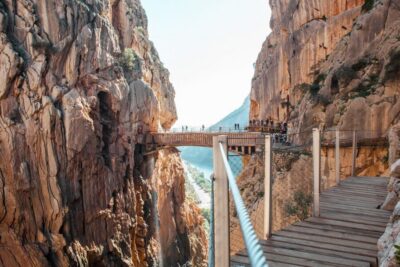
Caminito del Rey: Guided Hiking Tour with Entrance Tickets
Read our review →Browse the lists this tour appears in