
REVIEW · USA
Hilo: Waterfall Hike and Swim with Native Hawaiian
Hilo’s waterfalls are more than pretty photo stops on this four-hour outing. With Christian of Kalaninuimehameha, you follow forested trails tied to water, Hawaiian language, plants, history, and cultural practice. The swim at Waiʻale Falls is the physical reward, but the real point is learning how water shapes this place.
I like two things right away: the small group of six or fewer, which allows room for questions, and Christian’s use of Hawaiian language as part of the experience. You also receive wai, hua ʻai, and a lei, small but meaningful touches that connect the walk to local tradition.
The main caution is the trail. Some sections are steep and technical, with rocks, wet footing, and deep water near the falls. This is not a gentle stroll, and it is not a good fit if back or knee problems limit your movement.
Key points to know before you book
- Christian brings Hawaiian language and cultural practice into the walk, rather than treating the waterfalls as scenery alone.
- Waiʻale Falls offers a chance to swim, but the water can be deep and the rocks require care.
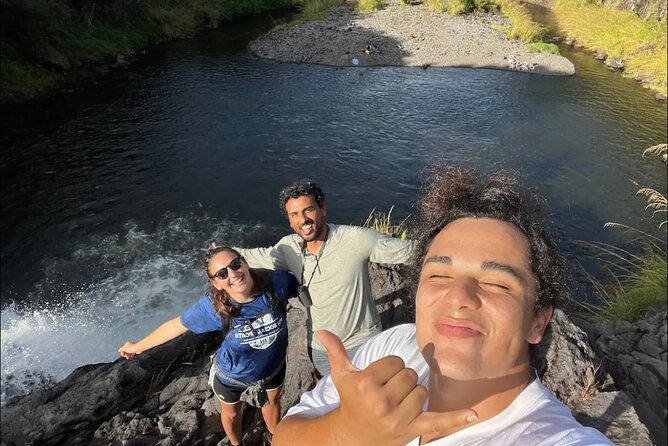
- Two alawai trails show different sides of the river system, including the base of Waiʻale Falls and a forested ridge leading toward Waiʻlima Falls.
- The four-hour tour visits Waiānuenue, Peʻepeʻe, Waiʻale, and Waiʻlima Falls, with explanations of local plants, animals, and Hawaiian history.
- A maximum of six participants keeps the outing personal, useful when the trail or cultural discussion calls for a slower pace.
- Sturdy waterproof shoes and a waterproof bag are essential, not optional extras for a wet forest hike.
Hilo water country, explained one step at a time
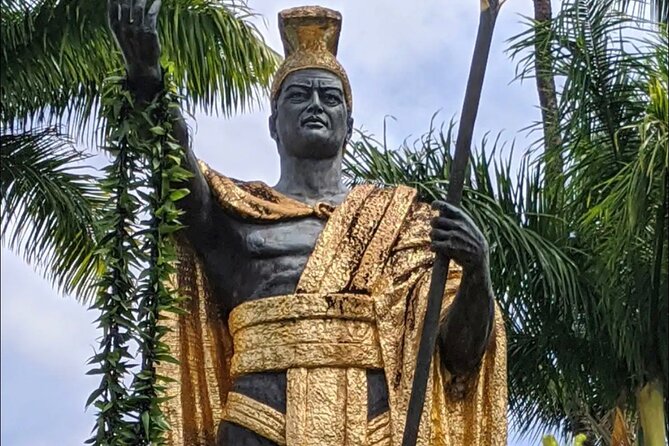
This experience begins at the Statue of King Kamehameha, where you meet your guide. There is no hotel pickup or drop-off, so you need to arrange your own way to the meeting point.
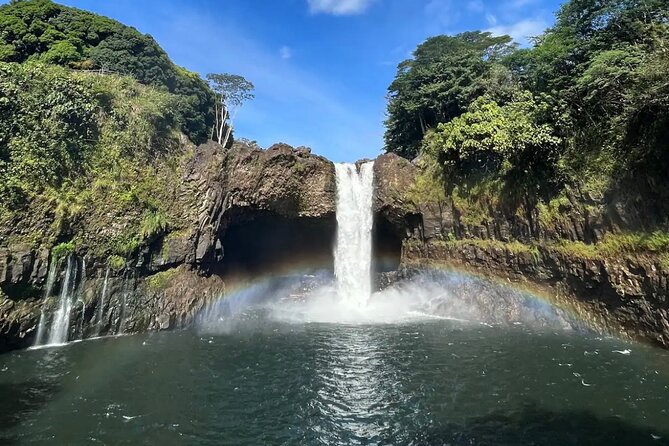
From there, the focus shifts quickly to Hilo’s water system. The tour follows two alawai trails, with each route offering a different view of the area. One reaches the base of Waiʻale Falls, where a stone-beached island forms part of the setting. The other passes through forested terrain on a ridge above the water and leads toward Waiʻlima Falls.
I like this structure because it avoids the usual waterfall routine: drive up, snap a picture, and leave. Here, the streams and trails are treated as part of a living system. You learn about endemic plants and animals connected with the rivers, along with stories tied to the area and Hawaiian ways of understanding water.
The tour is conducted in English, but Christian also speaks Hawaiian during the experience. That matters. You hear the language in the place where its words and meanings belong, rather than receiving only a quick cultural note from a distance.
More Waterfall Hikes in the USA
- Multnomah Falls and Columbia River Gorge Half-Day Hiking Tour
★ 5.0 · 2,108 reviews - Small Group Waterfall and Rainforest Hiking Adventure on Maui
★ 5.0 · 1,417 reviews - Kauai: Secret Falls Kayak and Hike
★ 5.0 · 1,403 reviews
Four waterfalls, four different reasons to pay attention
The experience includes Waiānuenue, Peʻepeʻe, Waiʻale, and Waiʻlima Falls. The information provided does not promise identical viewing conditions at each stop, and water flow can affect how each waterfall looks on the day of your visit.
Waiānuenue and Peʻepeʻe add broader context to the outing. They help show that Hilo’s waterfall country is not one isolated viewpoint, but a network of streams and drops shaped by rain, forest, and stone.
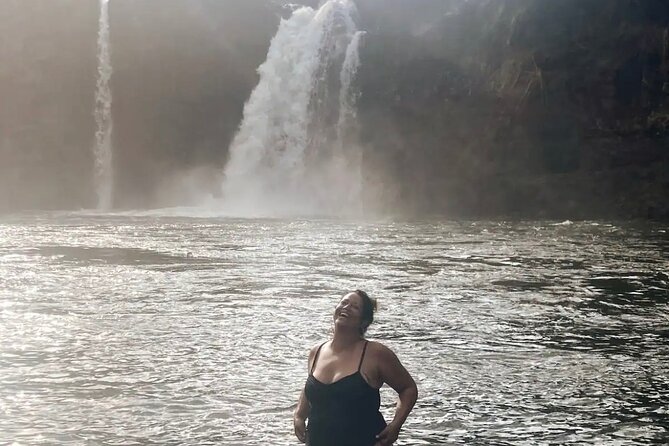
Waiʻale is the main active stop for swimming. The trail reaches its base and a stone-beached island, giving you a place to appreciate the falls from close range. You can swim in the refreshing water here, though you should take the warning about depth seriously. One participant lost glasses near the falls, and the guide tried to help recover them. That detail tells you what a careful visit requires: secure loose belongings before entering the water.
Waiʻlima Falls is reached along the forested ridge trail. This section brings more attention to the route itself, including the trees, river connections, and uneven ground. You should expect the trail to feel more like a backcountry walk than a paved attraction.
What the physical effort feels like
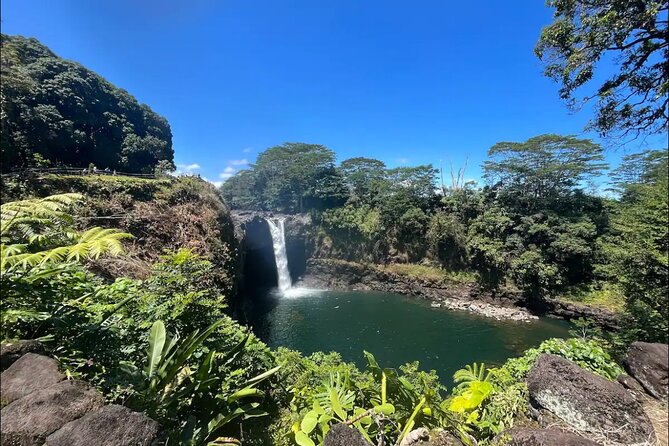
The tour description calls for moderate physical activity, and that is the right way to think about it. You should expect wet conditions, steep sections, rocks, and a few more technical moments as you move through the trees and near the waterfalls.
One account described the forest path, rock scrambling, and swim as more demanding than expected. That is useful advice, especially if you tend to judge a hike by its four-hour length. Four hours can feel quite different when the ground is slick or uneven.
Wear sturdy waterproof footwear with good grip. Comfortable shoes alone are not enough if they are soft, unstable, or likely to stay wet for the rest of the day. Bring swimwear and a towel, plus a waterproof bag for your phone, camera, and other electronics.
The rules are straightforward: no smoking, no littering, and no touching plants. The plant rule is especially important on a guided nature walk. You are being shown a living river system, not invited to collect souvenirs or push through vegetation.
The activity is not suitable for children under five or people with mobility impairments. If you have back or knee problems that restrict walking, stepping over rocks, or getting in and out of water, I would choose a less demanding Hilo outing.
Christian’s role makes the cultural side matter
The guide, Christian, is the person who gives this experience its shape. The strongest praise centers on his passion for Hawaiian culture, his command of Hawaiian language, and his ability to connect the setting with local history and tradition.
You can expect more than a list of waterfall names. The tour includes Hawaiian history connected to the region, explanations of cultural practice, and discussion of mana. The information also points to the importance of water, or wai, in the Hawaiian universe.
That cultural focus is valuable because it changes how you look at the walk. A waterfall is easy to treat as a backdrop. Christian’s approach asks you to consider the water, plants, animals, and people as connected parts of one place.
The experience also includes wai, hua ʻai, meaning fruit, and a lei. These items are part of the cultural presentation rather than a meal or a full food stop. Food and drinks are not included, so bring anything you need beyond the included fruit.
A small group helps here. With no more than six participants, you have a better chance to hear the language clearly, ask questions, and stay engaged during explanations. It also reduces the impersonal feel common on larger outdoor tours.
Same trailhead, a different sort of day:
- Lower Antelope Canyon Hiking Tour
★ 5.0 · 6,216 reviews - Boston Freedom Trail Walking Tour with Costumed Guide
★ 4.5 · 2,531 reviews - Small Group: Valley of Fire Half Day Tour from Las Vegas
★ 5.0 · 2,130 reviews - San Francisco: Yosemite National Park & Giant Sequoias Hike
★ 4.5 · 1,777 reviews
Swimming at Waiʻale Falls
The swim is likely to be the most anticipated part of the tour. Waiʻale’s water offers a cool break after the hike and gives you a direct way to experience the waterfall rather than simply view it from a lookout.
Still, this is not a controlled swimming pool. The supplied information specifically warns that some water near the waterfall can be deep. Rocks and wet surfaces add another concern, so you should move slowly and follow Christian’s instructions.
Protect your glasses, phone, and other loose items before entering the water. A waterproof bag is a smart addition even if you plan to keep your electronics out of the pool. Bring a towel and spare dry clothing if you have room, though spare clothing is not listed as a required item.
The swim is an opportunity, not a requirement stated for every participant. If you prefer to stay at the edge and enjoy the falls, ask the guide about the safest way to do so. The key is to treat the water with respect and not let the promise of a swim make you rush the difficult parts of the trail.
Is the $150 price fair?
At $150 per person, this tour costs more than a simple self-guided visit to a waterfall. The value comes from the combination of a guide, a small group, access to several waterfall areas, the swim opportunity, and a cultural lesson grounded in the Hilo region.
You are paying for interpretation as much as for walking. Christian’s role includes Hawaiian language, local history, endemic plants and animals, cultural practice, and an explanation of water’s place in Hawaiian thought. If you only want a quick waterfall photograph, the price may feel high.
I think the cost makes more sense for you if you want a guided outing with substance. The group limit of six is also important. A larger bus tour might cost less per person, but it would not offer the same level of personal attention or the same setting for questions.
There is no food or drink service beyond the included fruit, wai, and lei. Hotel transportation is also not part of the price. Factor in your own transport to the Statue of King Kamehameha and any snacks you want for before or after the hike.
Practical planning for a wet Hilo morning or afternoon
The tour lasts four hours, but starting times vary, so check availability when you book. The reserve-now, pay-later option lets you hold a place without paying immediately, and cancellation is available up to 24 hours before the activity for a full refund.
Pack light, but pack carefully:
- Sturdy waterproof shoes
- Swimwear
- Towel
- Waterproof bag for electronics
- Any food or drinks you want beyond the included fruit and wai
You should also plan for wet conditions from the start. Rain or spray can affect the trail, clothing, and electronics. A phone in an ordinary pocket is not protected just because you are not swimming.
The meeting point is the Statue of King Kamehameha. Since transportation is not included, allow enough time to reach the statue and locate the group. The available details do not state how parking or public transport works, so check those arrangements separately before the day of the tour.
Who will enjoy this waterfall hike most?
I would recommend it to an active adult or older child who can handle moderate exertion, uneven trails, wet rock, and a possible swim. It suits you especially well if you want to learn about Hawaiian culture while seeing the waterfalls, rather than separating sightseeing from history.
It is also a strong choice for anyone interested in Hawaiian language. Christian’s fluency is a central part of the experience, and you hear language connected to the land and cultural practice.
You may want to skip it if you need a flat trail, dry shoes, easy access to the water, or a predictable swimming area. People with mobility limitations and children under five are not suitable for this activity. If you dislike getting wet or climbing over rocks, the waterfall views alone may not justify the physical effort.
The small group can be a plus or a drawback depending on your style. It allows more conversation, but it also means you are sharing a close, active experience rather than moving independently at your own pace.
Should you book this Hilo waterfall experience?
Book it if you want Hilo’s waterfalls explained through Hawaiian language, history, and cultural practice, and if you are ready for a real forest hike. Christian’s enthusiasm and knowledge of the area are the heart of the outing, while Waiʻale provides the chance to swim and cool off.
Do not book it expecting a simple walk to a viewpoint. The trails can be steep, wet, and technical, and the water near the falls can be deep. For a fit visitor who values local interpretation and a small group, the $150 price is reasonable. For someone seeking easy access and minimal exertion, choose a gentler activity.
FAQ
How long does the waterfall hike and swim last?
The experience lasts four hours.
Where does the tour meet?
The meeting point is the Statue of King Kamehameha.
Which waterfalls are included?
The experience includes Waiānuenue, Peʻepeʻe, Waiʻale, and Waiʻlima Falls.
Can I swim during the tour?
You have the opportunity to swim at Waiʻale Falls.
Who guides the experience?
Christian guides the tour through Kalaninuimehameha.
What language is the tour conducted in?
The live tour guide speaks English, and you will also hear Hawaiian language during the experience.
How many people are in the group?
The group is limited to six participants.
What should I bring?
Bring comfortable shoes, swimwear, and a towel. Sturdy waterproof footwear and a waterproof bag for electronics are recommended.
Is hotel pickup included?
No. Hotel pickup and drop-off are not included.
Can I cancel the booking?
Yes. You can cancel up to 24 hours in advance for a full refund. You can also reserve now and pay later.
Just added around the USA
- Ketchikan Rainforest Canoe and Nature Walk★ 4.5 · 89 reviews
- Alaskan Escape: Cruise, Hike, and Cultural Immersion★ 5.0 · 3 reviews
- Private Waterfalls Hike and Swim in Lihue★ 5.0 · 38 reviews
- Hike and Bike Kelleys Island Trails★ 5.0 · 13 reviews
- Kansas City Crossroads Art District and Westside Urban Hike★ 5.0 · 22 reviews
- Strawberry Hill and Downtown KCK Hike★ 5.0 · 18 reviews
- Juneau Shore Excursion: Mendenhall Glacier Canoe, Paddle and Hike★ 5.0 · 75 reviews
- Norris Adventure: Seaplane, Paddle and Glacier Hike★ 5.0 · 12 reviews
USA Hiking Tours, compared.
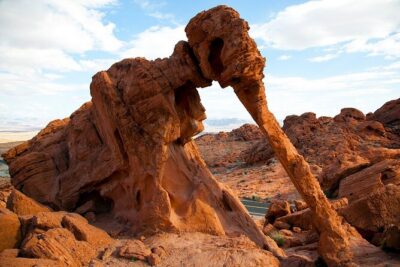
Small Group: Valley of Fire Half Day Tour from Las Vegas
Read our review →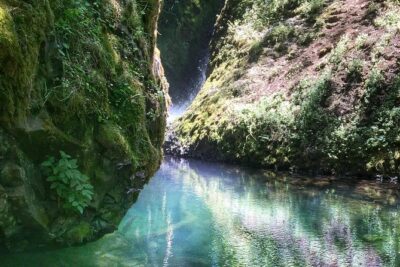
Multnomah Falls and Columbia River Gorge Half-Day Hiking Tour
Read our review →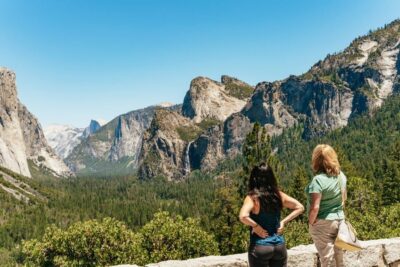
San Francisco: Yosemite National Park & Giant Sequoias Hike
Read our review →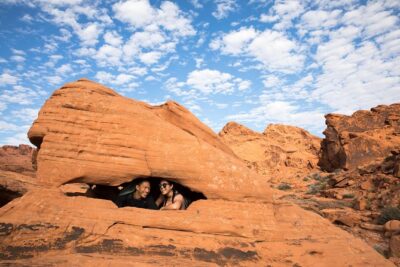

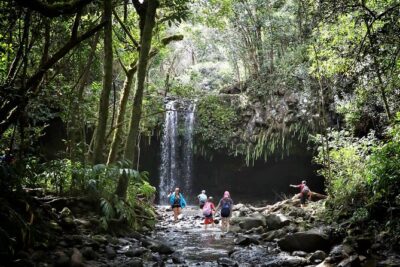
Small Group Waterfall and Rainforest Hiking Adventure on Maui
Read our review →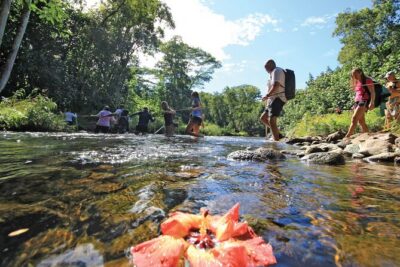
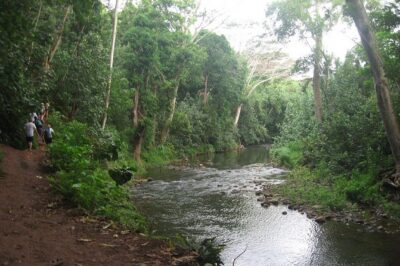
Kauai Adventure: Kayak & Hike to Secret Falls with Expert Guide
Read our review →Browse the lists this tour appears in