
REVIEW · SEOUL
Bukhansan mountain hiking tour – 6 hours
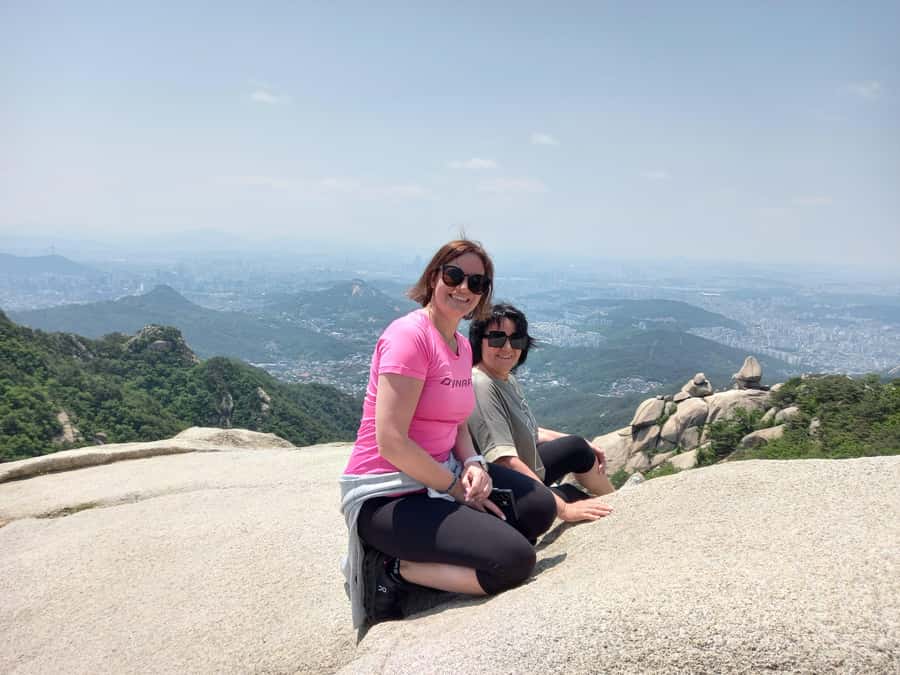
Bukhansan gives you something unusual in Seoul: a real mountain day without leaving the city. Granite peaks, odd-shaped rocks, a running valley, and broad views toward downtown arrive after a short bus ride from Gwanghwamun Square. The scenery is the star, but guide Paul Koo adds useful context about Korean mountain worship, Buddhist tradition, and the route itself.
I like two things here. First, the private format lets the guide set a sensible pace, which mattered for one older hiker’s mother and for a group of non-hikers in their 50s and 60s. Second, the trail links several of Bukhansan’s best rock formations rather than stopping at a single lookout. The drawback is the middle-high difficulty: the first 50 minutes climb steeply, and another 20-minute uphill section comes later.
Key points at a glance
- A six-hour mountain day from central Seoul: Meet at the King Sejong statue at Gwanghwamun Square, ride about 30 minutes by bus, and return to the city after the hike.
- A route built around granite formations: See Munsubong Peak, Tongcheonmun Rock, Seunggabong Peak, Bibong Peak, and Samobawi Rock.
- A private English-language tour: Paul Koo guides the group and can adjust the meeting place and time after booking.
- Mostly ridge walking after the hard climbs: The trail begins with a steep 50-minute ascent, followed by flatter sections and another steep 20-minute climb.
- A cultural side to the hike: Your guide explains Bukhansan’s Buddhist traditions and why mountains have long held spiritual importance in Korea.
- Bring your own fuel: Food, drinks, insurance, and transportation costs are not included, so carry water and simple snacks.
Why Bukhansan makes a strong Seoul day trip
Bukhansan reaches 836.5 meters, or 2,744 feet, yet it sits in the middle of the Seoul area. That combination is the appeal. You are not spending half a day getting to a distant trailhead, but once the walking begins, city noise gives way to rock, trees, water, and open sky.
The mountain was designated a Korean national park in 1983. It is also counted among Seoul’s three major natural landmarks, alongside the Han River and Namsan Mountain. That local importance helps explain why this is more than a generic walk in the woods. Bukhansan is part of how Seoul understands itself.
I especially like the contrast between the urban start and the rugged trail. You meet near the King Sejong statue at Gwanghwamun Square, one of the city’s central public spaces. About 30 minutes later, you are heading into Bukhansan National Park. That quick change of scene is one of the tour’s best features.
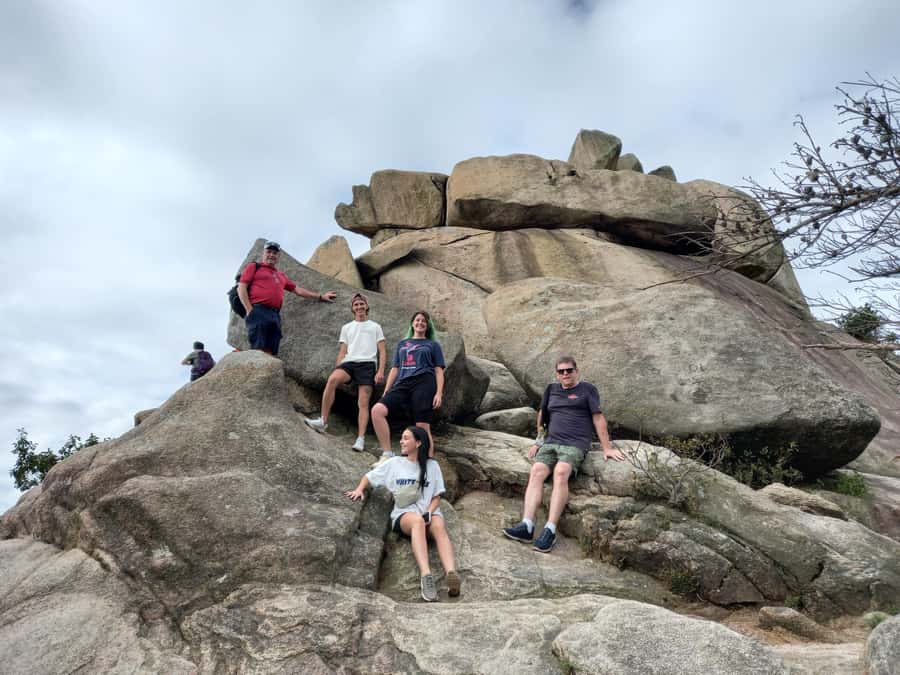
The route is also carefully chosen for views. Instead of focusing on one summit alone, it moves across a chain of granite formations. The rock around Bibong, Samobawi, Seunggabong, Tongcheonmun, and Munsubong has an almost sculpted look, with strange shapes and exposed surfaces that give the walk a strong sense of place.
More Mountain Hikes in Seoul
- Private Hiking tour to Bukhansan Peak(Baegundae: 836.5m) with Mountain Expert
★ 5.0 · 113 reviews - Seoul Mountain Hike: Temples, Folklore & Traditional Meal
★ 5.0 · 42 reviews - Bukhansan Mountain Private Hike with Lunch
★ 5.0 · 26 reviews
The 30-minute bus ride from Gwanghwamun
The scheduled meeting point is the King Sejong statue at Gwanghwamun Square, with a usual start time of 9:30 in the morning. The meeting place and time can be adjusted after booking, and your hotel may also be used as the meeting point.
The bus ride to the Gugi National Park office takes about 30 minutes. This is a practical part of the outing, not dead time. You begin in central Seoul, then reach the park without arranging a separate long transfer or figuring out a complicated route on your own.
Check the transportation terms carefully when you book. The tour includes the guide and hiking experience, but transportation costs are listed separately from the included items. Food and drinks are also your responsibility.
The first climb: Gugi office to Daenammun Gate
The hiking section takes about five hours. The first major stretch runs from the Gugi National Park office toward Daenammun Gate and takes roughly 90 minutes in the listed schedule.
This is where you feel the tour’s middle-high difficulty. The opening climb includes about 50 minutes of fairly steep uphill walking. The description calls the outing suitable for casual walkers, but that should not be confused with an easy stroll. You need a reasonable level of fitness and should be comfortable walking uphill for an extended period.
The private format helps here. Paul Koo can slow the pace when needed and offer support over harder parts of the trail. One account specifically describes him managing time well and helping a hiker’s mother through difficult sections. Another describes his patience with a group of women aged 50 to 60 and older who did not usually hike. That makes the tour more promising for mixed-ability groups than a fixed-pace group outing.
Still, do not arrive expecting the guide to remove the physical challenge. The steep opening is part of the experience, and you should bring suitable walking shoes, water, and enough energy for five hours outside.
Munsubong Peak and the ridge views
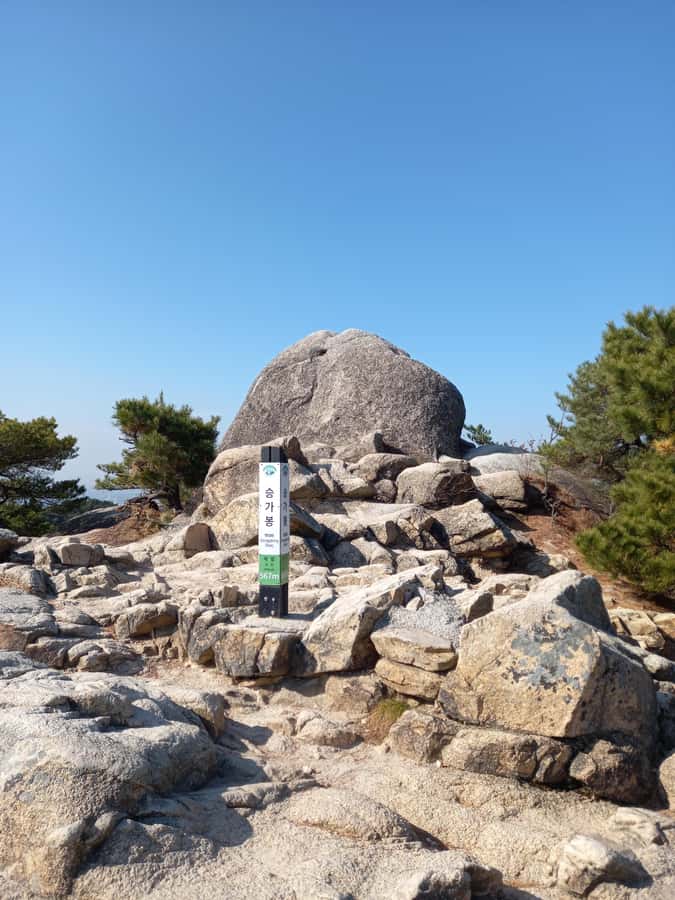
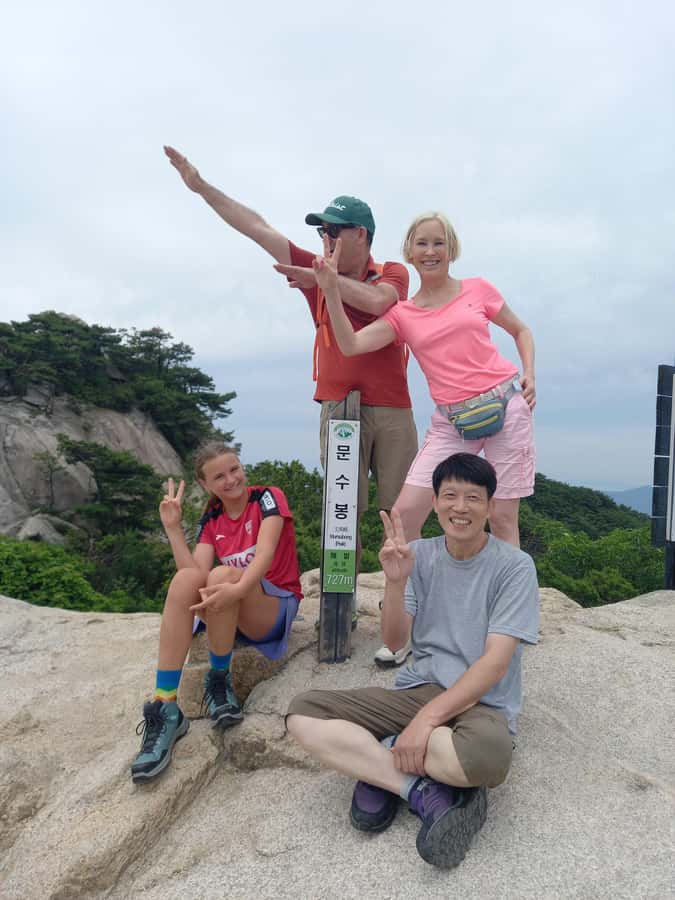
After the early climb, the route reaches Daenammun Gate and then continues toward Munsubong Peak. The schedule allows a short break around 11:40, followed by the Munsubong section and time for photographs.
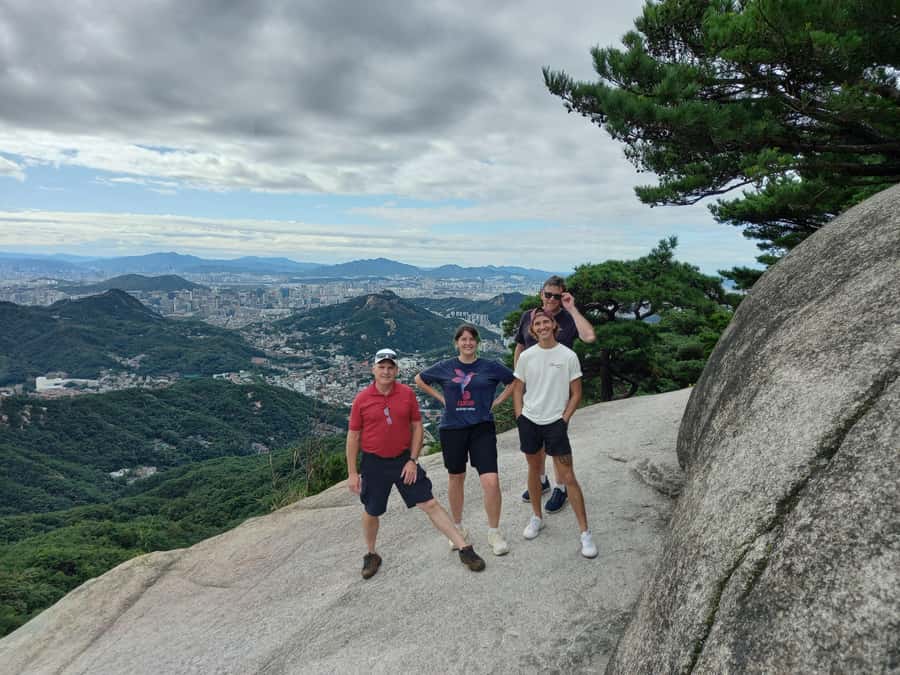
Munsubong is one of the main rewards of the day. From the top, clear weather can reveal a wide view of downtown Seoul. The city appears as a different kind of subject from this height, with the mountain’s granite forms creating a sharp foreground.
The route includes another steep section of about 20 minutes on the way to Munsubong. After that, much of the walking follows a mountain ridge and is described as nearly flat. That pattern matters: the hike is not one continuous climb, but you still need to budget for two demanding uphill stretches.
Cloud or haze can affect the views. The best city outlook depends on clear skies, so treat the panorama as a weather-sensitive reward rather than a guaranteed feature. The rock formations and valley remain worthwhile even when the city view is limited.
More Mountain Hikes in South Korea
- Seoul: Mt Seorak + Naksansa Temple or Nami Island Group Tour
★ 4.7 · 422 reviews
Tongcheonmun Rock and Seunggabong Peak
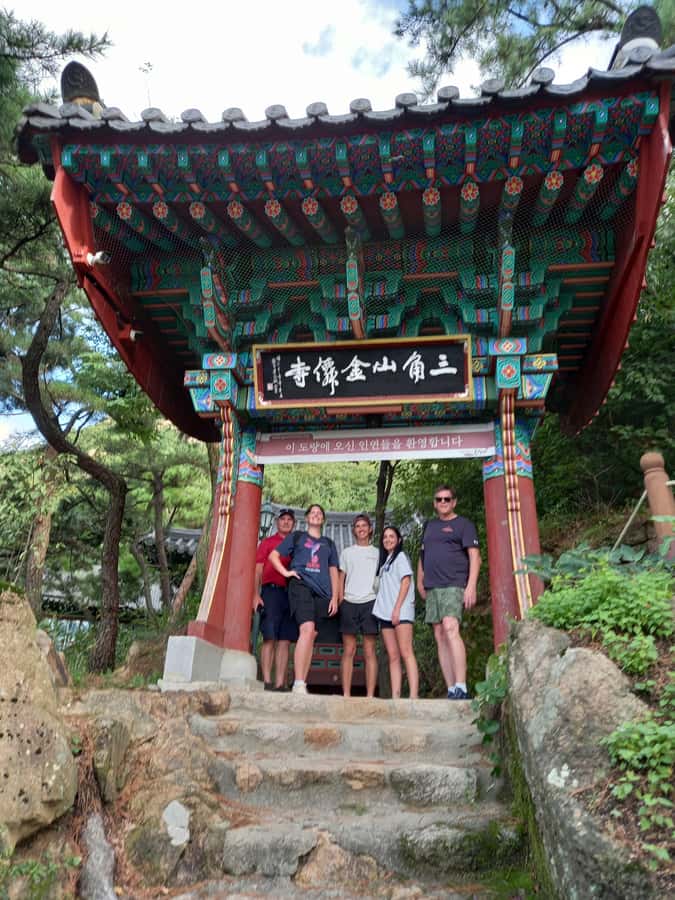
From Munsubong, the trail reaches Tongcheonmun Rock and Seunggabong Peak. The scheduled time for this section is about 30 minutes, though the actual pace depends on the group.
Tongcheonmun Rock is one of the route’s memorable natural features. The mountain’s granite has been shaped into unusual openings, slabs, and forms, giving this portion more visual interest than a standard forest path. Seunggabong adds another high point and another chance to look across the surrounding ridges.
This is also a good part of the tour for listening to Paul’s explanation. The guide discusses the mountain’s geography, history, and spiritual meaning. In Korean tradition, mountains were not viewed only as scenery or recreation. They could also be objects of worship, and Bukhansan still has Buddhist connections, including temples where visitors can take part in temple stays and meditation.
You do not need to be religious to find this useful. It gives the rocks and trails a human story and helps explain why the mountain remains important beyond its views.
Bibong Peak and Samobawi Rock
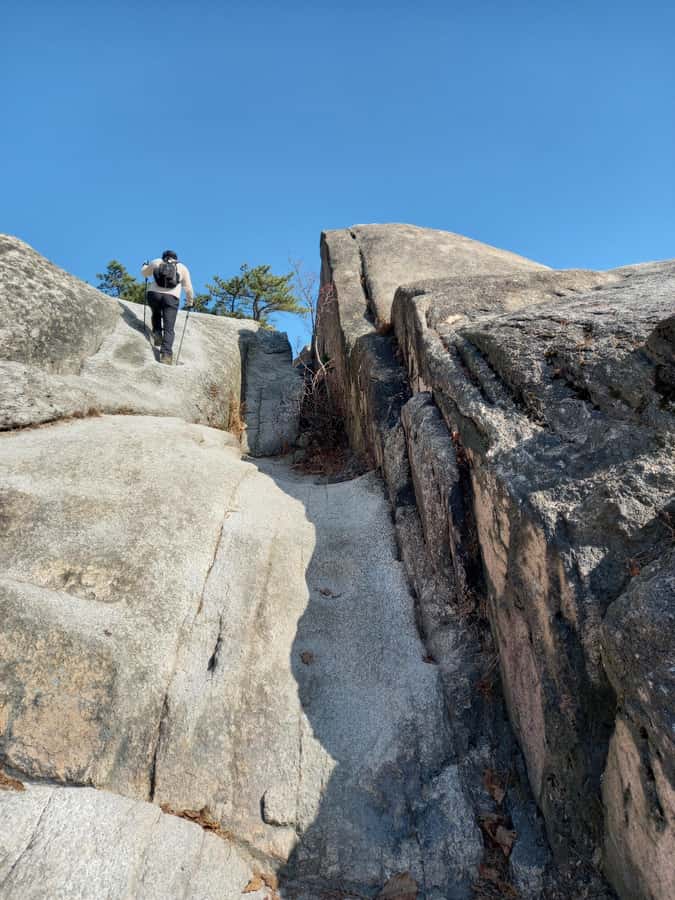
The trail then reaches Bibong Peak and Samobawi Rock, with another scheduled photo stop. This section is among the most visually distinctive parts of the route because the granite formations become the main attraction.
Samobawi Rock is described as a particularly unusual formation, while Bibong provides another elevated viewpoint. The route between them passes along a ridge, so you get a sense of how the mountain’s rock spine connects one lookout to the next.
Photography is built into the schedule, which is helpful. A mountain walk can become a rushed march if nobody allows time to stop, but this tour includes photo time at Munsubong and around Bibong and Samobawi. You should still keep your camera secure and avoid slowing the group during steeper or narrower sections.
The listed schedule places the Bibong ridge around 1:20 in the afternoon. By then, you will have completed the hardest parts of the route and seen the main granite landmarks.
The descent through the flowing valley
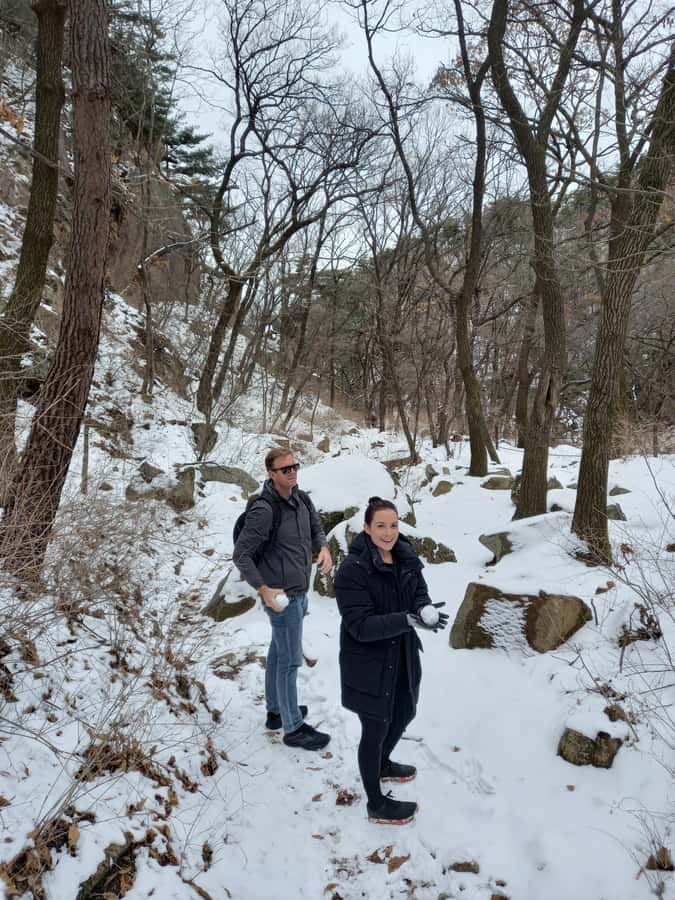
The way down leads toward the North 5 Provinces Office and takes about 90 minutes in the schedule. This section offers a different experience from the exposed ridge. Instead of looking outward from high rock, you follow a valley where water can continue flowing even during dry periods.
The sound of running water is a welcome change after the uphill work. It also makes the descent feel less repetitive. You get a cooler, quieter setting and a chance to notice details that are easy to miss while concentrating on a climb.
The valley route ends the hiking portion at the North 5 Provinces Office. From there, the bus ride back to Gwanghwamun Square takes about 50 minutes in the full schedule, with the tour ending around 3:30 in the afternoon if the 9:30 start is followed.
The timing leaves little room for a long restaurant meal during the hike. Carry your own food, such as an energy bar, bananas, water, and another simple snack. The supplied information specifically asks you to bring these items, and you should take that advice seriously.
What the guide adds beyond navigation
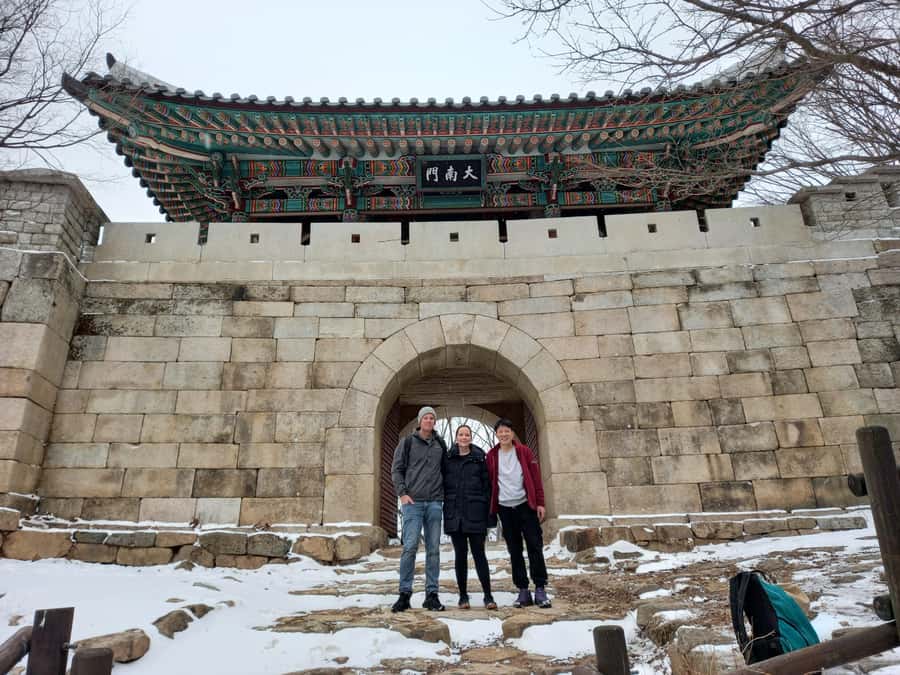
Paul Koo is the named guide for this experience, and the strongest praise centers on care, patience, and time management. That matters on Bukhansan because the route has enough elevation and uneven ground to make pacing important.
A guide can also help you notice what you would otherwise walk past. Paul explains the mountain’s rock formations, geographical features, cultural traditions, and spiritual associations. You get a better sense of why the trail follows Bibong, Samobawi, Seunggabong, Tongcheonmun, and Munsubong instead of simply treating them as names on a map.
The private group setting is another practical advantage. The price is $305 for a group of up to two people, so it is expensive for a solo participant but more reasonable when shared by two. In return, you get a private English-language guide for six hours and a route that can be handled at a more personal pace.
That value depends on what you want. If you only need directions and a mountain path, the price may feel high. If you want transport planning, cultural explanation, route interpretation, and personal support on a demanding hike, the cost makes more sense.
Who should book this hike
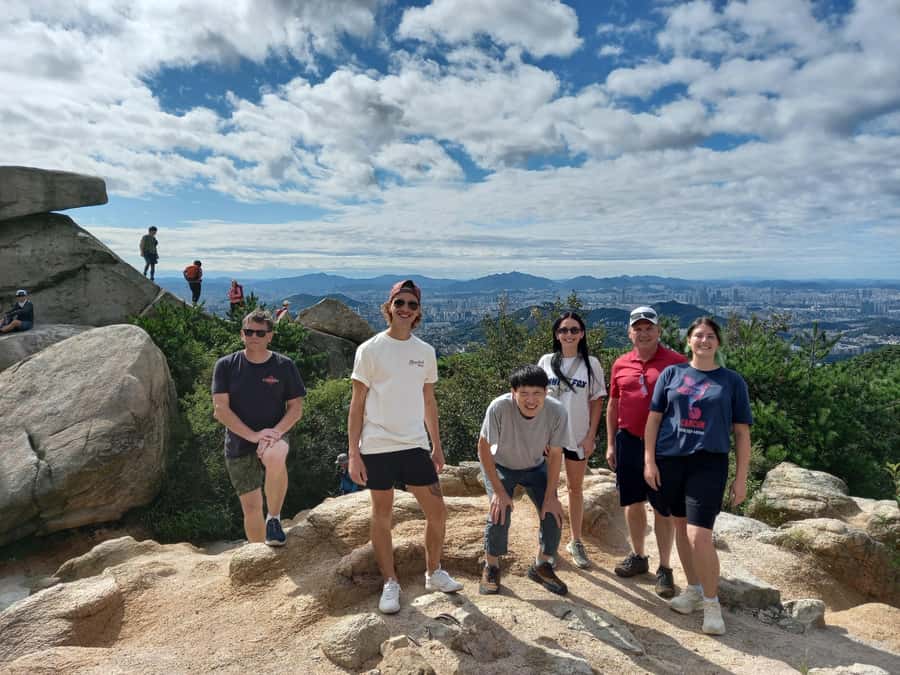
This tour suits you if you want active sightseeing rather than a gentle city excursion. You should be ready for five hours of hiking, including a 50-minute steep climb at the start and a second steep section of about 20 minutes.
It can also work well for a small family or private group with different walking abilities. The guide has experience supporting an older family member and keeping a slower group moving without turning the outing into a race.
You may want to choose something else if you are looking for a very easy walk, a short nature stop, or a tour that includes meals. The difficulty is described as middle-high, and the food and drinks are not included.
Clear weather improves the city views, but the tour still has several attractions if the skyline is hazy: the granite shapes, the ridge, the valley, the flowing water, and the cultural explanation.
After the hike, the supplied plan suggests relaxing at a cafe and trying traditional Korean food at Tongin Market in Seochon, near Gwanghwamun Square. That post-hike option is not included in the six-hour tour, but it makes practical sense. You finish near the center of Seoul, close to a neighborhood where you can sit down and eat.
Booking details that matter
The tour lasts six hours, with starting times shown when you check availability. The standard schedule begins at 9:30 in the morning and returns to Gwanghwamun Square around 3:30 in the afternoon.
It is a private group for up to two people, with an English-speaking guide. The meeting place and time can be adjusted after booking, and a hotel pickup meeting point may be arranged.
The price is $305 per group, not per person. Transportation costs, food and drinks, and insurance are not included. You can cancel up to 24 hours before the activity for a full refund, and the reserve-now, pay-later option lets you keep your plans flexible.
Ask for confirmation of the guide before setting out. That is especially useful here because the named experience depends heavily on personal pacing and route explanation.
Should you book the Bukhansan hike?
Book it if you want to combine Seoul sightseeing with a genuine mountain route and you are comfortable with a middle-high level of exertion. The strongest reasons are the private format, Paul Koo’s patient support, the unusual granite formations, and the chance to see the city from Munsubong and Bibong.
Think twice if you want an easy outing or a low-cost group walk. The opening climb is serious, transport and refreshments cost extra, and the city views depend on clear weather.
For two people who value a private guide and want Bukhansan’s best-known rock formations in one organized day, this is a strong use of time in Seoul. Bring water, snacks, good walking shoes, and enough energy to earn the view.
FAQ
How long does the Bukhansan hiking tour last?
The activity lasts six hours. The standard schedule runs from 9:30 in the morning until about 3:30 in the afternoon.
How much does the tour cost?
The price is $305 per private group of up to two people.
Where does the tour meet?
The standard meeting point is the King Sejong statue at Gwanghwamun Square. The meeting place and time can be adjusted after booking, and a guest hotel may be used as the meeting point.
Is transportation included?
The tour schedule includes bus travel to and from Bukhansan, but transportation is listed among the items not included. Check the final booking details for the transportation cost.
What language does the guide speak?
The live guide speaks English.
How difficult is the hike?
The hike is described as middle-high difficulty. It begins with about 50 minutes of steep uphill walking and includes another steep uphill section of about 20 minutes. Much of the remaining route follows a flatter mountain ridge.
What landmarks does the route visit?
The route includes Munsubong Peak, Tongcheonmun Rock, Seunggabong Peak, Bibong Peak, Samobawi Rock, Daenammun Gate, and the Gugi National Park area.
Are food and drinks provided?
No. Food and beverages are not included. You are asked to bring water, snacks, an energy bar, bananas, and simple food.
Can I cancel the booking?
You can cancel up to 24 hours in advance for a full refund. You can also reserve now and pay later.
More Mountain Hikes in the world
- Berber villages : Atlas Mountains Day Hike from Marrakech
★ 5.0 · 14,007 reviews - Bali: Sunrise Mount Batur Guided Hike with Breakfast
★ 4.8 · 9,660 reviews - Bali: Mount Batur Sunrise Guided Hike and Natural Hot Spring
★ 4.8 · 9,284 reviews - From Marrakech: Atlas Mountains Full-Day Hiking Trip w Lunch
★ 4.8 · 7,417 reviews
Just added around the world
- Madeira: Hike Transfer to Ponta de São Lourenço (PR8)★ 4.8 · 26 reviews
- Garibaldi Park/ Panorama Ridge/ Hiking Day Trip★ 5.0 · 4 reviews
- Glacier Express Jeep & Hiking Tour – Local Icelandic Guide★ 5.0 · 8 reviews
- Full Day in Côte Bleue: Scenic Nature Walk and Boat Tour★ 5.0 · 3 reviews
- Funchal: Pico Grande Guided Hike with Curral das Freiras★ 5.0 · 6 reviews
- Funchal: PR1.2 Pico Ruivo & Achada Teixeira Hiking Transfer★ 4.9 · 27 reviews
- From El Calafate: El Chalten Full-Day Tour and Short Hike★ 4.5 · 84 reviews
- From Reykjavik: South Coast and Glacier Hiking Tour★ 5.0 · 14 reviews
Seoul Hiking Tours, compared.
Mt Seorak + Naksansa Temple or Nami Island Group Tour
Read our review →
Guided City Wall Sunset Hike with Korean Dinner
Read our review →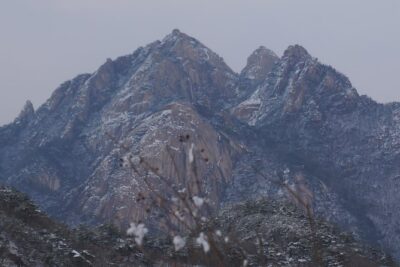
Private Hiking tour to Bukhansan Peak(Baegundae: 836.5m) with Mountain Expert
Read our review →
Seoul Mountain Hike: Temples, Folklore & Traditional Meal
Read our review →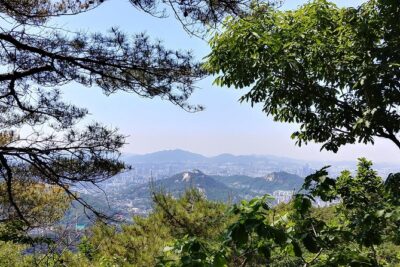
Browse the lists this tour appears in