
REVIEW · USA
Astro-Photo, Hiking and Stargazing Tour in Arches National Park
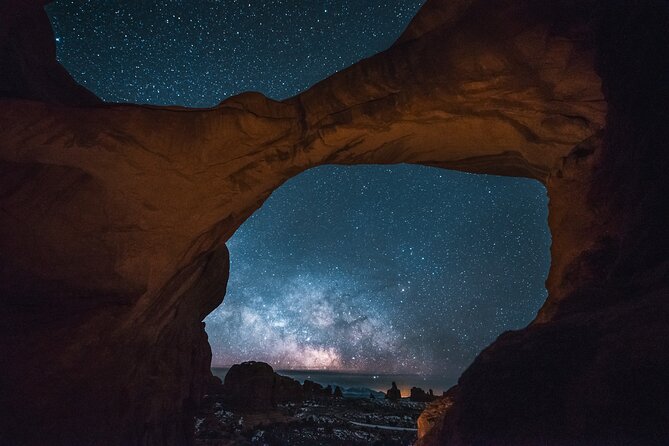
Arches National Park changes after sunset. The red rock fades into silhouettes, the crowds disappear, and the Milky Way can frame the park’s famous arches. This two-hour evening tour combines a short nighttime walk with practical astrophotography help, so you are not merely looking at the stars. You are learning how to photograph them.
I like the small group of no more than six, which gives you a fair chance to get help with your camera or phone. I also like the provided headlamps and tripods, useful touches that make the dark setting safer and the photography less frustrating.
The main drawback is the meeting point. You drive yourself to The Windows Section Parking Lot, and getting there on dark park roads may feel tricky if you are new to Arches. The tour also costs $175 for about two hours, so it makes the most sense if you care about night photography, not just stargazing.
Key points about this Arches night tour
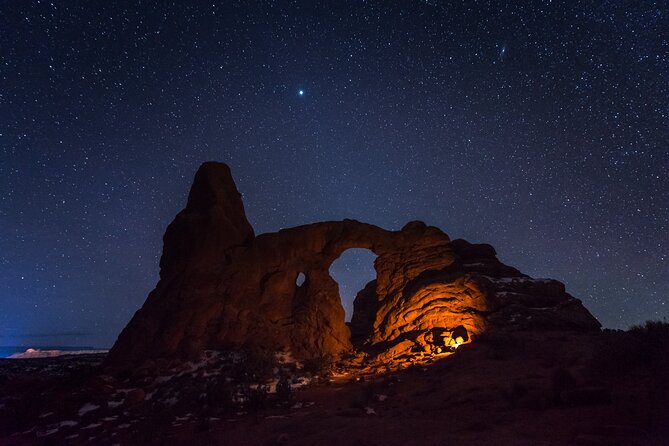
- The Milky Way becomes the subject: You can photograph the galaxy above Arches’ natural stone frames.
- Camera help is part of the experience: Guides Sam and Brandon have helped with both SLR cameras and phone settings.
- Tripods and headlamps are supplied: You do not need to arrive with every piece of night gear.
- The group is limited to six people: This allows for more direct instruction than a large coach tour.
- The Windows parking lot is both meeting point and finish: You handle your own transport to and from the park.
- Weather matters: Poor conditions can lead to a new date or a full refund.
What the $175 Arches night experience includes
At $175 per person, this is not a cheap add-on to a park day. Arches National Park admission is listed as free for the activity, but your payment goes toward the guide, small group, photography equipment, and instruction.
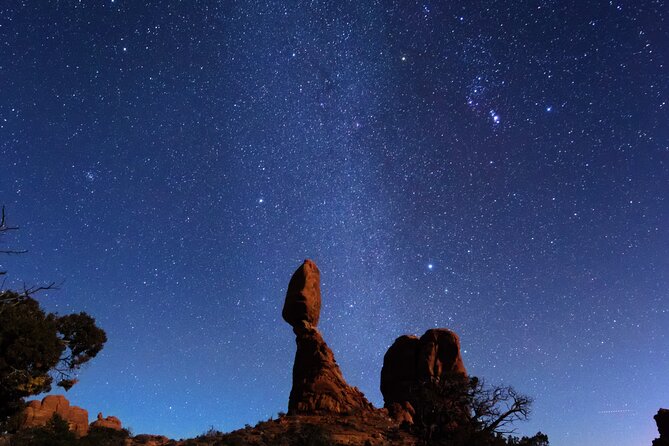
I see the value most clearly if you are new to night photography. A dark sky is impressive, but it does not automatically produce a good picture. You need a steady camera, the right settings, and a way to work without bumping into rocks or losing your footing. The supplied tripod and headlamp address two of those problems right away.
The guidance can also save you from spending an hour guessing at settings. Sam has helped with stars, arches, and camera controls, while Brandon has worked patiently with people who had no night photography experience. Phone users are not left out. Brandon has shown families how to get stronger results from their phones, including a playful photo of a stuffed yellow-bellied marmot beneath the stars.
If your main goal is a formal astronomy lesson with a telescope, adjust your expectations. The information provided for this tour focuses on astrophotography, constellations, and the night sky. A telescope is not listed as part of the equipment. One person found the cost high partly because they expected one, so I would book this for guided photography rather than telescope viewing.
More National Park Hikes in the USA
- San Francisco: Yosemite National Park & Giant Sequoias Hike
★ 4.5 · 1,777 reviews - Everglades National Park Biologist Led Adventure: Cruise, Hike + Airboat
★ 5.0 · 685 reviews - The Narrows: Zion National Park Private Guided Hike
★ 5.0 · 209 reviews
Meeting at The Windows after dark
The tour begins at The Windows Section Parking Lot in Arches National Park and ends at the same place. That simple arrangement keeps the evening focused, but it also means you need to plan your drive before sunset.
The Windows area is a strong setting for this kind of outing because the rock formations provide recognizable shapes in the foreground. Instead of taking a plain picture of stars, you can place an arch beneath the constellations or the Milky Way. The stone becomes a natural frame, giving your image a sense of place.
The tradeoff is that the parking lot is not a hotel pickup point. You are responsible for reaching it. One useful piece of advice is to arrive with enough time to find the lot and get settled before the activity begins. Dark roads inside a national park can be harder to follow than daytime roads, especially on your first visit.
You should also make sure your phone or camera is charged before setting out. The tour provides tripods and headlamps, but the supplied details do not say that cameras or phones are included. Bring the device you want to use.
A two-hour walk through Arches by night
The evening is described as a walk through Arches’ rock formations, with the guide pointing out the forces that shaped the arches before turning attention to the sky. This gives the outing two parts: a look at the park’s geology and a night photography session.
You will see the formations differently after dark. In daylight, Arches is about color, scale, and strong sun. At night, the details soften and the openings in the rock become windows for stars. The tour uses that change to create photographs that connect the park’s stone forms with the sky above them.
The walk is not presented as a long or strenuous hike. It lasts about two hours, and most people can participate. Still, darkness changes the nature of even an easy trail. The provided headlamps matter here, not just for comfort but for watching your footing. Keep your pace sensible and follow the guide’s directions around uneven ground.
The short duration is useful if you are fitting the tour into a larger Moab itinerary. You can spend the day visiting Arches in daylight, return to your lodging or have dinner, then come back for a very different view of the same area. The downside is that two hours leaves limited time for a long walk, a full astronomy lesson, and extensive instruction for every person. The small group helps, but the evening still has a clock.
Learning to photograph the Milky Way
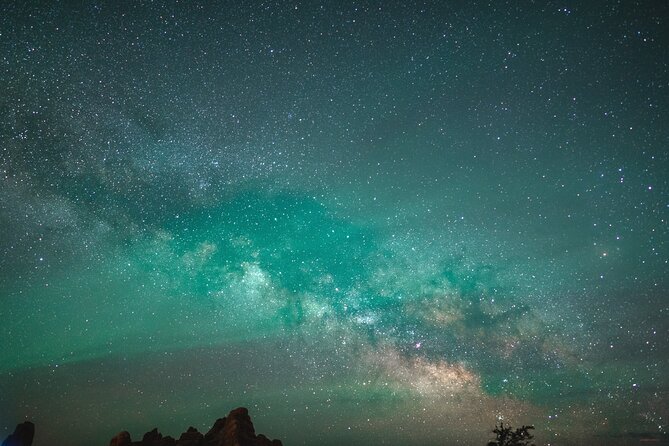
The strongest part of this experience is the practical help with photography. Night images often look simple when finished, but the process can be awkward. You must hold the camera steady, use settings that allow in enough light, and compose a scene that includes both stars and rock.
A tripod gives you a stable base for longer exposures. A headlamp helps you see your controls and move safely between photo spots. Those two pieces of equipment remove common obstacles for beginners, and they are especially useful if you are traveling with limited gear.
The guides also work with more than one type of camera. If you bring an SLR camera, you can ask about settings and composition. If you only have a phone, you can still take part. The instruction with phones is particularly useful for families or casual photographers who do not want to carry a large camera through the park.
I would not assume that every phone can capture the same result. Your final image depends on the device, its night mode, and how well you follow the guide’s directions. Still, learning how to get the best from the phone you already own can be more useful than being told that you need expensive equipment.
The best result may not be technically perfect. A photograph of an arch, the Milky Way, and your group can become a strong memory of your Moab trip. The guide’s help with framing gives you a better chance of producing something you will actually want to keep.
Same trailhead, a different sort of day:
- Lower Antelope Canyon Hiking Tour
★ 5.0 · 6,216 reviews - Boston Freedom Trail Walking Tour with Costumed Guide
★ 4.5 · 2,531 reviews - Small Group: Valley of Fire Half Day Tour from Las Vegas
★ 5.0 · 2,130 reviews - Multnomah Falls and Columbia River Gorge Half-Day Hiking Tour
★ 5.0 · 2,108 reviews
Constellations, geology, and a quieter park
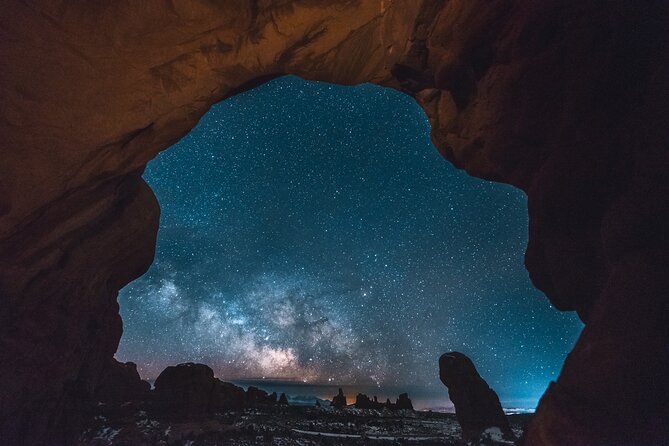
This tour is not only about camera settings. The guide also talks about constellations and the forces that formed the arches. That mix makes the night feel connected to the place rather than like a photography class held outdoors.
You can look up at the galaxy, then look back at the rock and think about the very different time scales involved. The formations took immense natural forces to shape, while the stars appear to rotate across the sky during your short visit. The experience uses both ideas without needing a long lecture.
The lack of crowds is another real benefit. Arches can be busy in daylight, especially around its best-known formations. At night, the cooler air and quieter setting change the mood. You get more space to pay attention to the sky and to make a photograph without a stream of people crossing the frame.
I would still be prepared for a quieter, darker outing rather than a staged show. There is no mention of special lighting, a telescope, or a large entertainment program. The appeal is the park itself, the sky, and a guide who can help you use your camera.
How the small group changes the evening
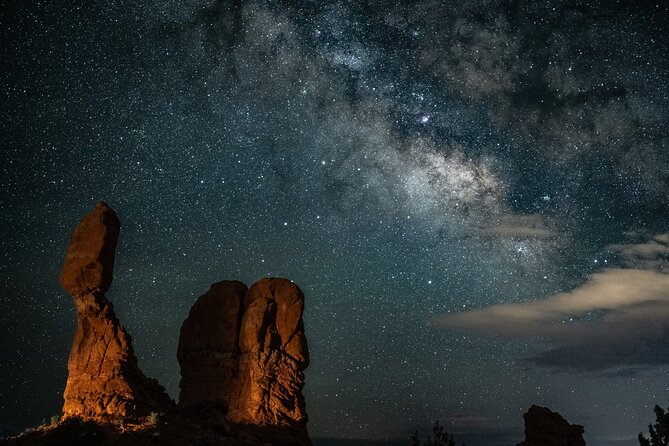
A maximum of six people is a meaningful limit for an instructional activity. If one person needs help with a phone and another needs help with an SLR, the guide has a better chance of giving both people useful attention.
The small size also helps when setting up tripods. You are less likely to feel packed into a large line of cameras, and the group can work around a photo location more easily. For families, the format may be comfortable because the guide can keep younger participants involved with constellations and simple photo tasks.
Brandon has been especially good with children, including two children aged 12 and 14. He has used the camera lesson as a way to keep kids engaged, even helping them photograph a stuffed trip mascot with the stars. That kind of activity gives children something concrete to do while adults adjust settings.
Small groups do not guarantee a private tour. Six participants can still have different interests and skill levels. If you want constant one-on-one instruction, you may need to share the guide’s attention. Even so, six is far more workable for photography than a large bus group.
Weather, timing, and what to bring
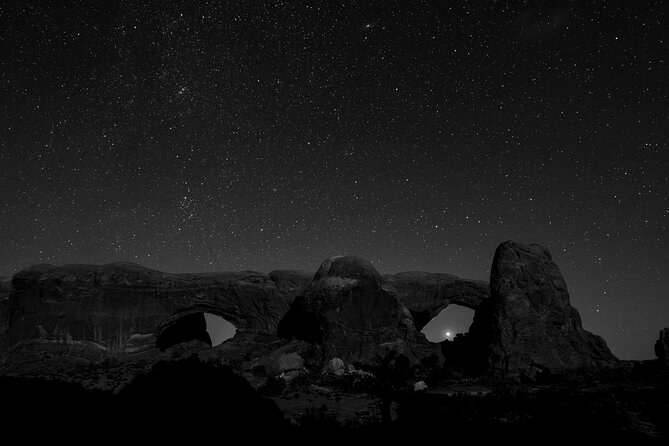
The activity requires good weather. If poor conditions cancel the tour, you are offered another date or a full refund. That is helpful, but it also means you should avoid making the experience the only important part of a tightly packed schedule.
Night photography depends on conditions beyond simple rain. Clouds can block the stars, and poor visibility can reduce the point of the outing. Since the sky is central to the experience, keep some flexibility in your Moab plans if possible.
The supplied equipment includes headlamps and tripods. Bring the camera or phone you want to use, and arrive with it charged. The information does not specify clothing, footwear, or a required equipment list, so you should dress for cool evening temperatures and choose shoes suitable for walking in the park.
The tour is offered in English. Confirmation is provided when you book, and most people can participate. The activity ends back at the starting parking lot, so plan your return drive rather than expecting transport to your lodging.
Who will get the most from this tour
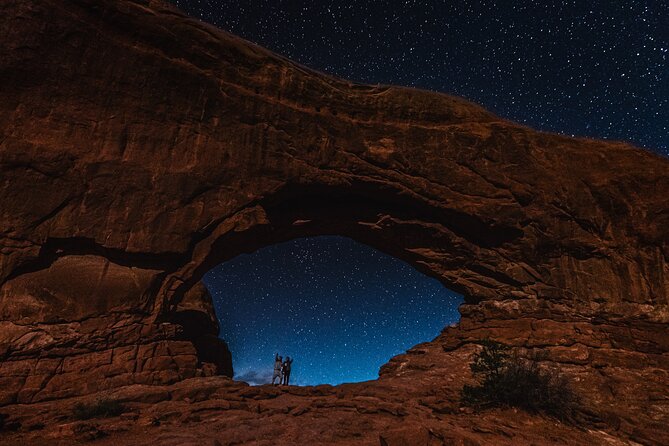
I would recommend this experience to several types of visitors:
- Beginners who want help taking their first Milky Way photograph.
- Phone photographers who want to learn what their device can do at night.
- Families with older children who enjoy stars, science, and simple creative tasks.
- National park visitors who have already seen Arches in daylight and want a different setting.
- Experienced photographers who want a guide to the area and a chance to work around natural arches.
I would be more cautious if your priority is a telescope session, a long hike, or a broad astronomy lecture. Those are not the central features described here. The focus is a guided night visit with photography support.
The cost may also feel high if you already know your camera settings and own a tripod and headlamp. In that case, the guide’s local help and the small group are the main reasons to pay. If you are starting from zero, the equipment and instruction make the price easier to defend.
Booking advice and cancellation terms
This activity is often reserved well ahead of time, with an average booking lead of 81 days. That suggests you should not leave it until the last minute if your dates in Moab are fixed.
You can cancel for a full refund up to 24 hours before the start time. Changes or cancellations inside that 24-hour window are not accepted for a refund. Cutoff times use local time, so check the exact start time carefully.
Because weather can cancel the outing, I would place it early enough in your stay to leave room for another date. That gives you a better chance of fitting it in if clouds or poor conditions interfere.
Should you book the Arches night tour?
Book it if you want more than a look at the stars. The guide, tripod, headlamp, and small group turn a dark park visit into a hands-on photography session, and the arch formations give your pictures a clear sense of place.
I especially like this tour for beginners and families. Sam and Brandon have helped people with both cameras and phones, and the instruction appears practical rather than aimed only at serious photographers. You can learn a setting, take home a photograph, and see Arches without daytime crowds.
Skip it if you expect a telescope, hotel transport, or a long backcountry hike. At $175 for two hours, the value depends on using the photography help. For the right person, especially someone who wants a Milky Way image but does not know how to make one, it can become one of the most memorable parts of a Moab visit.
FAQ
Where does the Arches night tour begin?
It begins at The Windows Section Parking Lot in Arches National Park, Utah.
Where does the activity end?
The tour ends back at the same meeting point, The Windows Section Parking Lot.
How long does the experience last?
The activity lasts approximately two hours.
How many people can join the tour?
The tour has a maximum of six participants.
Is park admission included?
The activity information lists the admission ticket as free. The tour price is $175 per person.
Does the tour provide photography equipment?
Headlamps and tripods are provided. You should bring your own camera or phone.
Can I use a phone instead of an SLR camera?
Yes. The guides can show you how to make the most of your phone for night photographs.
Is a telescope included?
A telescope is not listed as part of the activity. The focus is astrophotography, constellations, and stargazing.
What happens if bad weather cancels the tour?
You can choose a different date or receive a full refund if the activity is canceled because of poor weather.
Just added around the USA
- Anchorage: Full-Day Matanuska Glacier Hike and Tour★ 4.7 · 48 reviews
- Oahu: Manoa Falls Hike and east side beach day★ 4.9 · 10 reviews
- From Springdale: Greater Zion Scenic Hiking Tour★ 4.9 · 21 reviews
- From Springdale: The Zion Narrows Hike with Lunch★ 4.8 · 85 reviews
- From Seward: Harding Icefield Trail Hiking Tour★ 5.0 · 11 reviews
- From Sedona: Archeology and Nature Hike★ 4.9 · 8 reviews
- From Seward: 6-hour Wilderness Hiking Tour★ 4.5 · 5 reviews
- From Rapid City: Private Devils Tower Tour and Hike★ 5.0 · 6 reviews
USA Hiking Tours, compared.
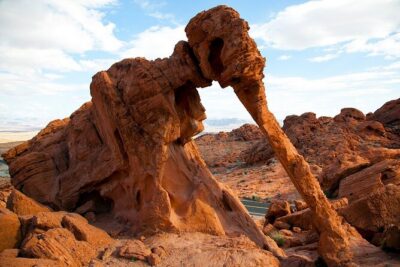
Small Group: Valley of Fire Half Day Tour from Las Vegas
Read our review →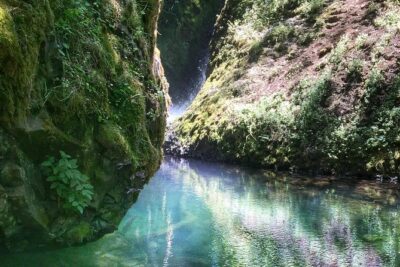
Multnomah Falls and Columbia River Gorge Half-Day Hiking Tour
Read our review →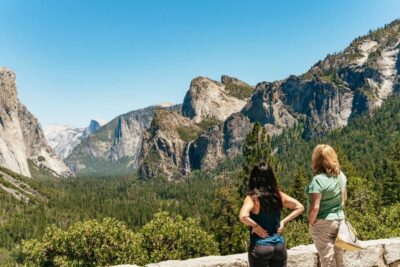
San Francisco: Yosemite National Park & Giant Sequoias Hike
Read our review →
Small Group Waterfall and Rainforest Hiking Adventure on Maui
Read our review →
Kauai Adventure: Kayak & Hike to Secret Falls with Expert Guide
Read our review →Browse the lists this tour appears in