
REVIEW · CHIANG MAI
Chiang Mai – Doi Suthep Temple & Wat Pha Lat Hike
The best part of this Chiang Mai outing is the contrast: you begin on a quiet forest trail to Wat Pha Lat, then move on to the grand gold-and-red halls of Doi Suthep. I like the way the experience links the two temples instead of treating them as separate photo stops.
I also like the small-group format, with no more than 10 people, and the choice of sunrise, afternoon, or evening departures. Guides including Saman, Jane, Amy, and Pia have been praised for clear explanations and patient pacing. The main drawback is the open-air songthaew ride, which can feel hot, smoky, and winding on the mountain road.
Key points to know before you book
- Wat Pha Lat comes first for most departures: Allow 30 to 40 minutes for the uphill section of the Monk’s Trail.
- The 300-plus-step Naga staircase is optional: You can use the cable car at Doi Suthep for an extra charge.
- Sunrise is the strongest time choice: The 5:00 a.m. departure brings cooler air, fewer people, and a walk down the trail instead of up.
- The red truck is part of the experience: Songthaews are local pickup trucks with bench seats, open sides, and no air-conditioning.
- Temple clothing matters: Cover your shoulders and knees, and bring proper walking shoes.
- Budget for about THB 180 in extra fees: Wat Pha Lat costs THB 100, while Doi Suthep entrance and cable car charges total THB 80 according to the tour details.
Why this temple pairing works so well
Chiang Mai is best understood through its mountain temples, and this half-day trip gives you two very different views of northern Thai Buddhism. Wat Pha Lat is quiet, shaded, and shaped by its forest setting. Doi Suthep is ceremonial, busy, and built for pilgrimage on a much grander scale.
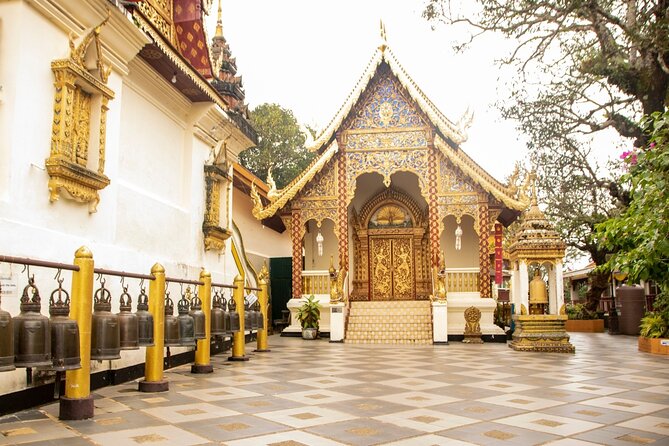
That change of mood is the reason I find this outing more satisfying than a simple drive to Doi Suthep. You first walk through the trees along the route used by monks climbing the mountain. Then you reach a major religious site with golden details, shrines, bells, Buddhist images, and views over Chiang Mai.
The price is $26.09 per person, which is a fair starting rate for transport, an English-speaking guide, and drinking water. It is not the final cost, since the THB 100 Wat Pha Lat trail fee and THB 80 Doi Suthep entrance or cable car charge are extra. Even after those fees, the tour offers solid value if you want transport and cultural explanation without arranging the mountain route yourself.
The tour is not a private luxury outing. You ride in a typical red songthaew, and pickup can begin as much as 45 minutes before the listed start time. That may feel loose compared with a private car, but it also gives you a very local form of transport and keeps the price down.
A few more hikes around Chiang Mai worth a look
- Chiang Mai: Doi Inthanon Park with Kew Mae Pan Hike Day Trip
★ 4.7 · 841 reviews - Chiang Mai – Doi Suthep Temple & Wat Pha Lat Hike
★ 4.6 · 740 reviews - Chiang Mai: Doi Inthanon Hiking & Elephant Sanctuary Program
★ 4.6 · 324 reviews
The Monk’s Trail to Wat Pha Lat
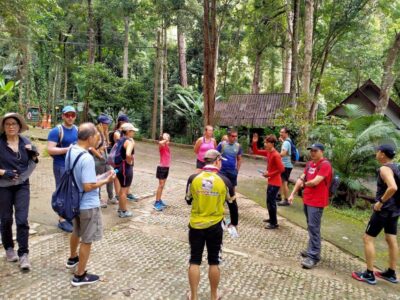
For the standard daytime route, the songthaew drops you near the start of the Monk’s Trail. From there, you walk uphill for roughly 30 to 40 minutes to Wat Pha Lat. The path has been used by monks heading toward Doi Suthep, and that detail gives the walk more meaning than a random forest stroll.
You should expect a real uphill walk, not a flat garden path. One account describes the wider Monk’s Trail as a 4.5-mile route, but the guided section described here is the shorter approach to Wat Pha Lat. Conditions can still make it harder. Rain turns parts of the trail muddy, and sandals are a poor choice.
Good walking shoes are important. A walking stick may be available, and one guide, Saman, was praised for offering one to help with the descent. In wet weather, the trail can become slippery, so take your time and watch your footing rather than trying to keep a fast pace.
The forest is the main attraction during this part of the outing. You are walking beneath trees toward a temple that feels tied to the mountain rather than placed beside a busy road. Guides use the walk to explain monastic life, the route’s purpose, and local Buddhist customs.
Dogs may be present along the trail. One group encountered several and found that the guide knew how to manage the situation. This is useful to know if you are uneasy around dogs, though the tour information does not suggest that encounters are guaranteed.
Wat Pha Lat, Chiang Mai’s forest sanctuary
Wat Pha Lat is often called Chiang Mai’s jungle temple, and its setting does much of the talking. The temple grounds include statues, stone details, and quiet corners surrounded by trees. The mood is calm and reflective, especially compared with the more formal complex at Doi Suthep.
This stop rewards patience. Instead of rushing from one landmark to the next, take time to look at how the temple sits among the rocks and greenery. Your guide can add context about the monks who use the mountain and the role of the temple along the old pilgrimage route.
The trail fee is THB 100 per person and must be paid in cash on the day. Keep small Thai notes or coins ready. The fee is not included in the headline tour price, so include it when comparing this experience with other Chiang Mai temple visits.
The walk to Wat Pha Lat is also the portion most affected by weather. Rain can make the path muddy, though a wet forest can add to the sense of being away from the city. Bring protection for your phone and camera if you choose a rainy-season departure.
Reaching Doi Suthep by staircase or cable car

After Wat Pha Lat, you continue to Wat Phra That Doi Suthep, one of Thailand’s major pilgrimage sites. The traditional entrance is a long staircase with more than 300 steps, flanked by a seven-headed Naga serpent. The staircase is photogenic, but it is also a workout after the forest walk.
You can climb the stairs if you want the full approach. If your legs are tired, the cable car is available for an additional fee. The tour information lists THB 80 per person for the Doi Suthep entrance fee and cable car, though it does not make clear how that charge is divided. Bring cash and confirm the exact arrangement with your guide.
For the sunrise departure, the order changes. You visit Doi Suthep first, watch the sunrise, and then walk down the Monk’s Trail to Wat Pha Lat. This is the easier direction for many people, especially if you prefer to save the uphill effort for the songthaew ride.
The 5:00 a.m. start is very early, but it has clear advantages. The air is cooler, the temple is less crowded, and the city view can be especially rewarding at first light. The early hour also changes the character of the site. Bells, shrines, and the mountain setting feel more peaceful before the day gets busy.
An afternoon or evening departure has its own appeal. A 4:00 p.m. start can be cooler than midday, and you may catch sunset views. One evening outing finished in time for the Sunday Chiang Mai night market, so this option can fit well with later plans.
Same trailhead, a different sort of day:
- Chiang Mai Doi Suthep Temple and Wat Pha Lat Hike
★ 5.0 · 299 reviews - From Chiang Mai: Doi Saket Hiking Tour with Lunch
★ 5.0 · 211 reviews - Chiang mai Hike & Downhill Bike Adventure –Suthep National Park
★ 4.5 · 204 reviews - Chiang Mai: 7-Hour Doi Suthep National Park Summit Hiking
★ 4.6 · 191 reviews
What you see inside the golden temple
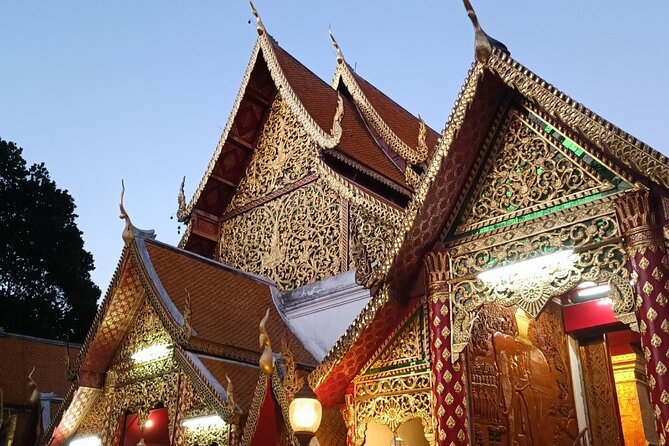
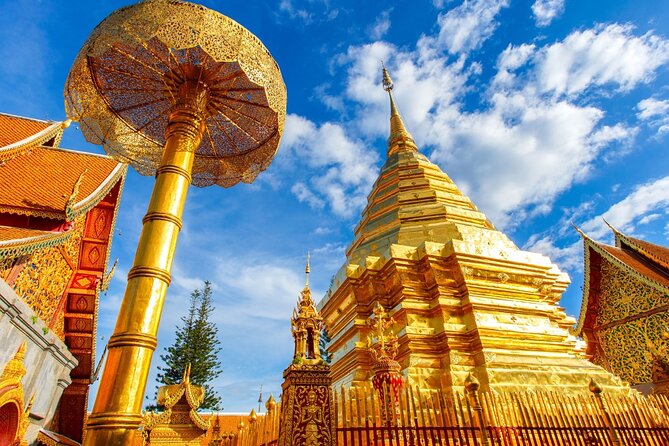
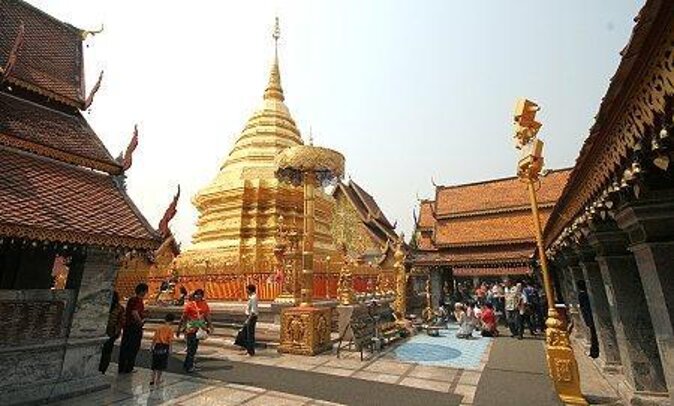
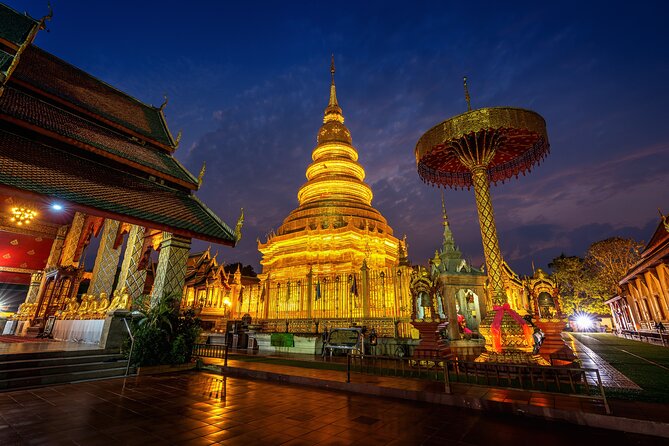
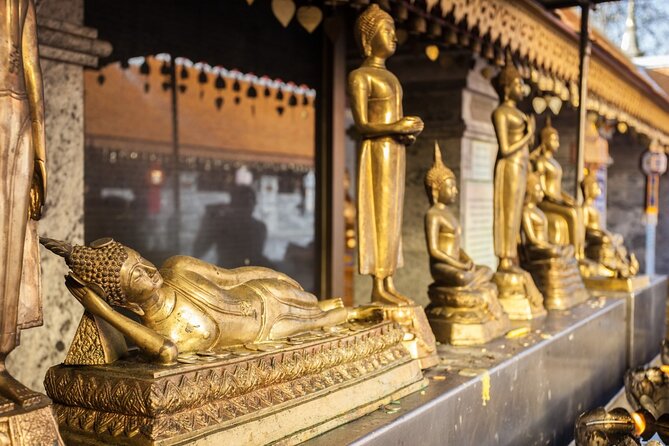
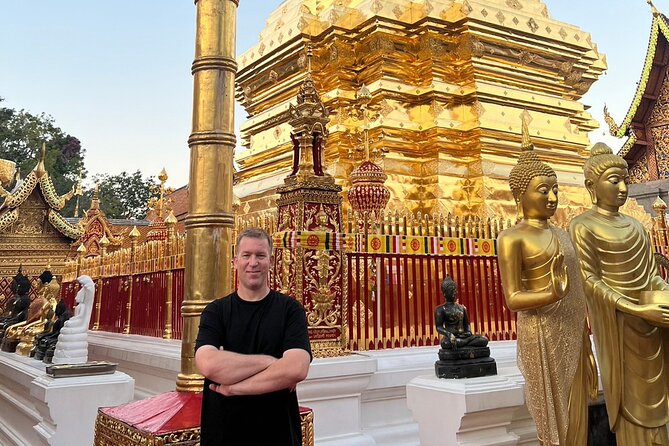
Doi Suthep is more ornate and formal than Wat Pha Lat. Inside the grounds, you can expect pagodas, shrines, bells, statues, Buddhist drawings, and the central copper-covered chedi. The chedi is the most sacred feature of the complex.
This is where a good guide adds real value. Guides such as Saman, Jane, Amy, Bright, and Pia have been praised for explaining Buddhist traditions, the lives of monks, and the meaning behind the temple art. You may learn why Buddha images are shown in certain poses, why some have closed eyes, and why a reclining Buddha lies on the right side.
The wall paintings depict episodes from the life of Buddha. Without explanation, they can look decorative. With a guide, they become a visual lesson in Buddhist teaching and temple tradition. Ask questions here, since the cultural details are one of the main reasons to choose a guided visit rather than arriving independently.
The viewpoint over Chiang Mai is another major reward. Weather affects visibility, so do not treat a clear city panorama as guaranteed. Even when clouds or haze limit the view, the temple’s architecture and mountain setting make the visit worthwhile.
The songthaew ride is useful, but not polished
The included transport is a Chiang Mai red car, or songthaew. It is a converted pickup truck with two bench seats in the back, open sides, and no air-conditioning. This is how many local rides work around the city, and it keeps the tour connected to everyday Chiang Mai.
The tradeoff is comfort. The road up Doi Suthep is curving, and some people have experienced motion sickness or irritation from vehicle exhaust. The ride can also feel hot in warm weather. If you are sensitive to fumes or winding roads, sit where airflow is best, carry water, and consider bringing whatever motion-sickness aid you normally use.
The songthaew is also less predictable than a private van. Pickup may start up to 45 minutes before the scheduled departure, and coordination can occasionally take longer than expected. Some trips have had excellent timing, while one reported a delayed pickup and a long wait at the temple. I would avoid scheduling a tight activity immediately afterward.
Pickup and drop-off are free inside Chiang Mai’s old walled city. If you are not staying at a listed hotel, the meeting point is in front of Burger King at Tha Pae Gate. Do not select a random hotel from the pickup list if you are not staying there.
How much walking and effort should you expect?
Most people with ordinary mobility can take part, but this is not a sightseeing trip where you simply step out of a car. You have the Monk’s Trail, uneven ground, stairs, and time on your feet at both temples.
The trail is described as a moderate hike, and the 300-plus steps at Doi Suthep add another challenge. Rain can make the forest section more difficult. The tour does offer flexibility: if you cannot hike up the mountain, you can ride by songthaew to the upper or lower location, depending on the schedule.
The sunrise version may suit you best if you want to reduce the physical strain. You ride up first, visit Doi Suthep, and walk down to Wat Pha Lat. Families have found this arrangement easier, and guides have helped older participants manage the stairs and trail at a comfortable pace.
Wear clothing that covers your shoulders and knees. This is required at the temples, not simply a suggestion. Choose shoes with a firm sole, and avoid relying on flip-flops if you plan to walk the trail or staircase.
Guide quality and group size
The tour allows up to 10 people in a group, although the wider activity may operate with more participants across different vehicles. A small group can make a real difference on the trail, since you can hear explanations and ask questions without standing in a large crowd.
The strongest part of the guiding is the cultural explanation. Saman has been praised for humor, local insight, and clear talks about Buddhism and the forest. Jane has been noted for her history explanations and calm manner. Amy, Pia, Bright, Maggie, and Emmy have also been singled out for warmth, careful pacing, or strong temple knowledge.
Guide quality can vary, as it does on any shared tour. One outing had a new guide who did not know the route well and needed to call the office often. That appears to be an exception rather than the usual pattern, but it is a reminder that the experience depends partly on who leads your group.
Is $26.09 good value?
For $26.09, you get a guide, a bottle of water, red-car transport, and a well-planned visit to two important mountain temples. You also avoid working out the route between the trailhead, Wat Pha Lat, and Doi Suthep on your own.
Add THB 100 for Wat Pha Lat and THB 80 for the Doi Suthep entrance or cable car charge. Gratuities are optional, and personal expenses are not included. The total remains reasonable for a four-hour outing, especially if you value explanations about Buddhist customs and temple art.
The value is weaker if you want air-conditioned transport, a private vehicle, or a slow, completely flexible schedule. In that case, paying more for a private tour may make sense. If you are happy with local transport and a shared group, this is a practical way to see both temples in one morning or afternoon.
Should you book this Doi Suthep and Wat Pha Lat tour?
I would choose this tour if you want more than a quick photo at Doi Suthep. The combination of forest walking, a quiet temple, a major pilgrimage site, and an informed guide gives you a fuller picture of Chiang Mai’s mountain culture.
Choose the 5:00 a.m. departure if sunrise, cooler air, and a downhill hike appeal to you. Pick the afternoon or evening option if you want a less punishing start and the chance of sunset. Before booking, be honest about the trail, stairs, rain, and open-air truck.
This is a good-value, culturally focused half-day trip for active visitors who can handle a moderate walk and do not mind basic transport. It is less suitable if you need guaranteed air-conditioning, exact timing, or a fully private experience.
FAQ
How long does the Doi Suthep and Wat Pha Lat tour last?
The experience lasts approximately four hours.
What is included in the tour price?
The price includes a Chiang Mai red car songthaew, a bottle of drinking water, and an English-speaking guide.
Are the temple entrance fees included?
No. Wat Pha Lat and the Monk’s Trail cost THB 100 per person. The Doi Suthep entrance fee and cable car charge are listed as THB 80 per person.
Do I have to climb the 300-plus stairs at Doi Suthep?
No. You can take the cable car instead, though the cable car cost is not included.
How difficult is the Monk’s Trail hike?
The walk to Wat Pha Lat takes about 30 to 40 minutes and is uphill. Proper walking shoes are recommended, and rain can make the path muddy.
Can I avoid hiking up the mountain?
Yes. If you cannot hike up, you can use the songthaew. On the sunrise program, you visit Doi Suthep first and hike down to Wat Pha Lat.
What should I wear to the temples?
Your shoulders and knees must be covered. Wear proper walking shoes for the trail and staircase.
Where does the tour start and end?
The listed meeting point is 2 to 6 Rachadamnoen Road in Chiang Mai’s old city, and the activity ends back at the meeting point. Free pickup and drop-off are offered inside the old walled city.
Just added around Chiang Mai
- From Chiang Mai: Mae Taeng Valley Hike & Bike Day Trip★ 5.0 · 50 reviews
- Chingmai Sunrise Hike & Cultural Traditions★ 4.9 · 17 reviews
- Chiangmai : Doi Pui Summit Hiking Experience★ 4.8 · 9 reviews
- Chiang Mai:Doi Inthanon National Park & Hike at Kew Mae Pan★ 4.4 · 53 reviews
- Chiang Mai Elephant Recovery Center, Doi Inthanon and Hiking★ 5.0 · 5 reviews
- Chiang Mai: Kew Mae Pan Nature Trail & Doi Inthanon Day Trip★ 4.4 · 14 reviews
- Chiang Mai: Doi Inthanon Park and Kew Mae Pan 2-Hour Hike★ 4.7 · 14 reviews
- Chiang Mai: Doi Inthanon Park and Pha Dok Siew Hike Day Trip★ 4.1 · 10 reviews
Chiang Mai Hiking Tours, compared.
Doi Inthanon Park with Kew Mae Pan Hike Day Trip
Read our review →
Doi Inthanon Hiking & Elephant Sanctuary Program
Read our review →
Chiang Mai Doi Suthep Temple and Wat Pha Lat Hike
Read our review →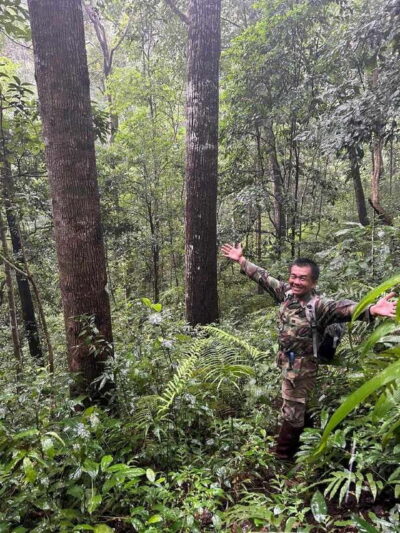
Chiang mai Hike & Downhill Bike Adventure –Suthep National Park
Read our review →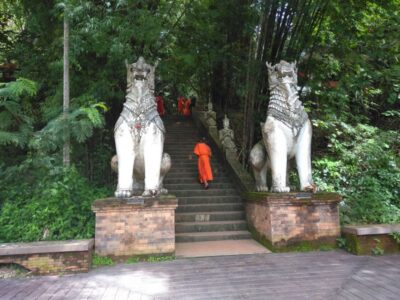
Suthep National Park Hiking & DH Mountain Biking
Read our review →Browse the lists this tour appears in