
REVIEW · MOUNTAIN & SUMMIT HIKES
4-Hours Hiking and Tasting Rice Wine in the Mountain of Busan
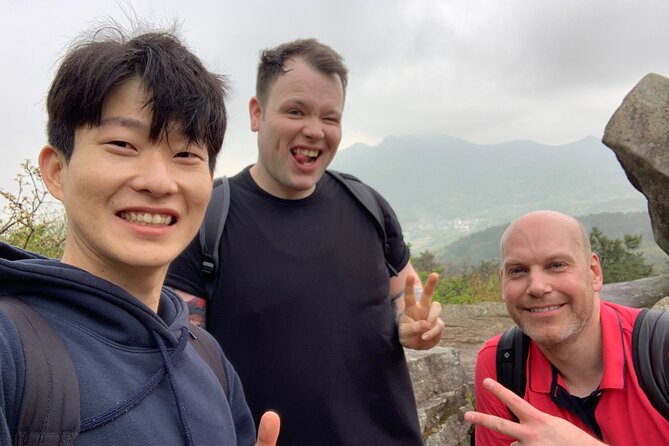
Busan’s best food experience may begin with a climb. This four-and-a-half-hour outing takes you up Geumjeongsan Mountain, through forest trails and old mountain villages, then rewards you with makgeolli and a homemade Korean meal at a humble pocha. I like the mix of exercise and table time, and I like that the guides, including Junwoo, Jun, HugYou, and Duyeol, make room for history, jokes, photos, and conversation. The main drawback is simple: this is a real hike, not a gentle city walk, and summer heat can change the route.
I especially like two things here. First, you reach places most Busan sightseeing plans skip, including village eateries and lookout points above the city. Second, the lunch feels tied to the setting: fresh side dishes, tofu, seafood or spring onion pancake, noodles, and locally made rice wine served in a small old-style stall. Bring water, good shoes, and a Tmoney card or fare for the local bus.
Key points to know before you book
- Geumjeongsan views: Hike through forest and up to mountain viewpoints overlooking Busan.
- Village-made makgeolli: Taste Korean rice wine with banchan and a light traditional meal.
- Small-group feel: The maximum group size is 10, and some departures feel almost private.
- Local bus access: Meet at Oncheonjang Station Exit 3, then ride uphill for about 10 minutes.
- Moderate physical effort: Expect roughly 8 to 9 kilometers and about three hours of hiking.
- Weather flexibility: Rain may bring a refund, a new date, or a lakeside and restaurant backup plan.
Why this Busan hike feels different
Many Busan outings keep you near the coast, markets, and major sights. This one turns inland, toward the mountain that gives the city a wooded counterpoint to its busy streets. You begin at Oncheonjang Station, take a local bus up the mountainside, and then trade urban noise for trees, stone paths, viewpoints, and a small mountain settlement.
The cultural hook is the Korean ajussi weekend routine: hike with friends, stop for food, and share a bowl or two of makgeolli afterward. You are not simply looking at Korean life from the edge of a tour group. You are taking part in a familiar local pattern, adjusted for an international group.
That difference matters. The mountain walk gives you a sense of Busan’s setting, while the meal gives you time to ask questions and talk with your guide. Guides such as Junwoo, Jun, HugYou, and Duyeol are described as warm, funny, attentive, and willing to adjust their pace. That personal contact is a major part of the value.
More Mountain Hikes in South Korea
- Seoul: Mt Seorak + Naksansa Temple or Nami Island Group Tour
★ 4.7 · 422 reviews - Private Hiking tour to Bukhansan Peak(Baegundae: 836.5m) with Mountain Expert
★ 5.0 · 113 reviews - Jeju: Mt. Hallasan Hike and UNESCO Sites Day Tour
★ 4.9 · 48 reviews
Meeting at Oncheonjang and riding uphill
The meeting point is Oncheonjang Subway Station, Exit 3, with a 9:00 am start. The experience ends back at the same meeting point. This is useful if you want a clear beginning and end near public transportation, but you should allow enough time to find the correct exit and arrive ready to leave on schedule.
The first transfer is a local bus ride of about 10 minutes up the mountainside. You may need a Tmoney card, and it is sensible to carry a little extra fare in case the guide asks you to pay separately. The bus is not just a transfer. It quickly shifts the mood from city streets to the mountain foothills.
Bring your own water because it is not included. That small detail matters more than it sounds, especially in warm weather. Wear shoes with a firm grip and choose long pants if possible. The trail is described as manageable for people with moderate fitness, but it includes hills, and comfortable footwear will make the day far more pleasant.
Hiking Geumjeongsan for three hours
The main walk takes about three hours, with the full outing lasting roughly four hours and 30 minutes. The total distance is about 8 to 9 kilometers, including the route up and down to a peak and onward to a mountain village.
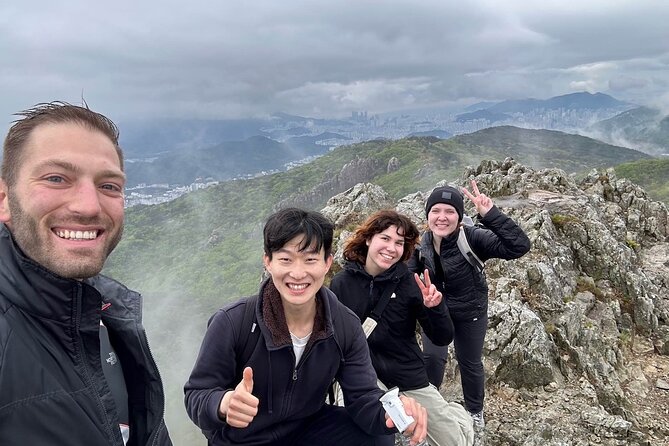
You can expect forest, inclines, lookout points, and stretches where the trail feels quiet and removed from the city. The scenery is one of the strongest reasons to book. From higher points, you may get wide views over Busan, with plenty of chances to stop for photographs. Several guide accounts describe lookout points and mountain views as highlights, so bring your camera, but do not let photography turn the walk into a race.
The terrain is not presented as extreme. People who do not exercise often have completed it, and the walk has been described as doable for middle-aged participants. Still, doable does not mean effortless. You should be comfortable walking for several hours and handling uphill sections. If you have a knee problem, poor balance, or difficulty with uneven ground, this may not be the right choice.
One useful feature is the guide’s ability to set the pace. Jun, for example, is described as slowing down for a participant and making the outing work for different fitness levels. That does not remove the physical demand, but it helps if your group includes people who walk at different speeds.
Along the way, the guide may explain local history and the mountain’s place in Busan. The focus is not just exercise. You get context for the old sites, the villages, and the relationship between the city and its surrounding mountains. Guides have also pointed out historical areas and lookout towers, adding substance to the walk.
Reaching the mountain village
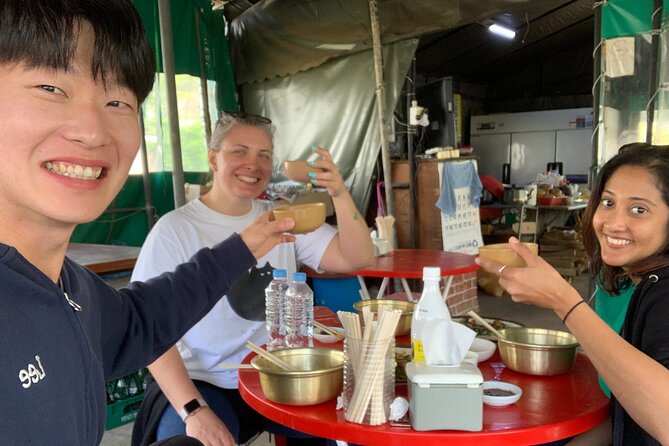
The village stop is what gives this experience its character. Instead of finishing at a large restaurant or returning straight to central Busan, you head to a small local place in the mountains. The setting is closer to an old-style pocha, a simple stall or tent with tables, than to a polished restaurant.
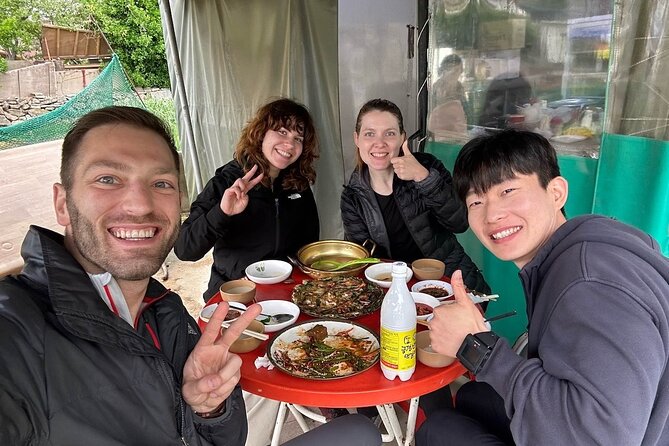
That simplicity is part of the appeal. The meal is connected to the village, and the food may be prepared by a local grandmother using vegetables grown nearby. You might find tofu salad, soup, seafood pancake, spring onion pancake, anchovy noodles or ramen, and several banchan. The exact dishes can vary, but the pattern is clear: a light, filling Korean meal served after the walk.
I like this pairing because the food tastes better when you have earned it. More important, you are eating in a place that feels practical and local rather than designed for sightseeing. You may share the space with Korean diners, creating an easy chance to observe everyday dining customs and exchange a few words.
Vegetarian adjustments have been possible for some groups, but you should communicate dietary needs before the meal rather than assume every dish can be changed. The supplied information does not list a full allergy or dietary policy, so anyone with a serious restriction should confirm details in advance.
Same trailhead, a different sort of day:
- Seoul: Guided City Wall Sunset Hike with Korean Dinner
★ 4.9 · 227 reviews - Fortress Night Hike & Snack at a Local Market
★ 5.0 · 112 reviews - Busan: Hiking and Tasting Rice Wine in the Hidden Village
★ 4.9 · 74 reviews - Seoul Mountain Hike: Temples, Folklore & Traditional Meal
★ 5.0 · 42 reviews
Learning to drink makgeolli
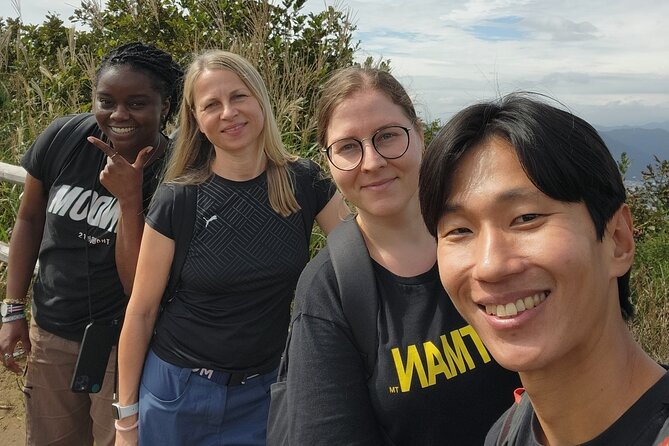
Makgeolli is a lightly cloudy Korean rice wine with a gentle sweetness and a soft, tangy character. It is often served in bowls, and it pairs naturally with savory pancakes, tofu, noodles, and small side dishes.
The tasting here is not a formal wine lesson. It is closer to sitting down after a hike and sharing a traditional drink with food. That makes it especially useful for anyone who wants cultural context rather than a polished tasting room. You can ask how rice wine is made, how it is served, and how drinking customs differ between Korea and your home country.
A small makgeolli museum has been mentioned near one of the village meal stops, explaining the production process. Because the exact meal setting can vary, treat that as a possible extra rather than a guaranteed part of every departure.
Alcohol is only for people aged 18 and older. If you do not drink, the main value of the experience is still available through the hike, food, village setting, and conversation, but you should not expect the same focus as on a standard non-alcohol food tour.
The guides shape the day
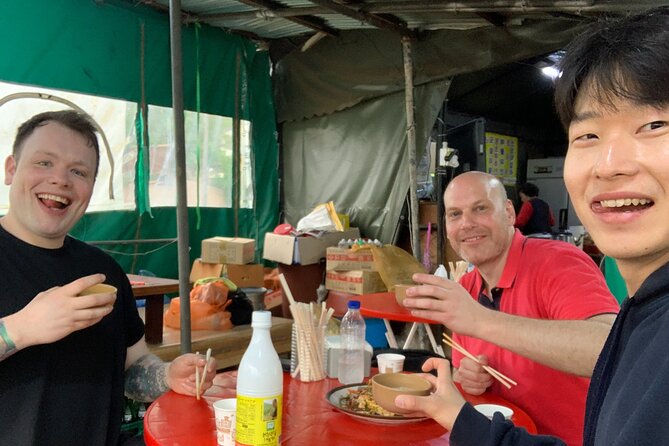
The guide is central to this experience. Names associated with the activity include Junwoo, Jun, HugYou, Duyeol, and Doyour. The spelling and guide assignment may vary, but the role is consistent: lead the walk, explain the area, keep the group together, and help turn lunch into a social experience.
I would choose this outing partly for that human element. The group size is capped at 10, and some departures have only two to four people. A small group makes it easier to ask questions, stop for photos, and talk with people from Busan. Solo visitors in particular may find the format friendly without the forced feeling of a large group activity.
The guides also appear to offer practical help beyond the walk. One has suggested restaurants and cafes near the station after the activity. That sort of local advice can be useful when you are deciding where to eat later in your Busan stay.
The experience is social, but you should not expect a scripted performance. The best moments may come through casual conversation, including talk about drinking customs, local food, mountain life, and daily routines. If you prefer a private guide who talks only about architecture and dates, this may feel informal. If you want a chance to meet a Busanian and ask ordinary questions, it fits well.
Summer heat and rain can change the plan
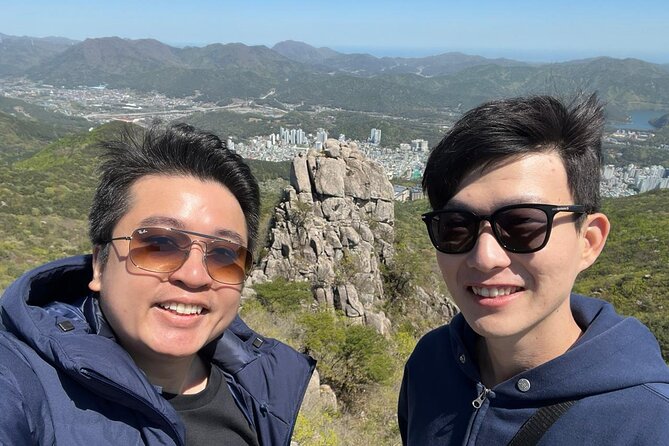
July and August deserve special attention. In hot weather, the full mountain route may be replaced with a shorter walk and a valley visit. After booking, the provider is expected to explain the seasonal options, called Plan B or Plan C.
That is a sensible adjustment. Busan’s summer heat can make a several-hour mountain walk unpleasant, especially when you are also planning to drink alcohol afterward. If the shorter route is offered, ask how much walking remains and where the meal will take place before deciding if the revised plan suits you.
Rain can also change the day. The activity may proceed with a backup plan, such as walking beside a lake and having rice wine at a local restaurant, or it may be canceled with a refund or a different date. The experience requires good weather, so do not make this your only fixed plan during a short Busan stay if the forecast looks poor.
The cancellation terms are straightforward: you can cancel for a full refund up to 24 hours before the start time. Changes or cancellations inside that window are not accepted for a refund, except when poor weather causes the provider to cancel.
Is $55 a fair price?
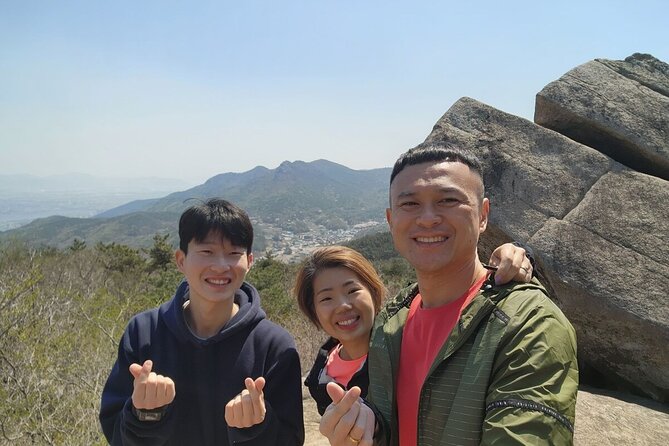
At $55 per person, the value depends on what you want from a Busan day. You are paying for a local guide, transportation guidance, several hours of hiking, a village stop, lunch, and makgeolli. Water is not included, and you should budget for local bus fare if needed.
Compared with a basic mountain walk, this costs more. But a self-guided hike would not give you the same help with the route, historical background, village meal, or local drinking customs. You would also have to arrange the food stop yourself, and the best small village eateries may not be easy to find without Korean language skills or local knowledge.
The lunch is a key part of the calculation. Fresh banchan, tofu, pancakes, noodles, and rice wine make this more than a guided walk with a snack. If the village meal and social contact appeal to you, the price is reasonable. If you mainly want a hard workout or a long summit hike, you may prefer to hike independently and spend less.
Who should book this experience?
I would recommend it to solo visitors, couples, and small groups who want nature without leaving Busan for a full day. It also suits people who enjoy food as part of cultural sightseeing and who would rather talk with a local than move through a large tour group.
You should have moderate physical fitness and be comfortable with roughly 8 to 9 kilometers of walking. Good shoes are essential. Long pants are recommended, and water is your responsibility.
This is less suitable for anyone seeking a fully relaxed morning, a guaranteed summit route in summer, or a formal makgeolli tasting with detailed technical instruction. The meal is casual, the trail is hilly, and weather can alter the plan.
Should you book the Geumjeongsan hike?
Book it if you want to see a quieter side of Busan and are happy to combine forest walking, local history, and a village meal. The strongest reasons are the small group size, the flexible guides, the city views, and the chance to eat fresh Korean food with makgeolli in a setting far removed from the usual tourist circuit.
Skip it if you dislike hills, cannot manage several hours on foot, or want a fixed schedule that will not change with weather. For everyone else, this is a well-balanced way to spend a morning: work up an appetite on Geumjeongsan, then sit down with a local guide and let the mountain set the pace.
FAQ
Where does the experience begin?
It begins at Oncheonjang Subway Station, Exit 3, in Bugok-dong, Busan.
What time does the activity start?
The scheduled start time is 9:00 am.
How long does the experience last?
It takes approximately four hours and 30 minutes.
How far will I hike?
The outing covers about 8 to 9 kilometers in total, with around three hours spent hiking up and down to a peak and a mountain village.
Is lunch included?
Yes. Lunch is included, with a light meal served alongside makgeolli and side dishes.
Is water included?
No. You should bring your own water.
How difficult is the hike?
A moderate level of physical fitness is recommended. The trail includes hills and inclines but has been described as manageable for people who are not regular exercisers.
What happens if it rains?
The provider may offer a different date, a full refund, or a backup plan such as a lakeside walk and rice wine at a local restaurant.
Can children drink the makgeolli?
Alcohol consumption is limited to people aged 18 and older.
How many people can join?
The maximum group size is 10 people.
Where does the activity end?
It ends back at the Oncheonjang meeting point.
More Food & Drink in South Korea
- Seoul Sunrise & Sunset Hike + Temple & K-Food Adventure
★ 4.8 · 6 reviews - The Volcano Heart Tour: Hiking, Tasting and Sunset Experience
★ 5.0 · 1,120 reviews - Catania: Etna Nature Tour with Hiking, Cave Visit, & Tasting
★ 4.7 · 502 reviews - From Helsinki: Nuuksio National Park Hiking Tour with Food
★ 4.9 · 379 reviews
More Wine Tours in South Korea
- Malibu: Guided Vineyard Hike with Photo Stops and Wine
★ 5.0 · 391 reviews - Freiburg: Veni, vidi, vino – wine hike and tasting
★ 4.5 · 144 reviews - Wild West Coast Hiking Adventure with Sunset Picnic Dinner & Wine
★ 5.0 · 120 reviews - Tuscany Hiking Tour from Siena Including Wine Tasting
★ 5.0 · 112 reviews
Just added around South Korea
- Temple Tour : Byeongpungam Seokbulsa Temple [Hiking+Cable car]★ 5.0 · 6 reviews
- Small Group Hike on Mt. Bukhan’s Secret Paths & Local Lunch★ 5.0 · 16 reviews
- Seoul: Inwangsan Sunset Hike with Guide★ 5.0 · 17 reviews
- Seoul Sunrise & Sunset Hike + Temple & K-Food Adventure★ 4.8 · 6 reviews
- Seoul: Night Namsan Hiking with Hidden Gem Recommendations★ 5.0 · 11 reviews
- Jeju: Sunset Tour Olle Trail Walking Tour with Hotel Pickup★ 4.9 · 7 reviews
- Jeju: Mt. Hallasan Hike and UNESCO Sites Day Tour★ 4.9 · 48 reviews
- Jeju: Hiking Mt. Hallasan, South Korea’s Highest Mountain★ 5.0 · 3 reviews
Mountain & Summit Hikes, compared.
Sunrise Mount Batur Guided Hike with Breakfast
Read our review →
Mount Batur Sunrise Guided Hike and Natural Hot Spring
Read our review →
Mount Etna: Summit Guided Hiking Tour up to 3,400 m
Read our review →
Bovilla Lake & Gamti Mountain Hiking Day Trip
Read our review →

Mount Batur Sunrise Hike and Natural Hot Spring Option
Read our review →Browse the lists this tour appears in