
REVIEW · ARUSHA
7-Day Kilimanjaro Hiking Tour via Machame Route
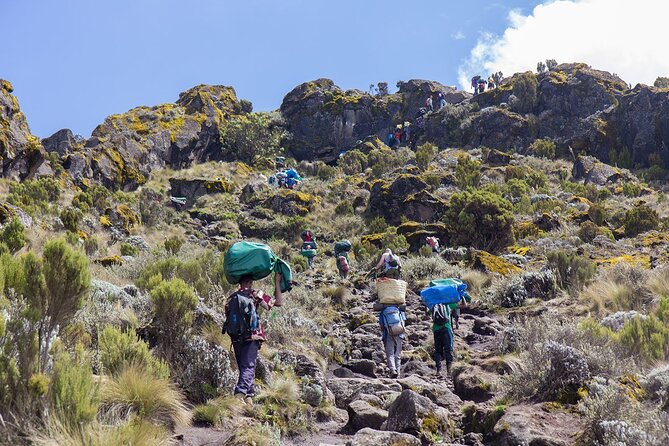
Kilimanjaro’s Machame Route gives you seven days to move from tropical forest to Africa’s highest summit, with tents instead of mountain huts and a demanding midnight push to the top. The scenery changes almost every day, from monkey-filled woodland to stark volcanic slopes.
I like the extra acclimatization time, which makes this a better choice than a rushed climb, and I like that the price includes a guide, cook, porters, meals, rescue fees, and crew wages. The main catch is simple: this is still a serious high-altitude trek, not a scenic walk. You need strong fitness and some hiking experience.
Key points
- Seven days on the mountain: More time to adjust to altitude than shorter Kilimanjaro routes.
- Scenic route variety: Walk through rainforest, rocky ridges, Lava Tower, Barranco Wall, and open summit terrain.
- Camping every night: Tents, a mess tent, tables, and chairs are provided, but comfort is basic.
- Long summit day: Expect a 10 to 14 hour day, beginning shortly after midnight.
- Small group size: The maximum is 12 people, with an English-speaking wilderness first responder and CPR-certified guide.
- Strong value at $2,150: The package includes park costs, food, water, transport, rescue fees, equipment rentals, and crew wages.
Why the Machame Route Takes Seven Days
The Machame Route is often called the Whiskey Route. That nickname hints at its reputation: it is more demanding than the easiest paths, but it rewards you with fine scenery and a gradual climb.
The seven-day schedule matters. You gain several nights at altitude before summit day, and the route rises and falls in a way that gives your body time to adjust. It does not remove the risk of altitude sickness, and it does not make the summit easy, but it is a more sensible plan than trying to race up the mountain.
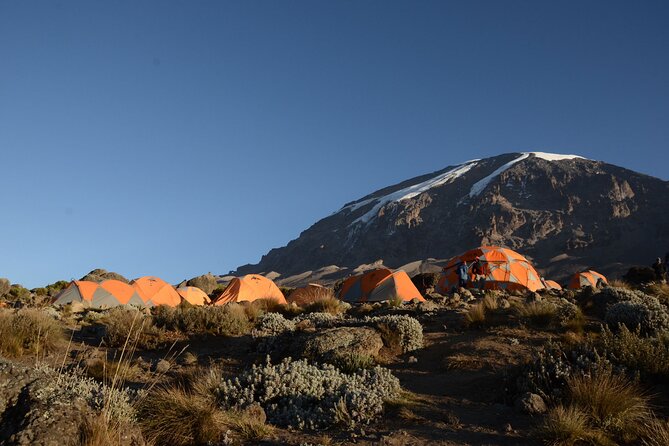
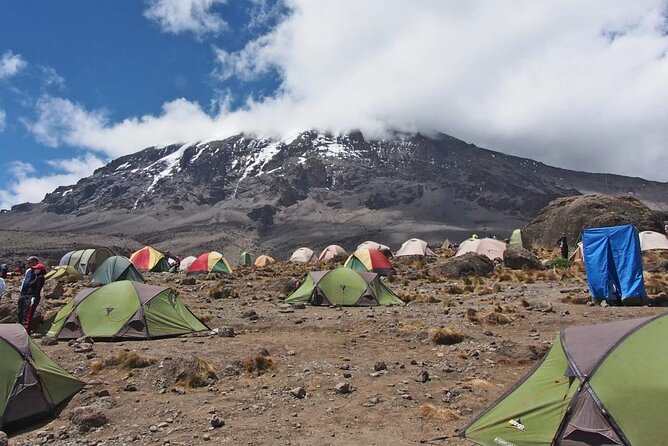
You sleep in tents for the entire climb. Meals are served in a dining tent or outside on a blanket, depending on the setup. This gives the trip a proper expedition feel, but you should not expect lodge comforts or a private room.
The group limit is 12 people. That is small enough for the guide to keep track of the group, while still large enough to include a range of hiking speeds and personalities. A professional English-speaking guide with Wilderness First Responder and CPR training leads the climb, supported by a cook and porters.
One account connected with the operator names a guide called Mr. Josia, and specifically praises his help on a seven-day Kilimanjaro climb. Since the available information does not confirm that he leads every Machame departure, ask about your assigned guide before booking if that matters to you.
A few more hikes around Arusha worth a look
- 7-Day Private Kilimanjaro Hiking Tour via Machame from Arusha
★ 5.0 · 11 reviews - 7-Day Mt. Kilimanjaro Hiking: Machame Route
★ 5.0 · 3 reviews - 7-Day Kathmandu, Pokhara Tour with Hike to Australian Camp
★ 5.0 · 4 reviews
Day 1: Rainforest From Machame Gate to Machame Camp
Your first morning begins with pickup and a drive to Machame Gate. Registration takes place there before you start walking.
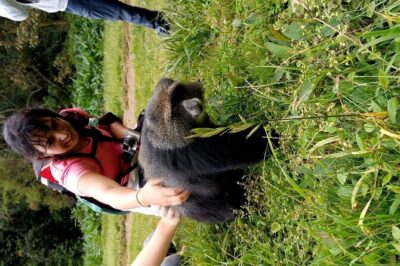
The opening section passes through tropical rainforest. This is one of the most enjoyable parts of the route because you are surrounded by thick greenery rather than bare rock. Colobus monkeys and wild birds may appear along the way, giving the first day a touch of wildlife viewing before the mountain becomes more severe.
The planned walking time is about six hours. The pace is described as leisurely, but you should not treat the day as effortless. You are carrying yourself uphill for much of the route, and the warm, humid forest can make the climb feel harder than the distance suggests.
Machame Camp is your first overnight stop. Dinner is provided, and you sleep in a tent. This is a good evening to check your clothing, water, and sleeping arrangements, since small problems become bigger problems once you are higher on the mountain.
Day 2: Rocky Ridges and Shira Camp
From Machame Camp, the trail crosses a stream and follows a steep, rocky ridge. The path crisscrosses the slope before reaching Shira Camp, positioned near a curved wall of rock.
This day feels different from the first. The rainforest gives way to more open ground, and the trail becomes rockier and less sheltered. The change in scenery helps you understand how quickly Kilimanjaro’s plant zones shift as you gain height.
The scheduled walk is about six hours. The steep sections can test your legs, especially after the first day. Keep your pace slow and steady. The point is not to arrive first. The point is to reach camp with enough energy for the days ahead.
At Shira Camp, dinner and another tent night follow. Since the camp is higher than Machame Camp, pay attention to how you feel. Headache, nausea, unusual fatigue, or poor coordination should be reported to your guide rather than dismissed as part of the climb.
Day 3: Lava Tower and the Great Barranco Wall
Day three is one of the most useful for altitude adjustment. You climb from Shira Camp toward Lava Tower, reaching about 15,000 feet, before descending to Barranco Camp.
This high point followed by a lower overnight stop is valuable because it lets you spend time at greater elevation without sleeping there. That said, Lava Tower can feel demanding. The air is thinner, and the climb may expose any weakness in your pacing or hydration.
After Lava Tower, you descend toward Barranco Camp. The route includes the Great Barranco Wall, which gives the day much of its drama. Barranco Camp is often considered one of the best camp locations on the mountain because of its setting near the wall and the surrounding high-altitude scenery.
The full walking time is listed as about six hours. Conditions, pace, and altitude can affect that estimate. Once you reach camp, use the evening for food, water, and rest rather than trying to squeeze in extra activity.
Same trailhead, a different sort of day:
- Mountain Kilimanjaro Day Hike
★ 5.0 · 102 reviews - Private Full Day Hiking Experience to Marangu Route
★ 5.0 · 61 reviews - From Arusha/Moshi: Kilimanjaro Hike Marangu Route Day Trip
★ 4.5 · 54 reviews - 4 days Best experience Kilimanjaro Hike, Serengeti &Ngorongoro
★ 5.0 · 54 reviews
Day 4: Climbing Barranco Wall to Karanga Camp
The morning begins with a climb along the edge of the Great Barranco Wall. This is a steep section, and it can feel intimidating at first, especially when you look up at the rocky route.
You do not need to sprint or treat it like a technical rock climb. The information provided describes it as a steep trail, not a route requiring specialized climbing. Your guide and crew are there to help manage the pace and direction.
The reward is the view from higher on the wall. This is one of the days when the physical effort and the scenery meet directly. You work hard for the height, then get a better view of the mountain and the route below.
Karanga Camp is the overnight stop. The planned walking time is about six hours. It is a relatively short stage compared with summit day, but it still adds to the accumulated fatigue. Eat well, keep drinking, and protect your rest.
Day 5: The Final Camp at Barafu
Day five takes you to Barafu Camp, the last camp before the summit attempt. The climb is described as shorter than the previous days, which is helpful because you need to conserve energy.
Barafu means ice in Swahili, and the name suits the high, exposed setting. The camp is the launch point for the summit push, so the mood changes here. You are no longer simply moving from one camp to the next. You are preparing for the most demanding part of the climb.
The schedule calls for about six hours of walking, followed by dinner and an overnight stay. You should expect limited comfort and a short rest period before the midnight start. Pack the items you need for the summit separately so you are not sorting through every bag when you should be sleeping.
This is also the point where fitness alone is not enough. Mental patience matters. You will need to walk slowly, manage cold and fatigue, and accept that the summit ascent will take several hours.
Day 6: Midnight Start and Kilimanjaro Summit
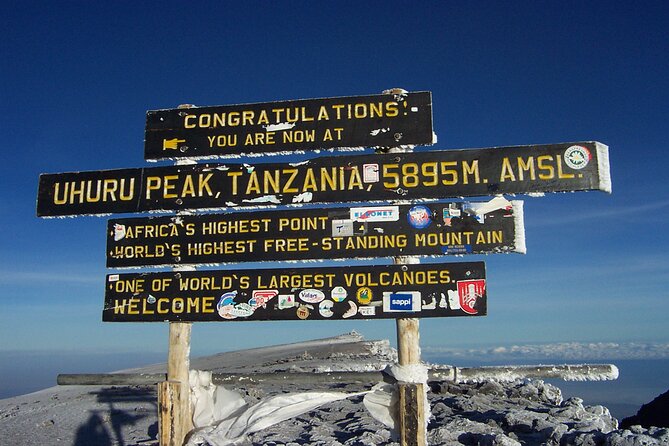
Summit day begins shortly after midnight. The ascent covers roughly 1,100 meters in a little over 3 kilometers, and the climb to the summit is expected to take six to eight hours.
That distance may sound short, but the altitude and steepness change everything. The full day is listed as 10 to 14 hours or more because the summit attempt is followed by a long descent to Mweka Camp. This is the day to follow your guide’s pace and instructions closely.
The goal is to reach the summit in time for sunrise over the Great Rift Valley. You have time for photographs at the top, but do not let the picture stop become too long. Cold, wind, altitude, and exhaustion can affect you quickly.
After the summit, you descend below the tree line and continue to Mweka Camp. This downhill stretch is not a simple finish. Your legs may be tired and your balance less reliable after the ascent. The promise of a lower camp can keep you moving, but you still need careful footing.
Dinner and overnight accommodation are provided at Mweka Camp. The schedule describes the day as six hours in its stop details, but the fuller description clearly says the total walking day can reach 10 to 14 hours or more. Plan for the longer figure.
Day 7: Forest Exit and Return to Arusha
The final day is a short hike through lush forest, listed as about three hours. You meet the vehicle at Mweka Park Gate, then return to your hotel in Arusha.
After the previous day, even three hours can feel substantial. The forest walk gives you a gentler finish than another exposed high-altitude stage, but you still need to watch your footing and keep your pace comfortable.
The transport back to Arusha is included through private transportation and gate transfers. The exact hotel arrangements are not specified, so confirm where the return transfer will end before you set up a flight or another activity.
What the $2,150 Price Covers
At $2,150 per person, this is not a budget day trip. It is a full mountain expedition with a large list of included costs.
The package includes private transportation, park fees and other taxes, rescue fees, drinking water, full-board meals, tents, a mess tent with tables and chairs, and a professional guide. A cook and porters are included as well, along with fair and sustainable crew wages.
That last point matters. A Kilimanjaro climb depends on a large support team, even when you are in a small group. Paying for proper crew wages is part of the real cost of climbing responsibly, not an optional extra.
Equipment rentals are available, though the exact rental list is not supplied. Ask what can be rented and what you must bring yourself. You should also clarify the tent arrangement, sleeping equipment, and any extra charges before departure.
Meals include six breakfasts, six dinners, and seven lunches. Water is included. The menu is not specified, so tell the operator about dietary needs before the trip rather than waiting until you reach the mountain.
Flights, visas, and optional activities are not included. You must also budget for those items separately. The price is strongest for someone who wants one organized package rather than arranging transport, crew, park access, food, and safety support independently.
Who Should Book This Climb
This route suits a physically fit person with some hiking experience. You do not need to be an elite athlete based on the information provided, but you do need to handle repeated six-hour walking days and one very long summit day.
I would choose it for someone who wants strong scenery, a reasonable acclimatization schedule, and the shared experience of tent camping. It also suits people who prefer a small organized group, with a maximum of 12 participants.
I would not choose it for a person looking for comfort, flexible sightseeing, or a gentle introduction to mountain walking. The tents are practical rather than luxurious, and the summit day can last well beyond the six-hour figure shown in the daily schedule.
The route also requires emotional patience. You may spend hours moving slowly in cold, thin air. Your body can feel tired before the hardest section arrives. A calm attitude is as useful as strong legs.
Practical Details Before You Pay
Pickup is offered, and the stated start time is 7:00 am. The experience has a mobile ticket, and confirmation is provided when you book.
The activity requires good weather. If poor conditions cancel it, you are offered another date or a full refund. You can also cancel for a full refund if you do so at least 24 hours before the start time. Changes or cancellations inside that 24-hour window are not accepted.
The operator is Kitau Tanzania Safaris. The group may use public transportation near the meeting area, although the mountain transfers themselves are described as private transportation and gate transfers.
Because the package is physically demanding, speak with the operator about your current fitness and hiking background. Also confirm the exact meeting point, guide assignment, equipment rental list, and return hotel transfer before you leave home.
Should You Book the Seven-Day Machame Route?
I would book this climb if you want a scenic, tent-based Kilimanjaro route with a better acclimatization schedule than a rushed itinerary. The included guide, rescue fees, food, water, porters, crew wages, and transport make the $2,150 price easier to justify.
I would pause before booking if you have little hiking experience, dislike camping, or expect the summit day to last only six hours. The route is demanding from the start and especially serious after midnight on day six.
For the right person, the appeal is clear: rainforest, rocky ridges, Lava Tower, Barranco Wall, a sunrise summit attempt, and a small support team. Go in prepared, ask precise equipment and guide questions, and treat the seven days as a real mountain climb rather than a sightseeing tour.
FAQ
How long is the Kilimanjaro Machame Route tour?
The climb lasts approximately seven days, including the final walk out from Mweka Camp and transport back to a hotel in Arusha.
What is the group size?
The maximum group size is 12 participants.
Are meals included?
Yes. The package includes full-board meals, six breakfasts, six dinners, and seven lunches. Drinking water is also included.
Do I sleep in tents?
Yes. All climbers sleep in tents. Tents, a quality mess tent, tables, and chairs are included.
How long is summit day?
The summit day begins shortly after midnight and may last 10 to 14 hours or more. The climb to the summit itself is expected to take about six to eight hours, followed by a descent to Mweka Camp.
Is airport transport or a visa included?
No. International and internal flights, flight taxes, and visas are not included.
Just added around Arusha
- 5 days safari, hiking & culture (Serengeti & kilimanjaro)★ 5.0 · 27 reviews
- Private Materuni Waterfalls Hiking and Coffee Tour★ 5.0 · 4 reviews
- 4 Day: Hiking Mount Meru★ 5.0 · 3 reviews
- Kilimanjaro Waterfalls Hike & Moshi Hot Springs Day Trip Tour★ 5.0 · 4 reviews
- Materuni Waterfall Hike & Coffee Tour★ 5.0 · 4 reviews
- Private Day Tour and Hike in Kilimanjaro National Park★ 5.0 · 3 reviews
- 7-Day Mt. Kilimanjaro Hiking: Machame Route★ 5.0 · 3 reviews
- Day Hike to Mount Kilimanjaro (Mandara Hut)★ 5.0 · 6 reviews
Arusha Hiking Tours, compared.
Private Full Day Hiking Experience to Marangu Route
Read our review →
From Arusha/Moshi: Kilimanjaro Hike Marangu Route Day Trip
Read our review →
4 days Best experience Kilimanjaro Hike, Serengeti &Ngorongoro
Read our review →
6 Days Serengeti Safari(hiking waterfalls &coffee tour)
Read our review →
Mount Kilimanjaro Day Hike Through Marangu Route to Mandara Hut
Read our review →
5 days safari, hiking & culture (Serengeti & kilimanjaro)
Read our review →Browse the lists this tour appears in