
REVIEW · PERU
Tour + Hike to the Sillar Route and Culebrillas in Arequipa
Arequipa’s famous white buildings begin outside the city, where workers cut sillar from volcanic stone. This four-hour trip takes you into the working Añashuayco Quarry, then along a short canyon walk to old Wari petroglyphs and stone apachetas. It is a practical way to see the source of Arequipa’s best-known building material.
I like the close look at stonemasonry, including the chance to try cutting a block yourself, and I like the contrast between the broad quarry walls and the narrow Culebrillas canyon. The main consideration is the short timetable: much of the outing is spent in the van, and the walking portion is modest rather than a full mountain hike. One visitor also objected strongly to vulgar, racially offensive music played during the ride, so families may want to ask about the van music before departure.
Key points at a glance
- See sillar at its source: Añashuayco is an active quarry where stonemasons work the volcanic stone used throughout Arequipa.
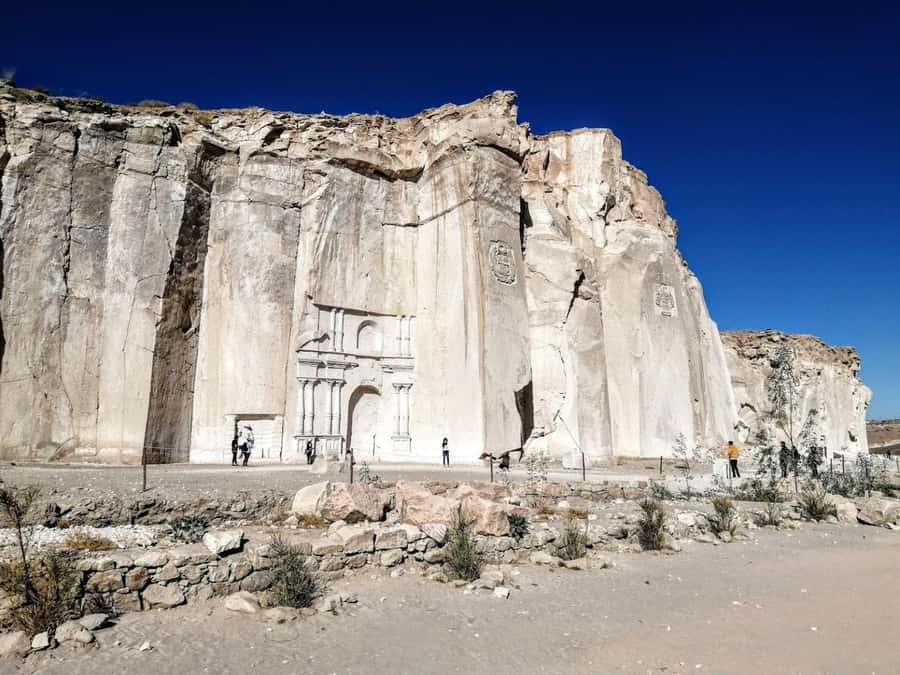
- Look for the church carving: A large stone carving reproduces the Church of the Company of Jesus.
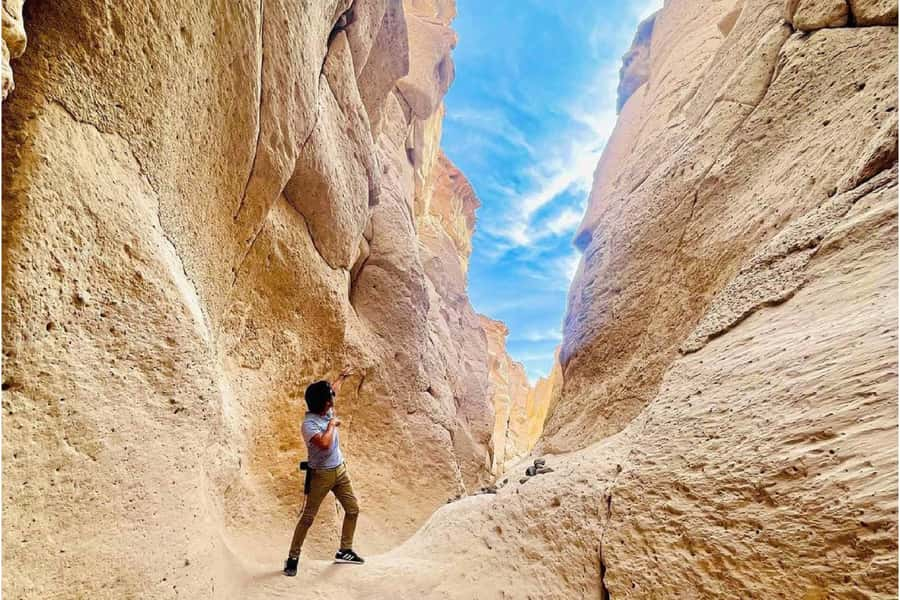
- Walk into Culebrillas: The route includes about 20 minutes inside a canyon with walls that reach 15 to 20 meters.
- Find ancient markings: Wari petroglyphs more than 1,000 years old appear near the end of the canyon walk.
- Take in volcano views: A viewpoint offers views toward the volcanoes and Chilina Valley, with the order of stops sometimes changing by season.
- Budget for the entrance fee: Transport and a professional guide are included, while entrance tickets cost 10 soles.
Why the Sillar Route matters in Arequipa
The Sillar Route is not only a scenic stop outside Arequipa. It explains why the city center has its distinctive pale stone appearance. At Añashuayco, you see the walls left by years of extraction and learn how blocks are cut, shaped, and put to use.
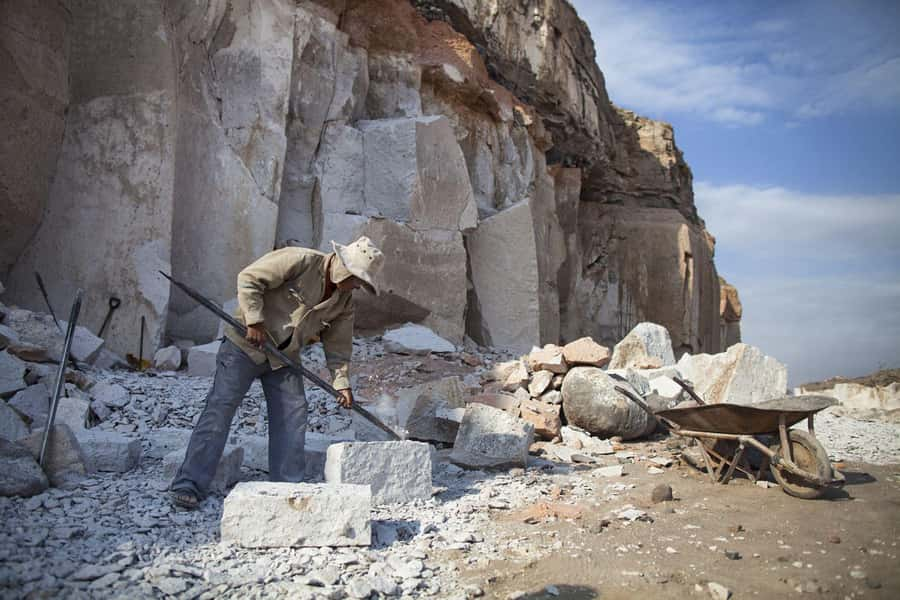
The quarry is still active. That matters because you are not looking at a dead industrial site arranged only for tourism. Stonemasons carry out their work early in the day, and the tour may include a visit with one of them. You can hear about the daily process and try cutting part of a stone block under guidance.
That hands-on moment gives the visit more purpose than a quick photo stop. Sillar may look soft and clean in Arequipa’s churches and courtyards, but the work behind each finished block is physical and skilled. You get a better sense of the effort involved when you handle the material yourself.
The quarry also gives you large-scale views of the excavation. Its cliffs are made from ignimbrite, the volcanic material from which the ashlar is taken. The walls rise several meters and form an impressive open canyon. Bring a hat and water, since the stop is outdoors and the description does not include any indoor shelter.
A few more hikes around Peru worth a look
- Cusco: Rainbow Mountain Tour and Red Valley Hike (Optional)
★ 4.7 · 149 reviews - From Huaraz: Hike to the Lagoon 69
★ 4.4 · 121 reviews - Private Palccoyo Rainbow Hike Without the Crowds
★ 5.0 · 86 reviews
The morning departure from central Arequipa
The morning departure is scheduled for 9:15 a.m. from C. Álvarez Thomas 115. The meeting point is the main office on the same corner, where your name is checked before the group receives instructions and sets off.
The van ride to the quarry takes about 50 minutes. That is a fair amount of time for a four-hour experience, so the tour works best if you want a compact introduction rather than a slow day in the countryside. The vehicle is listed as tourist transport, and the price includes the professional guide.
An afternoon departure is also available at 2:00 p.m. The supplied schedule describes the morning return arriving around 1:30 p.m. near Arequipa’s main square, while the detailed route lists Av. La Marina as the finish. If your next activity begins soon after the tour, confirm the exact drop-off point and timing when you book.
One practical concern deserves attention. A verified booking described music in the van that included sexually explicit and racially offensive lyrics, with families present. That is one person’s account, but it is specific enough to take seriously. If you are traveling with children or prefer quiet transport, ask the operator what music is used, or request that it be turned down or changed.
The volcano and Chilina Valley viewpoint
The first stop is described as a strategic viewpoint where you can see the volcanoes and the Chilina Valley. Depending on the season, the order may change, and the volcano viewpoint can appear later in the route.
This is a useful orientation stop. Before focusing on stone, you get a sense of Arequipa’s setting and the volcanic forces linked to the sillar quarries. The stop is designed for photos and a guide explanation rather than an extended walk.
The viewpoint is not the main event, so keep your expectations in check. You are likely to spend a short period there, not a full morning watching the mountains. Weather and seasonal conditions affect the views, and the information provided does not promise a particular volcano sighting on every departure.
The route descriptions give different orders for this stop. The narrative places a viewpoint early, while the detailed sequence lists Mirador de los Volcanes after Culebrillas. This likely reflects seasonal or operational changes. The exact order should not affect the main experience, but it is worth knowing if you are trying to match the tour to a strict schedule.
Entering the working Añashuayco Quarry
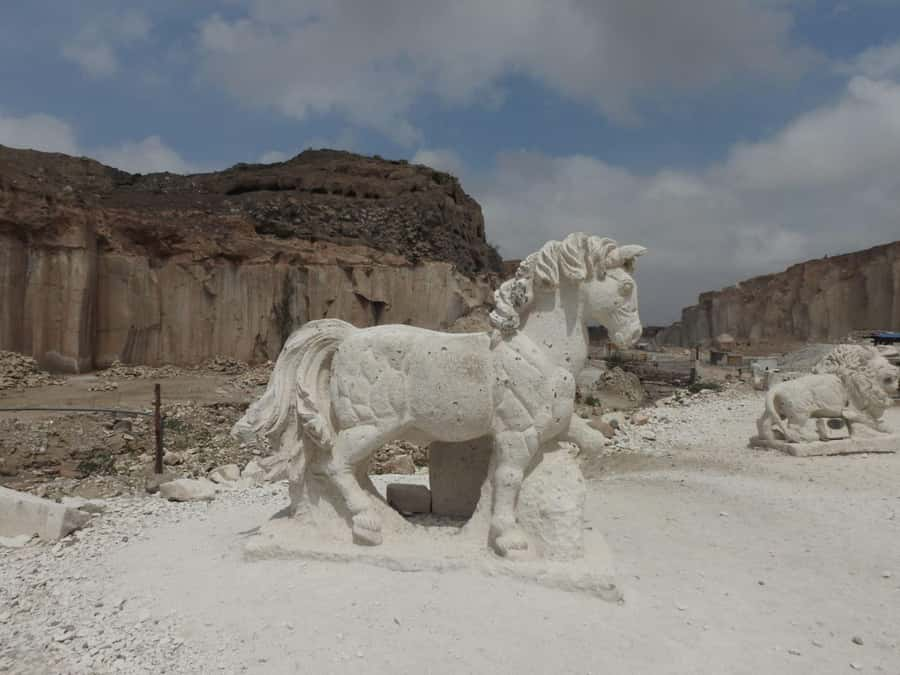
After roughly 45 minutes of driving from the viewpoint area, the group reaches Añashuayco Quarry. The quarry is the heart of the trip, and I would give the guide’s explanation here your full attention.
You learn how sillar is produced and how it has been used over time. The guide also explains the quarry’s history and the role of local stonemasons. Since the site remains in operation, the visit connects Arequipa’s famous architecture with present-day work rather than treating the stone as something from the past.
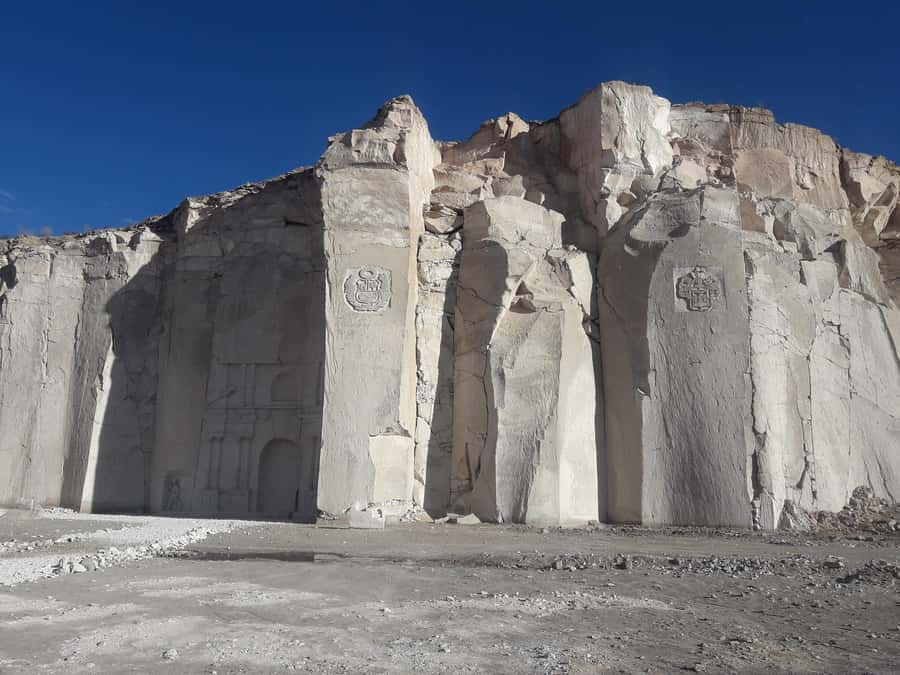
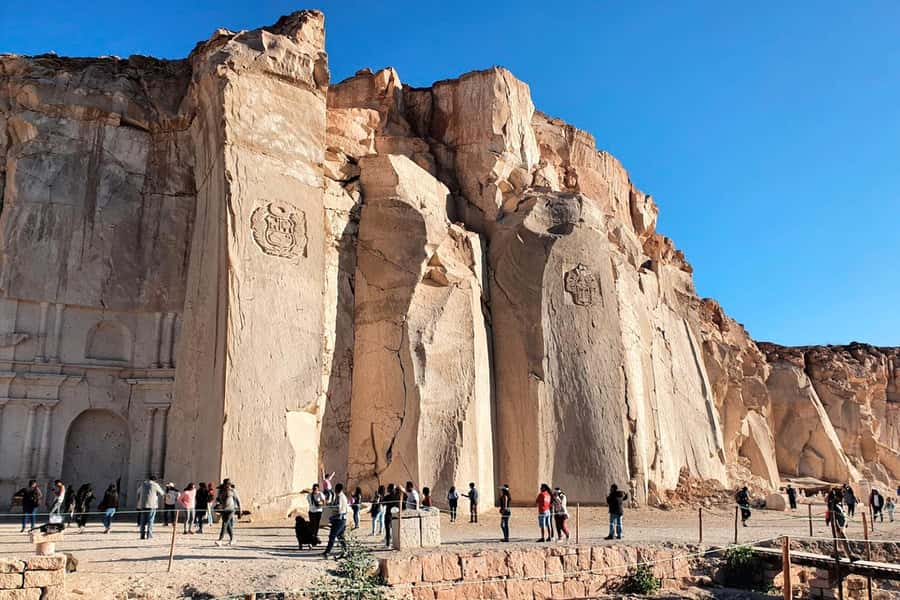
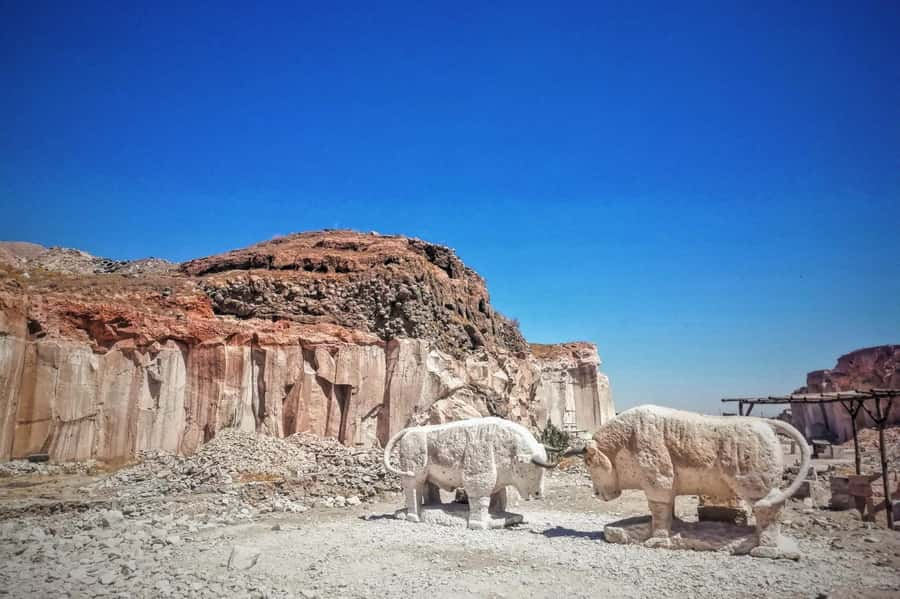
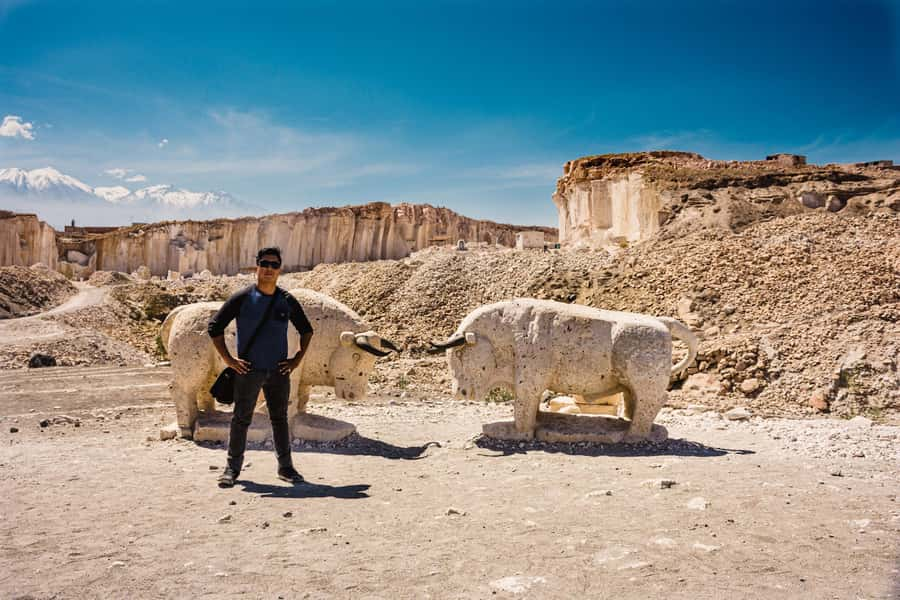
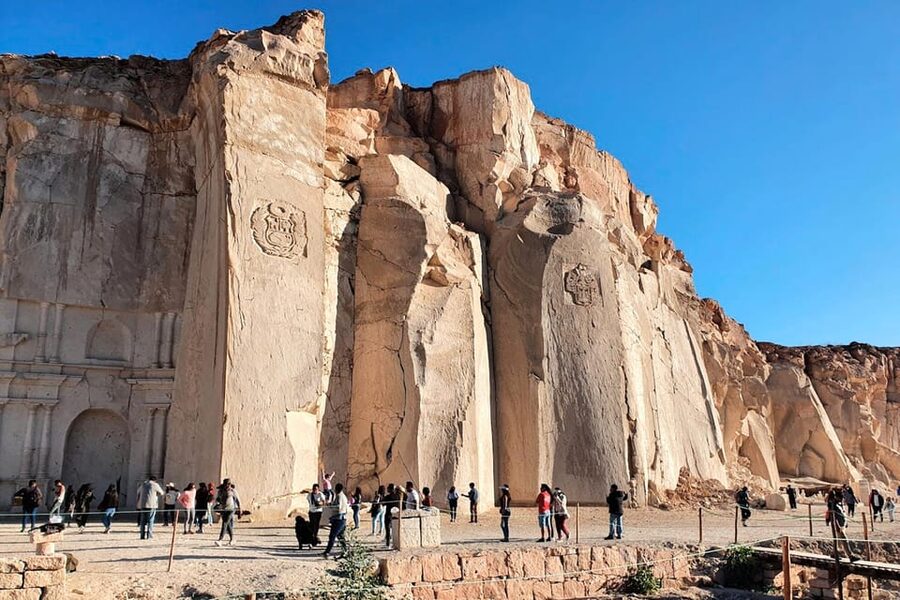
The quarry walls provide the strongest photo setting. Extraction has cut into the ignimbrite, leaving tall cliffs and an immense canyon-like space. The pale stone can be especially striking against the darker volcanic surroundings, though exact colors and visibility depend on the weather.
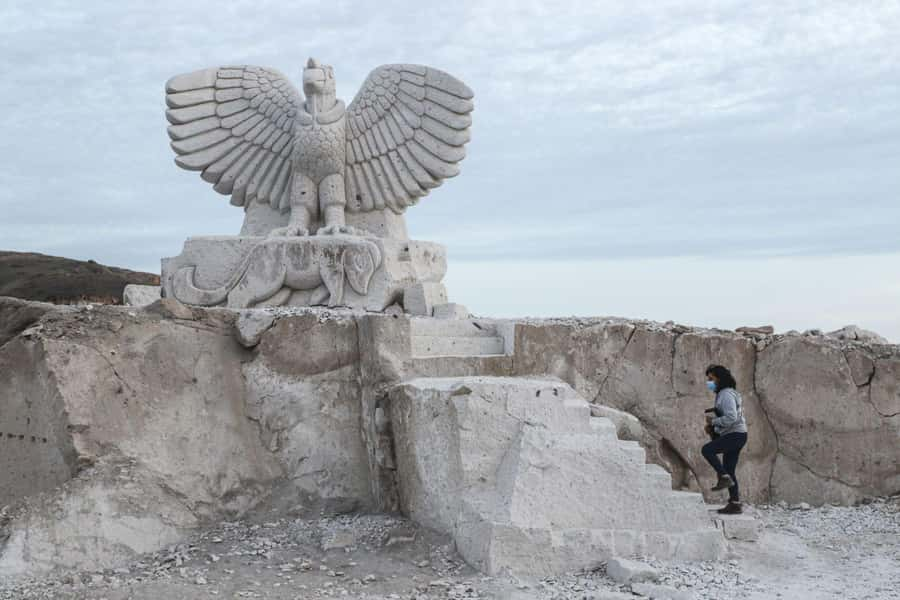
A major feature is the mega carving of the Church of the Company of Jesus. It was made by the stonemasons themselves and gives you a clear look at the decorative possibilities of sillar. The carving is not merely a natural rock formation. It is a piece of local craft made in the same material that shaped important buildings in Arequipa.
The visit also has a human side. You may meet a stonemason who explains the work and shows how blocks are cut. The chance to try cutting a block yourself is unusual for a short sightseeing tour. It will not turn you into a professional, but it helps you understand the weight, texture, and effort involved.
The quarry stop lasts about 45 minutes. That is enough time for an explanation, photos, the church carving, and the possible demonstration. If the stonemasons are working early, the morning departure may offer the best chance to see activity, although the tour information does not guarantee a particular worker or demonstration.
Same trailhead, a different sort of day:
- Humantay Lake Full Day Hike
★ 5.0 · 75 reviews - 2 Day Hiking Short Inca Trail to Machu Picchu
★ 5.0 · 66 reviews - 4-Day Inca Jungle Adventure, Mountain Biking, Rafting and Zipline
★ 5.0 · 60 reviews - Rainbow Mountain and Red Valley Hike – 2 Days / 1 Night
★ 5.0 · 41 reviews
The short walk through Culebrillas canyon
From Añashuayco, the van travels about 30 minutes to Quebrada de Culebrillas. Here the experience changes from an open quarry to a narrow natural passage shaped by water.
The walk inside the canyon takes approximately 20 minutes. Its walls begin lower and grow taller as you go in, reaching about 15 to 20 meters. The route is short, but the narrowing walls give it a stronger sense of exploration than the quarry stop.
This is a walk, not a demanding hike. The supplied information does not give a difficulty rating, trail surface, or elevation gain, so you should not book it expecting a long mountain trek. Comfortable shoes are still sensible because you will be walking inside a rocky canyon.
The canyon is valuable for its combination of geology and archaeology. Water formed the passage, while human activity left markings on its walls. Near the end of the walk, you can see petroglyphs linked to the Wari culture and dated more than 1,000 years old.
The petroglyphs are the reason to slow down. They can be easy to miss if the group moves quickly, so stay close to the guide and listen for the explanation of where they are located. The information provided does not describe the exact images or their condition, so avoid expecting a large, clearly marked archaeological site.
At the end of the visit, you see apachetas, small piles or formations of stones placed one on top of another. They are described as symbols of gratitude toward nature and as signs associated with good luck. Their meaning gives the final part of the canyon visit a spiritual and cultural note, though the time available remains brief.
What the four-hour schedule really gives you
The tour is advertised as four hours, but the route includes several van transfers. The ride from the starting point to the first main area takes about 50 minutes, the transfer from Añashuayco to Culebrillas takes about 30 minutes, and the return journey is listed as about 50 minutes.
That leaves a limited amount of time at the sites. Añashuayco receives about 45 minutes, Culebrillas includes about 30 minutes for the visit and hike, and the volcano viewpoint is listed with about 20 minutes. The schedule is efficient, but not leisurely.
I see this as a strength if you have only half a day. You can visit three very different places without arranging separate transport. It is less suitable if you want long walks, extended photography, or time to wander without a group.
The tour also offers English and Spanish guiding. That makes the historical and cultural explanations more useful than simply reaching the sites by taxi. No guide names are provided, so you cannot choose a particular guide in advance.
Price, entrance fee, and overall value
At $14 per person, the tour is priced as a low-cost outing. The price includes tourist transport and a professional guide, which is the main value here. Hiring separate transport to the quarry and canyon would remove much of the convenience, while going without a guide would make the stonework and Wari markings harder to understand.
You must pay an additional 10 soles for entrance to the places. That extra charge is modest, but include it in your budget so the advertised price does not catch you by surprise.
The value depends on what you want from Arequipa. If your priority is the city’s churches, convents, and historic center, this is a useful half-day addition that explains where the white stone comes from. If your priority is serious hiking, the short Culebrillas walk will feel too limited.
The low price also means you should keep expectations practical. This is a shared, time-conscious excursion with a short stop at each place. It is not a private photography trip, a long archaeological visit, or a full-day rural tour.
Who should book this outing
I would recommend it to you if you want to see the source of Arequipa’s sillar, prefer a short organized trip, and enjoy a mix of craft, geology, archaeology, and mountain views. Families may appreciate the compact schedule and the stone-carving demonstration, but I would first ask about the music used in the van.
It also suits anyone staying in central Arequipa who does not want to arrange transport independently. The central meeting point and return toward the city center make the outing easy to fit around other plans.
You may want a different experience if you need a quiet ride, want a long hike, or dislike tightly timed group visits. The quarry and canyon are the main attractions, while the transfers take up a large share of the four hours.
The cancellation policy allows a full refund when you cancel at least 24 hours ahead. You can also reserve and pay later, which helps if your Arequipa schedule is not fixed.
Should you book the Sillar Route and Culebrillas tour?
Book it if you want an inexpensive, efficient look at the material and people behind Arequipa’s white architecture. The working quarry, church carving, Wari petroglyphs, and short canyon walk give the trip more substance than a simple viewpoint excursion.
Skip it if you are seeking a substantial hike or a quiet, carefully controlled ride. Before paying, confirm the entrance fee, drop-off point, stop order, and music policy. With those details clear, this is a good-value half-day introduction to the countryside just outside Arequipa.
FAQ
How long does the Sillar Route and Culebrillas tour last?
The experience lasts about four hours.
Where does the tour start?
It starts at C. Álvarez Thomas 115 in central Arequipa. The meeting point is the main office on the same corner.
What languages are available?
The tour offers a live guide in English or Spanish.
What is included in the price?
Tourist transport and a professional guide are included.
Is the entrance fee included?
No. Entrance tickets cost 10 soles and are paid separately.
What time does the morning tour depart?
The morning departure is scheduled for 9:15 a.m.
Is there an afternoon departure?
Yes. A 2:00 p.m. shift is also available.
How long is the walk in Culebrillas canyon?
The walk inside the canyon takes approximately 20 minutes. The detailed route also lists about 30 minutes for the Culebrillas visit overall.
What can I see at Añashuayco Quarry?
You can see an active sillar quarry, tall ignimbrite walls, the mega carving of the Church of the Company of Jesus, and stonemasons at work. You may also be able to try cutting a stone block.
Can I cancel for a refund?
Yes. You can cancel up to 24 hours before the activity for a full refund.
Just added around Peru
- HHuayhuash-One of the most impressive hikes in the world★ 5.0 · 39 reviews
- 4-Day Inca Jungle Adventure, Mountain Biking, Rafting and Zipline★ 5.0 · 60 reviews
- Rainbow Mountain and Red Valley Hike – 2 Days / 1 Night★ 5.0 · 41 reviews
- Palcoyo mountain hiking + stone forests★ 4.1 · 10 reviews
- Palcoyo colored mountain hike + stone forests★ 4.6 · 3 reviews
- Huaraz: Laguna 69 | Cordillera Blanca | Hike to Lake 69★ 4.5 · 9 reviews
- Hiking Lomas de Lachay in Lima★ 4.3 · 4 reviews
- From Tambopata: Amazon Jungle Hike and Lake Sandoval 1-Day★ 3.8 · 3 reviews
Peru Hiking Tours, compared.

Rainbow Mountain Tour and Red Valley Hike (Optional)
Read our review →

Private Palccoyo Rainbow Hike Without the Crowds
Read our review →
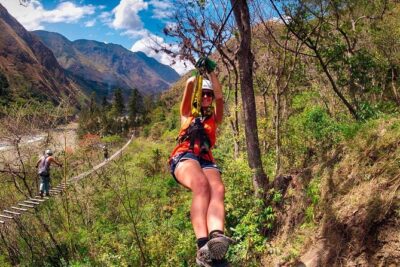
4-Day Inca Jungle Adventure, Mountain Biking, Rafting and Zipline
Read our review →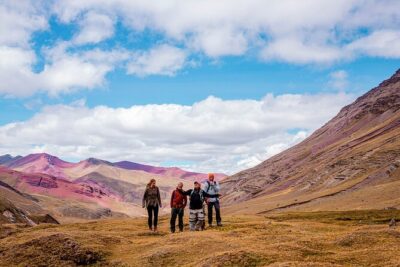
Rainbow Mountain and Red Valley Hike – 2 Days / 1 Night
Read our review →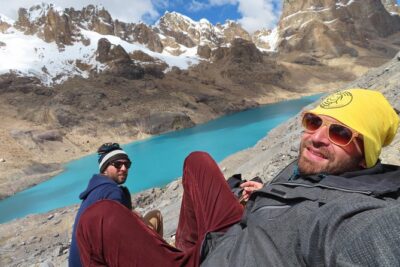
HHuayhuash-One of the most impressive hikes in the world
Read our review →Browse the lists this tour appears in