
REVIEW · NORWAY
Stavanger: Hiking to world famous Pulpit Rock
Pulpit Rock is not a gentle stroll, but it is one of Norway’s great payoffs: a broad stone platform above the Lysefjord, reached by a rugged trail of stairs, rocks, forest, and open mountain views. This guided outing gives you about five hours to make the climb, enjoy the summit, and return with local first responders helping set the pace.
I like the small-group feel of a local-led hike and the practical care built into it. Guide John has adjusted the start time around incoming rain and even arranged a hotel drop-off after one outing. I also like that snacks, water, and a less crowded trail are included, so you can focus on the climb rather than trail logistics.
The main drawback is the effort required. The opening climb is steep and rocky, and the return is a 4.2-kilometer descent that can be hard on tired legs. At $156 per person, this makes the most sense if you value guiding, local help, and transport support more than simply hiking the trail on your own.
Key points to know before booking
- A steep start sets the tone: The first section is the hardest, with rocky ground and a sharp climb.
- Sherpa-built stone stairs help later: The middle part is easier to follow, with stairs, forest, and small streams.
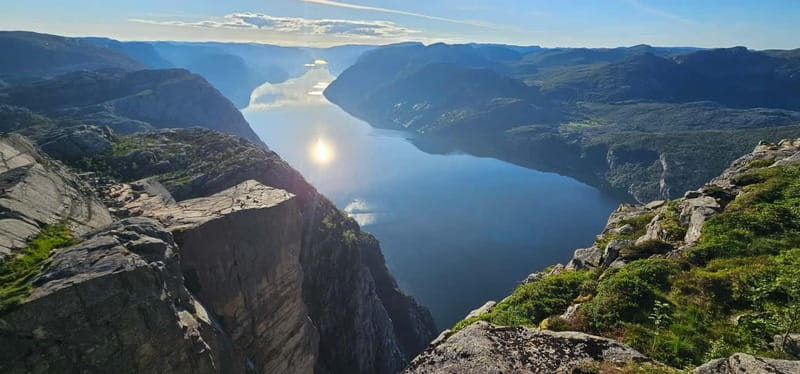
- The summit is a wide rock platform above Lysefjord: You get time to rest, hydrate, and take in the view.
- Local first responders lead the outing: Guides such as John and Tore provide trail help, pacing, and regional knowledge.
- The return covers 4.2 kilometers downhill: It is quicker than the ascent but still needs care on uneven ground.
- The tour includes simple trail supplies: Light snacks and water are provided, but dinner is not.
Why Pulpit Rock rewards the effort
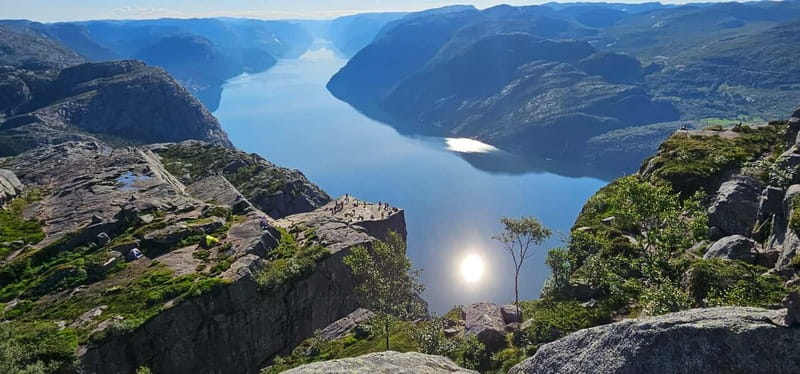
Preikestolen, known in English as Pulpit Rock, is famous for good reason. The trail ends at an expansive rock plateau that reaches above the Lysefjord, giving you the kind of open view that makes the climb feel worthwhile.
The attraction is not only the final viewpoint. The route changes as you gain height. You begin with a demanding uphill section, move through wooded stretches and across small streams, then reach more open ground as the mountain views grow wider.
I like this kind of hike because the scenery arrives in stages. You are not simply walking toward a single lookout. The changing trail gives you small goals along the way, which helps when the climb starts to test your legs.
The tour is described as a hike with a running focus, so fit participants can set a quicker rhythm where the trail allows. Still, you should not think of it as a road run. The trail has rocks, stairs, uneven sections, and steep parts where walking carefully is the sensible choice.
A few more hikes around Norway worth a look
- Oslo Nature Walks: Island Hopping Tour
★ 4.8 · 2,713 reviews - From Tromsø: Snowshoeing Hike with Picnic Lunch and Photos
★ 4.9 · 840 reviews - From Tromsø: Guided Husky Snowshoe Hike and Husky Camp Visit
★ 4.9 · 715 reviews
Starting at Preikestolen BaseCamp
Your outing starts at Preikestolen BaseCamp, beside the welcome map and Hiking Cafe. This is the practical place to get oriented, stretch, check your equipment, and prepare for several hours outdoors.
Transport from Stavanger is part of the setup described for the experience, while the actual hiking meeting point is the base camp. Since the exact transfer arrangement is not detailed, confirm the departure plan when you book. The important point is that you do not begin in Stavanger itself. You begin at the trailhead.
The base camp offers basic amenities, but this is not a full mountain resort experience. Arrive ready to hike. Wear trail shoes with firm grip, carry a windproof jacket, and bring dry clothes for afterward. Mountain weather can change quickly, and the supplied guidance specifically recommends a change of clothes.
Light snacks and water are included. That is helpful, but it does not mean you should arrive without thinking about your own needs. The information provided does not specify the amount of water or food, so a small personal supply may be sensible if you normally drink or eat more during a five-hour hike.
The first climb needs a slow pace
The first part is the section to respect most. It is steep and rocky, and the best advice is simple: move slowly, keep your steps controlled, and save energy for later.
If you arrive expecting to run from the start, you may burn through your strength too soon. The guide recommends walking smoothly on this opening climb, and that is sound advice. The trail is not the place to prove anything during the first minutes.
This is also where a guide can be useful. Local first responders can help you judge the pace and make sensible choices when the ground becomes awkward. Guide John, whose outing included participants moving at different speeds, was described as patient while people worked up the stairs. That matters on a hike where the strongest person in the group should not set an unreasonable pace for everyone else.
Good shoes are more important than fashionable clothes here. Trail shoes with reliable grip are specifically recommended. Ordinary casual shoes may make the rockier sections less comfortable, especially on the descent.
Forest, streams, and Sherpa-built stairs
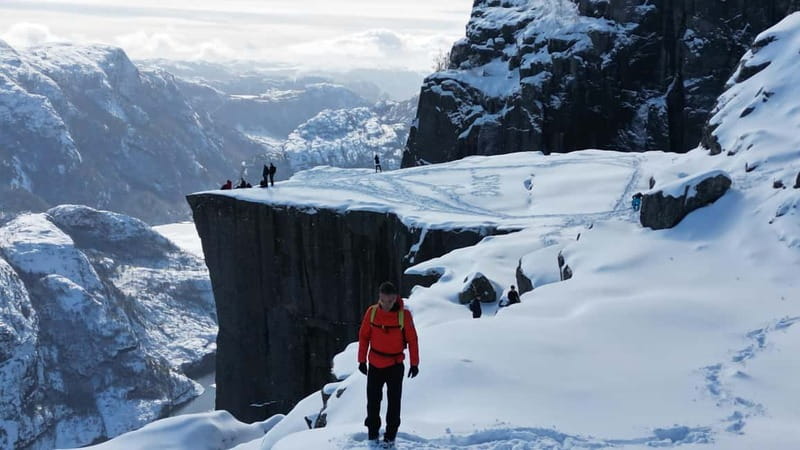
After the opening climb, the trail becomes easier to manage. The route levels out in places, giving you a chance to find a steady rhythm rather than fighting the slope every minute.
Stone stairs built by Sherpas make parts of the path more secure and easier to follow. They do not remove the effort, but they turn some of the rough climbing into a more regular series of steps. You will still need to watch where you put your feet.
The forest gives this middle section a different mood from the summit. Small streams and trees provide welcome changes in scenery, and the route feels more enclosed before the final open views arrive. I like this part because it gives you a chance to recover while still making progress.
Use the easier stretches to drink water and eat a snack. Waiting until you are exhausted is a poor strategy on a hike with another climb still ahead. A steady pace will serve you better than a burst of speed followed by a long stop.
Same trailhead, a different sort of day:
- Oslo Nature Walks: Island hopping
★ 5.0 · 570 reviews - From Tromsø: Snowshoe Hike in the Arctic
★ 4.9 · 467 reviews - Guided hike to Pulpit Rock Preikestolen
★ 5.0 · 390 reviews - Trolltunga Classic Overnight Hike
★ 5.0 · 336 reviews
The second climb and the final approach
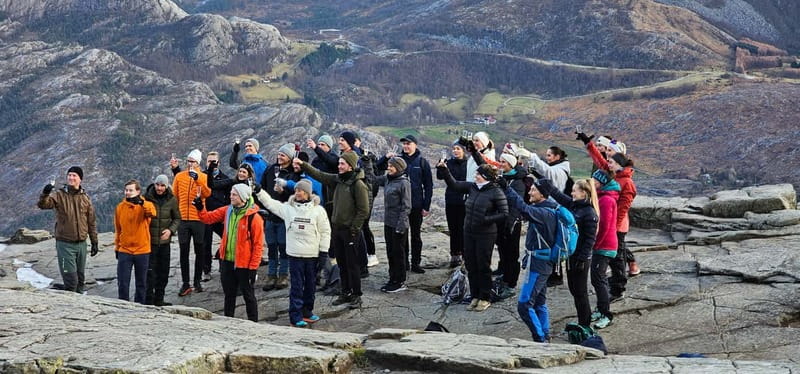
The second climb is less steep than the first, but it still asks for effort. The path becomes more rugged, so your attention needs to stay on the ground as well as the scenery.
This is where tiredness can make a simple step feel less simple. Take your time over uneven rock, especially if the weather has changed. The activity information does not promise a dry or easy trail, so bring the windproof layer and spare clothes as advised.
Near the summit, the character of the hike changes again. The route opens up, and the Lysefjord begins to dominate the view. The final approach follows the cliff toward the summit, making this a memorable stretch but also one where you should stay alert and follow your guide’s instructions.
A guide is particularly valuable here because the excitement of seeing the view can distract you from your footing. You do not need to rush the last section. The aim is to reach Pulpit Rock with enough energy left to enjoy it.
Time on the Pulpit Rock summit
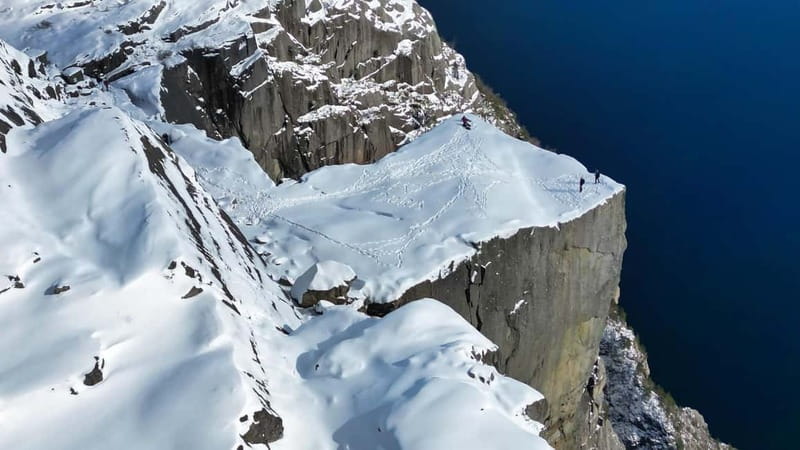
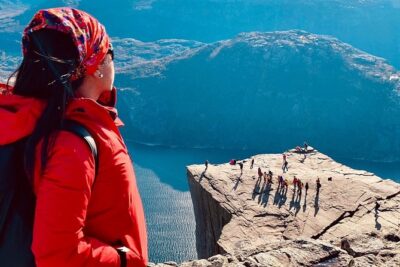
The summit is the reason for the climb. Pulpit Rock is a broad plateau projecting above the Lysefjord, with a dramatic outlook across the water and surrounding mountain country.
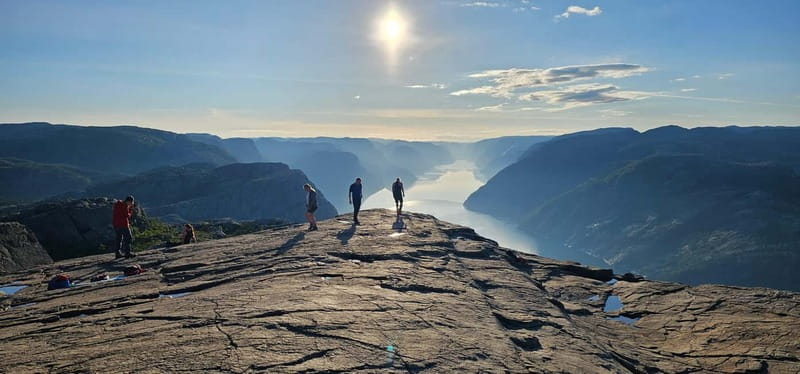
You are given time to rest, hydrate, and take photographs. That pause is not a minor detail. After a demanding ascent, the chance to sit, recover, and enjoy the view turns the hike into an experience rather than a race to a marker.
The supplied information emphasizes enjoying Preikestolen to the fullest. In practical terms, that means allowing your breathing to settle, taking in the scale of the fjord, and not treating the summit as a quick photo stop.
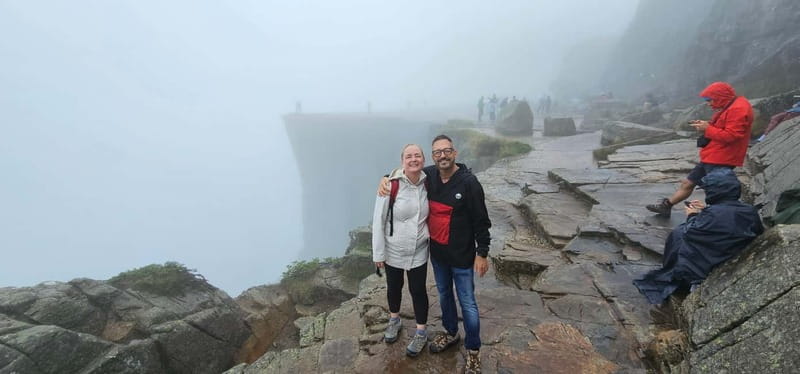
The viewpoint can be exposed to changing weather, so your windproof jacket earns its place even on a pleasant day at the base camp. The information does not provide a weather guarantee or a specific amount of summit time, so your guide will be the best source of day-of advice.
The 4.2-kilometer descent
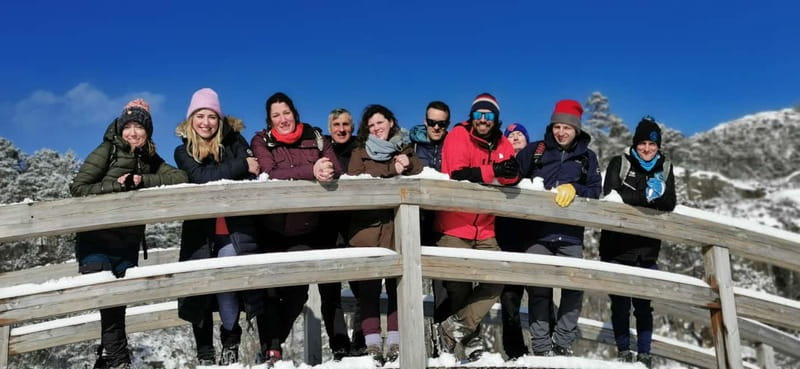
The return route leads downhill for 4.2 kilometers to Preikestolen BaseCamp. It is quicker than climbing up, but downhill does not mean effortless.
Steep steps and rocky ground can place more strain on your knees and ankles than the ascent. Keep your pace controlled, use the stairs carefully, and avoid letting the group spread too far apart. The tour guidance specifically calls for awareness of other hikers on the way down.
This is another reason not to overdo the running idea. If you feel strong, you may move briskly on smoother portions, but the terrain should decide your speed. A careful descent is better than arriving early with a painful slip or twisted ankle.
The less crowded trail is a useful part of the experience, although no trail is guaranteed to be empty. Fewer people can make it easier to hear the guide, maintain a comfortable pace, and enjoy the forest without constant stops around you.
The guides and the human side of the hike
The strongest part of this experience may be the guiding. The outing is led in English, and the guides are local first responders. That gives the tour a practical edge, especially on a trail where weather, rocks, stairs, and different fitness levels all matter.
Guide John has been praised for being funny, patient, and well informed about the route and his own experiences. He adjusted one departure 30 minutes earlier because rain was expected, allowing the group to finish before the weather arrived. He also provided a hotel drop-off afterward on that occasion.
Guide Tore is another named guide associated with the experience. He is described as good company and well informed about the area. Those details suggest a tour built around conversation and encouragement, not only pointing out the route.
You should still ask questions before departure if you have concerns about the pace or your ability level. The information does not state a fixed group size, fitness requirement, or guaranteed hotel transfer. The guides may be flexible, but those details should not be assumed.
Is $156 a fair price?
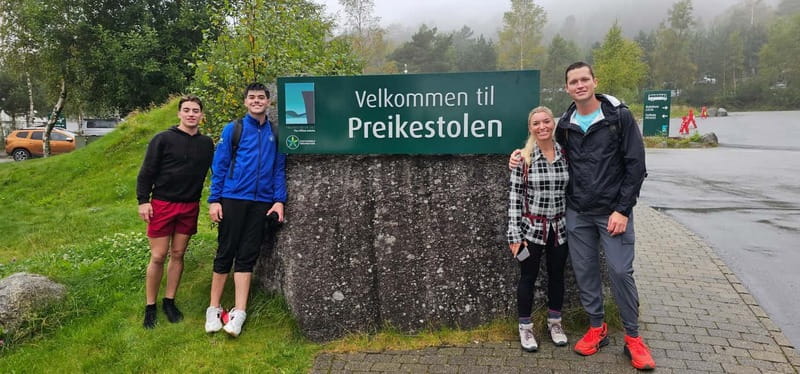
At $156 per person, this is not the cheapest way to reach Pulpit Rock. The trail itself can be walked independently, so confident hikers who already have transport, equipment, and route experience may find the price high.
The value improves if you are visiting from Stavanger and want help arranging the outing. You receive a five-hour guided experience, transport support from Stavanger, light snacks, water, an English-speaking guide, and the benefit of local first responder experience.
You are also paying for judgment. A guide who watches the weather, adjusts the start time, keeps a patient pace, and helps people over difficult sections can make the day less stressful. That matters more than a basic trail description when you are dealing with mountain conditions.
Dinner is not included, so plan to eat before or after the hike. The provided details do not include a meal stop or dinner arrangement.
Who should book this hike?
This experience suits you if you want the famous view but prefer not to manage the trail alone. It is especially useful if you are coming from Stavanger, want an English-speaking local guide, or appreciate encouragement on steep ground.
It also suits active visitors who like the idea of moving at a faster pace on parts of the trail. Just remember that the route includes walking, stairs, rocky ground, and careful downhill travel. You do not need to force a run to get the most from it.
It may not suit you if you want a relaxed sightseeing outing with little physical effort. The first climb is demanding, the second climb still requires work, and the descent can be tiring. You should also think twice if you do not have suitable trail shoes or weather-ready clothing.
Free cancellation up to 24 hours before the start and the option to reserve now and pay later make planning easier. Starting times depend on availability, so check the schedule before committing your day.
Should you book it?
Book this tour if you want Pulpit Rock with local support, flexible pacing, and practical trail guidance rather than a bare hike to a viewpoint. John and Tore add a human touch, and the weather-aware approach shown by John is exactly the kind of help that can improve a mountain day.
Skip it if you are an experienced independent hiker with your own transport and you are comfortable handling the route, food, water, and weather yourself. For everyone else, the $156 price buys more than a walk. It buys assistance on a tough trail and a better chance of enjoying the Lysefjord view without spending the day worrying about logistics.
FAQ
Where does the hike begin?
The hike begins at Preikestolen BaseCamp, near the welcome map and Hiking Cafe.
How long does the experience last?
The experience lasts five hours, including the guided hike to Pulpit Rock and the return to Preikestolen BaseCamp.
How long is the guided portion?
The itinerary lists the Pulpit Rock portion as a four-hour guided tour, within the overall five-hour experience.
Is transport from Stavanger included?
The experience description says you are transported from Stavanger to Preikestolen BaseCamp. Confirm the exact meeting and departure arrangements when booking.
What language is the tour offered in?
The live tour guide speaks English.
Are snacks and water included?
Yes. Light snacks and water are included.
Is dinner included?
No. Dinner is not included.
What should I wear?
You should bring trail shoes with good grip, dry clothes, and a windproof jacket. The trail includes rocky sections, stairs, and changing mountain weather.
Is the trail suitable for running?
The experience includes guidance for running to Pulpit Rock, but the trail has steep, rocky, and uneven sections. You should expect to walk carefully on the hardest parts and choose your pace according to the terrain.
Can I cancel for a full refund?
You can cancel up to 24 hours in advance for a full refund.
Just added around Norway
- Mjelle Beach – Easy Day Hike to Bodos no 1 Beach, Northern Norway★ 5.0 · 11 reviews
- Half-Day Hiking in Mosjøen Via Ferrata★ 4.5 · 7 reviews
- Hike to Hovdsundet Beach – Bodo, Northern Norway★ 5.0 · 10 reviews
- Hiking Trip to Keiservarden, Classic Hike, Bodo – Northern Norway★ 5.0 · 13 reviews
- Hiking Day Trip in Bodo, The Hidden Valley★ 5.0 · 20 reviews
- Three-summit hike in Bergen★ 5.0 · 3 reviews
- Full Day Hiking Adventure from Bergen to Trolltunga★ 5.0 · 7 reviews
- GUIDED TOUR: Hiking to Stoltzekleiven★ 5.0 · 3 reviews
Norway Hiking Tours, compared.

From Tromsø: Snowshoeing Hike with Picnic Lunch and Photos
Read our review →
From Tromsø: Guided Husky Snowshoe Hike and Husky Camp Visit
Read our review →
Browse the lists this tour appears in