
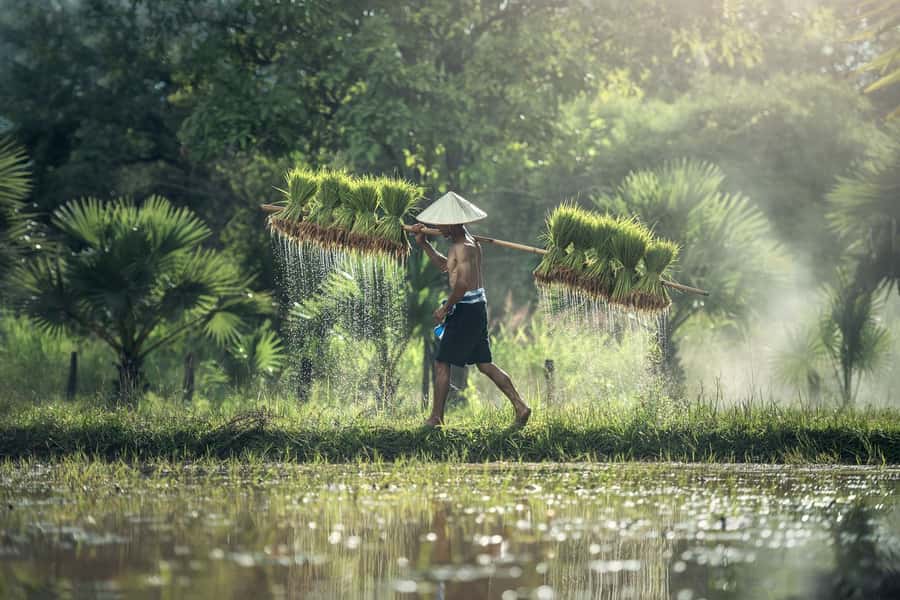
REVIEW · INDONESIA
Bali: Rice Terraces Guided Hiking Experience
The best part of this three-hour walk is that it treats Bali’s rice fields as a living system, not just a pretty backdrop. You’ll cross bamboo bridges, follow narrow terrace walls, and learn how subak irrigation links farming, village life, and Hindu worship.
I like the visit to a small agricultural temple, which most sightseeing routes skip, and the chance to learn about frogs, fish, crabs, snails, and the many crops grown beside rice. The main drawback is the setting: parts of Kerobokan are surrounded by houses, and you may not get the mountain views shown in promotional photos.
Key points to know before booking
- A working rice-field walk: Expect a 2 to 3 kilometer route along terrace walls, with rivers and bamboo bridges along the way.
- Subak explained on site: Your guide shows how Bali’s old irrigation system still supports farms and community life.
- A local farming temple: You visit a subak temple used by farmers, rather than only passing through a scenic viewpoint.
- Small café finish: Coconut water or coffee, mineral water, and light snacks are included after the walk.
- Shared or private format: Choose a lower-cost shared outing or a private experience for your own group.
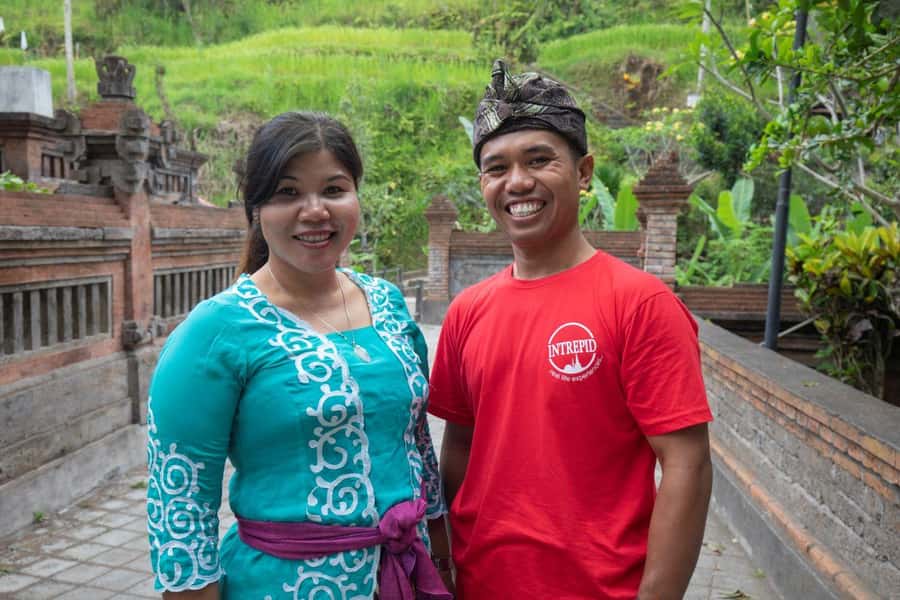
- Good guide reports: Lena has been singled out for clear explanations and a warm manner, while the local guide and farmer add useful local detail.
What this Kerobokan rice terrace walk is really about
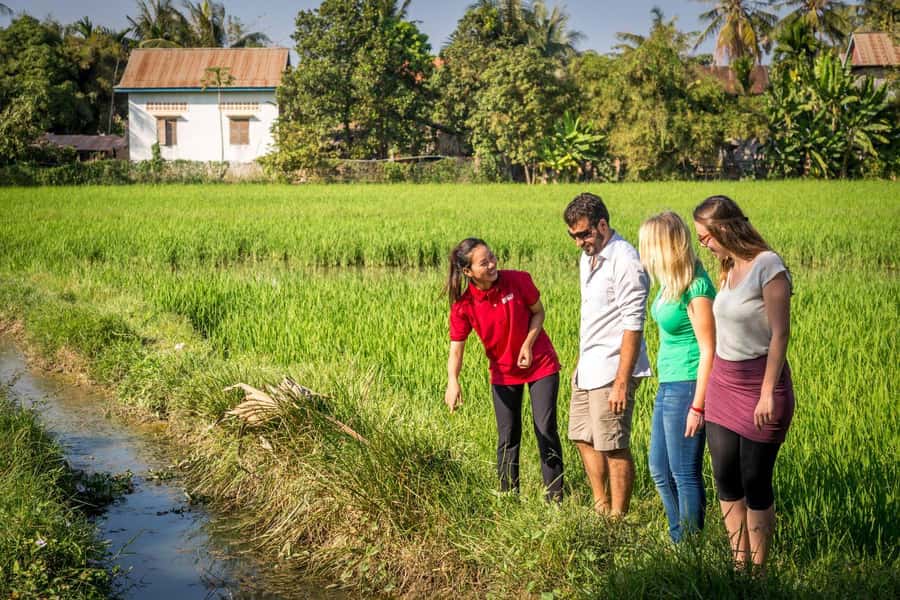
Bali’s rice terraces can be photographed in seconds. Understanding them takes longer. This experience gives you the background that makes the fields matter.
The terraces around Kerobokan were first planted after Hindu priests arrived in Bali in the ninth century. The fields are still farmed today, and the water that feeds them is managed through subak, an irrigation system introduced more than 1,200 years ago.
Subak is not simply a series of channels. It organizes how farmers share water and connects agriculture with village cooperation and religious practice. Your guide explains this before you begin the longer walk, so the narrow paths and carefully shaped fields have a clear purpose.
I especially like that the tour does not treat the rice paddies as a silent photo stop. You learn how water moves, how farmers work together, and why small aquatic creatures matter to the health of the fields.
The setting also gives you a glimpse of ordinary Bali close to the tourist zones. This is not a grand mountain trek. It is a working agricultural area near homes, roads, and daily village life. That makes it more authentic, but it also means the views can be less dramatic than you expect from photographs of Bali’s famous terraces.
More Guided Day Hikes in Indonesia
- Bali: Sunrise Mount Batur Guided Hike with Breakfast
★ 4.8 · 9,660 reviews - Bali: Mount Batur Sunrise Guided Hike and Natural Hot Spring
★ 4.8 · 9,284 reviews - Mount Sibayak Sunrise Hike or Day Hike from Berastagi
★ 5.0 · 45 reviews
Meeting at Starbucks Kerobokan
The outing begins at Starbucks Kerobokan and finishes at the same meeting point. That arrangement is simple, especially if you are staying in or near Kerobokan and prefer an activity with no complicated transfer.
There is no transport segment included, so you need to arrange your own way to the meeting point. Check the available starting times when booking, since the experience runs for three hours but does not list one fixed departure time.
You can join a shared group or book a private outing for your own party. A shared departure can keep the price down and add a social element. A private departure gives you more control over the pace and may suit families with older children or people who want more time for questions.
Children under six cannot join. Everyone else should be ready for a walk rather than a gentle roadside stop. Comfortable shoes and comfortable clothes are the right choices.
The subak system, explained beside the fields
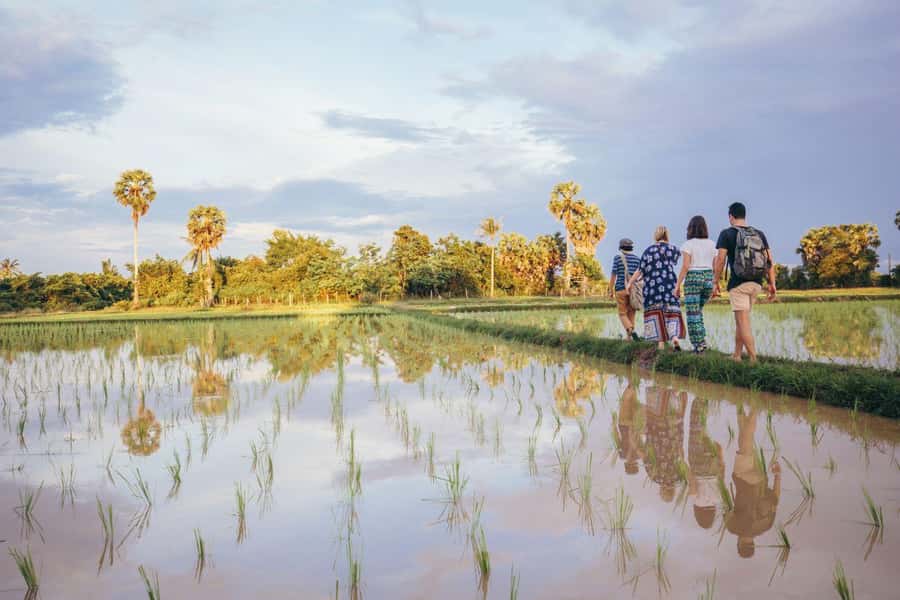
After meeting your English-speaking guide, you head toward the rice fields. The first major lesson concerns subak, Bali’s traditional irrigation system.
The guide explains how water reaches different plots and how the system depends on cooperation among farmers. This matters because rice farming is not only about planting and harvesting. It requires shared decisions about water, timing, maintenance, and the health of the wider field.
You also learn that the rice paddies support more than rice. Farmers grow tomatoes, beans, bananas, eggplant, chilies, corn, and sugar cane. Water snails are part of this farming environment too.
The fields also shelter frogs, fish, crabs, and other aquatic life. These species form part of a small ecosystem that can be easy to miss when you are focused on taking photographs. A good guide points out the connection between water, crops, animals, and human work.
The explanations are one of the strongest reasons to book this outing. One guide, Lena, has been praised for explaining the subject clearly and making the experience pleasant. A local guide and farmer may also take part, adding practical details about planting, field management, and the jobs assigned to workers.
The exact guide can vary, so do not book solely to meet a particular person. Still, the positive comments about Lena and the local guide fit what this experience is designed to provide: direct explanations rather than a quick walk with little context.
A small agricultural temple most tours skip
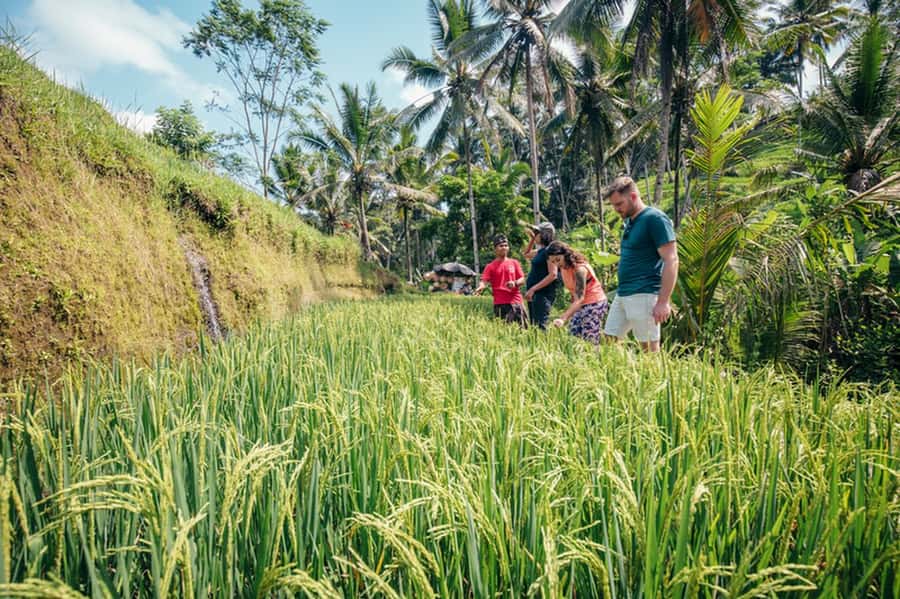
The visit to a subak agricultural temple gives the walk a cultural center. These temples are gathering places for farmers, and water priests honor the relationship among people, the earth, and the gods.
This is not presented as a major tourist temple with grand gates and long queues. Its value is its connection to local farming. You see how religious practice fits into the management of water and crops.
You should approach this stop with respect. It is part of a working community system, not a staged attraction. Listen to your guide about appropriate behavior and follow any local instructions.
For me, this is more useful than simply seeing another ornate building. It explains why subak is still important and why irrigation in Bali cannot be separated from local belief and community life.
Same trailhead, a different sort of day:
- Mount Batur Sunrise Hike and Natural Hot Spring Option
★ 5.0 · 1,927 reviews - From Ubud: Mount Batur Hiking With Hotspring
★ 4.8 · 1,850 reviews - Mount Batur Sunrise Hike with Breakfast
★ 5.0 · 1,757 reviews - From Ubud: Mount Batur Hiking
★ 4.9 · 617 reviews
Walking 2 to 3 kilometers on terrace walls
The main hike covers about 2 to 3 kilometers. The route follows the tops of the walls between rice plots, using paths that farmers use to move around the fields.
That wording matters. You are not walking on a broad paved trail. The walls can be narrow, and you need to place your feet carefully. The route also crosses rivers on bamboo bridges. These crossings are part of the charm, but they call for attention and steady footing.
Comfortable shoes are essential. Wear clothes that allow easy movement, and expect some exposure to sun and mud depending on conditions. The supplied information does not specify the exact terrain or weather policy, so ask the operator if you have concerns about walking conditions before departure.
The walk is long enough to feel active without taking up a full day. It should suit people who want exercise and local insight but do not want a demanding mountain hike.
Do keep your expectations in check. The Kerobokan fields are close to development. One important caution is that houses may surround parts of the route, and mountains may not be visible. If your main goal is a dramatic, uninterrupted view of Bali’s highlands, this may not be the best choice.
If your main goal is to understand how rice farming works close to an urban area, the setting becomes a strength. You see agriculture continuing beside ordinary homes and modern businesses.
Coconut water, coffee, and a simple finish
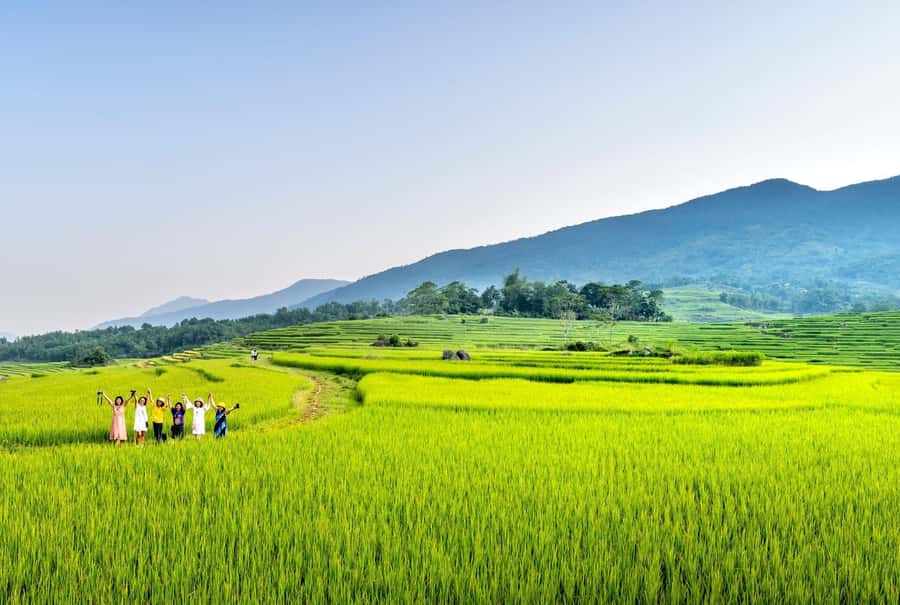
After the walk, you stop at a small café. The included refreshment is fresh coconut water or coffee, with light snacks. Mineral water is also provided during the activity.
This is a modest ending, not a full meal. Additional food and drinks are not included, so plan accordingly if you usually need a substantial meal after exercise.
The café stop gives you time to cool down and talk through what you have seen. After learning about planting, irrigation, and field wildlife, a short break with a local drink feels well matched to the pace of the outing.
Men receive an udeng, a traditional Balinese headcloth, and women receive a sash as a gift during the tour. It is a small touch, but it adds a cultural element to the experience. Treat the item respectfully and follow the guide’s instructions about how to wear it.
How much value do you get for $39?
At $39 per person, the price is reasonable if you value explanation and access to a working agricultural area. The fee includes an English-speaking local guide, mineral water, coconut water or coffee, light snacks, the temple visit, and a rice-field donation.
That last item is worth noting. A portion of the cost supports the rice fields through a donation, which gives the activity a more direct connection to the place you are visiting.
You are not paying for a large attraction with extensive facilities. You are paying for three hours of guiding, local interpretation, a walk through active fields, and a chance to ask questions about farming and subak.
The value is strongest for people who want to understand Bali beyond beaches and photo stops. It is weaker for anyone seeking a major scenic viewpoint, a long mountain trek, or a full meal.
The carbon-neutral format and B Corp certification are also relevant for people who want to consider the wider effect of their booking. The operator is committed to using tourism for positive social and environmental purposes. That does not change the route itself, but it may help you choose between similar short activities.
Shared or private: which option fits you?
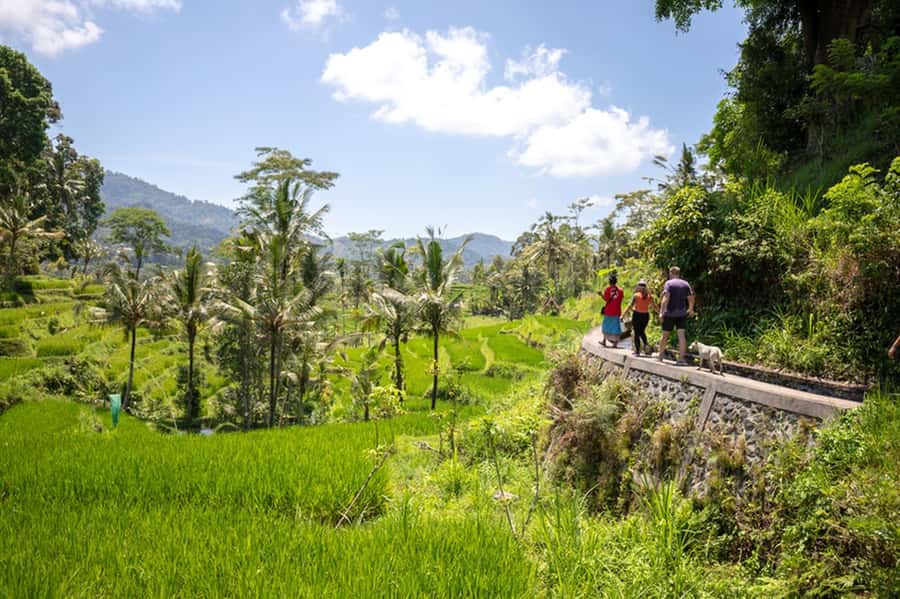
The shared version is a sensible pick if you want the standard experience at a lower cost and do not mind walking with other people. You will follow the scheduled route and share the guide’s attention.
A private tour makes more sense if you want to ask many questions, set a slower pace, or keep the outing within your own group. The activity description does not promise a customized route, so do not assume that a private booking will remove every part of the planned itinerary.
The guide is one of the biggest factors in how much you gain from the tour. The strongest reports focus on clear explanations, a welcoming manner, and the local guide’s practical knowledge. If your guide is as engaged as Lena was described, the agricultural details should be much more memorable than a simple walk through fields.
Who should book this experience?
I would recommend it to people who:
- Want to learn how Balinese agriculture works
- Prefer local context to a quick photo stop
- Are comfortable walking 2 to 3 kilometers on narrow field paths
- Like small-group or private activities
- Want to see a farming temple connected to daily community life
- Have three hours available near Kerobokan
It is also a good fit for repeat visitors to Bali who have already seen the major temples and beaches. The subject is specific, and the focus on water management gives you a fresh way to understand the island.
I would be cautious about booking it if your top priority is postcard scenery. The route may include houses, and mountain views are not guaranteed. The promotional images should not be treated as a promise of a wide, open panorama.
The walk may also be less suitable if you dislike uneven paths, narrow crossings, or outdoor conditions. The tour is not suitable for children under six, and the supplied details do not describe special accessibility arrangements.
Free cancellation up to 24 hours before the start and the option to reserve now and pay later make planning easier. You still need to check the available start times and make your own way to Starbucks Kerobokan.
Should you book the Kerobokan rice terrace hike?
Book it if you want the story behind Bali’s rice fields. The temple visit, subak lesson, working farms, local crops, and field wildlife give the three-hour route real substance.
Skip it if you want Bali’s most dramatic terrace views or a completely rural setting. Kerobokan can feel built up, and the scenery may not match your idea of an isolated mountain valley.
For $39, this is a fair-value cultural walk with a useful focus. The best reason to go is not the perfect photograph. It is the chance to understand how water, farming, religion, and village life still fit together in Bali.
FAQ
How long does the rice terrace hike last?
The experience lasts three hours, including the guided walk, temple visit, explanations, and café stop.
Where does the tour begin?
You meet at Starbucks Kerobokan.
Where does the activity finish?
The tour ends back at the meeting point.
How far do you walk?
The rice-field trek covers about 2 to 3 kilometers.
Is the tour available as a private experience?
Yes. You can choose between a shared tour and a private tour for your own group.
What language does the guide speak?
The live tour is conducted in English by a local English-speaking guide.
What refreshments are included?
Mineral water, coconut water or coffee, and light snacks are included. Additional food and drinks cost extra.
What should I wear or bring?
Bring comfortable shoes and comfortable clothes. The route uses terrace walls and includes bamboo bridge crossings.
Can young children join the tour?
The activity is not suitable for children under six years old.
Just added around Indonesia
- From Yogyakarta: Mount Merbabu One Day Hiking Tour★ 4.9 · 27 reviews
- From Medan: Mount Sibayak Sunrise Hike & Natural Hot Spring★ 4.8 · 31 reviews
- From Bali : Mt Ijen Hike, Blue Fire & Panoramic Lake Guided★ 5.0 · 5 reviews
- Exclusive Soft Hiking: 2-Day Pergasingan Hill Adventure★ 4.5 · 2 reviews
- Banyuwangi : Mt Ijen Hike, Blue Fire & Panoramic Lake Guided★ 4.9 · 98 reviews
- Banyuwangi: Mt. Ijen Sunrise Hike with Pickup & Health Check★ 4.9 · 109 reviews
- Bali: Sunrise Hike at Mount Batur with Bali Swing★ 5.0 · 24 reviews
- Bali: Mount Batur Sunrise Hike Including Transfer & All Cost★ 4.8 · 39 reviews
Indonesia Hiking Tours, compared.
Sunrise Mount Batur Guided Hike with Breakfast
Read our review →
Mount Batur Sunrise Guided Hike and Natural Hot Spring
Read our review →
Mount Batur Sunrise Hike and Natural Hot Spring Option
Read our review →
Munduk: Twin Lake Jungle Hike, Ulun Danu Temple, & Waterfall
Read our review →Browse the lists this tour appears in