
REVIEW · USA
Lamar Valley: Safari Hiking Tour with Lunch
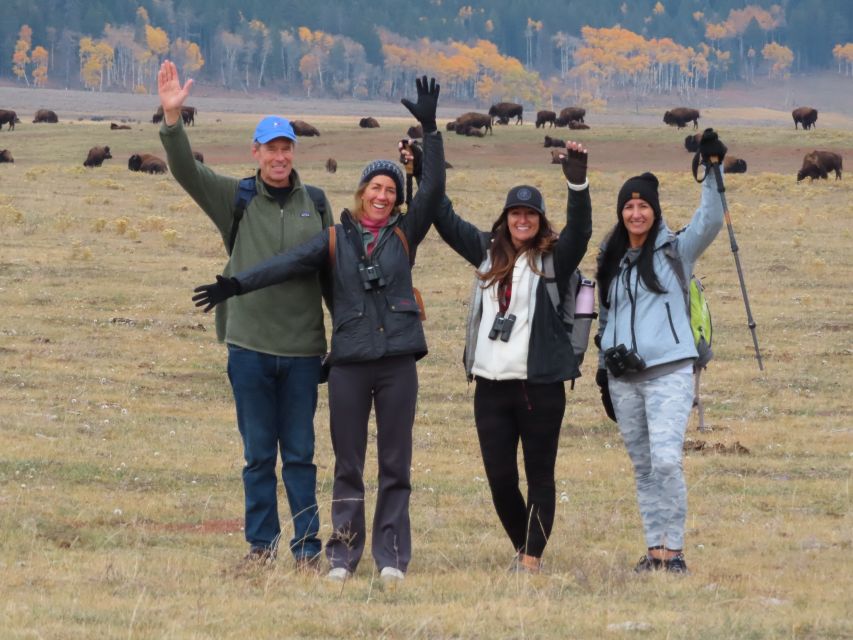
Lamar Valley is Yellowstone’s best place to trade a car-window safari for a real walk through open country. You’ll follow bison trails toward the Lamar River, scan the sagebrush for pronghorn and wolves, and stop for a picnic with the valley spread around you. The wildlife viewing and the local guide’s eye are the big draws.
I like the practical setup: binoculars, a spotting scope, trekking poles, bear spray, a pack, breakfast, and lunch are all supplied. I also like the guides’ flexible pace. Dallas adjusted his speed for the group, while Marisa rerouted twice when bison blocked the path. The trade-off is clear: this is a six-mile hike at 6,500 feet, with hills, changing weather, and no hotel pickup.
Key points
- Wildlife on foot: Look for bison, pronghorn, elk, wolves, bears, badgers, and birds from a safe distance.
- A full six-hour outing: Start at 8 am with a hot drink and snack, then hike to the Lamar River for lunch.
- Helpful equipment included: Use binoculars, a group spotting scope, trekking poles, a day pack, and bear spray.
- Guides who adapt: Bob, Dallas, Karlie, Marisa, Chris, and others have set a careful pace and changed routes around animals.
- High-country demands: Bring water, rain gear, and comfortable shoes for a rain-or-shine hike at 6,500 feet.
Why Lamar Valley rewards a walking tour
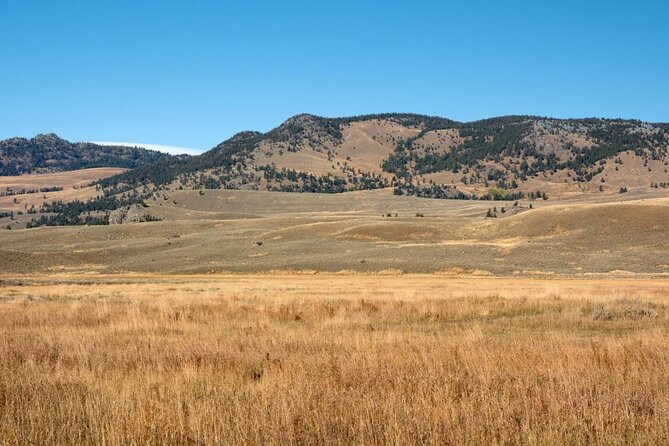
Lamar Valley is often called the Serengeti of North America, and the comparison makes sense in one important way: the country is broad, open, and full of animals that are easier to spot here than in much of Yellowstone. From a vehicle, you may see a distant herd. On foot, you notice the smaller things too, such as sage beneath your boots, tracks in the trail, birds working the grass, and the way bison paths cut across the valley.
This tour keeps the focus on that wider experience. You are not simply driven to a lookout, handed a pair of binoculars, and sent home. You walk across the valley, follow routes made by bison, and reach the Lamar River for lunch. The six-hour format gives your guide time to pause, explain, and change plans when wildlife or weather calls for it.
That does not mean guaranteed close-up sightings. Animals are wild, and the valley is large. Your best moments may involve a herd of bison beside the trail, a group of pronghorn in the distance, or a bird that your guide spots before you do. Bring patience along with your camera.
More Hikes with Lunch in the USA:
- Wailua River Kayak and Sacred Falls Guided Hike with Lunch
★ 5.0 · 783 reviews - Private Yellowstone Tour: ICONIC Sites, Wildlife, Family Friendly Hikes + lunch
★ 5.0 · 739 reviews - Oahu: Manoa Falls Waterfall Hike with Lunch and Transfers
★ 4.8 · 413 reviews
Starting at 8 am with coffee and gear
You meet at the Lamar River Trailhead at 8 am. This is the hiker trailhead, not the stock trailhead used by horse riders, and that distinction matters. The correct parking area is the larger lot with a small footbridge and no latrines.
If you are coming from Tower Junction, allow about 25 minutes for the 14.8-mile drive. Turn onto Highway 212 toward Cooke City, pass through Lamar Valley, and continue beyond the Lamar River Stock Trailhead. The hiking lot is another quarter mile upstream.
From Cooke City, the drive takes about 30 minutes over 18.3 miles. The trailhead is roughly half a mile past the small white Soda Butte thermal formation. Plan your bathroom stop before arrival. The stock trailhead has two latrines, but the hiker trailhead does not.
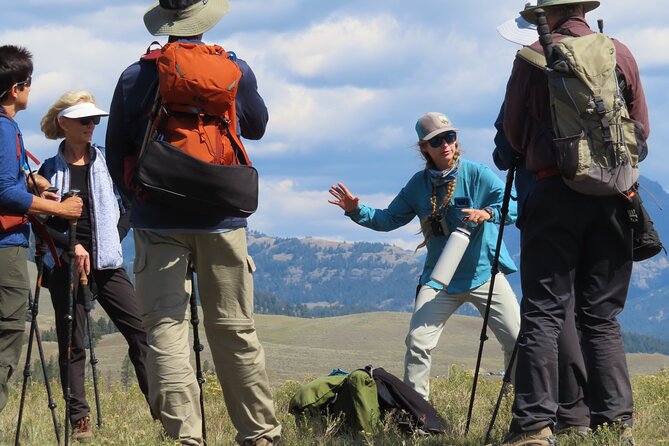
Once you meet your guide, you get a morning snack and a hot drink. Coffee, tea, and cocoa are listed, a small comfort at a cool Yellowstone start. You also pick up a backpack for personal items, trekking poles, binoculars, and bear spray. A group spotting scope comes along for longer views.
The safety briefing is brief but important. You are hiking in active wildlife country, not a city park. Your guide sets the rules for distance, movement, and animal encounters before you leave the trailhead.
Six miles through open Yellowstone country
The walking portion crosses Lamar Valley toward the Lamar River and includes both uphill and downhill sections. Six miles is manageable for many fit hikers, but the altitude changes the equation. At 6,500 feet, a pace that feels easy at home can feel harder here, especially if you are not used to mountain air.
I like that the guides appear to treat pace as part of the service, not as a test of toughness. Dallas was noted for checking that everyone could keep up, and another outing included frequent checks on how the group was doing. This matters because a wildlife hike works best when you are alert enough to look around, not simply focused on finishing.
The route is not described as a technical climb. Still, you need comfortable shoes, water, and rain gear. The outing runs rain or shine, and Yellowstone weather can change the feel of a six-hour day quickly. A rain jacket is required, but you must bring it yourself.
The walking also gives you a closer look at plants and geology. One guide, Bob, has pointed out plants, geology, animal behavior, and park history during the hike. A stop to smell the sage may sound simple, but it is exactly the kind of detail that gets lost when you rush from one viewpoint to the next.
Bison, pronghorn, bears, and the value of a guide
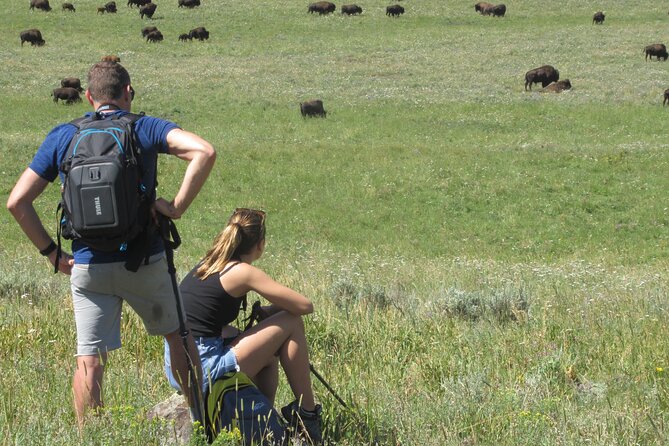
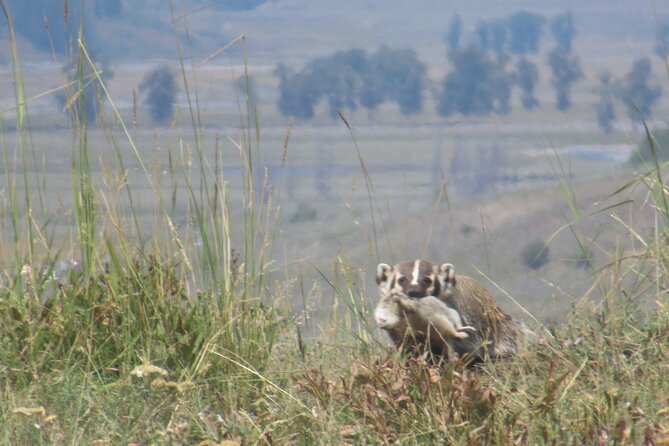
Bison and pronghorn are the animals most closely tied to this outing. The valley is known for large herds of both, and one hike encountered more than 20 pronghorn with young animals. You may also look for elk, wolves, bears, badgers, and many kinds of birds.
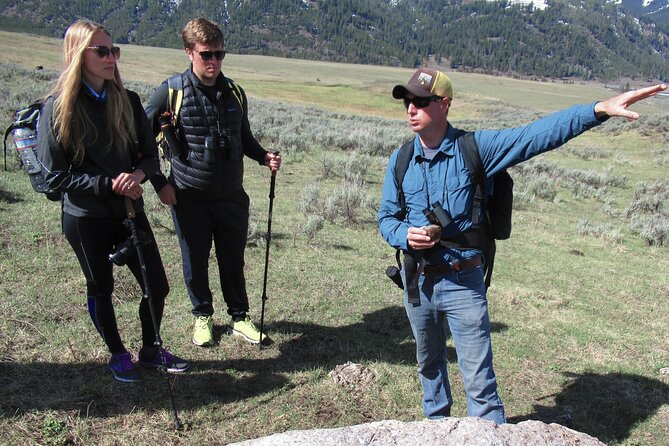
The guide’s real value is not just naming an animal. It is knowing where to look, reading the terrain, and helping you make sensible choices around wildlife. A group had to change its route twice because bison were in the way, and the guide kept everyone safe. That is a strong reason to consider this tour instead of walking alone.
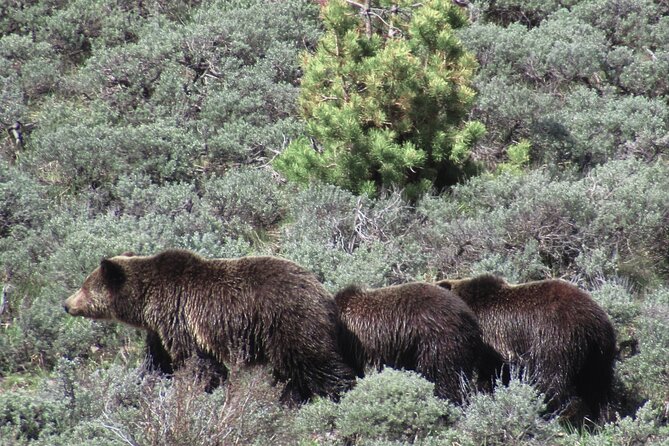
A striking bear sighting is possible, too. One group saw a grizzly along the river and felt much better having an experienced guide nearby. That does not turn the hike into a bear-watching guarantee. It does mean you have someone carrying bear spray, watching conditions, and explaining how to respond.
The supplied binoculars help you see without pushing too close. The group spotting scope is useful for distant animals, especially across the wide valley. You should still expect some time spent scanning and waiting. Wildlife viewing has quiet stretches, and those pauses are part of the day.
Respect for the animals is built into the rules. You cannot feed or touch them, use a drone, or ride them. Pets are not allowed. Those restrictions protect both you and Yellowstone’s wildlife, and they also keep the outing focused on watching animals behave naturally.
More Safari Days in the USA:
- Lamar Valley Safari Hiking Tour with Lunch
★ 4.5 · 164 reviews - Rainforest Hike and Waterfall Safari
★ 5.0 · 567 reviews - Howth Safari Hiking Tour
★ 5.0 · 279 reviews - Full Day Tour with Safari Float, Waterfall and Volcano Hike
★ 5.0 · 89 reviews
Guides who bring more than animal facts
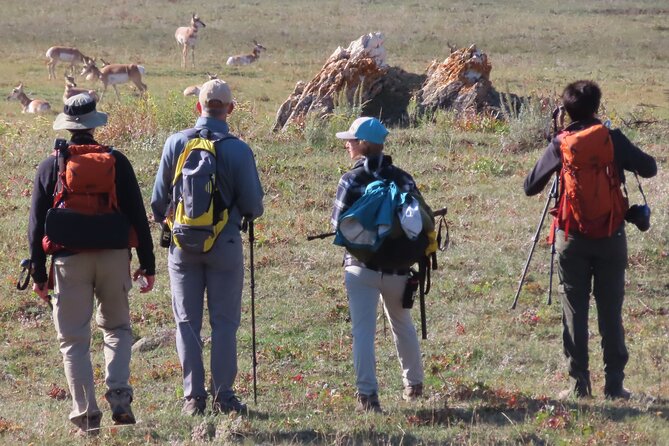
This experience depends heavily on the person leading it. The guide names connected with the tour include Bob, Dallas, Karlie, Marisa, and Chris, and the strongest pattern is their ability to combine facts with good group management.
Bob has been described as friendly and able to tailor the hike to a small group. His range of subjects includes plants, geology, history, and animals, rather than one long stream of wildlife names. Dallas has been praised for a steady pace and an easy personality, even adding a bad bison joke along the way.
Karlie led an outing with good views and a large pronghorn group, while Marisa handled changing conditions when bison occupied the route. Chris received credit for making a group feel safe and comfortable. These details tell you what to look for: a guide who watches the group, not just the horizon.
The Native American history element adds another layer. The tour places the valley in a human story as well as a natural one. You should not expect a museum-style lecture, but the guide can connect the scenery and trails with the people who have known this country for generations.
The format also allows for questions and suggestions. One guide adjusted the search based on what the group wanted to find. That flexibility is useful when your priorities differ from those of another person in the group. Some people want wolves. Others want birds, plants, geology, or a better view of the river.
Lunch beside the Lamar River
The hike leads to a picnic lunch near the Lamar River. A riverside meal gives the day a clear center, and it is more memorable than eating in a parking lot between stops. You get time to rest, take in the scenery, and enjoy the food after several miles on foot.
The lunch is a brown bag picnic, and it has been singled out as a strong part of the outing. Do not expect a restaurant meal or a wide menu. Think of it as a practical trail lunch that arrives at the right moment.
This stop also gives you a natural break before returning to the trailhead. The tour does not provide hotel transport, so after the hike you return to your own vehicle at the Lamar River Trailhead. Factor that into your day, especially if you are staying outside the northeast entrance area.
What $192 includes, and what it does not
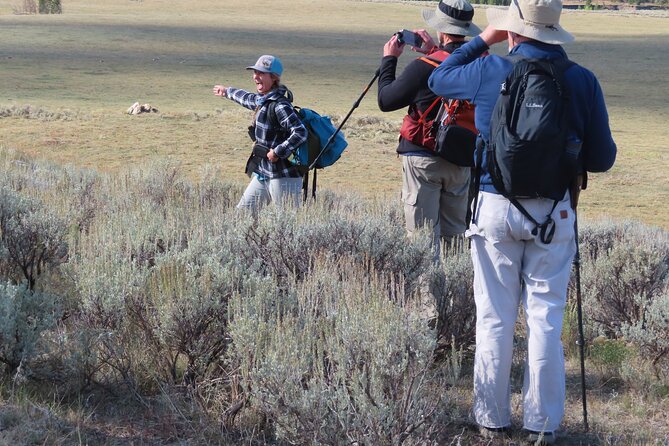
At $192 per person, this is not the cheapest way to see Lamar Valley. The value comes from combining a professional wildlife guide with equipment, food, safety gear, and six hours in a place where independent planning can be difficult.
You receive a morning snack and hot drink, binoculars, access to a group spotting scope, a backpack, trekking pole, bear spray, and a brown bag lunch. Those items would take time and money to assemble separately, and bear spray is particularly useful in this setting.
The fee does not include Yellowstone’s entrance fee, water, rain gear, or transportation from your hotel. You need to solve those parts yourself. If you already have park admission, hiking clothes, and a vehicle, the price is easier to assess. If you need a ride from your lodging, this is not the right format.
The strongest value is for someone who wants to walk in Lamar Valley but does not want to handle wildlife decisions alone. You are paying for local judgment, not just miles on a trail. If you are comfortable carrying your own safety gear, reading maps, and waiting for wildlife, you may prefer a self-guided visit. But a guide can make the day safer and more useful, particularly when animals block the planned route.
Who should book this hike
This outing suits adults and older children who can handle six miles with hills at altitude. Children under eight cannot join, and the tour is not suitable for wheelchair users, people with heart problems, or people over 80. Those limits are tied to the trail and elevation, not a lack of welcome.
You should be happy outdoors for six hours in changing weather. A person who wants frequent vehicle stops, indoor comfort, or a fixed schedule may find the format tiring. A person who likes moving slowly, scanning the valley, and learning as they go will get more from it.
The tour is also a good choice for first-time Yellowstone hikers who want a careful introduction to wildlife country. You receive basic equipment and a safety talk, and you do not have to guess how close is too close to a bison or bear.
I would be cautious about booking it as your only Yellowstone activity if you dislike walking or have trouble with altitude. The day is active, and the scenery does not remove the physical work. Wear shoes you trust, bring water, and take the rain requirement seriously.
Booking details worth keeping in mind
The activity is conducted in English and runs for six hours, beginning at 8 am when available. It takes place rain or shine. You can cancel up to 24 hours before the start for a full refund, and the reserve-now, pay-later option can help if your Yellowstone plans are still shifting.
The trailhead location deserves special attention. Put Lamar River Trailhead into your plans as the hiker lot, not the nearby stock trailhead. Since there are no latrines at the hiking lot, use the facilities at the stock trailhead before driving the final quarter mile.
A 4.6 rating from 44 bookings supports the overall picture of a well-run outing, but the practical facts matter more than any number. The main question is simple: can you comfortably walk six miles at 6,500 feet, carry water, and spend the day outside?
Should you book the Lamar Valley Safari Hiking Tour?
Book it if you want a closer, slower look at Yellowstone’s wildlife and prefer having a guide make the safety calls. The combination of bison trails, pronghorn herds, a riverside lunch, binoculars, and local interpretation gives the day more substance than a quick roadside stop.
I would especially choose it for a first Lamar Valley visit, a small group that wants to learn, or anyone uneasy about walking near large animals alone. Bob, Dallas, Karlie, Marisa, and Chris have each brought useful strengths: wildlife knowledge, local history, flexible routing, and a steady pace.
Skip it if you need hotel pickup, cannot manage six hilly miles, or want a short sightseeing stop. For the right hiker, though, this is a practical way to spend a full morning and afternoon in one of Yellowstone’s finest wildlife valleys, with lunch where the Lamar River meets the trail.
FAQ
Where does the Lamar Valley hike begin?
Meet at the Lamar River Trailhead, specifically the hiker trailhead rather than the nearby stock trailhead. The hiking lot has a small footbridge but no latrines.
What time does the tour start?
The meeting time is 8 am. The activity lasts about six hours, with availability depending on the selected date.
How far do you hike?
The hike covers six miles and includes uphill and downhill sections at about 6,500 feet.
What wildlife might I see?
Possible sightings include bison, pronghorn, bears, wolves, elk, badgers, and birds. Wildlife sightings are not guaranteed.
What equipment and food are included?
The tour includes a morning snack, coffee, tea, or cocoa, binoculars, a group spotting scope, a backpack, trekking pole, bear spray, and a brown bag picnic lunch.
What should I bring, and what is not allowed?
Bring comfortable shoes, water, and rain gear. Pets, drones, feeding animals, touching animals, and riding animals are not allowed.
More Lunch Experiences in the USA
- Grand Canyon of the Yellowstone Rim and Loop Hike with Lunch
★ 5.0 · 375 reviews - Hoover Dam & Hot Springs Kayak Tour with Lunch & Expert Guide
★ 5.0 · 318 reviews - Maui: Rainforest Waterfalls Guided Hike with Picnic Lunch
★ 4.9 · 274 reviews - Manoa Waterfall Hike with Waikiki Pickup & Healthy Lunch
★ 4.5 · 185 reviews
Just added around the USA
- Ketchikan Rainforest Canoe and Nature Walk★ 4.5 · 89 reviews
- Alaskan Escape: Cruise, Hike, and Cultural Immersion★ 5.0 · 3 reviews
- Private Waterfalls Hike and Swim in Lihue★ 5.0 · 38 reviews
- Hike and Bike Kelleys Island Trails★ 5.0 · 13 reviews
- Kansas City Crossroads Art District and Westside Urban Hike★ 5.0 · 22 reviews
- Strawberry Hill and Downtown KCK Hike★ 5.0 · 18 reviews
- Juneau Shore Excursion: Mendenhall Glacier Canoe, Paddle and Hike★ 5.0 · 75 reviews
- Norris Adventure: Seaplane, Paddle and Glacier Hike★ 5.0 · 12 reviews
USA Hiking Tours, compared.
Small Group: Valley of Fire Half Day Tour from Las Vegas
Read our review →
Multnomah Falls and Columbia River Gorge Half-Day Hiking Tour
Read our review →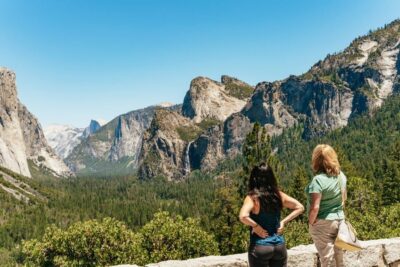
San Francisco: Yosemite National Park & Giant Sequoias Hike
Read our review →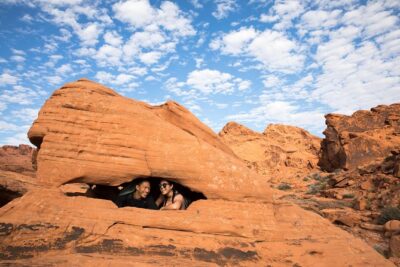

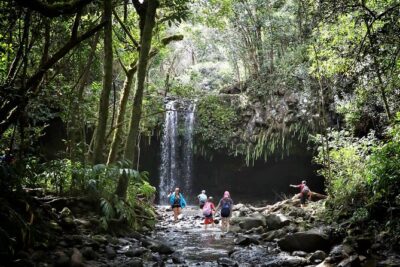
Small Group Waterfall and Rainforest Hiking Adventure on Maui
Read our review →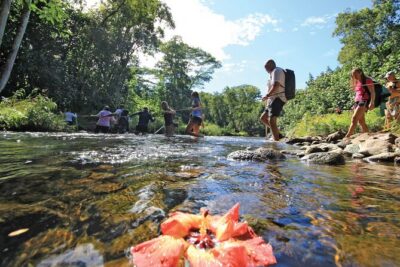
Kauai Adventure: Kayak & Hike to Secret Falls with Expert Guide
Read our review →Browse the lists this tour appears in