
REVIEW · MARKETS
Hangzhou Insider Mini-Hike: TCM, Hill Views and Wet Market
Hangzhou’s best surprises are packed into this four-hour walk: a grand old pharmacy, a 200-year-old Traditional Chinese Medicine museum, ancient hill paths, and a noisy neighborhood market. You move from quiet courtyards to temple trails and then into everyday local life without spending the day in a vehicle.
I like two things in particular. First, the route links places that most visitors would treat as separate stops, including Da Jing Xiang, Hu Qing Yu Tang, Wu Shan Hill, and Da Ma Long market. Second, guide Wen gives the walk a personal touch, explaining Chinese culture clearly in English and making time for questions.
The main consideration is the hike. It is gentle rather than steep, but you will walk uphill for about 90 to 120 minutes. This is not the right choice if you have back problems, high blood pressure, limited fitness, or difficulty with uneven trails.
Key points to know before booking
- The route connects old Hangzhou in a clever sequence: lanes, workshops, pharmacy, hill temples, views, and market.
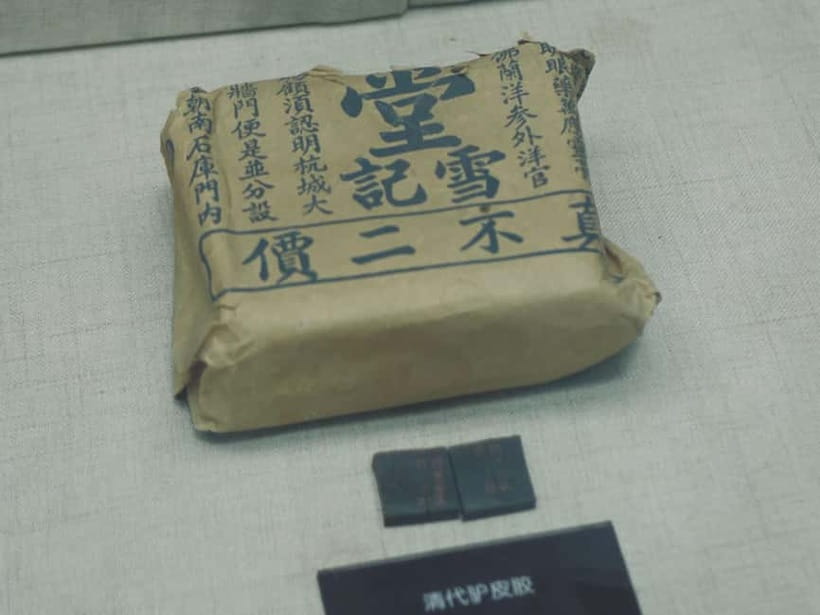
- Hu Qing Yu Tang is more than a pretty building: you visit its small museum and receive herbal tea in the old apothecary hall.
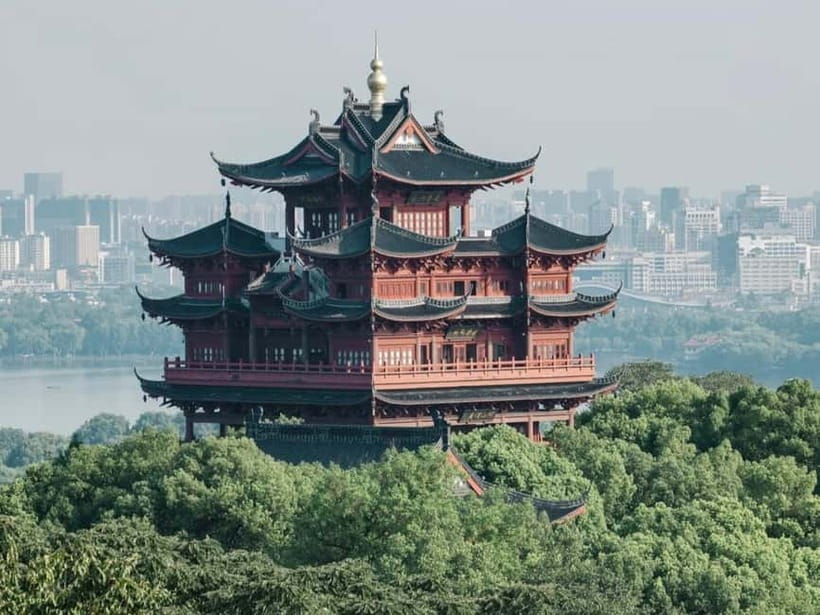
- Wu Shan Hill provides the physical highlight: expect ancient paths, religious landmarks, unusual rock shapes, and a hilltop pavilion facing West Lake.
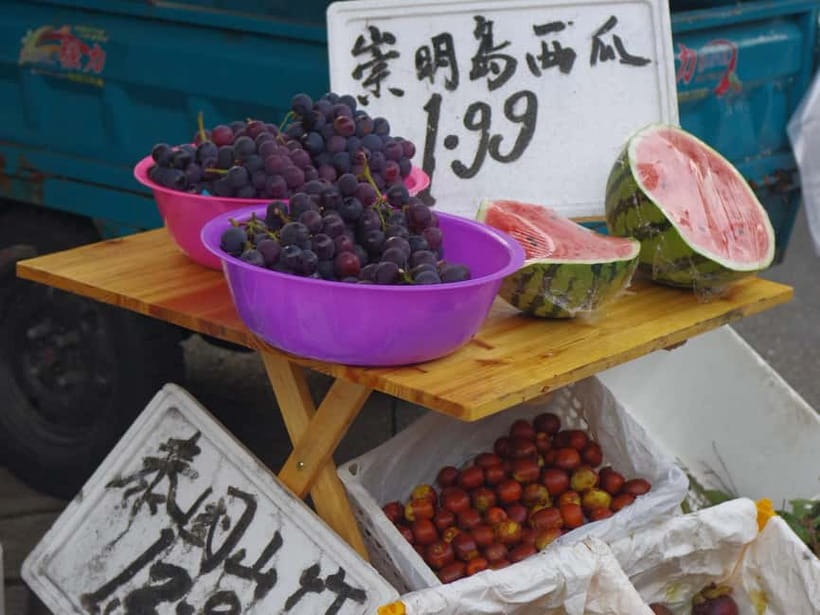
- Da Ma Long market is the most everyday stop: vendors call out prices, locals bargain, and food shopping happens around you.
- Wen is the guide to request by name: she speaks English well and is known for clear, friendly explanations.
- The $106 price buys a private half-day: museum admission and guiding are included, but lunch, snacks, and drinks are extra.
Why this Hangzhou walk feels different
Many Hangzhou tours focus on West Lake from the usual viewpoints. This one gives you a broader picture. You see the city through old streets, local work, religious sites, traditional medicine, and food shopping.
That mix matters because Hangzhou is not only a scenic lake city. It is also a living place where historic buildings still serve practical purposes and where old paths lead into neighborhoods rather than ending at a photo stop.
The four-hour timing is useful. You can fit this walk into a morning or afternoon while leaving room for a separate visit to West Lake, the Grand Canal, or a longer meal. Since this is a private group, Wen can explain details at a comfortable pace rather than moving everyone along in a large crowd.
The route is described as easy walking in terms of distance between the main stops, but the hill changes the picture. Bring water and wear shoes with a good grip. In warm months, mosquito repellent is sensible, especially on the wooded sections. Wen carries an anti-mosquito kit to share.
A few more hikes around China worth a look
- Fortress Night Hike & Snack at a Local Market
★ 5.0 · 112 reviews - Fortress Night Hike & Snack at a Local Market
★ 5.0 · 10 reviews - City Hike London (with Borough Market lunch break)
★ 5.0 · 7 reviews
Starting at Gulou Church and old city lanes
The meeting point is Gulou Church, also called 鼓楼堂, at No. 1 Zhonghe Middle Road in Shangcheng District. The historic Catholic church sits near Chaotianmen, at the southern edge of Hangzhou’s old city wall.
This is a practical meeting point because it puts you near the older part of the city from the start. Wen sends a photo and the exact meeting location the day before, which should make finding her easier in a busy urban area.
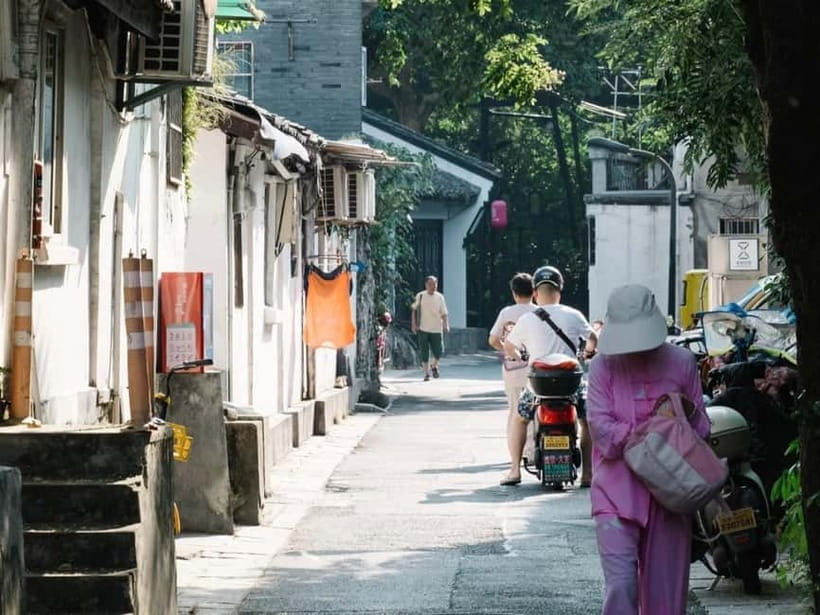
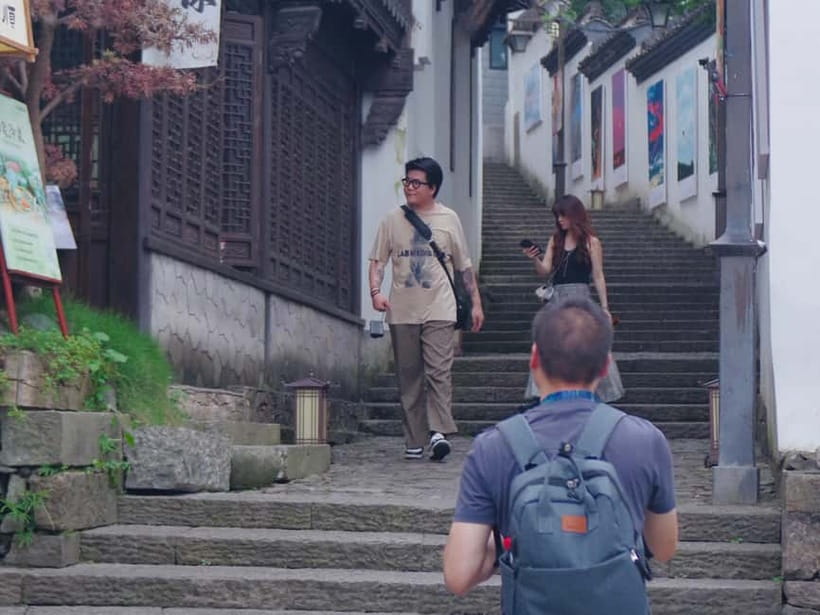
From the church, the walk heads toward Da Jing Xiang. This old alley network is lined with courtyard homes and gives you a look at how Hangzhou’s historic neighborhoods were arranged before wide modern roads reshaped the city.
You will pass heritage workshops connected with scissors, umbrellas, and herbal medicine. These stops are brief, but they help turn abstract talk about tradition into something concrete. You see the kinds of crafts and trades that helped make an old Chinese commercial district work.
I would not book this portion expecting a formal shopping tour. The value is in the setting and the chance to see working traditions along a walking route. If you enjoy small street details, old doorways, and local trades, this opening section should be one of your favorites.
Hu Qing Yu Tang and the old apothecary hall
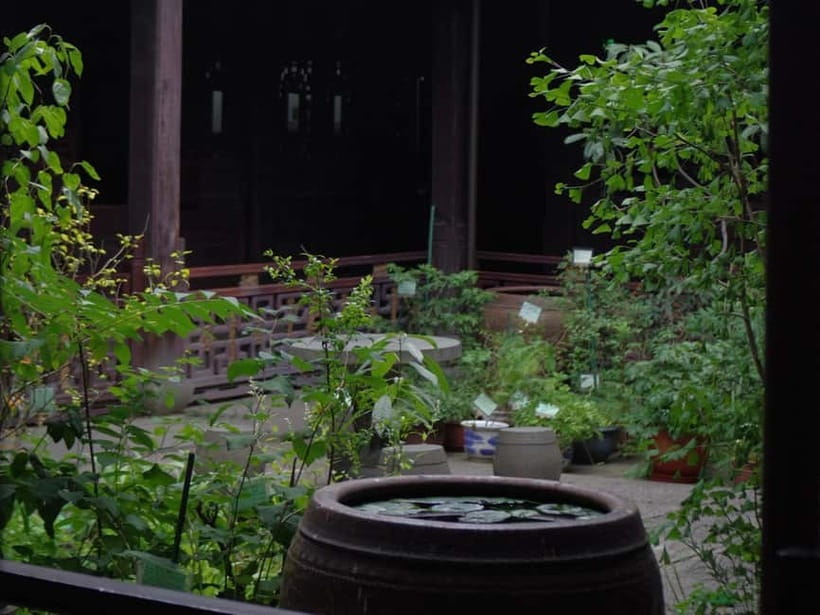
The next major stop is Hu Qing Yu Tang, one of Hangzhou’s best-known traditional Chinese pharmacies. The building is described as mansion-like and once famous for having the largest shop sign in China.
The setting is part of the lesson. Classical Chinese garden ideas, medicine, commerce, and architecture come together here. You are not simply entering a museum room with objects behind glass. You are seeing how a traditional pharmacy could also be a place of learning, business, and civic pride.
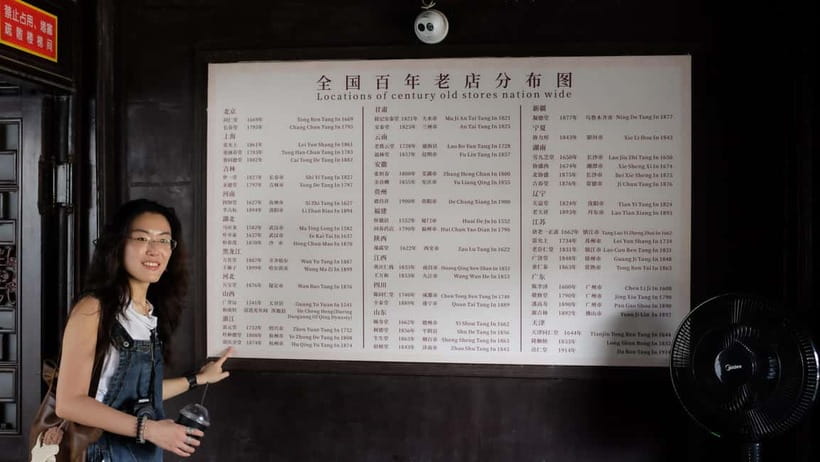
The Traditional Chinese Medicine museum is in an old attic area that many local people may not know about. Admission is included in the tour price, so there is no extra decision to make when you reach the site.
You also receive herbal tea in the historic apothecary hall. This is a small detail, but it gives the visit a useful sensory element. Medicine becomes something you taste and discuss rather than just something you read about.
The guide can help you understand the broad ideas behind Traditional Chinese Medicine and explain how the building’s design relates to classical Chinese gardens. If you want a detailed medical consultation, this is not that. It is a cultural visit with a traditional medicine focus.
Climbing Wu Shan Hill through temples and legends
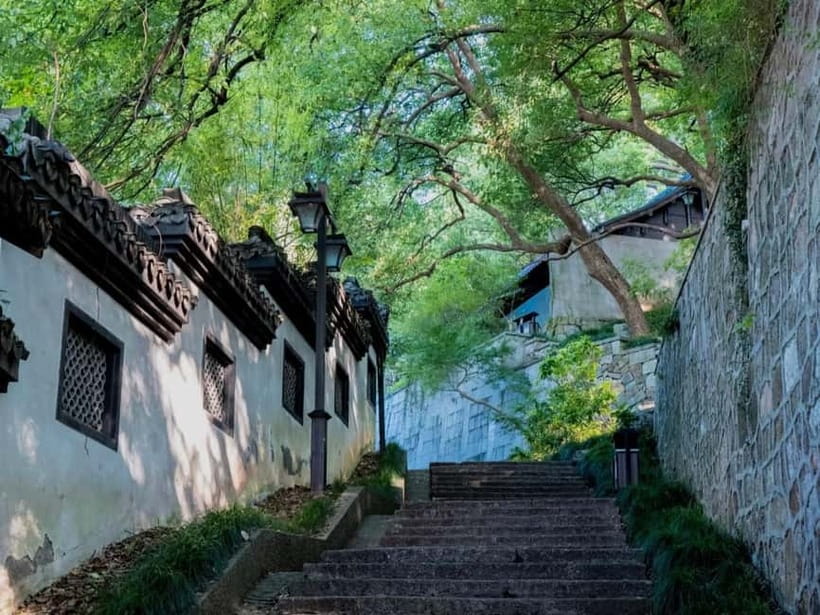
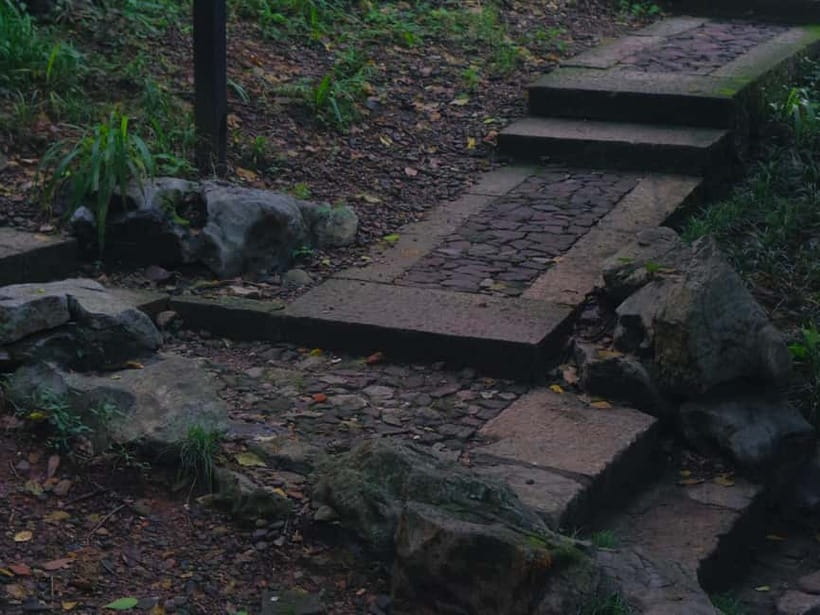
After the old streets and pharmacy, the route turns upward onto Wu Shan Hill. The hill was once associated with the Song Dynasty royal courts, adding an important layer to the walk. You are now leaving the tight urban lanes and entering a quieter setting of old trails, temples, rocks, and trees.
The climb is described as gentle, but do not mistake that for completely effortless. The hike lasts about 90 to 120 minutes, and the paths have been used by local people for centuries. Some sections may feel uneven, so sturdy walking shoes are more useful than fashionable city footwear.
One notable stop is Cheng Huang Miao, the City God Temple. It was historically used for fire-watching, which gives the site a practical civic role beyond its religious meaning. This is the kind of detail that makes the hill easier to understand. Temples were not only places for worship. They could also serve the needs of the surrounding city.
The trail includes both Taoist and Buddhist temples. You will hear legends connected with the hill and see spiritual landmarks woven into the natural setting. The appeal is not a single grand monument. It is the way small religious sites appear along a trail that still feels connected to local daily life.
Same trailhead, a different sort of day:
- From Beijing: Small Group Hike at Jinshanling Great Wall
★ 4.9 · 667 reviews - Beijing: Full-Day Small-Group Great Wall Hiking at Jinshanling
★ 5.0 · 347 reviews - Small Group 6km hiking Jinshanling Great Wall EN speaking driver
★ 5.0 · 347 reviews - Mini Group: Beijing Forbidden City Tour with Great Wall Hiking at Mutianyu
★ 5.0 · 344 reviews
Rock formations and the wet Buddha carving
Wu Shan Hill also brings a little visual fun to the walk. You will see rock formations shaped like zodiac animals, an unusual feature that gives the guide plenty to explain.
Another detail is a Buddha carving that appears only when the rock is wet. This is the sort of stop that rewards attention. It may not be a grand sight, but it encourages you to notice how moisture, stone, and local storytelling work together.
These features also help keep the hike varied. You are not simply walking uphill while listening to a long history lecture. The route gives you physical landmarks to look for, short stories to remember, and reasons to pause.
Still, the experience depends on your expectations. The hilltop views and trail atmosphere are the main rewards. If you need major monuments at every turn, the smaller-scale sites may feel modest. I think the walk works best for you if you enjoy details that would be easy to miss without a guide.
The pavilion view over West Lake
The hilltop pavilion is the scenic payoff. From here, you can look across West Lake and toward Hangzhou’s skyline.
This is not presented as the city’s most famous lake viewpoint, and that is part of its appeal. You reach it through the hill rather than by simply stepping out of a taxi at a standard lookout. The view gives you a chance to connect the old trails and temples with the modern city beyond them.
Bring your camera, but also allow time to listen. Wen can help you understand what you are seeing and place the lake and skyline within Hangzhou’s larger story.
Weather will affect the view, of course. A clear day should give you the best chance of seeing the skyline distinctly, but the walk still has value if haze softens the distance. The temples, rocks, and hill paths do not depend entirely on perfect visibility.
Da Ma Long market and the sound of local life
The final major stop is Da Ma Long, described as Hangzhou’s last old-school open-air alley market. This is where the tour shifts from quiet heritage to the everyday business of buying food.
Expect vendors calling out prices, local shoppers bargaining, and narrow market lanes filled with regional food. The atmosphere is direct and unpolished. You are watching a working market, not a staged food attraction.
This makes the market a strong finish. After hearing about old medicine, temples, and royal connections, you see how people shop and negotiate in the present day. The market brings the tour back to ordinary life.
Food tasting and street food are part of this section, but food and drinks are not included in the $106 price. Bring some Chinese currency or another accepted payment method if you plan to buy something, though the supplied information does not specify which payment methods individual vendors accept.
Lunch is optional and costs about 70 to 130 RMB per person. It is not included in the tour price, and you should tell Wen about dietary preferences in advance if you want to join. The guide covers her own meal. Since the market comes near the end of the route, this can be a relaxed way to continue the conversation, but you should treat it as an extra rather than part of the four-hour package.
What $106 gets you
At $106 per person, this is not a budget walking tour. The value depends heavily on whether you want a private guide and a route built around local details rather than only major sights.
Your fee includes an English-speaking private tour, entry to the Hu Qing Yu Tang Traditional Chinese Medicine Museum, and the walking route through Da Jing Xiang, Wu Shan Hill, and Da Ma Long market. You are paying for interpretation and organization as much as admission.
The private format is useful here. A large group could make the narrow lanes and market less comfortable, and it would be harder to ask questions in the pharmacy or on the hill. Wen can adjust explanations and walking speed for your group.
The price makes less sense if you mainly want a quick view of West Lake or a standard city highlights tour. You can find cheaper ways to walk around Hangzhou. This experience earns its cost through the combination of a private guide, a small museum visit, a moderate hike, and access to an everyday market.
The early feedback about Wen is especially strong. She has been praised for clear communication before, during, and after the walk, gentle guiding, and strong English. One useful point is that she has spent time in Europe, which helps her explain Chinese culture and history in terms that Western visitors can follow without flattening the subject.
Who should book this experience
I would choose this walk if you enjoy history in small doses, local markets, traditional crafts, and moderate outdoor activity. It suits couples, solo visitors, and private groups who want conversation rather than a scripted procession.
It is also a good pick for a second or third day in Hangzhou. By then, you may already have seen the standard West Lake sights and be ready for old lanes, hill paths, and a more ordinary side of the city.
I would be cautious if you have mobility concerns. The tour is not suitable for children under 13, people with back problems, people with high blood pressure, or people over 70. The supplied guidance also calls for a moderate level of fitness.
There are no baby strollers or carriages allowed, and making fires is prohibited. Those restrictions are unlikely to affect most visitors, but families with young children should choose another activity.
The tour is available in English and Chinese. Free cancellation is available up to 24 hours before the start, and you can reserve now and pay later. Check the available start times when booking, since the exact schedule is not fixed here.
Should you book the Wu Shan Hill and wet market walk?
Book it if you want Hangzhou presented as a connected story: old lanes leading to medicine, medicine leading to hill trails, hill trails leading to a city view, and the day finishing amid market bargaining.
Skip it if you want a purely relaxed stroll, a major-food tour with meals included, or a fully accessible route. The climb is manageable for a reasonably fit walker, but it is still a real part of the experience.
For the right person, this is a smart half-day choice. Wen’s calm English guidance, the unusual pharmacy museum, the hill’s small religious and natural details, and the Da Ma Long market give you much more than a standard sightseeing loop.
FAQ
How long does the Hangzhou Insider Mini-Hike last?
The activity lasts four hours. The hill section itself takes about 90 to 120 minutes.
Where does the tour meet?
You meet in front of Gulou Church, or 鼓楼堂, at No. 1 Zhonghe Middle Road in Shangcheng District, Hangzhou. It is near Chaotianmen and the southern edge of the old city wall.
Does the tour return to the starting point?
The stated arrival point is Gulou Church. The route also includes Da Ma Long market near the end of the walk.
Is the tour private?
Yes. It is offered as a private group experience with a live guide.
Is the guide available in English?
Yes. Guiding is available in English and Chinese. The guide named in the supplied information is Wen.
Is the museum admission included?
Yes. Entry to the Hu Qing Yu Tang Traditional Chinese Medicine Museum is included.
Is lunch included?
No. Lunch is optional and costs an estimated 70 to 130 RMB per person. You should provide dietary preferences in advance if you want to join.
How difficult is the hike?
The hill is neither steep nor high, but the walk lasts around 90 to 120 minutes and requires a moderate level of fitness. Comfortable shoes and water are recommended.
What should I bring?
Bring comfortable shoes, water, and mosquito repellent, especially during warmer months. Wen also carries an anti-mosquito kit.
Just added around China
- Small Group Hiking Day Tour to Lamma Island Hong Kong★ 5.0 · 3 reviews
- Plover Cove Bicycling and Hiking Waterfall Adventure★ 5.0 · 11 reviews
- Tai Mo Shan Waterfall Adventure Hike★ 5.0 · 16 reviews
- Geopark Hiking Tour★ 5.0 · 12 reviews
- Hong Kong Global Geopark Coastal Hiking Tour★ 5.0 · 4 reviews
- Small Group Hiking Day Tour to Lai Chi Wo★ 5.0 · 3 reviews
- Afternoon Hiking Tour Sharp Island Geopark★ 4.5 · 4 reviews
- The Dragon’s Back Hiking Tour, Hong Kong★ 5.0 · 54 reviews
Markets, compared.
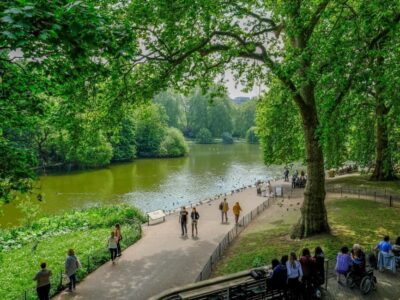
City Hike London (with Borough Market lunch break)
Read our review →
Ayutthaya Bicycle Hike & ATV to Top Attractions & Floating Market
Read our review →Browse the lists this tour appears in