
REVIEW · PERU
4-hour excursion: Sillar Route with Hiking in Culebrillas
Arequipa’s famous white stone is not simply a pretty building material. It is still cut by hand in working quarries, and this Sillar Route tour lets you see the stone being extracted, shaped, and used in local culture. You also get a short walk through Culebrillas Canyon, where old Wari petroglyphs add a welcome historical touch.
I like the contrast between the huge Añashuayco Quarry and the narrow canyon at Culebrillas. I also like the price: at $20, transport and a professional guide are included, while the entrance fee is only 10 soles. The main drawback is that this is more of a quarry and sightseeing outing than a serious hike, and one reported booking failed to take place, so confirmation is worth treating seriously.
Key points at a glance
- Working stone quarries: See the cliffs created by extracting sillar, the white volcanic stone used across Arequipa.
- A hands-on quarry stop: You may watch a stonemason explain the work and try cutting a stone block.
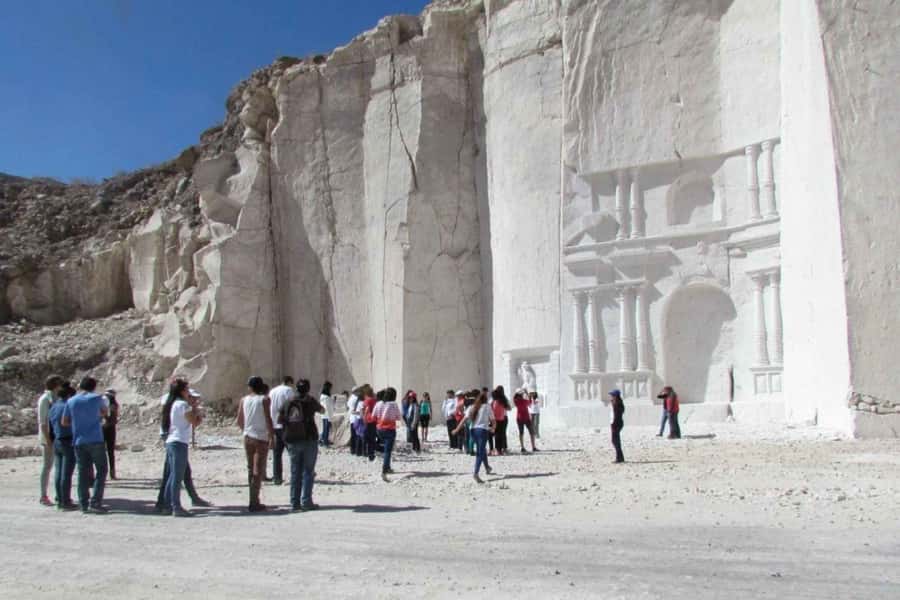
- The Megacavado carving: The quarry contains a large carving of the Church of the Company of Jesus.
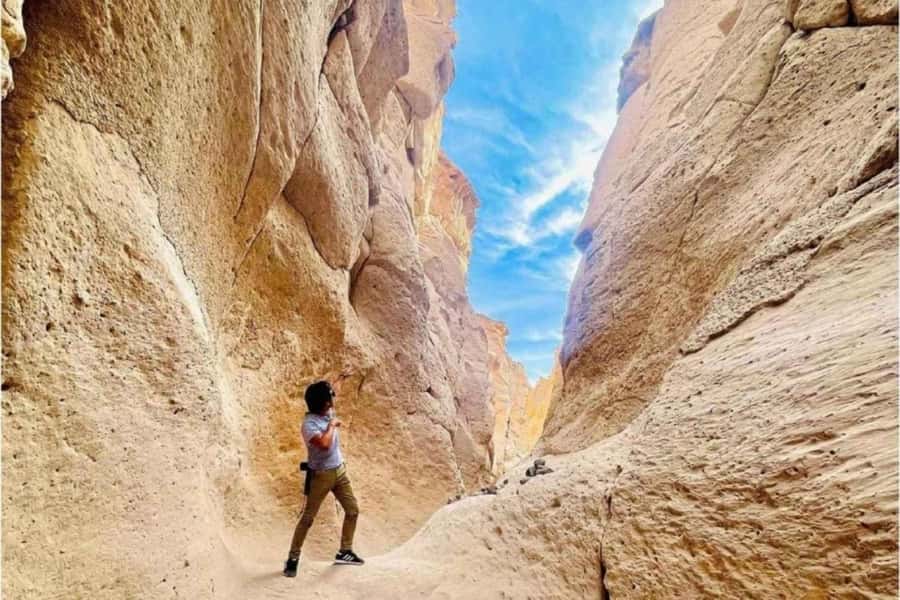
- A short Culebrillas walk: Follow the canyon for about 20 minutes between walls that reach 15 to 20 meters high.
- Wari petroglyphs and apachetas: Look for ancient rock markings and stacked stones linked with gratitude toward nature and good luck.
- A useful low-cost outing: Transport and a guide are included for $20, with a separate 10-sol entrance fee.
Why the Sillar Route is worth your morning
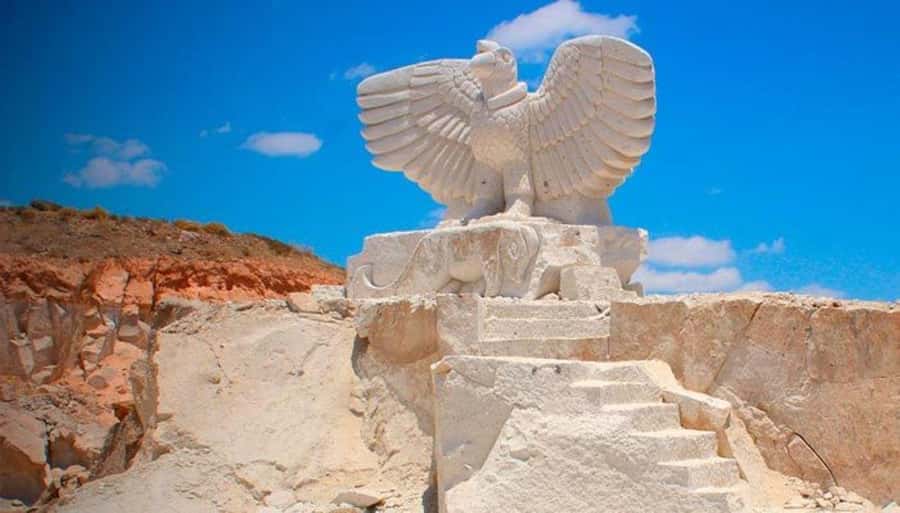
Sillar is part of Arequipa’s visual identity. The city is known for buildings made from this pale volcanic stone, and the route takes you out to the places where the material originates. That makes the visit more useful than simply admiring white façades in the city center. You see the source, the labor, and some of the artistic work produced from it.
The outing begins at about 9:15 am and returns to Arequipa around 1:30 pm. The advertised duration is four hours, though the stated schedule works out at roughly four hours and 15 minutes. That small difference should not cause trouble, but it is worth keeping in mind if you have a tightly packed afternoon.
I would choose this tour early in a stay because it gives you a quick sense of the area around Arequipa. The first viewpoint introduces the volcanoes and the Chilina Valley, then the quarries show how local stone shaped the city. Culebrillas finishes the morning with a quieter walk and older traces of human activity.
A few more hikes around Peru worth a look
- Cusco: Rainbow Mountain Tour and Red Valley Hike (Optional)
★ 4.7 · 149 reviews - From Huaraz: Hike to the Lagoon 69
★ 4.4 · 121 reviews - Private Palccoyo Rainbow Hike Without the Crowds
★ 5.0 · 86 reviews
The volcano viewpoint and Chilina Valley
Before reaching the main quarry, the vehicle stops at a strategic viewpoint. From here, you can see the volcanoes and the Chilina Valley. Depending on the season, the exact opening stop may change to another traditional viewpoint with volcano views.
This is a short photo and orientation stop rather than the main event. Still, it helps you understand where Arequipa sits and gives the route some visual scale before you enter the stone quarries. If the air is clear, the volcano view should be one of the morning’s strongest images.
The stop also breaks up the drive. The Añashuayco Quarry is about 45 minutes from the starting point, so the early viewpoint keeps the journey from feeling like one long ride. Bring your camera, but do not let the viewpoint become the whole point of the tour. The quarry and Culebrillas provide the substance.
Inside Añashuayco Quarry after 45 minutes
The first major stop is Añashuayco, an active quarry where stonemasons work early in the day. Here, extraction has created a large canyon with tall ignimbrite walls. The exposed cliffs show the scale of the work far better than a finished stone wall can.
The guide explains what sillar is, how it is produced, and how it has traditionally been used. That information matters because the quarry is not only a photo stop. It is a workplace tied to Arequipa’s architecture and local craft.
You should expect a commercial tourist setting rather than a remote spiritual site. The quarry has been organized as a visitor attraction, and that can make parts of the stop feel polished or staged. At the same time, the stone cutting remains a real trade, and the enormous walls give you a clear look at the physical cost of producing the material.
The scale is the highlight. You are looking at cliffs created by taking stone from the ground, not at natural canyon walls alone. The result is visually dramatic, but it also raises a useful question: how much of Arequipa’s famous white architecture depends on this demanding manual work?
The Megacavado and the work of a stonemason
One of the most distinctive features at Añashuayco is the Megacavado, a large carving of the Church of the Company of Jesus. The piece connects the quarry to the city’s religious architecture and gives you an example of what skilled workers can create from the same material being cut around you.
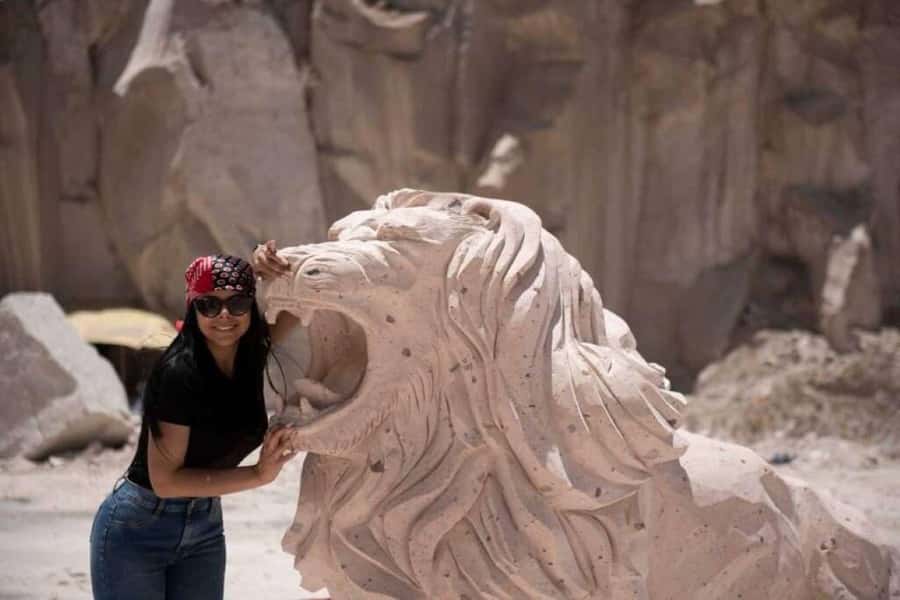
You may also visit a stonemason and hear about the daily work directly. The activity can include trying to cut one of the stone blocks yourself. That small hands-on moment is valuable because it turns an abstract explanation into a physical task. Sillar may look soft and uniform from a distance, but shaping a block requires care and effort.
The timing of quarry work matters. The stonemasons begin early, so the later you arrive, the less active the site may feel. This tour reaches the quarry after the initial viewpoint and about 45 minutes of driving. You should still see an operating setting, but do not expect every worker to be in the middle of a demonstration at every moment.
If you want polished monuments and a short practical explanation, this stop works well. If you want a quiet, untouched setting, it may disappoint. The quarry is one of the more commercial parts of the morning, and you should book it for the combination of scale, craft, and local context rather than for solitude.
Same trailhead, a different sort of day:
- Humantay Lake Full Day Hike
★ 5.0 · 75 reviews - 2 Day Hiking Short Inca Trail to Machu Picchu
★ 5.0 · 66 reviews - Humantay Lake Day Hike (Small Group or Private)
★ 5.0 · 30 reviews - From Puerto Maldonado | Jungle hike + Sandoval Lake |
★ 4.1 · 22 reviews
The 30-minute ride to Culebrillas
After Añashuayco, the vehicle travels for about 30 minutes to Quebrada de Culebrillas. This second stop changes the mood. Instead of standing beside a broad quarry face, you enter a narrow canyon shaped by water.
The walls are about 15 to 20 meters high, and they grow taller as you move farther inside. That gradual change gives the walk a sense of progression, even though the walking time is only about 20 minutes. You are not covering a long trail, but the canyon creates a more enclosed and natural setting than the quarry.
This is the part most likely to match anyone expecting a genuine walk through a striking setting. The route is short, though, so the word hiking should be understood generously. It is a brief canyon walk, not a half-day trek or a demanding mountain outing.
Wear shoes that can handle an uneven walking surface. The supplied details do not specify trail conditions, so I would not assume a paved path. You should also allow time to look upward and around you rather than rushing through for photographs. The walls are the main reason to slow down.
Wari petroglyphs at the end of the canyon
At the end of the walk, you can see petroglyphs attributed to the Wari culture and dated to more than a thousand years ago. These marks give Culebrillas a human story that reaches well beyond the modern quarry industry.
The petroglyphs are important partly because they are easy to miss if the group treats the walk as a quick photo stop. Listen when the guide points them out, and take a moment to understand what you are looking at. The available information does not provide detailed interpretations of the individual figures, so you should not expect a long archaeological lecture. The value lies in seeing evidence of earlier people in the same canyon.
This stop also helps balance the more commercial feel of Añashuayco. The quarry shows present-day labor and a living local craft. Culebrillas adds an older layer of human use. Together, the two places make a better pair than either one would be alone.
A practical warning: the atmosphere depends partly on how much attention the group gives the guide. If everyone is focused on taking photos, the historical side of Culebrillas can pass quickly. You will get more from the stop by staying close enough to hear the explanation and by treating the petroglyphs as the main feature, not just a background for a picture.
Apachetas and the return to Arequipa
Before leaving the canyon area, the tour stops to observe apachetas. These are stone formations made by placing one stone on top of another. They are described as signs of gratitude toward nature and as symbols associated with good luck, giving the final stop a small spiritual and cultural dimension.
The apachetas are not a substitute for a major archaeological site, but they are a useful reminder that this route is about more than stone extraction. The morning moves from volcano views, to working quarries, to a water-cut canyon, then ends with a simple local tradition.
The return begins at about 12:30 pm, with arrival in Arequipa scheduled for around 1:30 pm. That timing leaves the rest of your day available for the city, lunch, or another activity. You should still allow some flexibility because the tour involves road travel and multiple stops.
What $20 gets you, and what it does not
At $20 per person, this is a good-value half-day outing if you want transport outside Arequipa without arranging a private vehicle. The price includes tourist transport and a professional guide. English and Spanish guiding are available, which makes the route easier to follow if you do not speak Spanish.
You pay an additional 10 soles for entrance to the sites. That is a modest extra cost, but include it in your budget. The tour does not list meals, drinks, or personal expenses as included, so plan accordingly without assuming anything beyond transport and guiding.
The strongest value comes from the number of different stops packed into one morning. You get a viewpoint, a working quarry, a large stone carving, a short canyon walk, ancient petroglyphs, and apachetas. None of these receives a full day of attention, but together they make a varied introduction to Arequipa’s surroundings.
The value is weaker if you are booking specifically for hiking. The walk at Culebrillas lasts about 20 minutes, and the rest of the experience involves vehicle travel, viewing points, and guided stops. I would call it a cultural and scenic excursion with a short hike, not a hiking tour in the usual sense.
Guide quality and communication
A live guide is included, and the tour is offered in English or Spanish. That matters at Añashuayco, where the history of sillar and the details of stone cutting add much of the meaning. Without explanation, you would still see impressive cliffs, but you might miss why the material matters to Arequipa.
Communication quality can vary. One booking described a guide who seemed nervous and was difficult to understand over the microphone because of a strong accent. That does not mean every departure has the same problem, but it is a useful reason to stay near the guide during outdoor explanations and ask for clarification when needed.
No guide names are provided for this experience, so you cannot choose a particular person in advance. The guide language is the main choice available. If your Spanish is limited, select English and confirm the language when booking.
There was also one serious report of a booking not taking place at all. Since that is a major practical concern, confirm the departure details before the morning of the tour and keep the provider’s contact information available. The stated free-cancellation policy allows cancellation up to 24 hours in advance for a full refund, and the reserve-now, pay-later option keeps you from paying immediately.
Who should book this excursion?
I would recommend it to a first-time visitor who wants an efficient introduction to the area around Arequipa. It suits you especially well if you want a mix of geology, local craft, architecture, a little archaeology, and easy sightseeing in one morning.
It is also a good choice for photographers. The volcano viewpoint, pale quarry walls, Megacavado, narrow canyon, petroglyphs, and apachetas provide very different subjects. Just remember that the route’s photo appeal can compete with its cultural content, so make time to listen.
Families and casual sightseers may like the short walking section, though the tour data does not specify age limits or accessibility details. Anyone seeking a strenuous hike, a remote wilderness setting, or a deeply archaeological experience should look elsewhere.
Should you book the Sillar Route with Culebrillas?
Book this $20 excursion if you want a low-cost, well-packed morning that explains why Arequipa is built from white stone. The best parts are the working Añashuayco Quarry, the Megacavado carving, and the change of pace at Culebrillas with its Wari petroglyphs.
Skip it if your priority is a long hike or a quiet, untouched site. Go with realistic expectations: the Sillar Route is commercial in places, the Culebrillas walk is brief, and guide communication may affect how much history you take in. Confirm that your departure is operating, budget the extra 10 soles for admission, and this can be a practical way to see a side of Arequipa that the city’s white walls alone cannot explain.
FAQ
How long does the Sillar Route and Culebrillas excursion last?
The activity is advertised as four hours. The stated schedule runs from about 9:15 am until 1:30 pm, which is roughly four hours and 15 minutes.
What places does the tour visit?
The tour visits a volcano and Chilina Valley viewpoint, the Añashuayco Quarry on the Sillar Route, the Megacavado carving, Culebrillas Canyon, Wari petroglyphs, and apachetas.
How long is the walk in Culebrillas Canyon?
The walk through the canyon takes approximately 20 minutes. The canyon walls reach about 15 to 20 meters high and become taller as you continue inside.
Is this a difficult hiking tour?
No difficulty rating is provided, but the walking portion is only about 20 minutes. You should view it as a sightseeing excursion with a short canyon walk rather than a serious hiking trip.
What is included in the price?
Tourist transport and a professional guide are included. The guide service is available in English or Spanish.
Is there an extra entrance fee?
Yes. Entrance to the places costs 10 soles, which is not included in the $20 tour price.
Can I cancel the booking?
You can cancel up to 24 hours in advance for a full refund. A reserve-now, pay-later option is also available, so you do not have to pay at the time of booking.
Just added around Peru
- From Tambopata: Amazon Jungle Hike and Lake Sandoval 1-Day★ 3.8 · 3 reviews
- From Cusco: Waqrapukara Hike Full-Day Tour With Meals★ 3.7 · 3 reviews
- From Cusco: Machu Picchu Tour with Hiking Ticket★ 5.0 · 6 reviews
- From Cusco: Hike to Humantay Lake one day With Meals★ 4.5 · 6 reviews
- From Arequipa: Sillar Route and Hike in Culebrillas★ 4.5 · 6 reviews
- Horseback Riding at 7 lakes Ausangate Private |Optional Hike★ 5.0 · 4 reviews
- Cusco: Seven Lagoons of Ausangate Hiking Day Trip with Lunch★ 3.8 · 7 reviews
- 4-hour excursion: Ruta del Sillar with Hiking in Culebrillas★ 3.5 · 6 reviews
Peru Hiking Tours, compared.

Rainbow Mountain Tour and Red Valley Hike (Optional)
Read our review →
Private Palccoyo Rainbow Hike Without the Crowds
Read our review →
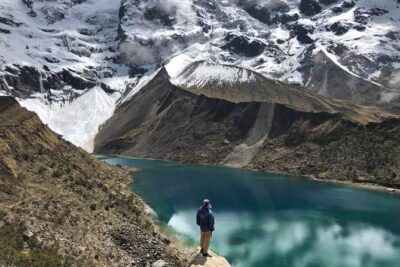
Humantay Lake Day Hike (Small Group or Private)
Read our review →
From Puerto Maldonado | Jungle hike + Sandoval Lake |
Read our review →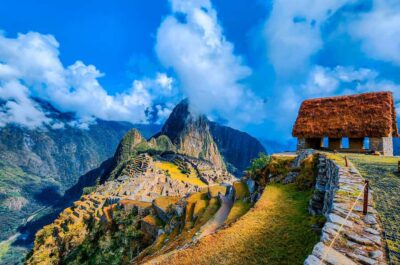
2-Day Inca Trail Hike to Machu Picchu & Panoramic Train
Read our review →Browse the lists this tour appears in